

A floating console keeps the floor visible while a full built-in system turns the wall into architecture, and the difference in budget and installation time is substantial.
The decision comes down to how much wall width you have and whether you need closed storage or open shelves, because a narrow wall rarely supports the symmetry a luxury setup depends on.
1. Wall-Mounted Floating Units

A floating console keeps the floor visible and the wall clean, which makes the room feel larger than it is. This setup works especially well in smaller living rooms where every inch of floor space counts.
Mounting the console securely matters most. Most floating shelves rely on heavy-duty brackets hidden inside the unit or fixed to wall studs.
If your wall is drywall, find the studs or use toggle anchors rated for the combined weight of the console and whatever you plan to store inside it.
Too much gap and the TV looks disconnected from the storage below.

Floating TV stand with Rattan Doors:The natural wood grain finish of this elegant floating TV cabinet has a unique aesthetic. The hand-woven rattan design on the surface of the double doors adds a distinctive vintage charm, perfect for bohemian, farmhouse or mid-century modern interiors.

Organized Storage with 3 Doors: Triple flip-down compartments of the floating tv cabinet hides clutter while keeping remotes, game consoles, routers, DVDs, and books within reach-your clean, modern entertainment center
2. Integrated LED Lighting

LED strips tucked behind the console or along the back edge of shelves add depth without glare.
The light bounces off the wall and softens the whole setup, which is especially helpful in the evening when overhead lights feel too bright.
Most strips come with adhesive backing and plug into a standard outlet.
I like warm white around 3000K for living rooms, because cooler tones can make the space feel clinical. Dimmable strips give you control when you want the light lower during a movie.
Run the wiring behind the unit or inside cable channels so nothing shows. If the console is floating, you can often hide the power cord along the mounting bracket.

Spacious Storage Layout: Features two drawers for concealed storage and an adjustable shelf perfect for media components, décor, or small accessories.

TV Stand with Storage for TVs up to 65 Inches – This 55-inch entertainment center features a spacious tabletop that accommodates flat-screen TVs up to 65 inches. Three open shelves provide easy access to gaming consoles, media players, soundbars, and streaming devices, while built-in cable management holes keep wires neatly organized. Three smooth push-to-open drawers offer concealed storage for movies, books, remotes, and everyday essentials

Length Adjustable - This extendable TV stand expands from 101.3 to 129.9 inches while staying 13.8 inches deep, fitting various living-room walls and media arrangements needs. Suitable for wall mounted TVs up to 115-Inch; the TV stand hold TVs up to 75-Inch if TVs sit on the top when not extened
3. Wall-Mounted TV Unit with Storage
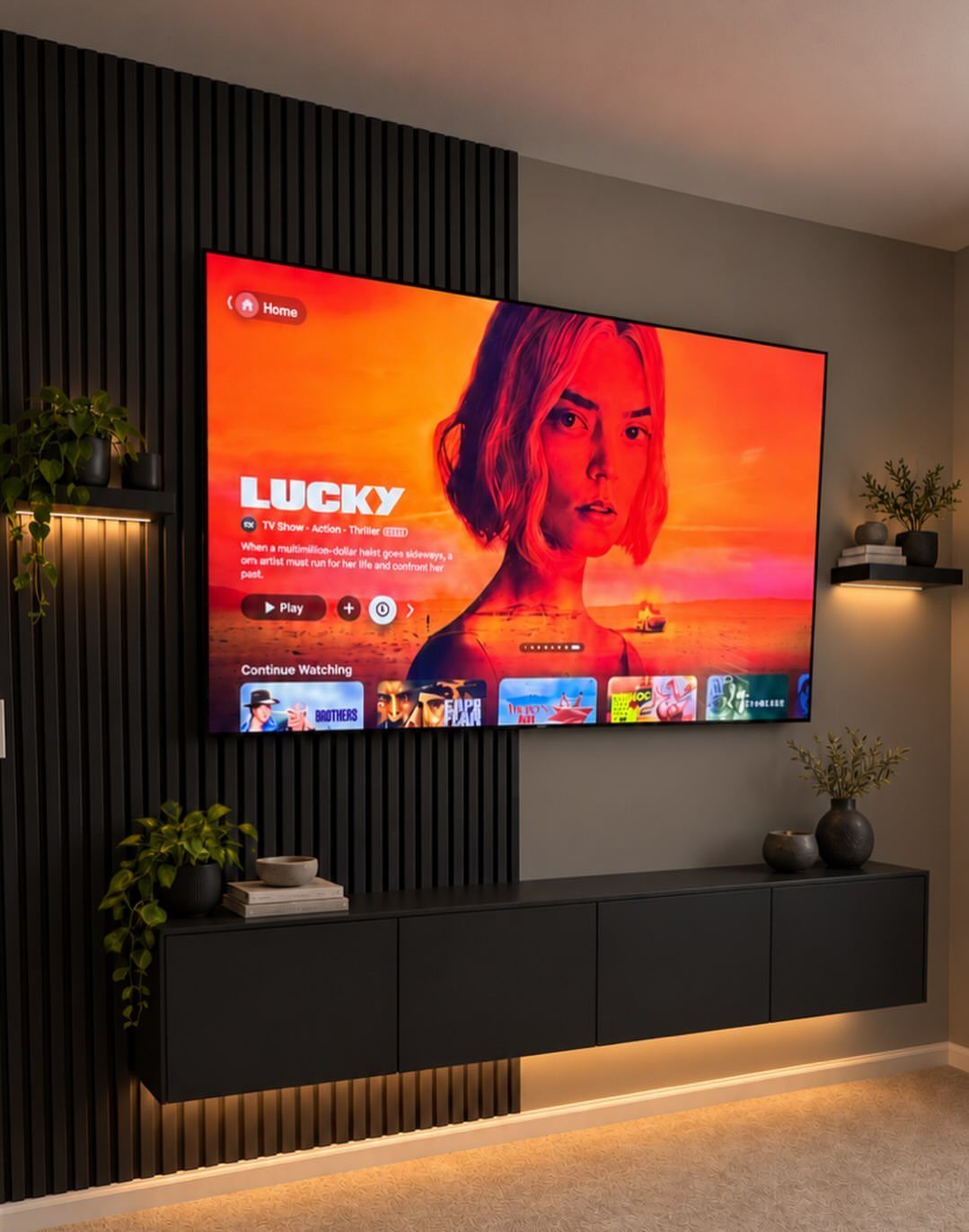
Mounting the TV on the wall and surrounding it with cabinets keeps cords and clutter out of sight.
This approach works best when you have enough wall width to build out storage on both sides, because a single narrow cabinet under the TV rarely holds what a living room needs.
Shallow storage keeps the unit from eating into the room. I often use closed cabinets below and open shelves or niches above for a mix of concealed and display space.
If you’re mounting cabinets to the wall, check the load rating. A full cabinet is heavier than it looks.

Segmented Dynamic Color: Featuring RGBICWW technology, this silver light bar offers tunable cool-to-warm white and vivid RGBIC colors for immersive gaming and viewing ambiance to suit your mood and needs. (Recommended for monitors under 45 inches.)

【Modern LED TV Stand】-Overall dimension: 63" W x 13.8" D x 18" H. Wood TV stand can fit a TV set up to 75 inches. Modern simple entertainment TV cabinet can perfectly match any style of room decoration, and is very suitable for farmhouse, living room, bedroom.

Elegant Mid-Century Modern Style: This 63" mid century modern TV stand features a sleek wood grain finish, tapered leg design, blending timeless style with contemporary aesthetics for your home.
4. Marble Accent Backdrop

Marble immediately reads as premium, and a single slab behind the TV anchors the whole wall. The veining in natural marble gives the setup visual weight without adding busy details, which keeps the focus on the TV itself.
Full-height slabs look the most seamless, but they cost more and require professional installation. Book-matched marble, where 2 slabs mirror each other, adds symmetry if the wall is wide enough.
Porcelain tiles that mimic marble are a fraction of the price and hold up better in high-traffic homes.
The grout lines will be visible, but if you keep them tight and match the grout color to the tile, the effect stays clean.

Sturdy Glass Floating Shelves: Large Strengthened Tempered Glass Shelf (Each glass measures 15 inch x 11 inch x 4mm thick), supporting a maximum weight up to 8kg (17.6lbs) per shelf, ensuring the safety and stability of your equipment.

wall Mounted Floating TV Stand: Different from common TV stand, our TV cabinet used hanging type design, you can choose the height that installs according to need, without so strong restriction, and can save the space of the sitting room; Up to a point, our hanging TV cabinets leaves valuable floor space and making cleaning easier, suitable for most home decorations and various styles.

Features: This updated 3 Shelves system that can be detached and reconstructed into a 1 shelf unit and 2 shelves unit. Large Strengthened Tempered Glass Shelf (Each glass measures 15 inch x 11 inch),supporting a maximum weight up to 8kg (17.6lbs) per shelf.
5. Wooden TV Units

Wood brings warmth to a room in a way painted or laminate finishes don’t, and it ages well if you treat it right.
The grain and tone do a lot of the visual work, so the unit itself can stay simple.
Solid wood costs more but lasts decades.
Walnut and oak are the most common choices for luxury units, and both darken slightly over time. Veneer over engineered wood is lighter and more stable, which matters if your room gets direct sun or swings in humidity.
I usually finish wood units with a matte or satin sealer rather than high gloss, because gloss shows every fingerprint and scratch. Dust weekly and wipe spills immediately to keep the finish intact.

Modern Natural Design for Any Space: Featuring clean lines and realistic woodgrain textures, this 55" TV stand delivers a modern yet organic aesthetic that fits effortlessly into contemporary, farmhouse, rustic, or minimalist interiors. Its compact size makes it especially ideal for apartments, bedrooms, and smaller living rooms.

Sleek Modern Design: Enhance your living room or bedroom with this modern floating TV stand, featuring a contemporary aesthetic that complements various decor styles

Fits Big Screens: The TV stand, 63-inch length works for TVs up to 70 inches (plus 55/60/65/70 inches models!). Sturdy U-shaped pedestal keeps your TV stable—no wobbles, even with larger displays
6. Rustic Reclaimed Wood TV Unit

Reclaimed wood has character that new wood doesn’t, and the imperfections are part of the appeal. The grain is often irregular, the color varies, and small knots or nail holes tell the story of where the wood came from.
This style works best when the rest of the room stays fairly neutral, because the wood itself is already doing a lot. Pair it with simple white walls and minimal accessories so the unit doesn’t compete with everything else.
One thing to check: reclaimed wood needs to be properly dried and sealed, or it can warp or crack over time.
Ask the supplier how the wood was treated, and plan for a finish coat if the piece didn’t come with one.

Minimalist Floating Design: The Guyii Walnut Floating TV Stand features a sleek, legless design that provides a minimalist appearance, perfect for modern living spaces. This hanging style offers an elegant and clutter-free look, making it an ideal choice for enhancing your home decor without taking up floor space.

Sturdy Wood Material: Crafted from E0-Grade high-strength MDF and finished by natural oak veneer offers a long-term use. It reduces formaldehyde content and enhances the safety and environmental friendliness of the product

Ample Storage Space: Wampat wall mounted floating entertainment center comes with 3 generous storage compartments for holding DVD player, gaming accessory, books, and decorations. The flip door design saves more storage space than traditional drawers and wall mount tv stand greatly frees up valuable floor space and suitable for all room
7. Shelf-Style TV Unit
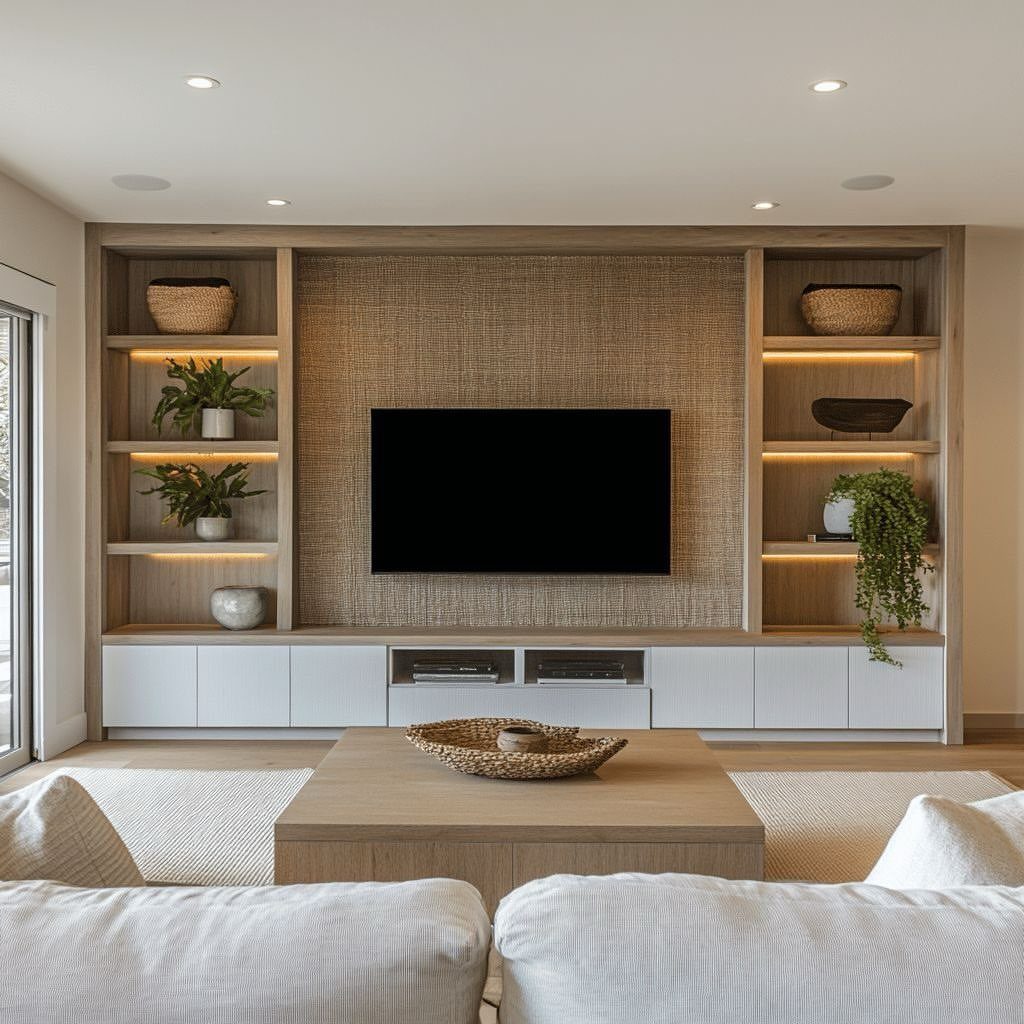
Open shelving around the TV keeps the setup light and gives you room to rotate what’s on display. In a smaller apartment, a shelf keeps the look light instead of filling an entire wall.
The balance matters.
If you load every shelf, the unit starts to feel cluttered. Fill about half the shelf space and leave the rest open so the arrangement reads as intentional instead of packed.
Shallow shelves work better than deep ones. Deep shelves collect items you forget about, and whatever sits in front hides what’s behind it.

Wall mount / bracket for the Sony Play Station 5 DIGITAL (PS5). Holds the device on the wall with all ports accessible. Left and right versions available. Includes instructions and drilling template.

Elegant Mid-Century Charm: Immerse yourself in the timeless allure of mid-century modern design, elevating the ambiance of your living space with sophistication. Our wood TV console features exquisite fluted sliding doors that add a touch of luxury, while the rounded curved edges exude graceful refinement, creating a captivating focal point in any room.

Elegant Mid-Century Charm: Immerse yourself in the timeless allure of mid-century modern design, elevating the ambiance of your living space with sophistication. Our wood TV console features exquisite fluted sliding doors that add a touch of luxury, creating a captivating focal point in any room.
8. Built-In TV Shelving

Building the TV into a shelving system makes it feel like part of the architecture instead of an afterthought. The shelves frame the screen and give you dedicated space for books, ceramics, or plants without adding freestanding furniture.
This setup needs enough wall width to make the symmetry work.
If the TV is large relative to the wall, the shelves can feel squeezed in. Size the shelves wide enough on each side that the TV doesn’t look squeezed between them.
Backlit shelves add depth, but the color temperature matters. Warm white keeps the display inviting, while cool white can wash out the objects you’re trying to highlight.

[Farmhouse Look & Space-Saving] This elegant corner floor lamp features a built-in LED light strip and wooden triangular shelf structure that maximizes space. Its sleek modern floor lamp design ensures every inch of your living room or bedroom is utilized, blending farmhouse style with functionality as a tall floor light.

【Adjustable LED System】-This LED TV stand has a built-in LED light with 20 light colors and 4 light change modes. There are two control modes: remote control and cell phone bluetooth, you can use the remote control or cell phone bluetooth to adjust the color and brightness of the light, very convenient.

Soft Warm Glow for Relaxing Evenings and Cozy Spaces: The elegant white linen lampshade of this gold table lamp offers a soft and consistent light distribution, reducing eye strain during prolonged reading or work sessions. The small gold lamp creates a relaxing ambiance for bedrooms, living rooms, reading nooks, and quiet evenings at home
9. Corner TV Unit

A corner unit turns dead space into storage, and it works especially well in rooms where the TV placement is dictated by the seating arrangement rather than the longest wall.
The challenge is keeping the proportions right.
Too narrow and the TV looks crammed in, too wide and the unit sticks out into the room. Measure the corner and size the unit so it stays within that angle without pushing past the walls.
Floating cabinets below the TV keep the floor open, which helps the corner feel less heavy.

Efficient Vertical Space Utilization: With 5-layered shelves measuring 11.6" x 15.4" each, spaced 13.7" apart, and standing at a total height of 70", our ladder shelf optimizes vertical space, ideal for use as a bookcase, commodity shelf, or bathroom accessory organizer, it enhances organization and aesthetic appeal in your living room, study, etc

[Strip LED Lights] The floating TV stand features 20 colors and 22 dynamic modes (flash, fade, smooth). This floating TV shelf with LED lights provides elegant lighting in warm and cool. The wall mounted TV stand will bring better entertainment experience for your family to watch movies and play games.

EASY EXPANSION: The tv floating shelves wall mounted AV rack’s interlocking brackets make it easy to join multiple units together, giving you the freedom to add as many as needed to carry your devices.
10. Low-Profile Media Console

A low console sits close to the floor and spreads horizontally, which keeps the TV from dominating the wall. This setup works best when you want the screen to blend in rather than act as the focal point.
The length matters more than the height.
If the console is too short for the TV width, the screen looks unanchored. I aim for a console that’s at least as wide as the TV, and often a bit wider.
Solid wood or thick veneer gives the piece enough visual weight to hold the room together. Thin materials make the whole setup feel temporary, even if the joinery is solid.

EXTENDABLE DESIGN FOR DIFFERENT ROOM SIZES: Adjust the width from 70.9" to 110.2" to match your living space. The horizontal extension design allows this TV stand to work well in compact apartments, condos and larger living rooms while maintaining a balanced entertainment setup.

Modern Natural Design for Any Home: Blending clean lines with authentic woodgrain textures, this TV stand captures a modern yet organic look that suits a variety of interior styles—from minimalist and contemporary to rustic farmhouse. Available in multiple natural finishes, it brings warmth, balance, and understated elegance to your living space.

【Fluted Farmhouse Charm】Elevate your living room with this stylish entertainment center featuring a striking fluted door design that blends farmhouse warmth with modern aesthetics. This TV stand adds texture, character, and timeless appeal to your space, making it a perfect match for vintage, minimalist, or contemporary home styles.
11. Slim Frame TV Setup

A slim frame TV mounted on the wall with minimal storage below keeps the room feeling open. This setup makes sense when you have minimal media equipment and want the wall to look clean.
The console needs to be wide but shallow. A slim profile keeps the unit from pushing into the floor space, which is the reason to choose this style in the first place.
If the console is white and the wall is light, the TV becomes the only dark element, which can look stark. A thin frame in black or charcoal helps the screen feel more deliberate.
12. TV Unit with Study Desk

Combining a TV unit with a desk makes sense when the living room doubles as a workspace and you want both functions in one built-in.
The desk section usually sits to one side of the TV, with enough surface area for a laptop and a task light.
The desk height needs to be comfortable for sitting, which is lower than most floating consoles.
That means the desk surface will sit below the TV cabinet, and the proportions work better when the desk is its own clearly defined zone rather than trying to match the console height.
Cable management gets more complicated when you’re running power for both the TV and the desk. Plan for outlets behind both sections, or use a single raceway that serves both.
13. TV Unit with Fireplace

An electric fireplace built into the unit adds warmth and gives the wall a finished look even when the TV is off.
The flame effect draws the eye down, which balances a large screen and keeps the setup from feeling top-heavy.
Measure the insert before you build or buy the unit, because widths vary and retrofitting is difficult once the unit is installed.
The heat output on most models is low, around 4,000 to 5,000 BTU, so this works as a supplement rather than the primary heat source.
For a truly luxurious and cozy living room setup, consider a TV unit design that incorporates an electric fireplace. This innovative combination not only provides warmth and ambiance but also serves as a stunning focal point.
14. Curved or Wavy Design

A curved wall behind the TV softens the whole setup and makes the screen feel less rectangular. The curve draws the eye inward, which works especially well on a large wall where a flat console can look lost.
Building a curved wall takes more framing and drywall skill than a flat one, so budget for a contractor if you’re not comfortable with the carpentry.
The curve can be subtle or dramatic, but a gentle arc reads as intentional without overwhelming the room.
Keep the console simple. A floating wood piece grounds the curve without competing with it.
15. Acoustic Panel TV Unit

Acoustic panels behind the TV absorb sound and give the wall texture without adding color. Vertical slats in wood or fabric soften echoes, which makes a noticeable difference in rooms with hard floors and minimal soft furnishings.
The panels can run floor to ceiling or just behind the TV. Full-height coverage gives a more finished look, but partial coverage costs less and still improves the acoustics.
Mounting the TV directly to the panels works if the panels are backed with solid plywood. If they’re just slats over a gap, mount the TV to the wall studs first, then build the panels around it.
16. Scandinavian TV Unit

Light wood and clean lines keep the setup minimal, which suits rooms where you want the TV to recede rather than dominate.
Birch, ash, or light oak are the usual choices, and all age to a soft honey tone if the room gets sun. A matte finish hides fingerprints better than satin or gloss.
Too many colors or patterns, and the simplicity that makes Scandinavian design work gets lost.
17. Industrial Style TV Unit
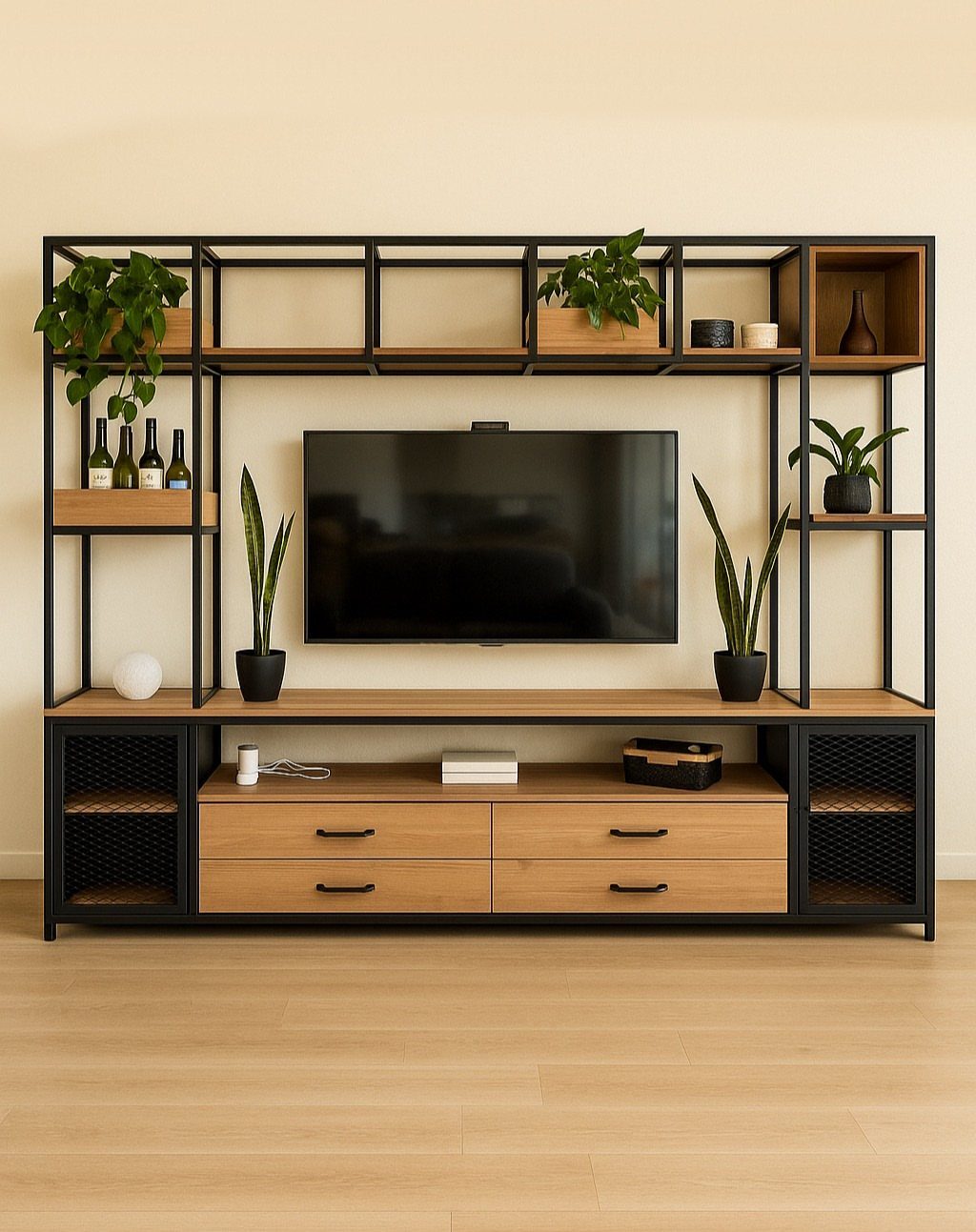
Black metal frames and open shelving give the unit a warehouse feel, and the exposed structure keeps the look honest. This style works best in lofts or rooms with high ceilings, where the metal frame doesn’t feel cramped.
The shelves are usually wood or metal, and the mix of materials adds contrast without complicating the design. Keep the finish on the wood simple so the metal does the visual work.
Open shelving means everything on the unit is visible, so plan for storage elsewhere if you need to hide cables or clutter.
18. Vintage TV Unit with Antiques

Carved wood and brass accents give the unit a formal, old-world look, and the TV becomes part of a display rather than the focus.
This works when the rest of the room is already traditional and you want the media setup to match.
The antiques need to be deliberate.
A few pieces look deliberate; too many start competing for space. Symmetry helps, so match the items on each side of the TV if the unit is wide enough.
Dark wood shows dust quickly, so plan to wipe it down more often than lighter finishes.
19. Dark Accent Wall TV Unit
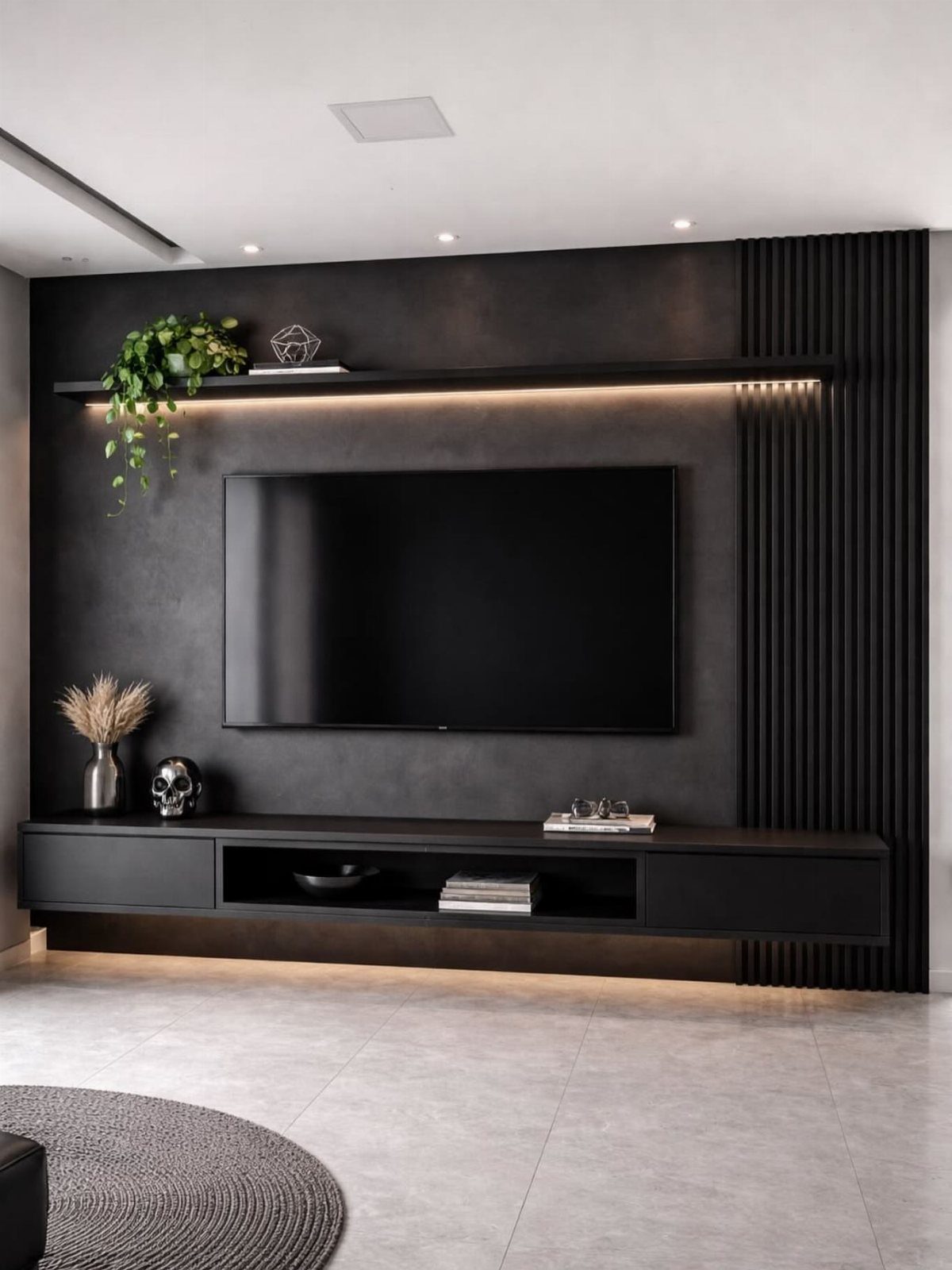
A dark wall behind the TV absorbs the screen rather than reflecting it, which cuts glare and makes the wall recede.
Charcoal, deep navy, or matte black work equally well, and all keep the TV from feeling like a bright rectangle floating in the middle of the room.
The console needs contrast or it disappears into the wall. Light wood, white lacquer, or a glossy finish separates the unit from the backdrop and keeps the setup from reading as one dark mass.
Paint matte or eggshell rather than satin, because sheen on a dark wall picks up every reflection and undoes the effect you’re after.
20. Slatted Wood Wall TV Unit

Vertical slats behind the TV add texture without pattern, and the shadows between each slat give the wall depth. This works especially well when the TV is large and you want the wall to feel intentional rather than blank.
The slat spacing matters.
Too close and the wall reads as solid, too wide and the gaps start looking like missing pieces. Slat spacing between an inch and 2 keeps shadow definition clean without chopping up the wall.
Pair the slats with a floating console in the same wood tone to keep the look cohesive, or go lighter if the slats are already dark.
21. Glass Display Cabinet TV Unit
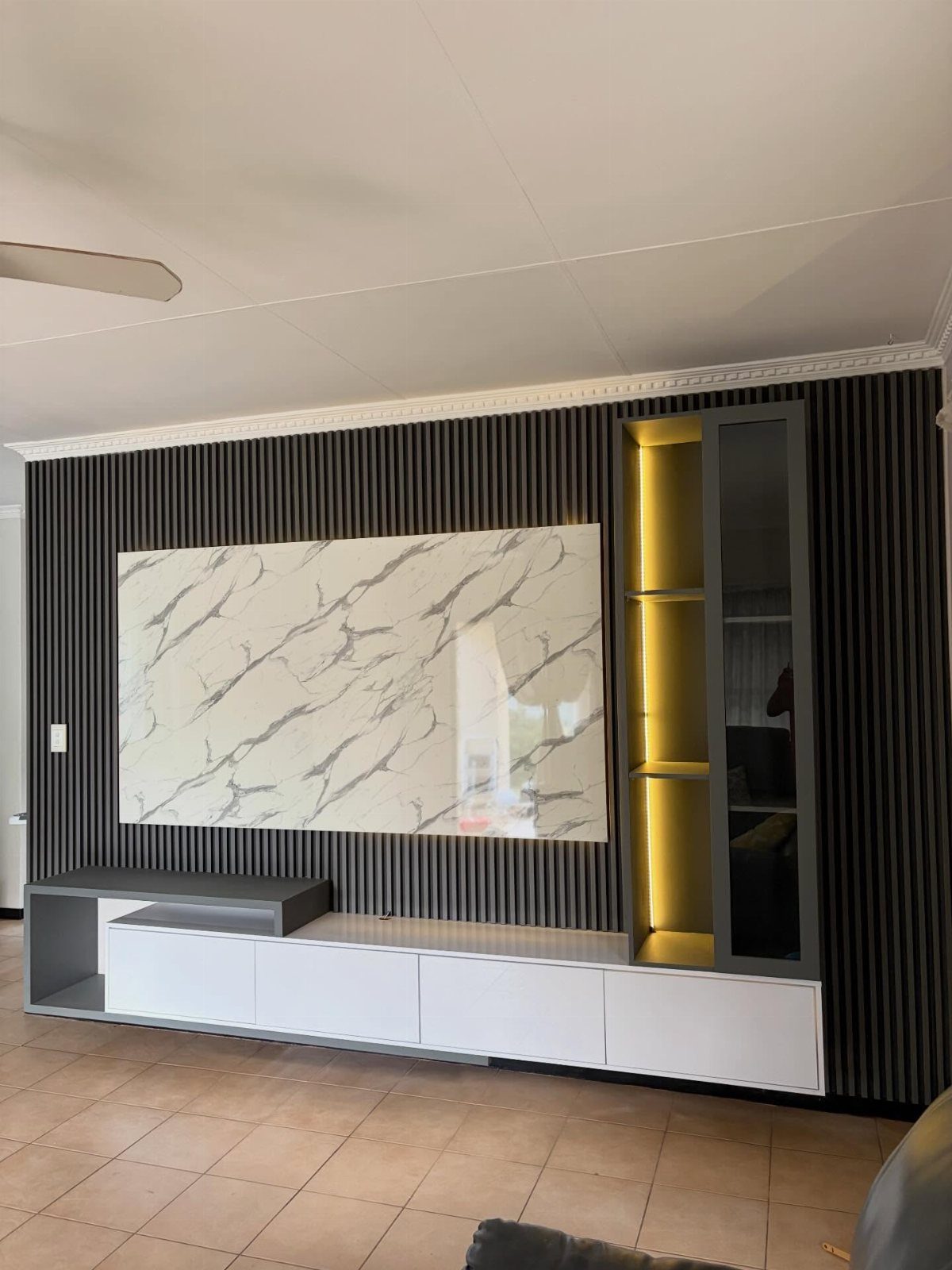
A tall glass cabinet next to the TV gives you room to display objects with good lighting, and the glass keeps the display visible without adding visual weight.
This setup works when you have ceramics, books, or collectibles worth showing and the TV isn’t the only thing you want the room to focus on.
The cabinet needs internal lighting, or everything inside reads as shadow. LED strips along the back or top of each shelf keep the display bright without hot spots.
Keep the console simple. If the cabinet is doing the detail work, the console can stay wide and minimal so the 2 pieces don’t compete.
Choosing Premium Materials and Finishes
Teak, walnut, and oak hold up for decades and bring natural grain that painted or laminate finishes can’t match.
Marble and stone finishes look premium but add serious weight. If you’re mounting a marble-backed unit or using a stone slab, make sure the wall structure or brackets can carry the load.
High-gloss lacquer reflects light and makes small rooms feel larger, but every fingerprint shows.
Matte wood with brass or gold hardware reads as expensive without the maintenance. Glass fronts lighten a unit visually but need regular wiping to stay clear.
Mixing wood, metal, and glass works when one material leads and the others accent. Too many finishes competing for attention dilutes the whole setup.
Proportion and Room Fit
Height matters as much as width. Measure from your couch before you mount or buy anything, because a few inches off in either direction changes how comfortable the viewing angle feels over a full movie.
Proportion scales with room size. A narrow unit in a wide room looks lost, and an oversized piece in a small space eats the floor.
Styling and Avoiding Clutter
One or two deliberate objects per shelf work better than crowding in small items.
A single vase, a stack of books, or one ceramic piece gives the eye somewhere to land. Art objects and sculptures hold up better than collections of small frames, which tend to look busy.
Match the unit’s finish to the major furniture nearby.
If the sofa and coffee table are warm wood, a console in the same tone ties the room together. Coordinate with rugs, cushions, and curtains so the unit feels part of the space instead of dropped in.
Mixing too many textures confuses the look. Marble, glass, and metal all in one unit rarely works unless one material dominates and the others stay minimal.
Frequently Asked Questions
What makes a TV unit design luxury?
Premium materials like solid wood, marble, and brass, along with refined finishes such as high-gloss lacquer or matte wood with metal accents, define a luxury TV unit.
Smart details matter too: hidden storage, integrated LED lighting, and proportions that match both the TV and the room size keep the setup intentional rather than generic.
Quality joinery closes flush, drawers glide without rattling, and every cable disappears behind panels or through routed channels.
How important is cable management and hidden storage?
Cable management keeps the setup looking deliberate rather than tacked together, and hidden storage for remotes and media equipment prevents visible clutter. Floating consoles make it easier to hide cords along the mounting bracket.
What are common mistakes to avoid in luxury TV unit designs?
Overcrowded shelves dilute the whole setup, and too many competing finishes make the unit look busy instead of refined.
An undersized console makes the TV look unanchored, while poor lighting leaves the wall flat and the unit feeling like an afterthought. Choose materials that suit your maintenance tolerance, because glossy finishes and glass demand regular wiping to stay sharp.
What budget range should I expect for a luxury TV unit?
Real wood veneer, good hardware, and integrated LED lighting sit in the mid-premium range and deliver a refined look without custom pricing.
Real wood, stone inlay, and custom millwork push the price past $3,000 easily, but the materials age well and the room feels finished in a way prefab units never deliver.
The return shows in durability and visual impact, so budget for materials and finishes that suit how long you plan to keep the unit.