

A marble panel behind the TV can run thousands for real slabs, but porcelain tile or marble-look panels deliver the same veining at a fraction of the cost.
The choice between a floating console, a built-in wall, or a partition unit comes down to how much floor space you’re willing to give up and whether the TV needs to anchor one wall or act as a room divider.
If you’re working with hard surfaces like tile or concrete, vertical wood panels cut echo while adding texture, and that difference shows up immediately in larger rooms where sound bounce is noticeable.
1. Marble TV Wall

A marble panel behind the TV lifts the whole wall into a more formal finish and makes the screen feel like part of the architecture instead of something added later.
Real marble slabs are heavy and expensive, so most installations use porcelain tile or marble-look panels that give the same veining at a fraction of the cost.
Wooden slats on either side of the marble add warmth and keep the look from feeling too cold. Floating the console below the panel clears the floor and makes the marble read as the focal point.

Premium LED Lights for TV Enhancement: Elevate your viewing experience with this advanced TV LED Backlight, featuring vibrant 5V LED strips and a 3-button USB Bluetooth controller for seamless brightness, color, and mode adjustments.

Large TV Backlighting: 16 million color LED strip creates a dynamic TV backlighting experience

[Floating TV Stand with Lights] - The floating media console can accommodate TVs up to 70 inches. It features 3-color LED lights, the remote control allows you to change lights color without effort. NOTE: This wall-mounted TV stand only workable for hard wall like cement and brick wall
2. LED-Lit TV Unit

Backlighting behind the TV or beneath the console adds a soft glow that separates the screen from the wall and reduces eye strain in a dark room.
The blue tone visible here is common, but warm white or adjustable RGB strips give you more control over the mood.
Most LED strips mount with adhesive backing and plug into a low-voltage adapter, so installation stays simple.
Run the strip along the back edge of the TV or under the floating console where the light won’t shine directly into the room. If the unit sits against a textured wall, the shadows from the light add depth.

MODERN CURVED DESIGN: Smooth curved edges paired with a natural wood finish bring a warm, sleek look to your living room while reducing sharp-corner risks, making the TV stand safer for families with kids and pets

MODERN CURVED DESIGN: Smooth curved edges paired with a natural wood finish bring a warm, sleek look to your living room while reducing sharp-corner risks, making the TV stand safer for families with kids and pets

Adjusts to Your Space: Expand or retract the TV stand from 70.9" to 110.2" wide to fit your living room layout perfectly-suitable for apartments, open spaces, or changing home setups
3. TV Unit with Hidden Storage

Closed compartments keep media equipment, cables, and everyday clutter out of sight so the unit reads as furniture instead of tech storage. Sliding panels or push-to-open doors let you reach what you need without leaving it visible all the time.
The sliding panel keeps the front clean and works well when you store devices that need occasional access but don’t belong on display. Leave enough room behind the panel for stacked equipment and cable clearance.

MID-CENTURY TV STAND - An organic aesthetic, clean lines and a streamlined profile bring mid-century intrigue to your living space. Update your home decor with this retro modern wall-mounted TV stand

MODERN FLOATING TV STAND: This wall mounted entertainment center creates a clean, open entertainment wall with a sleek modern look for living rooms, bedrooms, and apartments, pairing beautifully with TVs up to 80 inches.

Wall Mounted TV Stand with Power Outlets: With 4 standard plugs, the floating TV stand is extremely suitable for use with TVs, game consoles, WiFi router, DVDs, CD players, etc., easy charging for your media components
4. Built-In TV Shelving

Shelving built around the TV turns the wall into one continuous piece instead of a console with unrelated storage tacked on nearby.
The marble backing adds enough contrast that the white cabinetry doesn’t disappear into the wall.
If you’re building this from scratch, frame the TV opening with at least a few inches of clearance on all sides so you have flexibility later.

2-IN-1 Multifunctional Design: This fireplace tv stand comes with detachable electric fireplace insert, you can install it to become warm fireplace console in cold weather, or take out the fireplace directly to use it as a pure large storage TV cabinet, freely switch according to seasonal needs

All-in-One Desktop Organizer - Our 5-in-1 desktop storage stand can simultaneously store headphones, two controllers, cell phones, remotes, pens, scissors, and other items, which comprehensively improves space utilization and keep your gear and space organized.

Elegant Japandi Style: The warm natural oak finish and clean silhouette give this oak tv stand for living room a simple modern look that blends well with contemporary, minimalist, casual, and light wood interiors. It works beautifully as a entertainment center for living room or tv console in a variety of home styles.
5. High-Gloss TV Unit

A glossy surface catches light and reflects it back, which makes the unit feel brighter and more polished than a matte finish would.
This works best in rooms with good natural light, where the reflection adds depth instead of showing fingerprints and dust.
High-gloss units are usually made from lacquered MDF or acrylic-front panels, and the finish is smooth enough that any smudge shows immediately. I wipe mine down weekly with a microfiber cloth to keep the surface clean.
The vertical slats behind it break up the surface and give the wall dimension.

Versatile Open Storage: Features compartments for routers, game consoles, DVDs, remotes, or decor, organizing media devices and essentials in any modern living space
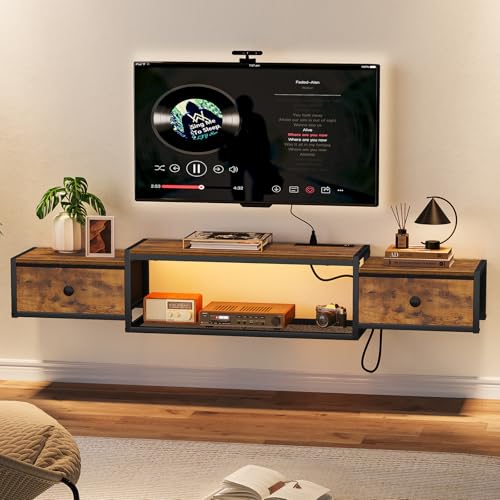
Save Floor Space: This wall-mounted floating entertainment center frees up floor space and creates a tidy living room. Measuring 63“ L x 11” W x 11" H, it accommodates TVs ranging from 32 to 75 inches. The open metal frame in the center allows for rapid ventilation and heat dissipation, making it convenient for storing electronic devices such as set-top boxes and game consoles.

Multi-Port Charging Station & Ambient Lighting: The floating TV shelf features 3 AC outlets and 2 USB ports for easy charging of your TV, gaming console, Wi-Fi router, DVD and more. Plus, an adjustable LED light offers color customization for a cozy ambiance
6. Minimal White TV Unit

A white console against a white or light-toned wall keeps the room feeling open and lets the TV sit on the wall without adding visual weight.
The setup works especially well in small living rooms where a darker unit would close the space down.
The fluted backdrop here adds texture without introducing a second color, and the LED strip below the console lifts the unit off the wall so it doesn’t feel too flat.
Black sconces on either side provide task light and break up the white without fighting the rest of the room.

Versatile Floating TV Stand: The Atelier Mobili floating media console is a stylish and modern wall-mounted TV stand that accommodates TVs ranging from 65 inches to 80 inches, making it a versatile choice for living rooms and bedrooms

Modern TV Stand: The TV stand features a contemporary design that complements any living room decor, offering a stylish and functional centerpiece for your entertainment setup.

Modern Curved Minimalist Design: Create a warm and modern living space with a sleek TV console featuring smooth curved corners, clean flat-panel doors, and a natural wood grain finish. The minimalist design adds timeless style while reducing sharp edges, making it a beautiful and family-friendly centerpiece for your home.
7. Curved TV Unit

A curved front softens the hard lines most TV units carry and sits better in a room where the furniture already leans rounded.
The flow keeps the unit from cutting across the floor visually, which matters in smaller living rooms where a rigid box can break up the space.
Most curved units are custom-built or come as floating wall-mounted pieces, since curving a floor-standing console requires bent plywood or molded MDF.
If you’re buying ready-made, check the depth at the widest point so it doesn’t push farther into the room than you expect.

Wall Mounted TV Stand with Power Outlets: With 4 standard plugs, the floating TV stand is suitable for use with TVs, game consoles, WiFi router, DVDs, CD players, etc., simplifying power access for your components

FULLY DIY NO-STUD PATENTED SOLUTION: HangSmart TV offers a complete DIY no-stud mount experience, making it a perfect choice for homeowners and renters who prefer a no-fuss, easy-to-handle installation process for their flat screen TVs
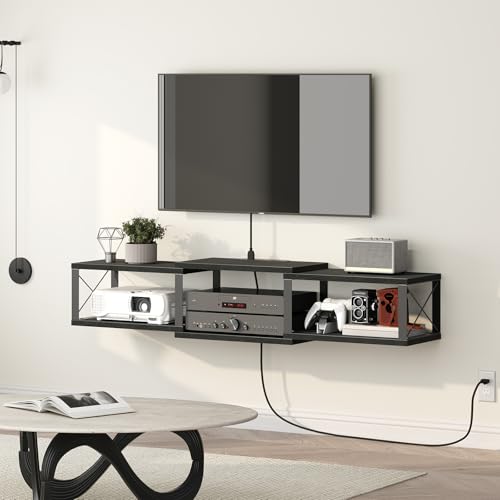
Optimize Your Space: Size: 43.7"L x 11.0"W x 8.9"H. Our floating tv stand saves valuable floor space and includes generous storage for all your media essentials - routers, DVD players, remotes, projectors, set-top boxes, game consoles, TV components, and decorations
8. Open-Shelf TV Unit
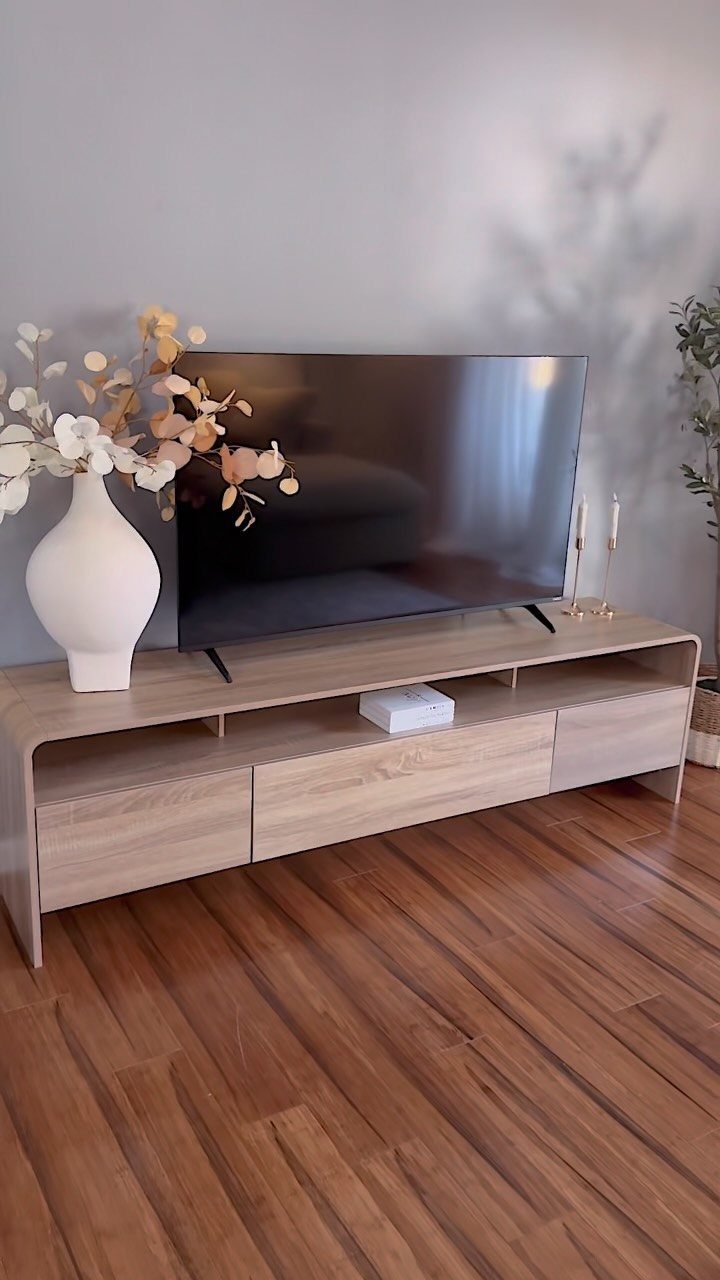
Open shelves let you keep remotes, a speaker, or a few books within reach without making the unit feel closed off.
I like this setup in smaller rooms where a solid cabinet would block too much of the wall and make the space feel heavier.
Whatever sits on those shelves stays visible, so clutter shows immediately. If you store media equipment on open shelves, run cables through the back or use a cable sleeve to keep them from hanging loose.
Light wood keeps the unit from reading dark, which helps in rooms with limited natural light.

2-IN-1 Multifunctional Design: This fireplace tv stand comes with detachable electric fireplace insert, you can install it to become warm fireplace console in cold weather, or take out the fireplace directly to use it as a pure large storage TV cabinet, freely switch according to seasonal needs
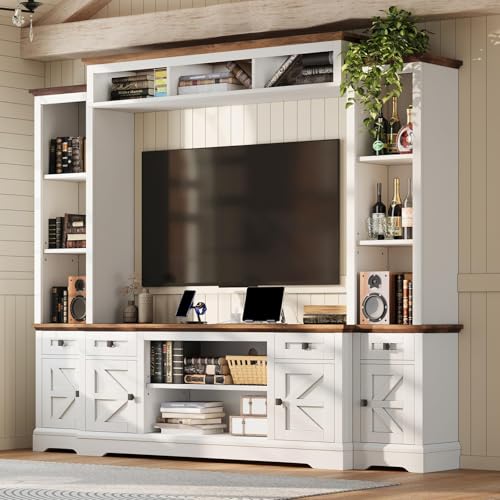
[Multi-Functional Entertainment Center] 98 inch wall unit TV stand combines a TV console, bookshelf, wine cabinet, and display shelves, making it a perfect all-in-one storage solution for your living room or entertainment space.

【RGB Lights & Built-in Power Outlet】-Two independent light belts support 21 adjustable colors controlled by remote to build customized atmosphere for gaming, movie nights or parties. This entertainment center is equipped with a built-in multi-socket power station, it offers easy plug-and-charge access for phones, game consoles, speakers and media devices, getting rid of tangled messy cords near your TV area.
9. Low-Profile Media Console

A long, low console spreads storage horizontally instead of stacking it, so the unit stays out of the way visually even when it holds multiple components.
I use this layout when the TV is wall-mounted and the client wants clean floor lines without losing drawer space.
The width matters more than the height here.
If the console runs wider than the TV, it anchors the screen better and gives the whole setup a more deliberate look. Low-profile units leave room for soundbars or center speakers without blocking the screen.

[ AMBIENT LIGHTING BEHIND YOUR TV ] - MATICOD led strip lights is suitable for various places and atmospheres. A bright tv backlight can provide a good viewing experience in the dark and relieve the visual fatigue caused by the dim space. Variety of color and dynamic options make tv lights the perfect atmosphere maker. Can be a novelty gifts for your family, friends, loved ones!

A Symphony of RGBIC Lighting: Govee RGBIC technology realizes the color segmentation display of the TV lights behind, creating more dynamic and gorgeous lighting effects. Experience more vibrant colors in your TV lights and upgrade your visuals.

【LED strip synchronized with music】TV lights behind has a built-in high-sensitivity microphone that collects music and ambient sound intensity in real time, pressing the music button on the remote control will change the color and speed according to the outside sound.
10. Scandinavian TV Unit

Tapered legs and light wood grain give a Scandinavian unit its recognizable look, and the style works especially well in rooms that already lean minimal.
Most Scandinavian units are made from oak, ash, or birch veneer, and the finish is usually matte or oiled rather than glossy. I like pairing this style with neutral walls and simple shelving so the wood stays the focus.

【Timeless Mid-Century Design】Upgrade your space with this walnut TV stand, a perfect mix of Mid-Century Modern aesthetics and minimalist charm. Four fluted doors, curved sides, and a faux marble top create an elegant tv console profile. Golden metal handles and rounded edges add sophistication and safety, making it an ideal television stand or tv stand entertainment center for living rooms or bedrooms.

[TV Stand with LED Light]: This TV console table with light under the table, the 3 colors RGB LED light can be adjusted by the remote or the APP conveniently. The LED light and the glossy surface add cozy atmosphere to your home. Overall dimensions: 63”L x 13.8”W x 9.8”H

Wood Base Design for TVs Up to 90":Designed with an integrated wood base instead of exposed metal legs, this TV stand creates a clean, low-profile look with stable floor support. Measuring 78.74" W × 15.2" D × 17.7" H, it accommodates TVs up to 90 inches while providing space for a soundbar and decorative accents
11. Dark Accent TV Wall

A dark wall behind the TV makes the screen feel intentional instead of like an afterthought. I use charcoal, deep grey, or matte black paint, and the contrast works best when the rest of the room stays lighter.
The wall doesn’t need to run floor to ceiling. A panel that stops at chair-rail height or extends just past the console on each side frames the TV without overwhelming the room.
If you’re painting, use a matte or flat finish so the surface doesn’t reflect light back at the screen.
12. Concealed TV Cabinet

Cabinet doors that close over the TV let you hide the screen entirely when it’s off, which suits living rooms where you don’t want the TV to dominate the wall.
Closing the doors makes the whole unit read as furniture instead of media storage, which works well when the TV shares space with built-in shelving or a library wall.
The doors need enough clearance to open fully without hitting nearby furniture, so measure the swing before you commit to the layout.
Most concealed units are custom-built or part of a larger shelving system, which adds cost but gives you control over the fit.
13. Modular TV Unit

Separate cabinets, shelves and drawer units that mount individually let you build the wall in pieces and rearrange them when your storage needs change.
This setup works well when you’re not sure exactly what equipment or shelving you’ll need long term, or when you move frequently and want a unit that adapts to different wall sizes.
The gaps between modules can look intentional or scattered depending on spacing, so I plan the layout on paper first and keep the vertical alignment consistent.
Most modular systems use a wall-mounted rail or bracket that holds the weight, which means you need solid backing or studs behind each piece.
14. Wall-Mounted Floating Unit

Mounting the console and the TV panel directly to the wall keeps the floor clear and makes a small living room feel larger.
The open space underneath also makes cleaning easier and lets you run a robot vacuum without moving furniture.
Vertical slats behind the unit add depth and break up a flat wall without requiring a full panel build.
The contrast between the dark slats and the white floating pieces gives the setup a finished look even when the rest of the room stays simple.
15. Wooden TV Unit

Natural wood tones bring warmth into a modern living room and soften the harder finishes most contemporary spaces carry.
Vertical slats on the wall add texture and depth behind the screen, and the grain reads better when the rest of the setup stays minimal.
A black floating console lets the wood pattern hold attention instead of fighting for it. The contrast works especially well in rooms with lighter floors or neutral walls.
16. Metallic Accent TV Wall

A metallic finish behind the TV, whether gold, brass, or brushed steel, adds a bold focal point and lifts the whole unit into a more formal register.
The finish reflects light, so the wall needs to sit away from direct windows or you’ll get glare on the screen.
Textured metallic panels read more refined than flat paint, and recessing the TV into the wall instead of mounting it on the surface makes the whole setup feel built-in rather than added.
17. Glass TV Cabinet

A tall glass-front cabinet alongside the TV unit turns part of your media wall into display storage and works well when you want to show books, objects, or tableware without dedicating a separate room to them.
The glass keeps dust off while still letting the contents stay visible.
Interior lighting makes the cabinet read as intentional rather than leftover. Most glass cabinets are frameless or have thin metal frames, which keeps them from looking too heavy next to a sleek console.
18. Stone-Back TV Wall

A stone or stone-finish panel behind the TV adds texture and weight to the wall, and the depth makes the screen feel recessed even when it’s mounted on the surface.
Real stone is heavy and expensive, so most installations use stone veneer or large-format porcelain tiles that mimic the look.
Integrated lighting above or below the console highlights the texture and keeps the wall from reading flat. The stone works best in larger living rooms where the panel can run wide without overwhelming the space.
19. TV Unit with Study Desk

A desk built into the same wall unit as the TV uses vertical space twice and works well in apartments where a separate office isn’t an option.
The desk shares the same cabinetry and finish as the TV console, so the whole wall reads as one piece instead of two unrelated setups pushed together.
Storage above the desk holds books or office supplies, and keeping the desk surface clear when you’re not using it prevents the living room from feeling like a workspace all the time.
LED strips along the shelves add light without needing a separate desk lamp.
20. Gamer’s TV Panel

A gaming setup centers storage around consoles, controllers, and cable management rather than trying to hide the equipment.
Open shelves or shallow cabinets keep everything within reach, and ventilation matters more here than in a standard media console since gaming hardware runs hot.
Cable channels or a hole drilled through the back panel keep charging cables and HDMI lines from piling up on the floor.
LED strips are optional but common in gaming setups, and keeping the console low profile leaves room for a soundbar or external speakers.
21. TV Unit with Fireplace

An electric fireplace below the TV adds warmth and a second focal point without requiring a chimney or gas line.
The unit mounts directly into the console, and most models produce enough heat for a small to mid-sized living room while staying cool to the touch on the exterior.
The fireplace raises the TV higher than a standard console would, so check the viewing angle from your seating before you commit to the layout.
Display shelves on either side balance the width and give you space for a few objects without crowding the screen.
22. Partition TV Unit

A partition unit holds the TV on one side and leaves the back open or finished as shelving, which divides an open floor plan without closing off sightlines or circulation.
This setup works best when you want separation between living and dining spaces but don’t want a solid wall.
The unit needs to be freestanding or anchored at the floor and ceiling, since there’s no wall behind it for support.
Keep the partition lower than ceiling height so the room still feels connected, and run power and cable lines through the base or a recessed channel.
23. Asymmetrical TV Unit
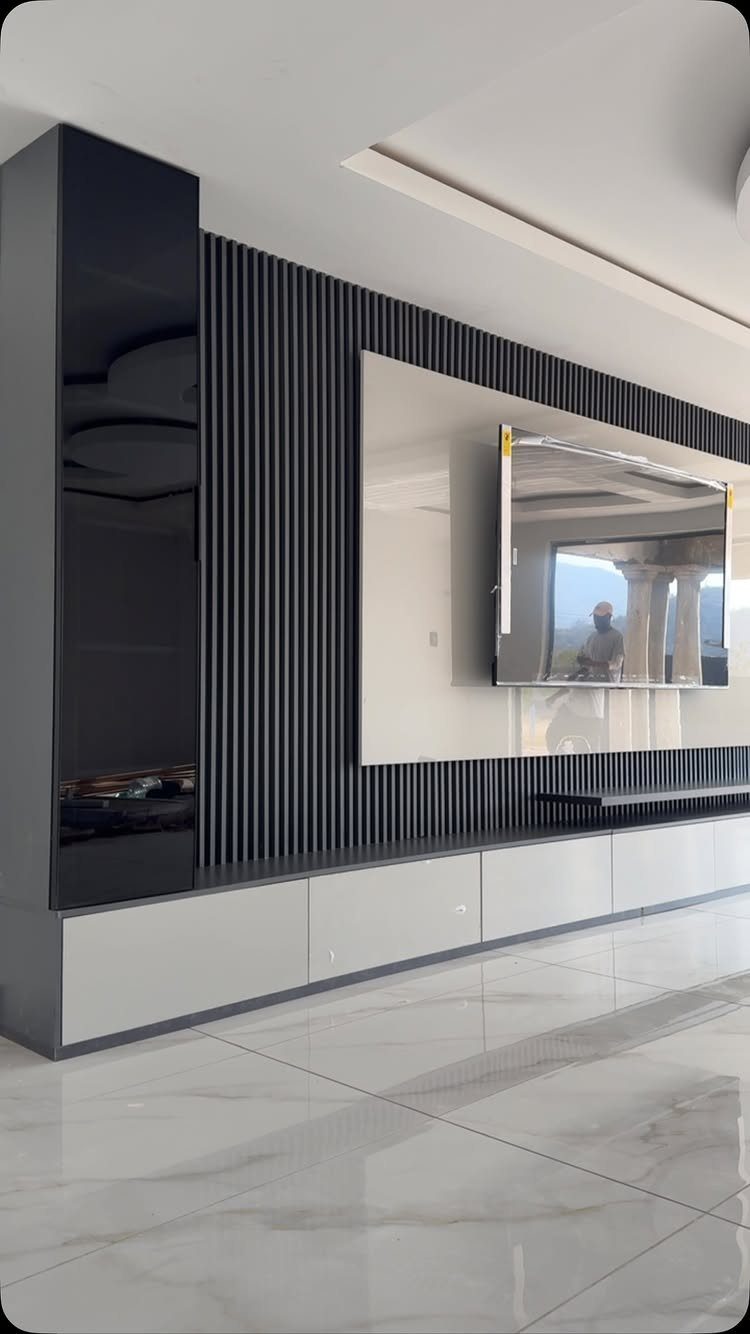
An asymmetrical layout breaks the centered TV wall into offset sections, which adds visual interest and works well when you have wall space that doesn’t divide evenly.
One side might hold a tall cabinet while the other stays low, or storage might sit entirely to one side of the screen.
This layout gives you more flexibility with awkward wall dimensions, but the imbalance can feel unresolved if the heavier side doesn’t anchor properly.
Keeping one material or color consistent across both sections helps the setup read as intentional rather than mismatched.
24. Acoustic Panel TV Unit

Vertical wood panels cut down on echo in rooms where hard surfaces outnumber soft ones, and that makes a real difference when you’re working with tile, concrete, or wide spans of hardwood.
The panels double as a textured backdrop for the TV and give the wall depth without requiring a full build-out.
Spacing the slats evenly keeps the look clean, and mounting the console as a floating piece maintains the vertical lines.
Acoustic panels work best in larger rooms or open layouts where sound bounce is noticeable, and the wood finish should match or contrast deliberately with the console rather than sitting somewhere in between.
25. Industrial TV Unit

Black metal framing around a wood console brings industrial character into the living room without requiring exposed brick or concrete.
The combination reads clean rather than raw, and it works especially well when the rest of the room already has hardwood or neutral finishes.
The open shelves give you storage without adding weight, and the metal frame keeps the look grounded. If the console sits low, the negative space underneath makes the room feel less crowded.
26. Gallery Wall TV Unit

Hanging framed art around the TV turns the screen into one piece among many instead of the only thing on the wall.
The layout works best when the frames vary in size but share a consistent mat or frame color, which keeps the arrangement from feeling chaotic.
A dark accent wall behind the gallery makes the frames stand out and pulls the TV back visually.
Leave enough clearance around the screen so the frames don’t interfere with ventilation or cable access, and mount the TV first so you know where the studs are before you start hanging art.
27. Built-In TV Wall

A full built-in wall turns the TV into one element inside a larger shelving system, which suits living rooms where you want the media area to feel permanent rather than furniture you could move.
The shelves hold books, objects, or a firewood nook, and the whole wall reads as architecture instead of a console pushed against drywall.
This setup requires framing and drywall or cabinetry that spans the wall, so it’s a bigger project than mounting a floating console.
You control every dimension, so you can recess the TV, add lighting exactly where you need it, and match the finish to the rest of the room.
28. Farmhouse Barn Door Console

Sliding barn doors with X-brace panels give a farmhouse console its recognizable look, and the doors hide media equipment while leaving the side shelves open for baskets or decor.
The white finish keeps the style light, and the dark wood top adds contrast without making the piece feel heavy.
The doors slide on a track rather than swinging open, so the console works in tighter spaces where a cabinet door would block the walkway.
Most barn door consoles sit low, which keeps the TV at a comfortable height and leaves wall space above for art or a mirror.
29. Slatted Wall TV Unit

Vertical slats give the wall behind the TV depth and texture without requiring a full panel build, and the narrow spacing makes the surface read as one plane rather than individual boards.
Mounting the console as a floating piece keeps the slats visible all the way to the floor.
Grey slats against white walls add contrast without going as dark as black, which works well in smaller living rooms where you want the wall to feel defined but not closed in.
The slats run best from floor to ceiling or at least above the TV, since stopping them partway up can make the wall look unfinished.
30. 3D Textured Wall TV Unit
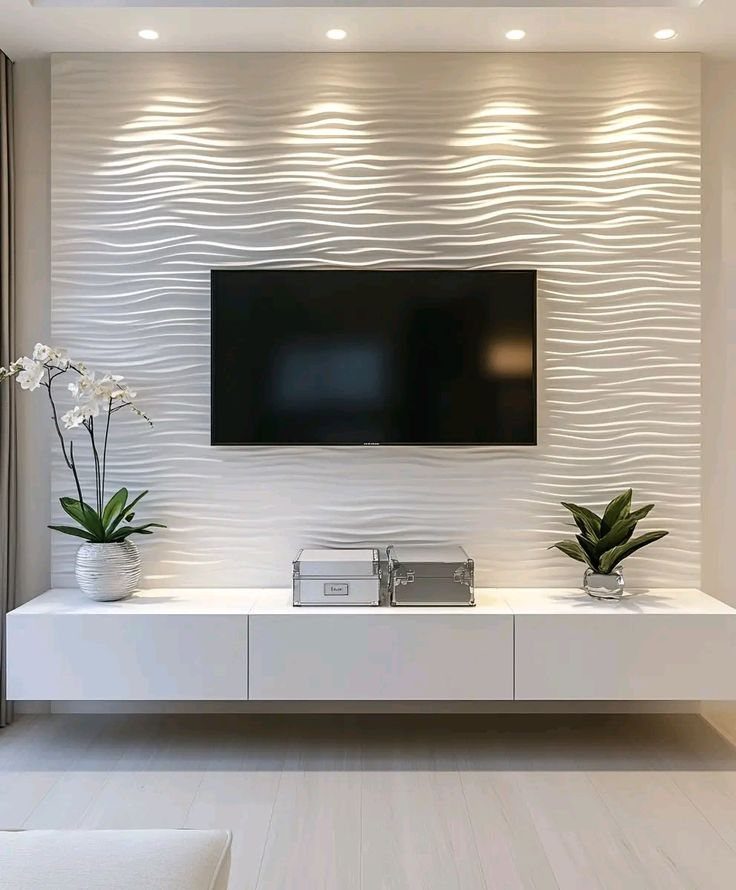
A three-dimensional wavy panel behind the TV adds movement and shadow to the wall, and the texture stands out even when the rest of the room stays minimal.
The panels are usually made from gypsum, MDF, or molded plaster, and they mount directly to the wall before you paint them.
The waves catch light differently depending on the time of day, so the wall never reads flat.
A floating console below keeps the setup clean, and keeping the console and wall the same color makes the texture the focus rather than the furniture.
31. Fluted Front TV Console
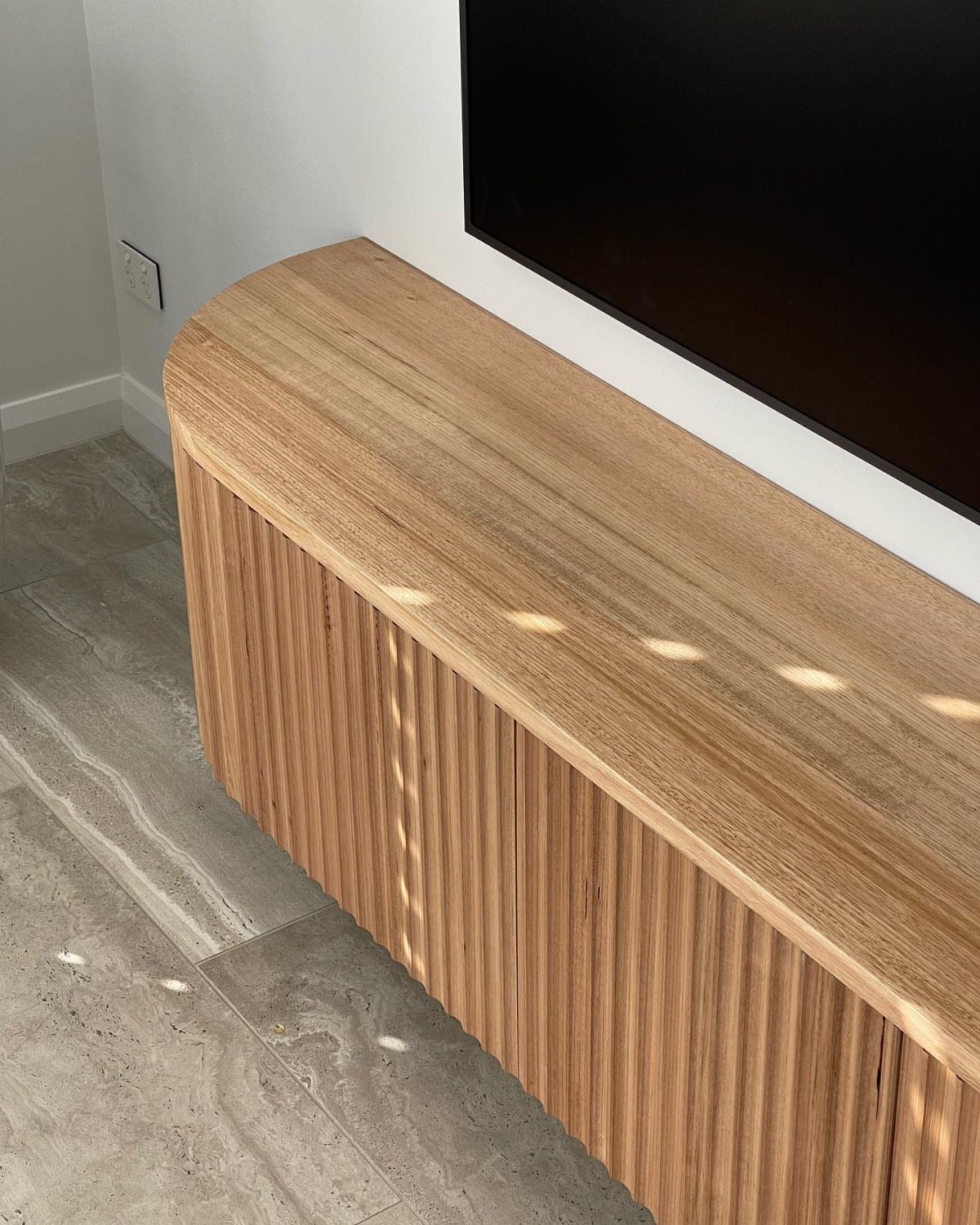
Vertical grooves cut into the cabinet face add texture and make a simple console feel more intentional.
The fluted detail works best on light woods where the shadow lines show up clearly, and keeping the TV mounted above the unit rather than sitting on top maintains the clean horizontal line.
This setup suits smaller living rooms where a low-profile console keeps the wall from feeling too heavy. The fluting gives the unit enough pattern that the shelves can stay simple or nearly empty.
32. Carved Wood TV Stand

Hand-carved wood panels give a freestanding console character without requiring a built-in wall, and the detail suits living rooms where you want texture but prefer natural finishes over paint or metal.
The TV sits on top of the console rather than mounting to the wall, so you can move the whole setup if the room layout changes.
Carved doors keep media equipment hidden while the open shelves hold a receiver or decorative pieces. This style pairs well with plants, woven baskets, and other organic materials rather than metallic accents or high-gloss finishes.
33. Mosaic Tile TV Credenza

Small mosaic tiles turn a simple credenza into a statement piece, and the glossy finish reflects light without reading as fragile the way mirrored furniture can.
The tiles cover the entire front and sides, so the piece works best when it sits against a neutral wall that lets the color stand out.
The tile surface wipes clean easily, and the material holds up better than wood veneer in rooms where drinks or plants might leave water rings.
Choosing Unit Size and Materials
Proportion matters more than matching the screen width exactly.
Walnut, teak, and white oak hold up over time and bring warmth without needing much finish.
Stone or marble slabs look striking but require solid wall anchors or a reinforced base, since the weight adds up fast. Metals like aluminum or brass add shine.
High gloss lacquer or enamel gives a premium look. A matte wood surface paired with brass or brushed gold pulls lifts the whole piece without feeling shiny.
Pairing wood with metal legs or glass shelves gives you texture contrast in a way that feels intentional. Stone-slab accents or full natural-stone panels fall into the same weight and anchoring category.
Lightweight laminates in suede or matte finishes fit tighter budgets and resist scratches better than raw marble or natural wood while still looking finished.
Cable management keeps the setup clean.
Hidden shelves or compartments hold remotes and set-top boxes. Running cord channels or a cutout panel along the back keeps cables out of sight.
Keeping Luxury Visually Balanced
Avoid overcrowded open shelves and too many competing textures or finishes. An undersized unit makes a large TV look awkward, and inadequate lighting flattens the whole setup.
Include one or two art objects, vases, or sculptures, but don’t overcrowd the surface.
Mirrored panels or metallic fixtures bounce light and make the room feel larger. Mirrored panels, especially in bronze or smoked finishes, bounce light around the room and add a layer of movement.
Coordinate the unit’s color with major furniture so the finishes don’t fight. Soft furnishings nearby, rugs, cushions, curtains in premium fabric, complete the look.
High-gloss lacquer in neutral tones like white, gray, or black reflects light and complements mirrored or glass components.
Frequently Asked Questions
What are some modern and luxury TV unit designs?
Floating units with marble or stone panels, high-gloss lacquered cabinets, and wood consoles with metallic accents bring a premium look to a living room.
LED backlighting, concealed storage, and modular built-in systems add function while keeping the setup clean. Materials like walnut, brass trim, and glass fronts reflect light and feel more refined than basic finishes.
What are the TV stand design trends for 2026?
Wall-mounted floating consoles with integrated LED lighting and modular systems that adapt to different storage needs continue to gain ground.
Marble or stone accent walls, high-gloss finishes, and Scandinavian-style light wood with tapered legs remain popular. Clean lines, hidden cable management, and mixed materials like wood with metal or glass keep the look current.
What makes a living room look luxury?
High-quality materials like solid wood, polished stone, or brass accents paired with clean craftsmanship lift the room into a more formal register.
Integrated lighting behind panels or under consoles, hidden storage with soft-close doors, and proportions that match both the TV and the room size all contribute.
Finishes that shine or reflect light, like high-gloss lacquer or metallic panels, feel more premium than flat painted surfaces.
Which materials should I pick for durability and aesthetic appeal?
Oak, walnut, and ash bring natural warmth and hold up well over time, especially when finished with matte oil or lacquer.
Porcelain tile or stone-look panels give the appearance of marble without the weight or cost of real slabs. Metal framing or brass hardware adds polish, while glass fronts keep the unit feeling lighter but need regular cleaning to stay smudge-free.
What finishes give the best premium look?
High-gloss lacquered MDF or acrylic-front panels catch light and feel brighter than matte finishes, though they show fingerprints immediately.
Natural wood with oiled or matte finishes paired with metallic hardware or trim reads refined without the upkeep of a glossy surface. Stone or marble-look panels with brushed brass or gold accents lift the unit into a more formal finish.
How important is cable management and hidden storage?
Closed compartments and cable channels keep the front clean so the unit reads as furniture instead of tech storage.
Running cables through the back panel or using a recessed channel prevents them from hanging loose, and push-to-open doors give you access to equipment without leaving it visible.
Hidden storage matters more in a luxury setup because clutter shows immediately against polished finishes.
What are common mistakes to avoid in luxury TV unit designs?
An undersized unit makes a large TV look off-scale, and crowding open shelves with too many objects breaks the clean look most premium setups need.
Mixing too many finishes, like glossy marble with heavy wood and glass all at once, confuses the visual flow instead of creating contrast.
Skipping ambient or accent lighting leaves the unit feeling flat, and choosing high-maintenance materials like real marble or high-gloss surfaces without a plan for upkeep leads to visible wear.
How to style your luxury TV unit for that final premium touch?
LED strips under the console or behind the panel add soft light that separates the unit from the wall and reduces eye strain in a dark room.
Keep open shelves minimal with one or two sculptural objects or books rather than filling every surface, and pair the unit with soft furnishings like a textured rug or linen curtains nearby.
Mirrored or metallic panels reflect light and make the space feel larger, and coordinating the unit’s finish with the room’s color palette keeps the whole setup intentional.
What budget range should I expect for a luxury TV unit?
Mid-premium units use wood veneer, quality hardware, and integrated LED lighting at a moderate cost, while high-end custom builds with solid wood, real marble or stone, and built-in features push the price higher.
These units last longer and hold up better than flat-pack alternatives, which makes the upfront cost easier to justify.