
Large flowers for a home or a backdrop range from cardstock and crepe paper blooms cut by hand over a few weekends to ready-made silk and faux stems, including lit ones that work as lamps.
How many spare hours you have decides whether giant paper flowers or a ready-made silk arrangement suits you better.
Giant paper flowers cost patience and little else, while artificial and silk flowers trade money for the cutting, gluing and shaping you skip.
1. Giant Paper Flowers
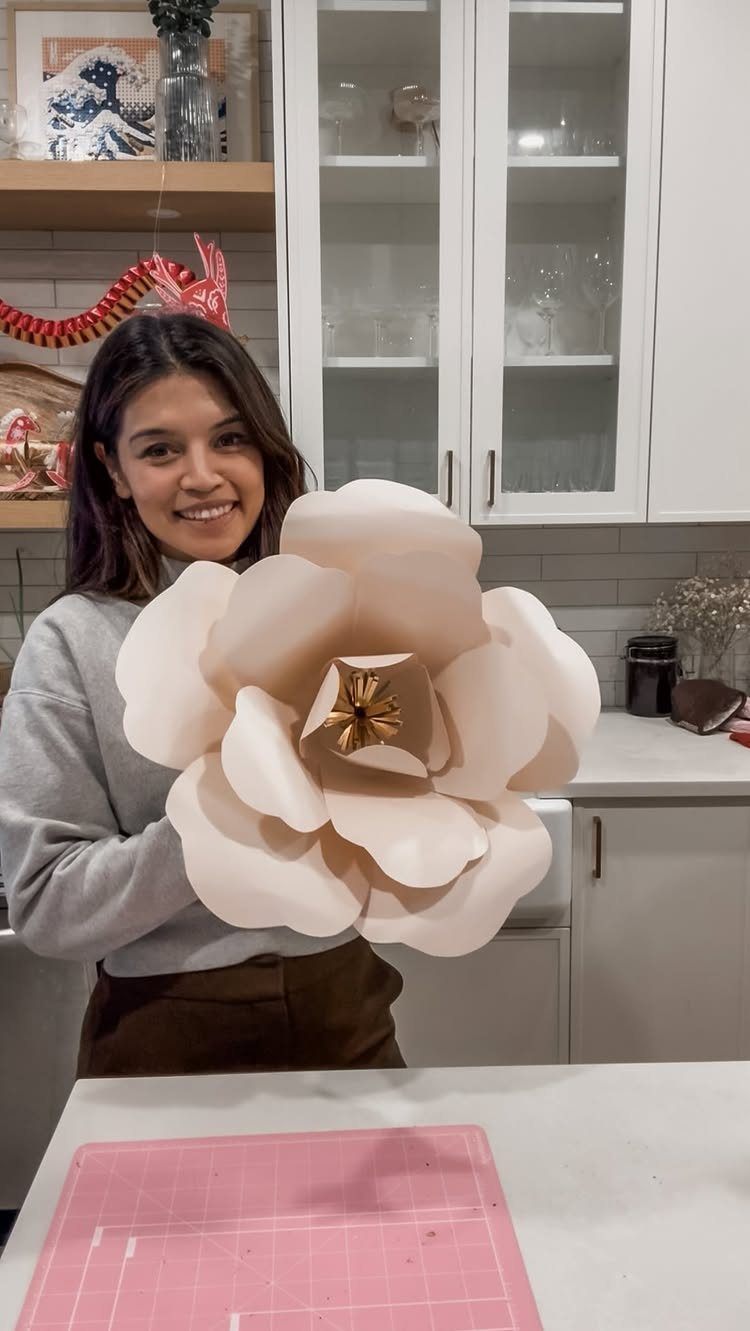
Paper flowers this size are a weekend project, and the only real cost is patience.
One maker cut and built 14 of them for a single backdrop display, which tells you the price of repeating a shape until your hands know it. Cardstock holds a curl better than printer paper, so I’d start there.
Make one flower first and judge the scale before cutting the other 13. Pale pink reads soft on a white wall; deeper shades need more flowers to avoid looking sparse.
2. Giant Artificial Flowers
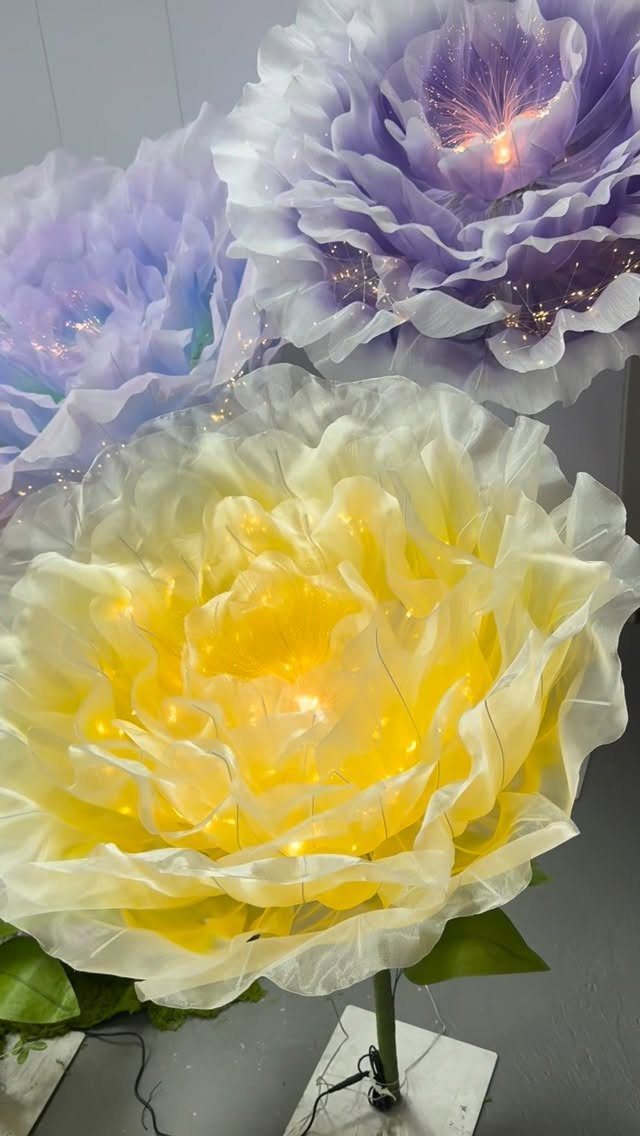
Ready-made faux blooms save the cutting, gluing and drying time that paper versions demand.
Giant artificial flowers on white bases with a light built into the center work as lamps as much as decor, so one piece covers both jobs in a corner or beside a sofa.
For a rental, that matters: nothing mounts to the wall, and the whole set moves with you.
I’d choose lit ones for a corner that needs evening light, and plain ones if the budget is tight. Buy only what you’ve measured for, since oversized stems take real floor space.
3. Giant Paper Peony

Peonies suit paper better than almost any bloom, because their ruffled, layered look comes from stacking petals rather than shaping them.
Cut graduated petal sizes, small for the center and larger outward, then curl each edge around a pencil before gluing.
A wire or dowel stem lets a giant paper peony stand in a vase or lean in a corner, whichever suits the room.
Scissors, glue and a template are enough to start. Expect the layering to take the most time, so work in batches of petals.
4. Giant Flower Backdrop
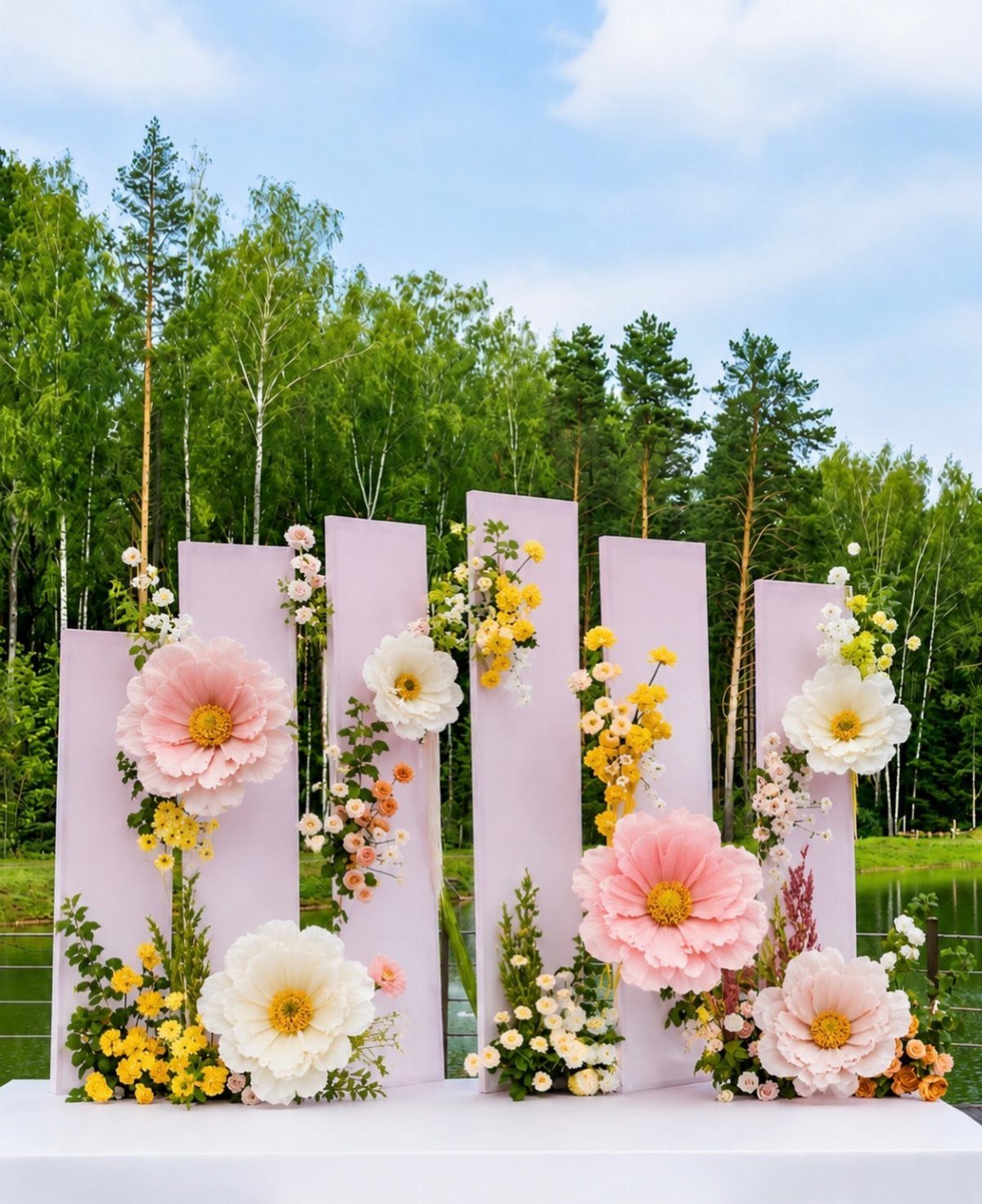
Backdrops are where oversized flowers earn their size, since a few big blooms against flat panels read clearly from across a yard.
Pin or tie the flowers to panels rather than leaning them, so a breeze doesn’t topple the display. Paper blooms are fine for a dry day; for anything uncertain, I’d go with faux ones.
5. Giant Paper Rose

A single red rose at body height makes a stronger photo prop than a dozen small ones. Layered paper or cardstock petals build the spiral, and each petal is curled outward at the top edge to get that opened-bloom shape.
Red cardstock shows every crease, so cut cleanly and glue sparingly.
Mount the bloom on a sturdy stem and it stands on its own beside a doorway or stone steps. For a gift or an anniversary, one tall rose beats a bouquet for impact.
6. Oversized Flower Set

Mixing flower types on freestanding stands gives you a set you can rearrange for each room or occasion. Sticking to 2 colors, like white and purple, keeps a varied set of paper blooms from looking messy.
Because each flower stands alone, you can build them one at a time over several weekends.
Put a lettered arch or sign behind them and the group reads as a deliberate backdrop. Vary heights so the eye moves instead of landing on one level.
7. Hanging Ceiling Flowers

Flowers hung overhead turn a ceiling into the decoration, and that frees up floor and wall space.
Red fabric blooms read sharply on a dark ceiling, and they do it best when strip lights and pendant lamps sit close enough to catch the petals.
Fabric hangs softer than paper and drapes better. For an event, I’d group flowers at 2 or 3 different heights rather than hanging them in a straight line, so the cluster looks full from below.
8. Giant Silk Floral Arrangement

A big silk arrangement does the work of fresh flowers on a kitchen island without wilting or needing fresh water. Pink and magenta stems in a white vase give you color that holds up in a bright room.
Pick a vase with a wide, heavy base, because tall silk stems tip easily.
Fan the stems out and bend them to different heights so the shape looks natural. Handmade arrangements cost less than a florist’s, though you pay in time spent shaping each stem.
9. Giant Paper Dahlia

Dahlias are layered paper shapes stacked from the outside in. Cut several rounds of petals in graduated sizes, then glue them from largest at the bottom to smallest in the middle.
Peach reads soft and works in most rooms.
Three blooms in a clear glass vase look fuller than one, and the cluster is easy to move around. I’d keep scissors and a scrap tray close, since you’ll cut a lot of repeated petals before the shape looks right.
10. Giant Flower Bouquet

Oversized sunflowers held together as a bouquet work as a prop first and a gift second. Three giant yellow blooms already look full, so skip the greenery and small stems.
Hold them at chest height for photos, with the faces turned slightly outward so each one shows.
Dress in a plain, light outfit and the yellow carries the whole picture. Making them in paper keeps the weight down, which matters if you’re holding them for a while.
11. Giant Lily Flower

A single giant lily, like this blue and pink one with brown stamens and yellow pollen, makes a statement on its own. A single bloom on a slatted wall in one flat color gives the eye a place to land.
Choose a flexible stem if you want to angle the flower toward a seat or doorway.
Keep the background simple, since the lily’s two-tone petals and darker center carry the detail. I’d place it where people pass close, because the stamens are the part worth looking at.
Paper Flower Crafting Tools
Crepe paper and cardstock give different results, so choose by the finish you want. Crepe gives a soft, textured look that suits a fuzzy flower center, while cardstock cuts into crisper edges.
Petal templates save the most time. Trace each size onto plain white paper, cut it out once, and use it as the pattern for every petal after that.
Hot glue sets within seconds, so line up each petal before it touches the flower. Keep your fingertips away from the nozzle and from fresh glue, which stays hot longer than it looks.
Scissors are enough for most projects. A smart cutting machine can do the same job, but it only pays off if you’re cutting petals by the dozen; otherwise, cutting by hand costs nothing extra.
Frequently Asked Questions
What are those huge flowers called?
They’re usually called giant or oversized flowers, and the bloom gets added to the name: giant paper peony, giant paper rose, giant paper dahlia, giant lily.
The same shapes come in cardstock, crepe paper, fabric, silk or faux versions, so the material is what sets one apart from another.
What are some flowers that are very large?
Peonies, roses, dahlias, sunflowers and lilies all work well at oversized scale.
Paper peonies and dahlias read as real because both flowers are built from layers, so cut your petals in steps from small at the center to large at the edge.
Sunflowers carry themselves: even 3 of them, with those wide yellow faces, fill a vase with no leafy filler at all.
Where can I buy giant flowers?
Shops that specialize in faux giant flowers sell them ready-made, including roses, peonies, daisies and sunflowers. Wild Things, for example, sells each flower individually, shows the size in text on the main photo, and charges separately for stands.
If you’d rather skip buying, giant paper versions are a weekend project with cardstock, scissors, glue and a template.
How do you assemble a giant bouquet?
Start with 3 giant blooms and skip the greenery and small filler stems, since big flowers already look full together.
Angle each head a little outward so none gets hidden behind its neighbor, and keep the whole bunch at about chest height while you tie it.
Paper blooms keep the weight down, which helps if the bouquet needs to be held for a while.