

An oak TV unit can cost as little as a floating shelf or as much as a full built-in that spans an entire wall and requires a carpenter to install.
The choice comes down to whether you need closed storage behind doors or drawers for equipment and cables or whether open shelves suit the room better.
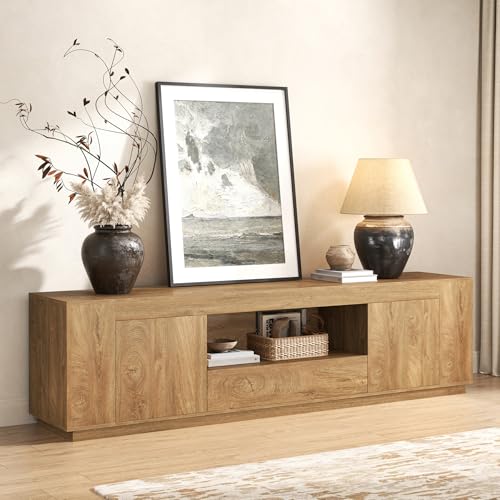
1. Low-profile Light Oak Unit

A long, low cabinet hugs the floor and stretches horizontally, keeping the TV close to eye level when you sit.
Light oak in this finish reads warm without turning yellow, and the grain stays visible enough to give the piece some texture.
I prefer this profile when the screen is large, because the width balances the television instead of making it look perched. The low height also leaves wall space above free for art or shelves.
One thing to check before buying: most low-profile units sit lower than standard console height, so measure your seating height to confirm the screen angle works from your sofa.

【Sculptural 6-Door Fluted Design】- Elevate your interior with this stunning tv console featuring a distinctive bold wave pattern across its unique 6-door facade. The handle-free silhouette with integrated finger pulls offers a sleek, modern look that seamlessly from the positive way, which fits Mid-century Modern, Modern Organic, and Japandi aesthetics.

【Convenient Push-to-Open Cabinets】Features two spacious cabinets with an easy push-to-open mechanism (ejector + magnetic catch). Simply press the door to open the entertainment center effortlessly, and it securely seals upon closing – no handles needed

WAMPAT Designers 2025 New design - Picture frame series furniture. The door handle of this new modern TV stand uses a press spring design, and the structure of the door panel uses a picture frame design, making the TV cabinet look more clean and tidy. The new collection applies a variety of decorative styles, from modern simplicity to pastoral themes of American country and tranquility.
2. Floating Oak Console

Mounting the console to the wall clears the floor completely and makes a small room feel larger. The floating setup works particularly well with in-floor heating or if you run a robot vacuum underneath.
I usually bracket these units into studs with heavy-duty hardware, because the combined weight of the console, the TV, and any equipment inside can be substantial.
Cable management gets simpler when you route cords through the wall before you hang the unit.

Ample Storage: Media console table can accommodate TVs up to 60", offering spacious open storage and display space. Features 3 central front compartments plus additional double-layer shelves on both sides for displaying media devices and daily essentials
Spacious yet Streamlined Design: Accommodates large-screen entertainment setups while maintaining a compact footprint, ideal for organizing your media components and enhancing living room's layout

Modern Farmhouse Style: This TV stand features a timeless minimalist design with rustic wood grain top and distressed cabinetry, blending modern farmhouse warmth and contemporary sleekness. Its minimalist handleless doors and geometric block leg base create a clean floating silhouette that complements any living room, bedroom, or entertainment space, matching American home decor perfectly.
3. Oak Built-in TV Wall

A built-in spans the entire wall and turns the TV into part of a larger storage system.
I see this most often in homes where the living room doubles as a library or where there is no separate dining room, so dishes and books need a place that looks intentional.
The combination of open shelving and closed cabinets lets you display some things and hide others.
White cabinetry with oak accents lightens the visual weight, and the mix works in rooms with a lot of natural light. Installation usually requires a carpenter unless the room dimensions happen to match modular units exactly.

MODERN CURVED DESIGN: Smooth curved edges paired with a natural wood finish bring a warm, sleek look to your living room while reducing sharp-corner risks, making the TV stand safer for families with kids and pets

Elegant Fluted Design: Textured fluted doors pair with pine wood handles and a realistic wood-grain finish to bring warm, understated style to your TV console, fitting seamlessly with modern, minimalist living-room décor

Modern Curved Minimalist Design: Create a warm and modern living space with a sleek TV console featuring smooth curved corners, clean flat-panel doors, and a natural wood grain finish. The minimalist design adds timeless style while reducing sharp edges, making it a beautiful and family-friendly centerpiece for your home.
4. Dark Oak TV Unit

Dark oak or a deep walnut stain brings weight and contrast to rooms with pale walls and light floors.
I reach for this finish when the space feels washed out or when the client wants the TV area to anchor the room visually.
The dark tone hides dust and fingerprints better than lighter wood, which matters if you have young children.
One trade-off: dark furniture can make a small room feel smaller, so I keep the rest of the palette light and avoid heavy drapes or dark rugs.
Drawers in a low-profile unit like this one are ideal for remotes, charging cables, and gaming controllers.

Farmhouse TV Stand: The natural texture on the surface of our large TV stand enhances the overall visual appeal, and this Wood TV stand pairs perfectly with other furniture from Joaxswe 's store. Rustic vintage TV stand is suitable for TVs up to 65 inches. This TV stand with storage can not only be used as a living room TV stand, but also as a TV stand for bedroom, dresser TV stand, adding a reliable and beautiful scenery to your warm home

【Sleek Mid Century Modern Design】This mid century modern TV stand combines classic design with modern functionality. Its clean, minimalist beveled profile and wood grain texture make it an ideal addition to any living room or bedroom. With its arched design, it not only enhances the beauty of the space, but also provides a stylish focal point for your TV setup. It is the ideal media console, perfectly blending aesthetics and practicality
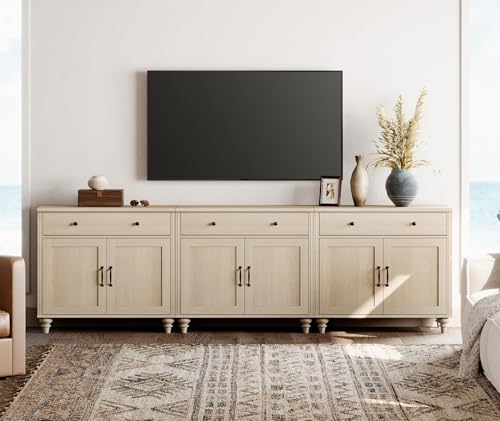
【3-in-1 Multipurpose TV Cabinet】The 3-in-1 large tv stand can be used separately as three wood cabinets. In addition to entertainment center, it can be placed in the dining room as a kitchen buffet cabinet or in the entryway as a console table. Dimension of single Cabinet: 33.9"×15.7"×30.9"(L×W×H).They are sent separately in two packages, so you may receive them at different times.
5. Light Oak TV Unit

Pale oak stays neutral enough to work with most wall colors and upholstery, and the natural grain gives the room warmth while still blending with other wood tones.
This finish pairs especially well with white, grey, or soft blue walls. I often choose light oak when the floor is already dark, because it brings balance without flattening everything to one tone.
The slatted wall panel behind the TV in this setup adds texture and hides cables, which is something I recommend when wall-mounting the screen.
Light oak shows scratches and scuffs more readily than darker stains, so plan to touch up the finish every few years if the unit sees heavy use.

Versatile Storage Solution: This multifunctional organizer fits seamlessly in your closet or entryway. It efficiently stores workout gear, blankets, delicate lingerie, and everyday essentials, maximizing space while keeping items neatly accessible

【Multifunctional Cube Storage Organizer】Versatile storage for living room, bedroom, or office. Open design keeps space tidy and clutter-free. Ideal as bookcase, display shelf, or entryway organizer.

Elegant Japandi Style: The warm natural oak finish and clean silhouette give this oak tv stand for living room a simple modern look that blends well with contemporary, minimalist, casual, and light wood interiors. It works beautifully as a entertainment center for living room or tv console in a variety of home styles.
6. Oak TV Unit with Drawers
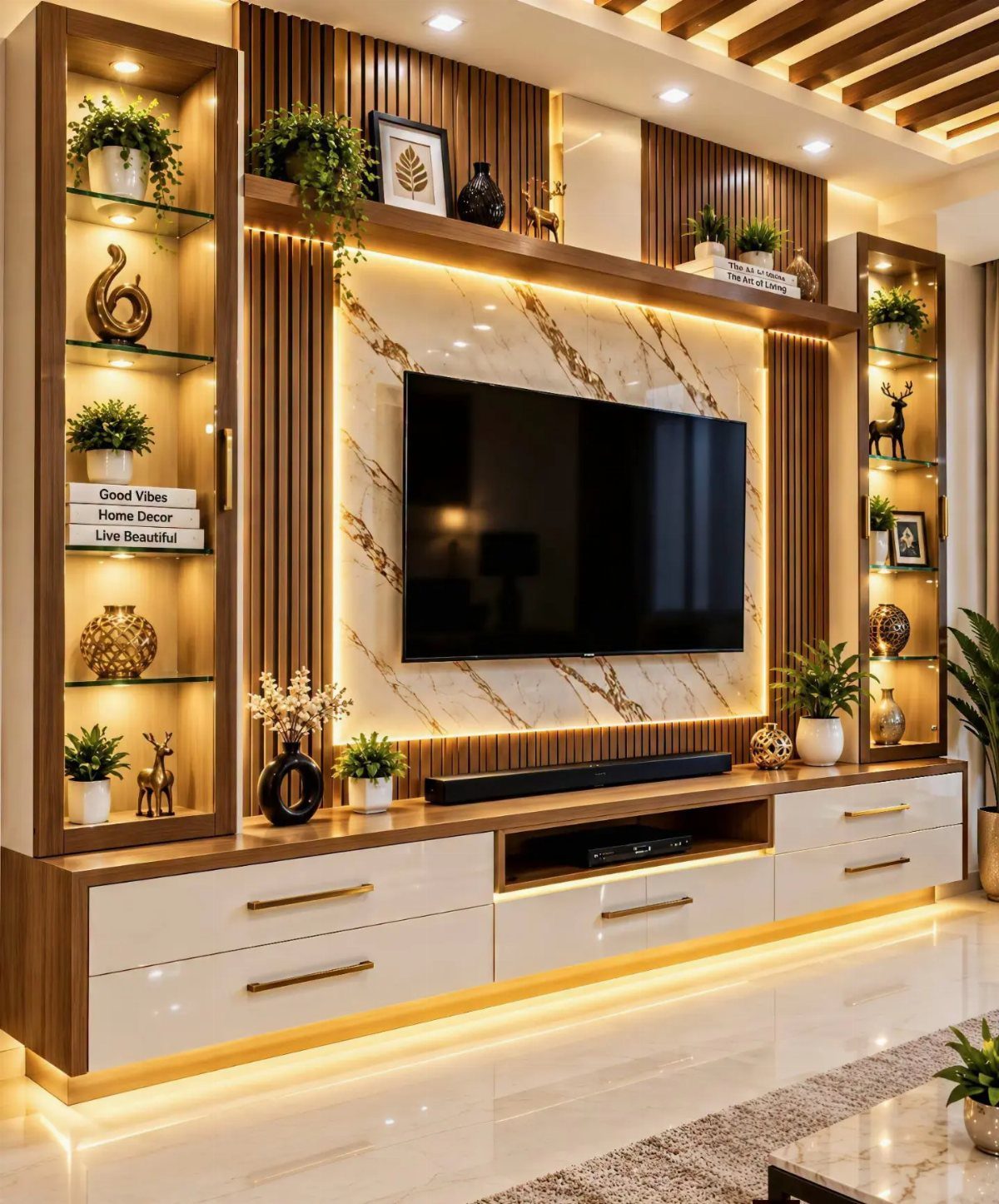
Drawers keep remotes, cables, and media accessories hidden, and they close more securely than open shelves or baskets. I prefer drawers with soft-close hinges in homes with children, because slamming wears out both the hardware and the cabinet frame.
Glass-fronted cabinets on either side let you display books or decor while keeping dust off. Built-in lighting inside the cabinets highlights what is on the shelves without adding floor or table lamps.

MODERN STYLISH DESIGN: This media center showcases clean lines and subtle hardware, offering a sleek, minimalist aesthetic that enhances any contemporary space. Its neutral wood tone adds an elegant touch, seamlessly blending with your decor, making it an ideal choice for the living room, bedroom, or lounge area

【Sculptural 3-Door Fluted Design】- Elevate your interior with this stunning tv console featuring a distinctive bold wave pattern across its unique three-door facade. The handle-free silhouette with integrated finger pulls offers a sleek, modern look that seamlessly fits Mid-century Modern, Modern Organic, and Japandi aesthetics.

Farmhouse Style: The corner TV stands with led light features a woodgrain countertop and barn doors for rustic charm. Corner TV cabinet with open storage paired with LED lighting enhances viewing and creates a cinema-viewing atmosphere
7. Oak TV Unit with Sliding Doors

Sliding doors cover the interior without swinging out into the room, which makes this layout work in tight spaces where a hinged door would block circulation.
The slatted or paneled fronts add texture while keeping the contents hidden, and you can leave one side open without the other door getting in the way.
You can only access half the interior at a time, so if you store equipment that needs frequent access, group it on one side.
Outdoor placement like this one is rare indoors, but the sliding mechanism holds up better than hinges in humid climates.

Spacious 8 Drawer Dresser: Maximize your storage with this long, deep dresser. Its smooth-gliding drawers effortlessly keep all your items neatly organized and easily accessible, perfect for any bedroom layout.

Floating TV Stand with Charging Station: Features a built-in power strip with 4 outlets for convenient charging of your TV, DVD player, phone, and more. The shelves include wire management to prevent tangled cords and ensure easy access for plugging in all your devices.

Farmhouse TV Stand: The natural texture on the surface of our large TV stand enhances the overall visual appeal, and this Wood TV stand pairs perfectly with other furniture from Joaxswe 's store. Rustic vintage TV stand is suitable for TVs up to 65 inches. This TV stand with storage can not only be used as a living room TV stand, but also as a TV stand for bedroom, dresser TV stand, adding a reliable and beautiful scenery to your warm home
8. Solid Oak TV Cabinet

Solid oak costs more and weighs more than veneer or particleboard, but the joinery holds up longer and the wood can be refinished if it gets damaged.
The carved details on the doors and the thicker frame give this cabinet a traditional look that works in older homes or rooms with other period furniture.
If you move often, solid oak is harder to transport, and the weight makes lifting awkward. The enclosed storage keeps dust off electronics, which matters if the unit sits in a room with pets or if you live somewhere dry.

【Modern Fluted Design】Fluted doors, softly rounded edges, and a warm wood-grain finish combine clean modern lines with subtle farmhouse charm, making this TV stand easy to coordinate with a variety of interior styles

【Minimalist Modern Design】Transform your living space with this boho storage cabinet, which seamlessly blends minimalist aesthetics with functional design. Perfect for any living room, kitchen, or dining room, it brings a touch of sophistication while providing ample storage. The sleek arched doors and metal handles create a stylish, timeless look that fits effortlessly into any home décor

Modern Floating Design – The Floating TV Stand features a sleek, wall-mounted design that saves floor space while adding a sophisticated, minimalist touch to your living room or home theater.
9. Organic-shaped Oak Console

Curved edges soften the profile and keep the unit from looking like a standard rectangle, which works well in rooms with minimal furniture where the TV stand becomes a focal point.
The vertical slats add dimension without adding bulk, and the light wood keeps the piece from feeling heavy even with the sculptural shape. This style pairs best with modern or Scandinavian interiors where other furniture also has clean lines.
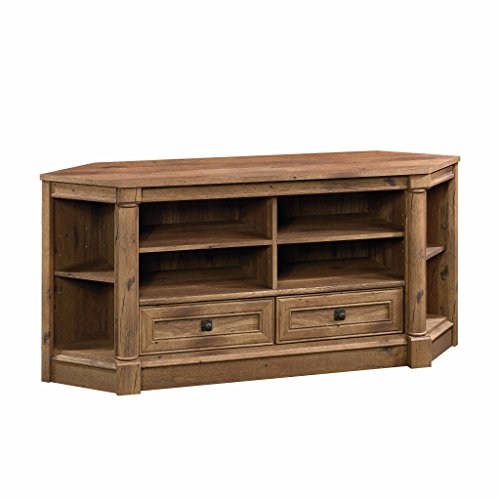
SPACE-SAVING DESIGN – This corner entertainment stand fits snugly in your living room, making it perfect for movie nights or binge-watching your favorite shows with family and friends

Convenient Sliding Doors: Sliding barn door makes it easy to access the cabinets and shelves while adding a touch of vintage charm and quality metal rail ensures smooth and noiseless movement

French Country Accent Cabinet: Our Credenza with storage features unique and exquisite carvings as well as a vintage finish. It embodies the freshness of nature and the romance of Provence, exuding a homely and cozy atmosphere. It looks lovely to place a few pots of fresh plants on the cabinet or hang some dried herb sprigs.
10. Oak TV Unit with Open Shelves

Open shelving keeps stereo equipment, game consoles, and record players accessible without opening doors, and ventilation stays better than in closed cabinets. Heat from amplifiers or receivers dissipates more easily, which can extend the life of the equipment.
The downside is that everything stays visible, so clutter shows immediately. I use open shelves when the devices themselves look good or when the client wants to display vinyl, books, or speakers as part of the room’s style.
Dust builds up faster on open surfaces, so plan to wipe down shelves every few weeks.

Elegant & Versatile Design: The fluted panel pattern of the modern TV stand adds a unique, textured charm, while rounded corners ensure safety for families with kids or pets. With stylish metal drawer handles, stable cabinet legs, and a special curved bottom detail, this TV console cabinet create a modern yet timeless look that blends seamlessly with living rooms, bedrooms, or dedicated media rooms.

Modern Mid Century Style: Our Cozy Castle TV Stand is capable of accommodating TVs up to 48-55 inches, with two different size options (43.3"L x 15.7"W x 19.5"H、 53.1"W x 15.7"D x 19.7"H), it meets your needs for placement in various spaces. As well as a stunning decorative piece for your living room, bedroom, home office, or lounge

【All in One Design TV Stand】Multifunctional use of cabinet space. TV cabinet, bookshelf, wine cabinet are all in one, solving your matching worries.creating own style of exquisite life.Kindly be aware: The oak tv cabinet is dispatched in 4 separate packages, which might arrive on different days.Overall size: 125.6”W x 72.1”D x 15.7”H.
11. Oak TV Unit with Tambour Doors

Tambour doors slide back into the cabinet sides, which keeps them from swinging into the room and gives you full access to the interior when open.
The slatted texture breaks up the flat front and adds visual interest without busy hardware.
This type of door works particularly well in narrow rooms or when the unit sits close to a sofa, because nothing projects forward when you open it.
The black legs lift the cabinet slightly off the floor, which makes cleaning underneath easier and keeps the piece from looking too heavy.
12. Arched Oak Entertainment Center
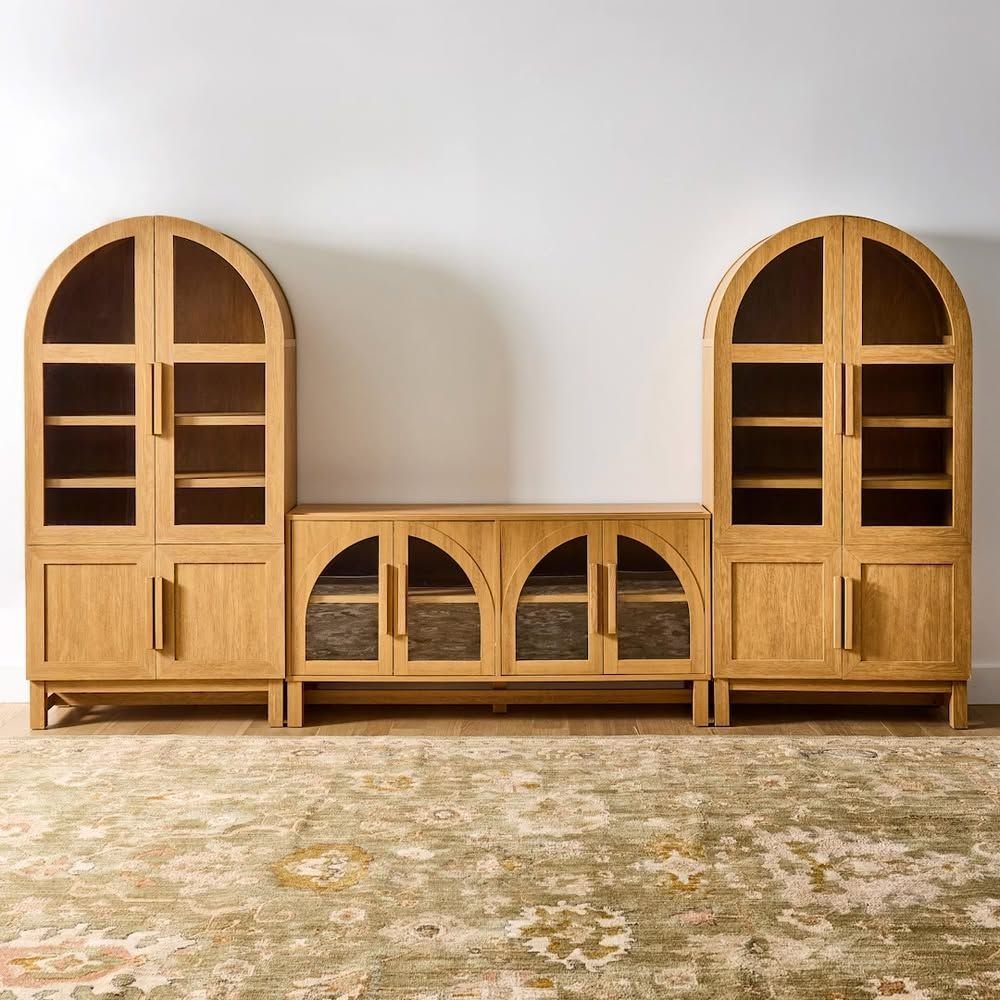
Arched doors give the entertainment center a more formal look than square cabinets, and the style suits traditional or transitional rooms where other furniture has curved details.
The three-piece layout separates the TV area from tall side storage, which works well if you need space for books, dishware, or linens in addition to media equipment.
Glass doors on the center section let you use a remote through the glass without opening the cabinet.
The height and width require a large room, and the piece reads best against a single wall rather than split across a corner.
13. Oak Unit with Metal Legs
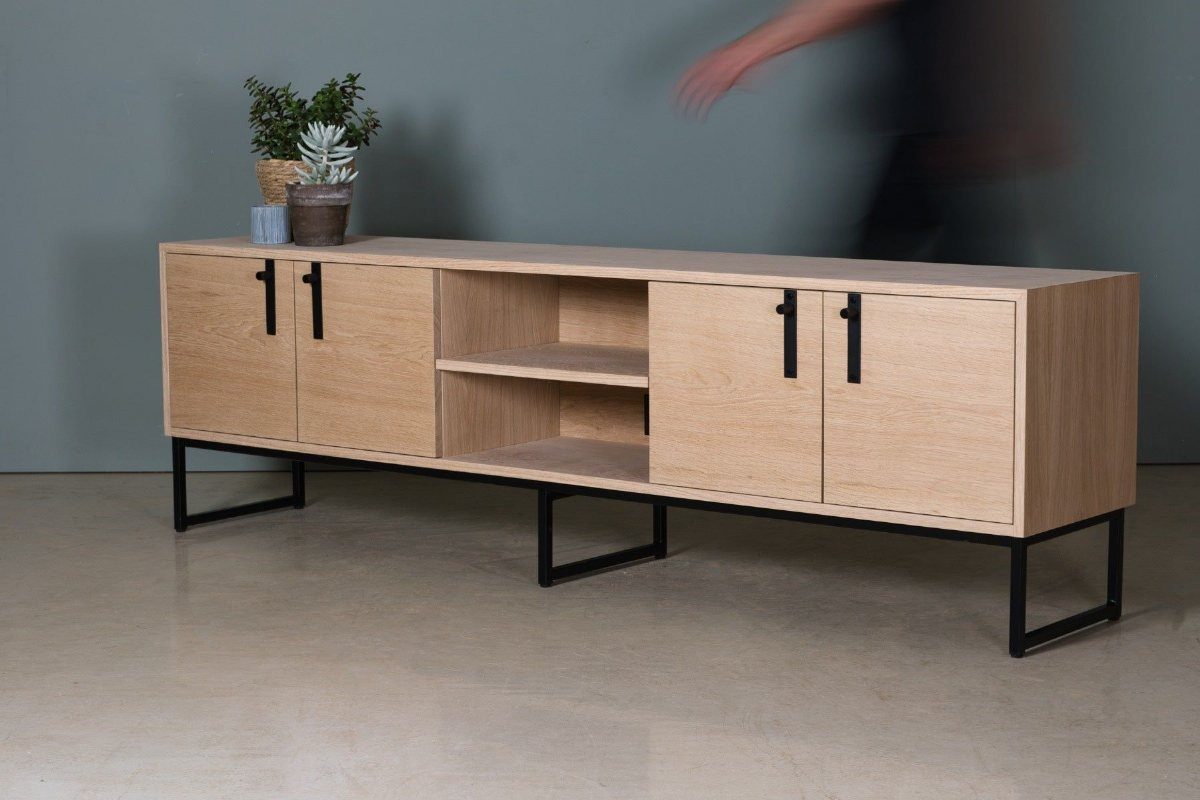
Black metal legs lift the console off the floor and create a visual break between the oak body and the surface below.
The contrast between warm wood and matte black hardware gives the piece a more contemporary look than all-wood legs would.
This style works particularly well in rooms where other furniture already mixes materials, like a dining table with metal bases or chairs with black frames.
The open middle shelf keeps media players and receivers ventilated, and the height of the legs makes it easier to sweep or vacuum underneath.
14. Oak Unit with LED Lighting

LED strips behind the oak slats create a soft glow that adds depth to the wall without overpowering the room.
The backlighting works best on a dimmer, so you can adjust the brightness depending on whether you are watching television or just want ambient light in the evening.
I mount the strips to the back of each slat or run them in a channel behind the panel, then route the power cable down through the wall to an outlet.
The floating console keeps the floor clear, and the white finish keeps the setup from feeling too dark when the lights are off.
15. Oak Floating Wall Shelf
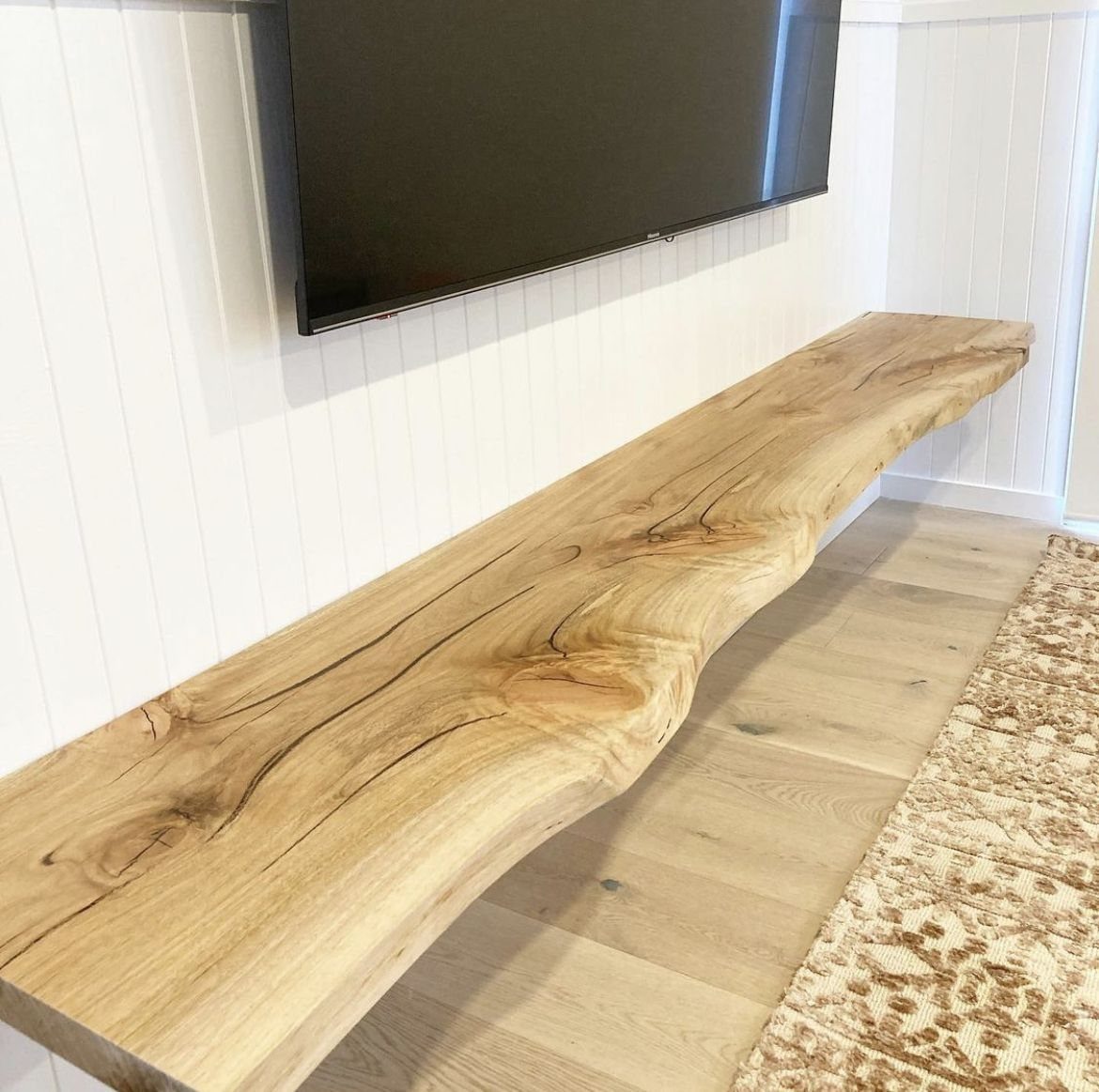
A live-edge slab keeps the natural contour of the tree and brings texture to a flat wall. The irregular edge makes each shelf unique, and the grain stays visible even from across the room.
I prefer this setup when the TV is wall-mounted and the shelf only needs to hold a few small items like a speaker, a plant, or a remote.
The floating bracket must go into studs, because a live-edge slab in solid oak weighs more than a standard shelf of the same length.
One thing to confirm before mounting: the depth needs to be enough to hold a soundbar or small devices without them hanging over the edge.
16. Oak Unit with Wicker Baskets

Wicker baskets slide into open shelves and hide cables, controllers, and charging blocks without the cost of installing drawers or cabinet doors.
The texture softens the look of the oak and adds a layer of visual interest to an otherwise plain unit.
I use baskets when the client wants flexible storage, because you can pull them out completely, move them to another room, or swap in a different size later.
The woven door panel on this unit keeps the upper compartment closed while still letting remote signals pass through, which matters if your equipment sits behind it.
17. Oak TV Unit with Soundbar
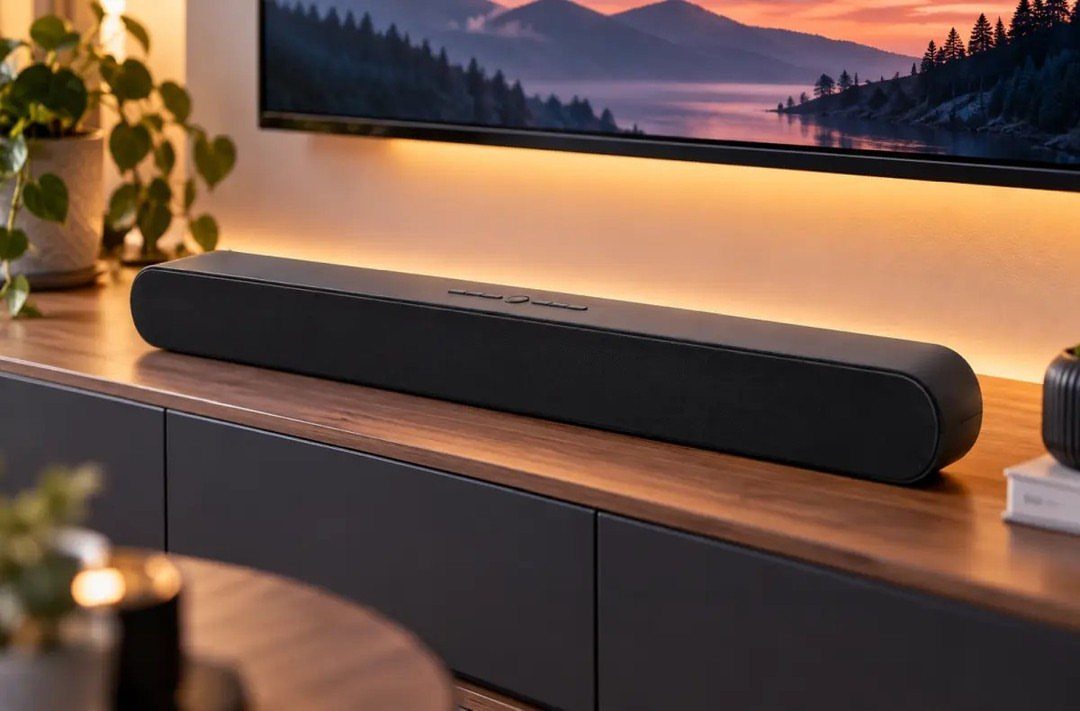
The soundbar sits directly on the console surface, centered under the screen, which keeps the audio at roughly the same height as the television and improves how dialogue sounds from the sofa.
Most soundbars need clearance on each side for ventilation, so measure the width of the console before choosing a model.
If the soundbar is wider than the unit, mount it on the wall instead. The warm glow behind the bar in this setup comes from a small LED strip, which adds ambiance but is optional.
Cable management matters here, because the soundbar, the TV, and any streaming boxes all need power and a clear path to the wall outlet.