

How much of the room you can change decides which of these looks is yours, and the closing sections on mixing styles, room size and lighting help you sort that out.
Exposed wooden beams, textured walls and ceiling paneling come with the house or they don’t, while a woven pendant light or a pair of palm-print curtains can go up in a weekend.
The styles run from the bare calm of a Clean-Line Minimalist Room to layered Bohemian and Old-and-New Eclectic Mix rooms, and renters will find most of their options toward the layered end.
1. Clean-Line Minimalist Room
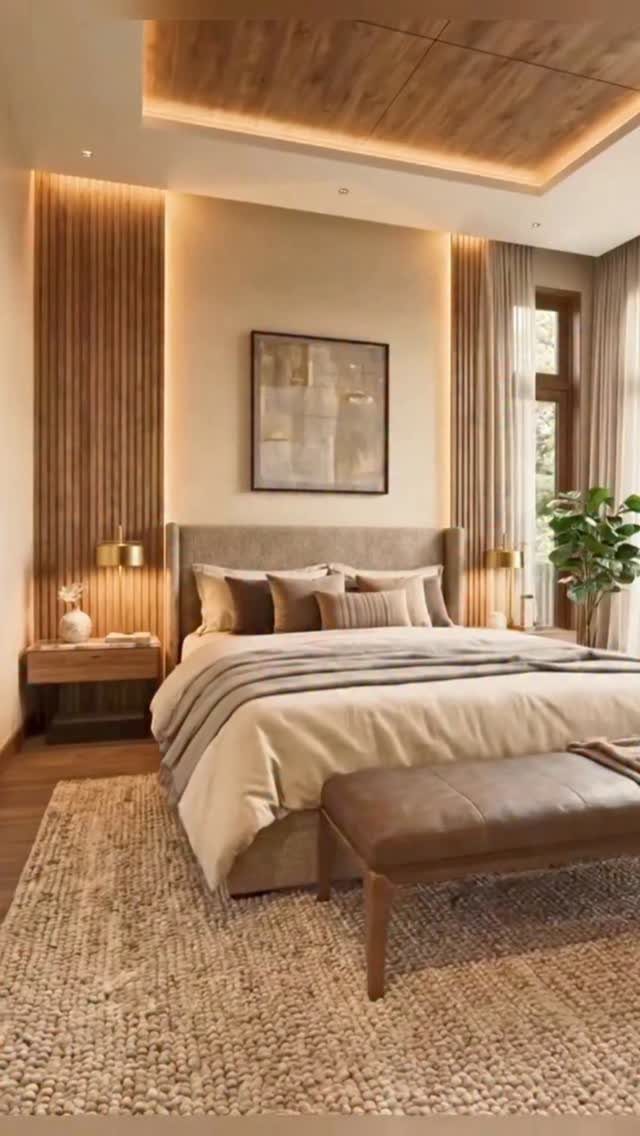
Restraint does the work in this room: one bed, one bench, one piece of abstract art, one plant. The wood paneling running up the wall and across the ceiling adds warmth, so the neutral linens never turn cold.
I’d keep the rug textured instead of patterned. It gives the floor some interest without adding visual noise, and warm lamplight finishes the look.
2. Bohemian
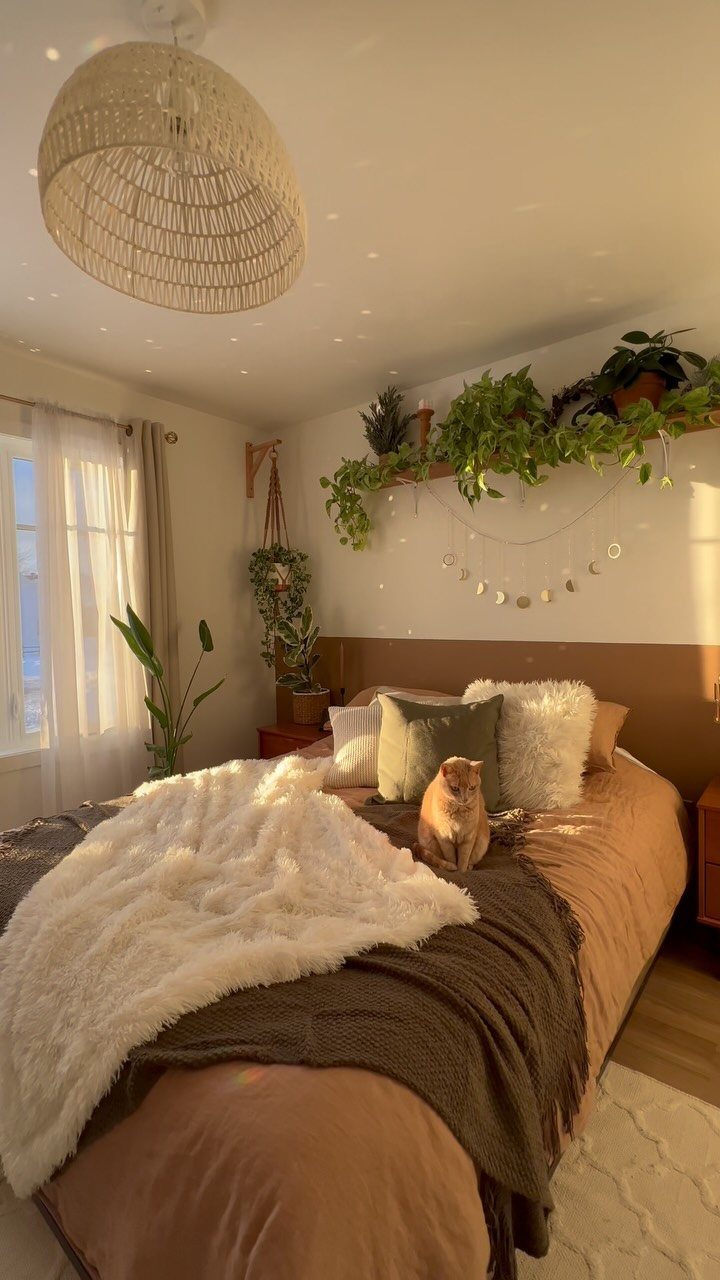
Trailing plants, a woven pendant and a moon garland all work in a small bedroom because they live above the floor. The garland takes up no floor space at all.
I like a white faux-fur throw over a dark wood bed, since the contrast keeps all those layers from blending into one brown mass. Add plants a few at a time and let them fill the corners and shelves first.
3. Mid-Century Modern

A blue bed beside a warm wooden dresser shows the pairing I’d copy: one saturated color and one wood tone, with everything else kept simple. A geometric rug can carry the extra colors so the furniture doesn’t have to.
Keep the wall art to a single large poster. A big window with a city view already supplies plenty to look at.
4. Cottagecore
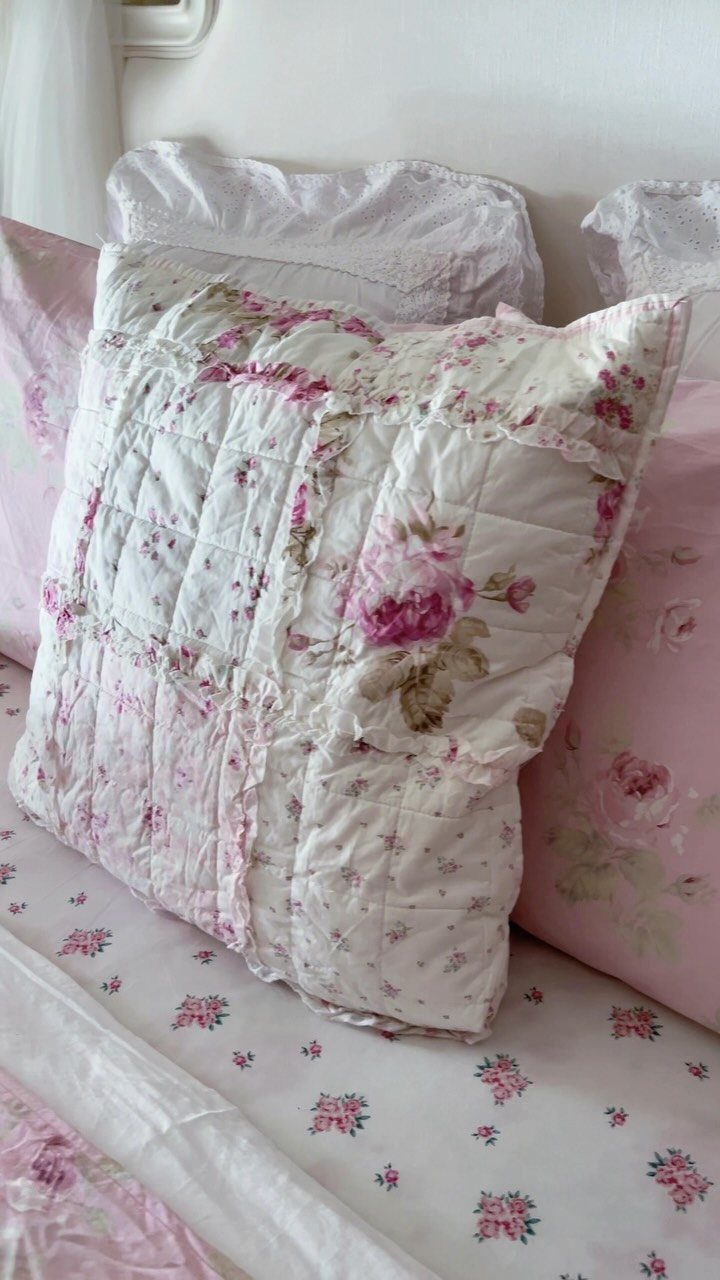
Keep the wall white and let the fabric do the talking. Pink-and-white floral pillows, floral sheets and lace bedding all work together because they share one narrow palette.
Mixing several floral scales on one bed is the part I enjoy most: a quilted rose pillow next to a smaller print on the sheets. Stick to pink and white and the pattern stays soft.
5. Rustic
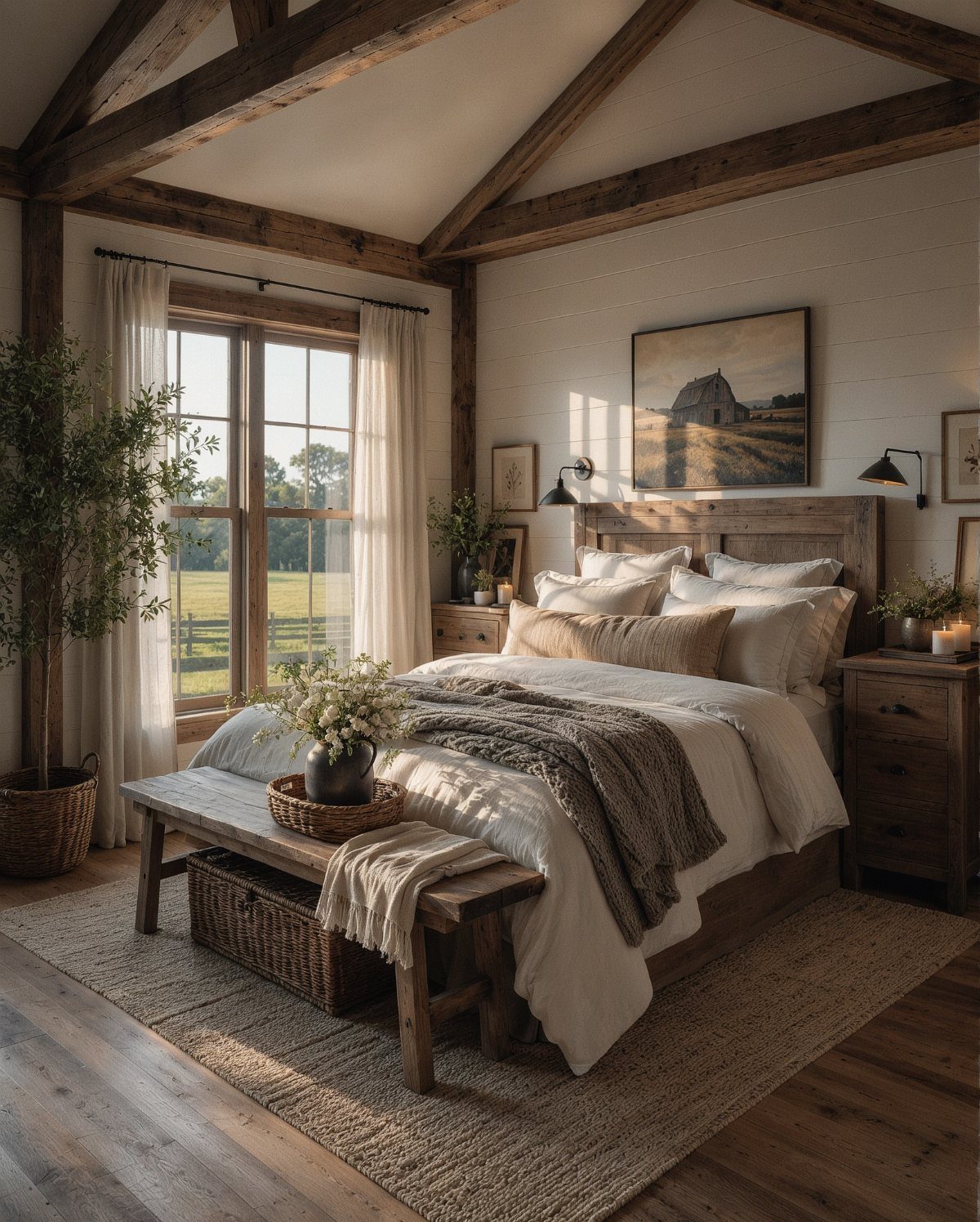
Exposed wooden beams set the tone, and I’d let the wood be the main texture. White linens on a wooden bed keep the room restful, and a window onto an open field needs no curtains fighting for attention.
Beams come with the house or they don’t. A bench at the foot of the bed and a jute rug are the pieces anyone can add to get the same feel.
6. Traditional
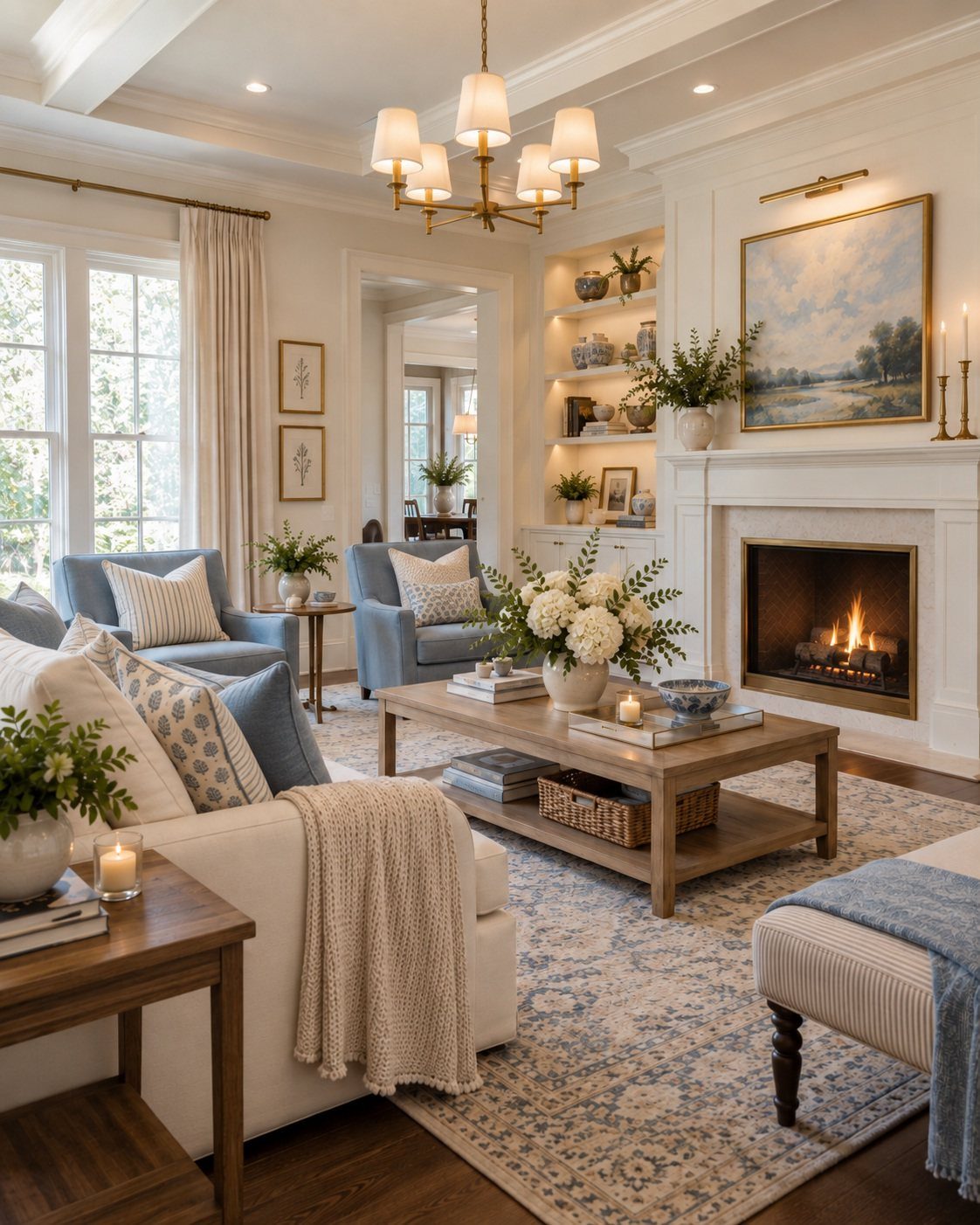
A gold chandelier overhead and a wooden coffee table between the seats finish the classic look. For a smaller space, I’d start with the paired armchairs and a patterned rug.
7. Low Japandi Furniture

A shelf that runs the full width of the wall can hold the television itself, so a separate stand becomes unnecessary. I’d keep it low and long, with one small branch in a vase on top and nothing else.
A black screen set into a white wall looks like built-in architecture. More objects on the shelf would break the calm that the low line creates.
8. Coastal

Light blue bedding on a white bed carries most of the coastal look, and the woven pendant and cream rug add the natural texture.
For a small bedroom I’d lean toward the California version: tailored, but relaxed enough to live in.
Stick to one piece of beach art. A small white desk fits the same palette, so it adds function without adding color.
9. Sleek Modern Room Decor
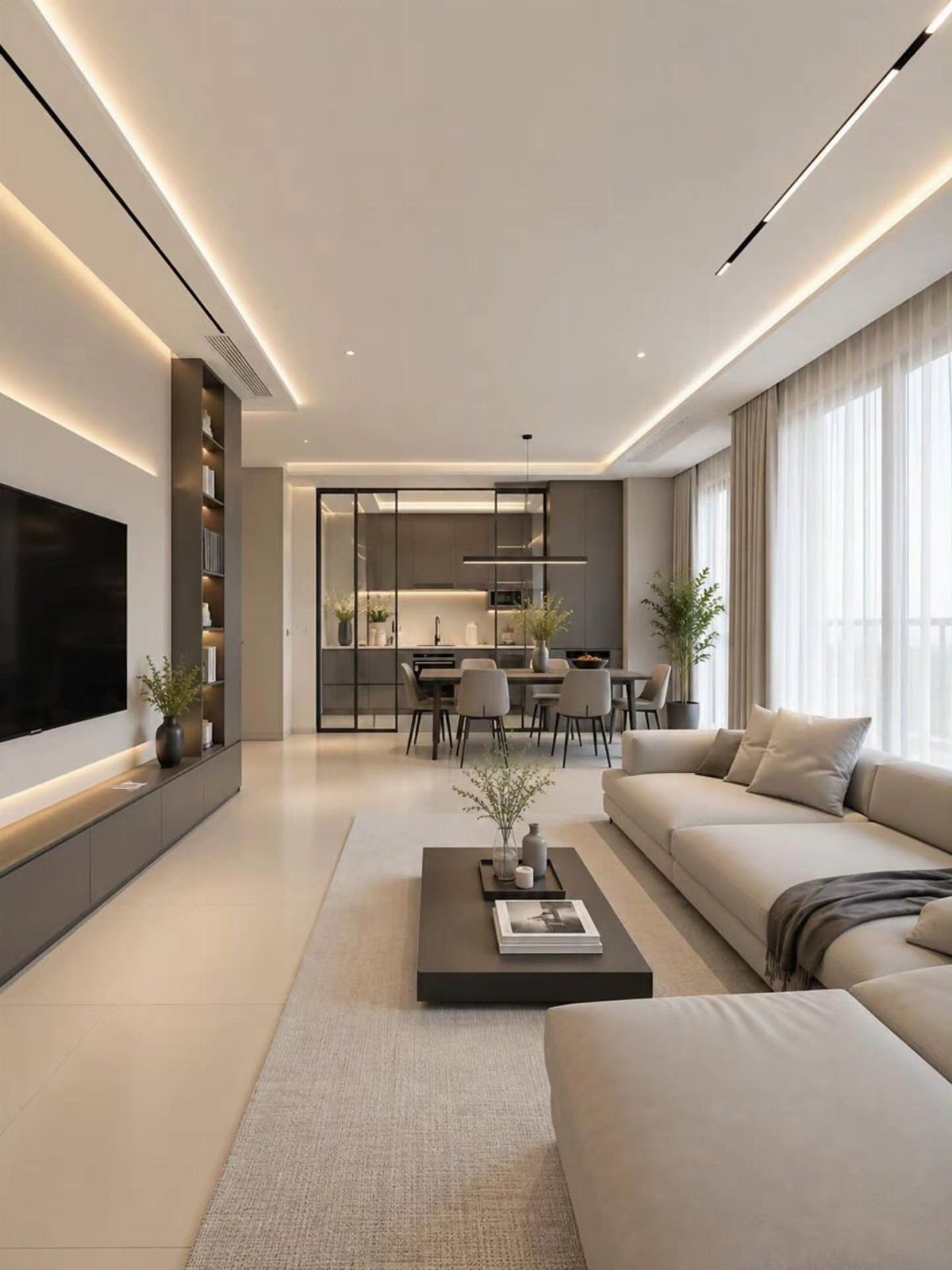
Because the lines are smooth and the palette neutral, the few decor pieces you add have to be distinctive. I’d choose one sculptural object over a cluster of small ones.
Recessed ceiling lights leave the surfaces free, which suits a room where living and dining share one open space.
10. Wooden Farmhouse Beams

Light green walls soften a heavy ceiling beam, and neutral bedding keeps the color from competing with the wood. Paint is the cheapest part of this room to copy.
I’d keep the rug light so the dark wood overhead stays the focus. A wooden bench at the foot of the bed echoes the beam, and a chandelier adds a more formal note.
11. Concrete Industrial Walls

Wood against grey keeps the room from feeling like a bunker.
Hanging plants bring in green against the gray concrete without taking up floor space. I’d leave the big window bare, since the city view belongs to the look.
12. Soft Girl

Pink leads, white backs it up, and a fluffy chair adds the soft texture. Yellow is the other color this look often uses, and I’d add it in small doses, such as a single cushion, before committing to more.
A neon sign with a message you like gives the room personality. A bedroom corner suits it too, where a vanity mirror and a chandelier can create a small dressing area.
13. Witchcore
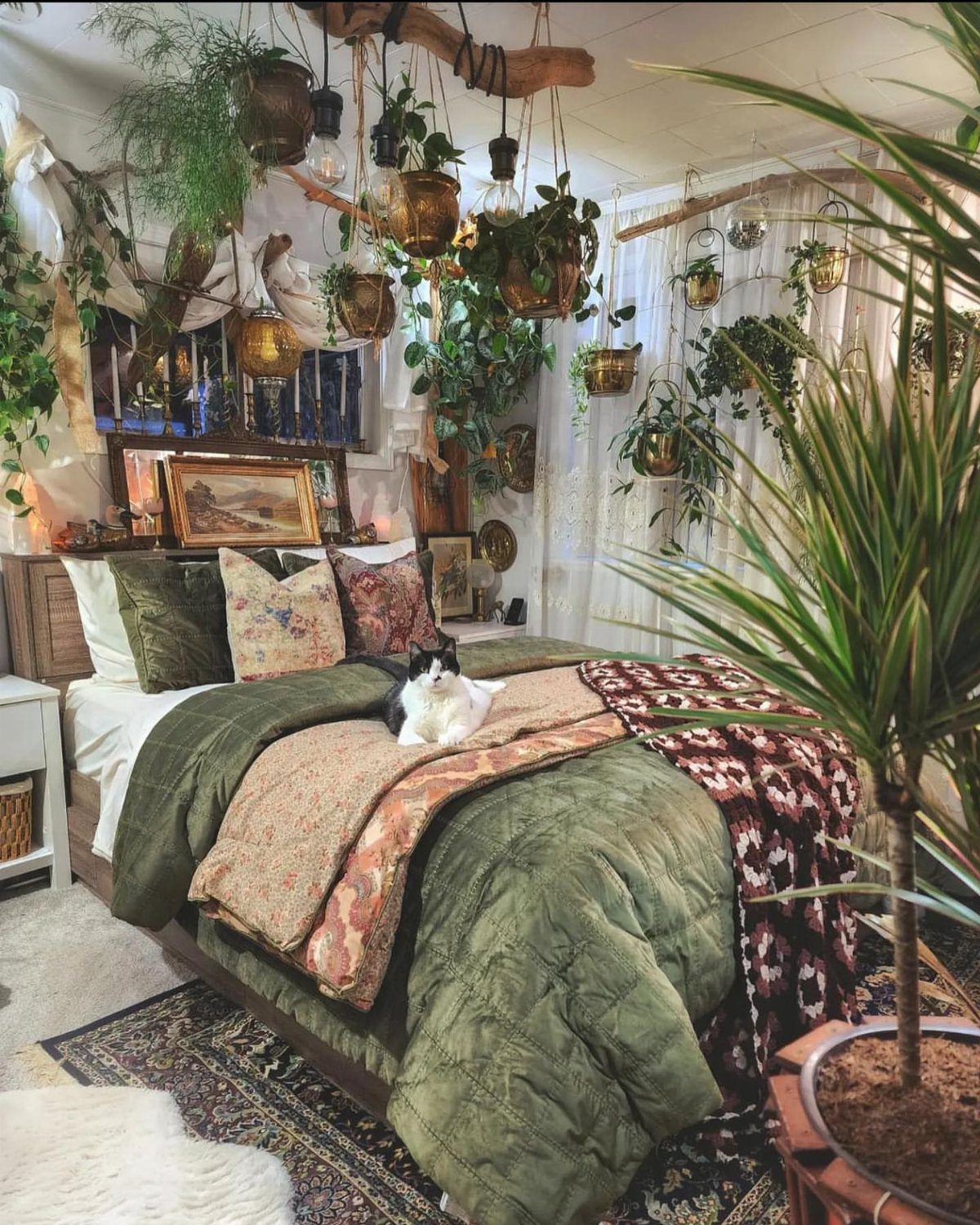
I’d keep the cat optional, though it clearly fits.
Lanterns and a patterned rug add the ritual, candlelit mood. Start with the plants and lanterns, then let the rug pull the colors together.
14. E-Girl

Pink and black split the room evenly, and the gaming setup is what makes it feel like a person lives there.
Pink against black is the pairing I’d start with: a pink chair in front of a black wall gives the room its edge with a single piece of furniture.
Anime figurines and a crystal chandelier sit at opposite ends of the style, which is the point. Keep the linens pink so the dark walls don’t swallow the bed.
15. Anime
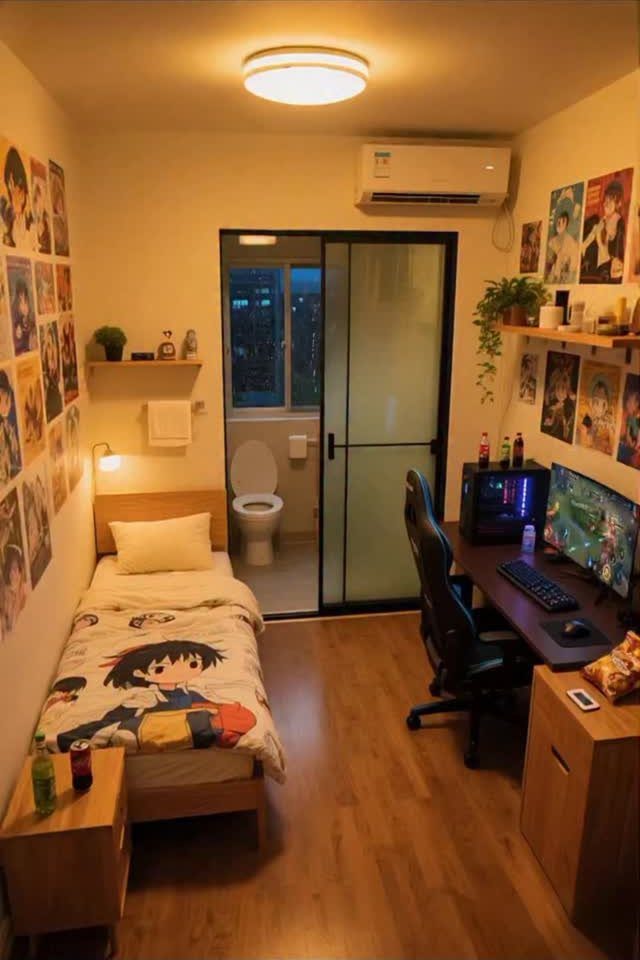
Posters and a character duvet cover are enough to build this look in a tiny bedroom, and both are cheap to swap when your tastes change.
I’d pick one favorite series and stay with it, so the walls read as a collection instead of clutter.
16. Dark Academia
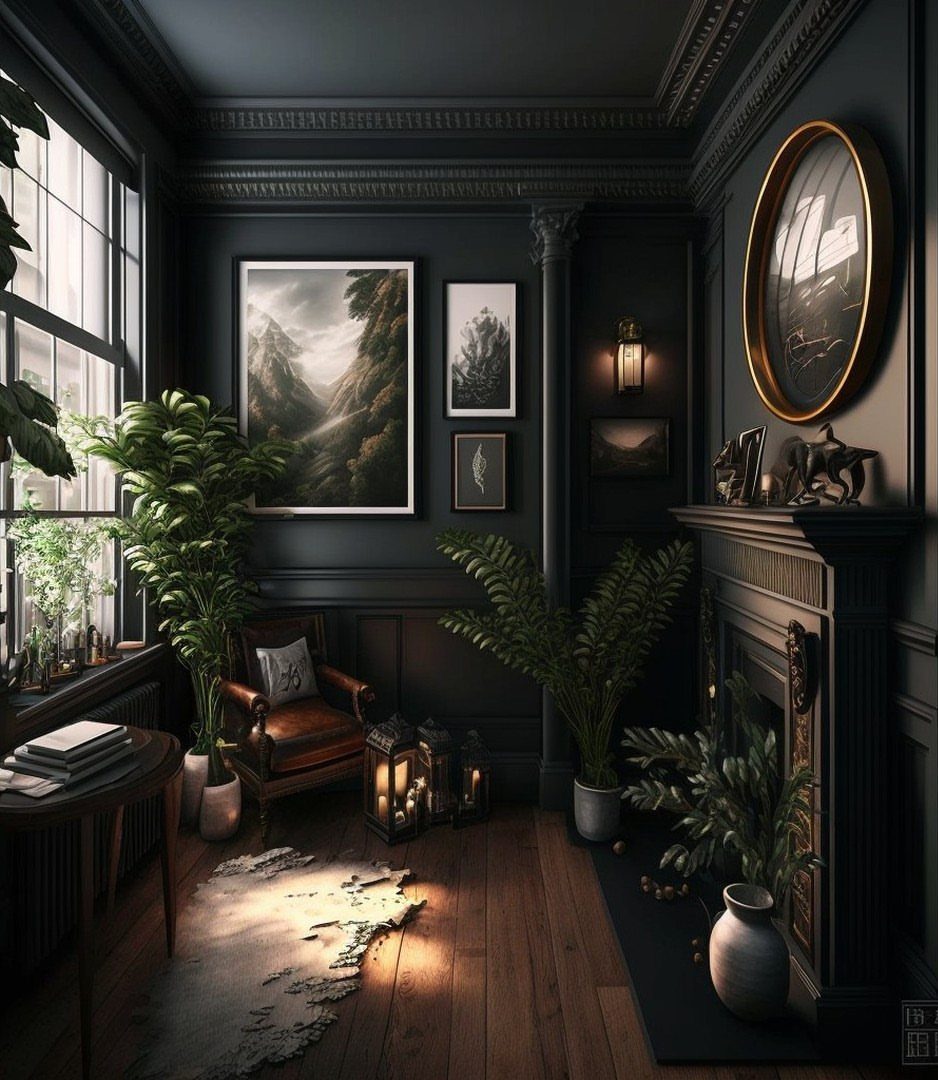
Dark walls with ornate molding give a room the weight of an old library.
A round gold mirror and framed art catch the light against the dark paint. The faux-fur rug on wooden floors adds a soft layer underfoot.
17. Vintage
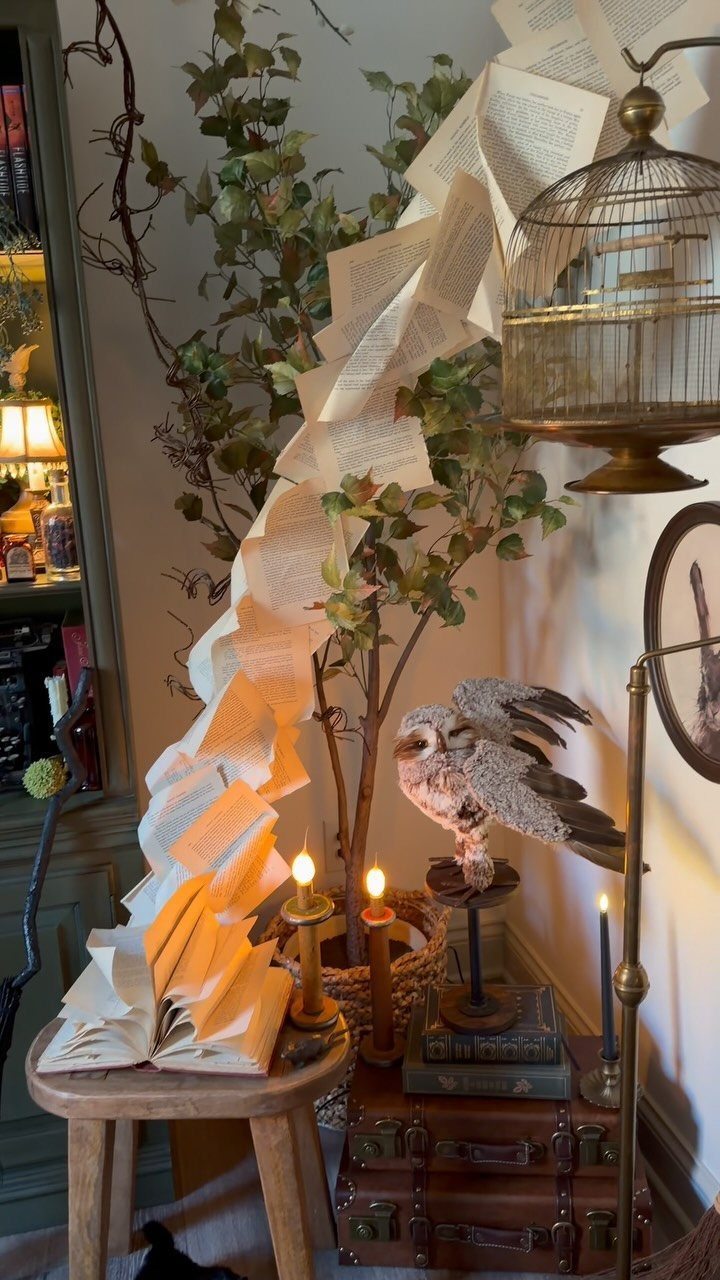
Pages of text draped like a garland over a small table is the detail I’d steal. It costs almost nothing, and it turns a bare corner into a scene.
A single corner gets you this feel, and the rest of the room can stay exactly as it is.
18. Dorm Room
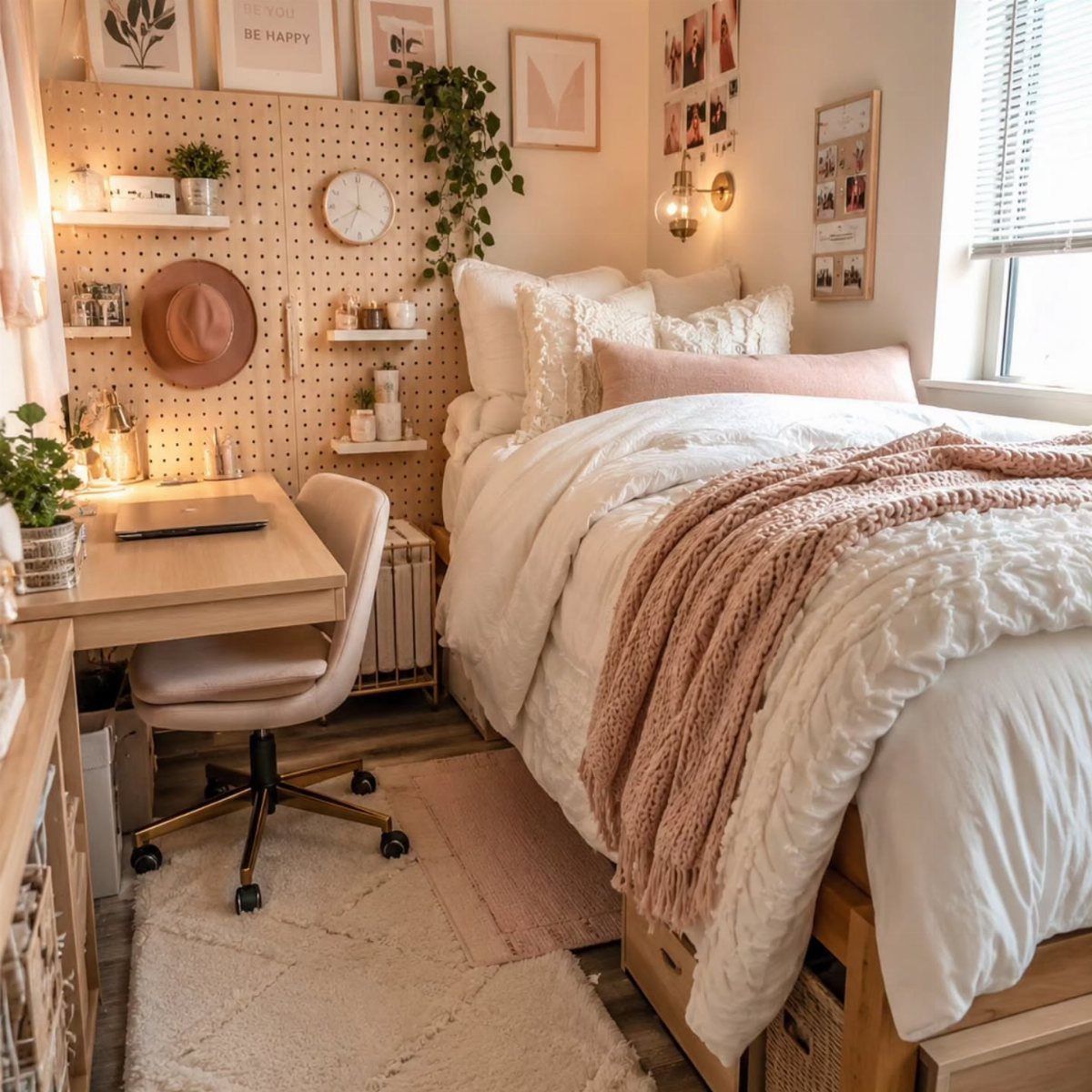
A pegboard wall earns its place in a small room because it holds notes, photos and supplies without taking up desk space.
A study desk and a cheerful message on the wall make the room yours.
19. Old-and-New Eclectic Mix
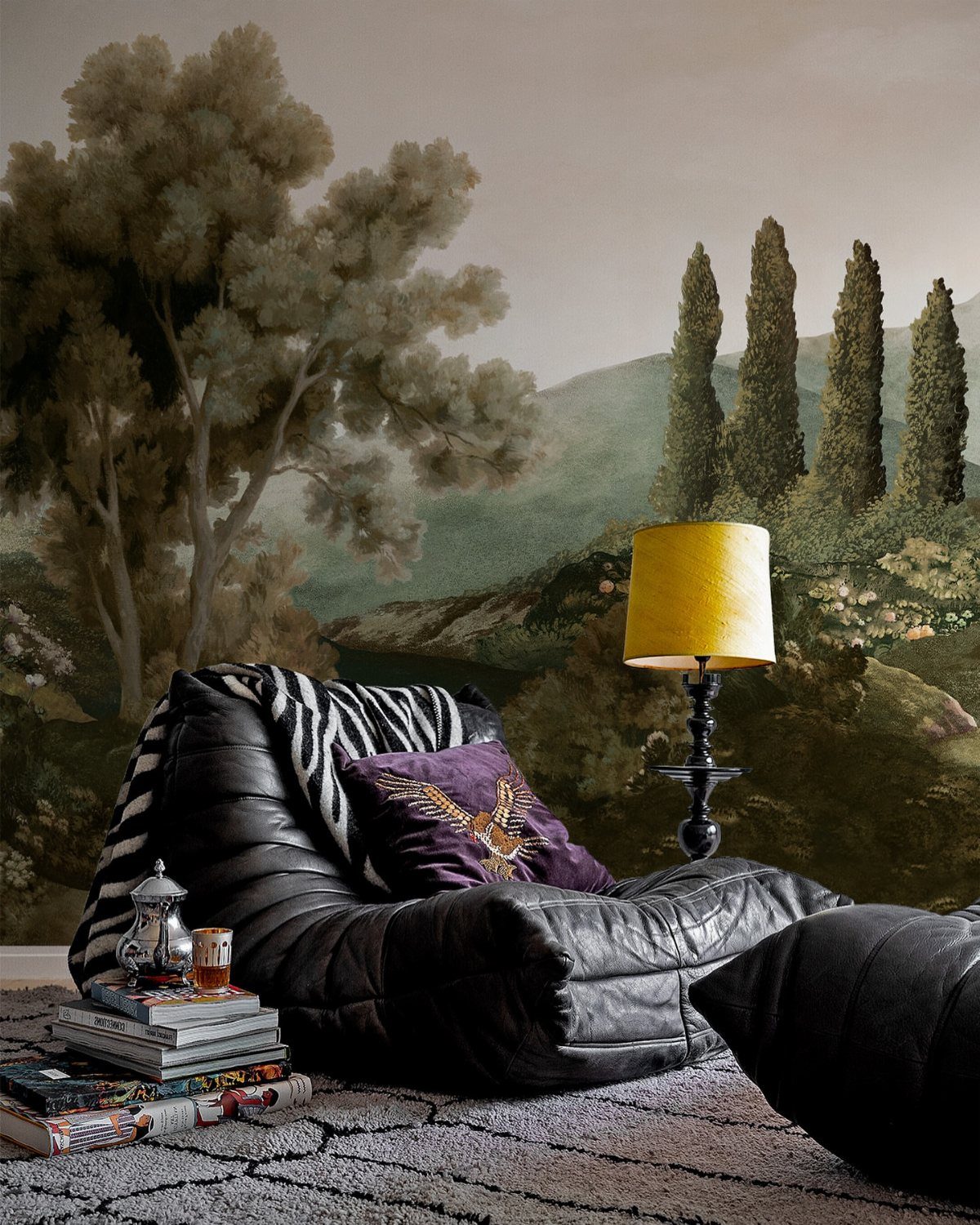
An eclectic room can hold together with nothing matching, as long as the mismatched pieces share a thread: a zebra-print pillow beside a purple embroidered one works because both are bold and similar in scale, and a yellow lamp over a stack of books adds one more warm accent.
The grey rug quiets the floor so the loud pieces can read as choices.
I’d keep every item only if you can say why it’s there. A mix works when each piece has a reason, and a pile of impulse buys never does.
20. Shabby Chic
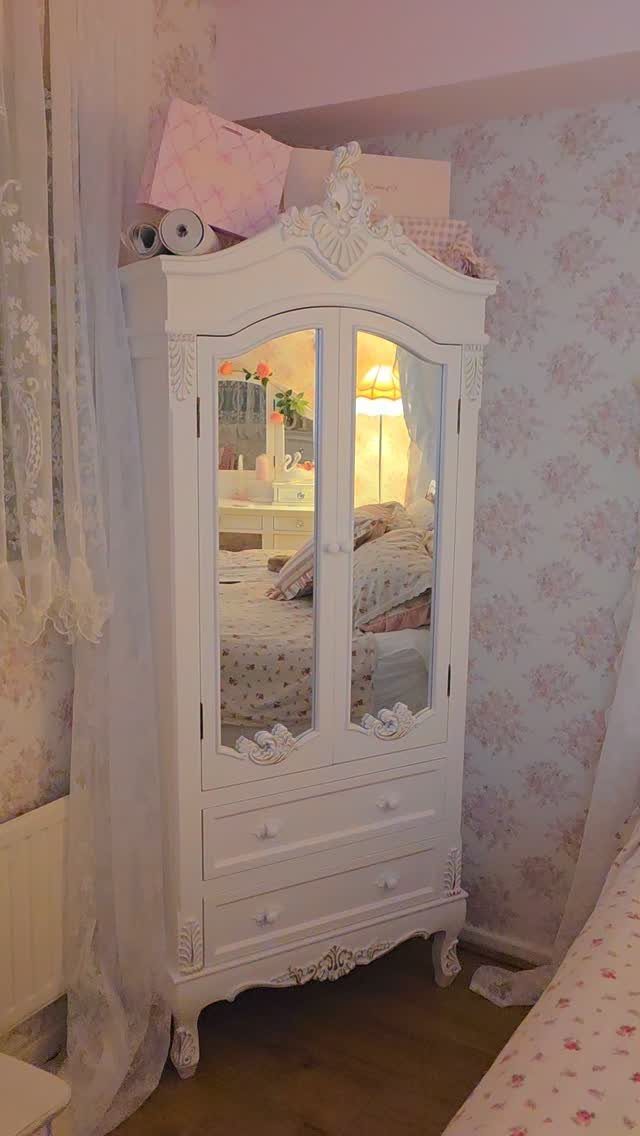
For a shabby chic bedroom, I’d build around one white, ornate armoire with mirrored doors, since it adds storage, bounces light around the room and sets the worn-pretty tone on its own.
Floral wallpaper and lace curtains sit comfortably beside it, because all three lean soft and a little worn.
Hunt for one carved, painted piece before buying anything else. Everything else in the room can stay simple and let the armoire lead.
21. Old Hollywood
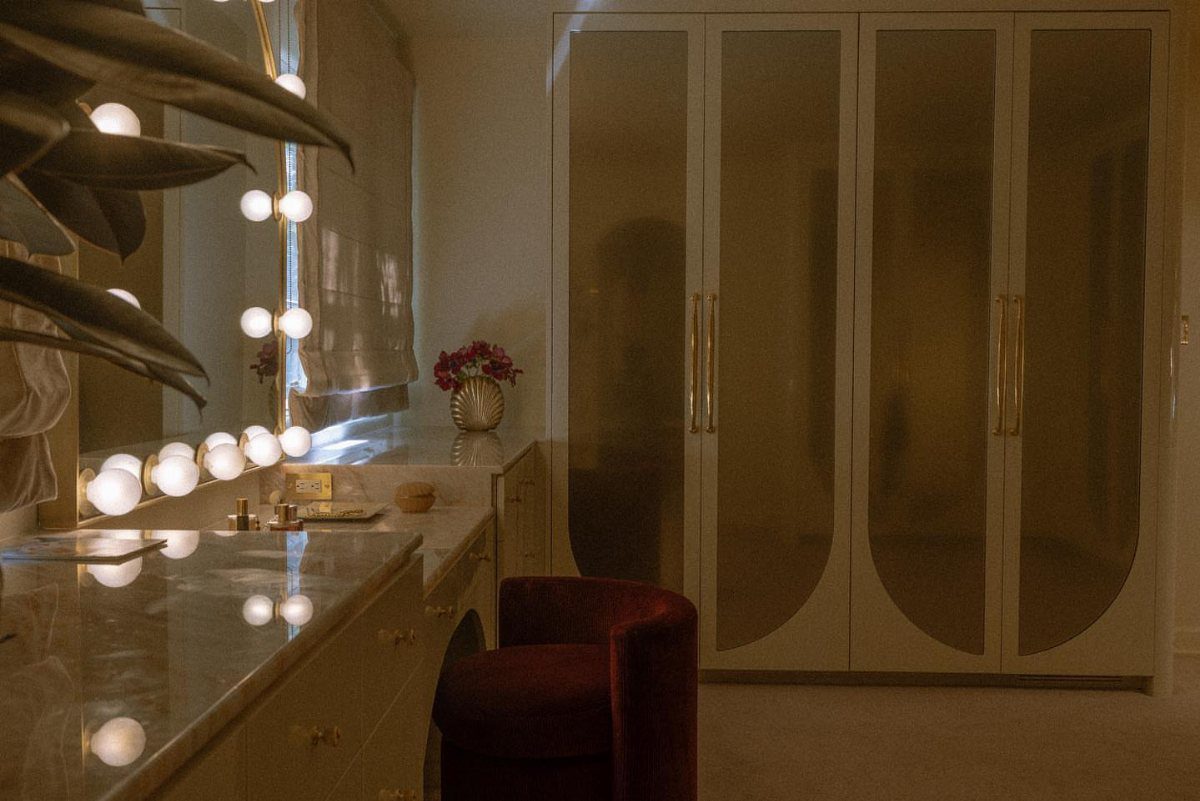
Globe lighting over a marble vanity does most of the Old Hollywood work, since it recalls the bulbs around a theater mirror.
A red velvet chair then supplies the one rich color, and gold handles on the wardrobes repeat the glow.
For a smaller room, I’d pick the lighting and the chair first. Wardrobes and marble are the costly parts, and the look still reads without them.
22. Southwestern

Textured pink walls and exposed wooden beams make a desert bedroom feel warm without a single extra decoration. A woven pendant light adds a handmade note to a Southwestern bedroom, and white bedding keeps the earthy palette from getting heavy.
If you rent, the beams and wall texture aren’t yours to add. I’d copy the woven pendant and a clay-toned wall color instead, since those are changes you can make in a weekend.
23. French Country
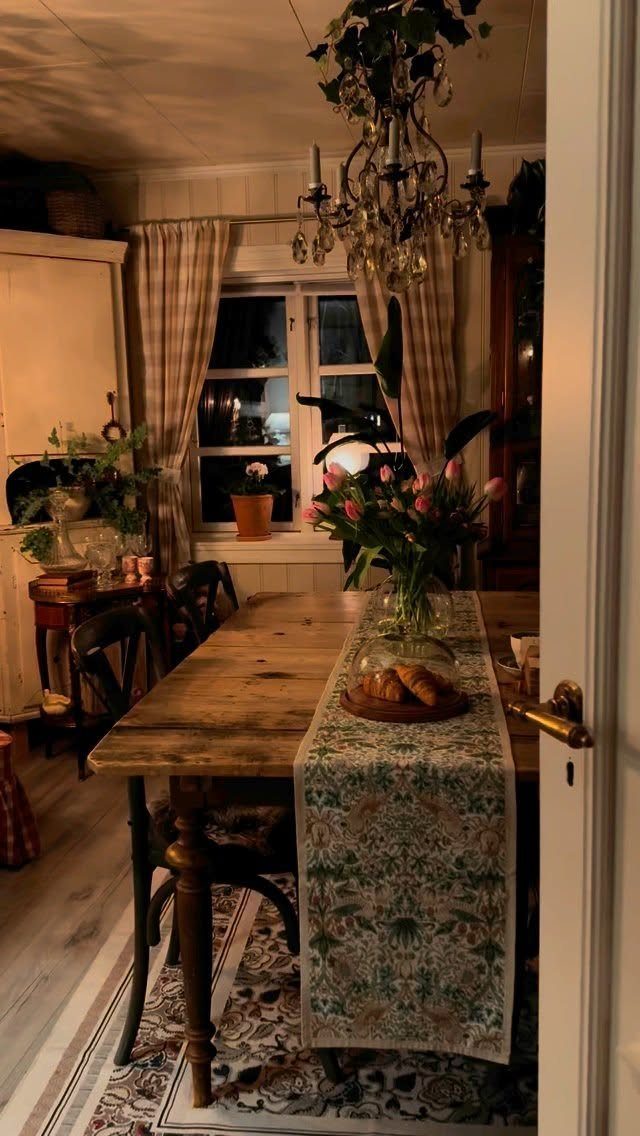
Pull the flowers from the runner’s color, like pink tulips down the center of the table, and the pattern mix starts to look planned.
The table runner and fresh flowers are where I’d start, because they’re cheap, quick to swap and set the French country mood faster than any larger piece.
A rough wooden table gives pattern a plain place to land, so keep the rest of the tabletop bare.
24. Natural Nordic Textures

A grey sectional gives this living room a calm base, and the wooden coffee table, shag rug and wooden bookshelf supply the texture. A lamp and a candle keep the light warm after dark.
I’d let wood and wool do the decorating here. Choose one shaggy rug, one wood tone and a single candle, and add nothing that competes with them.
25. Glam
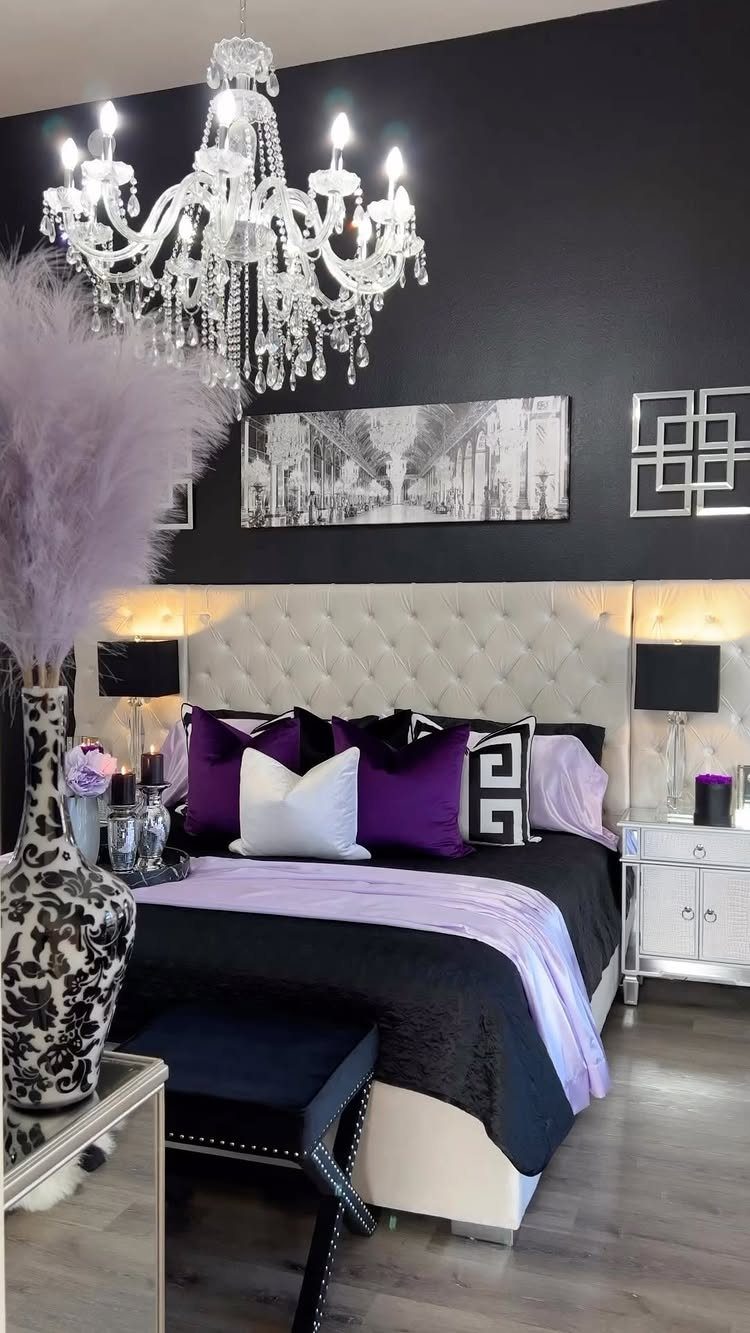
Shine and softness carry glam, and this bedroom uses both: a crystal chandelier for the sparkle, a tufted headboard for the plush. I’d keep the headboard white against the black wall so the bed reads as the focal point.
Bedding that picks up one color from the wall and adds black for contrast ties the room together without matching it exactly.
If the budget is tight, start with the chandelier and the bedding, since those 2 pieces change the mood fastest.
26. Whimsical
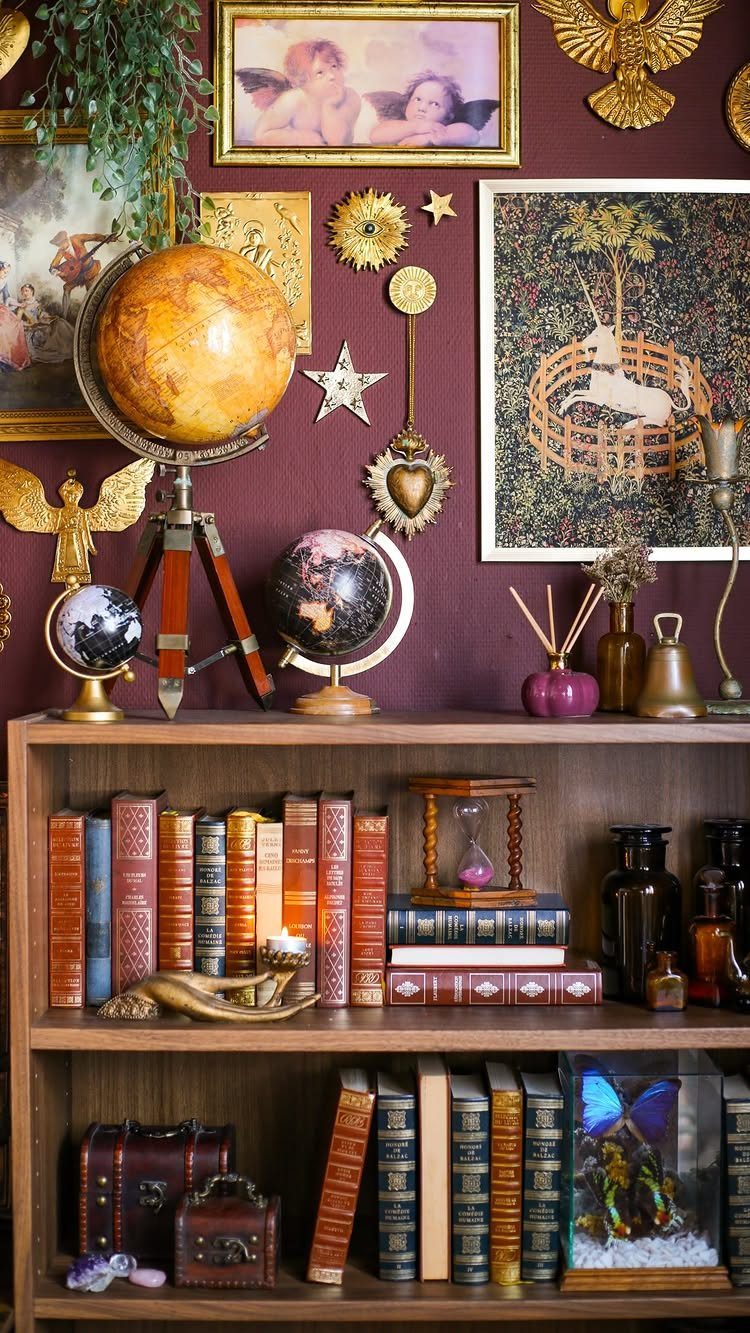
A deep purple wall is a bold backdrop for a collection, and gold ornaments look warmer against it than they would on white.
Globes, an hourglass and a butterfly terrarium work on a bookshelf because each one is a small curiosity worth a second look.
I’d mix old books in with the objects so the shelf feels lived in. Hang the celestial art and the unicorn print above the shelf instead of crowding it, and the whimsy stays playful instead of messy.
27. Palm Beach
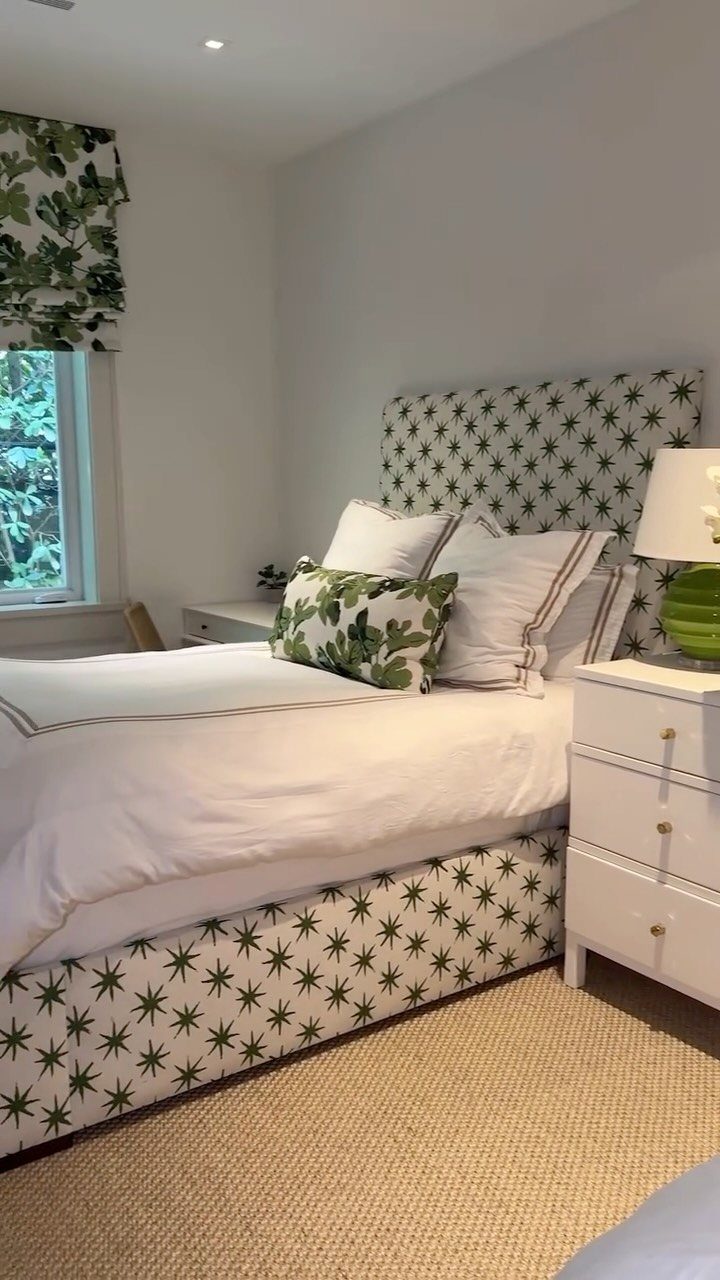
Palm-print curtains that echo a palm-patterned headboard are what make this bedroom feel preppy instead of beachy.
I’d repeat the print in exactly 2 places, as here, and let a woven tan rug supply the calm texture underneath. Curtains are the easiest piece to copy if the bed stays plain.
Choosing and Mixing Styles
Start with the feeling, not the label. Decide whether the room should feel personal, relaxing, inspiring or stress-free, then pick the style that gets you there.
Treat any style as a starting point. Pairing old pieces with sleek new accents keeps a room from looking like a catalog page, and mixing metals on lamps and hardware is part of that.
If you like pattern, Southern Traditional is a useful model: brighter colors, more pattern mixing, monograms, and wallpaper even in a powder room. A small room is the cheapest place to try a bold wallpaper.
Hold one color palette across the whole room, and the patterns and eras can vary without a fight.
Then check balance: if one wall carries all the visual weight, move a lamp, a mirror or a chair to the other side.
With an eye toward functional simplicity, Farmhouse style “suggests a more humble, vernacular interpretation of American historical styles from the 18th and 19th centuries, whether they be Colonial, Greek Revival, or Victorian,” explains architect Gil Schafer.
Adapting Ideas to Room Size
In a small room, limit yourself to 1–2 colors and use white as the base. Lighter shades make walls feel farther away, and a mirror placed to catch daylight pushes that effect further.
Storage and furniture should work harder than they look. A bed with drawers or a bench with a lid hides clutter, and a desk that doubles as a vanity saves a whole piece.
A large room has the opposite problem: it can feel empty or scattered. Split it into zones, such as a reading nook, a sleeping area and a spot for a desk, and give each its own rug or lamp.
Size the decor to the space as well. One tiny frame on a big wall gets lost, so choose larger art and bigger pieces.
Room Atmosphere and Lighting
Decide first what the room is for: relaxing, working or entertaining. That choice sets the lighting, because a bedroom meant for sleep needs something softer than one that doubles as a study.
Layer the light instead of relying on one ceiling fixture.
Layering light sources gives a room its mood: a pendant or table lamp for the main glow, string lights or an LED strip for accents, and a floor lamp with a soft shade to warm up any corner that stays dim.
Put the layers on separate switches or a dimmer if you can, so one room can shift from a bright workspace to a calm evening setting. Warm bulbs add depth and a more intimate feel.
LED strips are good for indirect glow behind a headboard or under a shelf. Candles add atmosphere, but never leave one burning unattended.
Frequently Asked Questions
What are different aesthetics?
Common room aesthetics include minimalist, bohemian, mid-century modern, cottagecore, rustic, coastal, Japandi, industrial, glam, dark academia and shabby chic. Some styles come from an era, like midcentury modern, and others from a region, like Scandinavian design.
Each one is recognizable by a narrow palette and a few signature materials, such as exposed wood beams for rustic or pink-and-white florals for cottagecore.
How to determine your bedroom style?
Pick the feeling first and the style name second.
Decide whether the room should feel personal, relaxing, inspiring or stress-free, then choose the aesthetic that gets you there. Give trends less weight than what actually makes you comfortable in the room.
How to make a small bedroom aesthetic?
Keep the palette to 1–2 colors with white as the base, since pale walls seem to sit farther back. A mirror hung across from the window bounces daylight around and widens that effect.
Pick pieces that swallow clutter, such as a storage bed or a lidded bench, and let one desk serve as a vanity too, which saves buying a separate piece.
How to make a big bedroom aesthetic?
Split the room into zones, such as a reading nook, a sleeping area and a desk spot, and give each zone its own rug or lamp.
Size the decor up as well: a single small frame disappears on a wide wall, so choose larger art and bulkier furniture.
A big rug, a canopy bed or an accent wall also helps fill a large room without scattering the look.
How to master different room aesthetics?
Stick to a single palette throughout, and mixed patterns and eras will sit together without a fight.
Use any style as a loose starting point, and set vintage pieces beside clean modern accents so the room never looks like a showroom.