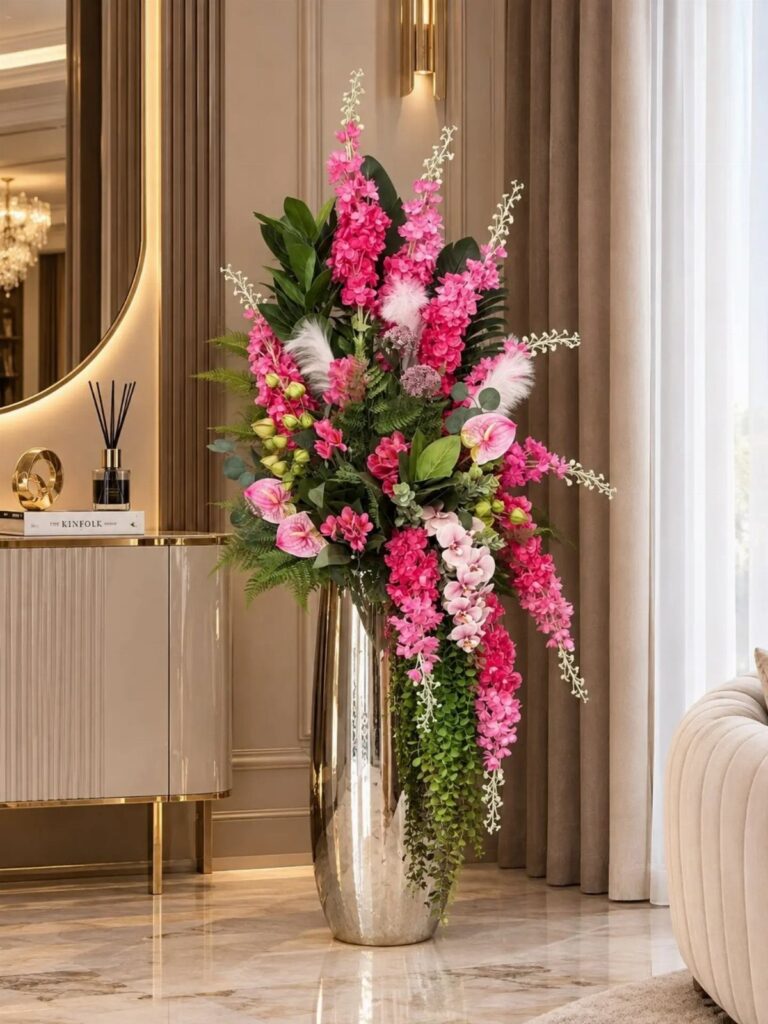
Artificial flowers range from one ranunculus bush in a wicker basket, which needs no arranging, to Lego botanicals that make a weekend activity of building brick by brick.
Your free time decides which end suits you, and where the flowers will sit decides the rest: a vase on a table wants full stems, while a gift box or wrapped bouquet takes short ones and no vase.
Either way, none of them need replacing every 7 days like real blooms.
1. Pottery Barn Faux Flowers

Peonies are the stem I’d pick for a first faux arrangement, because the ruffled petals and layered heads read as real even at a glance.
A simple vase in matte white ceramic keeps attention on the blooms instead of the container.
Pottery Barn sells a broad range of faux blooms and branches made to look real, so start there if you want something that won’t give itself away. Pricing varies by stem, so compare before buying a dozen.
2. Artificial Ranunculus Flower Bush

Ranunculus has so many tight petal layers that the faux versions often look better than other silk flowers do. Packed into a small wicker basket, a single bush becomes a kitchen centerpiece with no arranging at all.
The maker’s point is hard to argue with: real flowers are beautiful, but not replacing them every 7 days is a real perk. If you have little time or a small budget, that is the whole case for this one.
Set the basket on a board or tray so it reads as styled, not just left out.
And while faux plants typically focus on adding greenery and life into a room, artificial flowers can help complement your decor with jewel tones and pastels. A design trick that’s especially helpful when the world outside your windows remains dull and grey.
3. Lego Botanicals Flowers
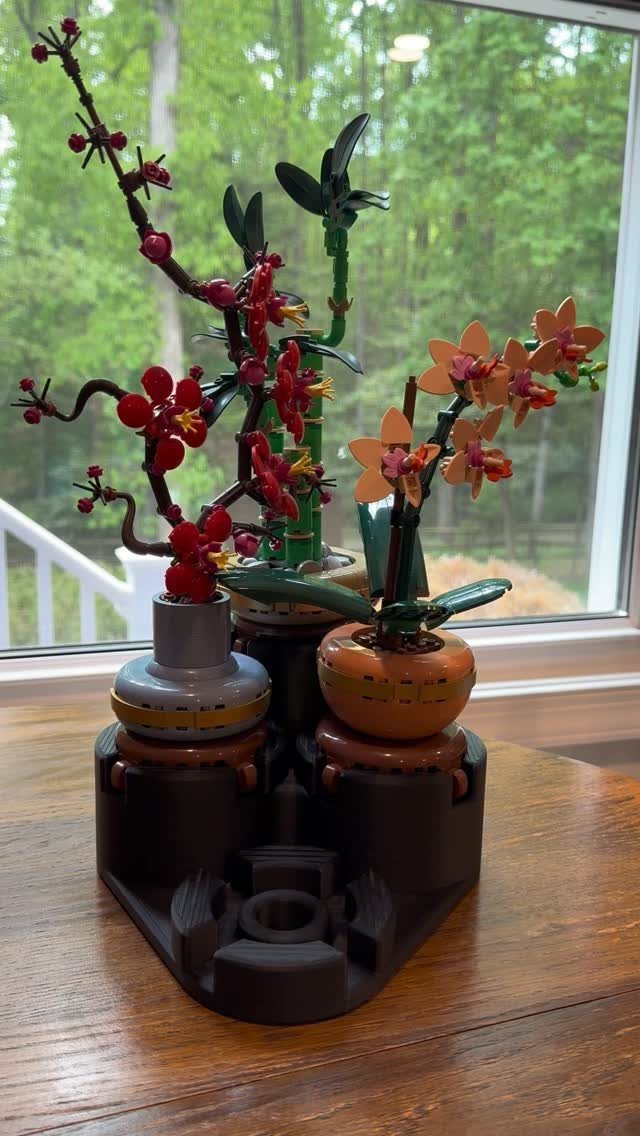
Building your flowers brick by brick turns decor into a project, which suits anyone who wants a weekend activity more than a shopping trip.
The Lego botanical pieces, cherry blossoms and orchids included, look like a sculpture collection instead of a craft.
These make sense where real plants struggle, and they never need water. I’d group 2 or 3 pieces of different heights on a table near a window and leave most of the surface clear.
Expect to spend time building, not just unpacking.
4. Colorful Hydrangeas
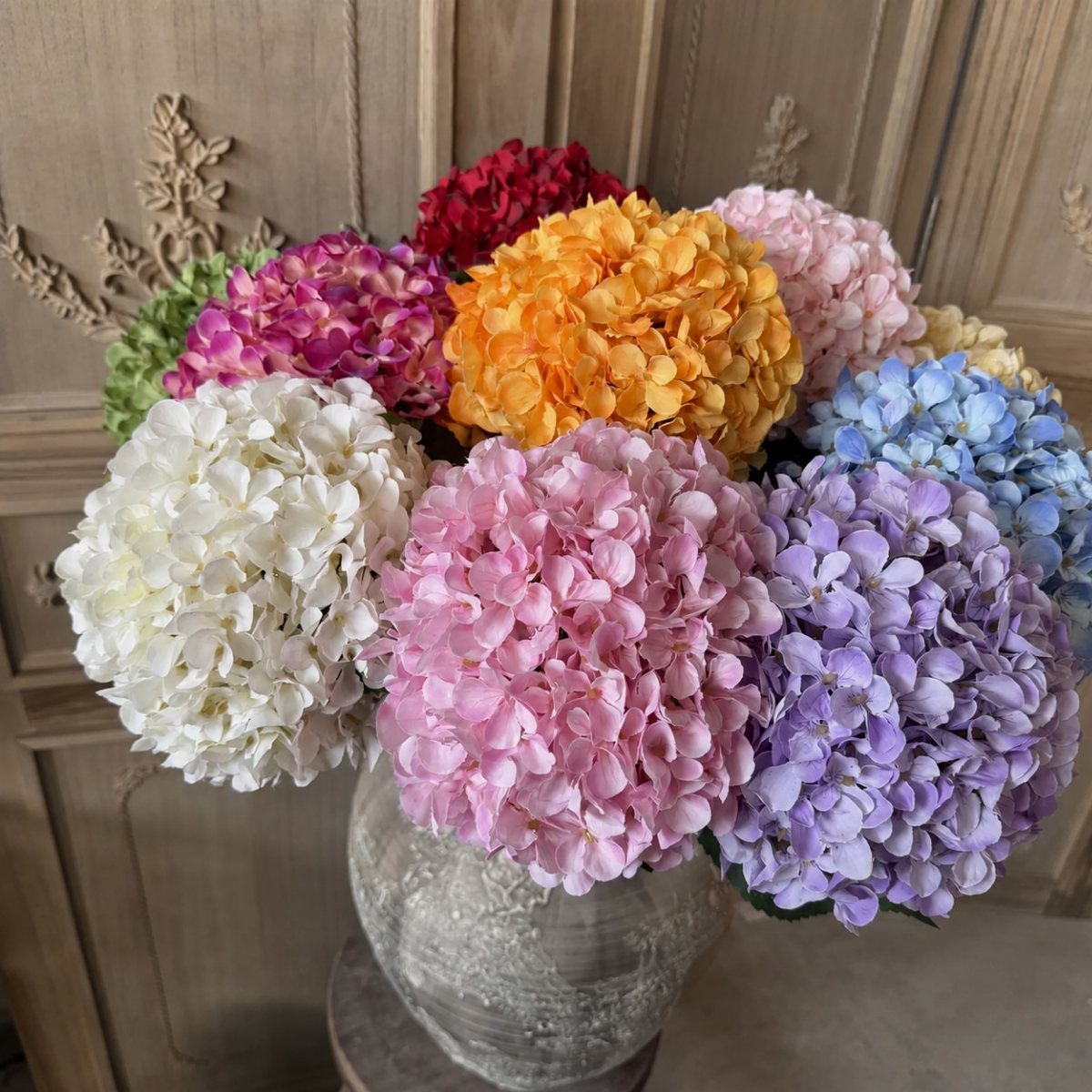
Multicolored hydrangeas hide the one flaw most faux flowers have: when every bloom is a slightly different shade, nobody notices that they’re fake. Mixed tones look natural because real hydrangeas shift color across a single head.
A textured vase in a muted tone like grey adds contrast to the smooth petals. Since hydrangeas are full and round, a few stems fill a vase better than a larger bunch of slim flowers would.
Fluff each head by hand after unpacking so the florets sit apart.
5. Christmas Artificial Flowers

Red poinsettias, berries and ornaments in one pot make a Christmas piece that never wilts and can be stored and reused each December. Pine needles add the green that keeps the red from looking flat.
Keeping the whole arrangement in one color family, as above, makes it look planned. A red pot echoes the blooms and finishes the look without further decoration.
For a limited budget, one good pot like this beats scattering several small ones around the house.
6. Pink Artificial Flowers

Pink and white tulips in a boot-shaped vase give a spring display some personality without much effort. The two-tone mix looks softer than a single color, and tulips have a clean, simple shape that faux versions copy well.
I’d keep the tray small so the arrangement doesn’t get crowded.
When spring ends, swap the figurines and keep the tulips.
7. Mixed Flowers in a Pedestal Vase
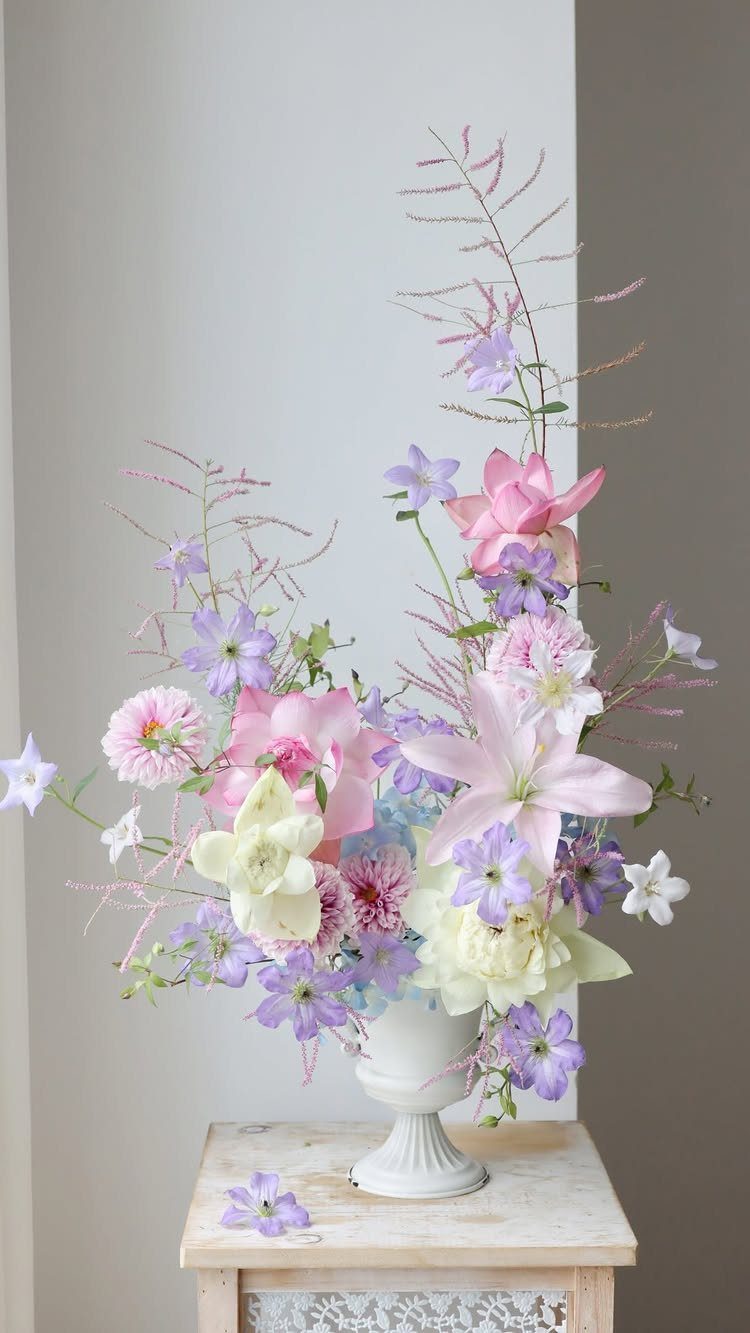
A pedestal vase lifts an arrangement off the table, so a loose, airy mix of pink, purple and cream stems gets room to spill and still looks deliberate.
I’d keep the vase plain white, as here, so the colors do all the talking.
Place it on a small table against a clear wall and leave the surface around it mostly empty. Bend stems outward at different angles by hand, because straight stems make a big arrangement look stiff.
8. Lush Flowers in a Ceramic Vase
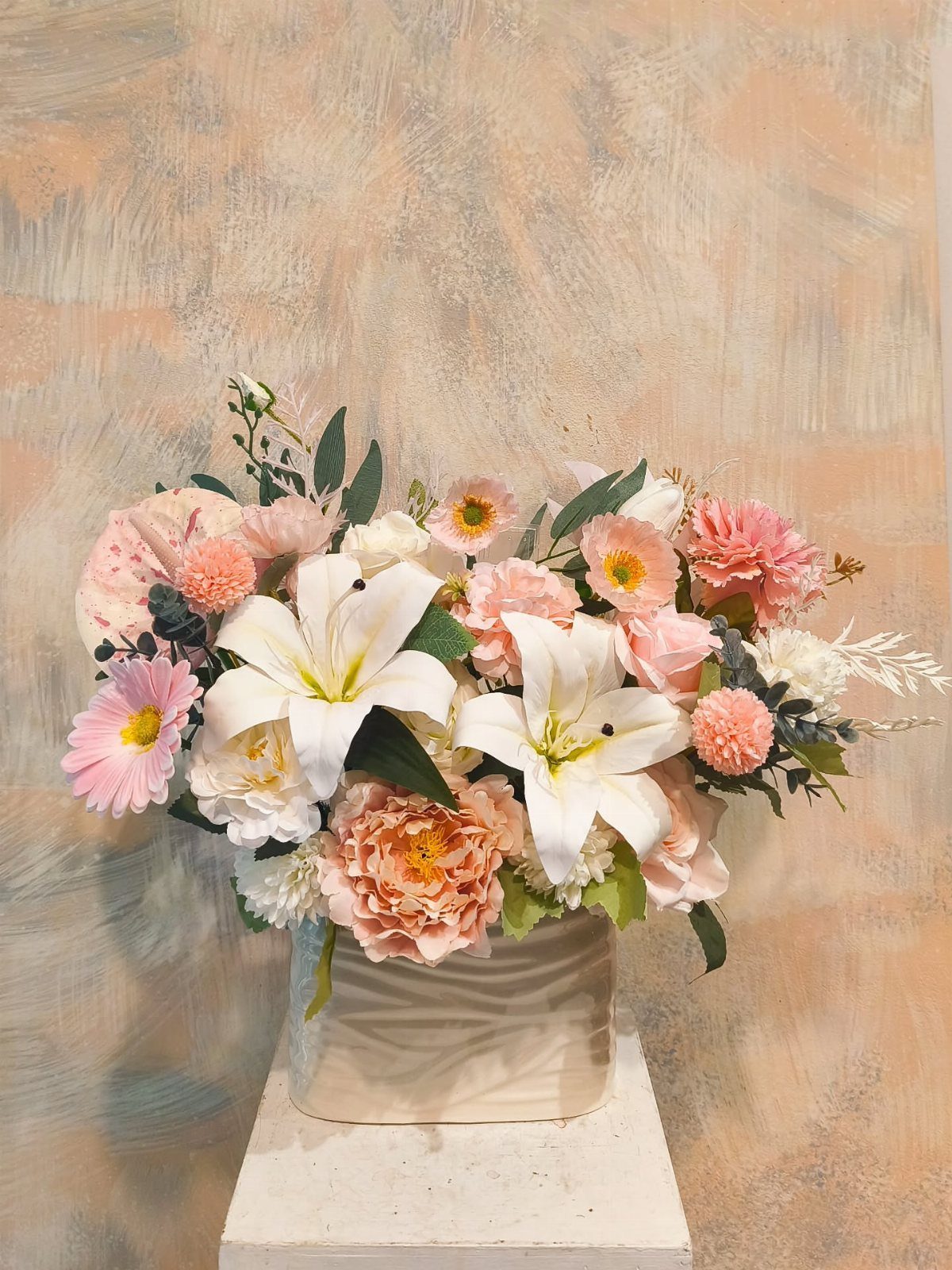
Full arrangements like this one look richest with a mix of flower shapes: big white lilies, round pink peonies and smaller gerbera daisies keep the eye moving. A white ceramic vase holds that much color without competing.
Set the tallest stems in first, then tuck the peonies low and fill gaps with the smaller blossoms. A textured neutral wall behind it adds depth, so skip extra decor nearby.
Pick one pink and repeat it across the peonies and daisies so the mix feels planned.
9. Moody Burgundy Flower Display

Burgundy and brown read as moody, and dried foliage makes faux stems look more convincing because real dried leaves are already muted and uneven. A white ribbed vase lightens the dark palette and adds texture.
On a kitchen counter or console, I’d pair it with a candle in a brass holder, since the warm metal suits the deep reds. Keep the arrangement narrow so it doesn’t crowd the counter.
This is my pick for fall, and it needs no swapping when the season changes.
10. Bold Blue and Yellow Arrangement

Blue and yellow sit opposite each other on the color wheel, so a bright yellow vase with blue blooms and blue leaves pops hard against a wall in soft white or cream.
Blue leaves are the unusual touch; they keep the blue from looking like a few stray flowers.
One loud arrangement works in a room, and two start to fight.
It suits a sunny kitchen or entry better than a dark corner.
11. Flowers in a Gift Box

A box turns faux flowers into something you can hand over, which makes it a smart gift for someone who kills every plant.
Pink lilies, yellow daisies and roses sit tight together, and a gold ribbon with a congratulatory card finishes it.
To copy it, choose a sturdy box with a lid, pack the stems in short, and add the card last. Short stems mean no vase is needed.
It also works on a shelf or marble counter long after the occasion.
12. Wrapped Colorful Bouquet

Wrapping faux flowers in black paper makes a bouquet look like it came from a florist, and the dark wrap makes bright colors stand out. Baby’s breath fills the gaps between the larger blooms and softens the mix.
Small figurines tucked among the stems add a playful touch, which suits a gift or a desk display. I’d lay it on a soft surface like faux fur, or tie the stems and lean it in a tall jar.
Keep the paper wrap loose enough that the blooms can fan out.
Frequently Asked Questions
Where is the best place to buy realistic artificial flowers?
For realistic faux stems, my first stop is Pottery Barn, whose range of blooms and branches runs wide and leans toward natural-looking petals.
Stems made from fabric, paper or metal are a step up from the old plastic craft-store kind and from resin-filled pre-arranged vases.
How to make artificial flowers look real?
Pick shapes that copy well, such as peonies, ranunculus and tulips, and choose multicolored stems like hydrangeas, because real heads shift color and a mix of shades hides the fakeness.
After unpacking, I pull each flower head apart with my fingers so the florets separate, then bend the stems at different angles, because a row of straight stems looks stiff.
Mixing flower shapes and adding dried foliage also makes an arrangement more convincing.