
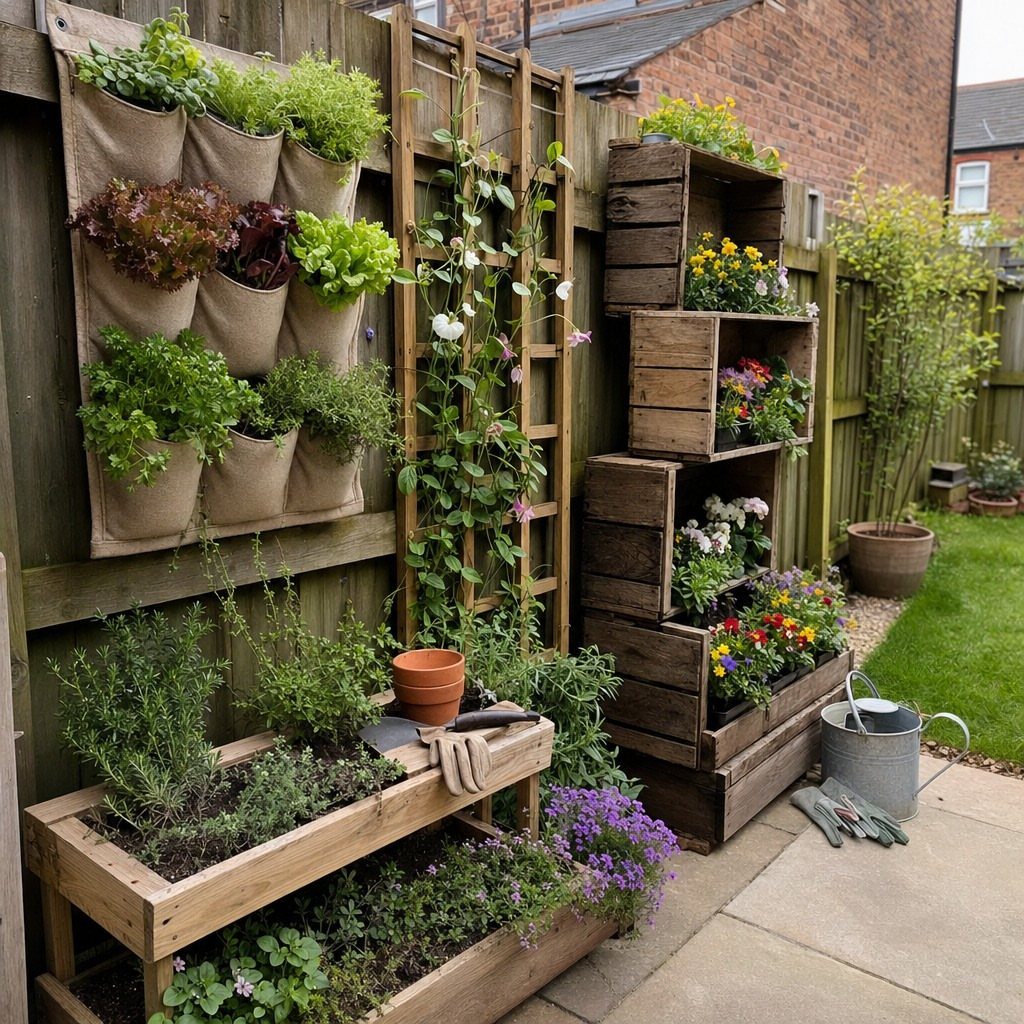
The wall you already have picks the idea: a fence takes tire planters, a flat bare wall suits a grid planter wall, and mounted staghorn ferns work where you want something light and sculptural.
The range runs from plastic bottle planters up to a rustic stone wall, a low retaining wall and white stucco garden walls.
1. Green Wall
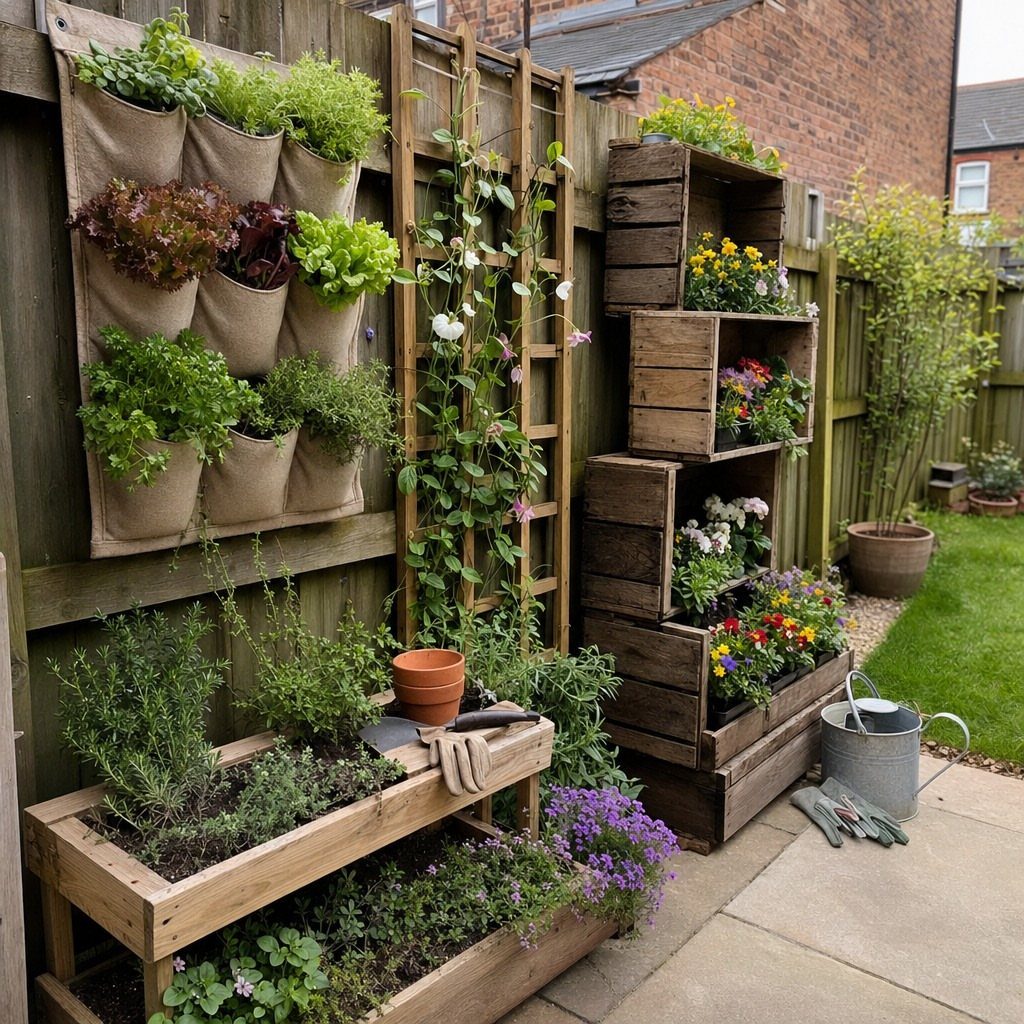
A plain fence turns into a layered garden once pockets, crates and a trellis share it.
Layer the wall: felt pockets for herbs and small foliage, a trellis for climbing flowers, and crates at the base for heavier pots, so it reads as a garden instead of one flat grid.
I like mixing the three because each container sits at a different depth, so the wall never reads as one flat grid. Climbing flowers belong up the trellis, and the crates at the base hold potted foliage.
2. Floating Plant Shelves

Floor space stays free when the pots move onto the wall. Small wooden shelves in mixed stains and sizes look collected rather than matched, and I prefer that to a perfectly even row.
Keep the pots small so the shelves stay light-looking. Wet soil weighs more than it seems, so screw brackets into studs or use wall anchors rated well above the load.
3. Hanging Garden

A single metal rail mounted along a fence can hold a full row of hanging baskets, which means one set of anchors instead of a dozen hooks.
I’d choose a rail over separate hooks because you can slide the baskets along and space them evenly.
Pink and purple blooms with trailing greenery look best against plain brown boards, since the fence stays quiet and the color does the work.
Choose spillers like ivy or sweet potato vine, since their stems drape over the edge and hide the hardware.
4. Trellis-trained Vine Wall
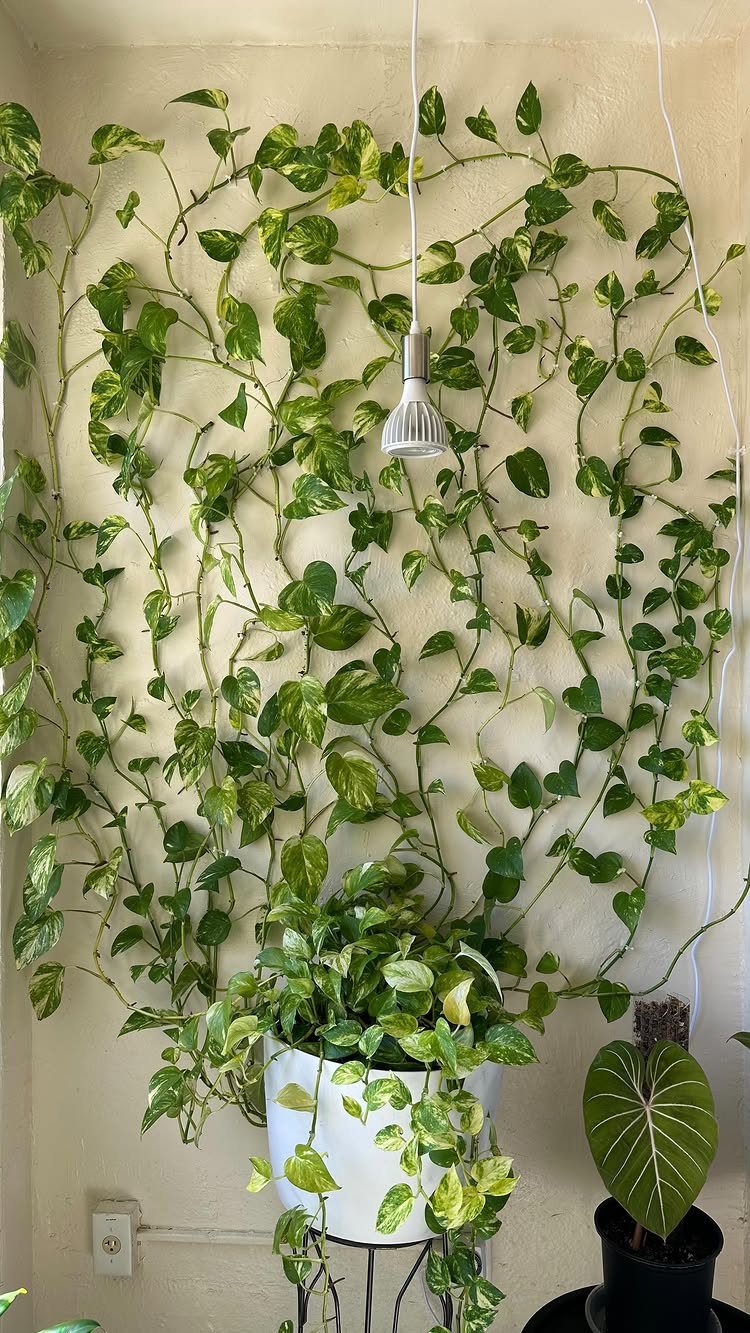
Pothos is an easy plant to train. Set the pot at the base of a cream wall, fix a trellis behind it, and weave each new stem through as it lengthens.
A hanging grow light above the vine helps in a dim room, and a second plant in a black pot below balances the arrangement. Start training early, while the stems are still bendy.
5. Rustic Stone Wall

Curves do more for a stone wall than height does. A tiered, curved wall of grey blocks makes planting pockets on each level, and ferns and shrubs settle into them easily.
Stacked stone works well beside a gravel path or a lawn, where its uneven texture softens the line between hard and green surfaces. I’d skip a straight line unless the yard is very formal.
6. White Stucco Garden Walls
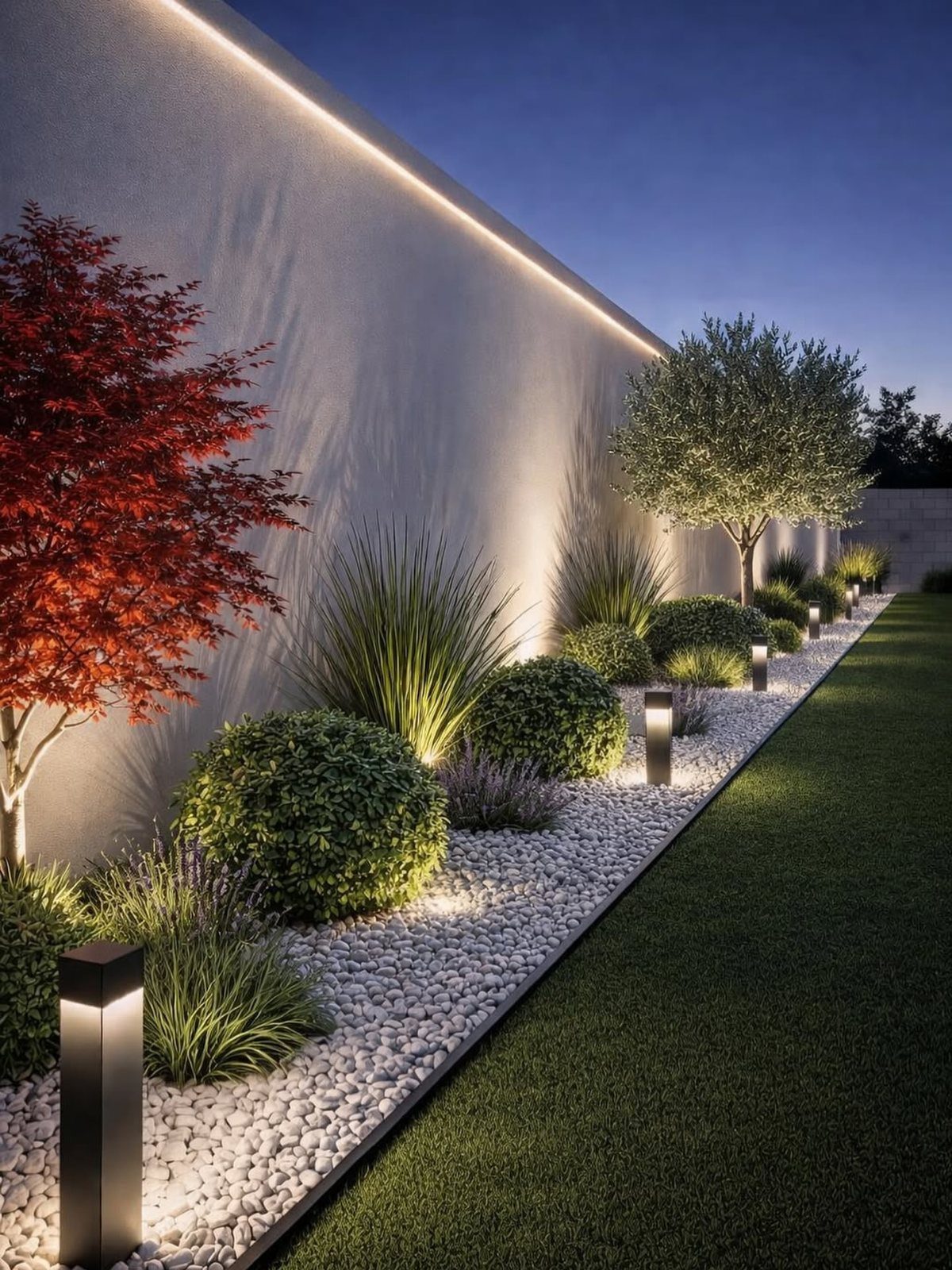
Match the garden wall to the house and the whole yard looks planned. White stucco with a lit top edge echoes a modern exterior, and white pebbles at its base keep the color going down to the ground.
Red-leaf shrubs such as loropetalum or nandina give far more contrast on white stucco than green ones do.
7. Painted Garden Backdrop

Paint does the decorating here, so the plants can stay simple.
A painted wall with a flower pattern needs only plain green foliage in front of it, and I’d keep the planters low and uncluttered so the artwork stays the focus.
Keep the painted area larger than the planter group so it reads as a backdrop, not a border.
8. Low Retaining Wall
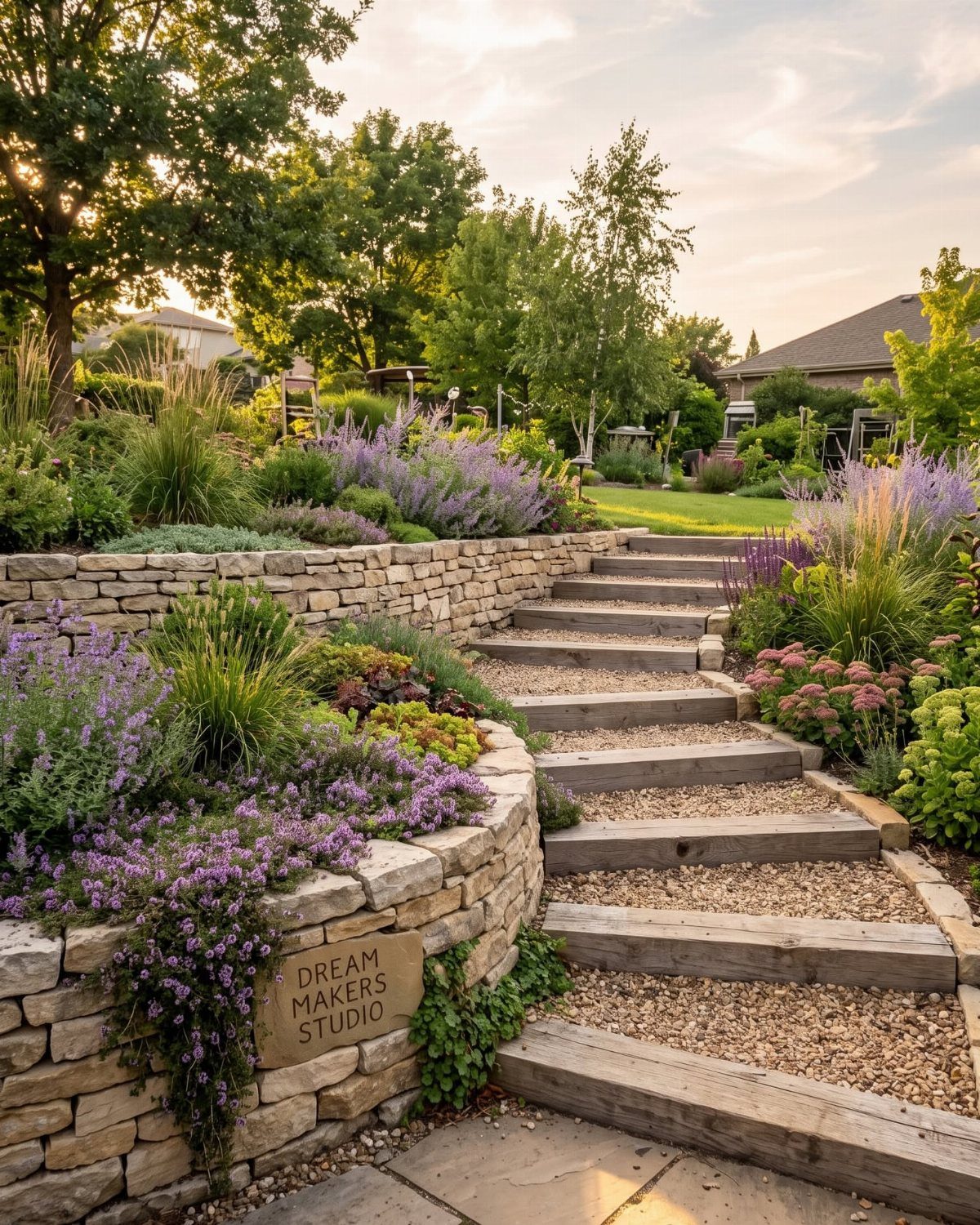
Holding the soil back at a low height keeps the bed neat and leaves the yard open for walking and sitting.
Purple flowers against stone with green leaves between them is a pairing I like, because the gray stays calm and the color stands out.
Run the wall beside the steps so the planting follows the path. A low line also won’t block the view across the yard.
9. Plastic Bottle Planters
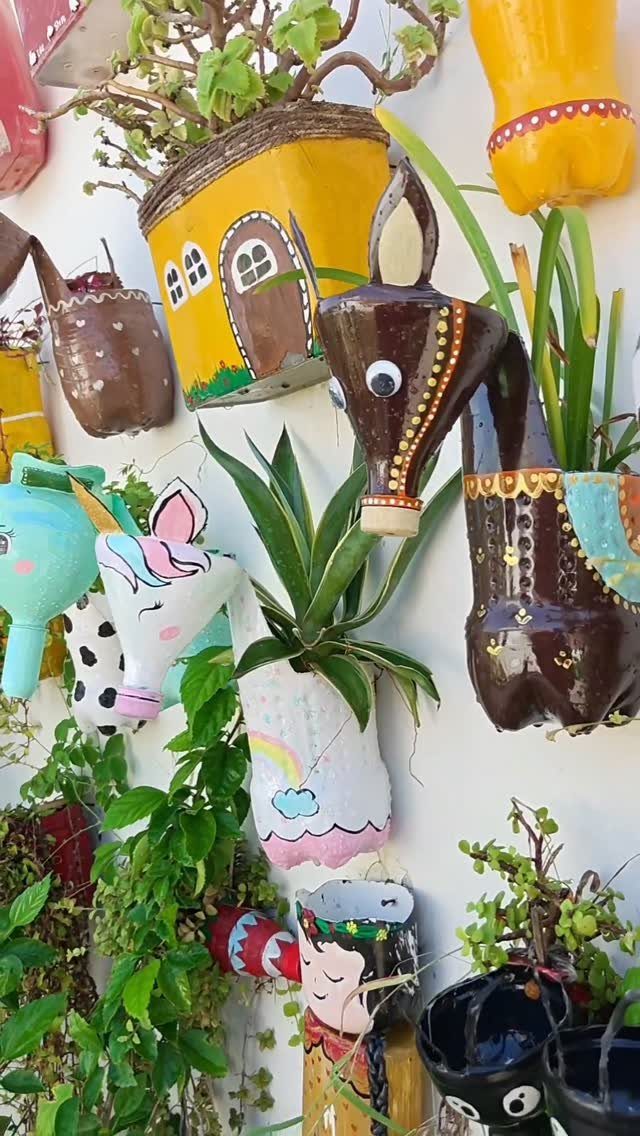
Bottles headed for the recycling bin make planters that cost little beyond paint. Cut an opening in each, add drainage holes, and paint them as animals or small houses, then fix them to a fence or wall.
Painted characters suit a kids’ corner or a play area. For a calmer look, I’d paint every bottle the same single color and let the plants supply the variety.
10. Grid Planter Wall
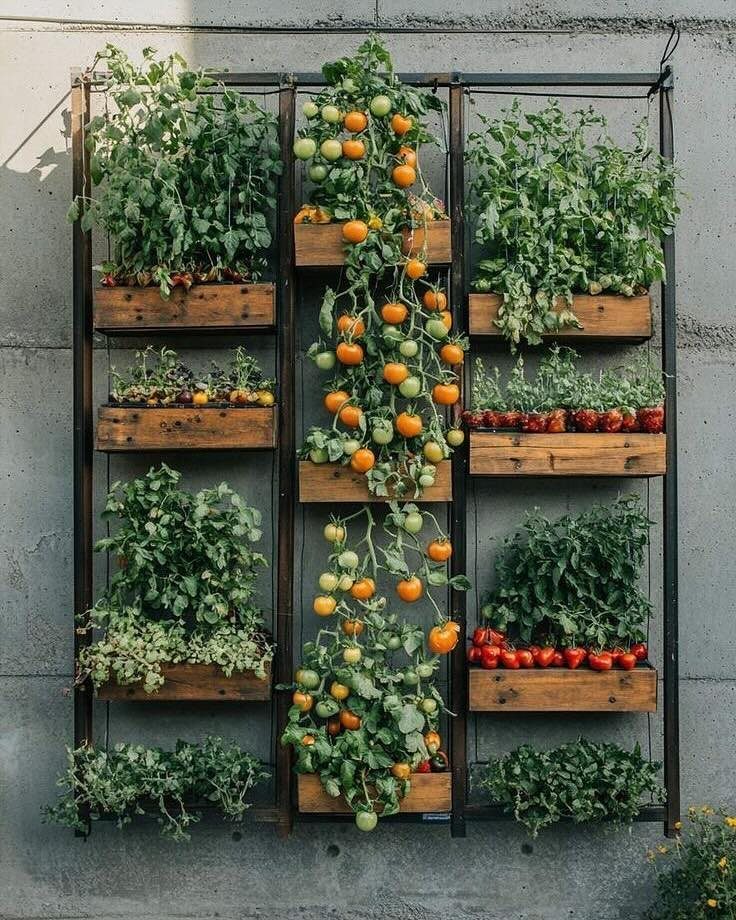
Tomatoes ripening in a grid of wooden boxes make a concrete wall look productive instead of bare. Matching rectangular planters keep the rows tidy, and leafy greens fill the boxes around the fruiting plants.
Use masonry anchors on concrete; ordinary wood screws will not hold. I’d put the tomatoes in the boxes that get the most sun and give the greens the shadier spots.
11. Mounted Staghorn Ferns
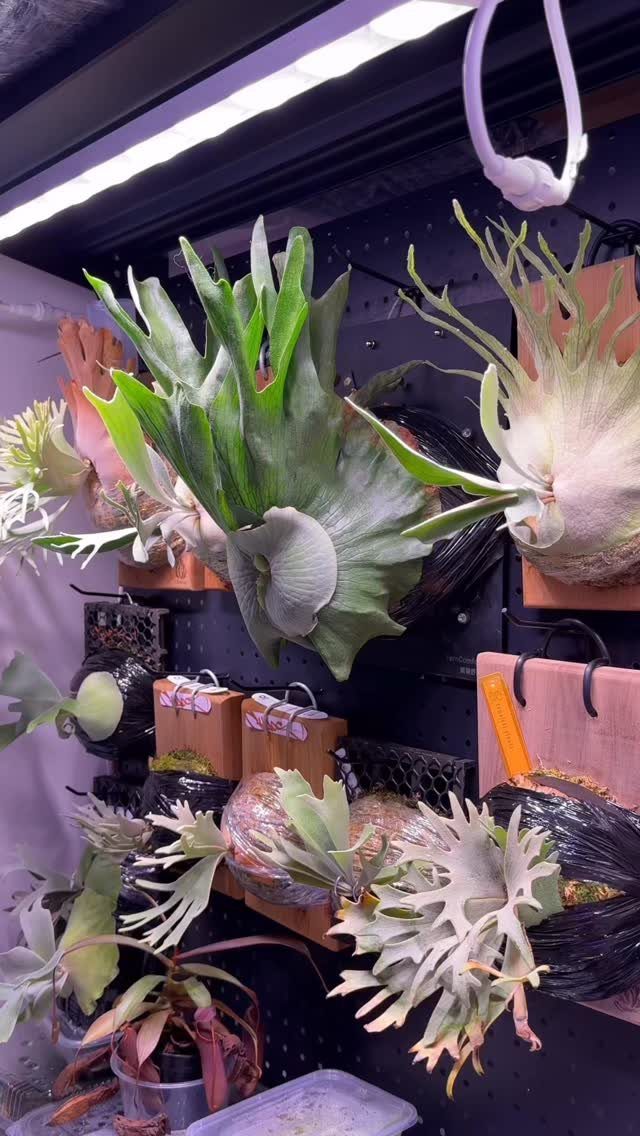
Staghorn ferns grow on a board with no pot at all, which is why a dark wall suits them so well.
Air plants can share the same mesh and boards, and a bright LED grow light above is what makes the arrangement work in a dim spot.
The grower of this board expects it to be completely full within 6 months. Leave gaps when you mount, because the ferns will fill them.
12. Fence-mounted Tire Planters

Half a tire makes a sturdy planter for a plain wooden fence. Three in a row filled with colorful flowers give the boards a bold, cheerful band of color.
Fasten each one through its back into a post or rail instead of a single thin board. One paint color across all three keeps the fence calm, and the blooms can supply the variety.
13. Mounted Flower Pots
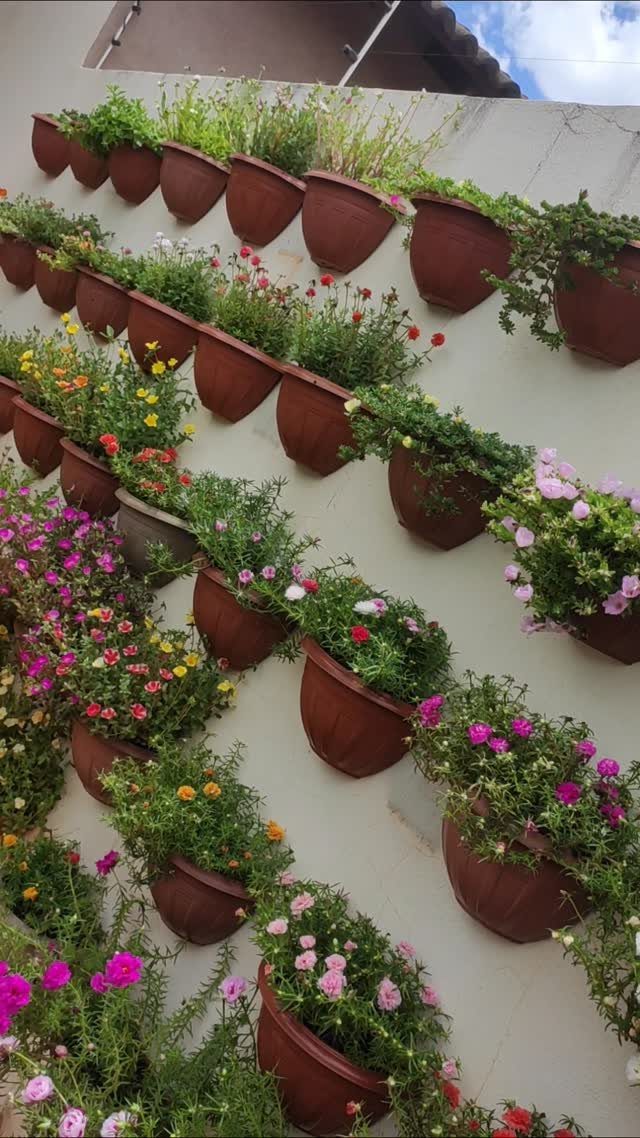
Individual pots fixed straight to a plain wall turn blank space into rows of color. Matching brown plastic pots keep the grid tidy, so the flowers supply all the variety.
Mount the pots in even rows with equal gaps, and fasten each one into the wall itself, not just a thin surface layer.
Brown pots and bright blooms read clearly on a pale wall, so a white or soft cream surface is the best backdrop for this setup.
14. Wall-mounted Herb Planters

Herbs stay within arm’s reach when three rectangular planters share one wooden frame. Building the frame first means you drill into the wall once and hang everything from it, which I prefer to fixing each planter on its own.
White planters keep the look clean, and the green of the herbs does the rest.
Mix in a few other plants for height and trailing leaves, and set the frame close to a deck or patio so you can snip while cooking.
15. Climbing Flowering Vine
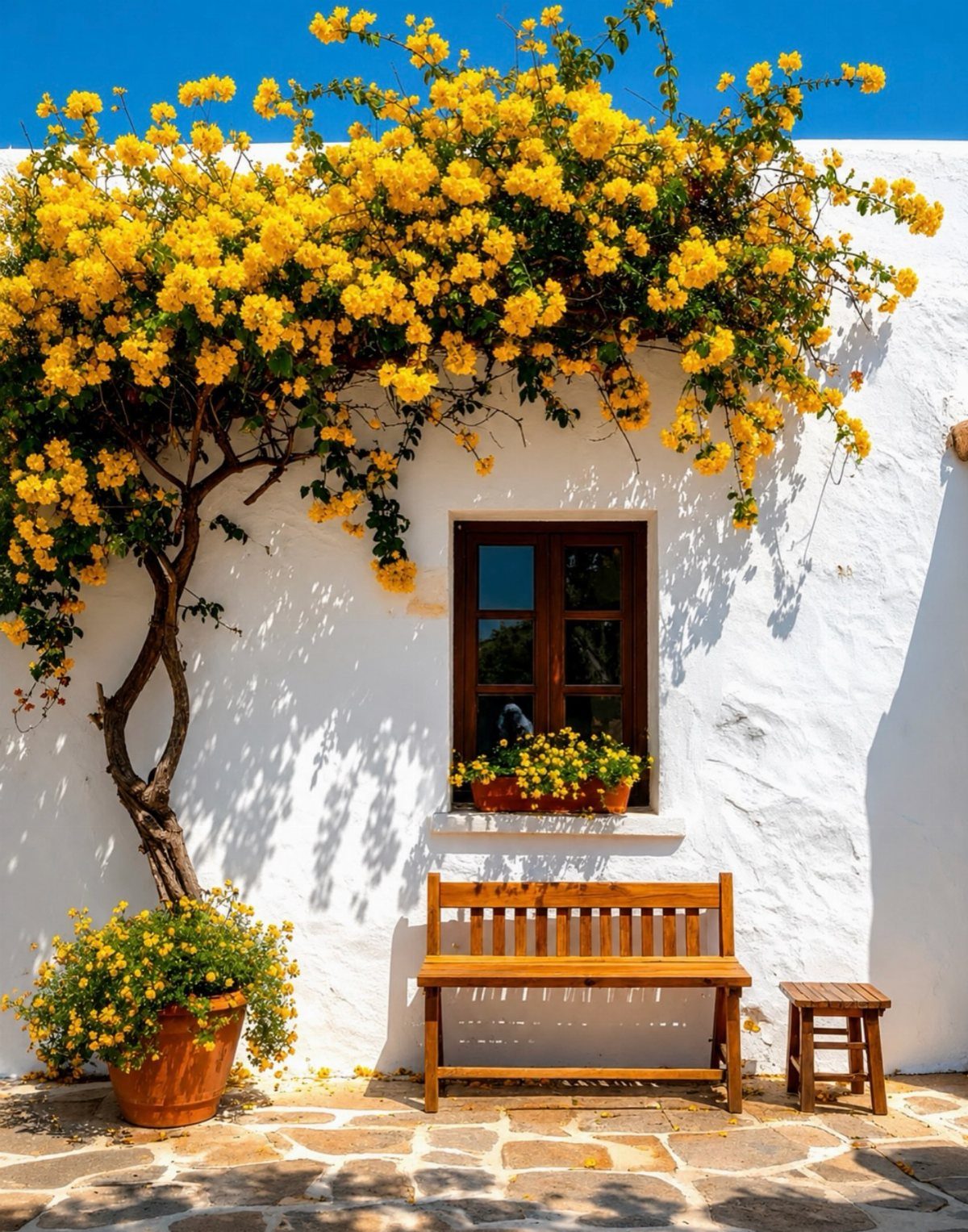
A yellow-flowering climber grown around a window frames the glass in color, and a white wall is the best backdrop for it.
Plant at the base and guide the shoots sideways and upward so the growth wraps the opening instead of covering it.
I’d keep the vine pruned back from the window edges so you can still open it. A bench below puts you right under the blooms.
16. Climbing Trellis Planters
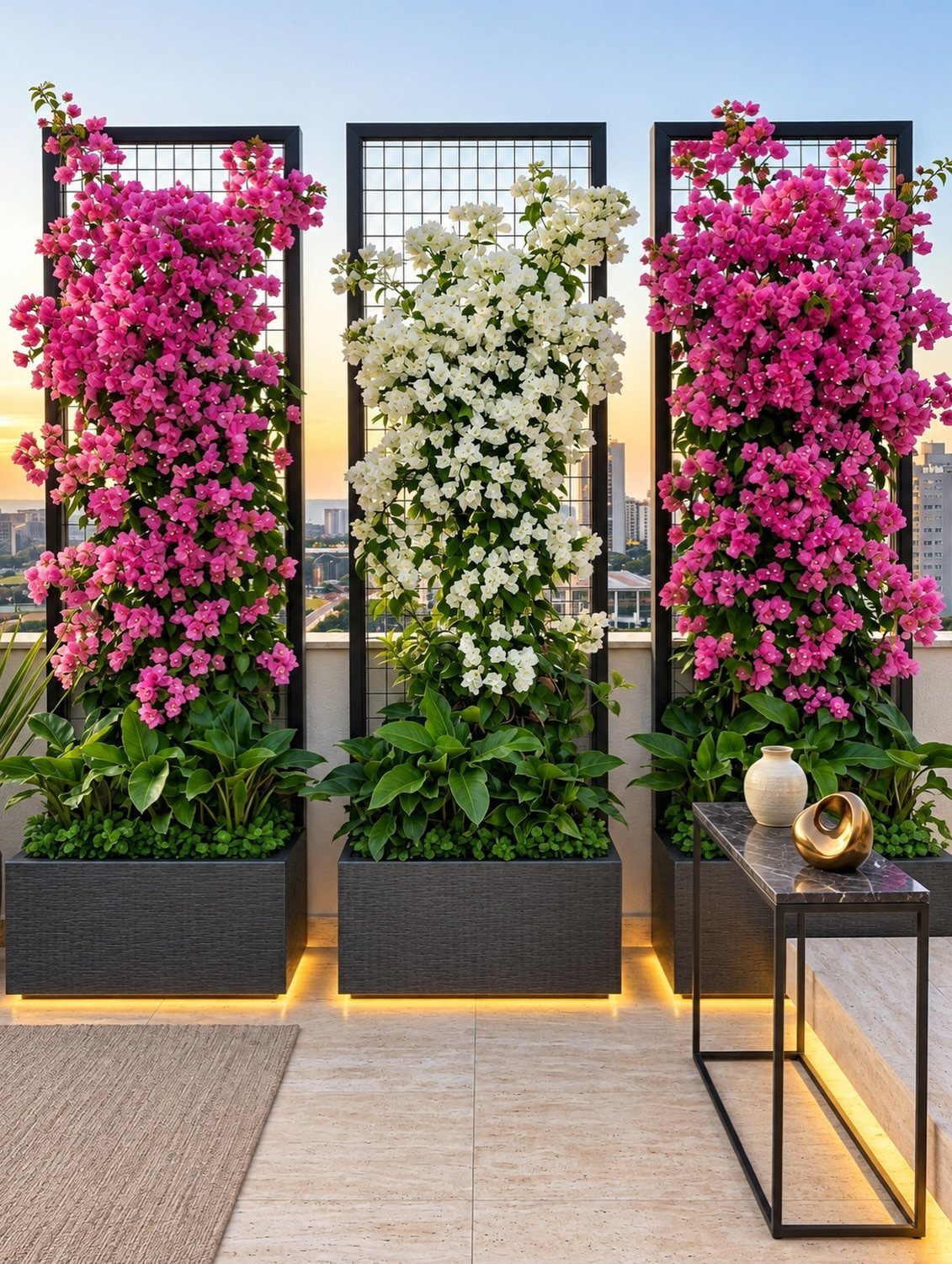
Black grid trellises behind tall black planters give a climber a clear path upward and keep the whole setup looking like one piece.
Bougainvillea in pink and white suits a terrace like this, since the grid is easy to tie stems against as they grow.
Set each trellis firmly into its planter, because tall growth catches wind. I’d mix pink and white plants in one row for contrast.
17. Vertical Plant Shelving

A curved shelf with vertical slats gives indoor plants a softer line than a straight bookcase does. Slatted wood lets you tuck pots between the uprights, so each plant sits at its own height along the curve.
Keep the pots varied in size, with larger ones low and small trailing plants higher. Against a neutral wall, the wood and greenery carry the room without extra decor.
Choosing Plants and Conditions
Right plant, right place settles most of this.
Watch how much light, moisture and wind your wall gets and check what the soil is like, then pick plants to match; a sheltered corner and an exposed stretch of the same yard can behave very differently.
Vertical planters dry out quickly, so compact, drought-tolerant plants suit them. Vines and trailing plants are the usual picks.
For flowering climbers outdoors, jasmine, morning glory, black-eyed Susan vine, moonflower and clematis all work. Climbing roses can look magnificent too, but only with the proper light.
Succulents and moss do well on an indoor living wall, and philodendron trails nicely from hanging planters. Monstera, anthurium and aloe vera hold up well on shelves and forgive a beginner’s missed waterings.
If you want screening at head height with the ground left open, pleached trees underplanted with low growth make a formal boundary.
Watering and Irrigation
Water decides whether a vertical garden thrives, and 2 things control it: enough growing media for the roots, and a way to water efficiently.
Small pockets of soil dry out fast, so give each plant as much volume as the structure allows.
A timed irrigation system takes the guesswork out, and a simple one is within reach of a DIY homeowner. DripWorks makes kits for indoor and outdoor walls that go together without much fuss.
If you’d rather buy a ready-made green wall, modular sets can be sized to your wall or fence. Several arrive already planted with small plug plants and have the watering lines built in.
No outdoor tap nearby? I’d pick a model with a reservoir box along the top, so you can fill it straight from a watering can.
Research has shown that air-purifying green walls in office spaces have improved workers’ skin quality and boosted immune systems.
Frequently Asked Questions
What’s the difference between a fence and a garden wall?
Height and purpose. A garden wall is low, usually 18–24 inches, and marks off a planting area while keeping the view across the yard open.
Height is the giveaway: a fence usually stands 6 feet tall to block views or keep people out, while a garden wall sits lower and mostly marks off a space.
If you want planting pockets and an open feel, I’d go with the low wall.
What are retaining walls?
A retaining wall holds back soil or other fill, which is why it shows up in raised beds, terraces, split levels, steps and platforms.
Built low in stone, the wall holds a planting bed’s edge crisp and leaves open ground for walking and sitting. Built alongside a staircase, the wall can step down with it, so the plants line the route you already walk.
What are the benefits of a vertical garden?
A vertical garden fits small or restricted spaces, because the pots move onto the wall and the floor stays free.
It also puts color and texture on a blank surface, screens an ugly view, and gives a small yard one spot where the eye lands.
What plants should be in a vertical garden?
Match plants to the light, moisture, soil and wind your wall actually gets, and favor vines and trailing plants. Soil volume is small and water drains straight down, so pick compact plants that tolerate dry spells.
Can I grow a vertical veggie garden?
Yes, as long as you pick climbing varieties: pole beans, peas, cucumbers, tomatoes and some squash all grow upward.
Mature plants get big and heavy, so the supports need to be sturdy. On a concrete wall, use masonry anchors for planter boxes, and give tomatoes the sunniest spots with leafy greens in the shadier ones.
Can I DIY a vertical planter?
Yes, and it can cost very little.
An old picture frame with a small wooden box fixed to the back works, as do thrift-store containers that hold soil, pots stacked on a stake through their drainage holes, pallets, and gutters mounted on a wall.
Soda bottles can serve too: cut a window in the side, punch drainage holes in the bottom, then screw them to a fence or wall.
How do I care for a vertical garden?
Water is what decides it. Deeper pockets hold moisture longer, so give every plant the most soil the structure can fit, and plan your watering before you plant.
A drip line on a timer waters on schedule, and a basic setup is a weekend job for a handy homeowner.