

How much each idea asks of your walls decides most of this list.
Wall decals and a leaning blanket ladder suit rental walls because neither needs a drill, and owners who are happy to commit can go bigger with barn wood shutters or a wood framed flag.
The projects run from a yarn hanging that fits in an evening to a spray-painted armoire, and I’d price each one against a store-bought version first, since tools for a one-off piece can cost more than the ready-made one.
1. DIY Wall Art
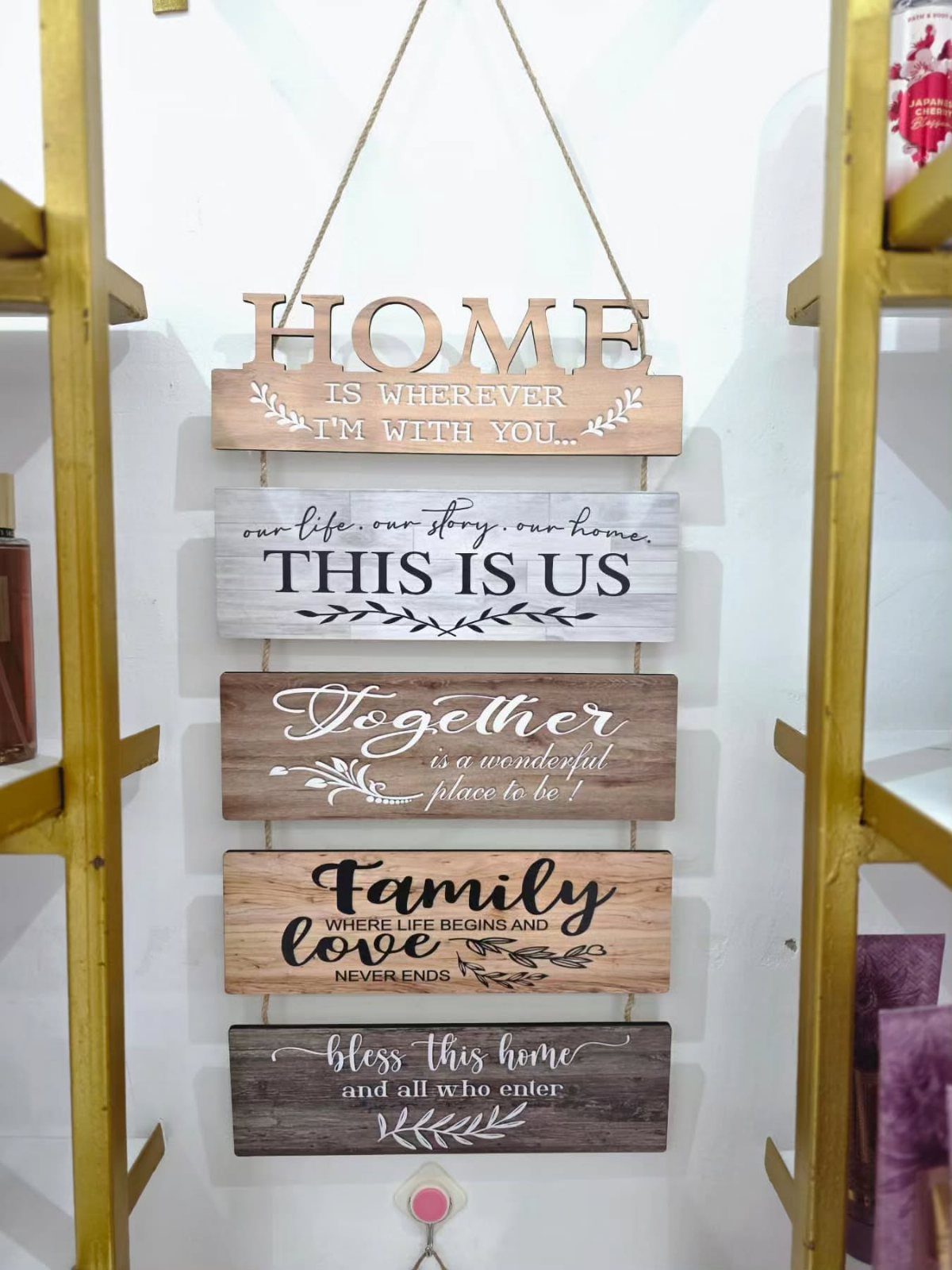
Wall art made at home starts with the wall, not the art. A narrow stretch between 2 shelves wants something tall, and planks stacked vertically fill it better than any frame off a store rack.
Short phrases read well at that height, so I’d keep each plank to a few words your household would actually say.
Plank wood and a little paint cost very little, and you can resize the whole piece by adding or dropping a board.
2. Painted Furniture
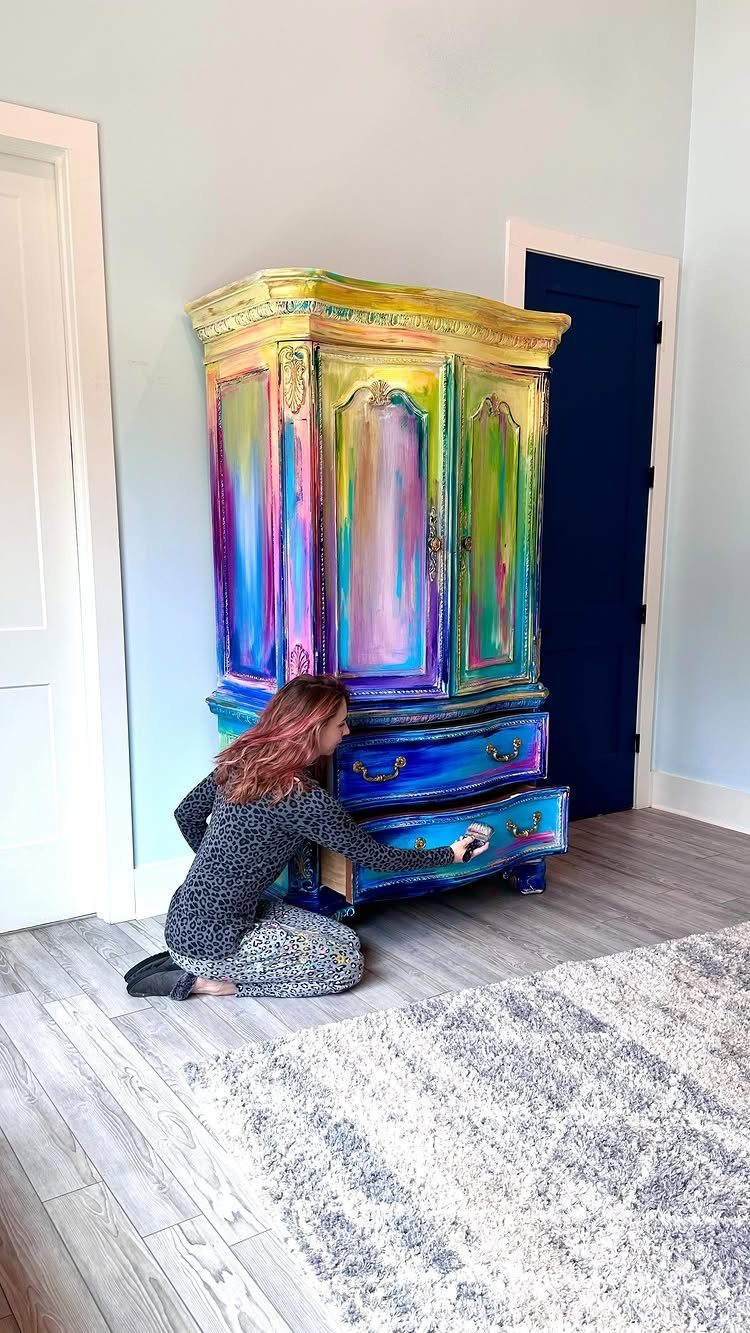
Spray paint reaches the carved grooves on an ornate piece that a brush tends to skip, which makes an old armoire a good candidate.
A full rainbow is a bold call, and I like it for a room that can carry one loud object. In a smaller space, a single color keeps the carving as the star.
Before any paint goes on, scuff the piece with fine sandpaper and wipe off the dust with a damp cloth. Several thin coats beat one heavy coat, which drips.
3. Wreaths and Garlands

A wreath on an interior door gives a plain white surface something to do, and it costs far less than most seasonal decor.
Evergreen with pinecones and berries suits winter, but the same base takes other materials when the season turns.
Renters can hang one from an over-the-door hook and skip the nail holes. A garland built from the same greenery can run along a mantel or shelf, so one trip for supplies covers both.
4. DIY Wall Decals
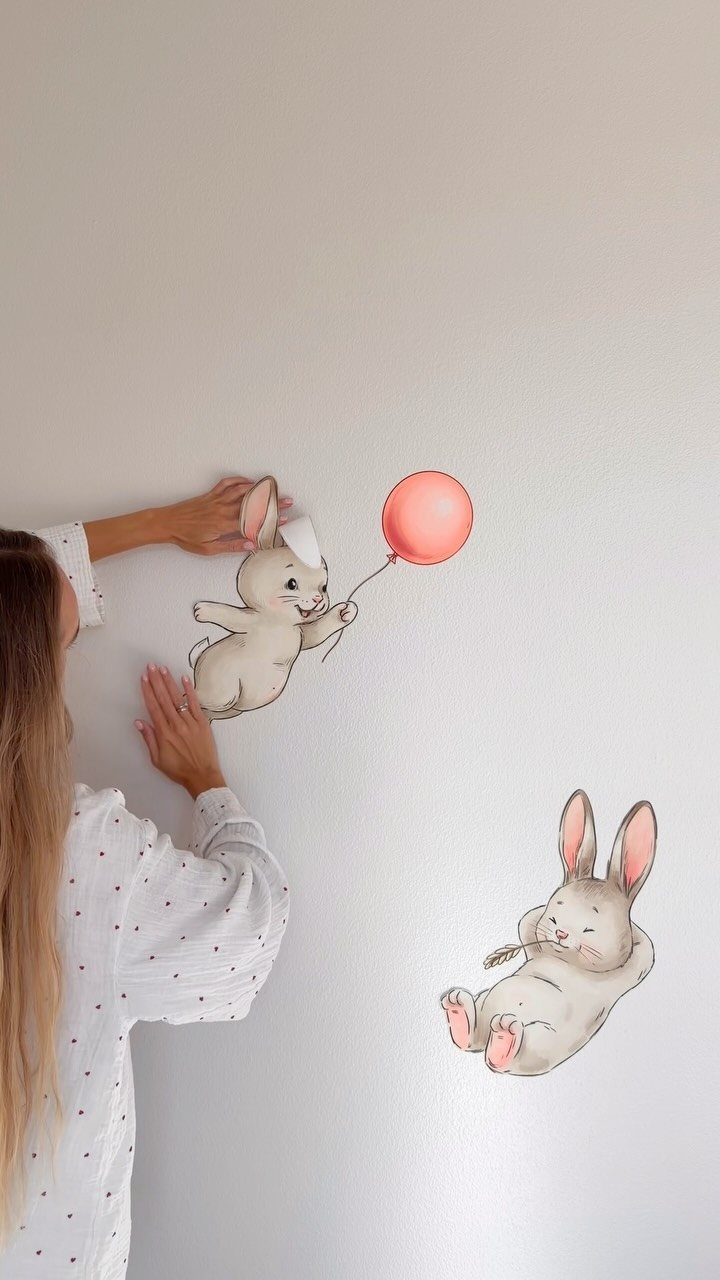
Adhesive vinyl lets you print or cut your own designs, which is how a pair of bunnies and a balloon ends up exactly the size the wall asks for. That makes decals a natural fit for a child’s room.
Wipe the wall clean and dry before you start.
Mark the position with painter’s tape, then press the decal on from the center outward to push out air bubbles. Vinyl usually comes off more easily than paint when the child outgrows the theme.
5. Yarn Wall Hanging
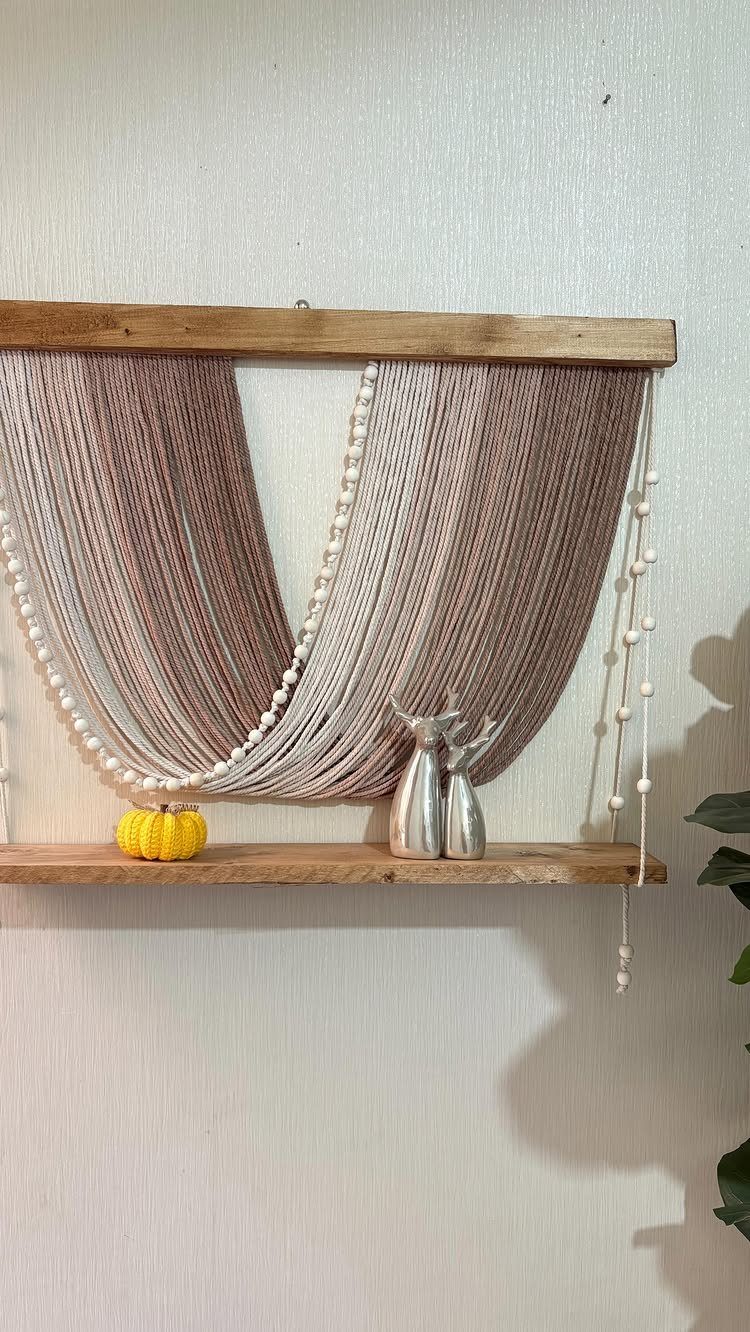
Yarn, a wooden dowel and scissors are nearly the whole shopping list for this one. Cut strands to equal length, fold each over the dowel and knot it, then trim the bottom edge straight or at an angle.
Threading a few wood beads onto the strands adds weight so they hang straighter, and it breaks up a plain color.
Tie a cord to each end of the dowel to hang it. It’s a beginner project that fits in an evening.
6. Wood Bead Garland
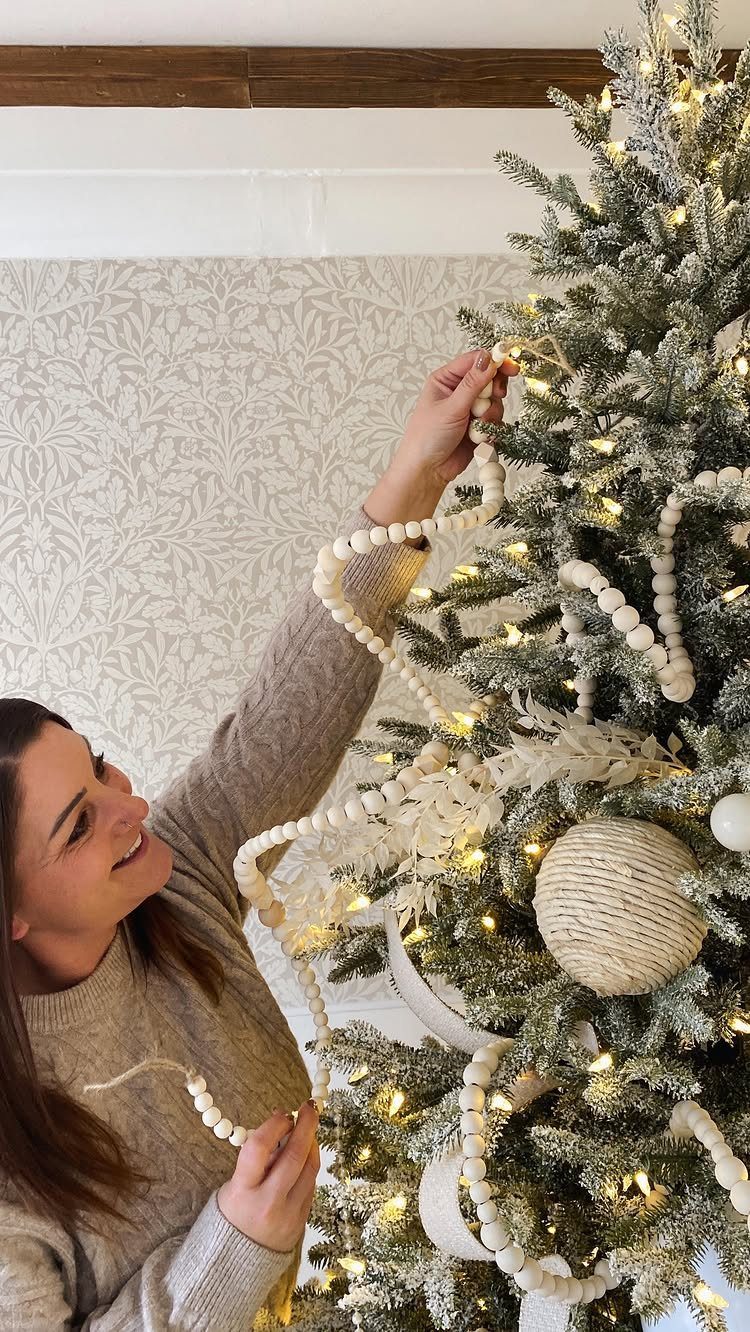
Light wood beads on a flocked tree read soft instead of shiny, which is why I’d pick them over metallic garland.
Thread the beads onto a strong cord, knot both ends, and mix a couple of bead sizes so the strand has some rhythm.
Wrap a piece of string around the tree first, then measure it to know how much cord you need. After the holidays, the same garland can drape over a mantel or window.
7. Felt Eucalyptus Stems
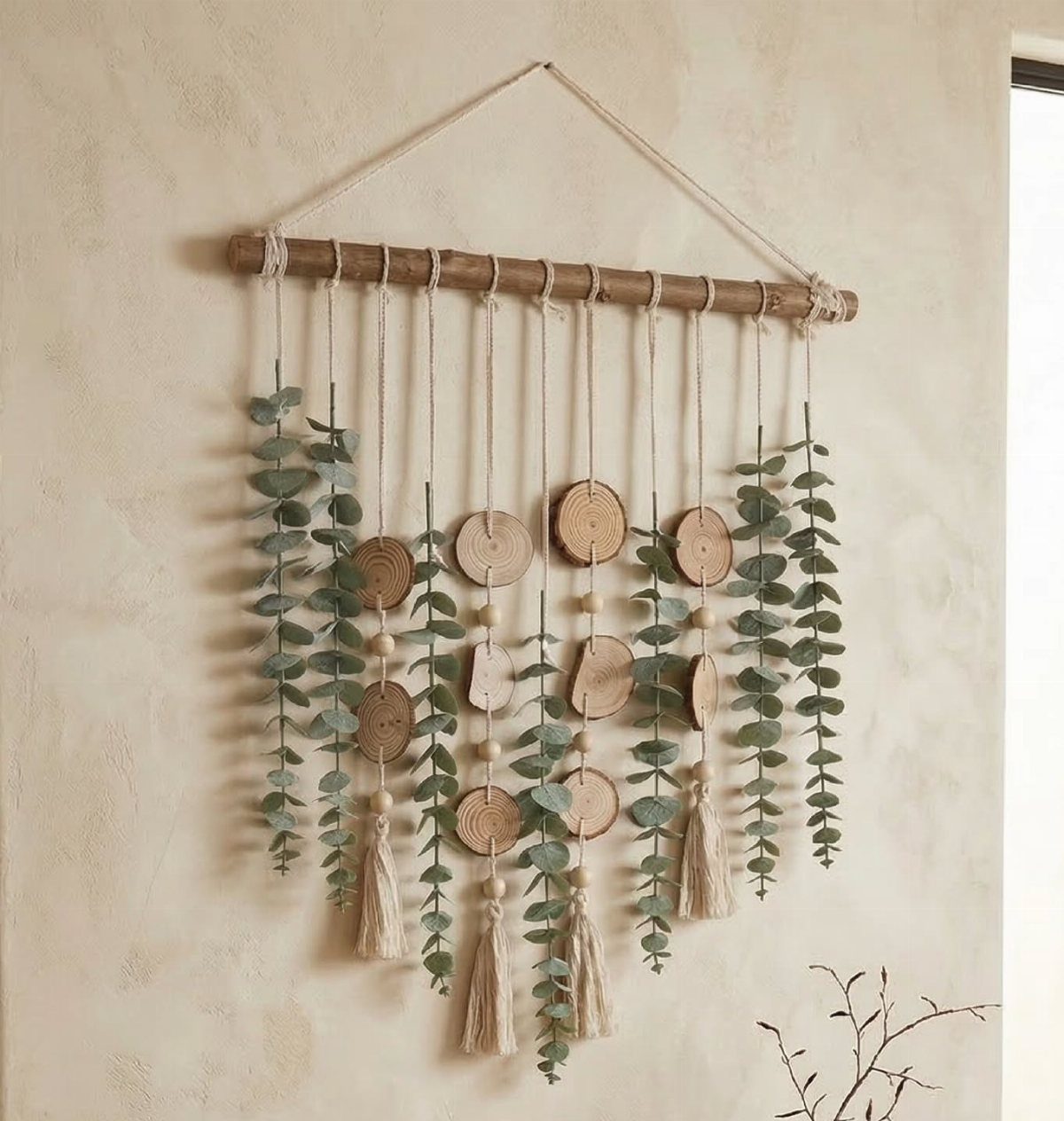
Felt leaves never wilt, so a eucalyptus hanging stays put with no water and no replacing.
Hang the stems from a branch on strings of different lengths, so the leaves layer instead of lining up in a row. Vary the leaf sizes a little too, since real eucalyptus never comes out uniform.
8. Driftwood Jewelry Hanger
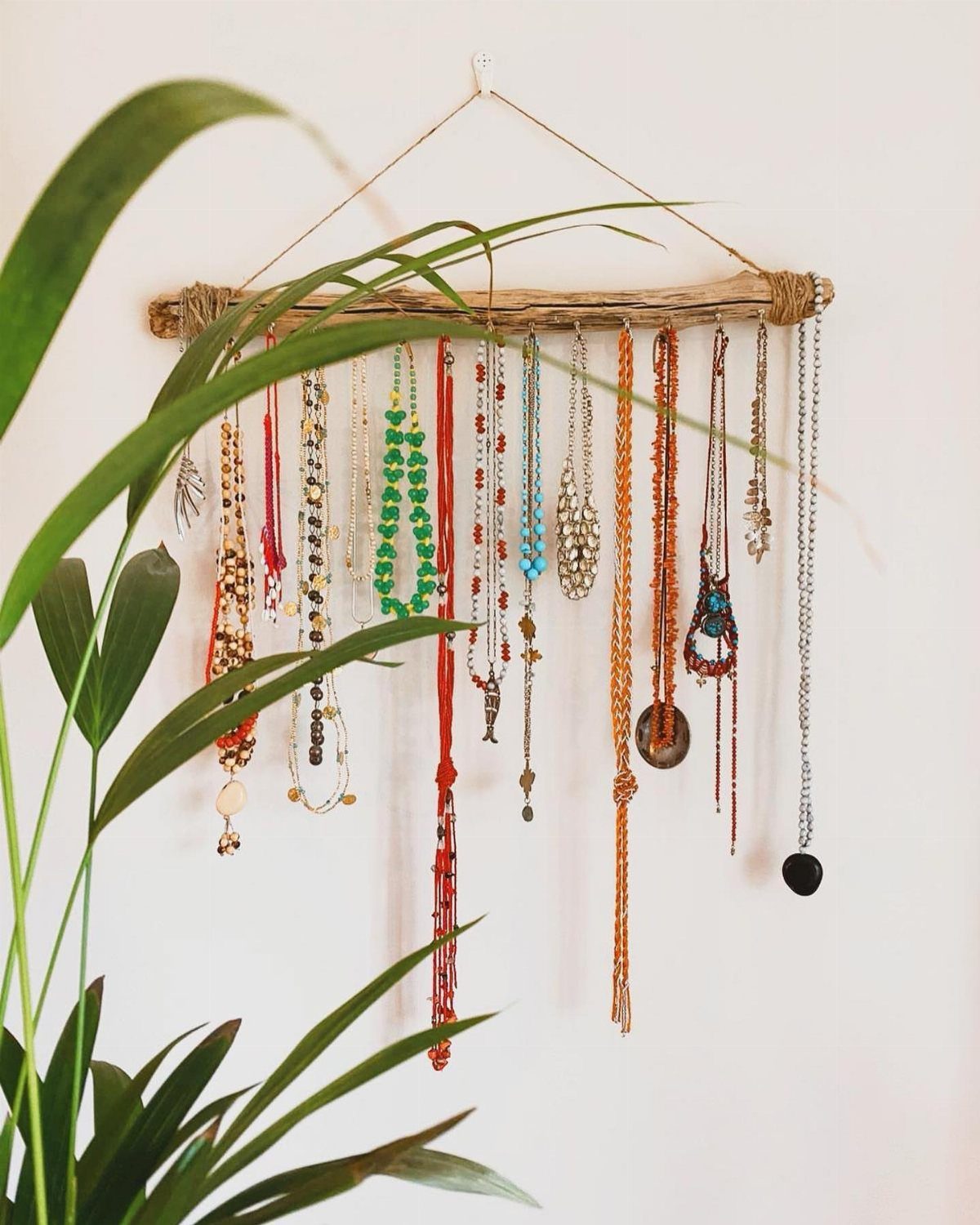
A driftwood piece with natural knobs and forks does the holding for you, so pick for shape before size. Hang it from a single string, then loop each necklace over a fork.
Colorful beaded necklaces stand out against a white wall, and seeing them all at once makes it easier to grab the right one. Keep the strands from overlapping, or they tangle.
9. Wooden Blanket Ladder
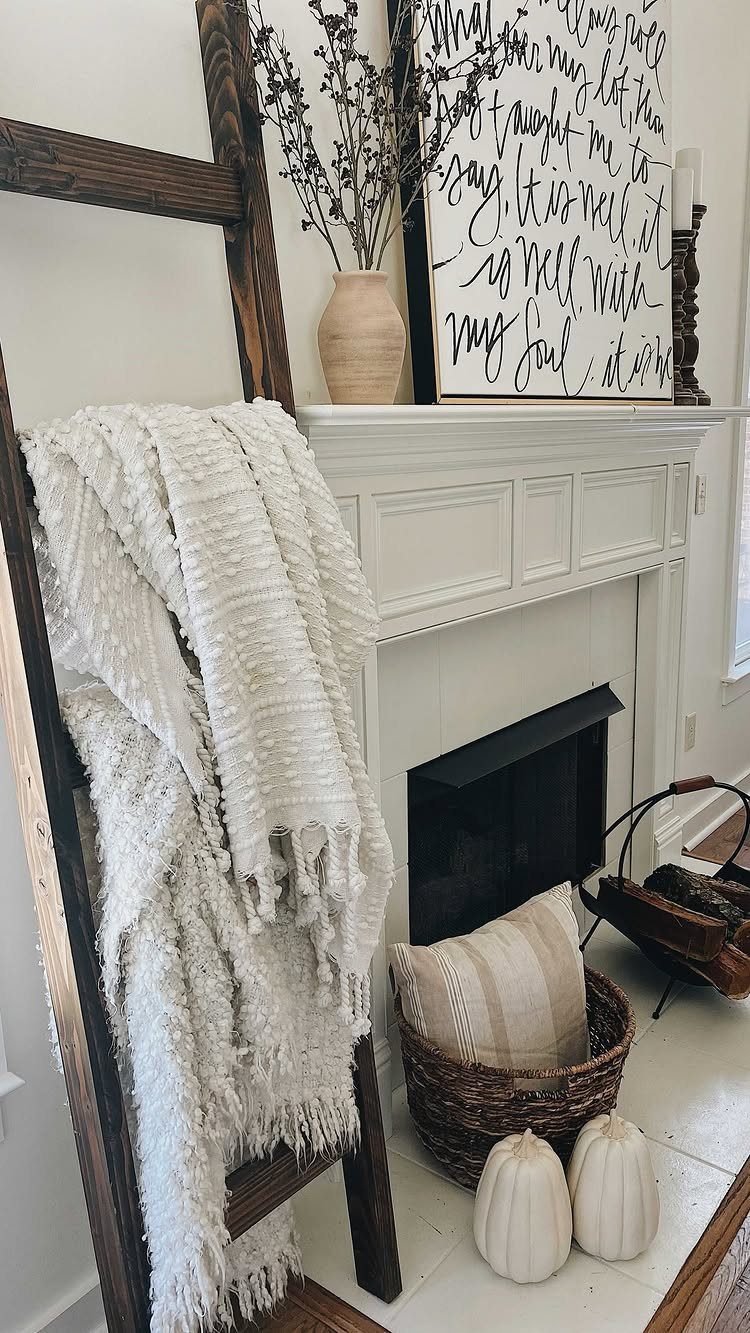
Leaning, not mounting, is what I like about a blanket ladder: it needs no wall holes, so renters can use it.
Build it from 2 side rails and a few evenly spaced rungs, and leave enough gap between rungs for a throw to drape over.
A dark stain gives the ladder visual weight against light walls, so blankets stay within arm’s reach. Fold them loosely over the rungs.
10. Wood Framed Flag
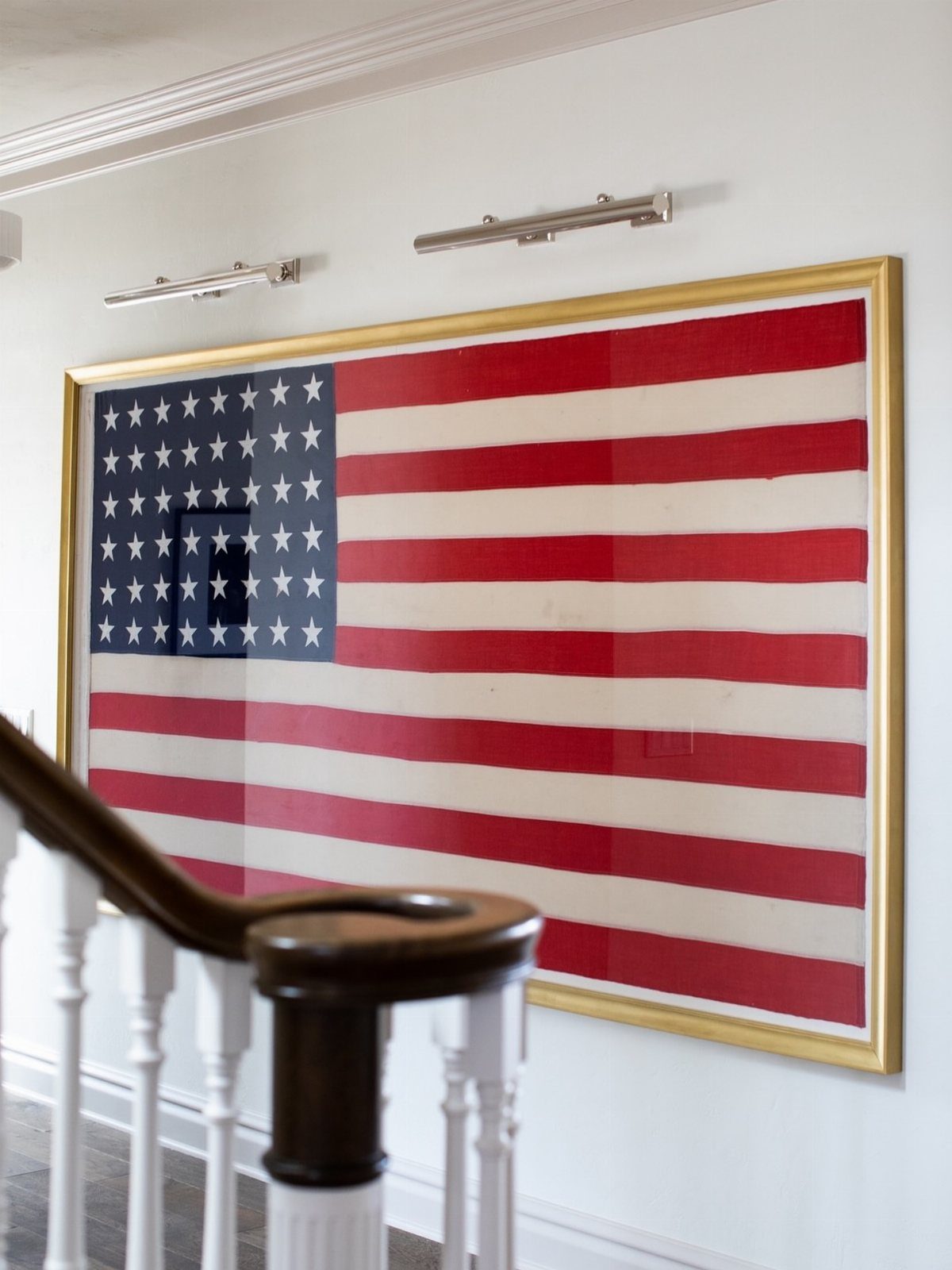
Size the frame to the flag before you cut any wood, because a flag is a large rectangle and a frame that’s off by an inch shows.
Build the frame from wood boards, then stain or paint it. A warm gold-toned finish suits farmhouse decor.
A staircase wall gives the frame the height it needs. Mount the flag flat against a backing so it hangs smooth, not in folds.
11. Barn Wood Shutters

Dark brown barn wood looks good against a light house, and it’s an easy way to give plain windows some weight.
A common rule of thumb is to make each shutter half the width of the window, so a closed pair would cover the glass.
You can also skip the house. Hang a shutter on a porch wall or indoors as a backdrop for a wreath, which gives the wreath a frame.
Plan the Space and Budget
Before spending a dollar, write down what you use the space for and the mood you want it to have.
A mood board, even a folder of saved photos plus paint chips and fabric scraps, shows fast whether your colors and ideas agree with each other.
Then walk the room and take inventory. A chair that can be repainted, a lamp that can move rooms, or a shelf that can be refinished is money you keep.
Price each project 3 ways: DIY, store-bought and custom. DIY is not always the cheapest, because tools and materials for a one-off piece can add up past a ready-made version.
Thrifted pieces, repurposed wood and leftover wall paint keep costs down. A mural painted from paint you already own, plus outdoor chairs at around $60 each, makes a cozy sitting corner on a tight budget.
Use Color Strategically
A big palette feels intimidating, so shrink it: one wall color, one accent and one neutral. For clean white walls, Decorators White is a dependable pick.
Bright color pulls the eye, which works in your favor. Put it on the wall or surface you want people to notice, and the less attractive features around it get less attention.
Paint a sample patch and check it in morning and evening light before you buy a full gallon.
Accent walls, color blocking, stenciling and ombre are all fair game. I’d start with color blocking, since painter’s tape gives you crisp lines, while ombre takes practice to blend well.
Decorate Small Spaces Thoughtfully
In a small room, every piece should earn its footprint. Furniture that does 2 jobs, like a storage ottoman or a desk that folds away, beats a single-purpose piece.
Go up before you go out. Floating shelves leave the floor open, and a built-in fills an awkward nook, such as an alcove or the dead corner beside a window, without eating into your floor area.
Hang a mirror opposite a window and it bounces daylight around, so the space reads wider. For lighting, skip the lone overhead fixture and add lamps at different heights, since pooled light makes corners look farther away.