
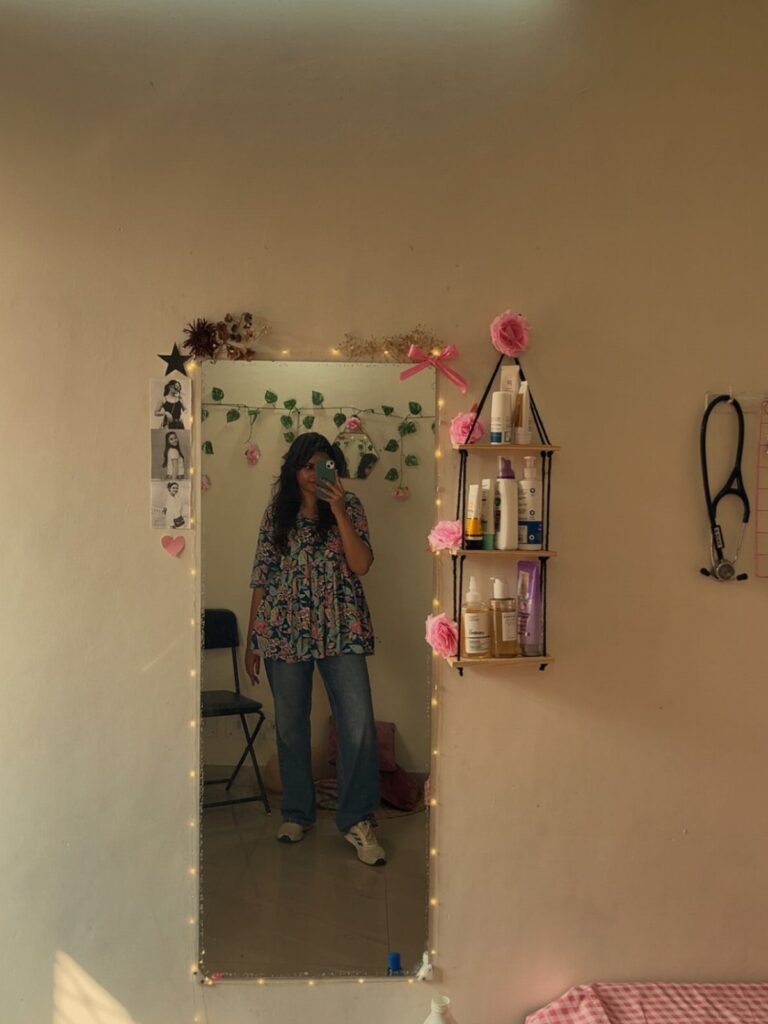
The right pick depends on what the room can spare: a free corner for a floor-length or leaning mirror, a bare door for a door-mounted one, or a stretch of wall above the dresser.
The range is wide: a leaning floor mirror goes up with no tools and shifts whenever the layout does, while mirrored closet doors only pay off if the closet is being built or replaced anyway.
Whichever you pick, glass on 2 walls at most keeps the room from turning into a hall of mirrors.
1. Backlit Vanity Mirror

A backlit mirror over a floating vanity gives a small bedroom a grooming spot with nothing standing on the floor. The glow does the work a table lamp would, so the surface below stays clear for makeup and brushes.
An irregular outline like this one reads as decor even when the light is off. A white drawer unit and a small stool tucked underneath keep the whole corner light and easy to walk past.
When you are arranging a small bedroom, plot out the opportunities for positioning mirrors: adjacent to a window is better than opposite for reflecting light back into the room, and is better for feng shui, too.
2. Door-mounted Full-length Mirror
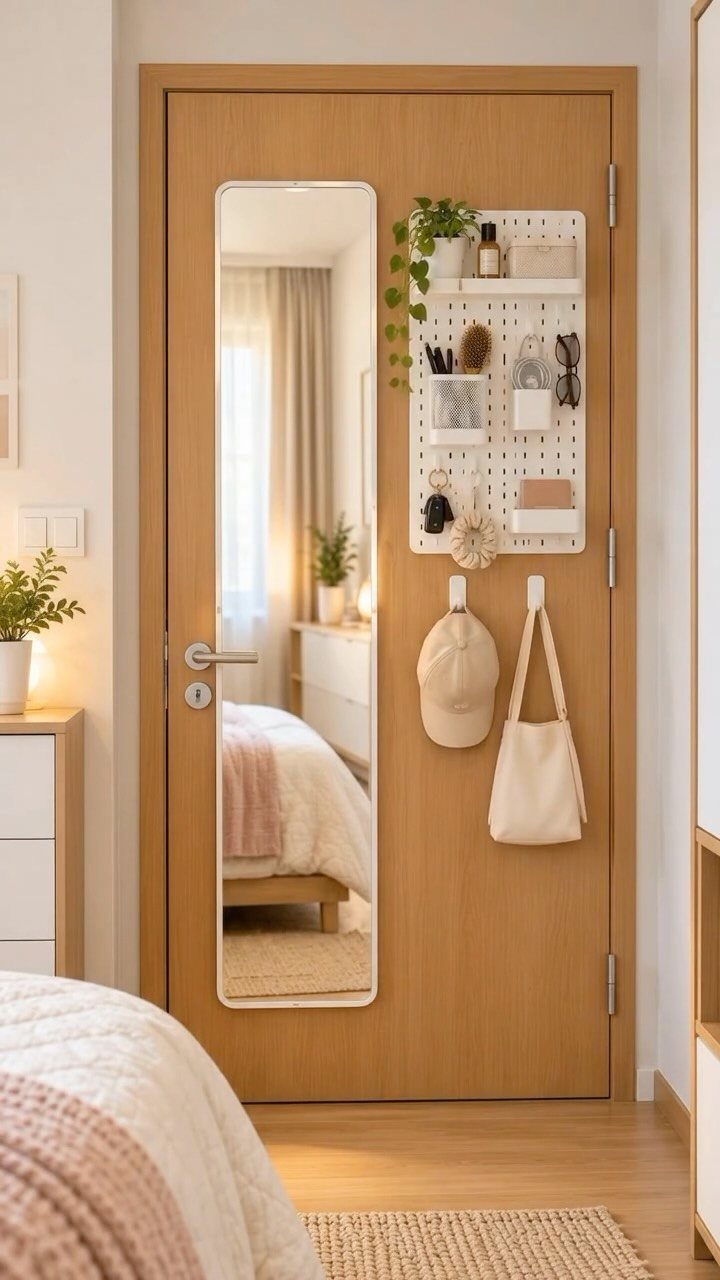
Hanging a full-length mirror on the bedroom door uses a surface that is otherwise wasted. No wall space gets spent, and no floor space either, which matters most in a room where the bed already claims the middle.
I like that the reflection lands on the bed and dresser, so the room reads wider from the doorway.
A pegboard beside it adds a spot for small things you grab on the way out. Check that the door still swings freely before you commit to a heavy mirror.
3. Hidden-storage Wall Mirror
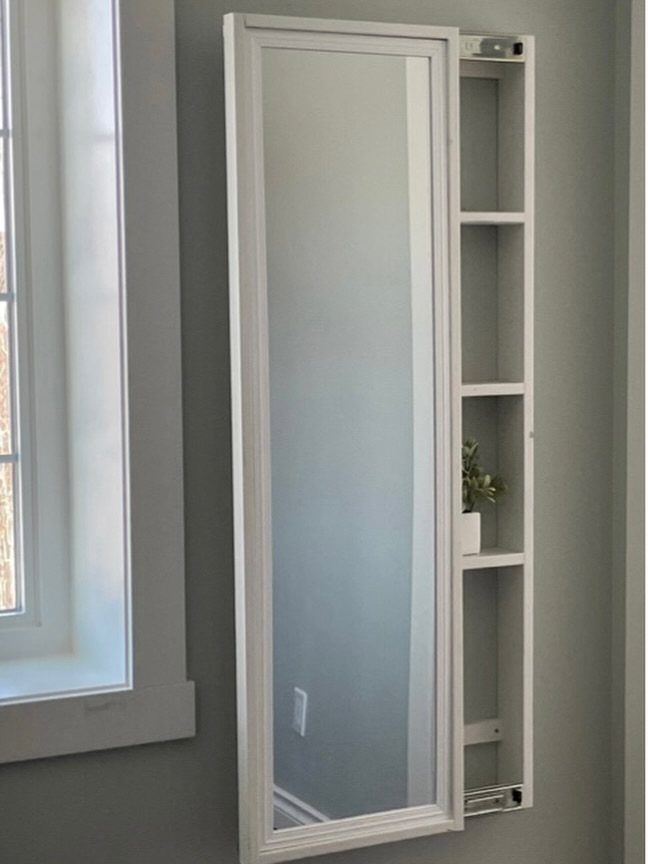
Behind a narrow wall mirror, a shelf cabinet can hold the small stuff that clutters a nightstand: jewelry, hair ties, a few bottles.
Closed, it is a mirror and nothing more, so the wall stays calm even in a tight room.
Slim versions fit beside a window or in a gap too thin for a dresser. Keep the shelves for items you reach for daily, and give any plant or decor piece a spot where the door can swing past it.
4. Window-pane Mirror

Grid panes turn a mirror into something closer to a second window. A large black-framed version mounted on a bare white wall reflects the bed and adds a sense of depth that a single flat pane often lacks.
The black lines add contrast, so I would use this where walls are pale and everything else in the room is soft.
Hang it at a height where the reflection catches the bed and any light source. Larger beats smaller here.
5. Mirror Above the Dresser
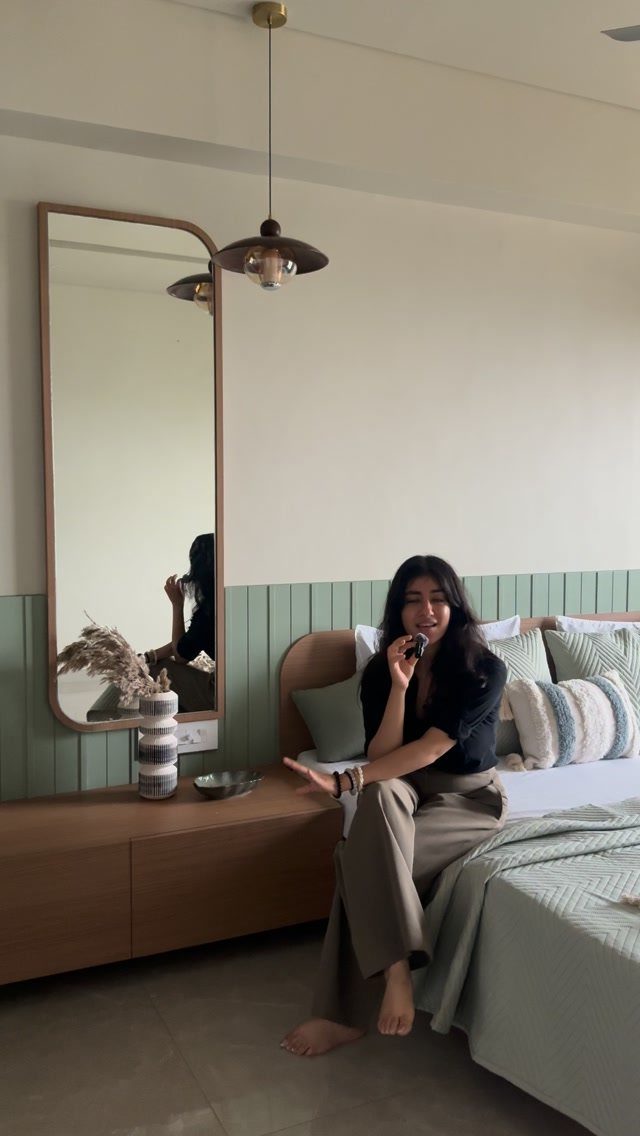
Above a dresser, a tall rounded mirror makes use of wall height that most small bedrooms leave empty. The dresser keeps its job, and the mirror stretches the eye upward, so the ceiling seems farther away.
Pick a mirror narrower than the dresser so the two look planned together.
Setting it against a paneled or colored wall, like the green one here, gives the glass a frame without paying for one. Keep the surface below clear so the reflection stays tidy.
6. Compact Vanity Mirror
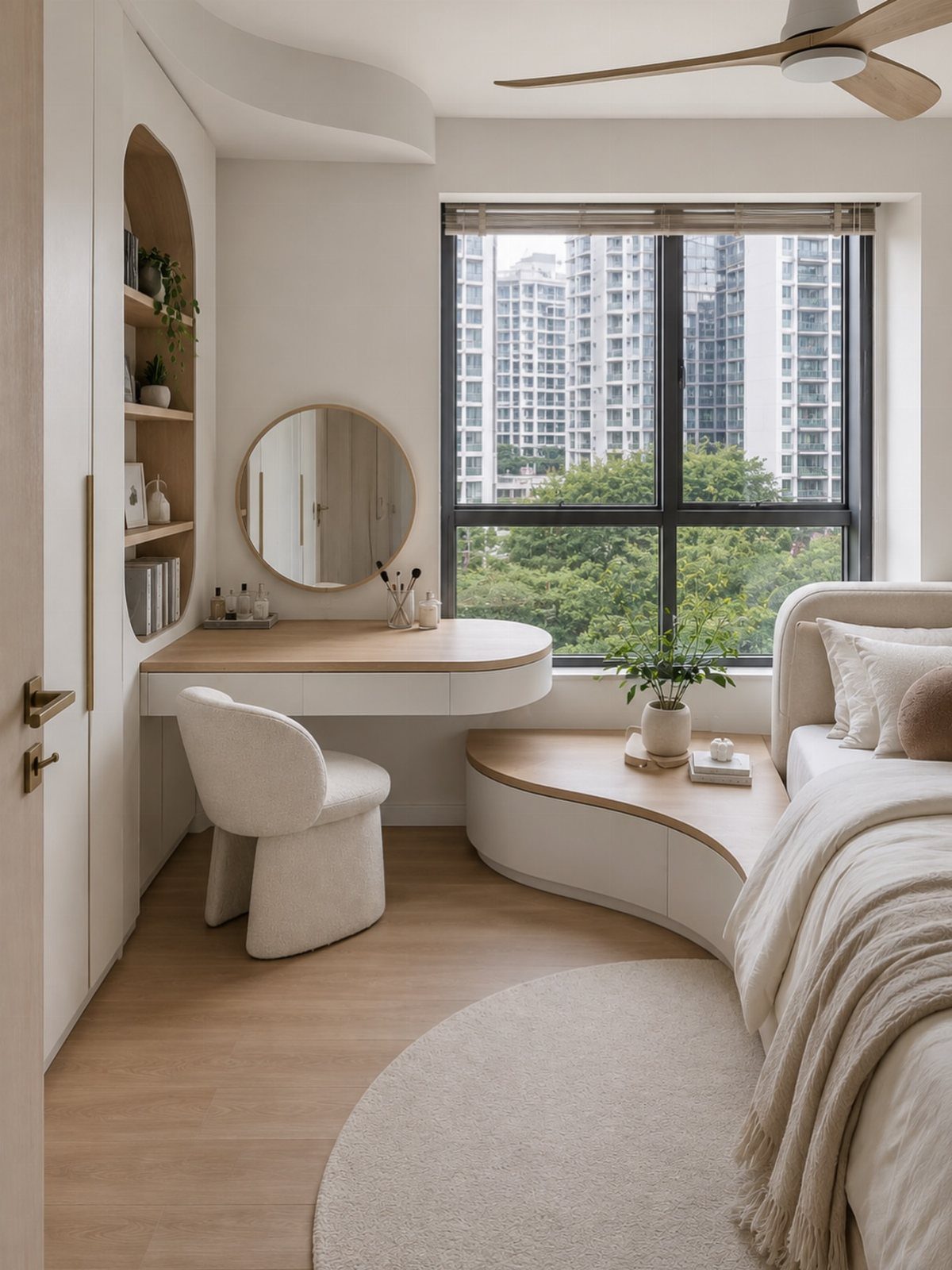
Pair a round mirror with a floating desk and you get a vanity that doubles as a place to sit and work. Nothing reaches the floor except a chair, so the room keeps its open feel.
A curved desk edge is kind to tight walkways, since there are no corners to clip.
I would choose a drawer or two so makeup and chargers disappear. Place the setup near the window if you can, because daylight beats any bulb for getting ready.
7. Mirrored Closet Doors
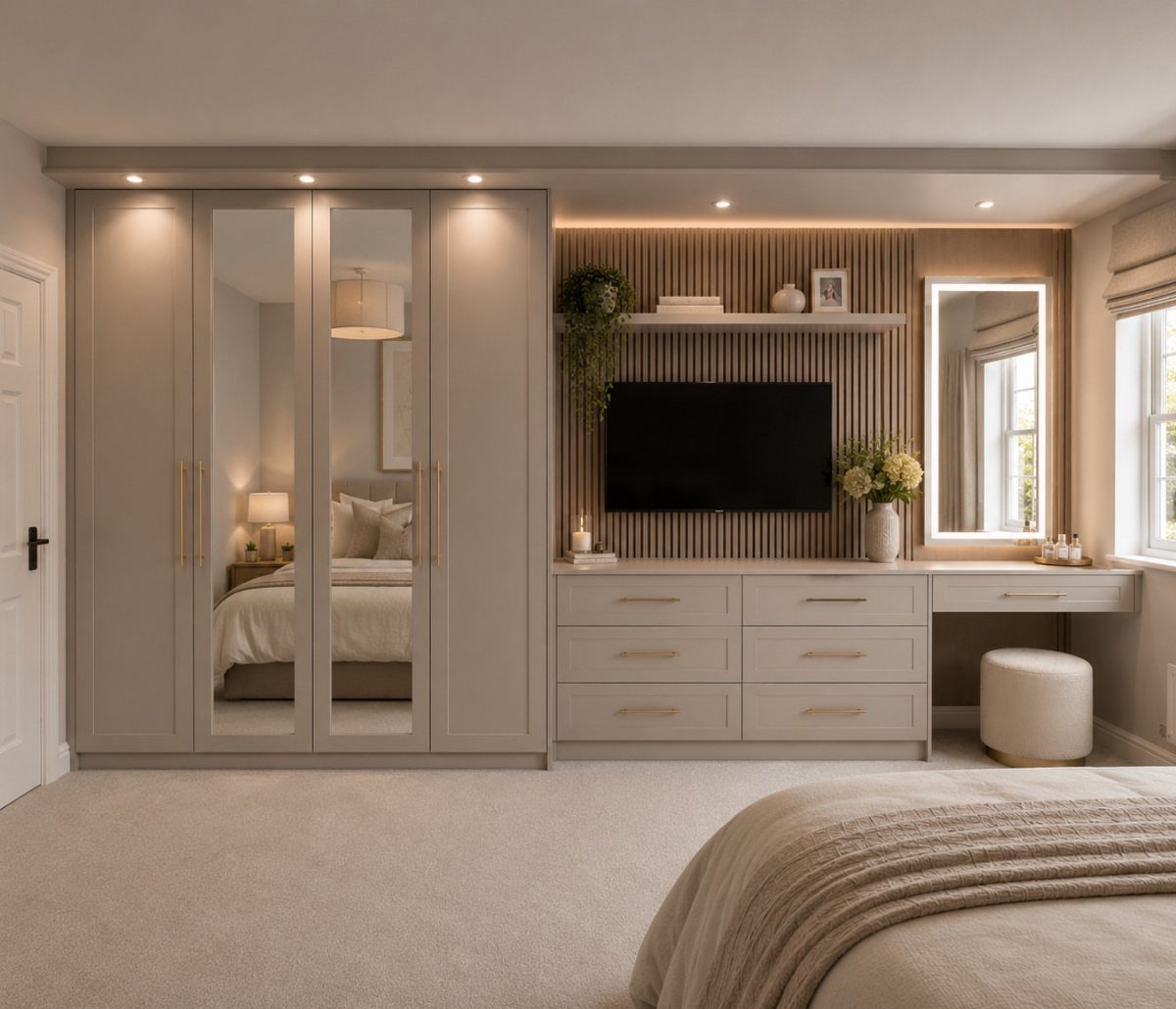
Two mirrored wardrobe doors give you a full-length mirror without hanging anything on a wall. Getting dressed and checking the outfit happen where the clothes live, so no floor space goes to a separate piece.
With the doors facing the bed, the reflection doubles the sense of depth in the room.
I would choose this if you are building or replacing the wardrobe anyway, and keep the surrounding colors neutral so the glass stays the main feature.
8. Mirrored Furniture
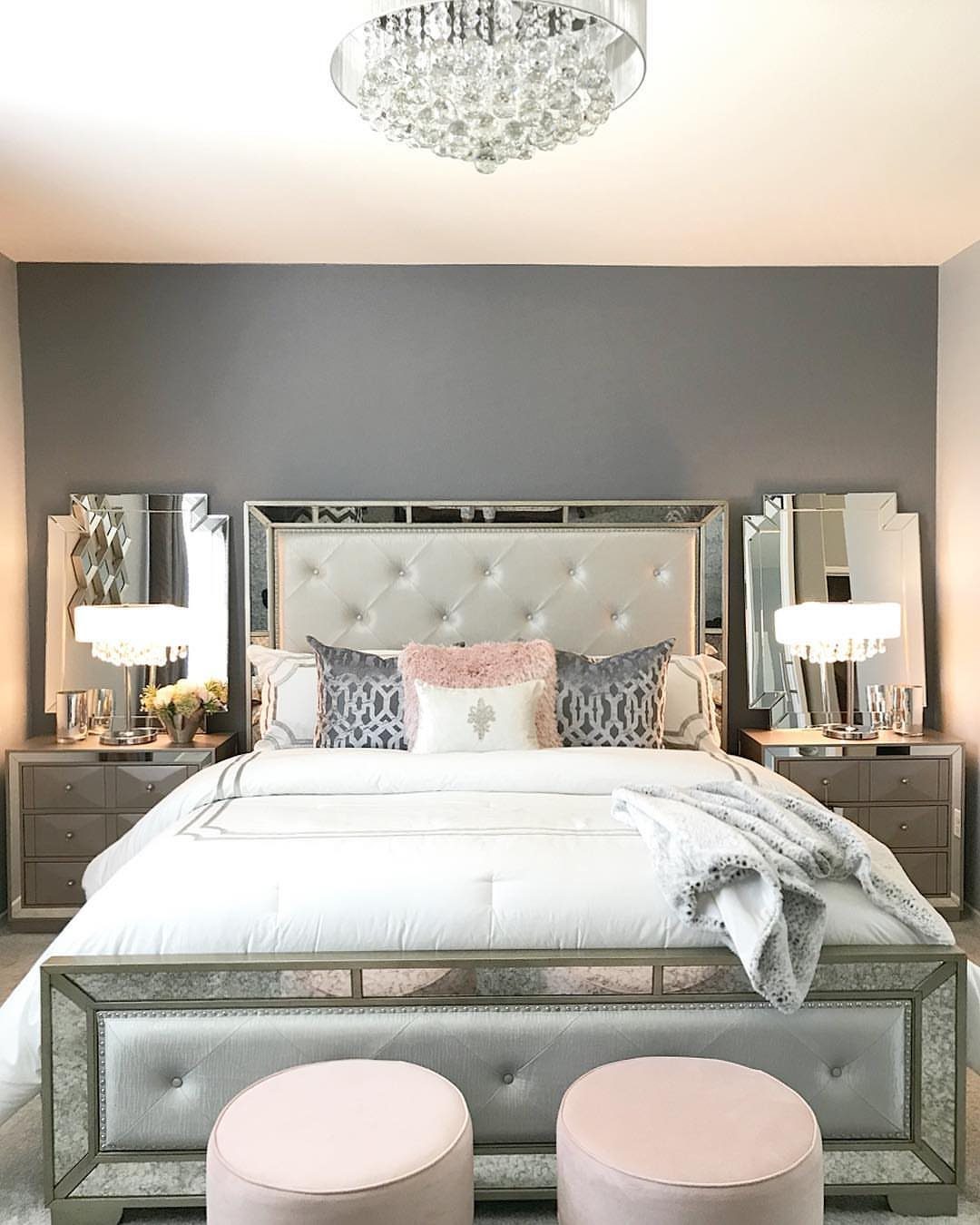
Nightstands finished in mirror take up the same footprint as wooden ones, but they bounce light back instead of absorbing it, so the pieces look lighter. A mirrored headboard does the same for the largest item in the room.
I would stop at two or three mirrored pieces. Soft pieces like a velvet ottoman take the edge off the hard shine, and a grey base stops the glass from tipping into too much.
9. Floor-length Mirror

Skip the dressing table: one tall arched mirror covers the full-length check and needs only a slim strip of wall.
Shelving built into the frame adds a spot for a small item or two, so the piece earns its place twice.
A wooden frame suits a neutral room, and I would stand it where you can step back a few feet to see the whole outfit.
10. Round Mirror
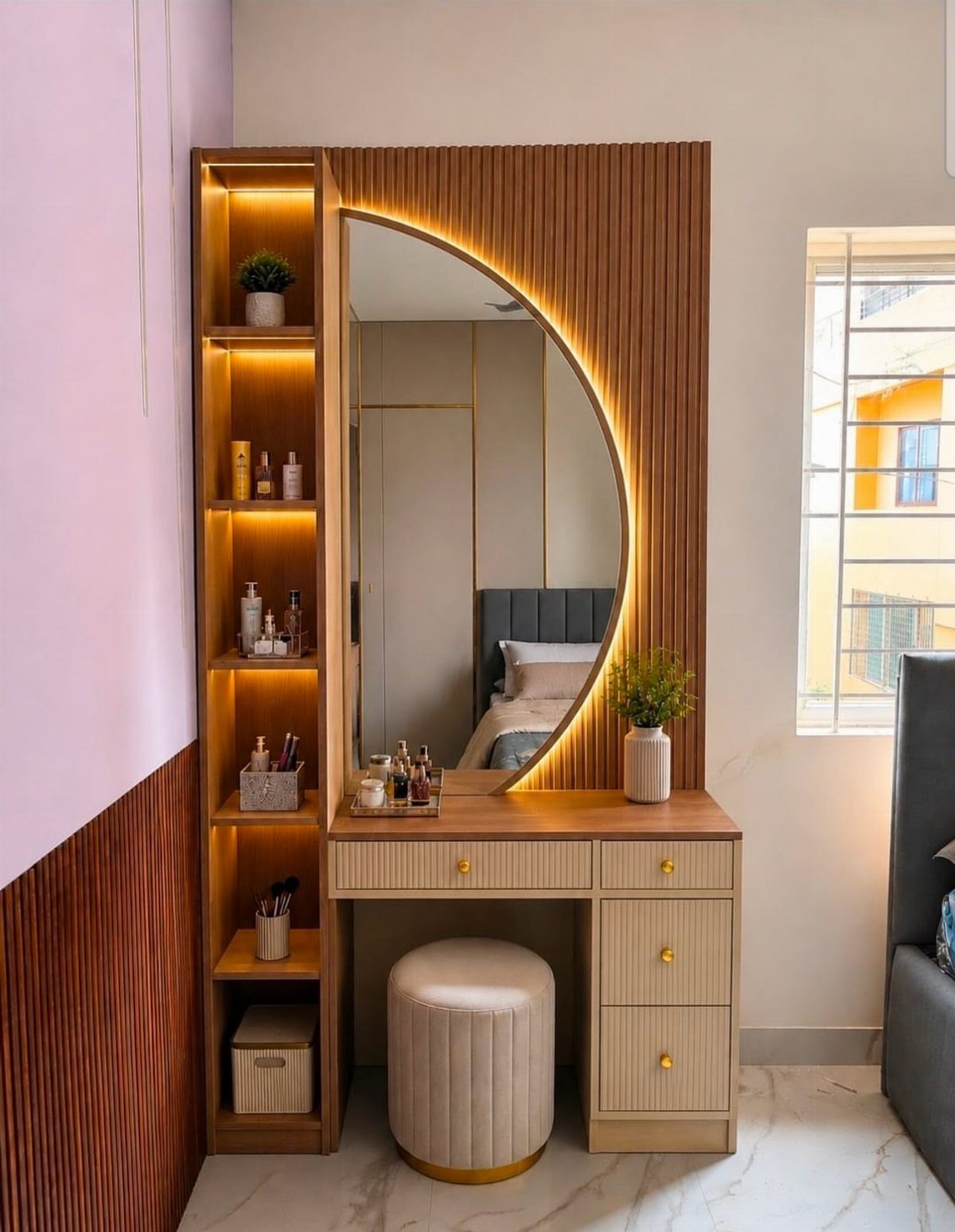
Bedrooms are full of square corners: the bed, the shelves, the window, the desk. A round mirror breaks up all those straight lines with one soft curve, and it pulls the eye to the wall without adding any bulk.
Center it over the desk so the shelf lines sit evenly around it. A wood surround keeps it warm, and a small stool or ottoman below finishes the spot.
11. Decorative Framed Mirror
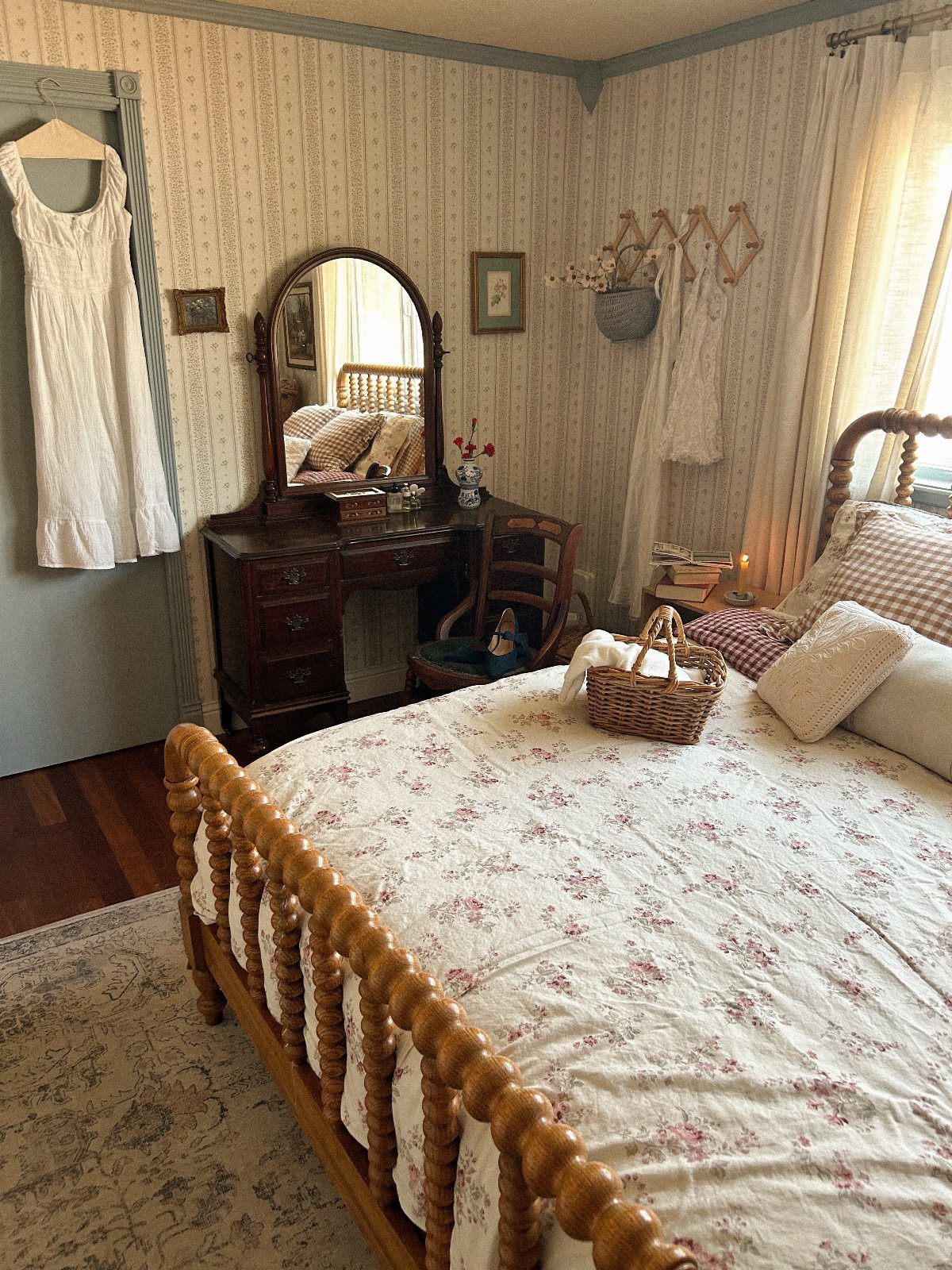
Frame choice decides whether a mirror looks bought for the room or just hung in it. Match the frame to something already there, such as the bed’s wood tone or the vanity’s finish, and the mirror joins the set.
Against busy floral wallpaper, I prefer an arched frame in a calm wood color, because the eye needs somewhere quiet to land. Keep the carving simple if the pattern behind it is loud.
12. Leaning Floor Mirror
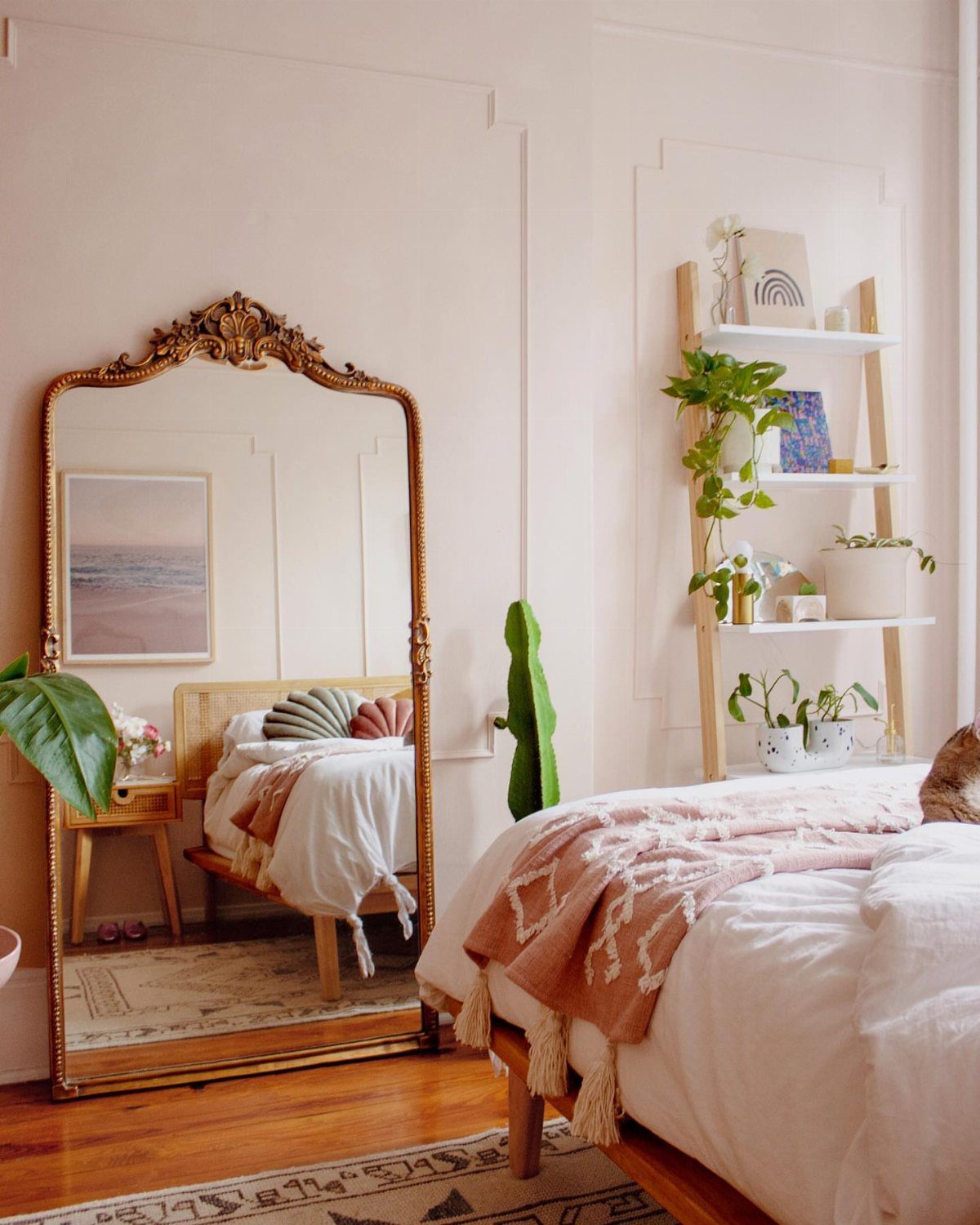
Leaning a tall mirror against the wall needs no drilling, which suits renters, and you can move it whenever the room gets rearranged. Pick the tallest one that fits under your ceiling, since the height pulls the eye upward.
Set it where it catches the bed and some artwork, not a bare corner. A small wall strap behind it keeps it from tipping if kids or pets share the room.
Limit Mirrors and Mirrored Furniture
Mirrors on every wall don’t make a small bedroom bigger.
They tend to make it uncomfortable, because you can’t look anywhere without meeting your own reflection. I keep glass to 2 walls at most, and a large mirror on a wardrobe or door counts as one of them.
Leave the other walls to paint, fabric or art, so the eye has somewhere to rest. If you’re unsure, stand in the doorway and look around; if the room feels busy or like a hall of mirrors, take one down.
Mirrored furniture follows the same logic.
The usual candidates are the bed, a pair of nightstands or a dressing table, and 2 of those is where I’d stop. Go past that and the glamor turns into glitz.
Frequently Asked Questions
What are some good mirror ideas for a small bedroom?
A full-length mirror on the back of the bedroom door and mirrored wardrobe doors both give you a mirror without using any extra floor space.
A mirror on the back of the bedroom door picks up the bed and dresser, so the space looks wider the moment you open it.
Leaning a floor mirror against the wall means no holes, which keeps a rental deposit safe. A round mirror centered over a desk or dresser softens all the square corners.
Where should a mirror be placed in a small bedroom?
Place it where the reflection lands on something worth doubling, like the bed, a piece of art or a light source.
A wall next to a window works well because the glass bounces daylight around the room. Spots that cost no floor space include the back of the door, the wall above a dresser and wardrobe doors.
Swing the door a few times after hanging a heavy mirror on it; if it drags or the hinges strain, that mirror is too heavy for the door.
What type of mirror is best for a small bedroom?
A tall one. Go as tall as your ceiling allows, since a tall mirror draws the eye up and makes the walls feel higher.
A door-mounted full-length mirror adds no furniture to the room, and it keeps the wall space beside the bed free for art or a lamp.
How do you make a small bedroom look bigger with a mirror?
Mirrored wardrobe doors that run floor to ceiling make the biggest difference, provided you can see them from the doorway or the bed.
Doors set opposite the bed send back a second view of the room, which reads as extra depth.
A mirror on the back of the bedroom door gives a lighter version of the same effect. Soft white, greige or pale gray beside mirrored doors lets the glass stay the main feature.
How many mirrors should be in a bedroom?
Limit mirrors to 2 walls; a big mirrored wardrobe or door takes up one of those.
Mirrors on every wall make you meet your own reflection wherever you look. Check by standing in the doorway: if the reflections feel busy, take one mirror down.