
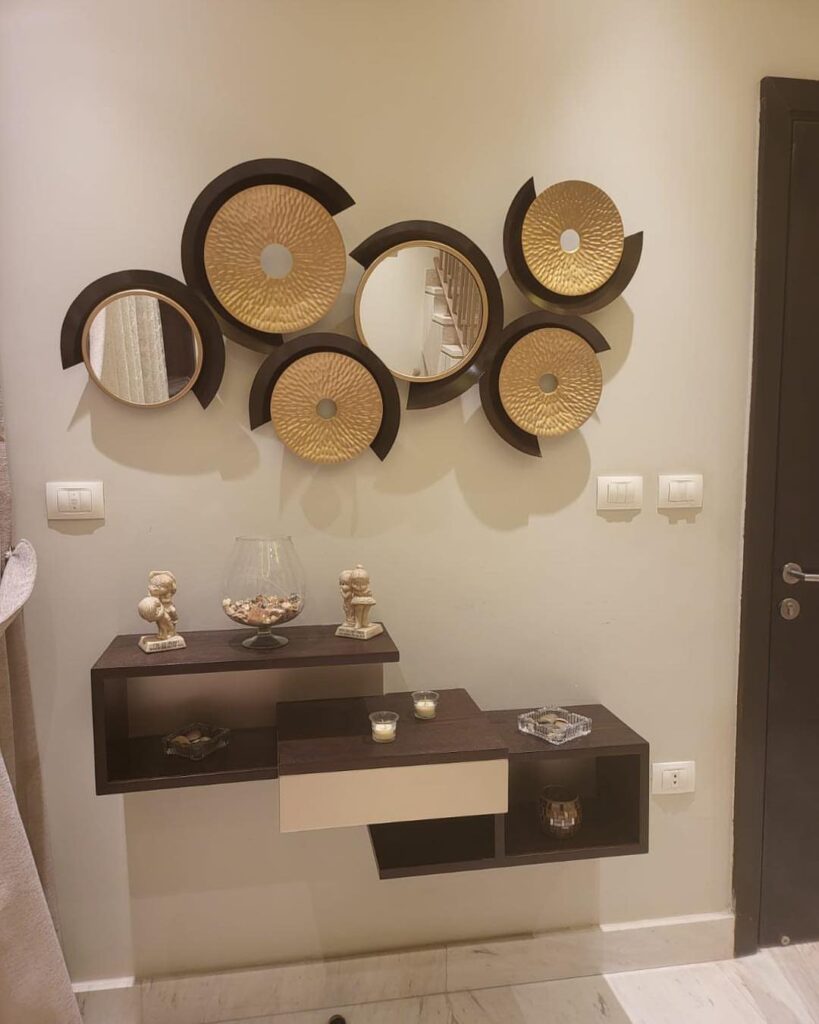
The ideas run from floor mirrors that lean with no drilling to mosaic art and a cloud-shaped backlit mirror that needs an outlet nearby. Which one fits depends on what your room lacks.
A dim, narrow room does best with a mirror angled toward the window, and a blank wall calls for a sunburst or a wall mirror set that gives the eye something to land on.
1. Sunburst Mirrors
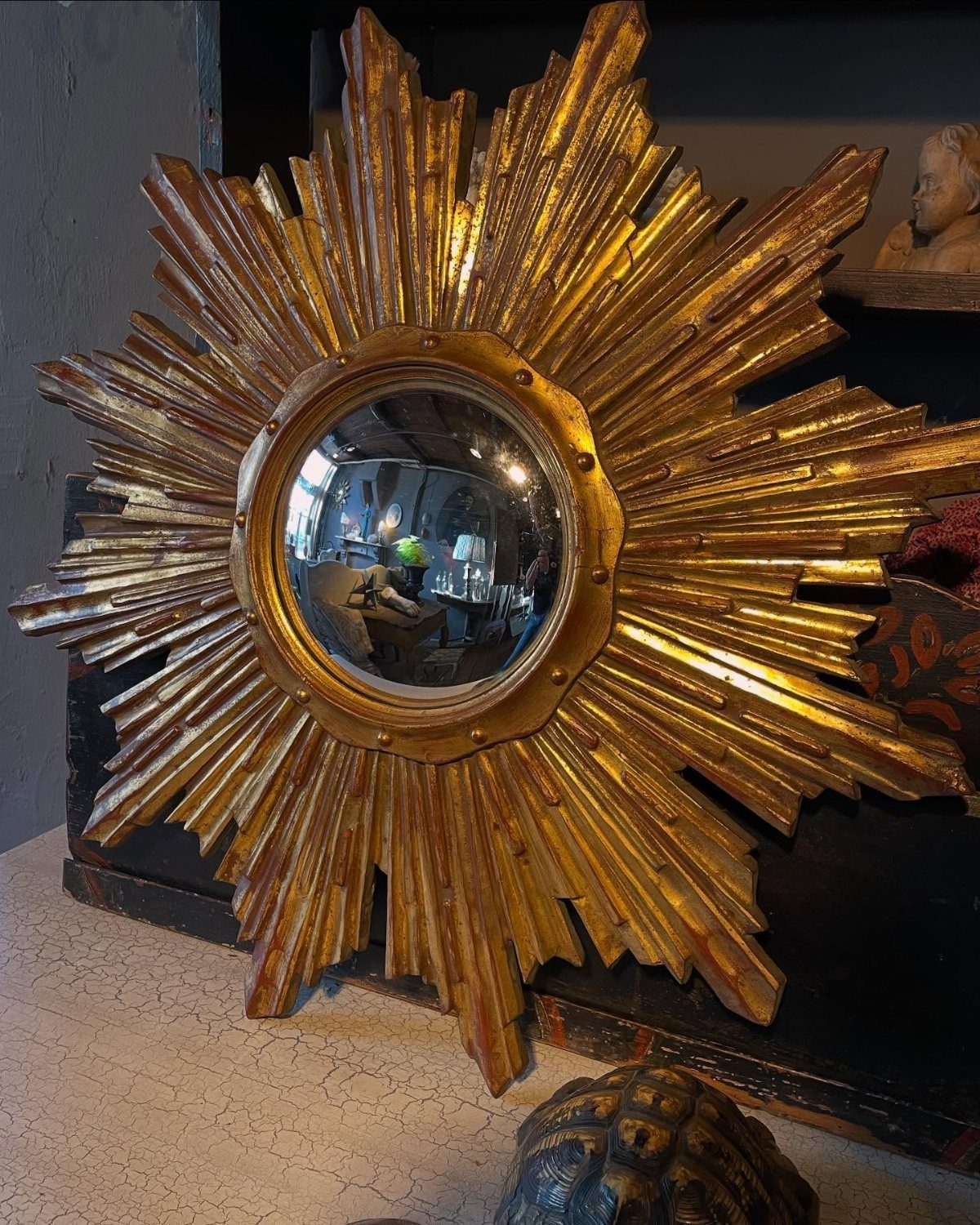
Gold rays around a round mirror make the frame the main event, and a dark cabinet behind it gives the metal plenty of contrast.
I’d keep everything nearby quiet, with one sculpture or object at most, so the rays don’t compete.
Leaning it instead of hanging it means no drilling, and you can shift it whenever the room changes.
2. Ornate Mirrors
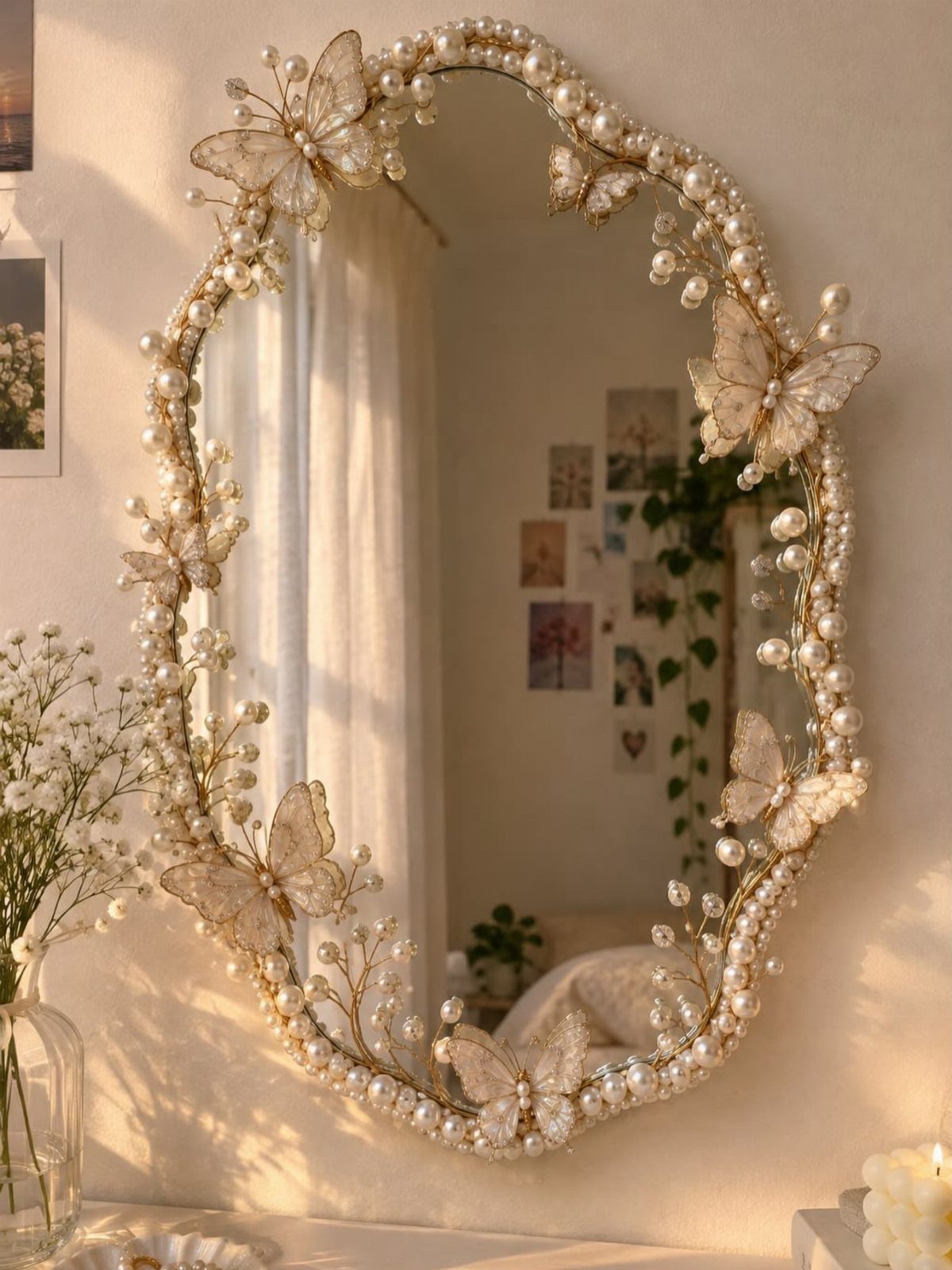
A frame set with pearls and small gold butterflies already works as decoration, so a plain white wall is the right backdrop. An oval shape lets the detail run all the way around the glass.
I’d choose one piece like this over a cluster of smaller mirrors. Soft curtains and gentle light beside it suit the delicate mood, while busy patterns would compete with the frame.
3. Black Mirrors
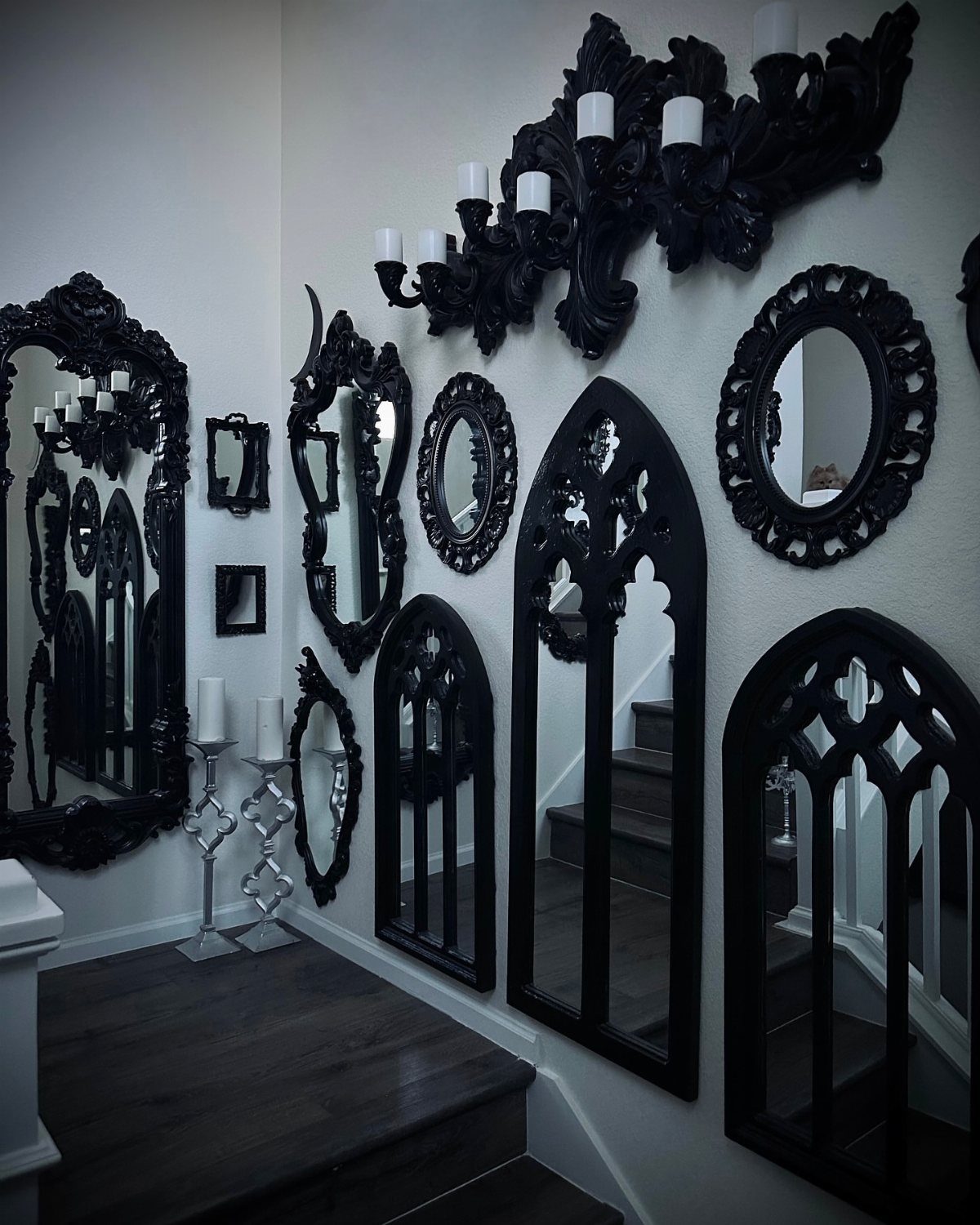
Black frames add contrast to a white wall without bringing in another color. A group of mirrors looks planned when the finish matches across all of them, and the shapes can vary as much as you like.
A sconce in the same black ties the group together. Ornate frames give you detail to look at, so a hallway like this needs very little else.
4. Entryway Mirrors
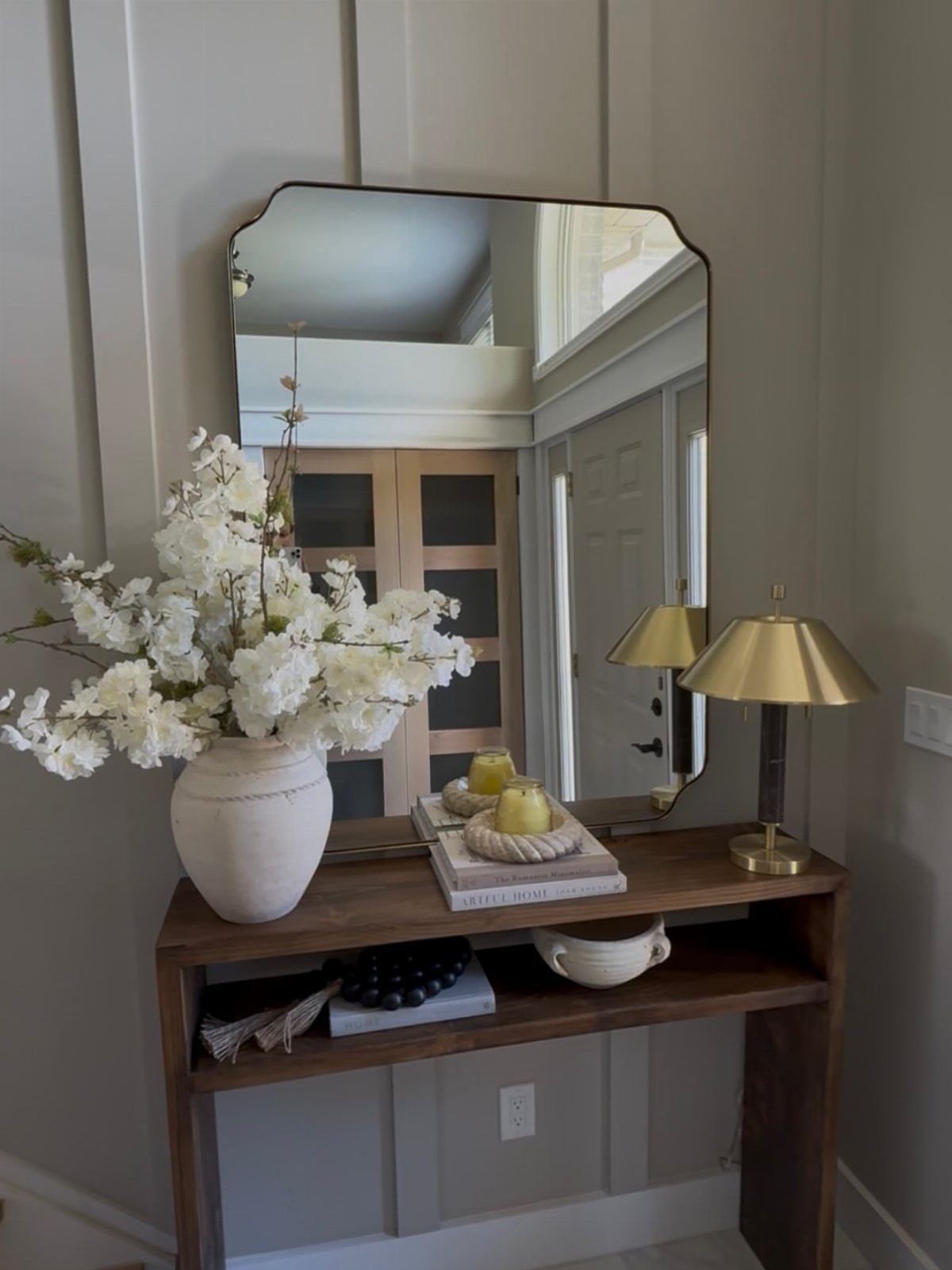
Over a console table, an entry mirror picks up daylight from the front door and bounces it deeper into the room. Gentle curved corners soften the rectangle, and a gold frame warms up a wooden tabletop.
A common rule of thumb is a mirror about two-thirds to three-quarters the width of the table. Keep the surface to a lamp, a few books and one vase so the mirror stays the focus.
5. Arched Mirrors
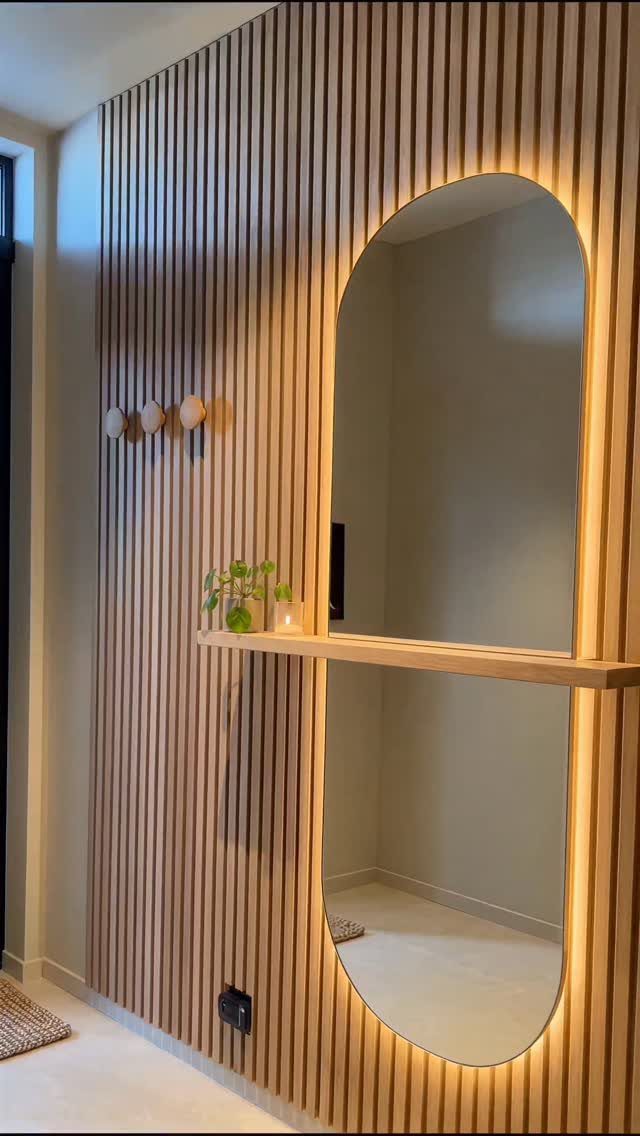
A slat wall is all straight lines, which is exactly why an arched top works there. The curve breaks up the grid and feels softer than another rectangle would.
Backlighting adds a glow, and light wood keeps that glow warm. A small shelf beside the mirror is handy for keys, a candle or a plant.
6. Round Mirrors
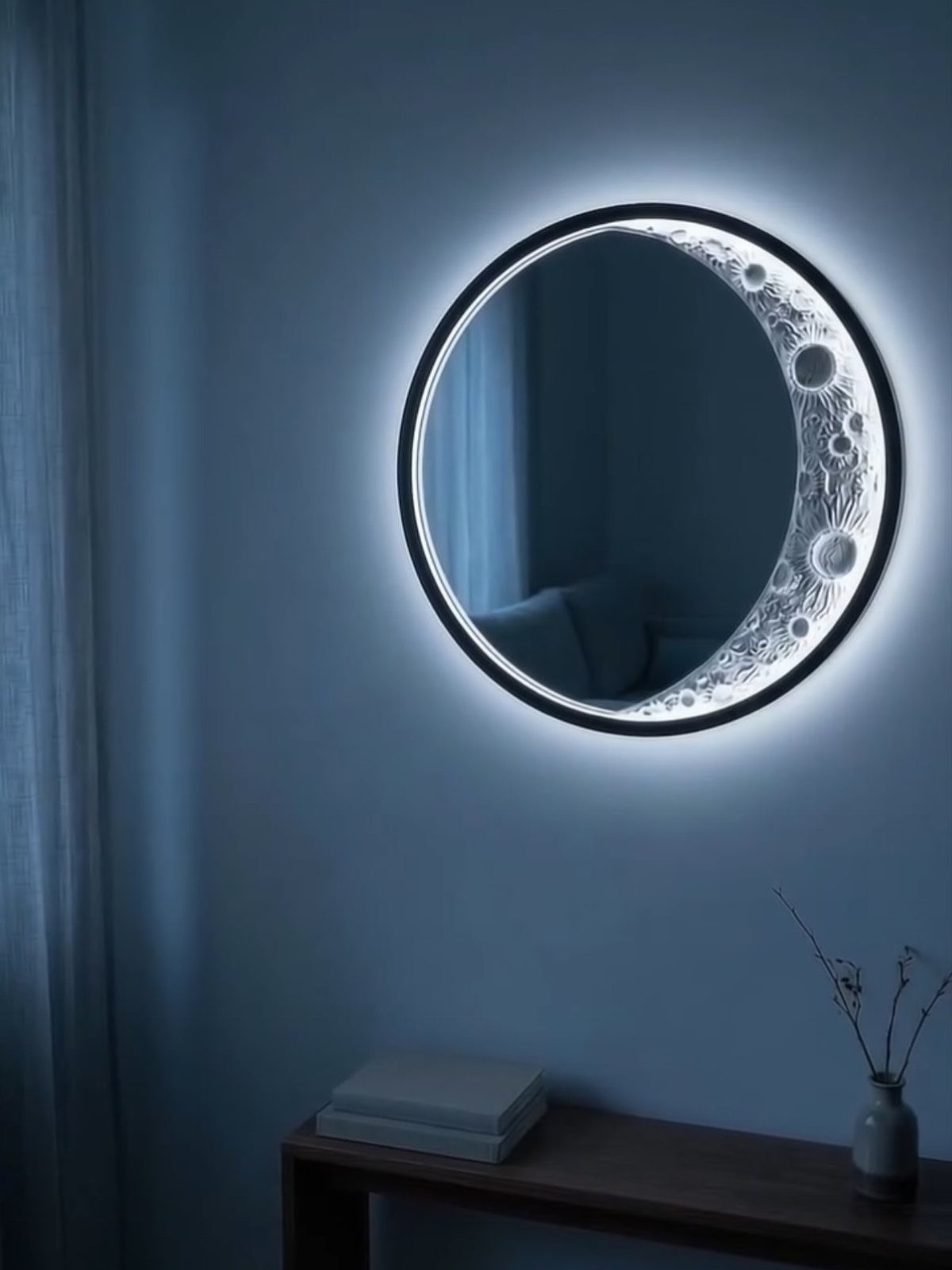
Round mirrors range from plain rims to carved designs, and a crescent moon is one of the more distinctive choices. Against a blue wall the carving stands out clearly, and a backlight adds a soft halo around it.
Hang it over a console so the books and a small vase sit under the curve. I’d go carved only if the rest of the wall stays simple.
7. Rectangular Mirrors
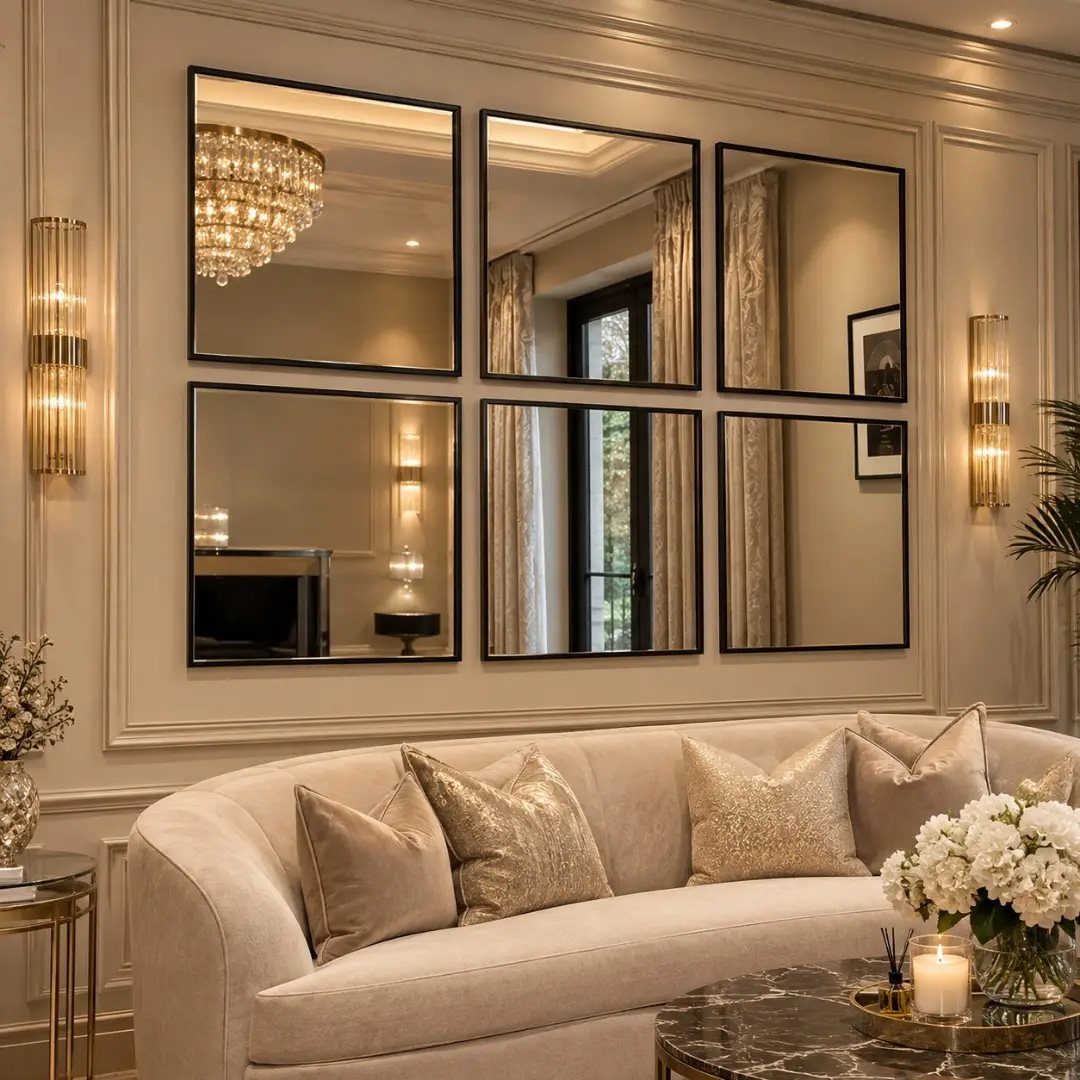
A grid of rectangles reads as structured, and that order is what makes six identical frames look like one deliberate piece instead of six separate mirrors. Black frames against a beige wall keep the edges crisp.
Matching frame finish and even spacing do most of the work. I’d center the grid over the sofa so the whole arrangement feels anchored to the furniture below it.
8. Organic Free-form Mirrors
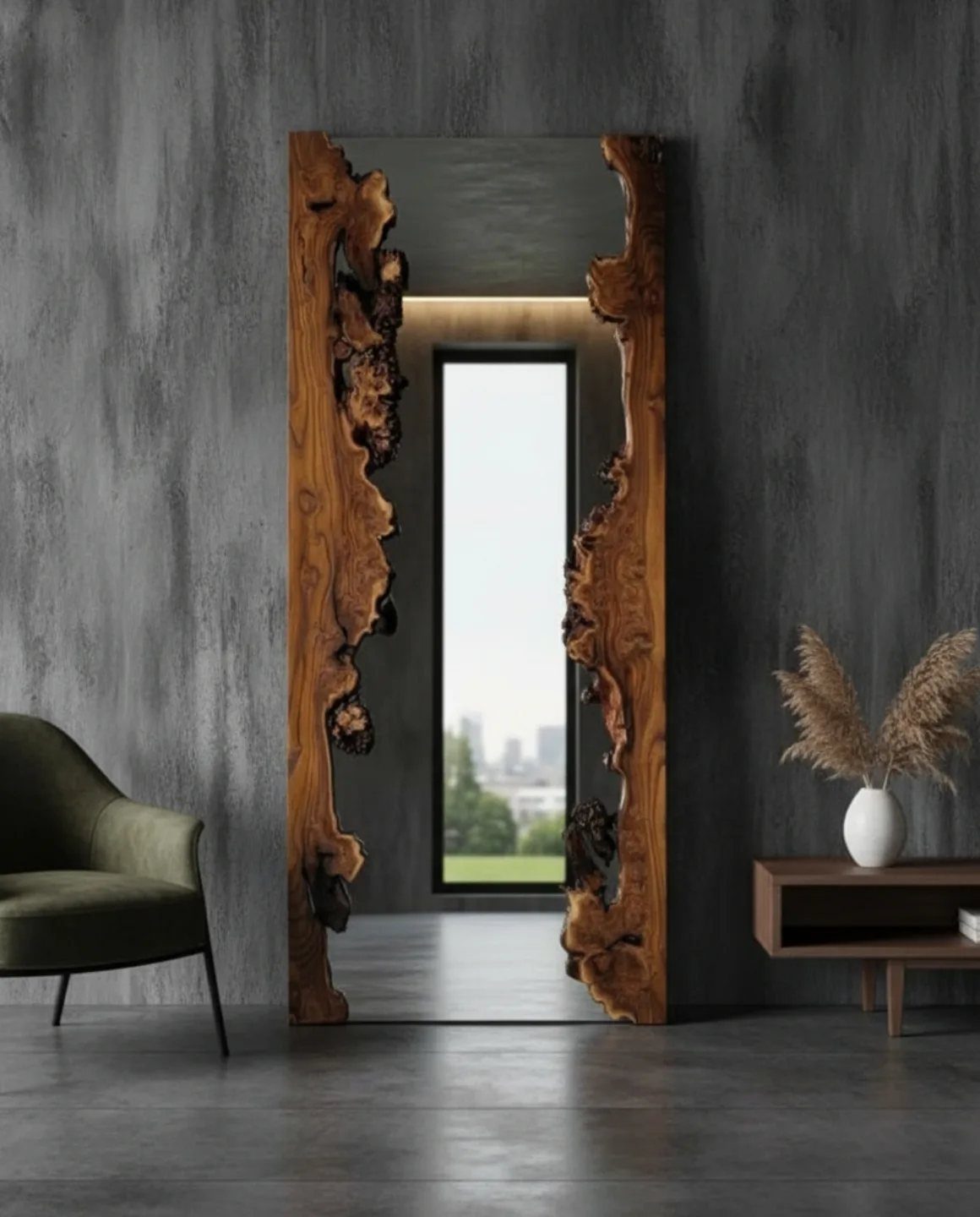
Soft, uneven edges are what a live-edge wood frame brings to a flat wall, since no straight line repeats.
A tall mirror like this can lean on the floor, which suits a room with a chair and a small table nearby.
I like it against a plain, textured wall, where the grain of the wood is the only busy thing. Rooms full of sharp corners benefit most from one irregular outline.
9. Scalloped Mirrors
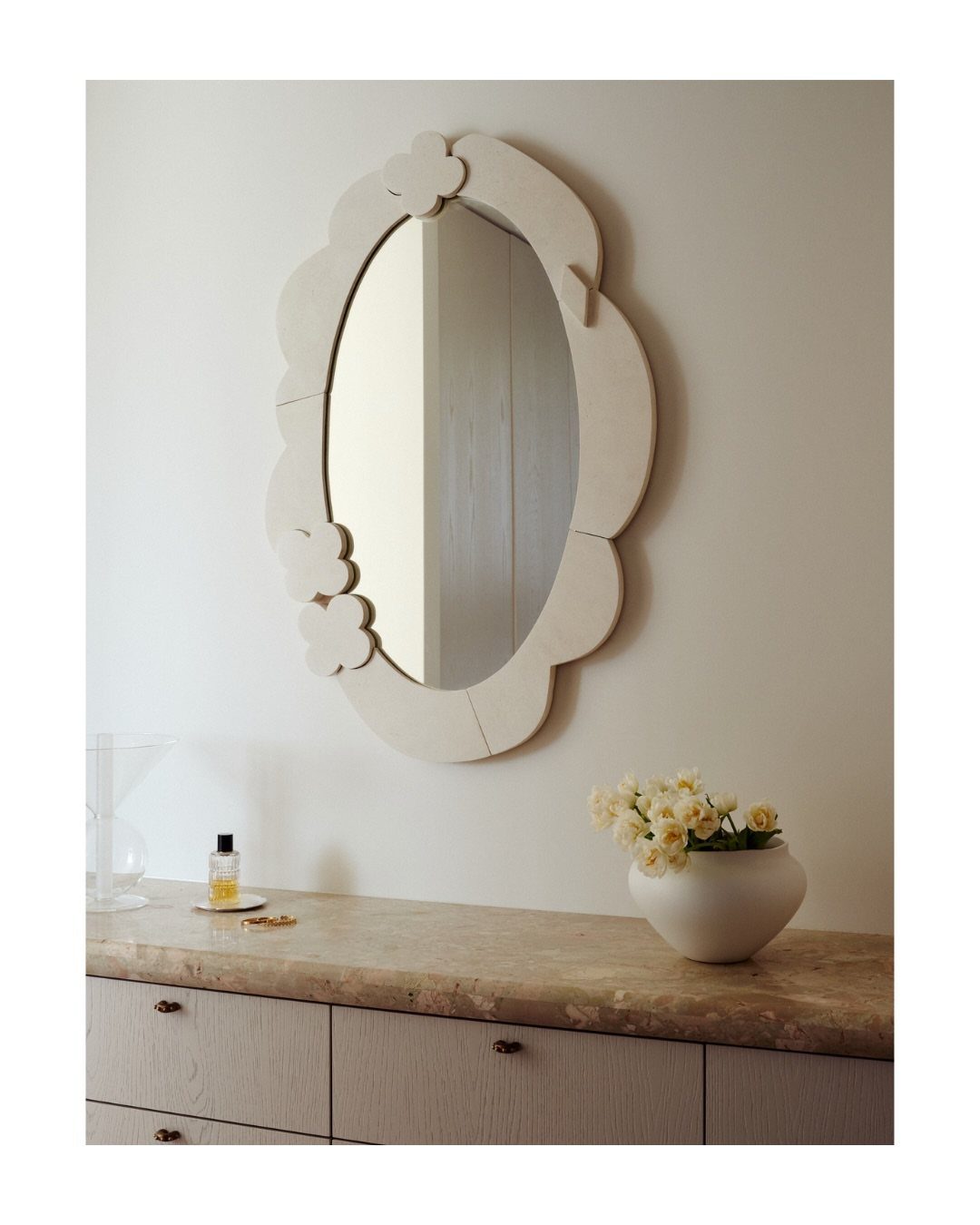
Scalloped edges turn a simple oval into something with a gentle ripple around the glass, so the mirror itself does the decorating. A cream frame stays quiet against a white wall.
Above a counter, I’d keep the styling small: one vase of flowers and a single bottle is plenty. The frame already has detail, and extra objects would only crowd its outline.
10. Wood-frame Mirrors
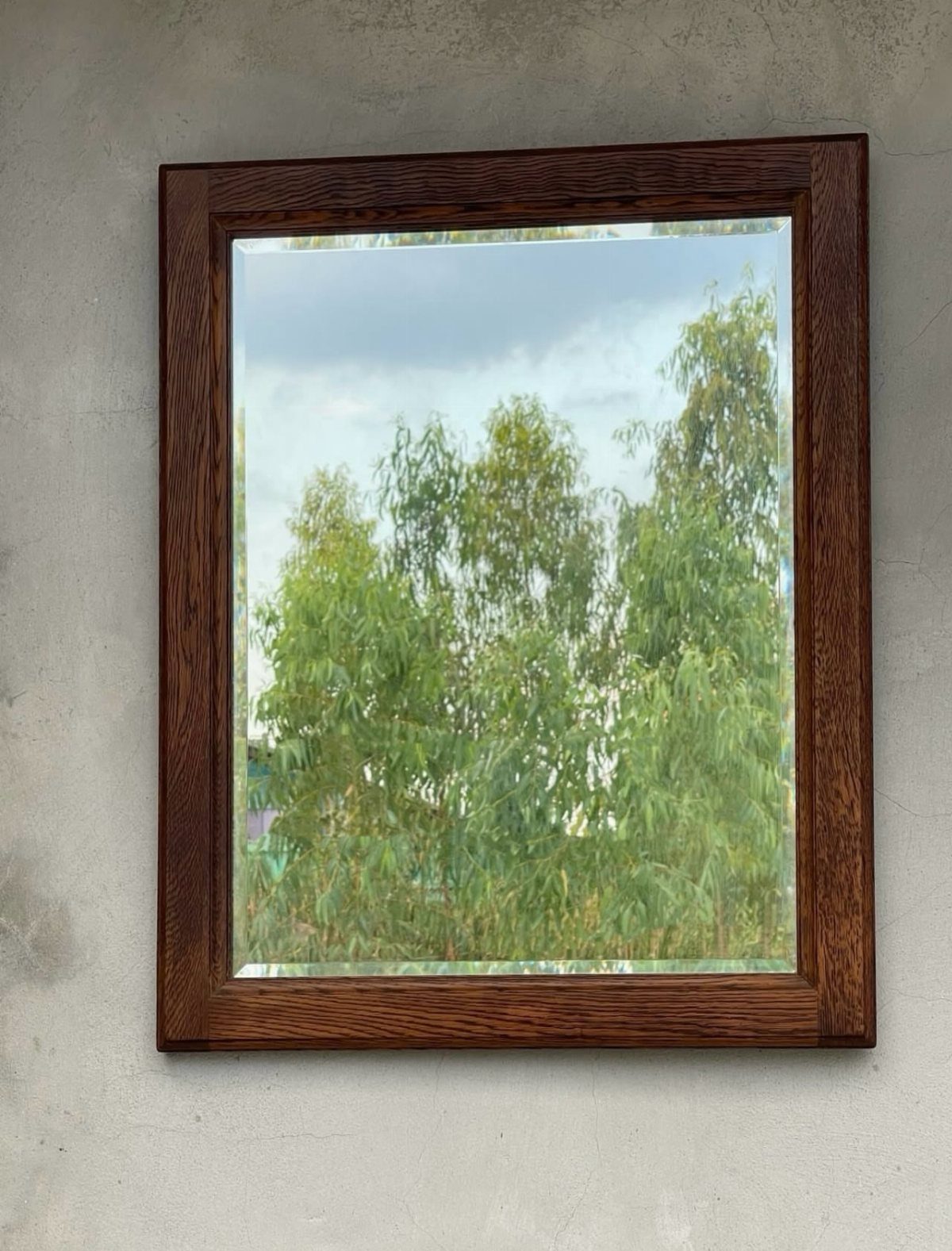
Dark brown wood gives a mirror weight and warmth that thin metal rarely matches. On a plain, light wall, the frame stands out clearly without any other decoration.
Hung where it can catch trees and sky through a window, the mirror brings the outdoors inside.
11. Wall Mirror Sets
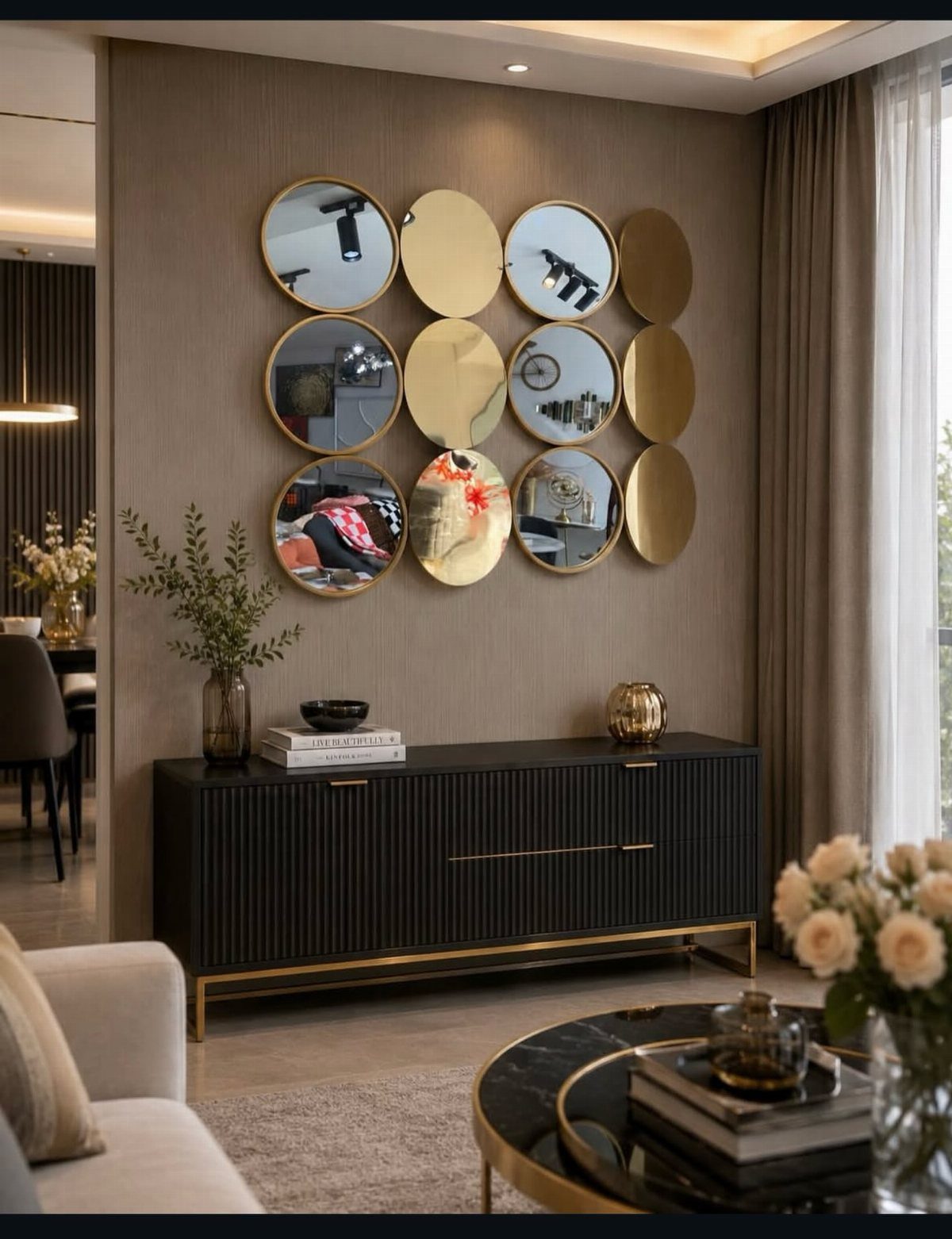
Nine round mirrors in matching gold frames work as one display, with the grid doing the organizing. Set against a brown wall, the gold stands out and the repeated circles feel intentional.
Hang the group over a sideboard so it sits tied to a piece of furniture, with identical spacing between frames. Identical frames make it easy; mixing sizes takes far more planning.
12. Vintage Mirrors
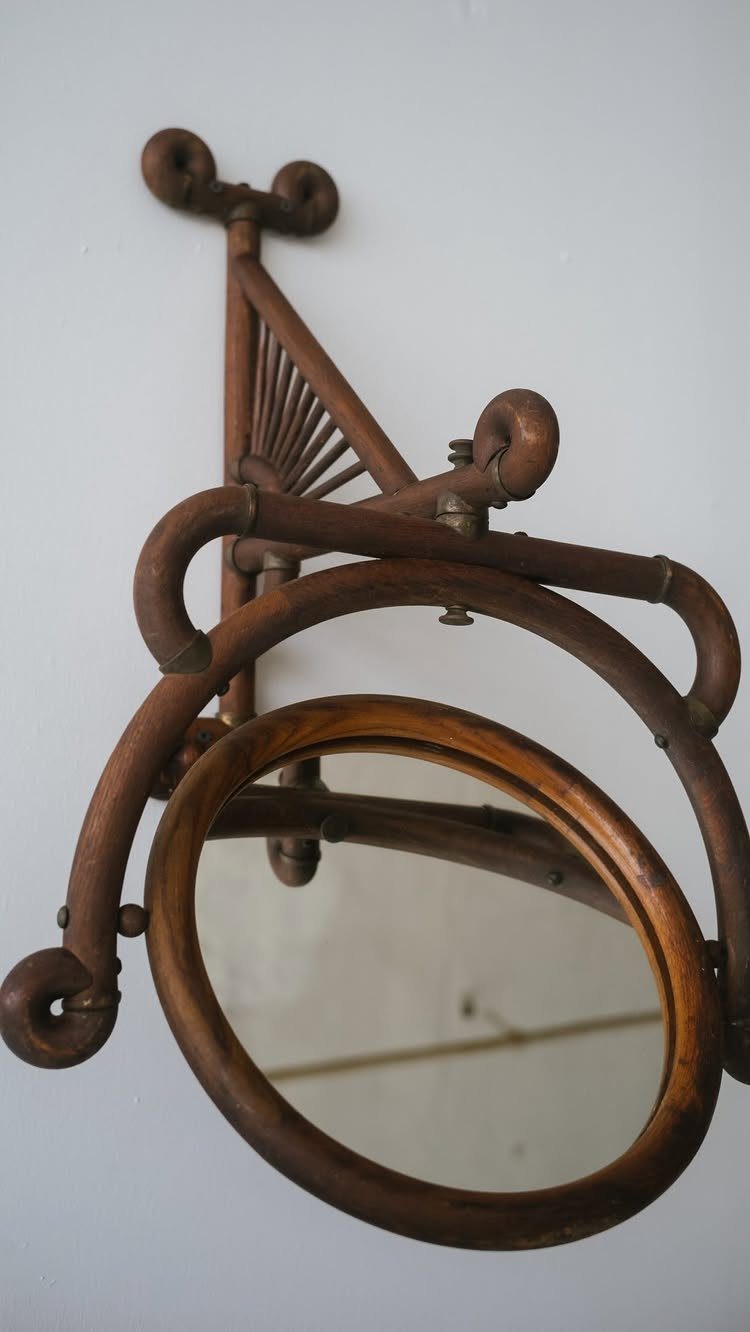
Vintage styling shows up in carved curves and warm brass, as in an oval mirror set into a sculpted wooden frame. The shape looks collected over time instead of bought in one trip.
Keep the wall behind it plain white so the frame’s curves are the only story. I’d let one piece like this hang alone, with no competing art nearby.
13. Gold Glam Mirrors
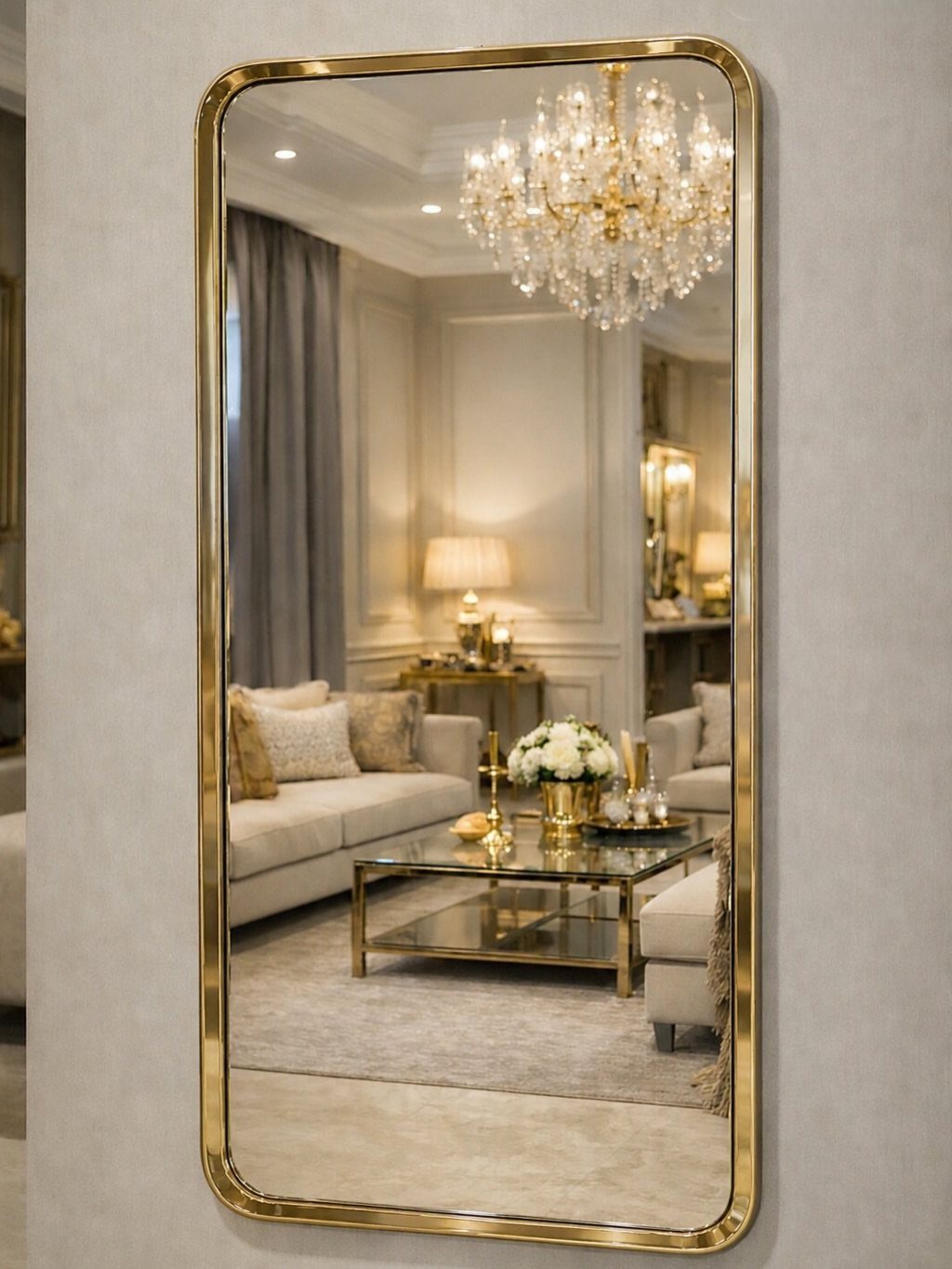
Gold frames and crystal light fittings speak the same language, and a rounded rectangle softens all that sparkle so the mirror doesn’t feel stiff. Glam depends on the metal being the loudest thing on the wall.
A mirror repeats whatever sits across from it, so I’d keep that side of the room simple and skip busy patterned cushions. One mirror, one chandelier and plenty of bare wall is enough.
14. Traditional Mirrors
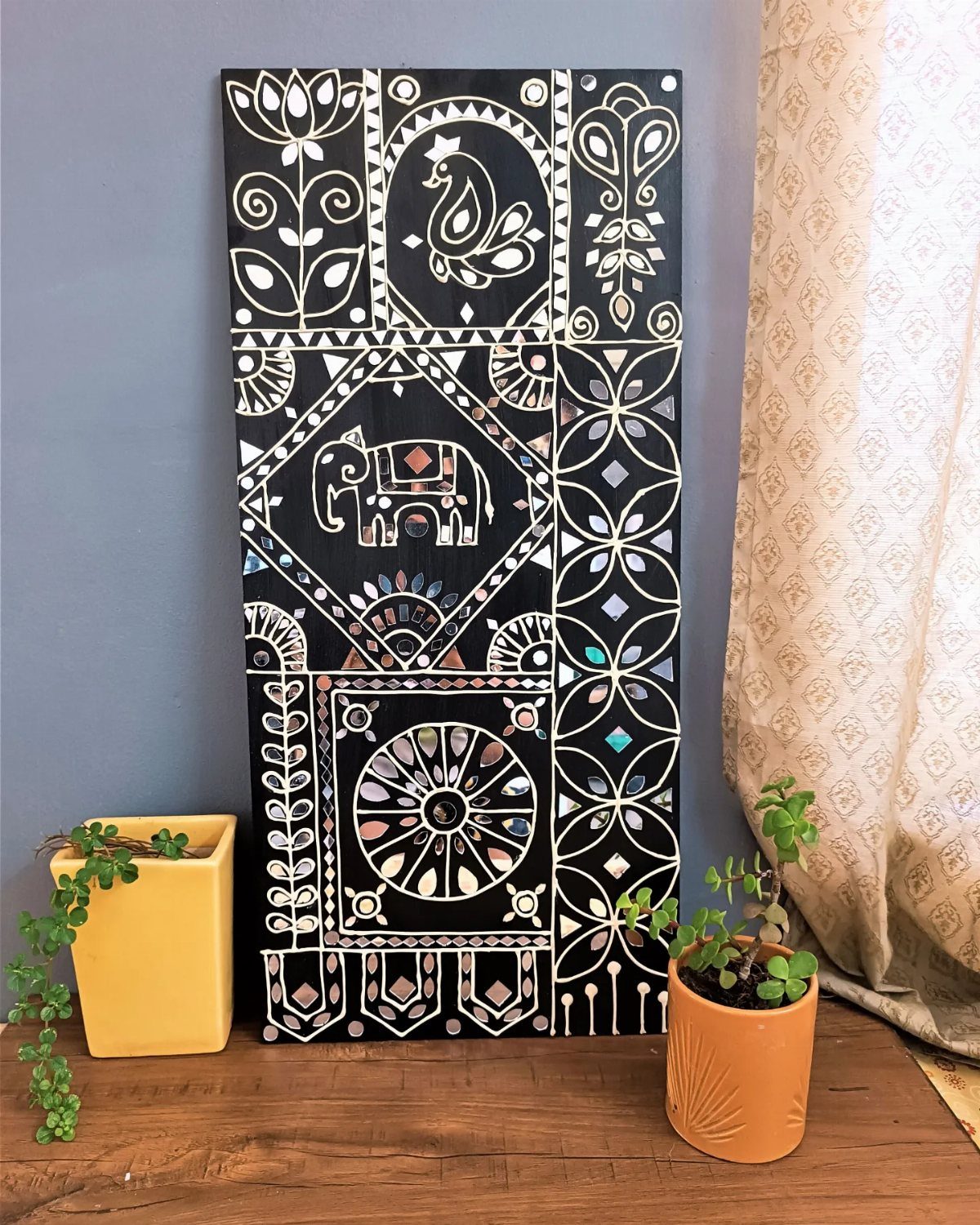
Mirror inlay panels in the traditional Indian style turn tiny pieces of glass into a picture, and an elephant with a peacock is a classic pairing. Black behind the glass makes every fragment catch the light.
A traditional frame can lean on a wooden console or shelf instead of hanging, and a strong wall color like blue gives the carved detail a lively backdrop.
I’d keep the rest of the styling plain so the pattern stays the focus.
15. Floor Mirrors
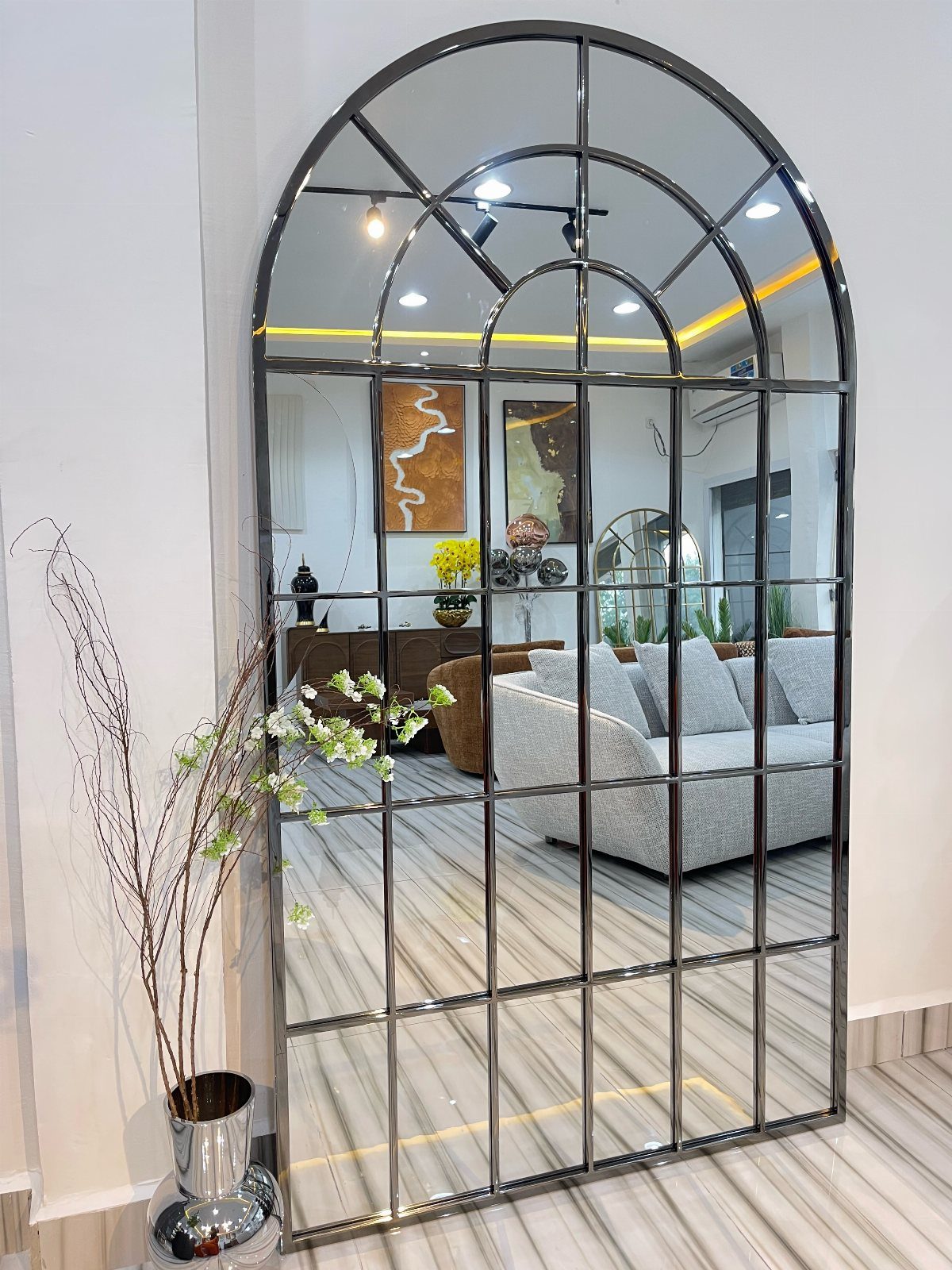
A windowpane grid across an arched floor mirror makes it read as furniture as much as glass. The black lines break up the reflection into panels, which feels more architectural than a single sheet would.
Lean it against a white wall and let it reflect something worth seeing, like a sofa and a piece of art. I’d pick this over a plain mirror if the room needs a strong shape.
16. Living Room Mirrors
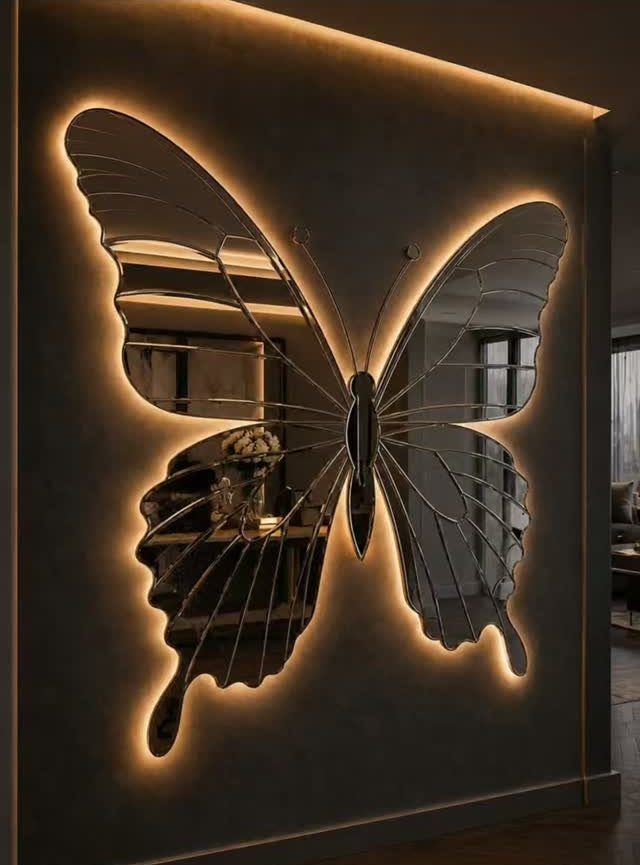
A butterfly outline with warm backlighting turns a living room mirror into the light source for the wall. On a dark grey wall the glow stands out strongly, and the shape does the decorating without any frame at all.
Mount it at a height where the sofa sits below it, and keep nearby art to a minimum. Backlit pieces need a power source nearby, so plan the outlet before you pick the spot.
17. Decorative Wall Mirrors
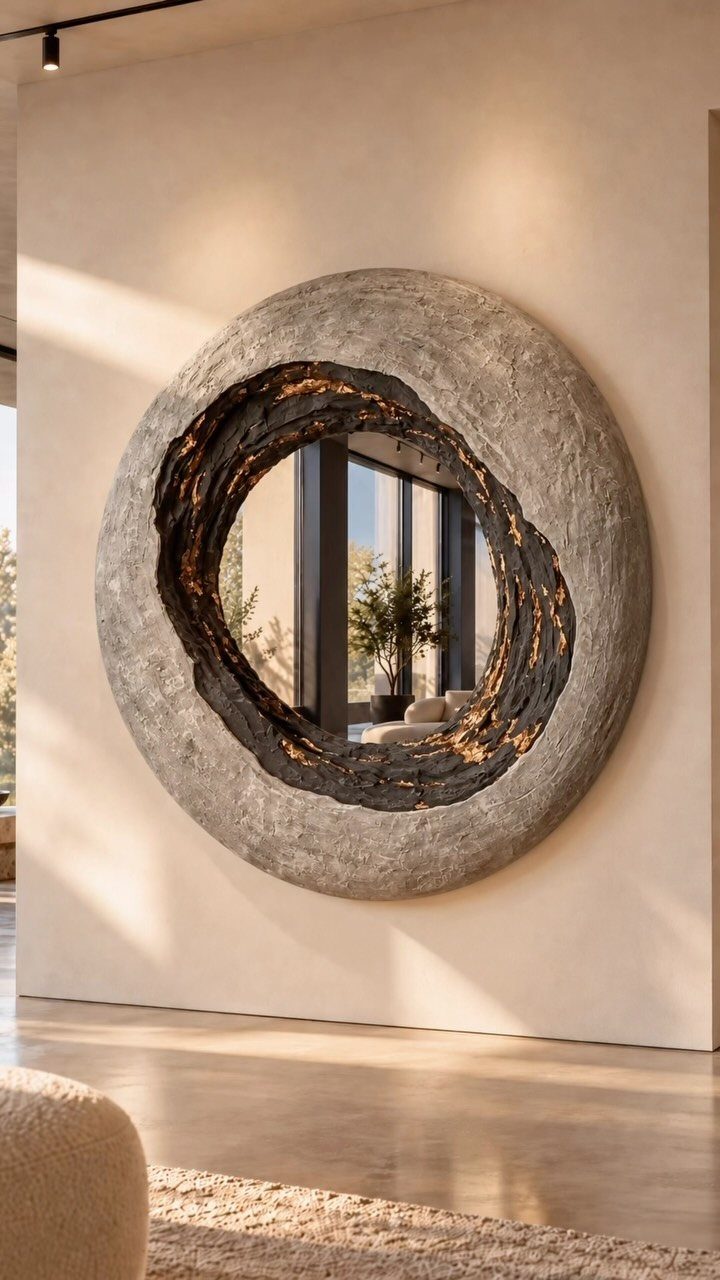
A grey, stone-textured frame with a thin gold inner rim gives a round mirror two finishes in one piece, so it works as art even when you ignore the reflection. Neutral walls let that texture read clearly.
I’d hang it alone and leave generous space around it. A frame with this much surface detail looks best when nothing else on the wall asks for attention.
18. Full-length Mirrors
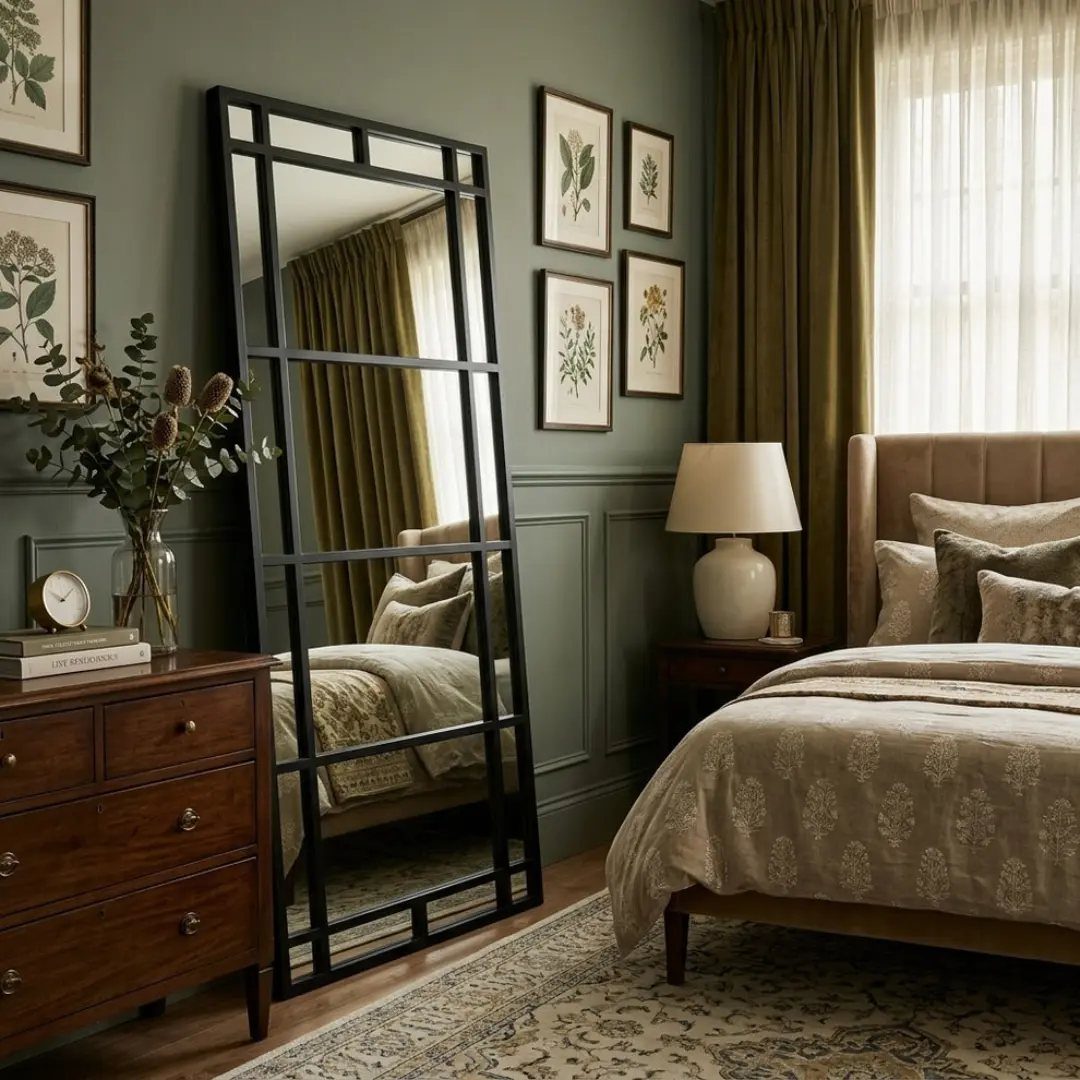
On a green wall, a black frame gives a full-length mirror a crisp outline, and leaning it saves you from drilling into the plaster. It also makes it easy to move when you rearrange the bedroom.
Stand it near the dresser and bed so it reflects the room and makes it feel larger. I’d keep the frame slim and dark; a heavy frame on a colored wall can feel crowded.
19. Geometric Abstract Mirrors
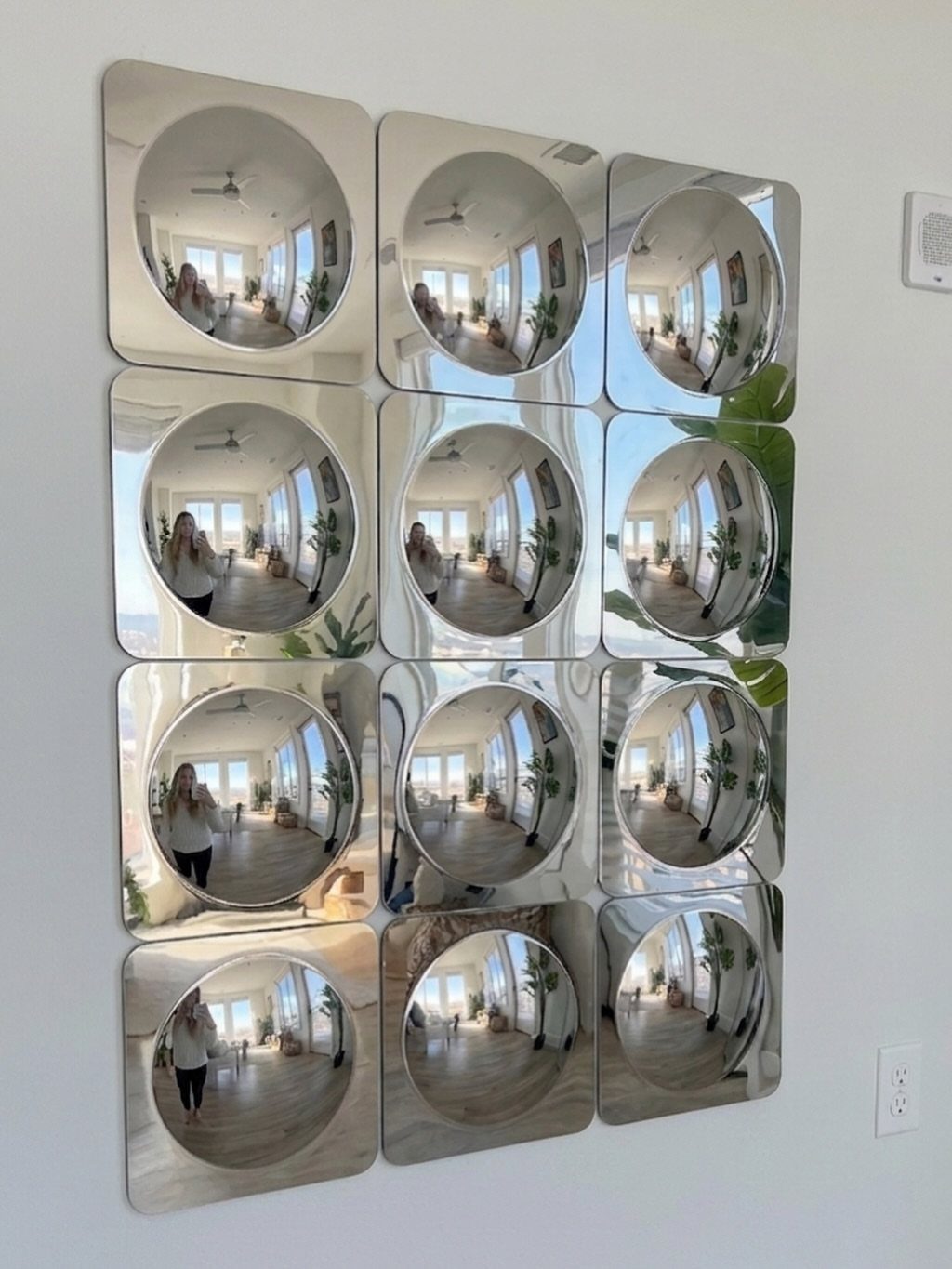
12 squares with round centers turn a plain white wall into a pattern, and the mirrors read as art before they read as glass. Because the grid is so regular, the surface of each one does the decorating.
I’d hang the whole set at eye level with even gaps and nothing else on the wall. Pieces this graphic don’t need competition from frames or shelves.
20. Sofa Wall Mirrors
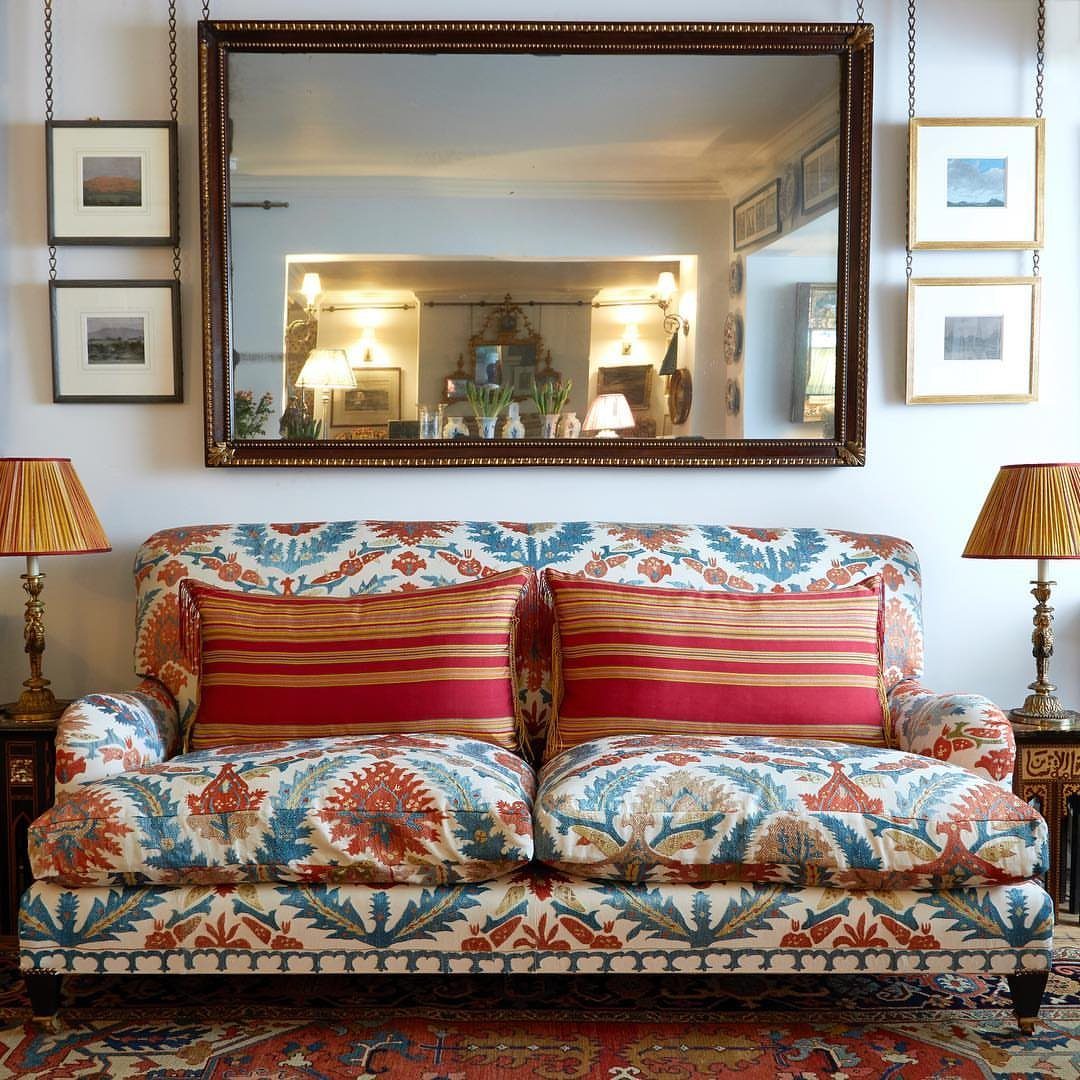
Above a patterned sofa, a large mirror in a gold rectangular frame gives the wall one clear anchor. The sofa carries the pattern, so a single plain-shaped frame keeps the arrangement from getting busy.
I’d hang it slightly narrower than the sofa and low enough that the 2 read as a pair. A lamp on each side table finishes the symmetry.
21. Mirror Over a Fireplace
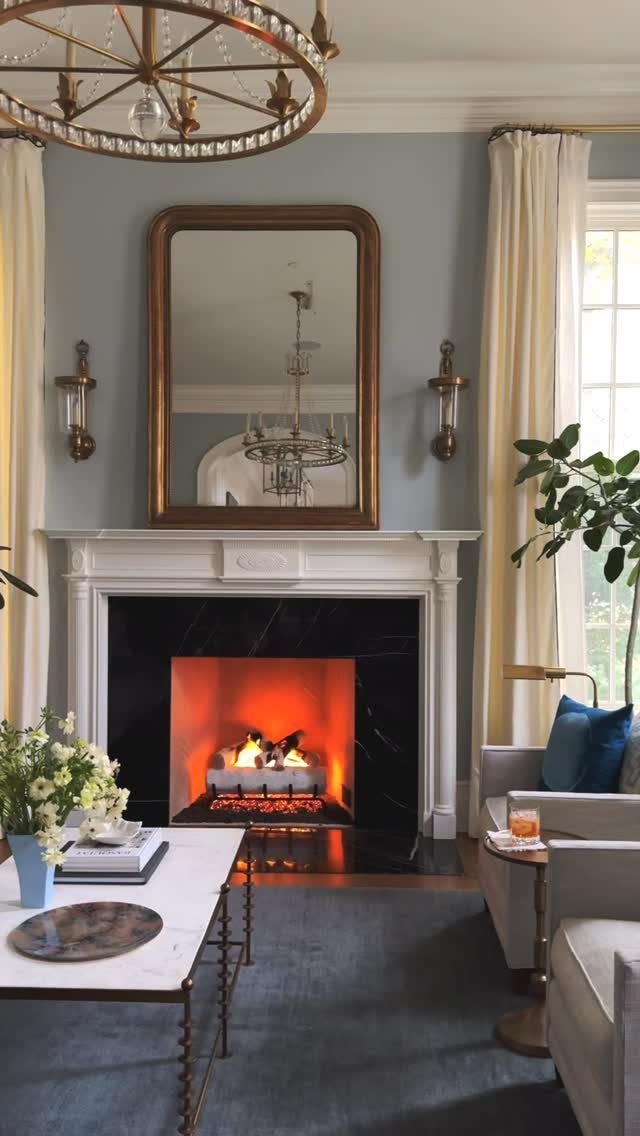
A rounded gold mirror centered over a white mantel makes the fireplace the middle of the room. The curve also softens the hard line of the black firebox below it.
Center it on the opening, not on the wall, so the two line up. I’d leave the mantel nearly bare and let the frame be the only gold up there.
22. Face-height Grooming Mirrors
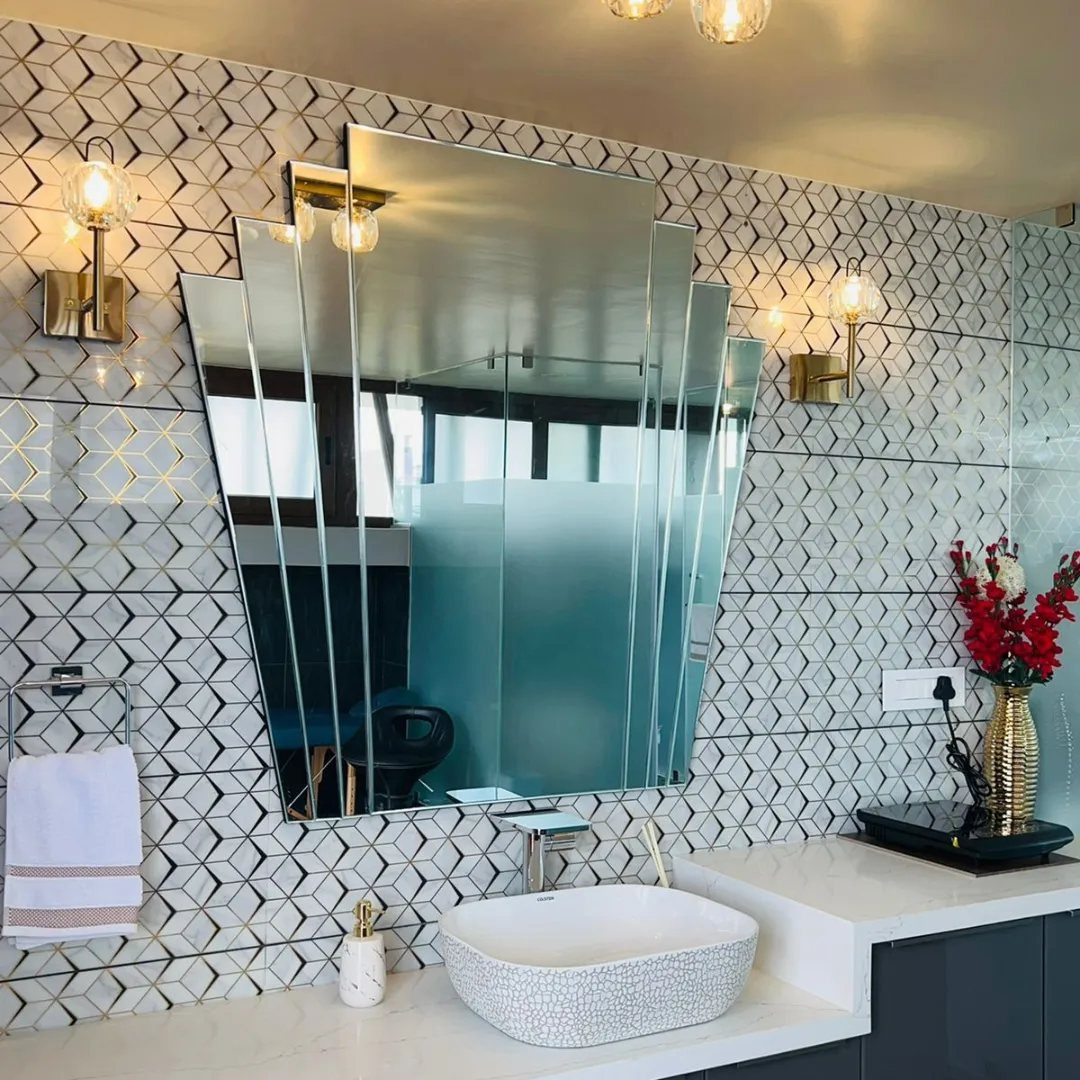
Over a vessel sink, a faceted geometric mirror works as the grooming mirror and as wall decor in one piece. Against patterned tile, the angled shapes add interest without needing a second finish.
Hang it so the center sits at face height, since that’s where you’ll actually use it. Gold sconces and a small vase of flowers are enough styling for a wall this busy.
23. Cloud-shaped Backlit Mirror
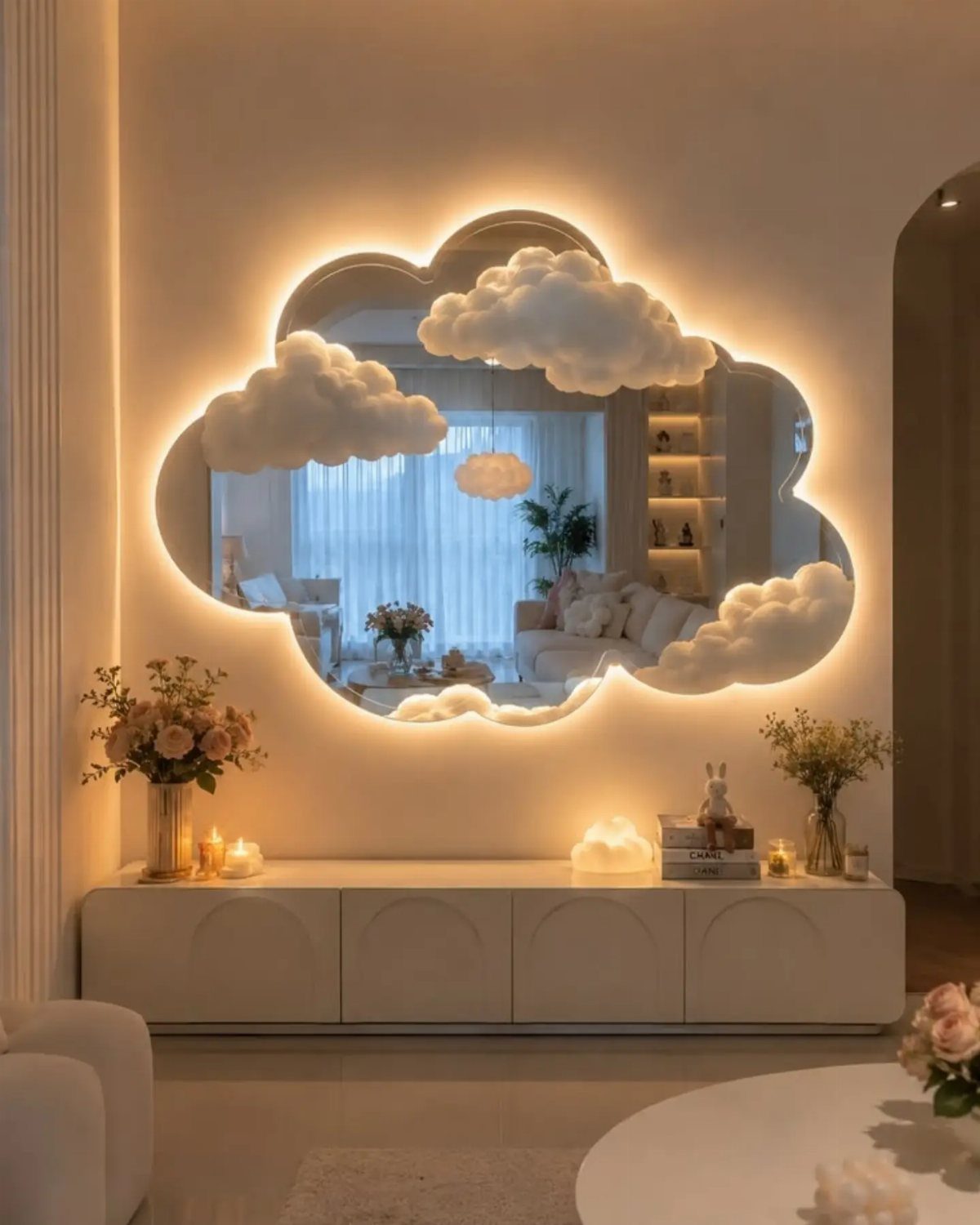
Warm backlighting and small raised clouds on the glass make this mirror a soft light source over a white sideboard. The outline does the decorating, so no frame is needed.
Plan the power before you choose the spot, because the lit edge needs an outlet nearby. I’d keep the sideboard top simple, with a lamp-free surface, so the glow is the only light on the wall.
24. Figurative Mosaic Mirror Art
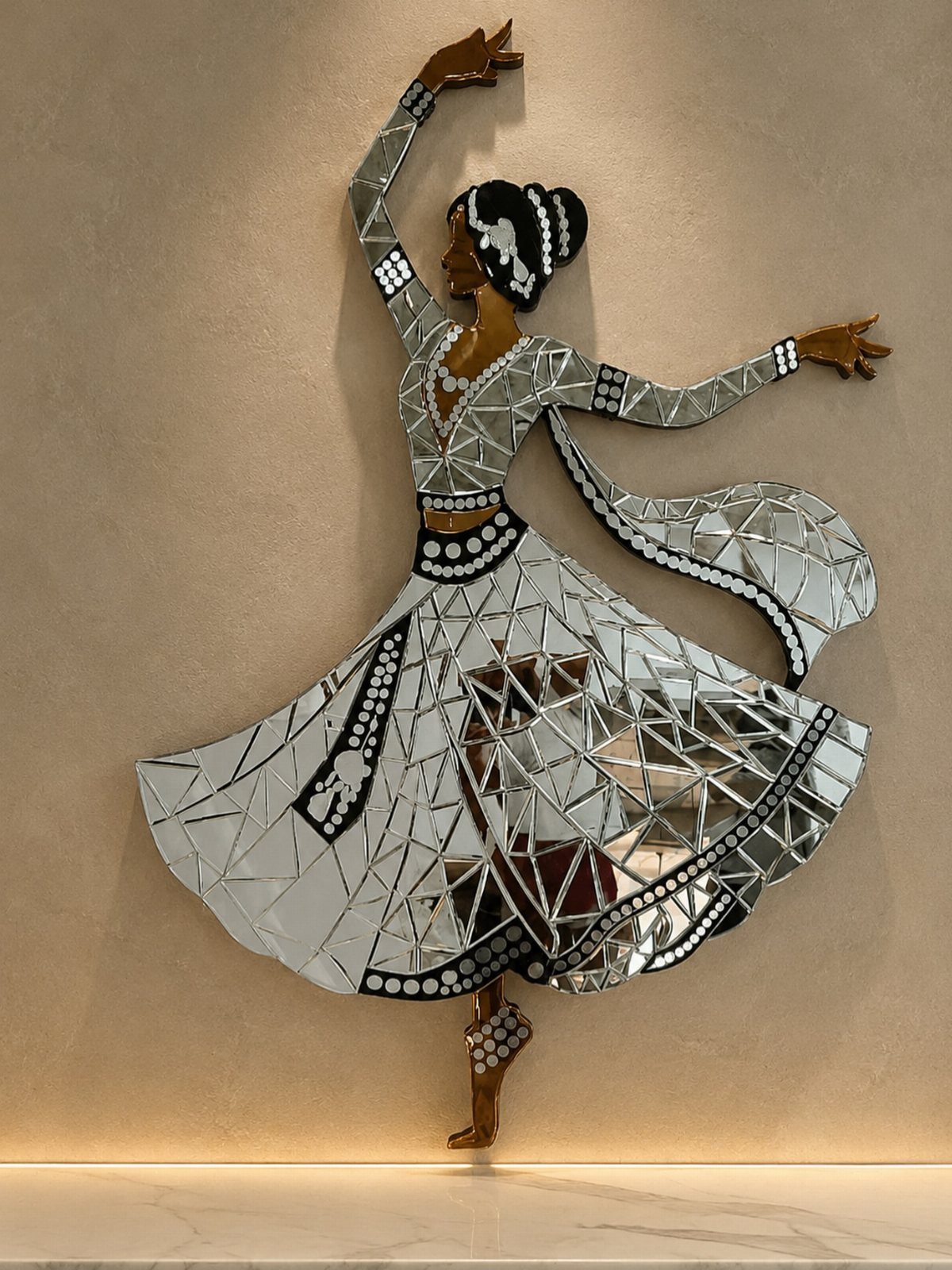
Mirror fragments and gold-toned accents come together as a dancing woman in a flowing dress, which makes this less a mirror than a piece of wall art.
Each fragment catches light at a slightly different angle, so the figure shifts as you walk past.
A neutral wall lets the glitter carry the room. I’d hang it where daylight or a lamp can reach it from the side.
25. Blue Mirror Mosaic Art
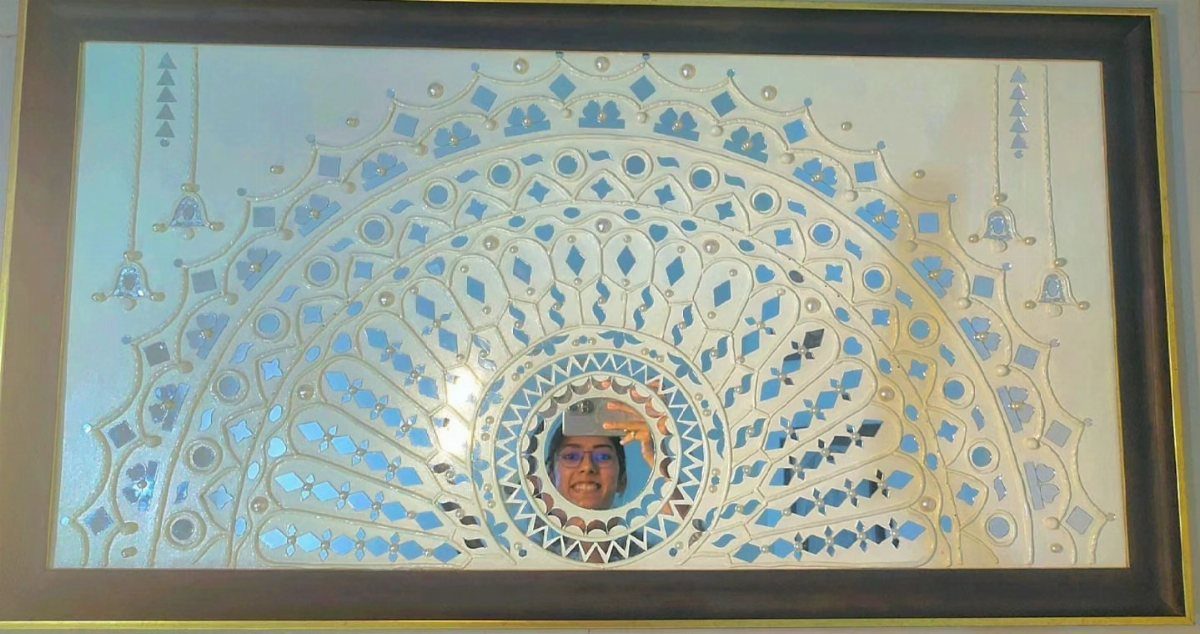
A semicircle of small blue and silver pieces gives this framed mosaic a ripple of cool light, and the cut glass shows a slightly different reflection in every tile.
Blue reads calm, which suits a bedroom or reading corner better than a busy hallway.
Hang it at eye level so the reflection catches you, or a face in the center, as it does here. I’d leave the wall around it empty, because the frame already contains the pattern.
Mirror Benefits and Function
A mirror does two jobs at once, so settle which one matters more ahead of the purchase. A dim, tight room needs light and depth, while a bare wall mostly needs something worth looking at.
For brightness, place the glass across from a window or beside it so it catches daylight instead of a dark corner. Stand back and check what it will reflect before you drill.
To make a room look larger, hang a wall mirror on the side where the space feels shortest. The eye reads the reflection as more room.
Wall mirrors suit almost any room, from hallways to dining rooms to bathrooms. Floor mirrors work better as anchors in bedrooms and entries, where a full-height view is useful.
Secure a tall mirror to the wall with a safety strap or anti-tip bracket, especially in homes with kids or pets.
Frequently Asked Questions
Where should I hang a wall mirror for the most visual impact?
Aim the glass at something worth doubling, such as a window, a pendant light or a framed print, and set its center near eye level, about 57–60 inches off the floor.
Consoles, sofas and fireplaces all make good spots, and so does an entry, where the glass pulls daylight farther into the room.
Above a mantel, center the mirror on the firebox rather than on the wall, so the pair looks planned.
Where not to put mirrors?
Avoid pointing the glass at a dim corner or a messy part of the room, because whatever sits opposite gets doubled. A window or a lamp gives back light, while a gloomy corner gives back nothing.
Hold the mirror up in the spot, or have a helper do it, and look at what shows in it before any drill touches the wall.
How can I decorate my wall mirrors?
Keep the styling small, because most frames already do the decorating. One vase, a lamp or a single sculpture on the surface below is plenty, and a sconce in the same finish as the frame ties a group together.
A strip of LED lighting behind the frame gives off a soft glow, and a slim ledge next to it can hold keys or a candle.
How do I choose the right mirror size?
A mirror that spans 2/3 to 3/4 of the console or table width looks balanced above it.
Over a sofa, size the mirror a little under the sofa’s width and hang it close, around 6–8 inches above the back, so the two look connected.
On a bare wall, go larger than feels natural, since a small mirror floating on a big expanse looks lost.
What is the difference between a wall mirror and a floor mirror?
A wall mirror is mounted and doubles as decor or a quick face check, while a floor mirror stands on its own, leaned or anchored, and shows you head to toe.
Hallways, bathrooms, dining rooms: a wall mirror fits nearly anywhere. Bedrooms and entries are where a floor mirror earns its footprint, because a full-height view is what you want there.
What styles and finishes are available for wall mirrors?
Shapes include sunburst, arched, round, rectangular, scalloped, ornate and organic free-form, plus backlit and mosaic pieces.
You can find gold, brass and black metal frames, plus wood for a warmer look. Curved and arched shapes take the edge off a wall, while rectangles look more tailored.