

A floating console clears the floor and makes a small room read larger, while built-in shelving flanking the TV balances a wide wall without adding furniture.
The choice depends on how much storage you need, whether the TV mounts on the wall or sits on a console, and what backdrop treatment frames the screen.
Wood slat panels install over a plywood backer with half-inch to 1-inch gaps, marble panels come as large-format porcelain slabs that mount lighter than real stone, and LED strips behind the screen or console run on a dimmer at 2700–3000K to add glow without glare.
1. Wood Slat Panels

Vertical wood slats build a textured backdrop that frames the TV and lets it sit cleanly in the wall.
The spacing between slats adds depth, and when you add LED strips behind them, the wall reads as a deliberate feature instead of just a mount.
I like this approach when the TV sits on a blank wall that feels too plain.
The slats give you a defined zone, and installation is straightforward if you use prefinished panels or individual battens on a plywood backer. Most slat systems run 1–3 inches wide with half-inch to 1-inch gaps.
Keep the slats within a few feet of the TV edges so the treatment stays centered and doesn’t dominate the wall.

WIDE COMPATIBILITY: It looks high tech and fairly sophisticated. This nice universal swivel floor tv stand fits most 32 37 40 42 43 46 47 50 55 60 65 70 inches Plasma LED LCD flat and Curved Screens, compatible with brands. To make sure this mount will fit, you should insure your TV's VESA bolt pattern falls between 100 x 100mm up to 600 x 400mm.

Modern, simple and minimalist. This iconic TV stand is based on a cantilever, a beam anchored only on one end. Its curving steel beam is not only elegant but also strong. Unlike Easel or Tripod typeTV stand, Our TV stand FSM has 4 across touch point to the floor thus it provides much more stable placement to your living room, bed room, home office, studio or any other at your home.

Enhanced Safety & Stability: Our television stand features a 0.4" tempered glass base that combines textural quality with exceptional stability. It is designed with your safety in mind, so say goodbye to worries about wobbling or tipping.
2. Floating Low-profile Console

A floating console sits a few inches off the floor and holds the same storage as a grounded unit, but the gap below makes the room feel more open.
That visual trick matters most in smaller living rooms where floor space reads tight.
I mount these high enough to run a robot vacuum underneath but low enough that the TV stays at a comfortable viewing height. The console needs to anchor into studs or use heavy-duty drywall anchors, since there’s no leg support.
Pair a dark wood finish with a light or marble wall treatment around the screen to keep the console from disappearing into the background.

CUSTOMIZABLE LAYOUT: Overhead bridge mounts to cabinets or wall separately for variable heights (match any TV setup)
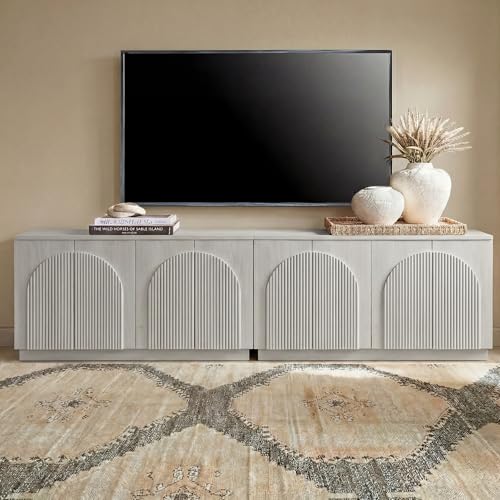
[Handcrafted Arched Reeded Artistry] Elevate your living space with a unique blend of modern fluted textures and elegant arched silhouettes. Each 3D reeded door panel is meticulously handcrafted, creating a sophisticated play of light and shadow that mimics high-end custom cabinetry. Unlike mass-produced flat panels, this mid-century modern TV stand features premium MDF with a refined wood grain finish, offering a bespoke focal point for contemporary, upscale interiors.

【Spcious Space】This media storage cabinet is essential for multimedia storage. It can be used as a CD storage cabinet with CD capacity of up to 240 CD's or a DVD storage tower with capacity of up to 108 DVD's or for a mix of media discs. It also may store up to 132 Blue Ray Discs or Video games
3. Marble Wall Panels

Marble panels behind the TV create a contrast that makes the screen read as part of the wall architecture instead of an appliance stuck to it.
The veining adds movement, and a white or grey marble stays neutral enough to work with most furniture.
Large-format porcelain slabs in marble patterns are lighter and easier to install than real stone, and they cost less per square foot. I usually run the panel floor to ceiling and wider than the TV so the treatment feels proportional.
If the room has warm tones, choose a marble with warm grey or beige veining instead of cool white.

[Mirror Embedded Display Design]: This design allows you to do hair / makeup while watching tutorials, or watch the news while brushing your teeth, just turn off the switch and it is a 32"*24" high-definition full-length mirror, allowing you to have both The dual function of mirror and display is a great value.

【On as TV, off as mirror】 Equipped with a 1920*1080 FHD screen, it serves as both a high-definition TV and an elegant mirror, enhancing the sense of luxury in the space. It is not only suitable for bathrooms but also can be installed in dressing rooms, bedrooms, salons, yachts, SPA clubs, and other places.

UNIQUE DESIGN: This asymmetrical mirror is an artistic display on its own, which is a beautiful part of any home decorating scheme. This unique shaped mirror gives the illusion of even more light and depth
4. Integrated LED Lighting

LED strips behind the TV, along the console edges, or inside shelving add a soft glow that reduces eye strain and makes the wall feel finished at night.
The lighting works best when it highlights the architecture rather than washing the whole wall.
I install warm white or tunable strips with a dimmer so the brightness adjusts to the room.
Adhesive-backed strips go up fast, but hiding the power supply and keeping the wiring clean takes some planning. Run the cable down through a wall channel or behind the console so no cords show.
Avoid RGB or color-changing strips if you prefer a more neutral look, though some rooms can carry a bolder lighting mood.

【PREMIUM QUALITY CONSTRUCTION】Made with high-quality solid wood composite panels, this Wall Mount TV Frame features a smooth surface and fade resistance. Its sturdy and durable design ensures long-lasting use. Equipped with standard wall-mount accessories and high-quality hardware, it provides strong and robust support for your television.

Organized home theater setup – Eliminate messy wires and give your entertainment area a clean, modern look. This in-wall cable management kit provides an easy way to power your TV and hide cables for a polished setup in living rooms, bedrooms, or home theaters. Comes with 2 power plugs, 1 USB-A port and 1 USB-C port to power your devices.
5. Built-in Shelving

Shelves flanking the TV give you space for books, plants, and objects without requiring a separate bookcase. The arrangement keeps the TV from floating alone on the wall, and the shelving adds symmetry if you balance both sides.
I build these in or use floating brackets that sit flush to the wall.
Depth matters: shelves that hold most decorative items without crowding the TV work best, but go shallower if the wall is tight. Space the shelves far enough apart vertically so taller objects fit without looking crammed.
If the TV is large, keep the shelves narrow and to the sides so the wall doesn’t feel overloaded.

Multi-Port Charging Station & Ambient Lighting: The floating TV shelf features 3 AC outlets and 2 USB ports for easy charging of your TV, gaming console, Wi-Fi router, DVD and more. Plus, an adjustable LED light offers color customization for a cozy ambiance

Multi-Port Charging Station & Ambient Lighting: The floating TV shelf features 3 AC outlets and 2 USB ports for easy charging of your TV, gaming console, Wi-Fi router, DVD and more. Plus, an adjustable LED light offers color customization for a cozy ambiance

Elegant Design: Our floating media console features a unique mirrored and crystal crushed diamond finish that elevates your home décor. The reflective surfaces add a touch of glamour and sophistication, making your living space look more luxurious and stylish.
6. White Floating Console

A white floating cabinet creates a clean base for the TV and keeps the whole setup feeling light. The color works especially well in rooms with white or neutral walls, where a dark console would draw too much attention.
I mount these the same way as any floating console, with the cabinet hung on a rail or heavy brackets hidden inside.
The white finish shows dust and fingerprints more than wood or dark colors, so choose a matte or satin surface instead of high gloss unless you’re ready to wipe it down regularly.
Add small decorative objects or a low plant on top to soften the look without blocking the screen.
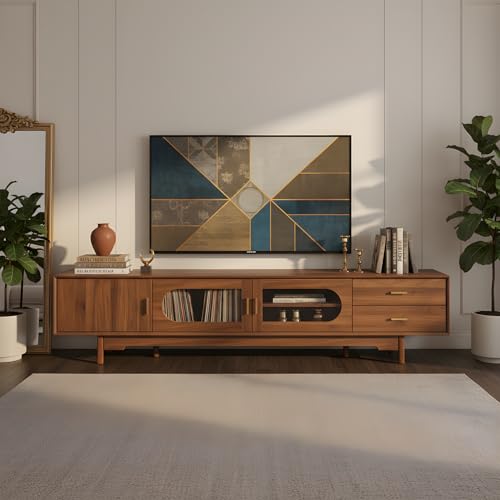
【Mid-Century Modern Design】This wooden TV console brings timeless mid-century style with clean lines, warm wood texture, and smooth curved details. The fluted-glass double doors add a refined touch, while the solid door keeps the overall look balanced—making it an eye-catching centerpiece in any living room.

Acrylic columns Supports: Design with 4 cylindrical acrylic columns makes the TV stand more stable and not easy to break, greatly ensuring the safety of the countertop. Also, the texture of transparent acrylic adds more technology and modernity to the product
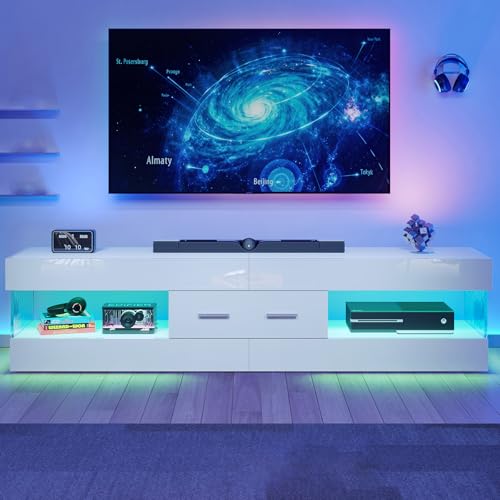
【TV Stands for 65–75 Inch TVs】Built with a full 67-inch wide tabletop, this white tv stand for 65–75 inch TV delivers rock-solid support for large screens. Reinforced particleboard and MDF construction provide up to 200 lbs weight capacity, making it a dependable large tv stand for living room setups with soundbars and home theater systems—no wobbling, no worries.
7. Wood Floating Console

A wood-finish cabinet adds warmth below the TV and keeps the look grounded when the rest of the wall stays neutral or light. The grain brings in texture without needing extra decor.
I usually set the height so the TV center sits at eye level when seated.
If you add LED strips underneath, keep them warm white so the glow matches the wood tone instead of washing it out.

[Multi-functional storage rack] 4 tiers of entertainment center stand can be used to store audiovisual equipment, record Blu-ray players, TV accessories, game consoles, PS5, Xbox One, Switch Games and Disks Organizer, CD storage, etc., as a dvd shelf, projector rack, stereo stand, audio cabinet

【Modular 3‑in‑1 Design】 Modular Featuring: 47" Mantel + 60“ Cabinets——Standalone or Combo. You can easily split or merge the pieces to fit any space—from a living room centerpiece to an entryway sideboard. Overall dimensions: 15.7"D x 104"W x 37.4"H.

Enclosed Storage: Closed media storage cabinet doors keep your collection neatly hidden and shielded from dust, while opening them provides clear visibility and easy access. This design delivers tidy organization and reliable protection for valuables
8. Grey Floating Cabinet

A grey cabinet sits quietly beneath the TV and works well when the wall behind has marble panels or a light finish. The muted tone keeps the console from competing with the screen or the backdrop.
I use this finish in rooms where dark wood feels too heavy and white feels too stark. Grey hides dust better than white and pairs easily with cooler or warmer wall colors depending on the undertone.
If the room has a fireplace insert below the TV, size the cabinet so it clears the fireplace opening and doesn’t crowd the heat vent.
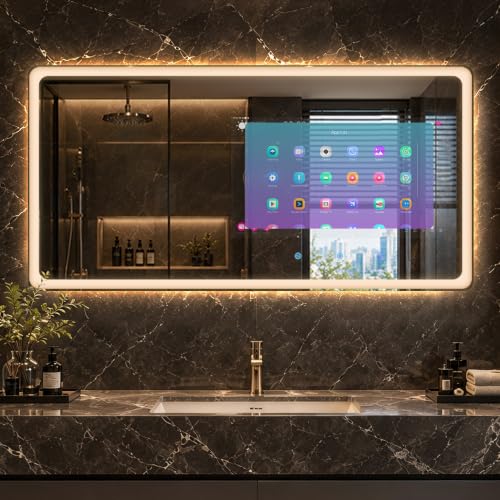
【On as TV, Off as Mirror】 Equipped with a 1920×1080 FHD display, this smart unit functions as both a high-definition TV and an elegant mirror. It enhances the luxury of any space and is suitable for bathrooms, dressing rooms, bedrooms, salons, yachts, SPA clubs, and more.

【Upgraded Android 13.0 System & Expanded Memory 】Enjoy smoother performance, faster app loading, and more storage with the latest Android 13.0 OS and upgraded 2GB RAM + 32GB ROM configuration.

Crushed Diamond TV Stand:This LED entertainment center is perfect to support 45”- 50”, and even 55" TVs in plasma, LED, OLED, and LCD options, which means the TV & media furniture game console cabinet is designed for your home decor/office/bedroom/living room
9. Warm LED Strip Lighting
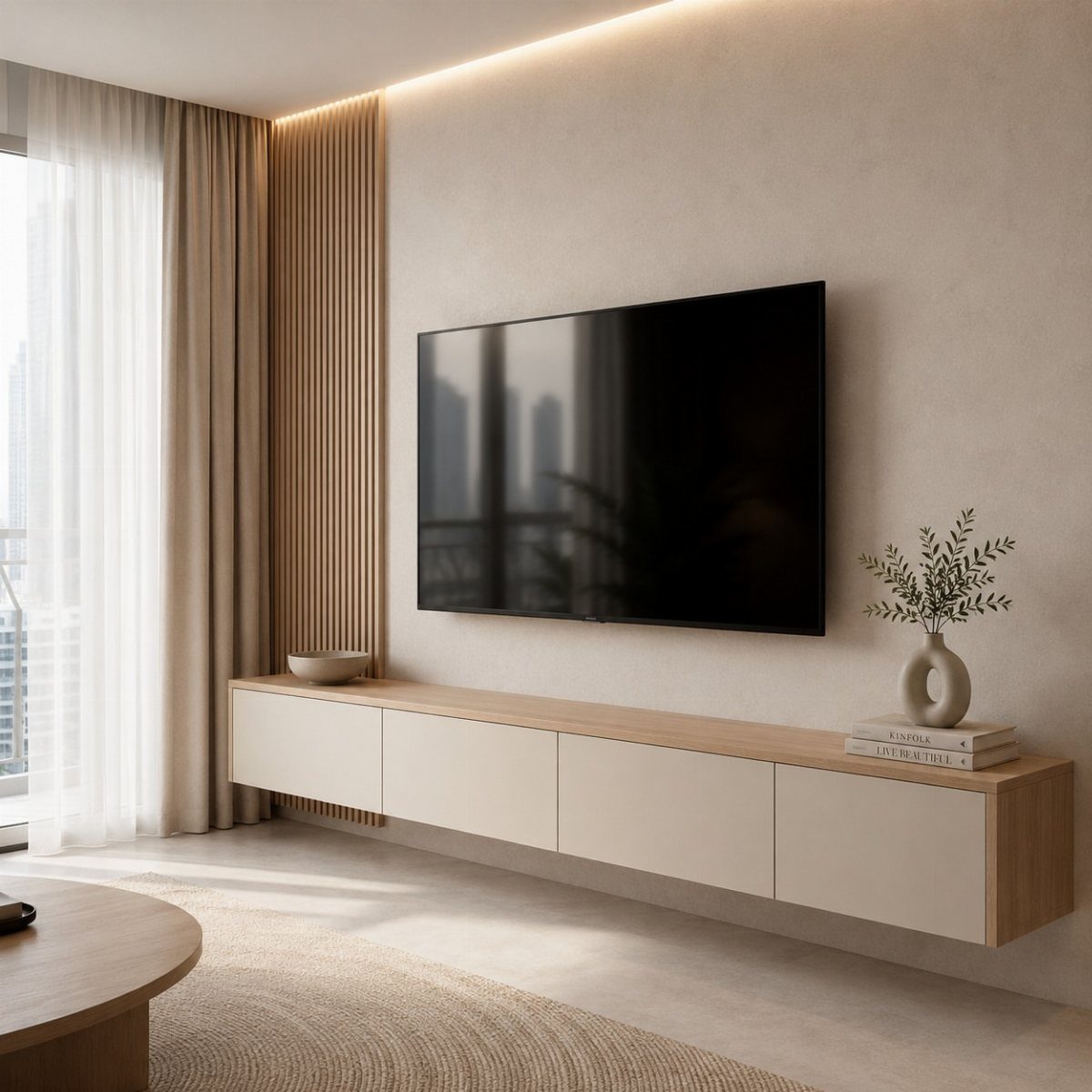
Warm LED strips along the ceiling line or under the console add soft ambient light that keeps the TV from feeling harsh in a dark room. The strips highlight the architecture without flooding the wall.
I run these on a dimmer and keep the color temperature around 2700–3000K so the light reads warm instead of clinical.
Adhesive strips work if the surface is clean, but use aluminum channels if you want a cleaner edge and better heat dissipation.
Place the strips where they backlight a feature, not where they shine directly into the seating area.
10. Wood and White Console
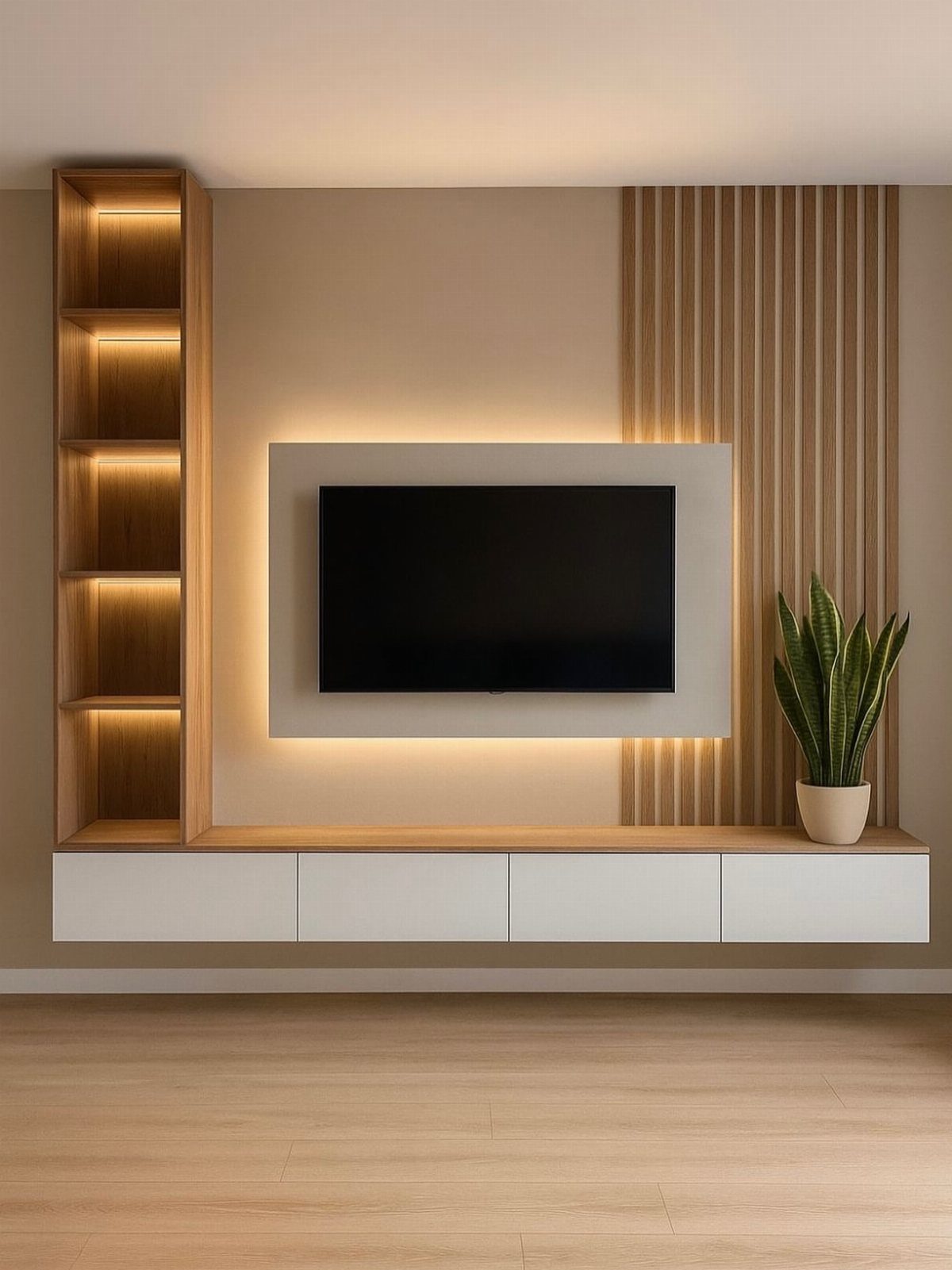
A cabinet that mixes wood with white drawer fronts or side panels balances warmth with a clean finish. The combination softens an all-white wall without committing to a fully wood look.
This works well when you want the console to tie into both light walls and wood accents elsewhere in the room. I usually choose a light or medium oak tone for the wood portion so the contrast stays gentle.
Keep the wood continuous across the top surface and let the white sit below, which keeps the horizontal line strong and the design from feeling split.

Exquisite PET High Gloss & Plywood Core: Elevate your living space with the ultimate modern aesthetic. Unlike cheap paper-laminated units, Furninova features a premium PET high gloss finish that is scratch-resistant, yellowing-resistant, and incredibly easy to clean. Combined with a solid plywood core, this floating tv console offers a mirror-like elegance backed by structural integrity that won't warp over time

Optimize Your Space: Size: 43.7"L x 11.0"W x 8.9"H. Our floating TV stand saves valuable floor space and includes generous storage for all your media essentials - routers, DVD players, remotes, projectors, set-top boxes, game consoles, TV components, and decorations

Floating TV stand with Rattan Doors:The natural wood grain finish of this elegant floating TV cabinet has a unique aesthetic. The hand-woven rattan design on the surface of the double doors adds a distinctive vintage charm, perfect for bohemian, farmhouse or mid-century modern interiors.
11. Beige Floating Cabinet

A beige cabinet pairs naturally with beige or taupe wall panels and keeps the whole TV wall reading as one coordinated zone. The color sits between white and wood and works when you want warmth without grain.
I choose this finish when the room already has beige upholstery or rugs and the TV wall needs to tie in without adding contrast.
The cabinet shows less dust than darker finishes, and if the wall panels have integrated lighting, the beige reflects that glow softly.
Mount it level and centered under the TV so the alignment feels deliberate, not approximate.
12. White Marble Backdrop

A white marble panel behind the TV creates a clean vertical stripe that frames the screen and separates it from the surrounding wall.
The veining adds subtle movement, and the white keeps the focus on the TV instead of the backdrop.
The panel installs over drywall with adhesive or a rail system, and keeping it centered matters more than perfect symmetry with the console below.
If the room has black or dark wood accents, pair the white marble with a wood slat section on one side to break up the brightness.
13. Black Floating Shelves
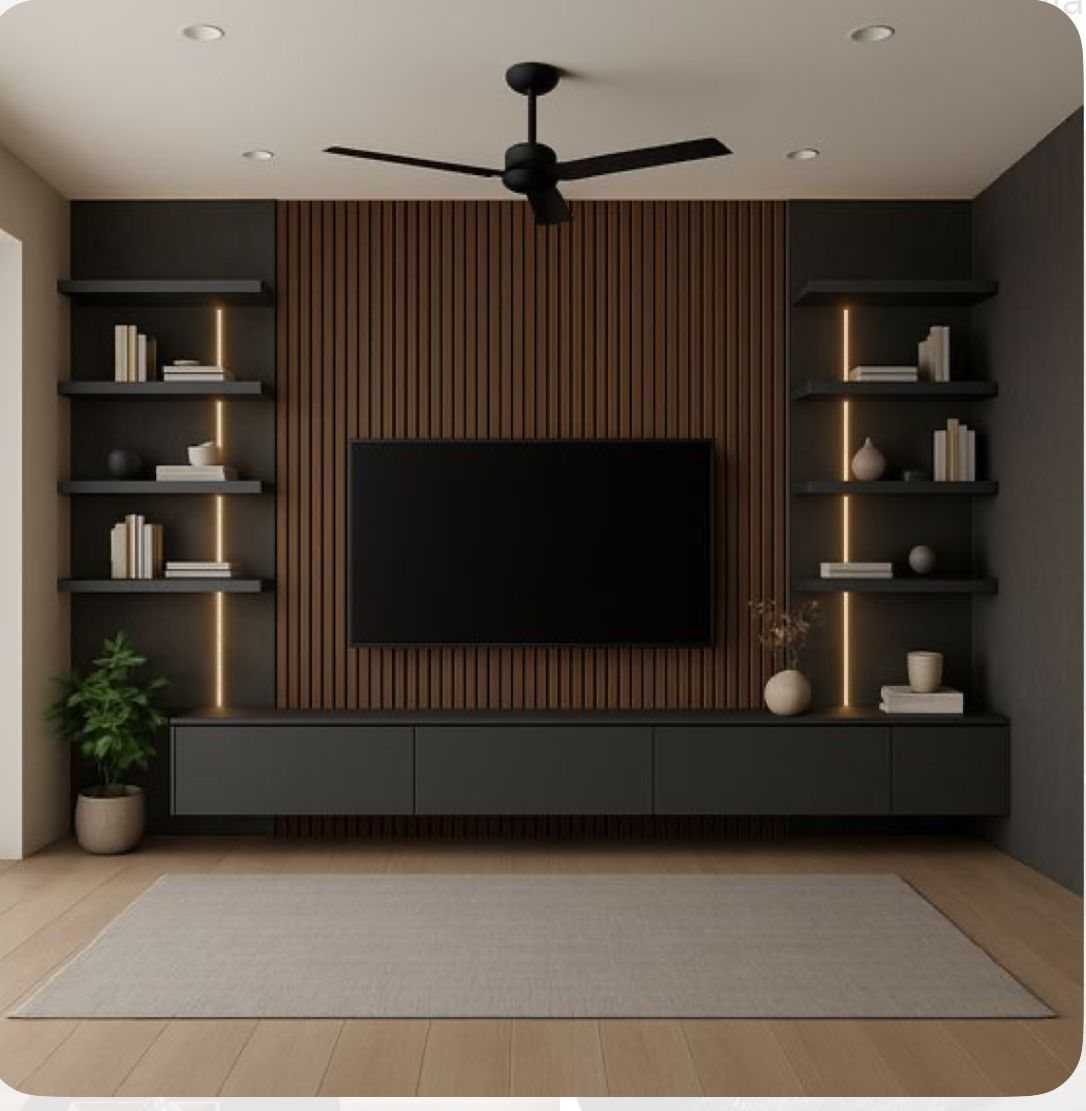
Black shelves against a lighter wall or slat panel create a strong vertical line that balances the TV and adds storage without blending into the background. The dark finish makes the shelving feel intentional instead of just filling space.
I use this approach when the room has other black accents, like trim or furniture, that need a visual anchor on the TV wall. The shelves work best when kept narrow so they don’t project too far into the room.
If you add LED strips behind or under the shelves, the glow softens the black and keeps the wall from feeling too stark.
14. Grey Marble Backdrop

Grey marble panels sit cooler than white marble and pair well with rooms that have grey upholstery or steel accents. The veining adds texture, and the darker tone keeps the TV from looking like it’s floating on a bright surface.
Large-format porcelain slabs install like white marble but read heavier, so I keep the panel width close to the TV size and avoid extending it too far across the wall.
If the room gets a lot of daylight, grey marble won’t darken the space the way it might in a basement or north-facing room.
Pair it with warm LED strips to lift the coolness without shifting the color.
15. White Glossy Panels

Glossy white panels reflect light and make a small room feel larger, but the finish shows fingerprints and requires regular cleaning. The shine works best in rooms with good natural light, where the reflections stay soft instead of harsh.
I avoid glossy finishes near windows that create glare on the screen. The panels usually come as high-gloss laminate or acrylic, and both need careful handling during installation to prevent scratches.
If you want the brightness without the maintenance, choose a satin or semi-gloss finish instead.
16. Gold Metal Strips

Gold metal strips add vertical or geometric lines to white or neutral panels and catch light without needing their own power source. The strips read as trim, and the placement defines how formal or modern the wall feels.
I use adhesive-backed metal strips or slim channels that screw into the panel substrate. Spacing the strips evenly matters more than thickness, and keeping the pattern simple prevents the wall from feeling busy.
Choose a matte gold or brushed finish if the room has warm wood or brass hardware elsewhere.
17. Wall-mounted TV

Mounting the TV directly to the wall keeps the setup minimal and frees floor space below for a low console or open shelving.
The screen sits at whatever height you choose, and the clean look works in both small and large rooms.
I mount to studs or use heavy-duty anchors rated for the TV weight plus a safety margin. Running cables inside the wall requires a recessed outlet kit or conduit, and most local codes require that work to meet electrical standards.
Set the center of the screen at seated eye level.
18. White Floating Shelves

White shelves on a dark wall stand out without adding bulk, and the contrast keeps decorative objects visible instead of blending into the background.
The shelves give you display space that balances the TV horizontally and breaks up a large expanse of wall.
I mount these with concealed brackets so the shelves appear to float. Depth matters so items sit stable without projecting too far into the room.
Space the shelves vertically with enough room for books or taller objects, and avoid overcrowding them so the wall stays clean.
19. Black Marble Backdrop

A black marble panel behind a dark TV creates a single unbroken surface that keeps the screen from floating and reads formal in low light.
The dark backdrop works when the wall behind has darker wood slats or a moody finish, so the marble doesn’t sit alone.
Large-format porcelain slabs in black marble patterns install the same way as lighter stone but show dust and streaks more readily. I add backlighting behind the panel so the edges lift slightly and keep the wall from reading flat.
This finish suits rooms with dark upholstery or metal accents that need the TV wall to hold weight instead of recede.
20. Curved TV Wall
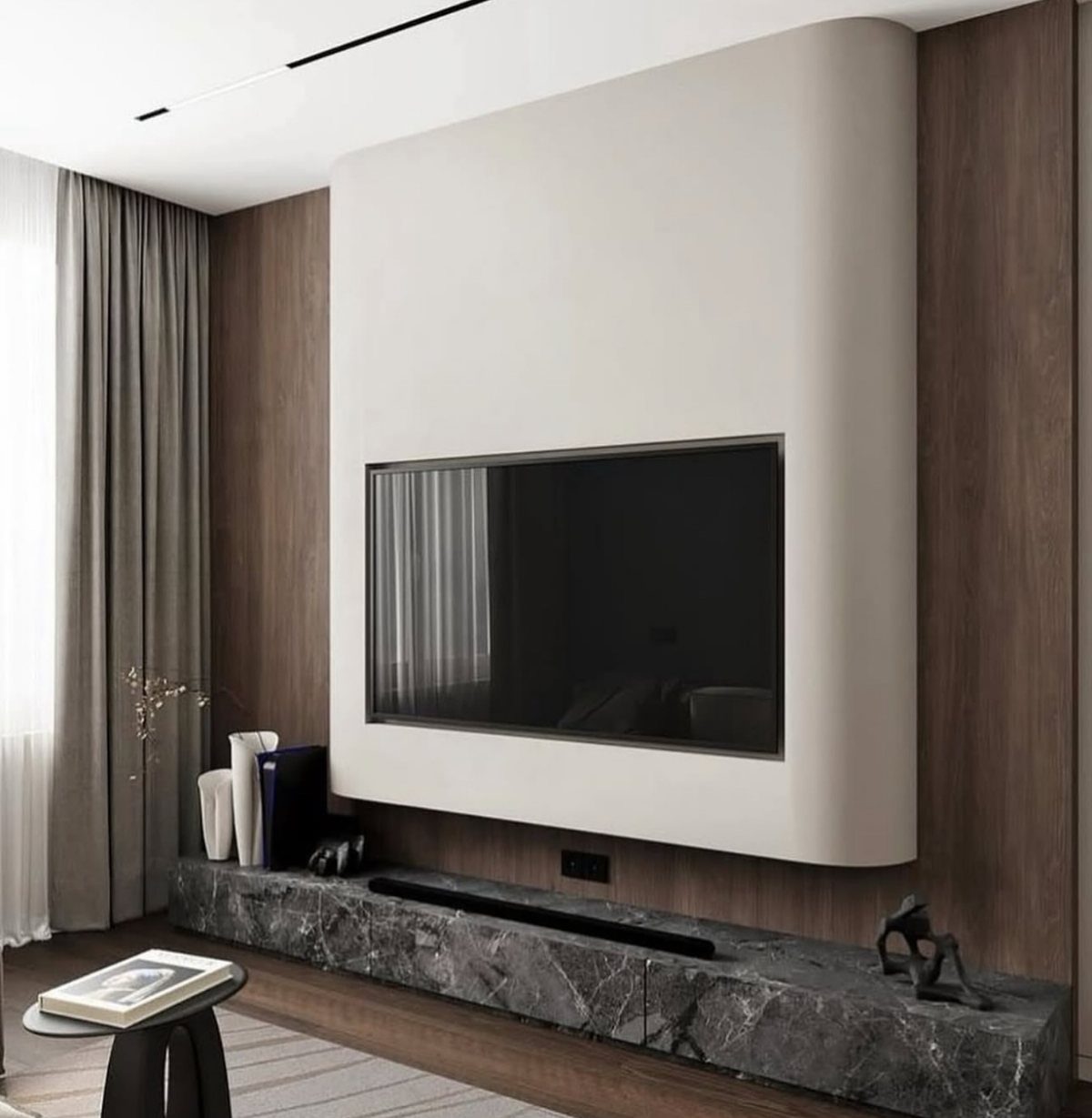
A curved panel wraps the TV in a soft arc instead of a flat plane, which breaks the geometry of a boxy room and keeps the wall from feeling like a grid.
The curve usually sits vertical and centers the screen, though some versions sweep horizontally across the wall.
Building this requires framing the curve before installing the finish material, and drywall curves more easily than rigid panels. The softer the radius, the less noticeable the seams.
I keep the console straight so the curve reads as a deliberate feature instead of an accidental mismatch.
21. Built-in Fireplace

A linear fireplace beneath the TV adds warmth and a second focal point without requiring floor space for a separate hearth.
The horizontal flame sits in a recessed opening or built-in base and runs the width of the console or wider.
Electric models install without venting and plug into a standard outlet, though the heat output stays lower than gas. I set the fireplace opening far enough below the TV so heat doesn’t reach the screen.
The fireplace works best when the surround matches the TV wall finish so both elements read as one built-in unit.
22. Mirrored Side Accent

A mirrored panel on one side of the TV wall reflects light and makes the room feel wider without adding storage or shelving. The mirror usually runs floor to ceiling and sits adjacent to the TV panel, not behind it.
The reflection doubles whatever sits opposite, so I place the mirror where it catches a window or a clean wall instead of clutter.
Frameless mirror panels install with adhesive or clips, and keeping the edges aligned with the TV panel matters more than perfect centering.
This works best in narrow rooms where widening the space visually helps more than adding another storage cabinet.
23. Tall Display Cabinet

A tall cabinet with glass doors gives you vertical storage for books or display objects and balances a wide TV wall without adding another low console.
The cabinet usually sits to one side of the TV and runs close to ceiling height.
I choose a cabinet depth that matches or stays shallower than the floating console so the wall reads as one plane.
Glass doors keep the contents visible, which works when the shelves stay organized and the objects inside tie into the room’s color scheme.
Interior lighting inside the cabinet adds glow at night and keeps the tall piece from reading as a dark mass.
24. Light Oak Paneling

Light oak slats behind the TV bring warmth and grain without the heaviness of darker wood.
The vertical lines add texture, and the pale tone works in rooms with white walls or light upholstery that need connection to wood floors or furniture.
The slats install over a backing board with even spacing, and keeping the gaps narrow prevents the TV from looking like it’s floating over voids.
I run the slats floor to ceiling so the panel reads as deliberate architecture instead of just a TV backdrop.
Pair this with a matching oak console to keep the wood continuous, or use a white cabinet if the room needs contrast.
25. Grey Paneled Wall

Grey panels running floor to ceiling create a structured backdrop that separates the TV from the surrounding wall without adding color or pattern.
The vertical lines give the wall definition, and the neutral tone works when the room already has grey upholstery or flooring that needs a visual anchor.
If the console sits directly below, choose a wood or lighter finish so the grey doesn’t run unbroken from floor to ceiling.
26. Teal TV Wall

Teal drywall brings color to the TV wall and works when the rest of the room stays neutral and needs a focal point that isn’t just the screen.
The built-in framing holds shelves and a fireplace in one vertical unit, and the teal reads modern without trending as hard as jewel tones or saturated blues.
I use this when the client wants color but doesn’t want to commit it to furniture.
The drywall itself is standard, painted after taping, and the teal shade sits between blue and green so it pairs with both warm and cool greys.
27. Circular LED Backdrop

A circular panel with LED backlighting creates a soft halo behind the TV and breaks the straight lines of a typical wall unit.
The rounded shape draws attention without competing with the screen, and the glow keeps the panel from reading as a heavy frame.
The circle usually builds from curved drywall or a prefabricated ring, and the LED strips run behind the perimeter so the light spills evenly.
I set the panel diameter wider than the TV so the screen sits inside the curve with breathing room on all sides.
28. Fluted Wood Console

Fluted wood cabinets add vertical texture at the base of the TV and give the console more presence than a plain box.
The grooves catch light and shadow, and the low profile keeps the floor clear while still offering closed storage.
The fluting runs the full width of the cabinet face, and the finish usually stays natural or light stained to show the grain. Metal handles in brass or gold lift the warmth of the wood without adding contrast.
Center the TV above the cabinet so the piece anchors the screen rather than sitting off to one side.
29. Stone Accent Wall
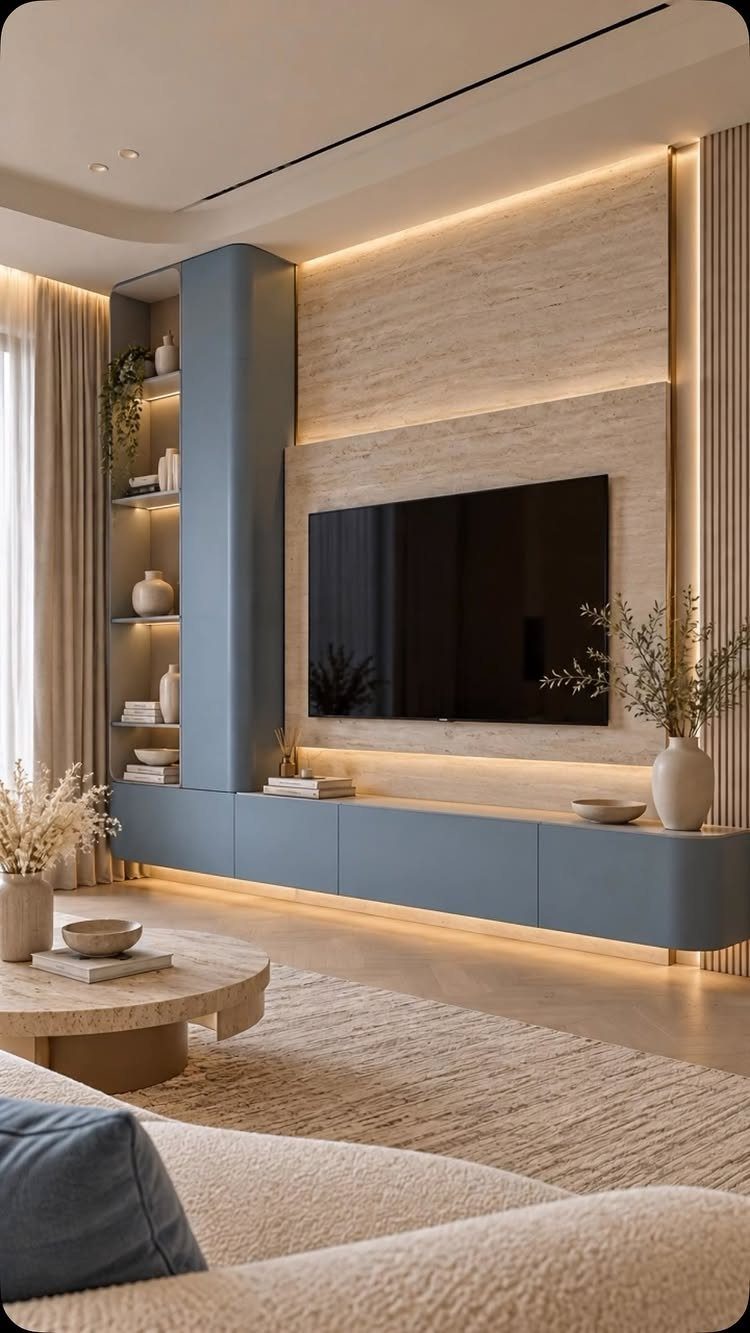
Stone panels behind the TV add texture and weight that painted drywall can’t match. The surface reads three-dimensional, and the natural or stone-look finish pairs well with rooms that have concrete, tile, or other hard surfaces elsewhere.
Thin stone veneer or large-format porcelain installs over drywall with mortar or adhesive, and the seams matter less when the stone pattern has movement.
Keep the stone section vertical and centered behind the screen so it frames the TV without extending across the full wall.
Pair it with LED strips at the base or sides to soften the texture at night.
30. Arched Backlit Shelving
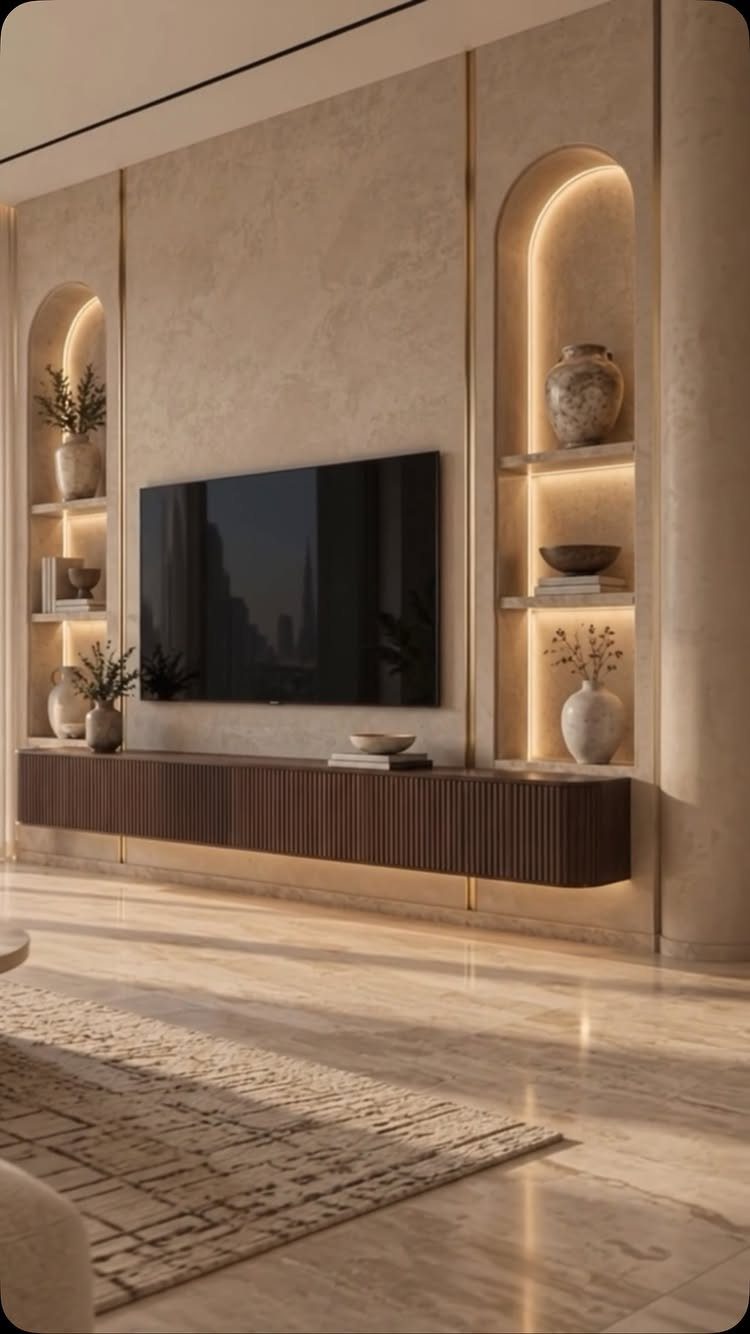
Arched shelving with backlighting flanks the TV and adds symmetry without filling the wall with storage you might not need. The curves soften the rectangular screen, and the glow inside each niche highlights whatever sits on the shelves.
The arches recess into the wall, which requires framing before finishing, and the LED strips run inside the back of each niche.
Keep the objects on the shelves simple so the backlight stays visible and the arches don’t disappear behind clutter.
Spacing the arches evenly on either side of the screen keeps the composition balanced.
31. Blue LED Cabinetry

Glossy white cabinets with a curved profile use built-in blue LED strips to add glow and movement in a room that needs a contemporary finish without hard edges.
The curve softens the boxy shape of most consoles, and the blue light reads cool and futuristic against the white lacquer.
The LED strips typically run along the bottom or inside recessed channels on the cabinet face.
Blue stays more noticeable than white or warm tones, so I use it when the room has minimal color elsewhere and the TV wall should stand out.
Keep the surrounding walls neutral so the glow doesn’t compete with other colors in the space.
32. White Textured Panels

Textured panels give the wall behind the TV surface depth that flat paint can’t deliver. The pattern catches light at different angles, and the white finish keeps the texture subtle instead of competing with the screen.
These panels install over drywall with adhesive and come in patterns ranging from geometric to wavy. The depth of the relief matters, anything too pronounced collects dust and shortens how clean the wall looks between wipes.
Pair the textured wall with a simple wood console so the eye registers the texture first and the storage second.
33. Wall Molding Panels
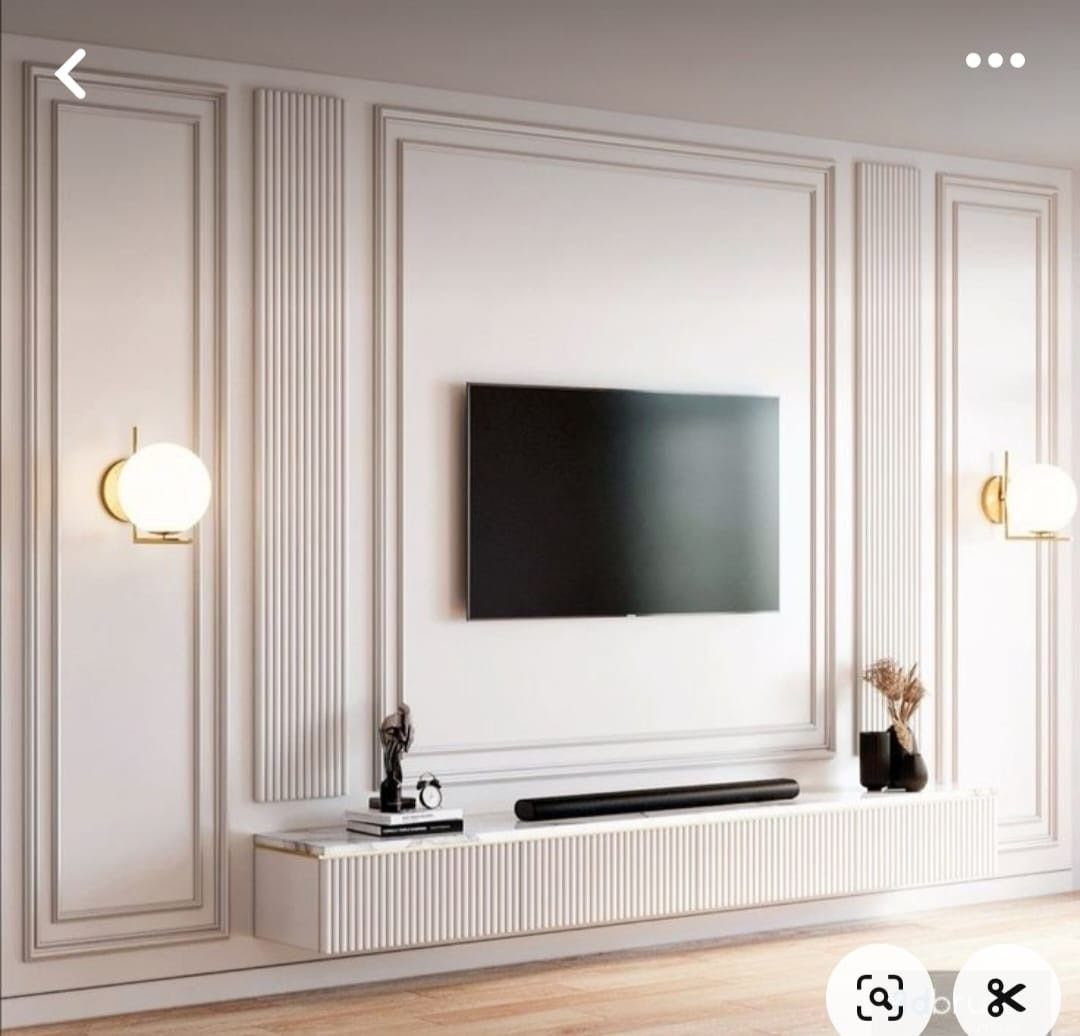
Applied molding in a rectangular grid turns the TV wall into a paneled feature and reads more formal than plain drywall.
The raised trim defines zones around the screen, and the symmetry works when the room has traditional details like baseboards or crown molding elsewhere.
The trim installs with adhesive and finish nails, then caulk fills the seams before painting. Keeping the rectangles proportional to the TV size matters, too small and they disappear, too large and the grid loses definition.
I choose a matte finish so the trim reads as architecture instead of gloss that catches every reflection.
34. Electric Fireplace Base

Positioning a linear electric fireplace at the base of a TV console adds warmth and a second light source without taking up additional wall width.
The fireplace sits below the floating shelf in a wide horizontal recess that often matches or exceeds the cabinet width.
These units plug into a wall outlet and produce heat through an internal fan, though output is moderate compared to gas or wood fireplaces.
The flame effect works year-round even with the heat off, which makes it more about ambiance than primary heating.
Position the unit low enough that the warm air stream rises in front of the console rather than straight toward the screen.
35. Fluted Panel Accents

Vertical fluted panels behind the TV add rhythm and shadow without the weight of full wood cladding.
The narrow grooves run floor to ceiling and give the wall texture that reads modern, especially when paired with a floating console in a matching or complementary wood tone.
The panels mount to a backing board with even spacing between each groove. Centering the fluted section behind the screen frames it cleanly and avoids pushing texture into corners where it can look unfinished.
This works best when the rest of the wall stays smooth so the fluted section reads as an intentional accent, not a leftover from another project.
36. Recessed Shelving

Recessed shelves carve display niches into the wall plane instead of adding depth into the room, giving you storage without furniture that projects forward.
The shelves usually sit to either side of the screen or above a fireplace and can include LED strips that light the back of each niche.
Building recessed shelves requires framing the openings before finishing the wall, so this works best during new construction or a full remodel.
The depth should hold decorative objects without making the wall too thick, and spacing the shelves evenly matters more than the number you install.
Keep the items on the shelves light in color or backlit so they stand out against the recess.
37. TV Wall Trends

Stone cladding paired with LED strips and a floating wood cabinet pulls together 3 finishes that define most contemporary TV walls right now. The texture reads modern without trending hard, and the backlighting keeps the stone from feeling heavy.
If the room already has grey flooring or concrete, this combination ties into that palette. The floating cabinet opens storage without adding legs or visible hardware, and the shelving to the side balances the width of the screen.
Keep the LED temperature warm or neutral so the stone stays natural instead of reading cold.
38. Small-space TV Wall

When floor space is tight, a wall-mounted screen above a narrow console keeps circulation open and gives you storage without depth that eats into the room.
The slat panel adds vertical interest behind the TV, and the floating shelves to the side hold a few objects without requiring a full bookcase.
The console here combines white and wood, which works when the room has both tones elsewhere. Mount the TV low enough that viewing height stays comfortable from the sofa, and keep the shelves light so the wall doesn’t feel crowded.
Frequently Asked Questions
What TV unit style is trending?
Floating low-profile consoles in beige, white, or wood finishes dominate current TV unit trends, often paired with textured backdrops like wood slats or marble panels.
The look favors clean lines with integrated LED lighting that highlights the architecture rather than sitting visible on the surface.
Curved wall panels and built-in fireplaces are also showing up in higher-end installations where the TV wall becomes a deliberate focal point.
What are some modern TV wall design ideas?
Modern TV walls layer texture and lighting: vertical wood slats with LED backlighting, large-format marble panels behind the screen, and floating consoles that keep the floor open.
Integrated shelving flanking the TV adds symmetry and storage, while linear fireplaces below the screen bring warmth without taking floor space. The finish palette stays neutral with wood, white, grey, and beige so the wall reads cohesive rather than busy.