The surface you’re styling decides which of these works.
A table you eat at needs a bowl low enough to talk across, a console suits a long rectangular vase, and a cascade that spills toward the floor needs a table with enough room to anchor it.
The span runs from silver dollar eucalyptus branches in a pale vase to a party installation on a wooden beam with green amaranthus pouring down.
Fruit can stand in for flowers too, right down to a hollowed-out watermelon used as the vase.
1. Large Floral Arrangement

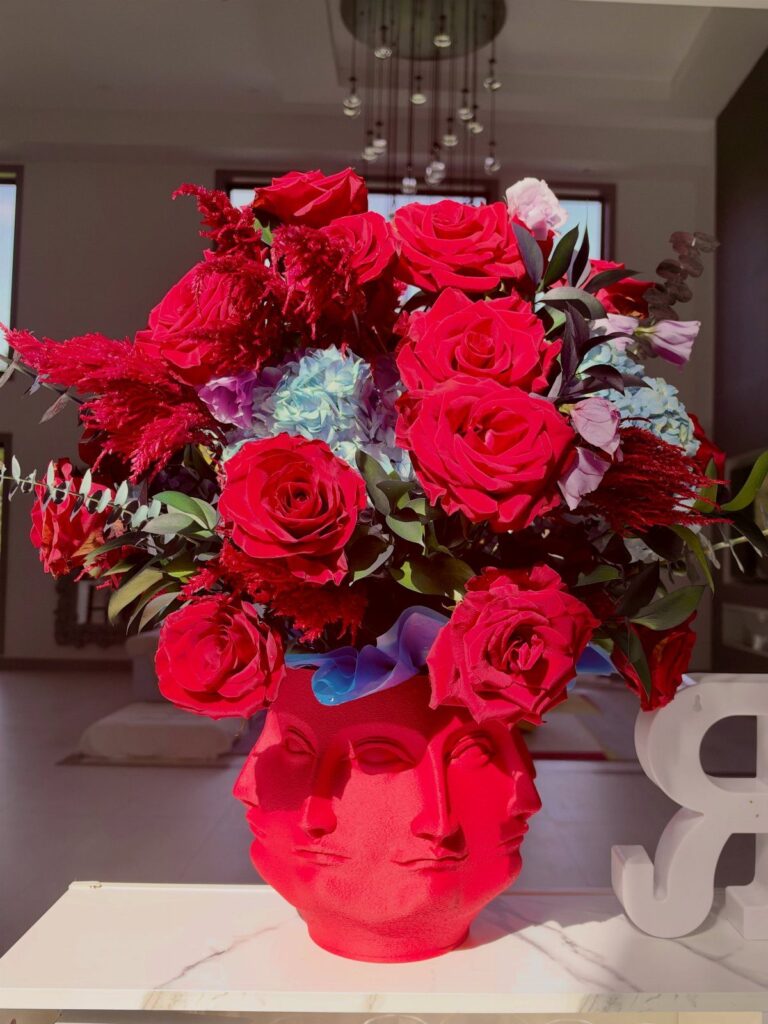
Red roses and blue hydrangeas make a bold pairing, and the red vase pulls the whole thing together.
Roses bring stiff, dependable stems, while hydrangea heads fill the gaps fast, so a modest number of stems covers a lot of space.
Stick to those 2 colors and make the vase the third. On a marble surface, a piece this full reads as a deliberate focal point.
2. Flower Centerpiece

A glass bowl on a tiered metal stand lifts a mixed bunch of purple, pink and red blooms off the table and gives it presence without needing extra stems.
For a quick version, fill the bowl with water, cut the stems short, and pack the flowers tightly against each other so they hold themselves in place.
A stand does more here than the flowers do: it turns an ordinary bowl into the centerpiece.
3. Accent Table Arrangement

A round glass accent table suits a wide, low bowl of purple and pink flowers, because you see the arrangement from every side and nothing hides behind it.
Build it rounded and even all the way around, with no front or back.
Clear glass shows the water line, so trim leaves off the stems that sit below it. A cloudy bowl undoes the fresh look quickly.
4. Silver Tray Flower Arrangement
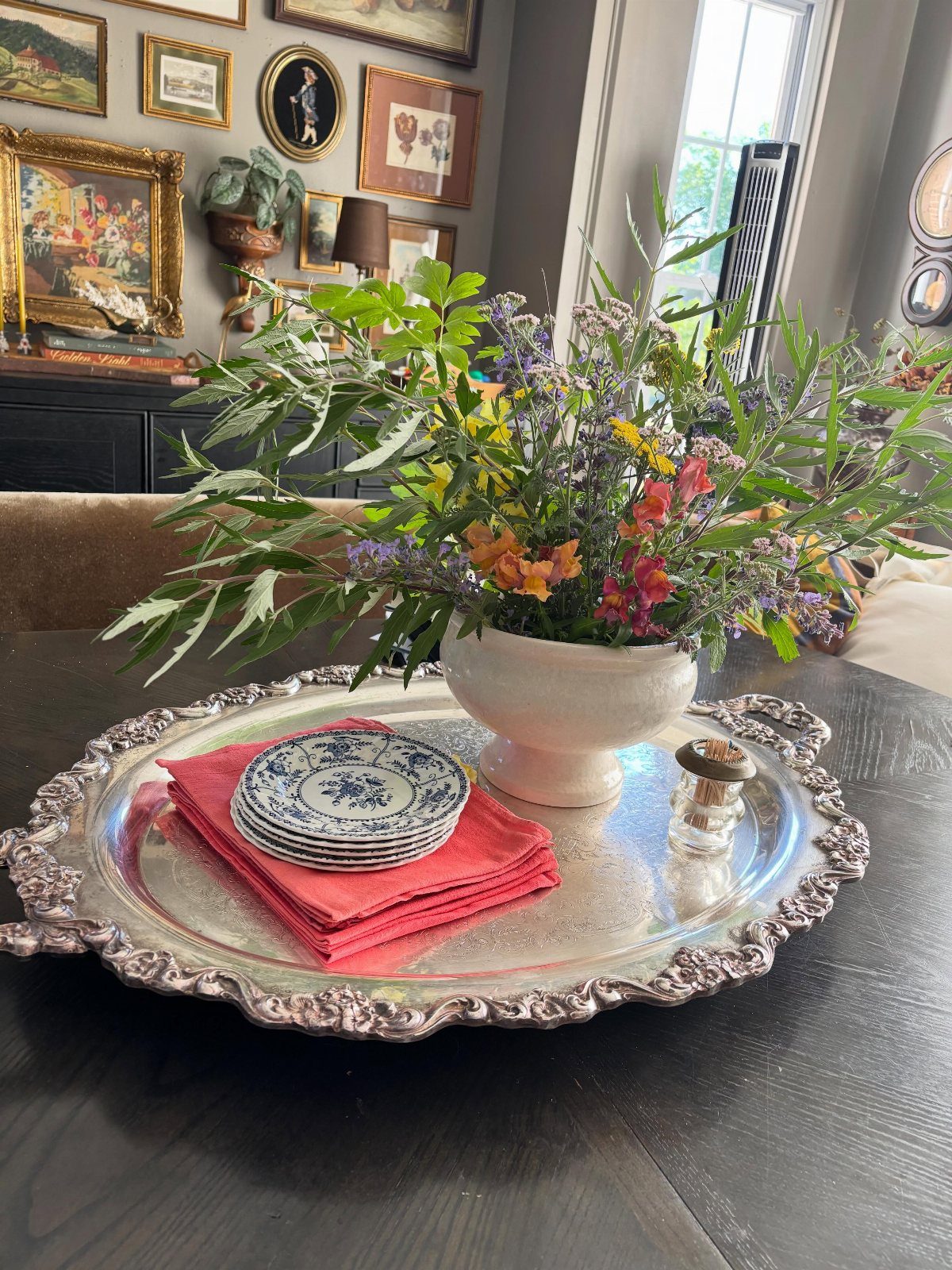
Setting a bowl of wildflowers on a silver tray makes the arrangement part of the table setting instead of an obstacle on it. The tray catches drips, and it lets you slide the whole thing aside when plates come out.
Fill a white bowl loosely with mixed stems, then tuck seasonal accents around its base on the tray. Keep those accents low so guests can still see across the table.
5. Weeping Berry Arrangement

Berries that droop and trail give this arrangement its movement, and a stone-look vase on a pedestal lets them hang without crowding anything.
Place the weeping stems last, angled outward and slightly down, once the hydrangeas and peonies set the shape. A pedestal gives drooping branches the drop they need.
6. Silver Dollar Eucalyptus

Silver dollar eucalyptus needs nothing else.
Vary the cut lengths of the branches so the outline looks natural instead of clipped. Keep the vase simple and pale so the foliage color stays the focus, and the arrangement sits happily beside a candle and mirror without competing.
7. Santa Bottlebrush Arrangement

Tucking a Santa figurine into red roses and evergreen turns a plain Christmas bouquet into something with a punchline.
I’d set him in last, deep enough in the greenery that he looks planted there, and let a few roses sit at his shoulder height.
Keep the greens full so the red stays the loudest color.
8. Frosty Berry Centerpiece
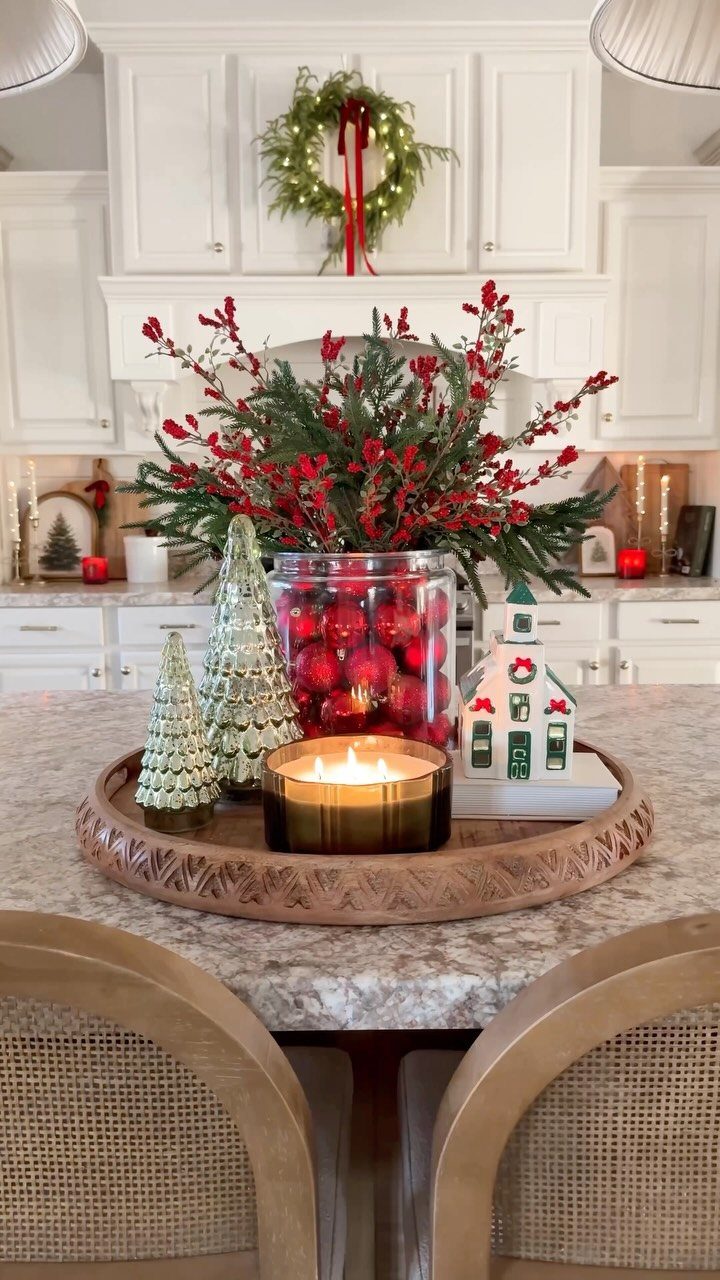
A wooden tray keeps the pieces grouped and lets you move the whole display in one lift.
Vary the heights: the jar tallest, the trees in the middle, the candle lowest. Stick to one shade of red for the berries so the group reads as a single piece instead of a pile of holiday items.
9. Red Hydrangea Christmas Arrangement
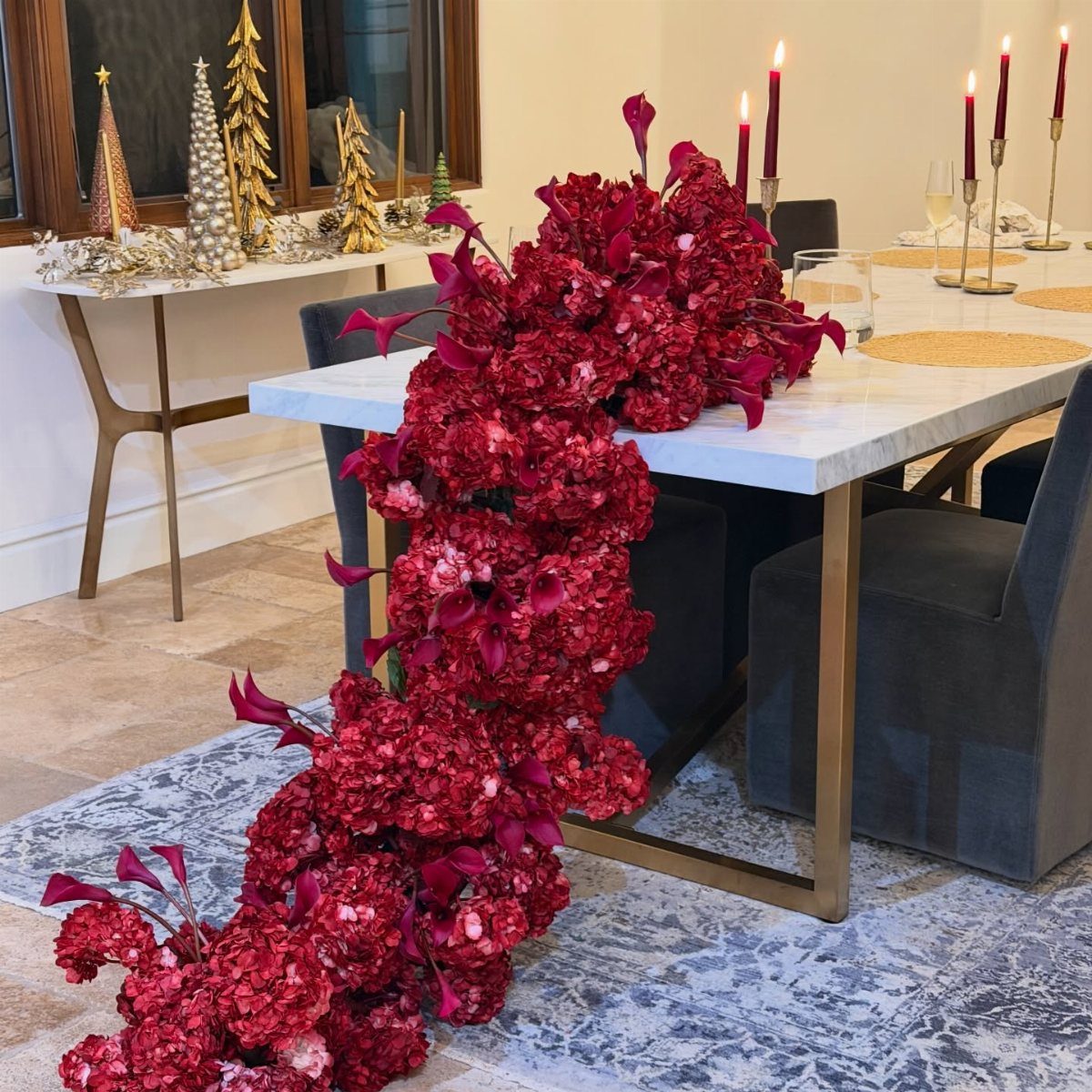
Let the flowers spill past the table edge and down toward the floor. Red hydrangeas supply the bulk, and calla lilies add a cleaner, narrower shape that stops the mass from turning into a red blob.
This is the biggest version of the idea, and it needs a table with enough surface to anchor the arrangement before it falls away. White marble keeps the red looking sharp.
In a smaller room, shorten the drop and use the same 2 flowers.
10. Blue Ranunculus Wildflower
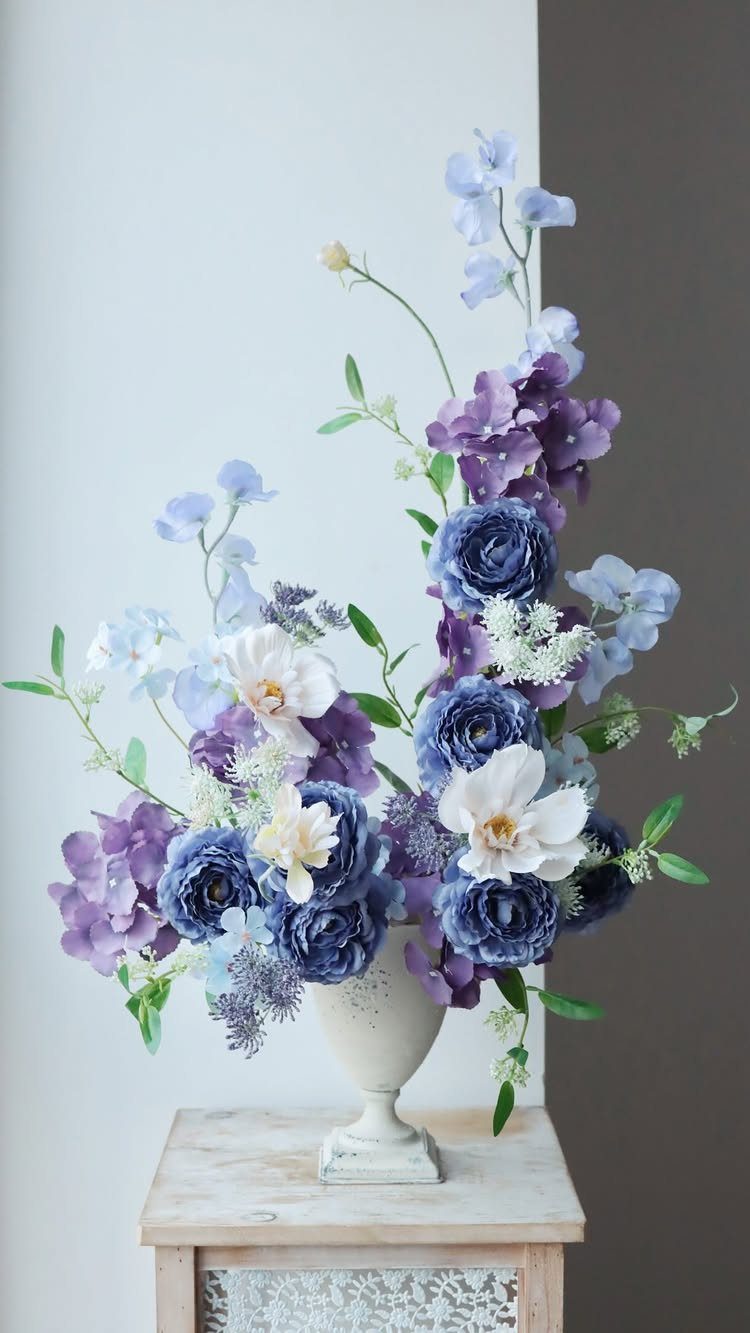
Cool blue against rustic wood is what makes this one work. Blue ranunculus and purple hydrangea sit together in a white pedestal vase, and the pedestal lifts the heads to a height where they read from across the room.
An empty wall behind it matters more than it sounds, because the soft colors need blank space to carry. Keep the mix loose and a little uneven for the wildflower look, with the white of the vase doing the tidying.
11. Fruit Foliage Centerpiece

Bananas, citrus and a cabbage sitting among palm leaves and purple flowers make a centerpiece you can partly buy at the grocery store.
Start with the palm leaves for height, then set the fruit low and close, and finish with the purple blooms as the accent.
The green and yellow glow against a black counter, so I’d pick that kind of dark, plain surface over a busy one. Leaves and fruit are bigger than flowers, so you need fewer pieces than you’d guess.
12. Pine Berry Mix Arrangement

Pinecones bring the texture, red berries bring the color, and green foliage fills in between. That is the whole recipe, and I’d stop at those three so the arrangement stays tight and easy to read.
Group the berries in clusters of the same red instead of scattering single stems. Set the cones near the front where the eye lands, with the foliage behind.
13. Faux Eucalyptus Ribbed Vase
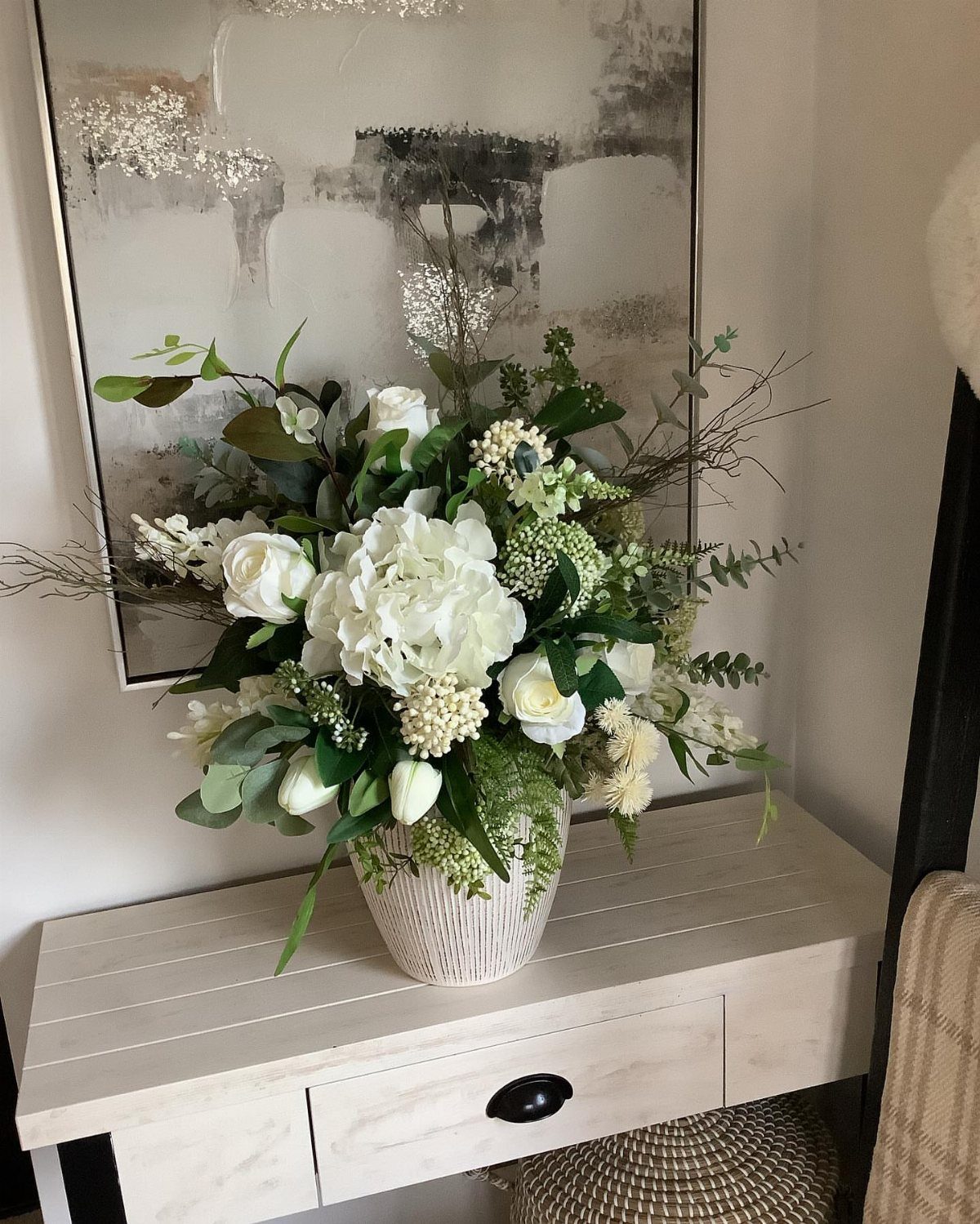
A ribbed white vase gives a plain eucalyptus stem a shadow pattern of its own, so the vase does half the decorating. Faux stems suit a console you pass every day, since they never need fresh water or a trim.
Fan the stems out unevenly, with a few taller ones off to one side, so the shape looks grown instead of placed. Keep the art above it quiet and the whole corner holds together.
14. Oversized Hand-tied Bouquet

Blue hydrangeas, pink roses and purple orchids wrapped into one armload is a bouquet you carry in and set down as the display. Hydrangea heads take up the width, roses add the pink, and orchids rise above both for height.
Keep the stems uncut at first and hold the bunch in one hand while you add, turning it as you go.
Tie it once it looks full from every angle, then trim the bottoms level and drop it in a heavy vase.
15. Large Tropical Arrangement

Palm leaves do the work of a dozen flower stems here. Fan palm fronds rise out of a tall ceramic vase, and a few purple blooms near the rim add just enough color against all that green.
Set the leaves first, with the largest at the back and the shorter ones leaning forward. Then slip the flowers in low, where they read as accents.
A dark, reflective table doubles the greenery, so I’d choose it over a pale one every time.
16. Tall Statement Centerpiece

Green hydrangeas and eucalyptus read calm in a neutral room, so a tall arrangement like this belongs on a clear sideboard rather than a busy shelf.
The stone gives weight at the bottom, and the foliage supplies height without a single bright color.
Aim for an arrangement about as tall as the vase, so it reads as one tall piece instead of a vase with a few stems. Leave space on both sides of it, and the sideboard looks styled instead of stacked.
17. Grand Event Installation

White orchids and roses sit along a wooden beam while green amaranthus pours down below them. The falling strands are what make this feel like an installation instead of a bouquet.
This is a larger project than a table piece, and I’d treat it as one for a party or an outdoor gathering.
Anchor the flowers firmly to the beam first, then let the amaranthus hang freely, with the white blooms bunched at one end.
18. Autumn Floral Display

A bronze urn holds autumn leaves and purple flowers with a weight a glass vase can’t match, and pumpkins at its base finish the picture.
The warm metal and stone walls behind it belong together, so the display feels settled in the room.
Put the leaves in first for the fall shape, and let the purple flowers sit lower as the contrast. Set the pumpkins last, grouped in odd numbers, with one tucked close to the urn.
19. Red Berry Arrangement

Black vase, red berries, white room: that’s the whole palette, and it works because nothing competes. The dark vase gives the red an edge, and a marble table keeps the base clean.
Fill the vase with berry branches in one shade of red, then let the greenery fall between them and spill over the rim.
Use more branches than feels necessary. A sparse berry arrangement looks like a holiday leftover; a full one looks planned.
20. Blue and White Bouquet

Pick the bowl first, and pick it in the blue of the flowers.
Blue and white delphiniums in a blue ceramic bowl read as one piece, and a wall painted in two blues carries the same color idea up the room.
Mix the white stems in among the blue instead of grouping them, so the bowl looks evenly dappled. I’d keep the surface underneath white and empty, since any other color pulls attention from the delphiniums.
21. White Rose Bowl Arrangement

Low and white is the right call for a table you actually eat at. A shallow bowl keeps lilies, roses and baby’s breath below eye level, so people can talk across it.
Lay the greenery in first as a loose ring, then add the lilies for the big shapes and the roses around them.
Baby’s breath goes in last, filling the small gaps. A wooden table gives the white a warm backdrop, which I prefer to a white tablecloth.
22. Colorful Mixed Flower Vase

A gold lantern fixture overhead gives the yellow blooms something to answer, and that link keeps a pink vase from feeling one-note. Let one color lead, here pink, with white and yellow as the supporting stems.
Mixed flowers look best in a rounded shape, so turn the vase as you work and check the outline from every side. If your room already has brass or gold nearby, choose a yellow flower to echo it.
23. Large Rose and Hydrangea Basket

Wicker softens a dressy flower like the hydrangea. Purple and pink hydrangeas and roses packed into a woven basket make a full dome, and the basket gives it a relaxed, welcoming feel.
Set a waterproof container inside the basket to hold the water, then build from the center out so the dome stays even.
Snip off the ribbon tags if the arrangement is staying home; keep them if it’s a gift. A neutral wall behind it lets the purples carry.
24. Oversized Pink Rose Bouquet

Sometimes the size is the whole gift. Pink roses and purple hydrangeas gathered into one huge round bouquet need no wrapping tricks, just enough stems to fill both arms.
To copy it at home, start with hydrangea heads for width, then push the roses in around the edges and across the top.
I’d pick a wide, deep vase to match the bouquet’s spread, so the round shape stays the star.
25. White and Green Vase Arrangement

White alstroemeria with green stems in a silver vase is a two-color arrangement, and I’d keep it that way. The silver picks up the mirrored console, and the white matches the curtain behind it.
A rectangular vase suits a console better than a round one, since the flowers can spread along the table instead of bunching in the middle. Let the green fill the gaps between the white blooms.
26. Citrus Flower Display

Lemons and limes do the job of extra flowers here. Yellow blooms and leafy branches spill down a white fluted pedestal, and the fruit sits among them like part of the bouquet.
Place the branches first, letting a few trail downward, then tuck the fruit in at different heights.
A display with this much color wants a quiet backdrop, so a plain white or soft neutral wall works better than wallpaper or busy art.
27. Yellow and Blue Arrangement

Yellow ranunculus against blue delphiniums is a loud pairing, and a blue and white ceramic vase calms it down. The vase repeats the blue, so the yellow reads as a deliberate accent instead of a clash.
Let the delphinium spikes rise at the back for height, and cluster the ranunculus lower and toward the front.
Yellow stems get lost when they’re spread one by one through the blue, so I cluster them in groups of 3 or 4 and let the blue fill the gaps.
28. Tall Yellow Floral Arrangement
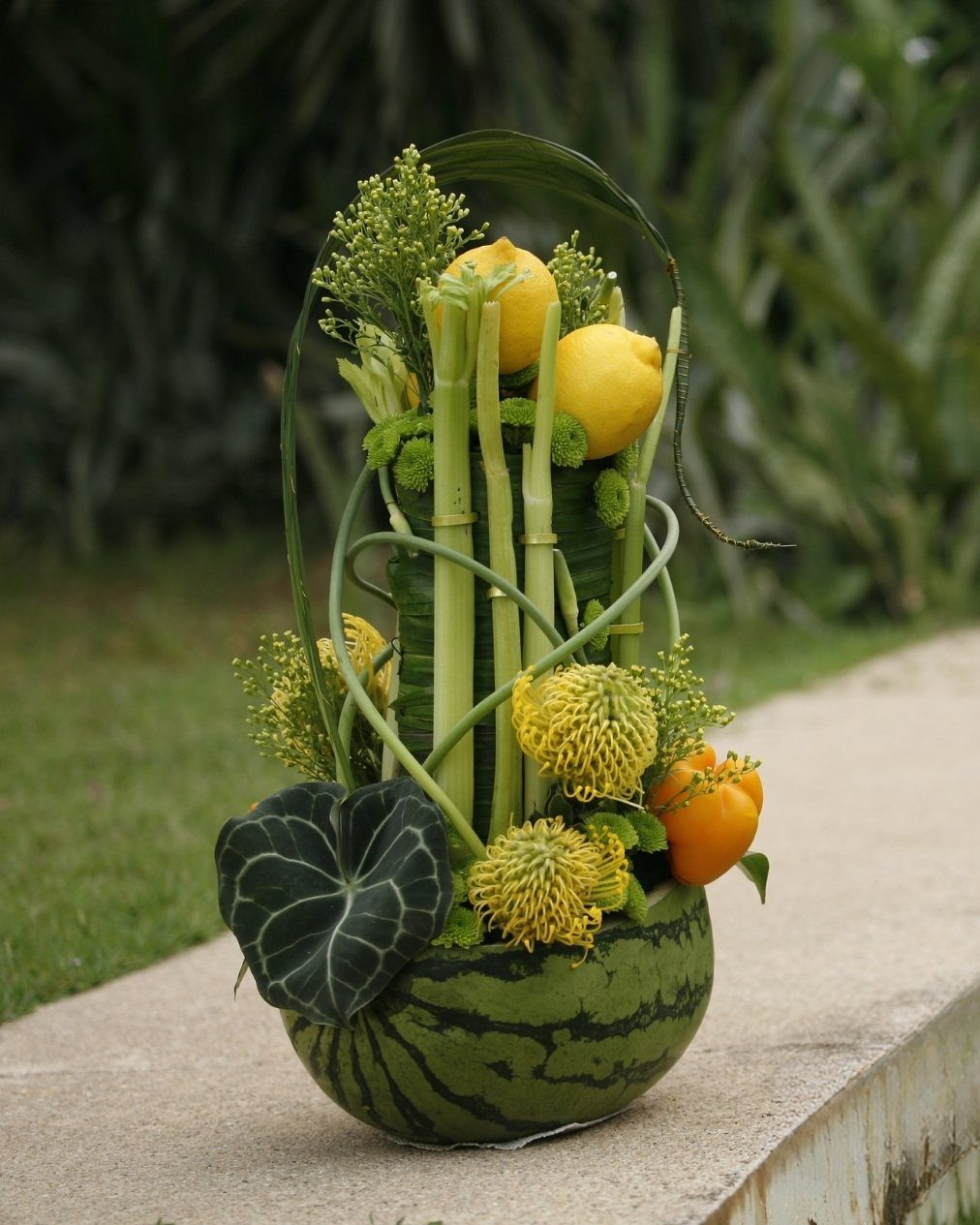
A hollowed-out watermelon makes a vase nobody else on the table will have. Yellow flowers and green stems rise out of it, with lemons worked in near the rind to repeat the color.
Warm weather suits this one best, set on a backyard party table or along a patio ledge where it can sit in open air.
Set the tall stems in first, then add the lemons last, low and close to the melon.
29. Large Pink Peony Bouquets

Three bouquets of pale pink peonies, all in matching white containers, look more generous than one big arrangement. Pale pink needs no second color, so I’d skip the filler and let the dense, ruffled heads carry it.
Stand the containers in a row or a loose cluster, and keep them close together. Put them where a mirror can double the effect.
30. Wrapped Peony Bouquet

White paper turns a bunch of peonies into a gift. Pink peonies and purple stock make a full, soft bouquet, and the wrapping keeps the palette to those colors plus white.
Gather the stems into one bunch first and tie it, then wrap the paper around the stems in a loose cone with the flower heads above the rim.
If it’s for your own table, unwrap it and drop it in a vase.
31. Pink Chrysanthemum Pedestal Bowl
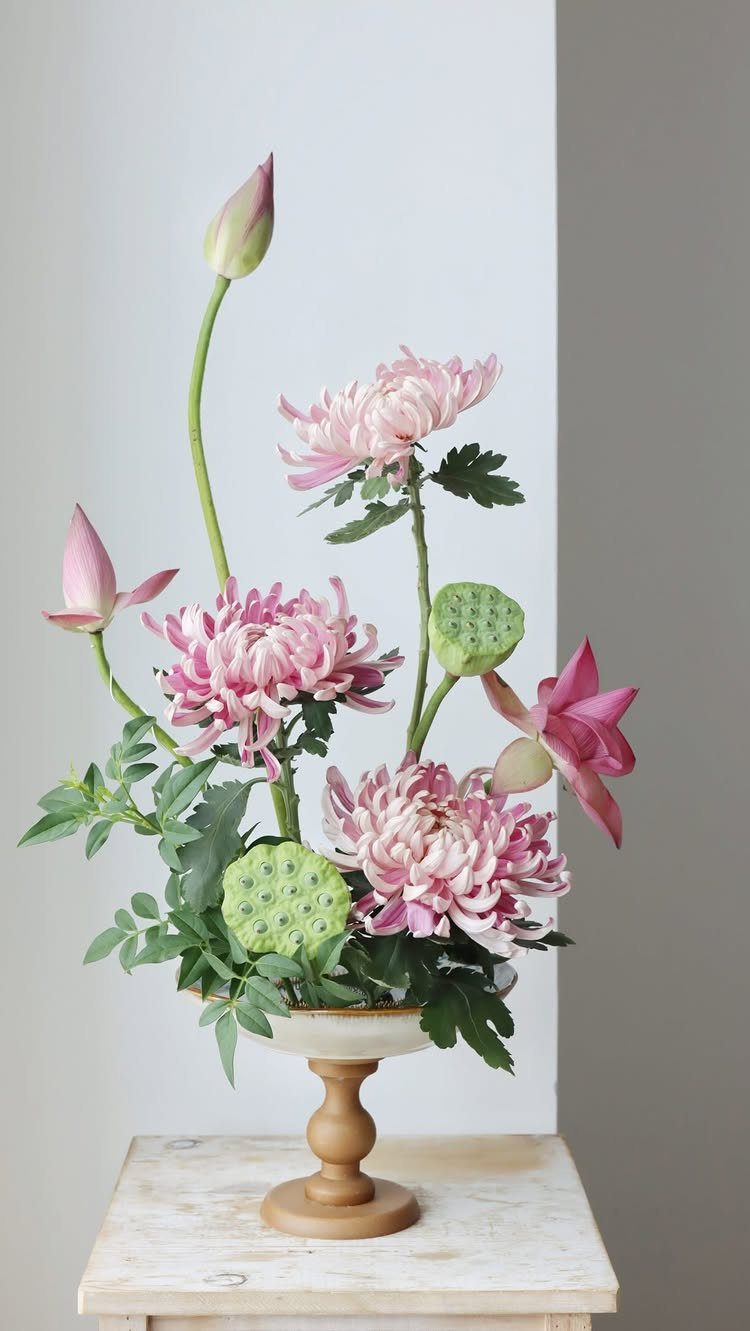
A pedestal bowl lifts pink chrysanthemums and lotus buds so the arrangement reads tall without needing a tall vase. The green seed pods add a vertical line that the round flower heads can’t.
Set the pods and lotus buds first, at different heights, then fill the bowl’s rim with chrysanthemums so the stems hide. I’d keep to this one pink and let the white bowl and wall stay empty around it.
32. Floral Centerpiece with Champagne
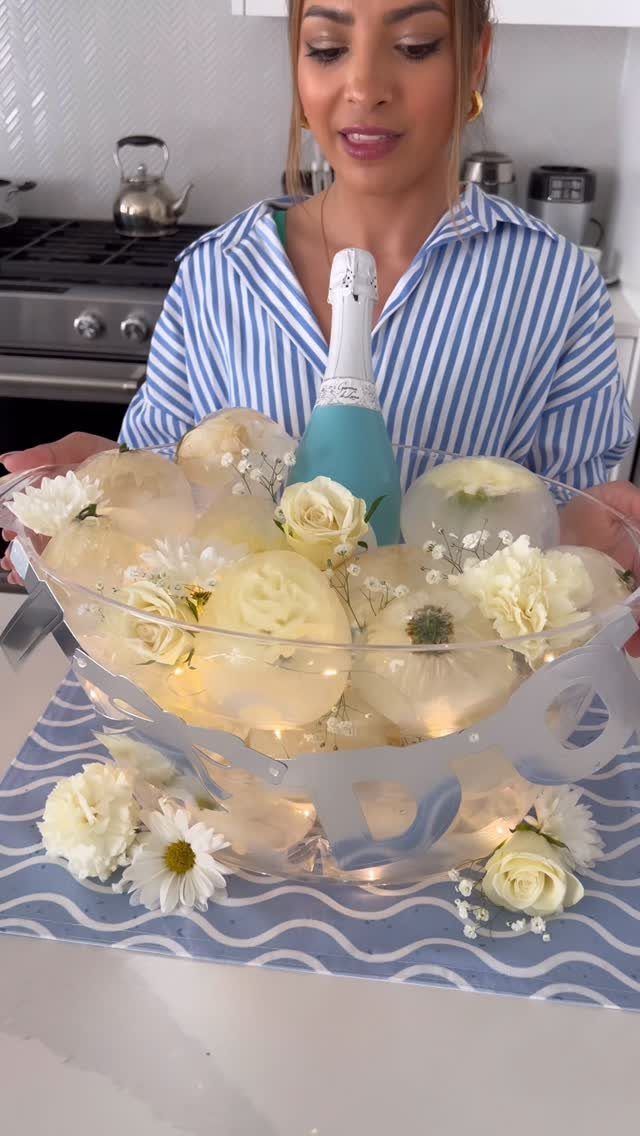
A bottle chilling in a bowl of white roses and daisies turns the centerpiece into the drink service too. Ice spheres melt slower than cubes, so the bottle stays cold through a longer evening.
Stand the bottle in the center, pack the roses and daisies around it, and tuck the ice in last.
Use a bowl wide enough to hold the blooms and the ice together, so the flowers can rest right against the ice spheres. I’d set it on a kitchen island or buffet, where guests can reach it.
33. Cascading Table Flowers

Spilling toward the floor is what sets this apart from a standard centerpiece. Pink roses and dahlias carry the color, and green hydrangeas fill the body so it looks full from the tabletop down.
Build the dense top first, then angle the longest stems over the edge so they hang freely.
Hydrangea heads work best as the bulk, with roses and dahlias pushed in around them. A plain white or solid-color tablecloth keeps the eye on the pink and green blooms, so I’d skip patterns under a cascading arrangement.
34. Person Arranging a Large Bouquet

Big arrangements get top-heavy fast, so I’d choose a heavy base like a concrete bowl, which stays put where a lighter vase would tip.
Working directly in the bowl, rather than building a bouquet in your hands, is the simpler method for a first large arrangement.
Place the greenery first to set the outline, then add roses one at a time, turning the bowl after each.
Step back often. A wide, low shape is easiest to judge from a few feet away.