I swap mine every five to seven years in average rentals, though I once pushed cheap polyester to year eight and learned why olefin dies young. Nylon will fight for twelve to fifteen years if you pamper it, but hallway matting doesn’t care about your calendar.
I replace when bald patches peek through, odors outlast cleaning efforts, or mold turns squishy underfoot.
Wool at eighteen years equals deposit nightmares. Material science meets turnover economics; ugly carpet costs you tenants faster than replacement costs you cash. Stick around and I’ll show you how to fund this without crying at your spreadsheet.
How Often Must a Landlord Replace Carpet?
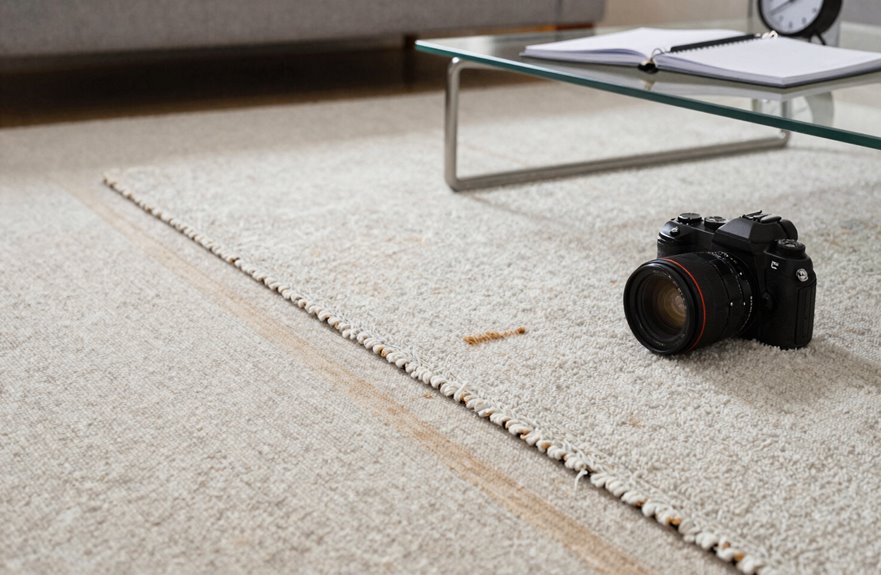
What actually matters is health, safety, and wear and tear. Your nylon Berber from 2015? Probably still functioning well. That mystery-stained polyester in your cousin’s basement? Likely overdue for replacement.
Typical lifespans vary widely: nylon lasts 12-15 years, wool lasts 10-15 years, while budget polyester typically lasts 5-8 years. Most landlords plan replacement every 5-7 years for average use.
Replacement becomes necessary when you observe bald patches exposing concrete, mold growth from leaks, or persistent odors that cannot be eliminated through standard cleaning methods. These conditions indicate the carpet requires immediate replacement.
Who Pays for Carpet Replacement: Landlord or Tenant?
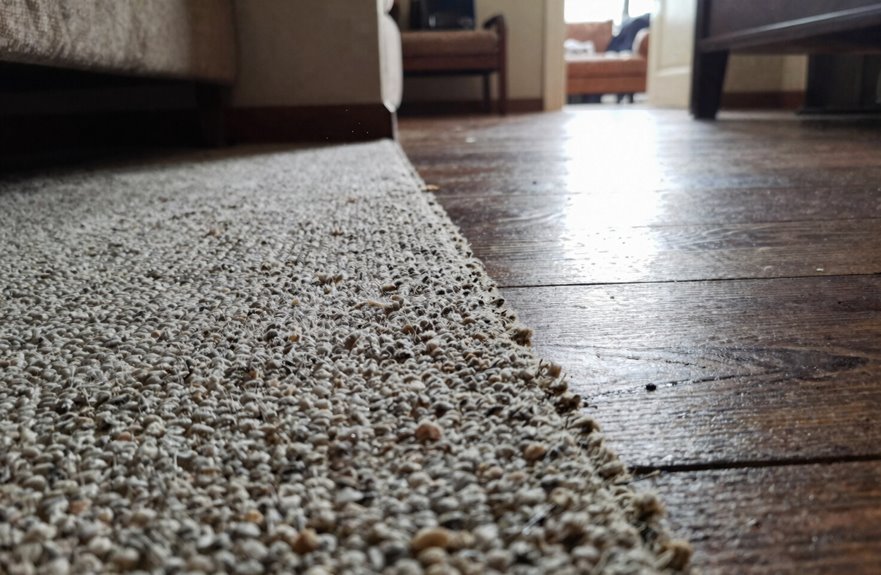
So here’s the million-dollar question that probably concerns you: who actually pays when that coffee-stained carpet in the living room finally needs replacement? I’ve seen people stare at security deposit deductions, uncertain if they’re being treated fairly.
Here’s the breakdown on carpet replacement costs:
- Normal wear? Landlord’s tab. That flattened hallway trail from five years of comings and goings is not your responsibility.
- Your red wine stains? That deducts from your deposit. This applies to damage beyond normal wear and tear.
- Health hazards like mold? Landlord obligation, full stop.
The Mydeposits case proves this: a landlord claimed £825 but scored just £195. Carpet replacement timing matters. Charging a tenant for a decade-old Berber is unfair and often unenforceable.
What’s Normal Wear and Tear: and What’s Tenant Damage?
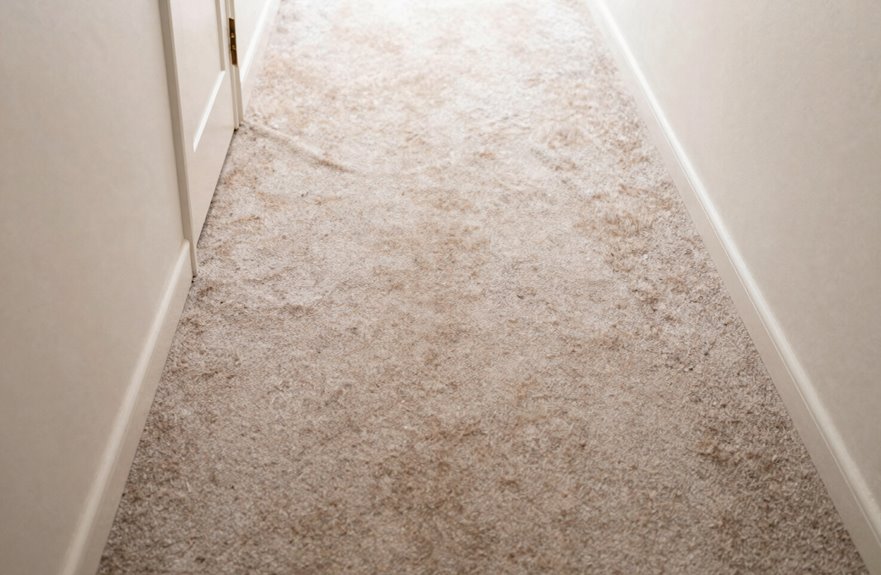
You and I both know that security deposit fight I just mentioned. It always comes down to this: what’s wear and tear versus genuine damage. I’ve seen friendships end over iron burns versus faded pile. That gray area exists in most rental situations.
Here’s the breakdown that’ll save everyone headaches:
| Scenario | Wear and Tear (Landlord’s bill) | Tenant Damage (Your wallet) |
|---|---|---|
| Fading near sunny windows | ✓ Expected deterioration | ✗ Bleach spots from cleaning experiments |
| Matting in hallways | ✓ Foot traffic over years | ✗ Cigarette burns from “just one guest” |
| Slight discoloration | ✓ Aging and use | ✗ Red wine stains from that party |
| Loose threshold | ✓ Normal settling | ✗ Tears from dragging furniture |
Document everything with photos. This evidence protects both landlords and tenants by creating a clear record of the property’s condition.
How Long Do Different Carpet Materials Last?
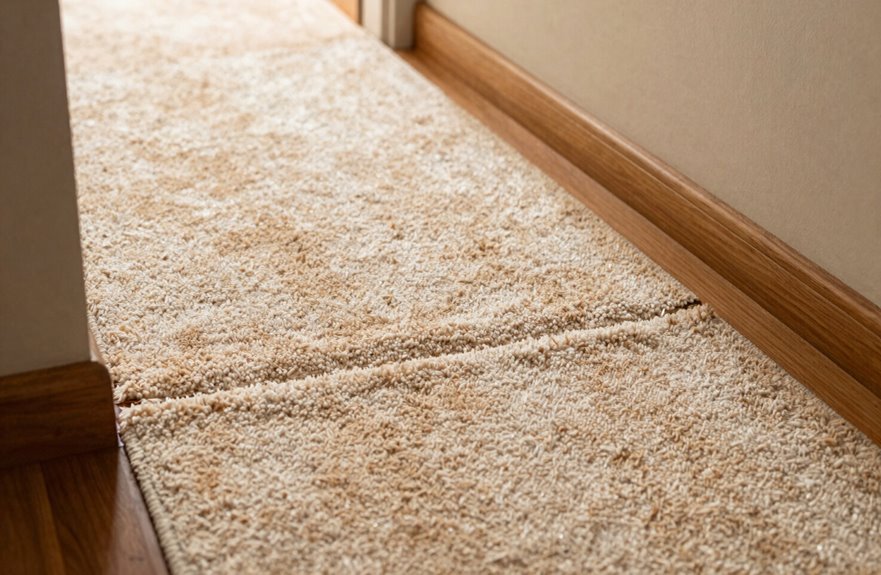
Why does carpet lifespan matter to your essential takeaway? Because replacing flooring every other lease cycle becomes expensive and disruptive.
Replacing flooring every other lease cycle becomes expensive and disruptive—carpet lifespan directly impacts your bottom line.
Here’s what I’ve learned about actual lifespans:
- Nylon dominates at 12–15 years, making it a reliable choice for high-traffic rental situations.
- Polyester gives you 5–8 years. It offers attractive appearance but crushes easily under heavy foot traffic.
- Wool hits that sweet 10–15 year zone with natural stain resistance properties.
Olefin ranges from five to seven years with decent mold resistance, though it mats quickly in humid conditions. Mid-range carpets typically last around 5–10 years, while high-end options can stretch toward 20. Quality directly impacts durability and long-term value.
When Is Carpet Replacement a Health or Safety Issue?
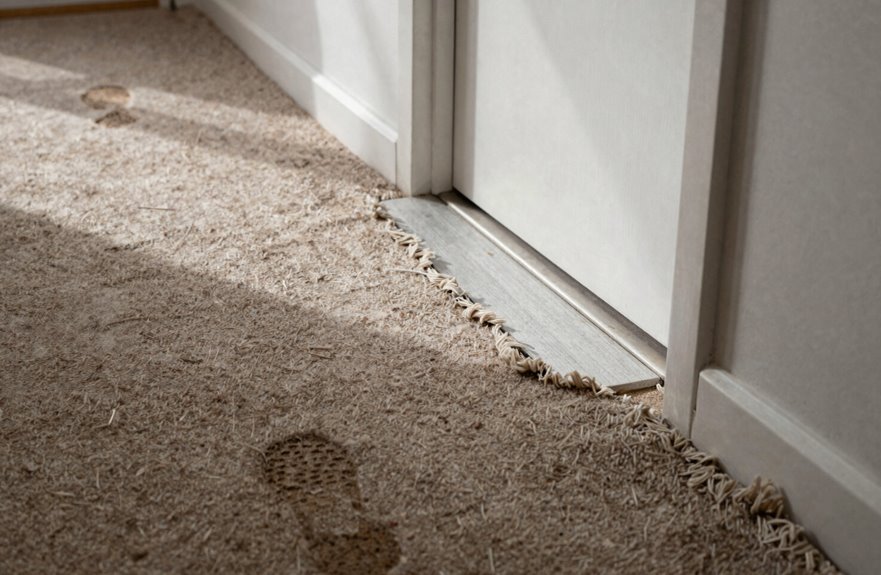
Carpet replacement involves genuine health and safety concerns beyond aesthetics. Exposed tacks poking through the surface create trip hazards, while hidden mold underneath produces airborne spores that can trigger respiratory problems. Spongy spots underfoot indicate structural rot and moisture damage. Trip hazards, airborne spores, and structural deterioration represent real risks that distinguish a safe home from one requiring medical intervention. Understanding when carpet becomes a liability helps identify situations requiring immediate landlord notification or replacement.
Exposed Tacks Hazards
Where exactly does that thin line between “cozy vintage charm” and “lawsuit waiting to happen” actually sit? It’s somewhere around exposed tacks poking through your carpet like tiny metallic sharks.
What I’ve learned about keeping everyone safe and protecting finances:
- Document everything — I snap photos of exposed tacks during walkthroughs like I’m Ansel Adams shooting for National Geographic
- Act fast — that one tack my tenant stepped on could have resulted in stitches or a court date
- Know your local codes — some cities don’t mess around with habitability standards
I check my properties quarterly because worn edges love revealing sharp surprises. My move-in checklist specifically notes tack strip conditions, a lesson learned the hard way in 2019. Replacing carpet protects your relationship with tenants and prevents liability claims.
Mold Contamination Risks
How quickly can a soggy carpet turn into a full-blown biohazard. Faster than you can say “black mold.” I’ve seen it happen after a pipe burst in my own rental; three days of dampness and suddenly we’re hosting a mold contamination party nobody wanted an invite to.
Moisture sneaks into carpet fibers like an uninvited guest, and once mold sets up shop, you’re not just dealing with musty odors, though your tenants will definitely notice those. We’re talking real health hazards here: respiratory issues, allergy flare-ups, the works. I learned that damp patches mean immediate action, not “I’ll get to it next week.”
Replace that water-damaged carpet immediately. Your lungs and your lease agreements depend on it.
Trip and Fall
Why does a carpet suddenly become your property’s most dangerous feature? Carpet replacement in rental management isn’t just about looks. It’s about keeping everyone on their feet (literally).
Here are the trip hazards that demand action:
- Exposed tacks and uneven surfaces that grab shoes and send folks flying
- Worn bald spots from that high-traffic hallway everyone uses
- Water-damaged, buckling sections that create sneaky little ramps
Lumpy carpets create real safety risks. When stains or damage make patch jobs impossible, full carpet replacement becomes your safest bet. Outdated carpet from decades past can result in tenant injuries and increased liability claims.
What Does Carpet Replacement Cost in the UK?
I’ve just had a look at some recent quotes for my own rental (yes, I’m that landlord who puts off carpet shopping until the last possible minute), and average price ranges in the UK swing widely from about £150 per room for basic stuff you’d find at Carpetright, up to £600+ if you’re eyeing something plush like a Wilton Royal Axminster. Professional installation costs add significantly to this; fitters typically charge £3–£10 per square metre. That “bargain” £5/m² carpet suddenly isn’t such a steal when you’re staring at a £400 bill for your lounge. I learned this the hard way (picture me, coffee in hand, gasping at a quote like a Victorian lady spotting a mouse), so let me break down what you’ll actually pay when you factor in both materials and fitting.
Average Price Ranges
Three figures you absolutely need to know before walking into a carpet shop: £150, £300, and that gut-punch moment when you realise you’ve forgotten about underlay.
Standing in that fluorescent-lit showroom, it’s easy to overlook the hidden extras. Carpet replacement costs in the UK typically hit £150–£300 per room for standard quality, though premium options like plush wool blends from Crucial Trading can reach £300–£600.
Per square metre, you’re looking at:
- £5–£55 for standard to mid-range options
- £100+ for top-tier luxury, such as Axminster
- Underlay, fitting, and old carpet removal costs
Larger rooms and premium materials will increase your total bill. Some landlords now choose LVT instead, accepting higher upfront costs for superior durability in rental properties.
Professional Installation Costs
Sometimes I stand there watching the fitters work and think, “I could’ve done that.”—then I remember the time I tried to lay laminate and created what looked like a topographical map of the Lake District. Professional installation isn’t just a luxury; it’s survival.
Here’s what we’re really talking about, mate:
| Room Size | Standard Fit | Premium Fit |
|---|---|---|
| Small bedroom | £150–£200 | £300–£400 |
| Living room | £200–£300 | £400–£600 |
| Large open-plan | £300+ | £600+ |
Those numbers sting, I know. But factor in material longevity; nylon lasts 12–15 years versus polyester’s 5–8 years, and suddenly that professional installation pays dividends. Your tenants notice wonky seams. I’ve learned that cheap fitting ruins expensive carpet faster than red wine on moving day.
How to Request Carpet Replacement From Your Landlord
Why does asking your landlord for new carpet feel like you’re requesting a kidney donation? I’ve been there. You have rights, and there are effective ways to get that carpet replacement.
First, document everything. Take photos of exposed nails, mysterious stains that appeared before your tenancy, and persistent odors. Put it in writing with certified mail so they cannot claim they never received it.
What makes landlords actually listen:
- Proof of health hazards (mold, allergens, tripping dangers)
- Evidence it’s not your fault (normal wear and tear, not damage from accidents)
- Professional assessment (sometimes worth paying for yourself)
Stay polite but firm, give reasonable deadlines, and keep copies of everything. Document every communication and response to establish a clear record of your request and their compliance or non-compliance.
What If Your Landlord Won’t Replace the Carpet?
If your landlord won’t budge on that water-stained, mold-speckled carpet, you’ve got two powerful paths to explore. First, document health hazards by photographing black mold creeping along the baseboards under natural light and citing housing code violations. When you mention code violations, landlords typically respond quickly because they face legal liability.
Then there’s the repair and deduct option. You hire a crew yourself, keep every receipt organized, and subtract the cost from next month’s rent. However, you must send a written notice with a reasonable deadline first. Seven days is the standard timeframe for landlords to make repairs before you can proceed with this remedy.
Health Hazard Grounds
So your landlord’s dragging their feet on replacing that waterlogged carpet, and you’re wondering where you stand. Mold isn’t something you negotiate with. It’s your health on the line, not just aesthetics.
When carpet becomes a genuine health hazard, you’ve got serious leverage. What actually matters:
- Document everything – photos, dates, that musty smell that hits you at the door
- Know your local habitability laws – most places require immediate action for mold
- Get it in writing – emails create paper trails that landlords suddenly respect
Water damage isn’t cosmetic, it’s dangerous. That squelch under your socks means bacteria is proliferating. Insurance might cover it, but safety drives this bus. You’re not being dramatic. You’re being smart. Your lungs deserve better than a science experiment.
Repair and Deduct
Where exactly does that leave you when your landlord ghosts your third text about the carpet that now crunches when you walk on it. My first apartment in Portland had a shag situation that I’m pretty sure predated the Clinton administration.
Most states let you use “repair and deduct” for carpet replacement when it’s genuinely trashed. Think mold, irreversible stains, that weird crunch. Here’s the playbook: send two written requests, wait about seven days (longer if they’re sourcing unicorn-patterned Berber, I guess), then hire someone yourself and deduct from rent. Document everything with photos, emails, and that check-in sheet you almost threw away. Don’t aim for betterment though; you’re not upgrading to plush Moroccan wool on their dime. Keep it fair, keep it legal, and you transform from a powerless renter into one who understands the legal tools available to you.
Can a Landlord Charge You for Carpet Damage?
Why exactly can your landlord dip into your deposit for that stained carpet, and when are they just being cheeky? I’ve been there, staring at that burn mark from my dropped curling iron (RIP, 2019), and panicking.
They can charge you for real damage, not normal life. That worn path from your sofa to the fridge? That’s wear and tear, and that’s on them. But that red wine tsunami from your birthday bash? That’s coming out of your pocket, unfortunately.
Real damage is on you; normal life is on them. Know the difference, protect your deposit.
The Mydeposits case proves adjudicators reject dodgy claims quickly. They check:
- The carpet’s actual age (no charging full carpet replacement for ancient shag.)
- Whether you’ve got check-in photos showing pre-existing stains.
- If the “damage” is really just normal living.
Document everything, know your rights, and don’t let them pull a fast one.
Is Professional Cleaning Enough, or Do You Need New Carpet?
How exactly do you know when you’ve crossed that line from “just needs a good scrub” to “burn it and start over”. Professional cleaning works magic on surface grime, but it won’t resurrect threadbare tragedy.
Carpet replacement becomes unavoidable when you’re facing irreparable stains (that red wine from 2019 isn’t budging), bald patches resembling mangy pets, or mold. Water damage requires immediate replacement to prevent health hazards.
Partial fixes rarely work. Widespread staining demands full carpet replacement, not creative furniture rearrangement. Judge by condition, not age. Some five-year-old carpets look ancient while others at fifteen remain pristine. When odors linger after professional cleaning, replacement is necessary. Tenants deserve functional flooring rather than temporary solutions.
Does Pet Damage Insurance Cover Carpet Replacements?
I’ve looked into pet damage insurance for my own rentals, and the coverage scope can feel like a maze. Some policies cover those deep-set urine stains (the kind that make you gag), while others treat scratches from a tenant’s Great Dane as expected wear and tear. You’ll hit claim limitations fast though, since most insurers cap payouts or slap depreciation formulas on your five-year-old Berber, leaving you holding the bag for the real replacement cost. Before you count on this safety net, grab that policy document and a highlighter because nothing diminishes the value of “covered damage” like discovering your deductible eats the whole check.
Coverage Scope
Where exactly does your pet damage insurance kick in when your tenant’s golden retriever turns your beige wall-to-wall into a Jackson Pollock of muddy paw prints and mystery stains? Carpet replacement coverage isn’t the blanket safety net most people expect.
Most policies cover sudden damage, such as Fido’s accident on your vintage Stark sisal, but they draw the line at wear-and-tear. That threadbare traffic pattern near the kitchen is your responsibility.
What actually matters:
- Verify if replacement or just cleaning is included (this distinction is critical).
- Document everything: photos, receipts, and correspondence about the damage.
- Check your deductible against the actual damage cost.
Landlords often assume they’re fully protected, only to discover their “comprehensive” policy barely covers steam cleaning. Many policies provide limited coverage despite appearing robust on the surface.
Claim Limitations
So you’ve checked your policy’s coverage scope, and you’re feeling pretty smug about that “comprehensive” pet damage clause. Well, reconsider that confidence, because most policies have significant limitations.
Most policies draw a hard line between sudden pet chaos (your tenant’s golden retriever redecorating with muddy paws) and gradual wear and tear. That threadbare hallway where Mr. Whiskers sharpened claws for three years. Probably on your dime, mate. Insurers include numerous exclusions for pet-related damage.
Documentation saves claims. Snap photos, hoard inventories, maybe even that vet record showing Fido’s “digestive issues.” But don’t expect full replacement costs; these policies complement deposits, they don’t replace them. Know your limits before pet damage accumulates.
How Inventory Reports Protect Your Deposit on Carpet Claims
I often tell friends that an inventory report is basically a landlord’s version of “pics or it didn’t happen.” When I moved into my last flat, the agent snapped photos of every carpet stain (that suspicious brown patch by the radiator), and I signed off feeling protected.
Here’s why inventory reports matter for your deposit:
- They establish your carpet’s starting condition; no guessing games later.
- They separate normal wear from actual damage you’ve caused or haven’t.
- They provide photographic proof that keeps deductions fair and square.
Without that documented baseline, you’re trusting your landlord’s memory, and theirs might be conveniently selective. I’ve seen mates lose hundreds because they skipped the check-in walkthrough. Don’t be that person; grab the report and protect your cash.
How to Budget for Carpet Replacement Between Tenants
Smart landlords keep a “carpet fund” ticking over between tenancies. I learned this the hard way after getting caught out by a threadbare surprise in my second rental. Now I set aside cash monthly, which proves essential when wear and tear strikes between tenants.
Here’s my breakdown:
| Budget Factor | My Typical Cost |
|---|---|
| Standard bedroom (cheap carpet) | £150–£200 |
| Standard bedroom (mid-range) | £200–£300 |
| Living room (larger footprint) | £300–£450 |
| Professional fitting | £50–£100 per room |
| Contingency for surprises | +20% buffer |
I check for bald spots, stubborn odors, and water damage rather than relying on the calendar alone. Quality matters significantly. That £80 B&Q special lasted five years, while my 10-year wool blend in the Cotswolds still photographs beautifully. Budgeting strategically prevents panic-replacements later.
Should Landlords Switch From Carpet to LVT Flooring?
After years of feeding that carpet fund, I started wondering if I was throwing good money after bad. What if there was a better way?
After years of dumping money into carpet replacements, I finally asked myself: what if there’s a smarter investment?
I’ve watched fellow landlords ditch their carpets for LVT commercial-grade flooring, and the results speak for themselves. Sure, that upfront cost stings, but LVT resists spills, shrugs off stains, and maintains its appearance in high-traffic zones where carpets curl up and deteriorate.
Here’s what sold me:
- Waterproof magic — no more panic when tenants fail to report leaks.
- Fade resistance — that “just installed” look actually lasts.
- Fewer replacement cycles — I’m tired of replacing carpet every five years.
Higher installation costs now means lower maintenance expenses over time. Landlords who invest strategically reduce long-term operational costs and tenant turnover related to flooring quality.