
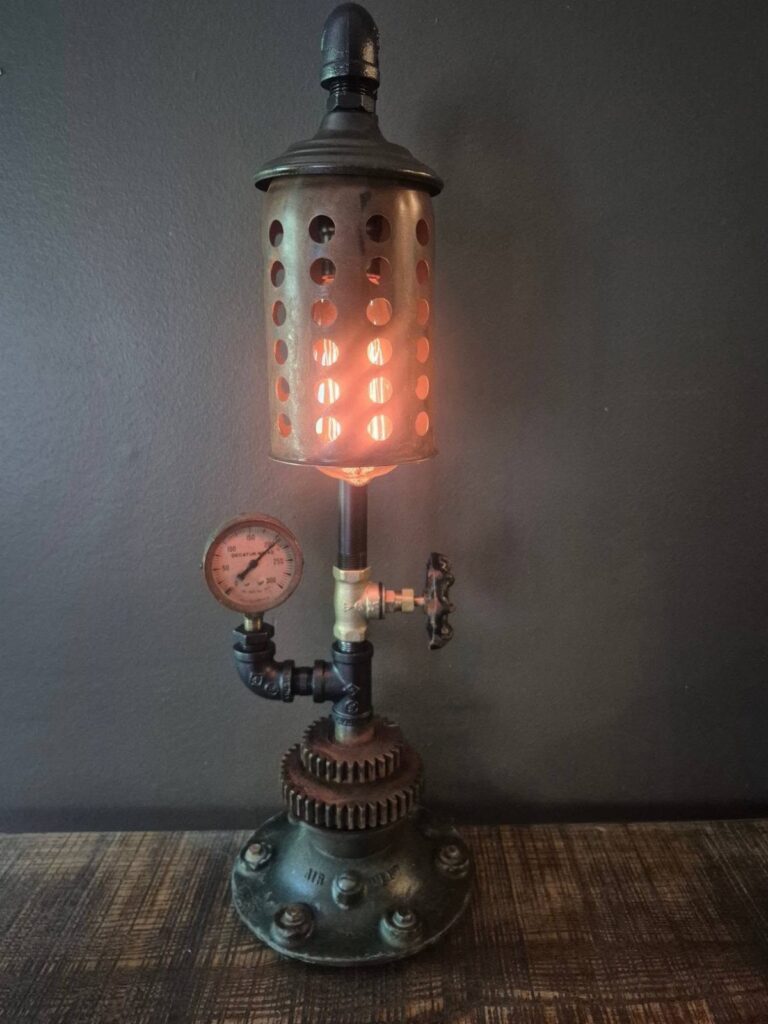
Handmade lamps here range from a chalk-painted makeover to a steampunk pipe build, and from mason jars full of fairy lights to a hollow log or a concrete bedside lamp.
What you already have on hand decides the pick: a dated lamp or an old shade points to chalk paint, a flouncy skirt or the rewiring advice, while a stash of mason jars, branches, driftwood or pipe fittings points to building from scratch.
1. Rustic Desk Lamp
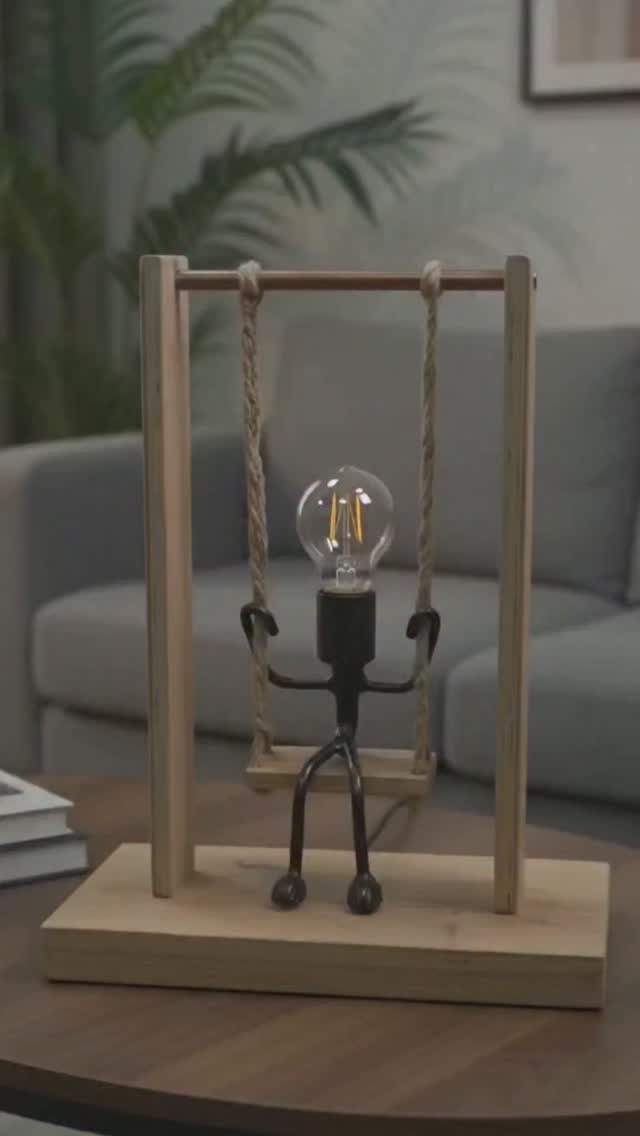
Wood and rope are cheap, forgiving materials, which suits a first build.
I’d pick a wood with visible grain and keep the rope thick enough to look deliberate. Keep the scale desk-sized so the figure stays charming instead of bulky.
2. Industrial Elements Lamp
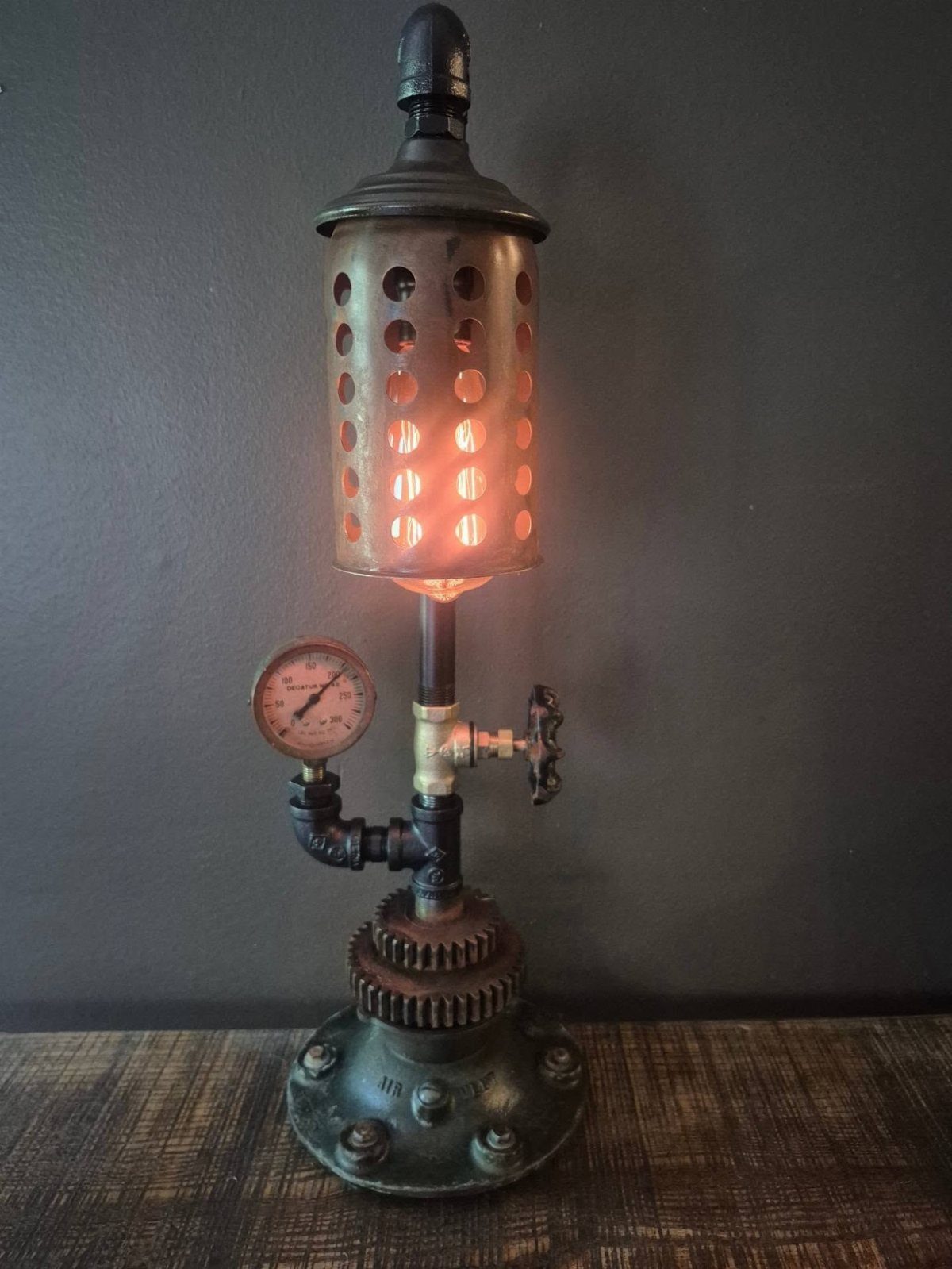
Pipe sections, a gear and a pressure gauge give an industrial lamp its character, so choose the gauge first and size the rest of the parts around it.
It draws the eye first, and everything else gets picked to support it.
A dark wall behind it makes that glow stand out.
3. Sculptural Wood Lamp
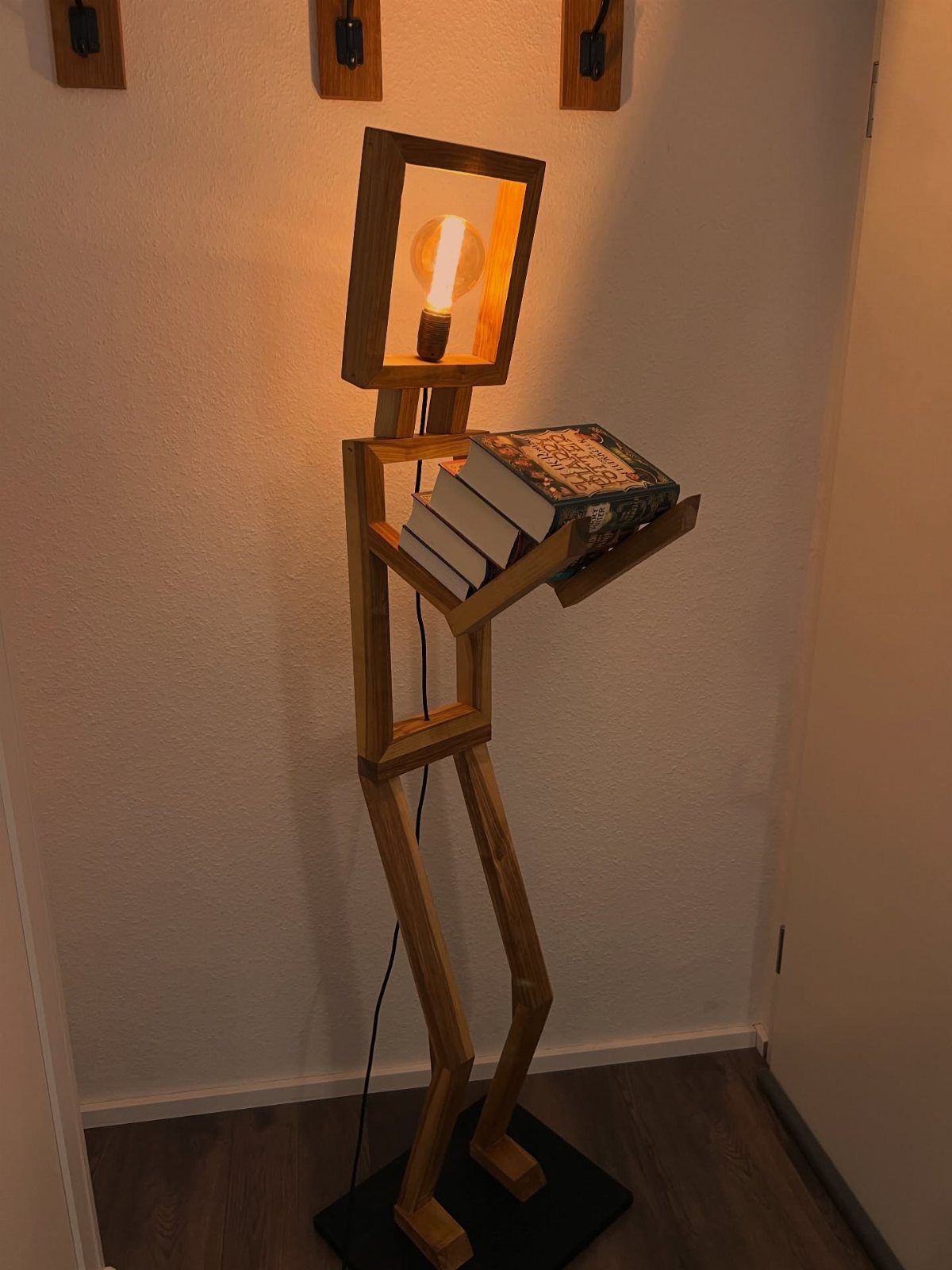
Books in its arms and a bulb for a head make this wooden figure feel like a character more than a fixture.
Stylized proportions are what keep it sculptural, so I’d carve or assemble it from simple, chunky pieces of wood instead of aiming for realism.
A plain white wall behind it keeps the silhouette easy to read.
4. Concrete Bedside Lamp
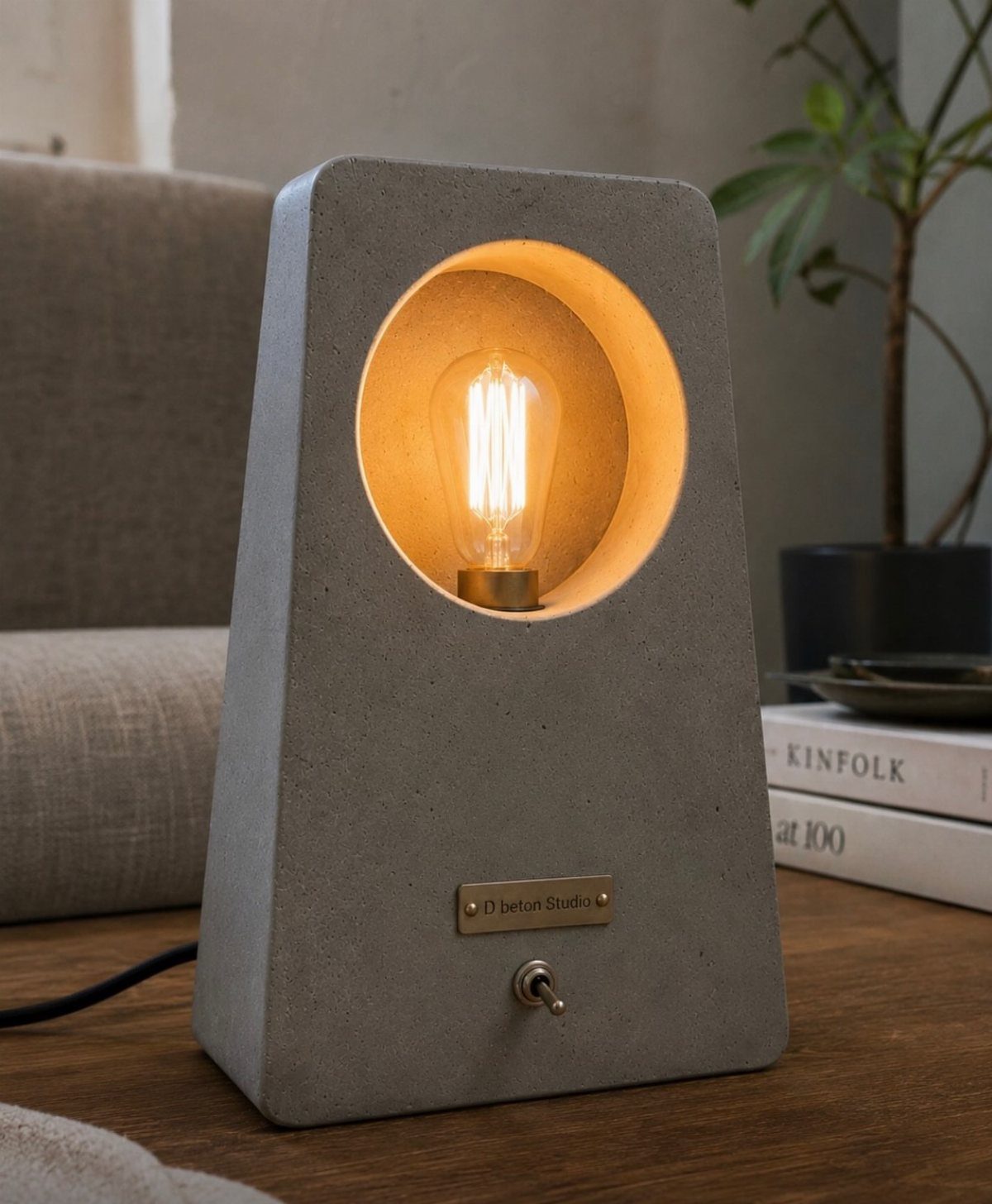
Concrete gets its graphic look from restraint. A smooth gray body with one circular opening frames an Edison bulb, and I wouldn’t add anything else.
On a nightstand, the bare concrete looks right beside a stack of books and a small plant. Choose a bulb you like looking at, since it’s the only ornament the lamp has.
5. Salvaged Wood Lamp
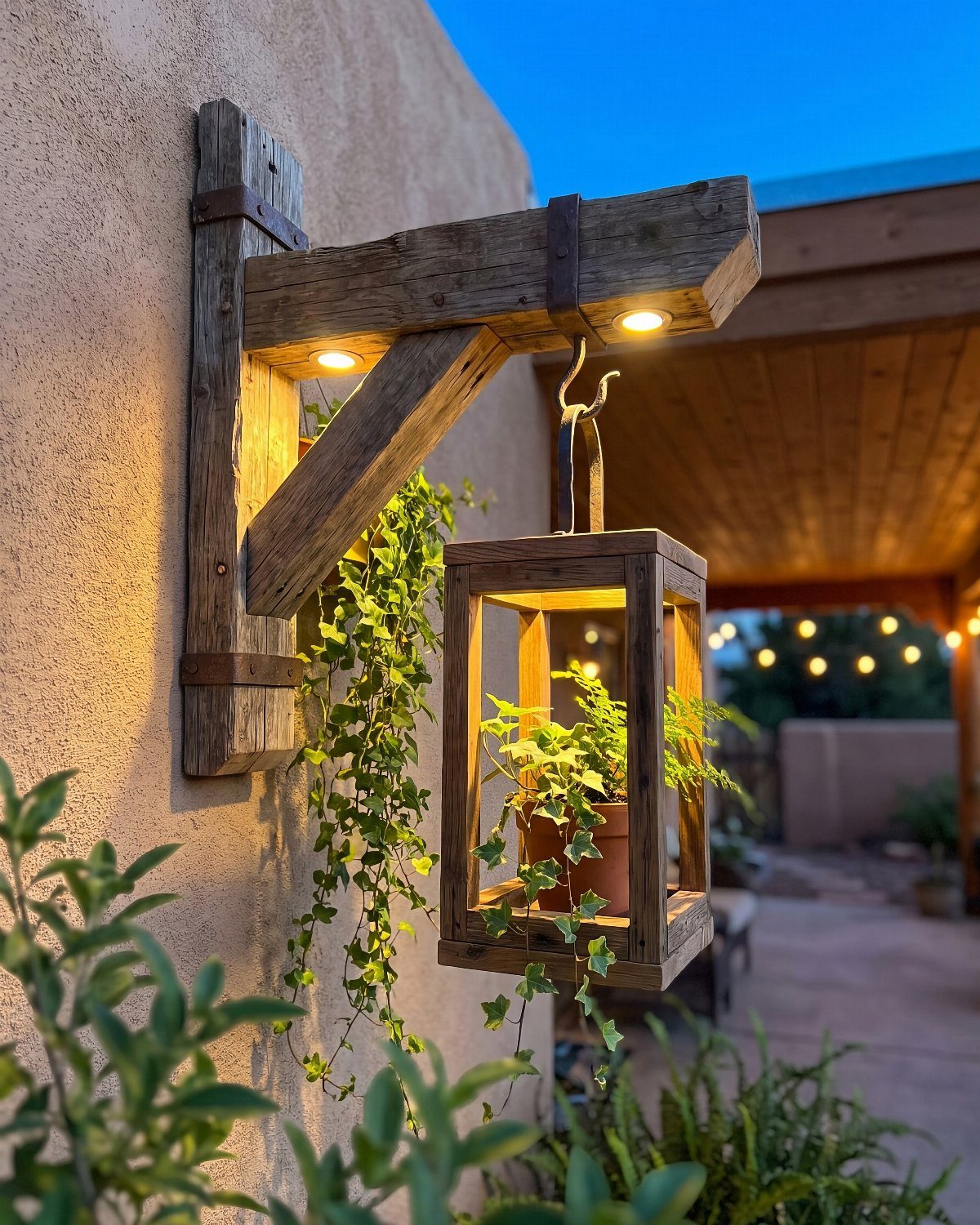
Outside, a lamp built from salvaged beams can do 2 jobs at once.
Rough, weathered timber suits this better than anything planed smooth. Any outdoor light needs fixtures and wiring rated for outdoor use, so check the labels before you mount it.
6. Wooden Branch Lamp
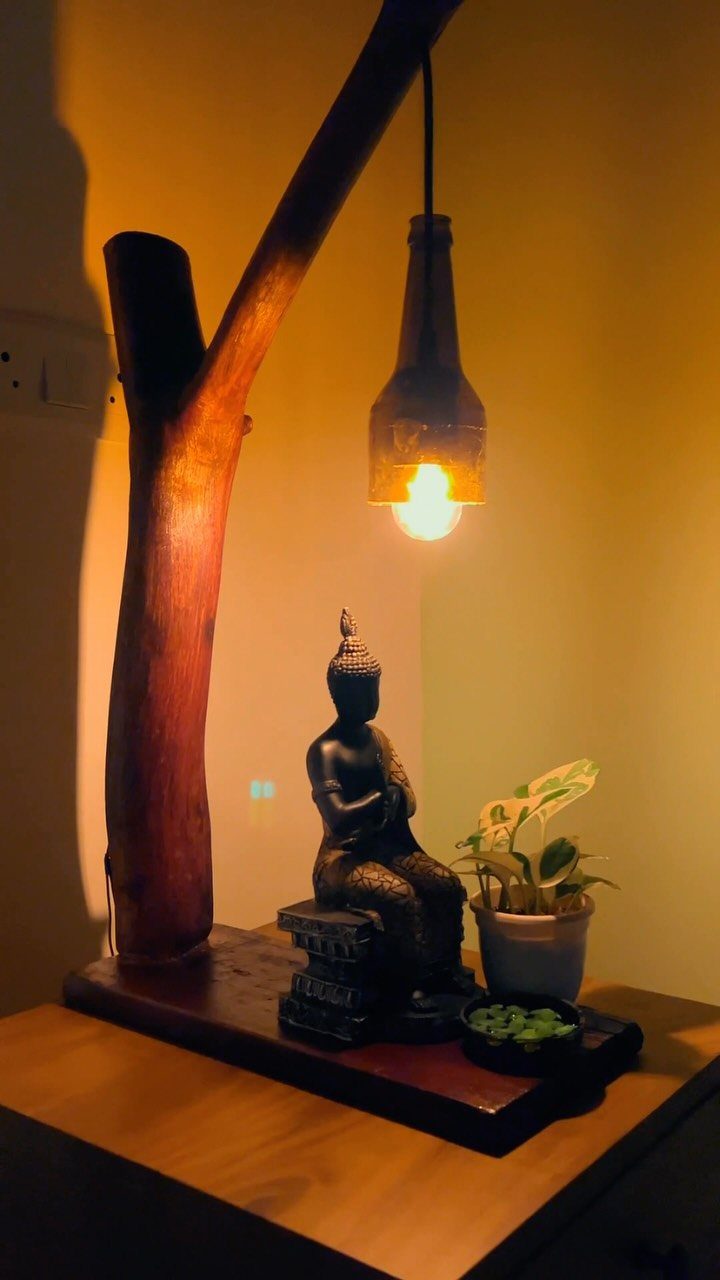
Let the curve of the branch do the design work. Hang the bulb from the bend so the light drops onto something you want noticed, like a statue or a small potted plant on a wooden base.
I’d search for a branch with one pronounced arc instead of a straight stick. A bottle-style industrial bulb hung from the end adds a second texture and still leaves the wood room to stand out.
7. Minimalist LED Wood Lamp
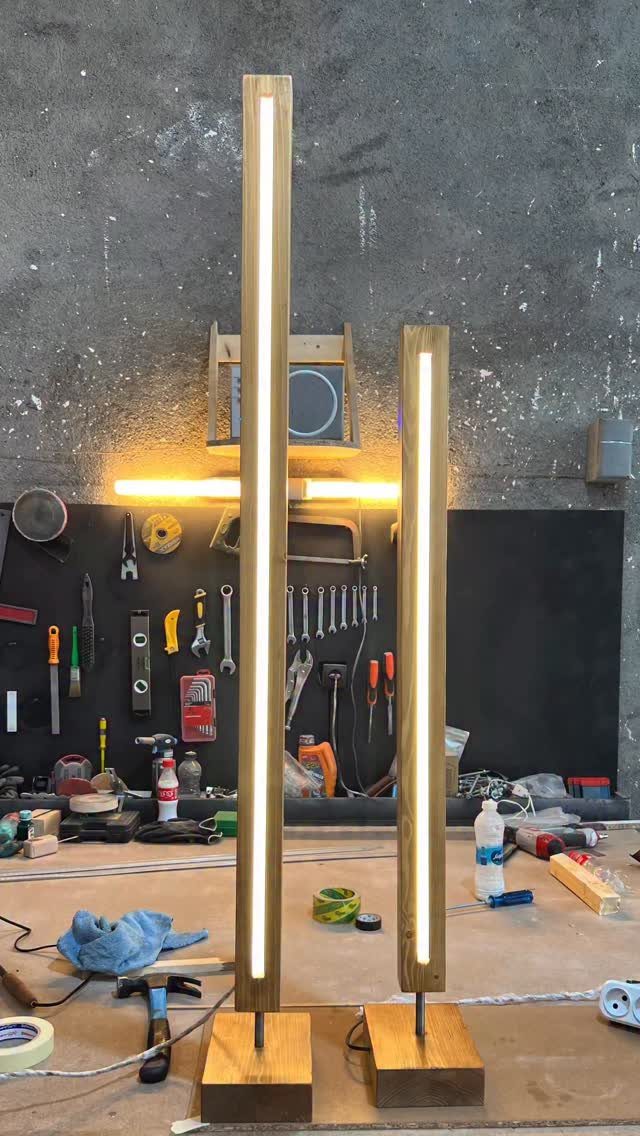
Two heights beat one. A tall lamp and a short one in the same wood read as a deliberate pair, and a plain slim body leaves the vertical LED strip as the only detail.
I’d keep the wood finish simple and let the grain carry the rest. Set the pair at different spots on a shelf or sideboard instead of side by side.
8. Wine Bottle Lamp

Choose the words before you choose the bottle. A frosted surface with a floral pattern gives the glow a soft, even look, and a short line of lettering turns it into a lamp with a personality.
I’d go with a quote you won’t tire of, since it will be in view every time the lamp is on. A reading nook or kitchen counter suits it best.
9. Driftwood Lamp
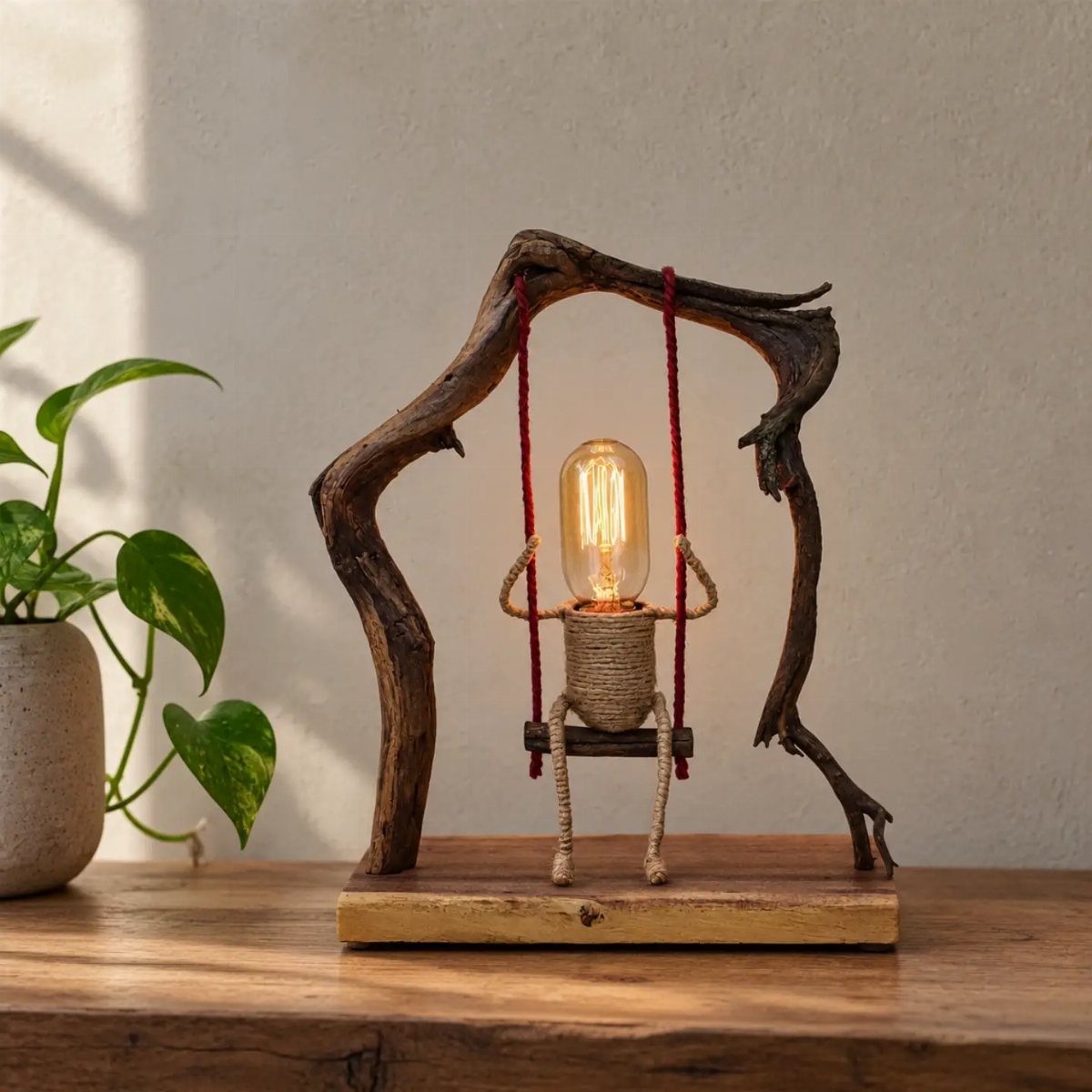
Driftwood does that well: choose pieces with a clean, open shape so the figure sits in the middle and the wood simply holds it.
I like it on a small wooden base next to a potted plant, where the natural textures match. Skip any extra decoration; the bulb already draws the eye on its own.
10. Figurine Table Lamp
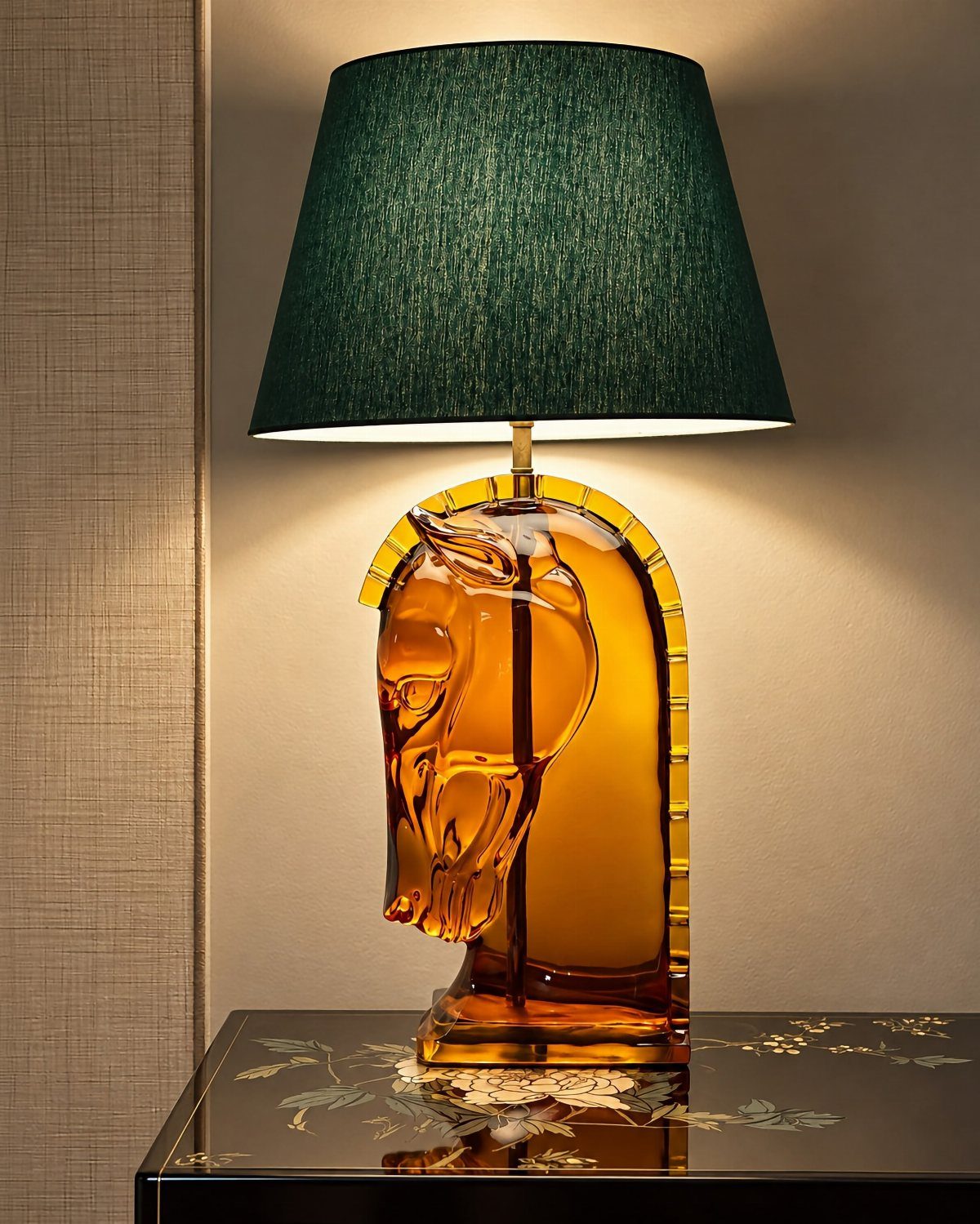
Start with a figurine you would keep even if it never lit up.
I’d pick the figurine first and the shade second, because the base sets the mood for everything above it. A dark surface underneath helps the amber stand out.
11. Chalk-Painted Lamp
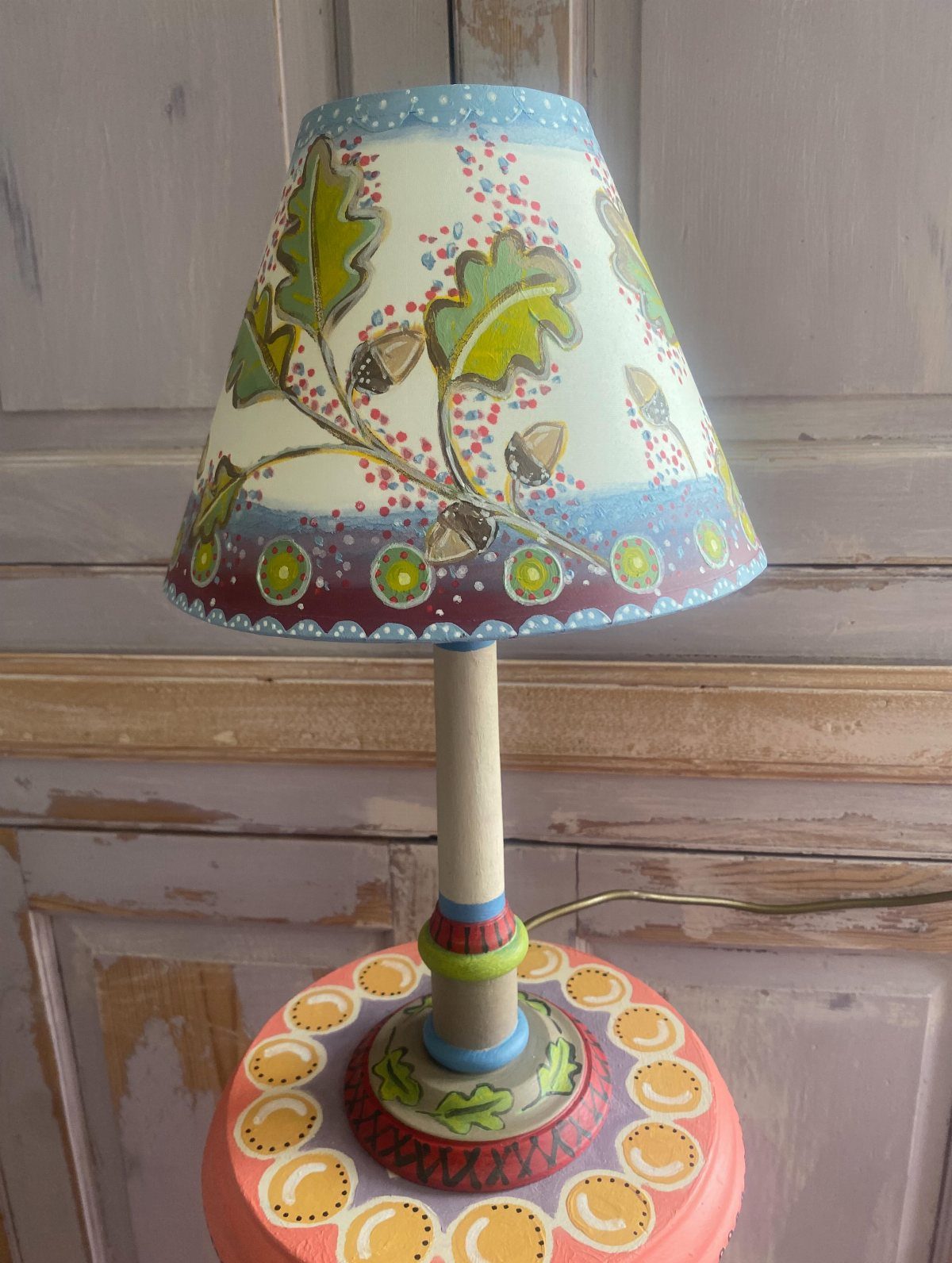
A thrifted lamp with a dated finish is the right candidate for chalk or craft paint.
I’d keep the palette to a few shades, since a hand-painted lamp already has plenty going on. Paint the base first, then the shade.
12. Flouncy Lampshade Skirt
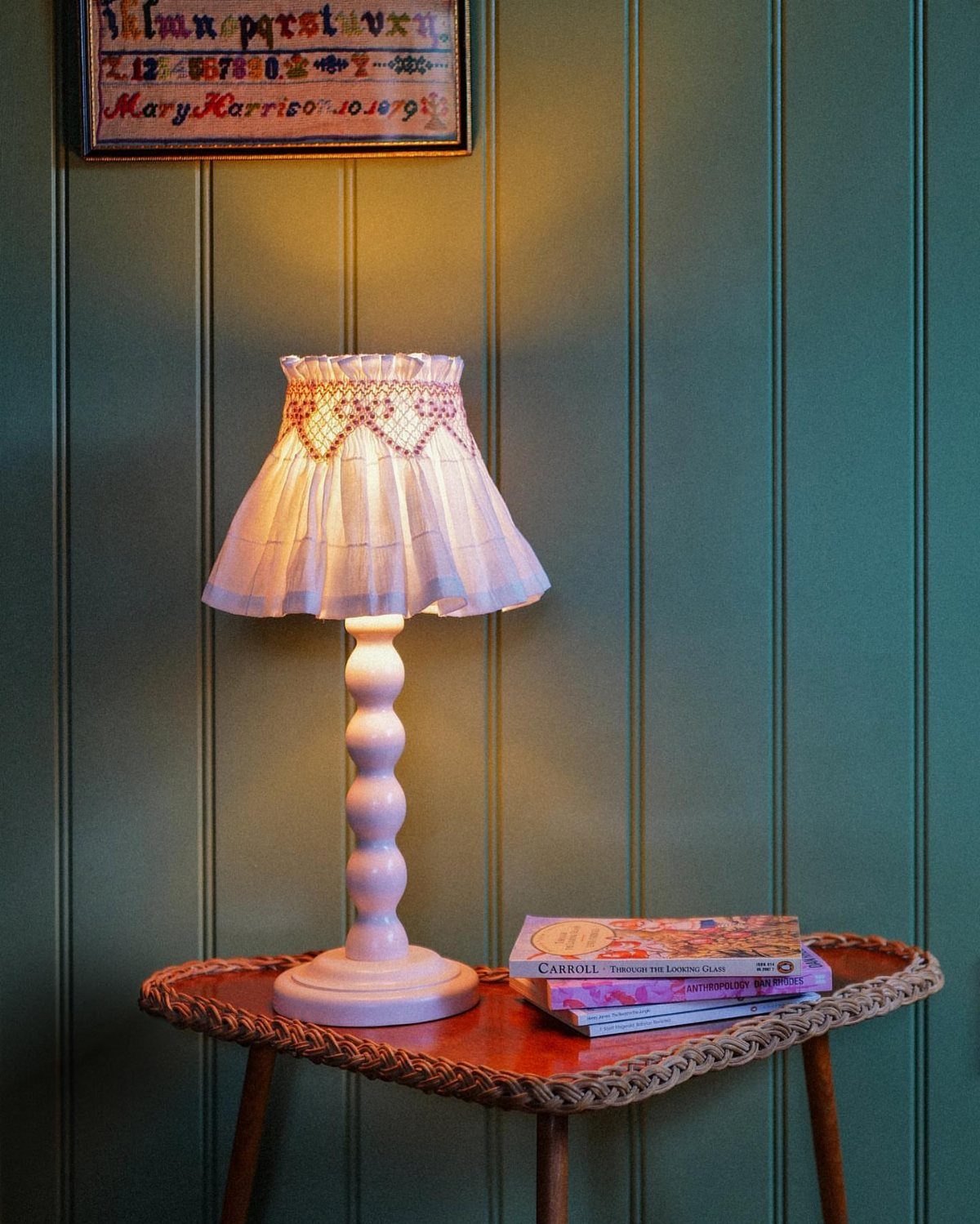
An old lampshade gets a fresh look when you tie a fabric skirt over it. White pleats with a lace trim give a plain shade a soft, ruffled edge, and the shade underneath stays exactly as it was.
Choose a light fabric that lets the glow through, and keep it clear of the bulb. A trim in a contrasting color is an easy variation.
13. Mason Jar Fairy-Light Lamps
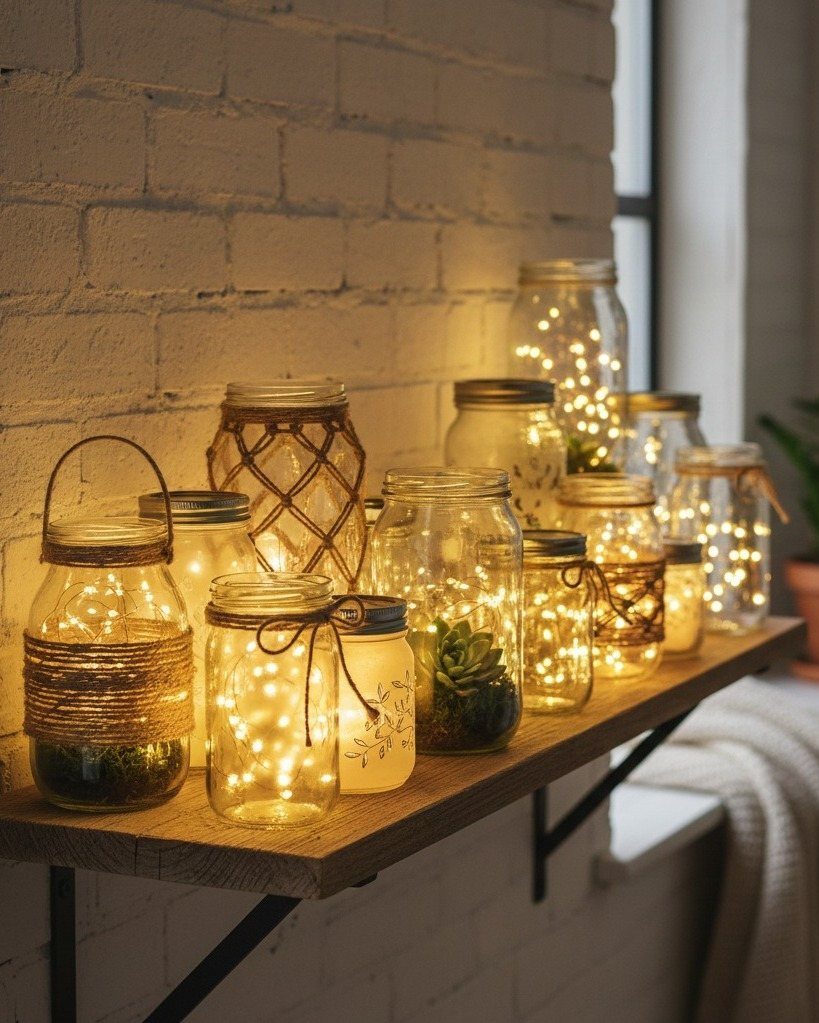
Clear glass does the work here, so the jars can stay plain.
Warm fairy lights packed into jars of different sizes glow like small lamps, and a bit of twine around a few of them adds texture without hiding the light.
I’d mix heights and group them on a shelf in an odd count. The same jars can also hang outdoors from a hook or branch.
14. Gemstone Mason Jar Lamp
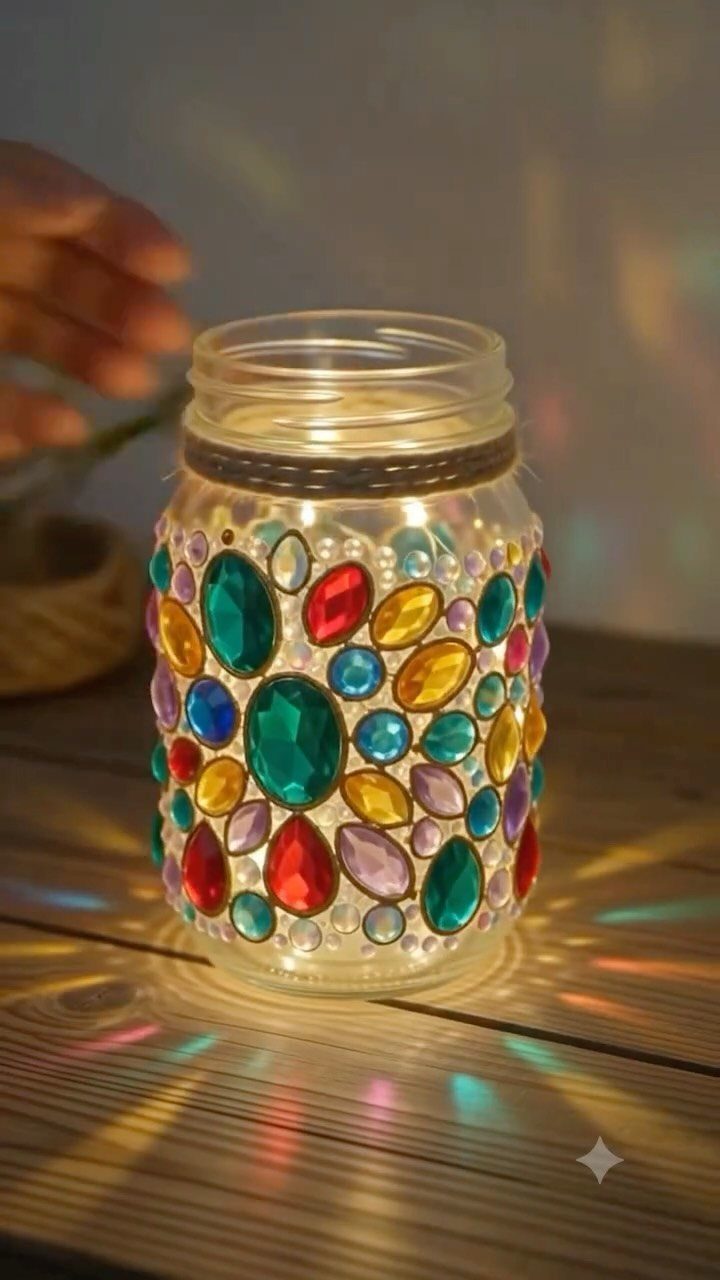
Faux gemstones turn an ordinary canning jar into something that looks like cut glass when the light comes on.
Pick stones in a mix of colors, and glue them on in clusters so some glass stays clear for the glow to pass through.
I’d start with a jar that has a smooth surface and add the stones last. Dense coverage looks richer than a scattered few.
15. Miniature Winter Scene Lamp
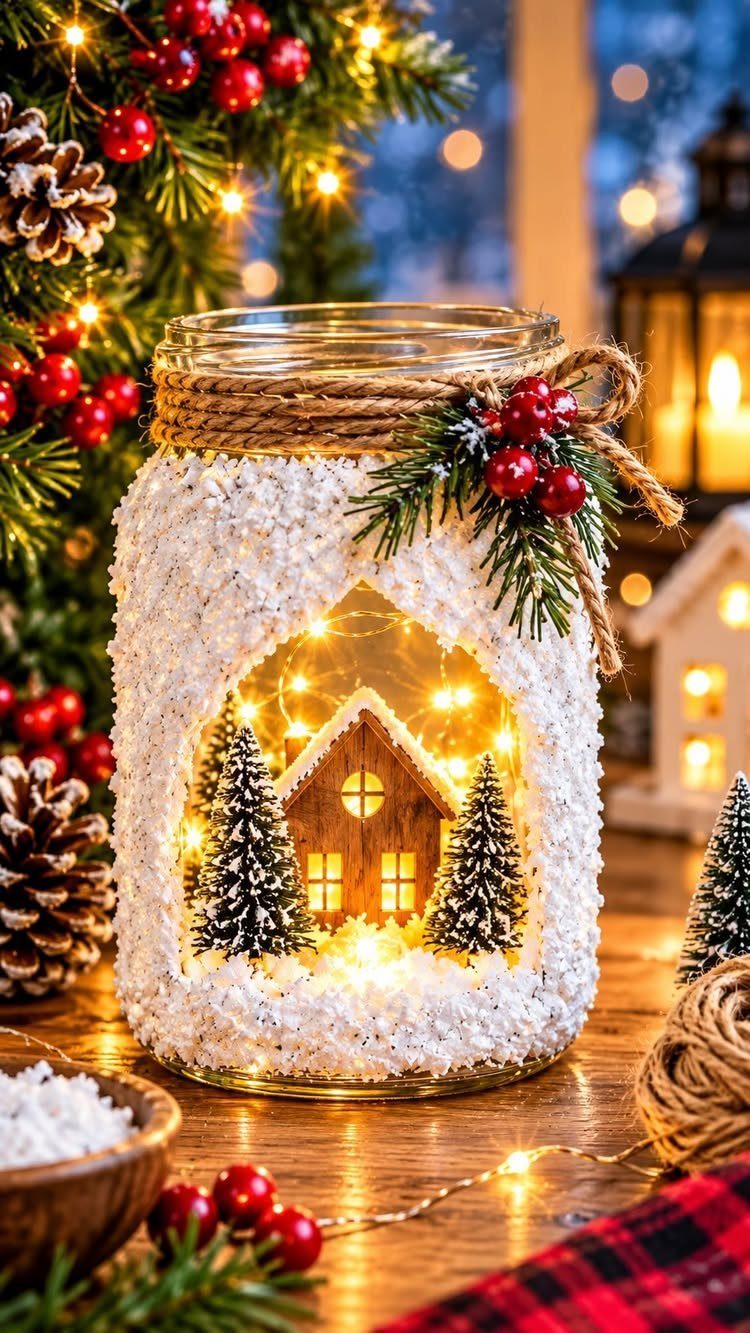
A tiny house with a lit window is the whole reason to make this one.
Faux snow over the roof and trees, then a loop of twine with a few berries around the jar’s neck, gives it a finished holiday look.
I’d keep the scene small enough that the glow still shows through the glass. Since the theme is seasonal, this is a lamp that earns its place for a few weeks, then packs away easily.
16. Steampunk Pipe Lamp
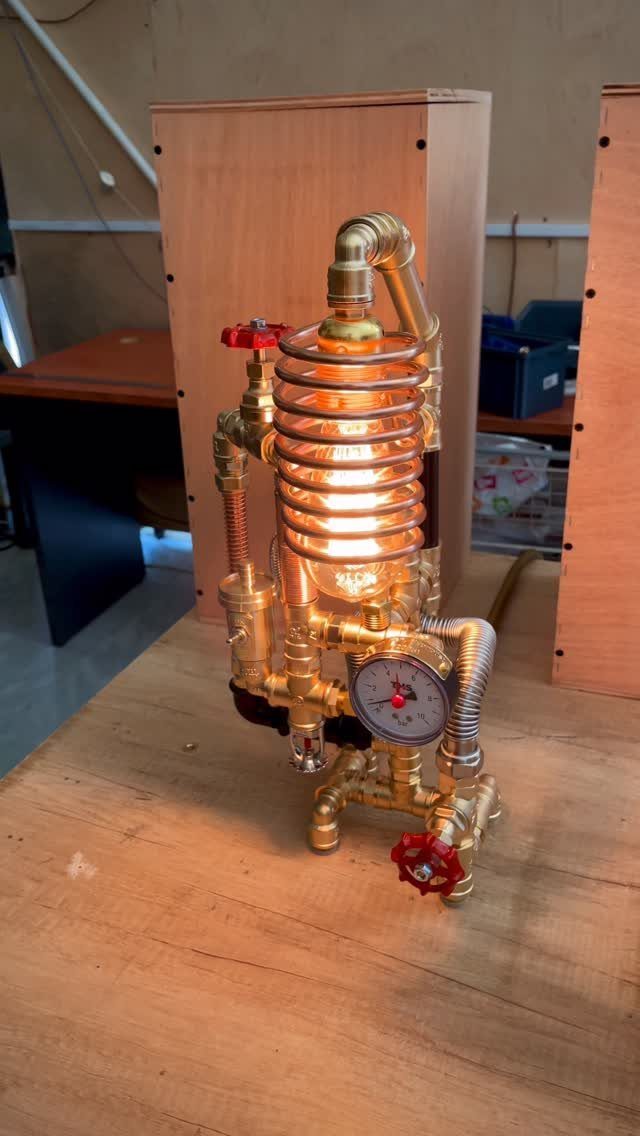
Brass pipes, valves and a pressure gauge give a steampunk lamp its look, and the bulb at the top should be an exposed one so the metal parts have a light to frame.
Plan the layout so the gauge faces forward and the valves sit where you can see them.
I’d choose brass over mixed metals, since one warm finish makes a pile of fittings read as a single object. A wooden table suits it well.
17. Hollow Log Lamp
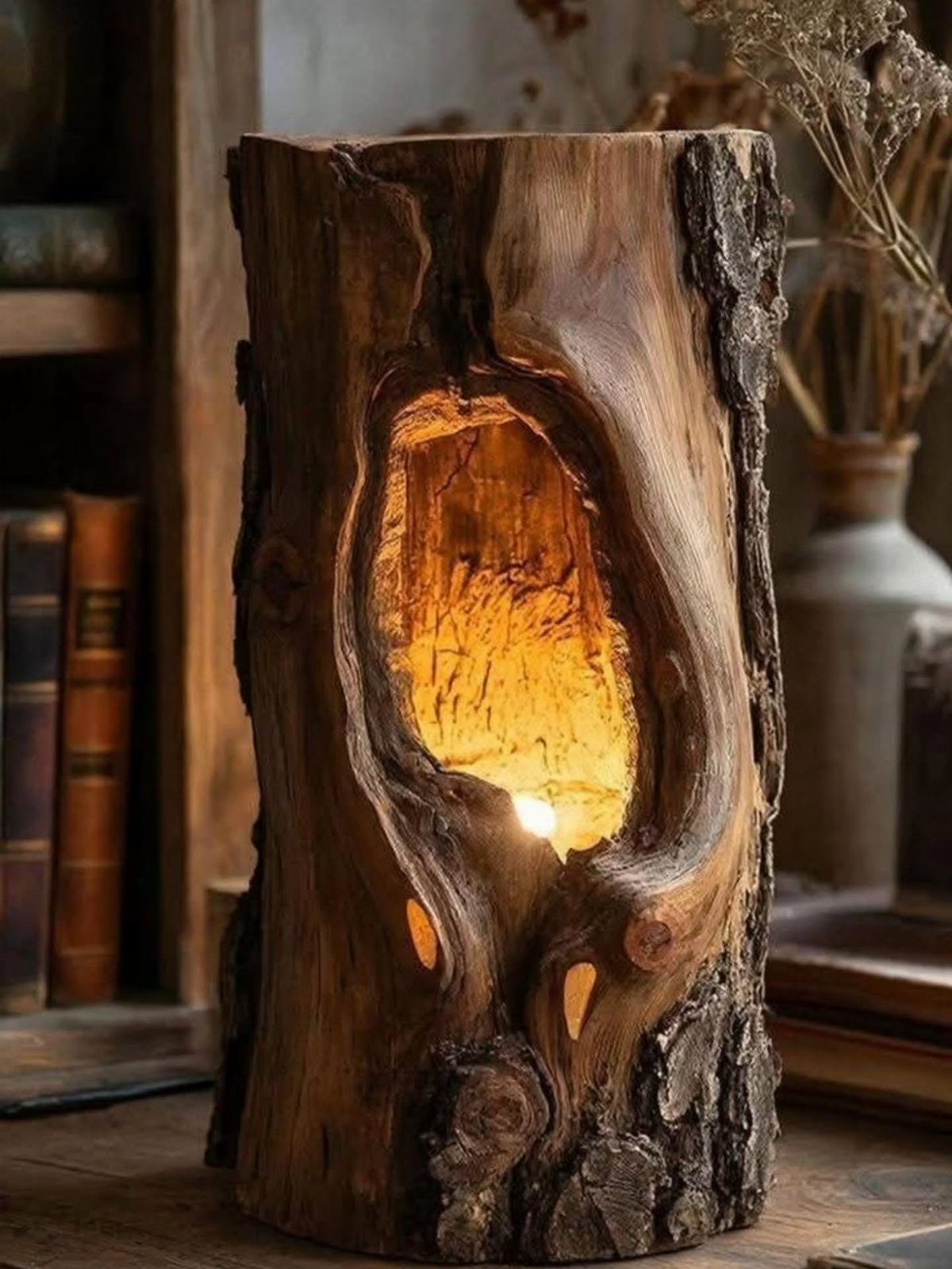
A hollowed center is what makes a log lamp, because the light has to come from inside the wood.
Choose a vertical section with a sturdy outer wall and a natural, uneven cavity, and let the warm glow show the rough surface of the opening.
I like it beside books and dried flowers, where the organic shapes echo each other. Keep the styling simple so the log stays the focus.
Lamp Makeover and Rewiring Advice
Sand and clean a base before any paint or finish goes on. Sanding gives the surface some grip, and a wipe-down removes the dust and oil that make paint peel later.
Test your paint and texture on a scrap of wood first. Color often shifts as it dries, and a scrap shows you that before the lamp does.
If the base doesn’t work, a lamp rewiring kit is the simplest fix. A rewiring kit usually bundles the socket, cord, threaded rod, and harp, which means one box replaces every part the current runs through.
Unplug the lamp before you touch anything, and pick a kit with a safety listing mark, such as UL, on the packaging.
Shade, Height, and Bulb Choices
A lamp that sits too low can be lifted without rebuilding it. Stack books, set it on a decorative riser, or use wood rounds, wood balls, a tree-trunk slice, a cutting board, or a basket.
Make whatever you stack wider than the lamp base so it can’t tip.
A separate shade is easy to find at Target, Lowe’s, and Walmart. Measure your lamp’s fitting before you shop, and hold the shade over the base if the store allows it.
For bulbs, the choices are soft white, LED, Edison, or smart. Soft white gives a warm, homey light, and a smart bulb lets you change brightness from your phone.
A dimming socket adds mood lighting to any of them. Check that the bulb you buy is dimmable before you pair the two.
Frequently Asked Questions
How do I make a table lamp taller?
Set the lamp on a stack of hardcover books, a decorative riser, or a few slices of tree trunk.
Pre-cut wood rounds and wood balls from a craft store also make a riser, and a cutting board or basket from around the house works too.
Pick a riser with a footprint larger than the lamp’s base, or the whole lamp can topple, and I’d set the lamp on it to judge the height before committing.
Where can I buy inexpensive lamp shades?
Target, Lowe’s, and Walmart all sell affordable shades separately in a range of sizes. Many stores only sell a shade bundled with a lamp, so those three are worth checking first.
Take the size of your lamp’s fitting with you to the store, and if they allow it, set a shade over the base to see how the two look together.
How do I make a lamp shade cover?
A fabric skirt tied over the old shade is the easiest route, and it leaves the shade underneath untouched.
You can also fit fabric around the shade and glue it in place, or accordion-pleat leftover wallpaper and attach it. A thin, light fabric passes the most glow, and I’d leave a gap between the cover and the bulb.
What kind of light bulb should I use in a table lamp?
Soft white is the safest pick, since it gives a warm, homey light. Beyond those, LED, Edison-style and smart bulbs are popular picks, and a smart bulb dims from an app on your phone.
Bulb type and wattage change how a lamp looks, so try a few in the actual room before you settle on one.
How do I rewire a table lamp’s socket and cord?
Buy a lamp rewiring kit, which usually includes a new socket, cord, threaded rod, and harp.
That makes a kit the easy route for a thrifted lamp or a dead one, since every piece the current passes through comes new. Pull the plug before you start, and check the packaging for a safety mark like UL.
Can I add a dimming socket to a lamp?
It works on most lamps that take a standard-size socket. A dimming socket suits a table lamp, a floor lamp or a pendant alike, and it softens the light for TV nights in the living room or dinner with guests.
Pair it with a dimmable bulb, because a bulb that can’t dim won’t respond to it.