
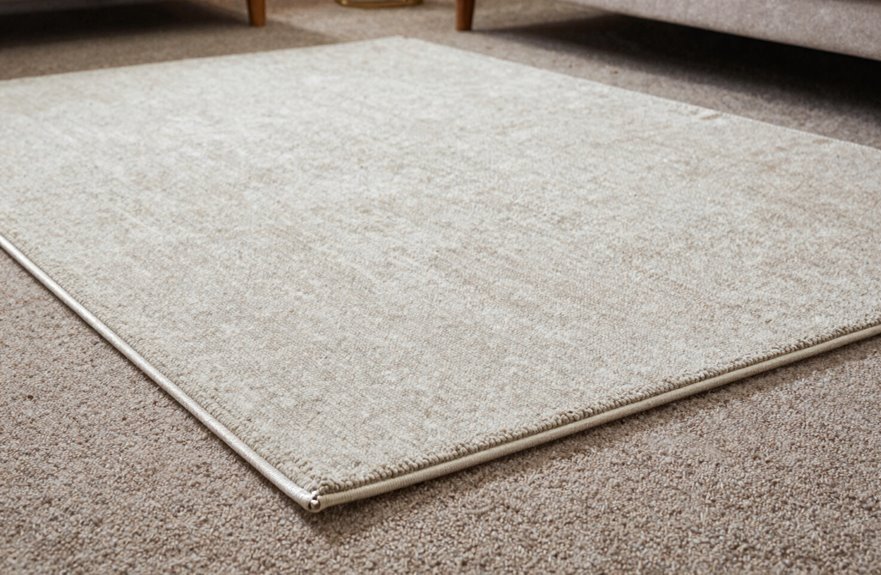
I’ve spent years watching beautiful rugs turn into dangerous slip-n-slides on carpet. Basic grip pads from big-box stores are essentially useless against the physics of shifting fibers underneath your feet. What actually works is layering: start with a stiff, textured carpet-on-carpet pad (felt-rubber hybrids from RugPadUSA are effective), add double-sided tape at corners, and anchor edges under your heaviest furniture legs. For high-traffic zones, draw thin caulk lines on the pad’s underside. This creates friction that grips like sandpaper. Replace everything every couple years before the texture flattens, and you’ll stop that infuriating rug migration every time someone walks by. A whole world of clever fixes exists that will make your layered rugs behave beautifully.
Start Here: Why Rugs Slide on Carpet and Fixes That Fail
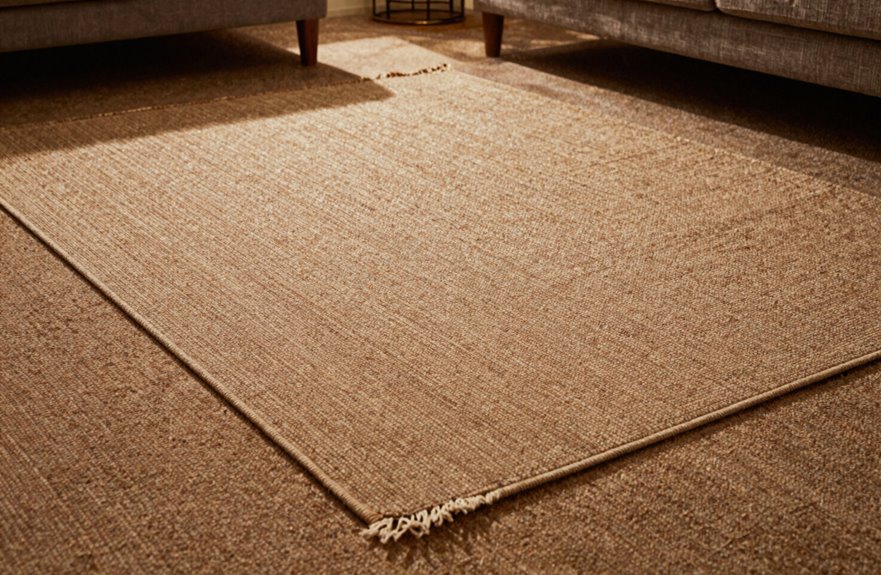
Why does your gorgeous vintage runner keep staging a great escape across your living room every time someone walks by? Chasing down loose rugs feels like herding cats.
Loose rugs don’t just slip—they stage daily escapes that turn your living room into an unintended obstacle course.
Carpet fibers constantly shift beneath your feet, creating a slippery situation where rug movement becomes inevitable, especially with flatweaves or lighter pieces on plush pile. That oushak you scored at auction is skating because insufficient grip between surfaces turns walking into unintended redecorating.
Friends often rely solely on basic rug pad options that promised miracles yet delivered disappointment within weeks. Rubber pads and Velcro strips lack staying power for high-traffic zones. Single-method approaches fail because they ignore how different materials interact.
Layering solutions require understanding your specific rug type alongside traffic patterns. Heavy wool behaves differently than cotton dhurries. Without considering both elements together, you’re setting decorative dominoes in motion.
Choose a Rug Pad Built for Carpet-to-Carpet Grip
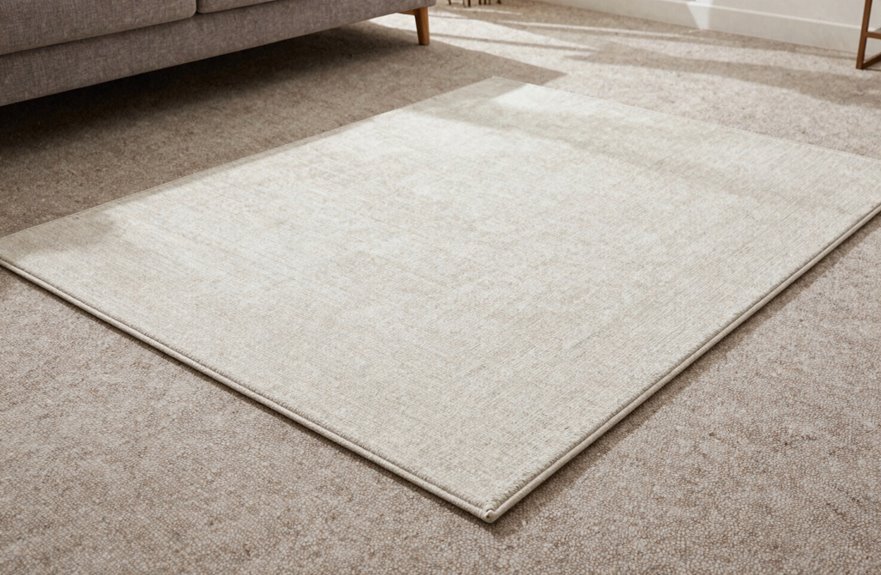
I’ve found that the real magic happens when you match the right construction to your specific rug type. Adhesive dry grip pads (like those sticky-backed options that feel like a firm handshake) grab onto both surfaces without any messy residue, while felt rubber combinations give you that satisfying density that performs well underfoot. Think of it like choosing the right wine for dinner; you want something that complements without overpowering. After watching my vintage kilim accordion into a wrinkled mess on my bedroom carpet, I learned the importance of selecting the right pad. The key is looking for that slightly stiff, almost sandpapery texture on both sides. Nothing too plush or you’ll be chasing your rug across the room as it shifts out of place.
Adhesive Dry Grip
How exactly do you stop a rug from becoming a slip-and-slide on top of carpet? Adhesive dry grip technology solves this problem for anyone tired of constantly repositioning their living room centerpiece.
This specialized rug pad uses water-based, pressure-sensitive adhesive on both sides; dry acrylic that won’t transfer or gunk up your carpets. Not all “grip” solutions perform equally. The slightly stiff texture grips both layers simultaneously, creating carpet-to-carpet stability.
Place the adhesive side down, peel off the protective film, and position your rug on top. Products like Slip-Stop feature polyester non-woven coatings that size easily and hold firm without residue. Spot clean and air dry occasionally to maintain the grip.
Felt Rubber Construction
When I’m hunting for a rug pad that actually stays put on carpet, felt rubber construction is where I invest every single time. I’ve learned from experience that this combination delivers significant grip without damaging carpets.
Why this works:
- The felt backing presses into carpet fibers, creating friction that locks everything in place and prevents shifting.
- Natural rubber grips your rug’s underside effectively.
- You get cushioning and sound absorption, which reduces noise transmission to lower levels.
- Matching pad thickness to your rug type matters; use thicker felt-rubber for lighter rugs and thinner for plush carpets.
Skip the cheap PVC alternatives. Natural felt and rubber hybrids last longer and perform better.
Add Double-Sided Tape at Rug Corners and Edges
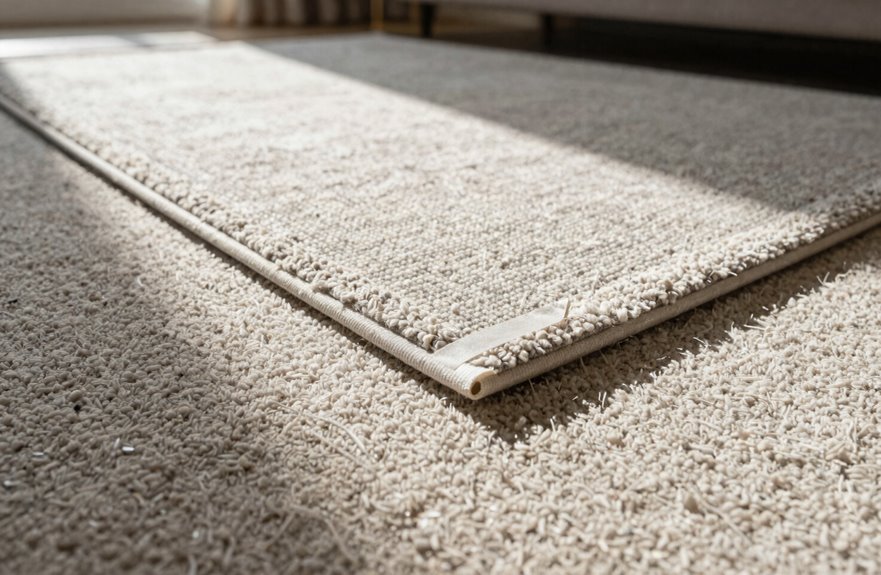
Because nothing ruins a cozy living room moment quite like doing the accidental shuffle-slide across your rug like you’re auditioning for a low-budget musical, I always keep a roll of double-sided carpet tape within arm’s reach. (I’m looking at you, the time my mother-in-law nearly took out my vintage Noguchi coffee table during Thanksgiving dinner.) This stuff is the unsung hero of rug placement.
I cut strips around 50 mm long and press them firmly along every rug corner and perimeter edge. Clean, dry surfaces are non-negotiable. Dust is the enemy of adhesion. Here’s what I’ve learned about tape varieties:
| Tape Type | Best For | Watch Out For |
|---|---|---|
| Blue film | High-traffic zones | Aggressive residue |
| White cotton | Temporary fixes | Shorter lifespan |
| Silicone-based | Delicate fibers | Higher price point |
| Heavy-duty | Large area rugs | Tricky removal |
| Low-residue | Vintage textiles | Less grip strength |
Test a corner first. I learned that lesson the hard way with my grandmother’s Persian.
Anchor Rug Edges Under Heavy Furniture
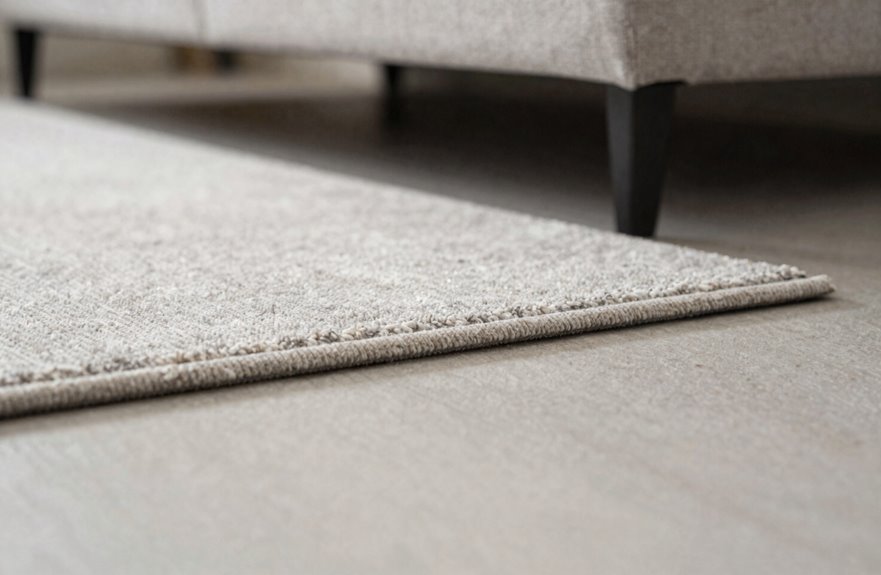
I love this trick because it’s basically free if you’ve already got furniture. I tuck my sofa’s front legs and my chunky ottoman, a vintage find that weighs a ton, right onto the rug’s edges, and suddenly that slippery runner stops acting like it’s on a skating rink. You’ll want to spread the weight around though; I’ve learned the hard way that one heavy chair leg in the wrong spot can create a pucker that’s visible all day, so I aim for at least two anchor points per side and sometimes sneak in corner weights, the kind you hide under furniture skirts, when my lighter flatweaves still shift.
Furniture Placement Basics
Three heavy pieces of furniture can transform your rug from a sliding mess into a grounded centerpiece without grip tape required. Smart furniture placement works as your hidden advantage for rug anchoring.
Here’s my tried-and-true lineup:
- Position a substantial sofa (think Restoration Hardware’s Maxwell) with front legs planted firmly on the rug’s edge
- Anchor opposite corners with matching upholstered chairs, creating tension that fights sliding
- Center a weighty coffee table, marble or solid wood, to pin the middle
- Add an ottoman for bonus anchoring and extra seating when friends crash
Furniture alone won’t suffice for lightweight rugs. Pair this strategy with quality rug pads underneath, or you’ll still battle wrinkles where nothing sits. Rug pads are essential for preventing movement across hard flooring surfaces.
Edge Anchoring Techniques
Furniture placement gives you the foundation, but now we’re getting surgical with it. Edge anchoring is where we really lock things down, literally. Pressing your sofa’s legs onto the rug’s perimeter allows that carpet grip to take hold as the weight flattens every stubborn curl.
You’ll want heavy hitters here: think ottomans, upholstered chairs, that solid oak coffee table you inherited (thanks, Aunt Carol). Position them strategically along edges and corners, and rug movement becomes a distant memory. Layering this approach works best; pair edge anchoring with a quality pad underneath for double-duty stability. Check those anchored spots monthly though. Furniture drifts, life happens, and your perimeter deserves attention.
Draw Cheap Grip Lines With Caulk or Hot Glue
Creating your own rug gripper from silicone caulk or hot glue is a cheap hack that works. I’ve tested this caulk grip method on thrifted runners, and it delivers results.
Silicone caulk or hot glue: a cheap, tested hack for DIY rug grippers that actually works.
Here’s how to build anti-slip lines that keep rug edges locked down:
- Flip your rug completely, like you’re making a giant silicone pancake.
- Squeeze caulk in parallel lines 3–6 inches apart, plus a border around all rug edges.
- Let it cure for 24 hours.
- Press firmly so those lines bite into carpet fibers.
Fair warning: this DIY fix can pull fibers when removed, so stick to cheap rugs. It provides temporary stability, not a permanent pad replacement.
Layer Methods for Rugs in High-Traffic Carpet Areas
So you’ve got your caulk lines down, but that’s a weekend project for a runner in the guest room, not the high-traffic areas where your kids sprint through with cereal bowls. For those spaces, layering methods provide the durability you need.
Start with a non-slip rug pad designed specifically for carpet-on-carpet applications, as standard pads won’t perform the same way. The stiff, textured grip creates friction between surfaces while cushioning your rug. I learned this after watching a runner shift across the living room during a Super Bowl party.
Add corner grippers for extra stability, especially on thinner rugs that tend to buckle. For your heaviest traffic areas like the hallway to the kitchen, reinforce with rug-to-carpet tape at the edges. Vacuum underneath monthly and check your layers regularly to maintain effectiveness.
Replace Worn Grips and Flatten Curling Rug Corners
Why do we always notice the curling corner at 11 PM when we’re carrying a glass of wine? I’ve learned the hard way that worn grips don’t announce their retirement. They simply let your rug start a slow-motion migration across the carpet while you’re not looking.
Worn grips don’t announce their retirement—they simply let your rug start a slow-motion migration across the carpet while you’re not looking.
Here’s how I tackle edge curling and grip replacement:
- Inspect your rug pad monthly by flipping corners during vacuuming to catch compression before it fails
- Flatten curling edges with damp towels and heavy books overnight, a technique that works consistently
- Swap carpet-on-carpet pads every 18-24 months since that waffle texture flattens faster than expected
- Anchor fresh corners with furniture legs or discreet weights until the rug stays in place
Staying ahead of grip replacement prevents rug migration and protects your flooring.