
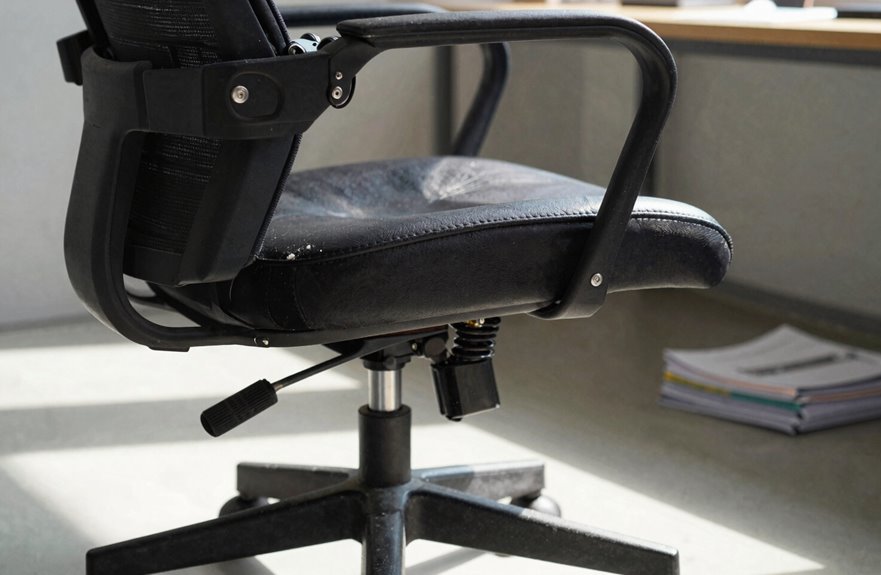
Your chair keeps sinking because the gas lift cylinder, that shiny metal tube under your seat, has lost its internal pressure, usually from worn seals or a busted valve letting nitrogen escape. The seals wear out from years of sitting, overloading, or just cheap manufacturing, and once that airtight seal breaks, gravity wins every time.
Sometimes it’s just a misaligned lever mimicking failure, so check that first. But if you’re hearing hisses or spotting oil around the shaft, your cylinder needs replacement. Worn seals allow nitrogen gas to escape gradually, causing the chair to sink lower with each use. Replace the gas cylinder with a new one to restore proper height adjustment and seat stability.
What’s Actually Making Your Chair Sink?
Why does your chair keep betraying you like that ex who “just needed space”? It’s maddening.
Your gas lift cylinder is the culprit. When internal pressure drops, usually from worn seals or a busted hydraulic valve, you get pneumatic leakage and suddenly you’re sinking mid-Zoom call. I’ve personally face-planted into my keyboard during a presentation to Sarah from accounting.
Your gas lift cylinder is the culprit. When internal pressure drops, usually from worn seals or a busted hydraulic valve, you get pneumatic leakage and suddenly you’re sinking mid-Zoom call.
Exceeding that weight limit accelerates wear and tear dramatically, like overstuffing your favorite jeans. A loose adjustment lever can trigger unintentional sinking too, even when you haven’t touched it.
Poor maintenance kills these cylinders. Dirt degrades seal performance, and without regular care, you’re stuck with a sinking chair that makes you question what went wrong. The problem isn’t you; it’s the equipment failing to do its job.
Temporary Fixes That Stop the Drop
You know that feeling when you’re already late for a meeting and your chair slowly deflates like a sad birthday balloon? I’ve been there, and I’ve got your back with some quick wins.
The hose clamp method is my go-to temporary fix. Just wrap that metal band around your gas lift, tighten it where you want, and you’ve achieved stabilization. Pro tip: add duct tape underneath so it doesn’t slide. I’ve learned that the hard way.
For something sturdier, grab a PVC pipe. Slide it over the cylinder like a sleeve, and you’ve got fixed-height salvation. No more sinking chair drama.
These DIY solutions eliminate your height adjustment completely. They work for now, but your ergonomic chair deserves proper cylinder replacement eventually. Most people postpone that purchase.
When a New Gas Cylinder Is Your Only Real Fix
So how do we understand when it’s time to stop playing MacGyver and actually replace the thing? I’ve been there, knee-deep in DIY repair videos, convinced I could outsmart my sinking chair with sheer willpower and a YouTube tutorial. Spoiler: I couldn’t.
When your hydraulic lift loses pressure from damaged seals (thanks, eight-hour workdays), no amount of chair maintenance tricks will save you. I’ve tried.
No amount of chair maintenance tricks will save a hydraulic lift with damaged seals. I’ve tried.
Here’s what I’ve learned about pulling the trigger on a replacement cylinder:
- Check warranty guidance first. Manufacturers like Herman Miller or Steelcase often cover gas lift failures (free fix).
- Verify compatibility; your gas cylinder must match stroke length and chair height specs exactly.
- Skip the seal kits. DIY gasket fixes fail fast, while a proper module actually lasts.
Get that chair sitting properly again.
Replacing Your Chair’s Gas Lift: A Step-by-Step Guide
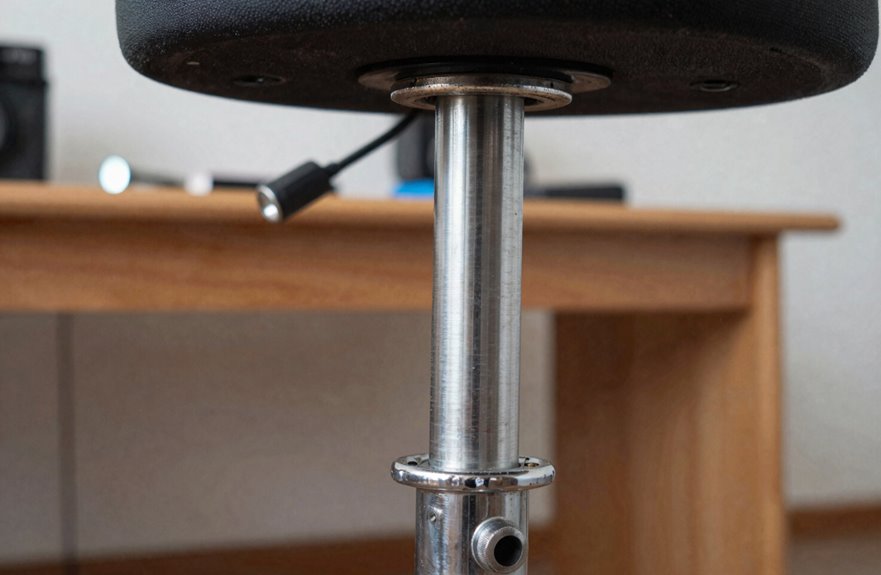
I’ve tackled this repair myself more than once, and I can walk you through the actual hands-on work: getting that stubborn old cylinder out and seating the new one properly so your chair doesn’t wobble like a barstool at closing time. You’ll need a rubber mallet, some patience, and maybe a friend to hold the base steady while you tap the bottom end of the gas lift to break the friction seal. A screwdriver and hope won’t work here. Once the old cylinder slides free, installing the replacement is straightforward: drop it in, reattach your seat, and you’ve completed the repair instead of just complaining about it.
Gas Lift Removal
Why would anyone keep sinking slowly toward the floor like a deflating bounce house? That sinking chair feeling is usually caused by worn cylinder seals.
To remove a gas lift cylinder:
- Grab a rubber mallet and tap the cylinder’s bottom end gently to loosen it from the base and mechanism
- Pull straight out with steady tension and weight, avoiding wiggling motions
- Measure your old cylinder’s length and stroke for a compatible replacement and check warranty support
Before hunting for a replacement gas lift, check your chair’s specs printed underneath. Cylinder replacement is more practical than rebuilding, as repairing seals is difficult and time-consuming.
New Cylinder Installation
Pop that fresh cylinder in and suddenly I’m sitting tall again, no more the slow, humiliating descent into floor-land. First, measure your old gas lift’s length and stroke with a tape measure rather than a ruler. Compatibility matters. Check your chair’s weight capacity, your AndaSeat X-Air needs 265 pounds max, and verify warranty coverage to keep future protection intact. Base removal was surprisingly therapeutic: a few taps with a rubber mallet and the old cylinder surrendered. Following the installation steps, slide the new cylinder into the chair mechanism, reattach the base, and flip it upright. Test height by pumping the lever. Smooth height adjustment means no sinking chair drama.
5 Warning Signs Your Chair Is Beyond Repair
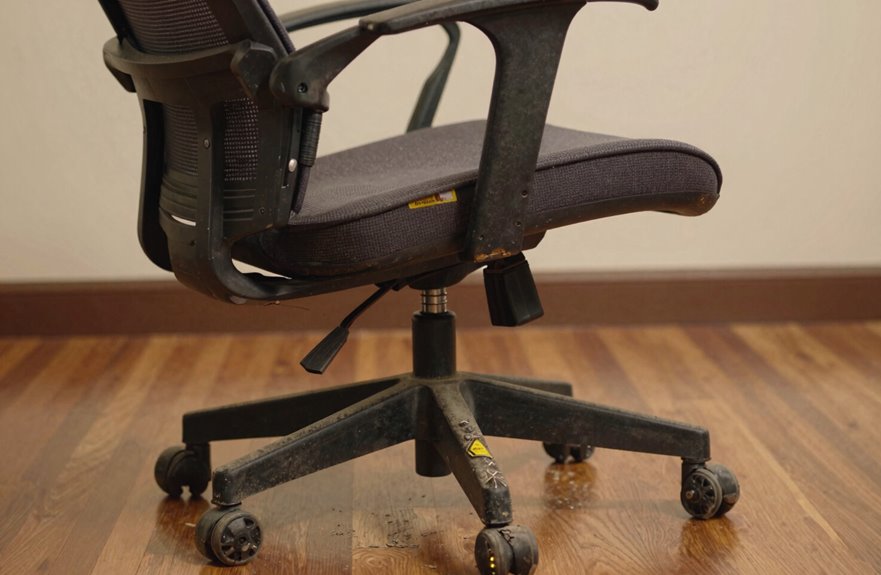
I’ve learned the hard way that some chair battles just aren’t worth fighting. When your seat starts sinking again right after you’ve wrestled with a replacement gas lift, you need to recognize when repair is no longer practical. Structural integrity failure is your chair’s way of signaling the end. Cracked tilt plates will have you tilting like the Leaning Tower of Pisa, or a persistent wobble will have you gripping your desk like you’re on a carnival ride. The spilled coffee stains prove it happens more often than you’d expect.
Pneumatic system breakdown is the final warning sign. That hissing sound coming from your cylinder isn’t a snake; it’s the death rattle of your chair’s structural system. Once that pressurized seal fails, the chair cannot be repaired.
Structural Integrity Failure
Sometimes I wonder if my chair’s trying to tell me something, like maybe it’s ready for retirement. We’ve all been there, stuck with a sinking chair that gas lift swaps just won’t fix anymore. When I spot these red flags, I know my buddy’s structural integrity is compromised:
- A cracked base or wobbly tilt mechanism that stays loose after I’ve cranked every screw.
- Worn bolts at the base connection creating that scary linkage play, like my Herman Miller’s experiencing failure.
- An aging frame past 5-7 years where hydraulic lift failure meets total chair maintenance neglect.
I learned the hard way that rebuilding seals on premium hydraulic lifts isn’t worth the hassle. Sometimes chair replacement means accepting our shared journey’s ended. Your back deserves better than continuing to use a structurally compromised seat.
Pneumatic System Breakdown
Why does my chair sound like it’s deflating a tiny pool toy every time I adjust it. That adjustment hissing indicates my pneumatic cylinder is failing. A sinking chair means my gas lift has lost its battle against time and weight stress.
When I spot oil leaks or feel sudden height drops mid-Zoom call, I’m witnessing pneumatic failure in real time. Worn seals and valve wear turn my seat into a slow-motion elevator. I’ve tried fixes, but once the pneumatics fail, stable height becomes impossible. Sometimes chair replacement is the only practical solution, since a malfunctioning pneumatic system cannot be reliably restored.
Buying a Chair That Won’t Start Sinking
How do I finally win the battle against gravity and my own chair? Buying smart beats fixing forever.
Buying smart beats fixing forever—stop battling gravity with duct tape and temporary hacks.
When shopping for an ergonomic chair that won’t betray me, I prioritize:
- Robust gas lift cylinders from trusted makers like Samhongsa or KGS Class 4
- Chair warranty coverage that explicitly includes cylinder replacement
- Height adjustment that glides smoothly with no lever issues or wobbling
I’ve tried temporary fixes like hose clamps and PVC sleeves, but they eliminate your adjustability. A leaking gas cylinder means chair replacement time, period. No more duct tape solutions in my home office.
Why Gas Cylinders Fail (And How to Prevent It)
I thought buying a Samhongsa Class 4 cylinder would solve my chair problems, but I’ve learned that even the best gas lift can fail. Your gas lift cylinder fails when internal seals degrade or valve leakage reduces pressure, causing you to sink unexpectedly during work. Exceeding the weight limit accelerates seal degradation. I’ve seen this on Herman Miller knockoffs, with oil leaking around the shaft and hissing sounds indicating failure. Misalignment of your lever can mimic failure symptoms, so check that linkage before replacing components. Maintain your airtight cylinder with basic care: wipe the shaft regularly, listen for leaks, and schedule preventive replacement before complete collapse. Proper maintenance extends the life of your chair.