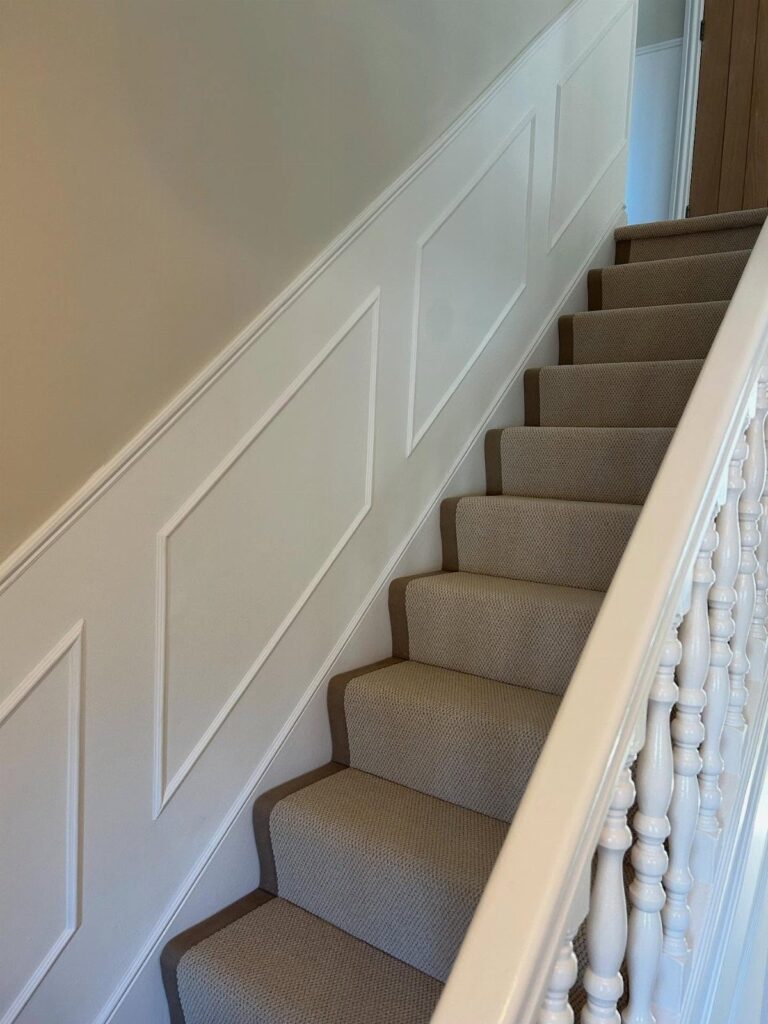
Carpet on stairs ranges from full plush coverage that quiets an entire flight to a narrow runner that leaves painted edges exposed, and the right choice depends on how much grip, warmth and pattern you need against the traffic the staircase sees.
Sisal adds texture but shows dirt faster, while a herringbone weave hides footprints better than solid color.
1. Striped Carpet
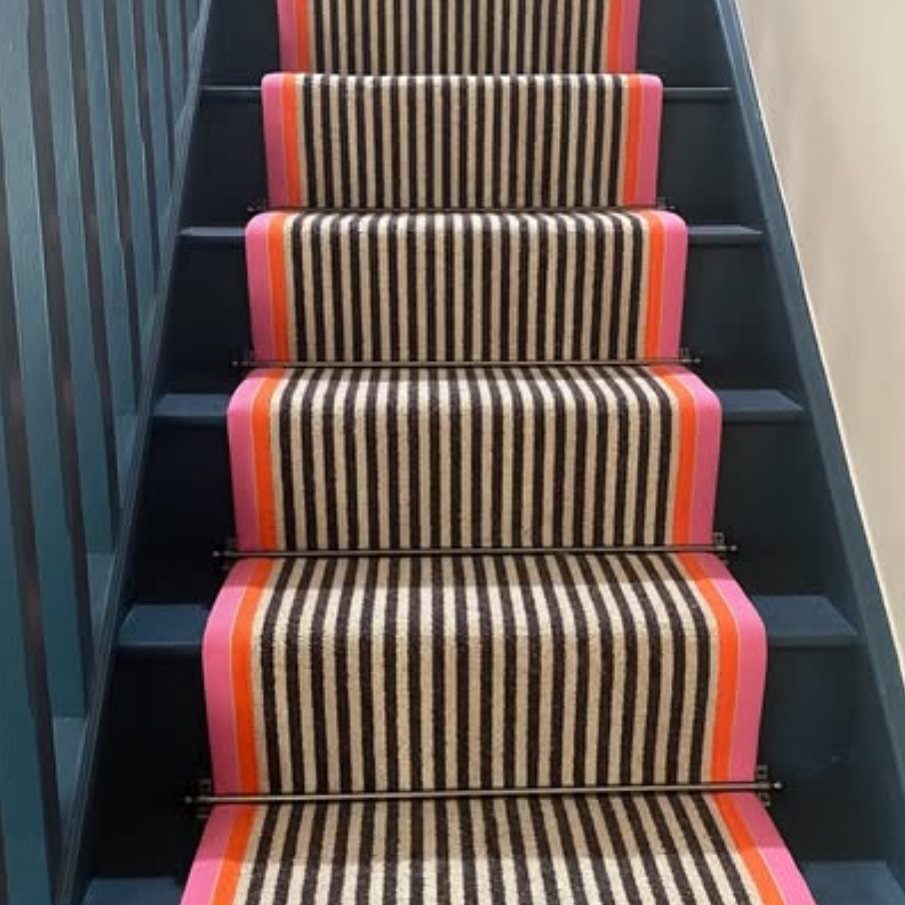
Stripes along the length of a stair runner pull the eye upward and make a narrow staircase feel less closed in.
The direction of the pattern matters: horizontal stripes across each tread can make a stair feel wider, but vertical stripes running with the climb give more height.
Contrast between the stripe colors and the exposed stair edges sharpens the look. Dark painted treads frame the runner cleanly, and borders in warm tones add contrast without competing with the main pattern.
A runner that leaves a few inches of wood or paint visible on each side defines the edges and keeps the stairs from looking too narrow.
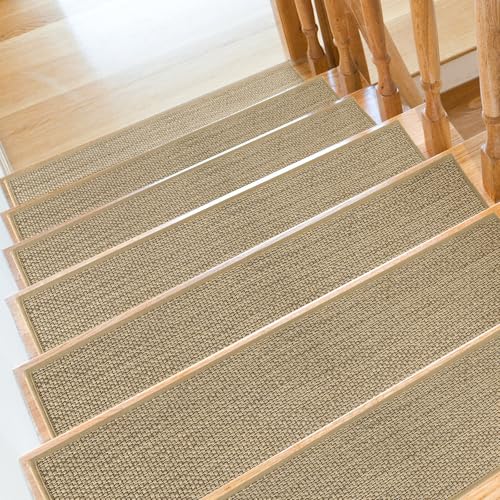
Anti Slip Stair Runners for Wooden Steps: The back of safety stair rug is made of specially engineered TPE slip-resistant material that grips surfaces of stairs firmly, securing the stair mats in place on steps. Protect your family, kids, dogs and pets from slips and falls while going up and down stairway.

【 Rubber Backing Stair Treads】Because it’s sturdy non-adhesive anti-slip luxury rubber backing. You don’t need to purchase another tape for the carpet stair treads for your kids, elderly parents, and pets. It can stick to wooden, tile, and marble surfaces tightly, stair treads stay put and stay in place.
2. Brown-Striped Runner
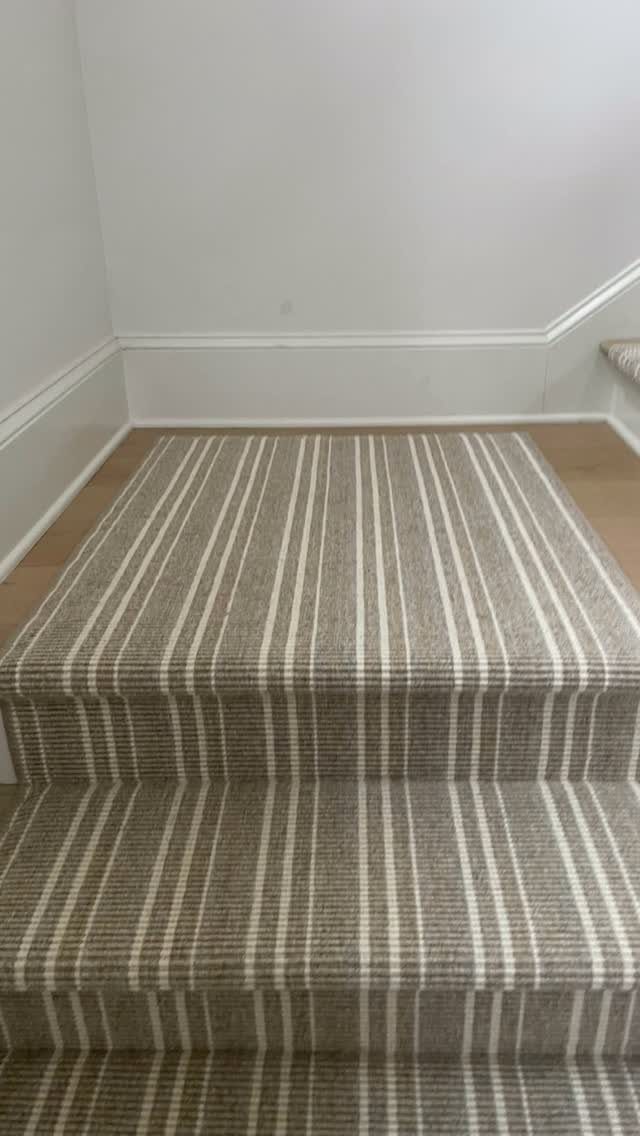
Brown and cream stripes read warmer and less formal than black and white, which makes them easier to live with in a home that leans rustic or transitional.
The pattern still gives you the visual stretch of a stripe, but the softer palette keeps the staircase from feeling stark.
Pair this with white risers and natural wood or painted treads.
The contrast stays clean without going cold. If your walls already carry a lot of pattern or color, a two-tone neutral stripe holds the staircase back from competing.
Most striped runners come in a flatweave or low-pile construction, which makes them easier to clean and less likely to show footprints than plush carpet.

Triple reinforced ROUNDED bullnose front with non skid fiber pad backing.

[WEAVE / CONSTRUCTION : HAND KNOTTED LOOM] Handmade by skilled artisans proficient in the art of rug weaving, who invest countless hours in perfecting this artistic area rug. Hand-knotted loom rugs are crafted using traditional hand loom machines, offering a versatile style that complements both contemporary and conventional living spaces. The price is quite rational for the buyers along with minimal maintenance and the quality of manufacturing is high.

[COLOR & DESIGN]: SAFAVIEH's Natura area rug features a hand-woven, subtly textured geometric pattern in blue tones; actual color may appear darker or lighter than shown, depending on lighting and screen settings.
3. Tartan Patterned Carpet

Tartan brings pattern density and tradition to a staircase, and it works especially well in homes with wood trim, paneling, or a color palette that already pulls from browns, grays, or greens.
The plaid structure gives you multiple colors in one runner, so it ties together finishes that might otherwise feel disconnected.
Brown and gray tartan pairs well with white balusters and a black handrail, which keeps the pattern grounded without adding competing tones.
If you go this route, keep the walls simple. Tartan holds its own and doesn’t need much around it.
Most tartan runners are wool or wool-blend, which gives durability and a softer feel underfoot than synthetic options.

NON-SLIP STAIR RUG: Multi-purpose Stair mats to use the TPE Non-Skid backing on dry floor, helping it to stay in place on your floor, it won't slip or scuff floors. Low profile design so doors won't get stuck.Perfect for homes with pets (dogs or cats) or kids.

THE ORIGINAL EXTRA STRONG GRIPPER: our trusted Gorilla Grip nonadhesive rug pads offer a unique, dual sided grip that firmly holds onto both the rug pad and your hard floor to help prevent rug movement
NON-SLIP STAIR RUG: Multi-purpose Stair mats to use the TPE Non-Skid backing on dry floor, helping it to stay in place on your floor, it won't slip or scuff floors. Low profile design so doors won't get stuck.Perfect for homes with pets (dogs or cats) or kids.
4. Neutral Textured Carpet
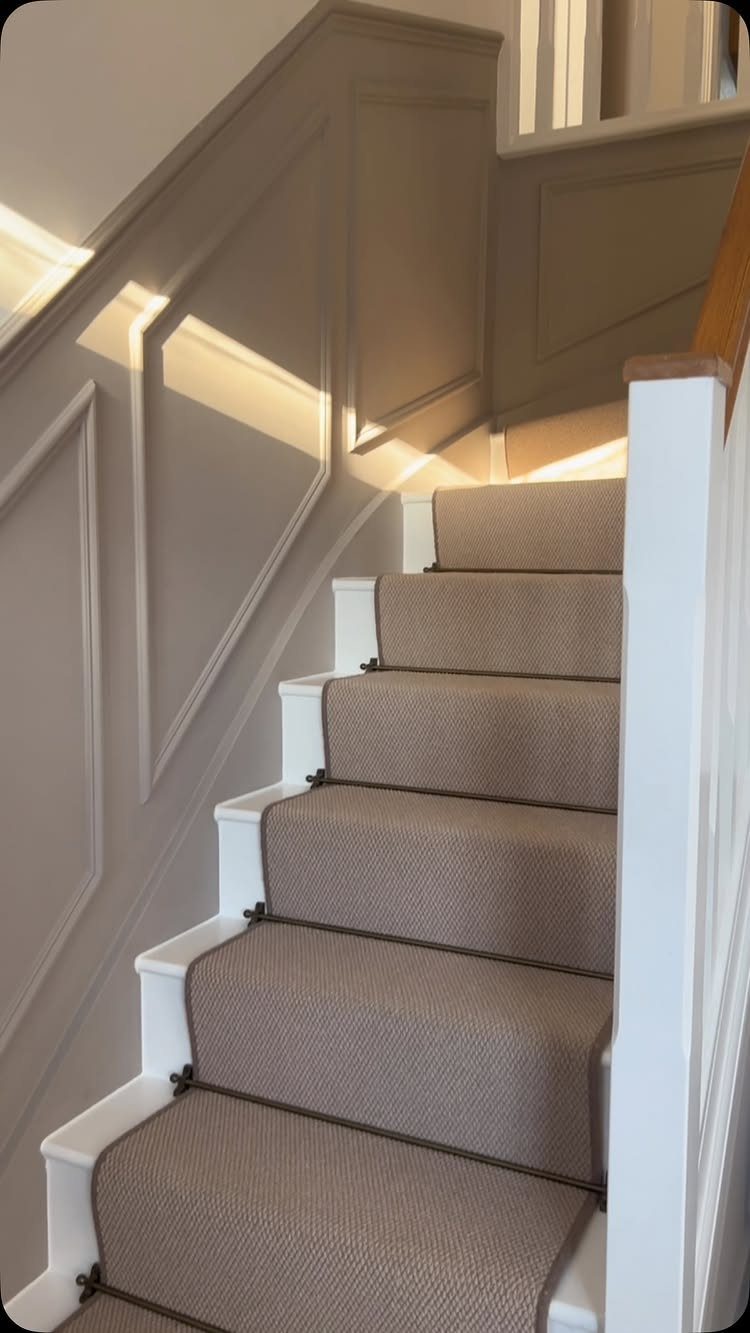
A raised texture in a solid neutral gives you something more interesting than flat broadloom without introducing pattern. Beige and gray are the most common choices, and both hide dirt better than white while still feeling light.
The texture also adds grip, which makes the stair safer, especially if you have kids or older adults in the house.
Pair it with stair rods if you want a more finished look; the metal breaks up the expanse of carpet and adds a traditional detail that works in both classic and updated interiors.
This approach suits staircases where the architecture is already doing the work. If your treads, risers, or railings carry detail, the carpet can stay simple.
With an additional hint of color and texture, carpeting can round out a design and create a sense of continuity between two different floors.

❤Comfortable & Noise Reducing - 15-Piece Stair Treads Carpet is made of polyester, High-density wool blends on the stair cover surface make you feel soft and comfortable on bare feet. Proper thickness can reduce the noise generated when going up and down the stairs, and provide you with a quiet and relaxing environment. They are an excellent choice for anti-slip protection.No crease, no curl, no fading.

【Non-Slip & Safe】:The runners for hallways with rubber backing are coated with a TPR backing to help the non slip runner rug stay in place. Sufficient grip to prevent dangerous slips for the elderly and children. Non-slip runner also protect laminate and hardwood floors

Notes: Made of neoprene with non slip rubber backing, not carpet, more like a printed rubber mat
5. Sisal or Jute Carpet
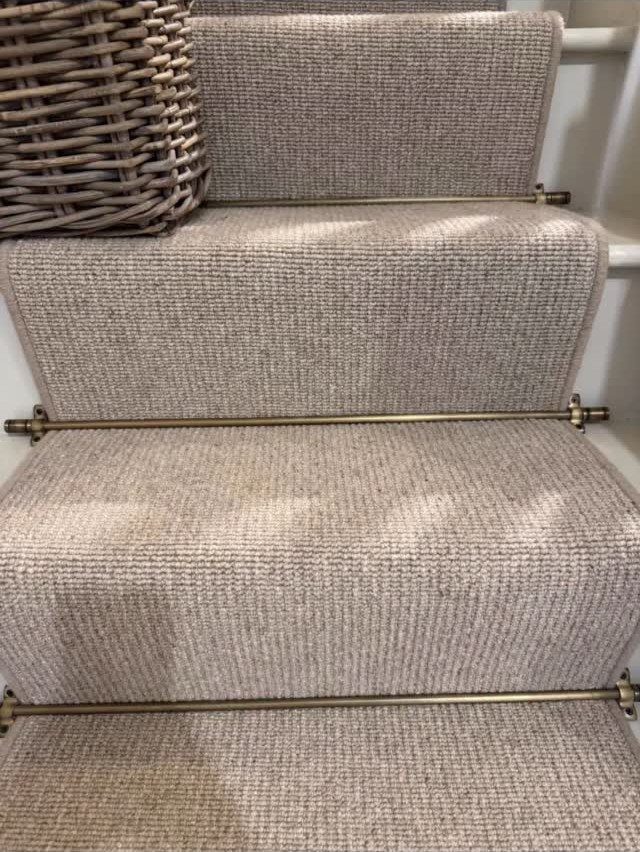
Sisal and jute give stairs a woven, organic texture that works well in coastal, farmhouse, or minimal interiors.
The natural fibers are durable and hold up to foot traffic, but they feel rougher underfoot than wool or synthetic carpet, which some people mind and others prefer.
Both materials come in a tight weave or a looser boucle, and the tighter weave is easier to clean.
Jute is softer than sisal but less stain-resistant, so if your staircase gets heavy use or you have pets, sisal is the better pick.
Stair rods in brass or bronze add a warm metal detail that complements the earthy tone of the fiber. Without them, the runner can look unfinished.
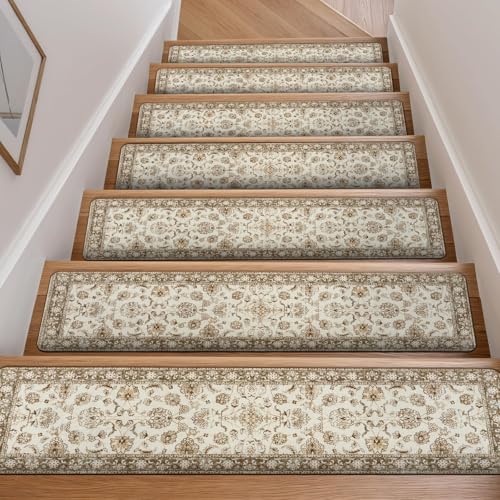
Non-Slip Stair Treads: OJIA non-skid stair treads feature reliable anti-slip rubber backing, ensuring they stay securely in place on your stairs and making every step safer for kids, elders, and pets. Note: Not carpet, these stair treads are printed rubber mat.

Neutral Design: These stair treads has a neutral design and features vintage and abstract patterns that effortlessly complements any interior style—from modern minimalist to classic rustic. The subtle textures add a touch of understated elegance to your home without overwhelming the space.

❤️【Soft Low Pile Rug】 This area rug is made of high-quality polyester. Ultra pleasant soft feel and quality appearance. The rug is low pile but it is very soft, almost plush feeling. The texture is very bare-feet friendly and is luxury soft underfoot.
6. Carpet Stair Landing
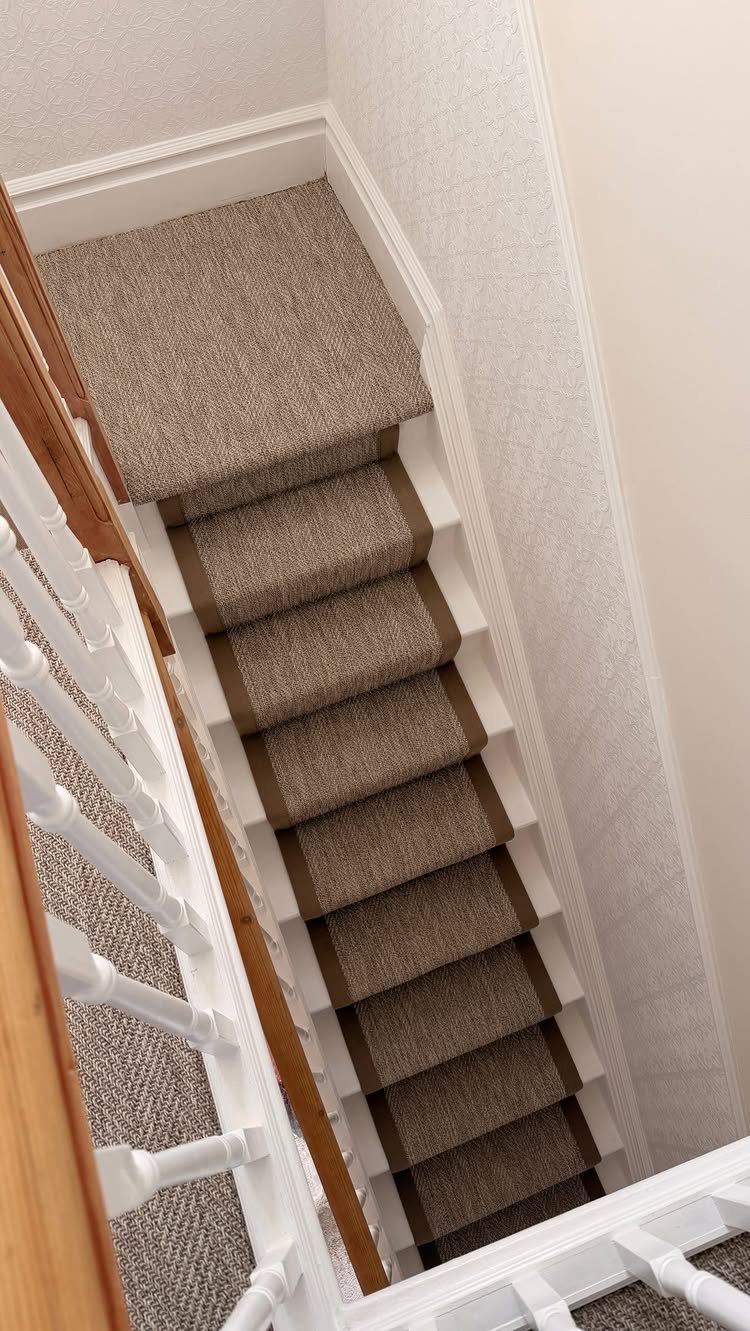
Carrying the same carpet from the stair treads onto the landing creates a continuous surface that makes the transition feel intentional instead of patched together.
This works especially well when the landing is visible from below or opens into a hallway, because the repetition ties the 2 spaces together.
Match the carpet pile and color exactly.
A different texture or a slightly off shade will read as a mistake, not a choice. If you’re installing a runner on the stairs, extend it across the landing rather than switching to a different product at the top.
A textured carpet that covers both the stairs and the landing fully simplifies the install and keeps the look cohesive.

Product Details: 3' x 18' (36"x216"); Thickness: Rug: 0.19 in; Edge: 0.38 in; . Note: Please ensure door clearance is over 0.4" to avoid jamming. Thick edges may lift, use a smaller non-slip pad to reduce tripping risk

Safety & Protection: Our Bullnose design carpet stair treads are reinforced with iron-made bullnosing to ensure a secure transition between steps. The rounded edge also reduces the risk of trips and falls, making your home safer.

[COLOR & DESIGN]: SAFAVIEH's Natural Fiber rug borders a woven marble sisal field; its 3/8" pile is firm and textural in a living room; color and pattern contrast may look different in person, and shade can vary depending on lighting and screen settings.
7. Green Stair Carpet
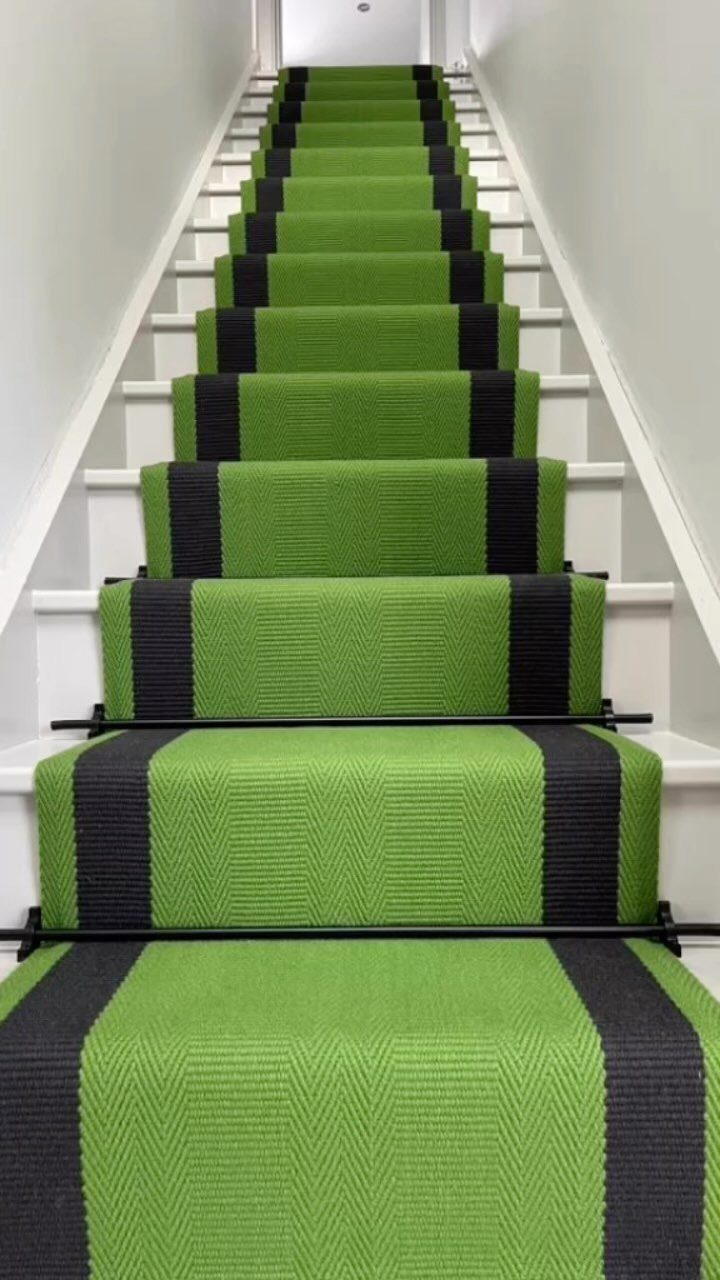
A green carpet runner pulls color into a staircase without overwhelming the space, and the striped version keeps the pattern simple enough to work in most homes.
Green reads fresher than brown or gray, and it pairs well with white or painted wood.
If you go with a stripe, the green and black combination grounds the color and keeps it from looking too bright. A solid green runner works too, but pick a muted sage or forest tone rather than something too saturated.
Green hides dirt better than cream or beige, which matters on stairs that get daily use.

[WEAVE / CONSTRUCTION] Handmade by skilled artisan’s adept in the art of rug weaving, dedicating numerous hours to meticulously craft this artistic area rug to perfection. As the name resembles the hand-woven flat weave rugs are thinly woven with low pile and flat surface. This rug is woven with fabric by interlocking horizontal & vertical threads, to create a flat rug in a variety of colors & designs. These are light-weight but end up lacking the soft velvety feel often associated with rugs.

Braided Stair Tread: Transform your staircase with the Rhody Rug braided stair tread, meticulously crafted to provide comfort and style. Made from 100% premium wool, it offers a durable, texture-rich surface that lays flat, protecting wooden steps from wear and damage. Perfect for adding warmth and elegance to any staircase, it’s an ideal choice for both indoor and outdoor settings.

Natural Material: Hand woven south western wool jute from India blending sustainability and style with care
8. Contrasting Stair Carpet
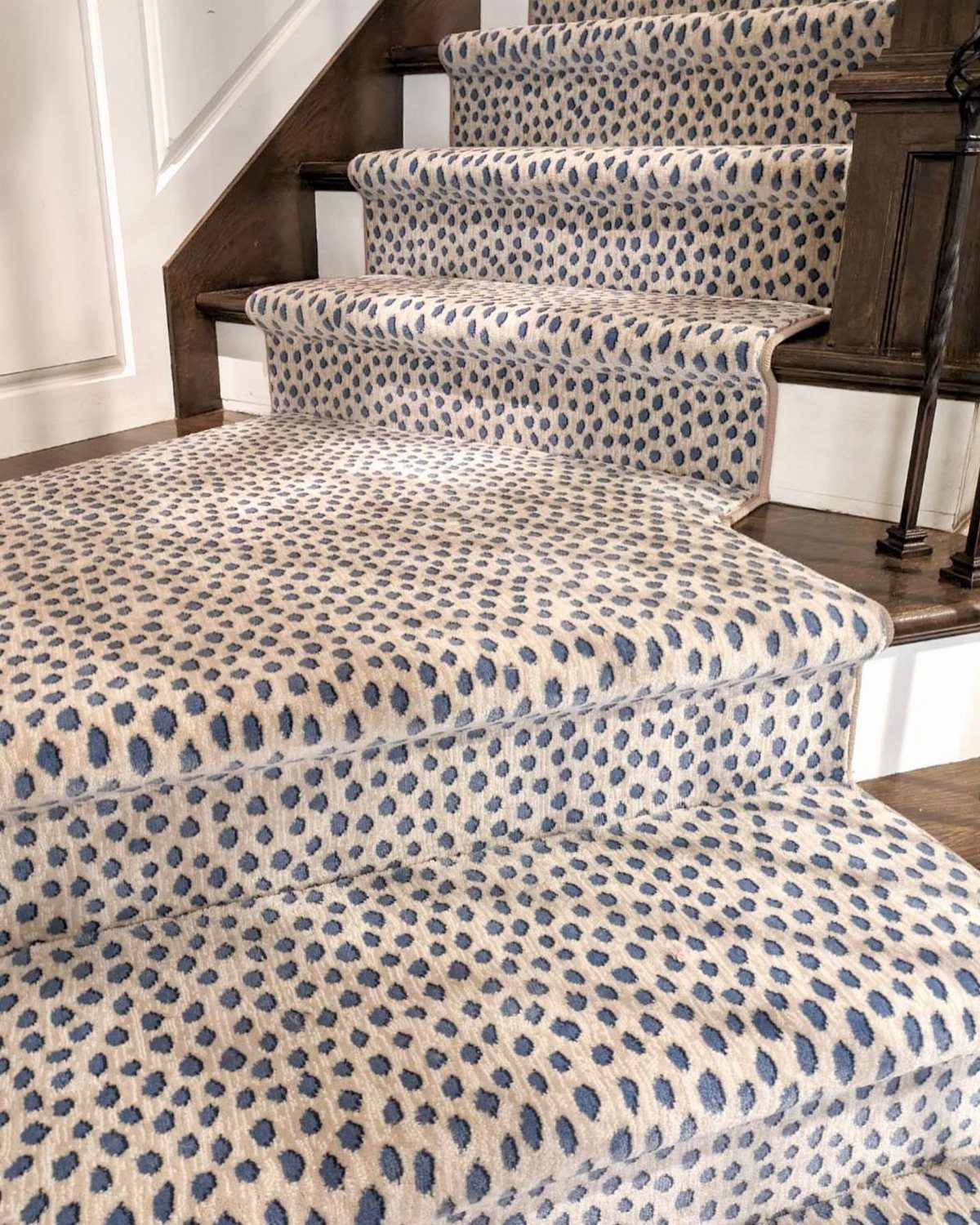
A carpet that contrasts with the hallway floor marks the staircase as its own zone instead of trying to blend everything together.
This works well when the hallway is already busy or when you want the stairs to feel like a deliberate design moment.
The contrast can come from color, pattern, or both. A patterned runner over dark wood stairs against a lighter hallway floor keeps the transition clear without needing a threshold piece.
If the hallway floor is carpet, a runner with a different texture or weave will still read as separate even if the colors are close.
THE ORIGINAL EXTRA STRONG GRIPPER: our trusted Gorilla Grip nonadhesive rug pads offer a unique, dual sided grip that firmly holds onto both the rug pad and your hard floor to help prevent rug movement

Non-slip Protection: Our pad's signature grip keeps rugs securely in place, preventing bunching and sliding during daily use. It also protects your floors from wear and tear, including damage from high heels, children at play, and more.
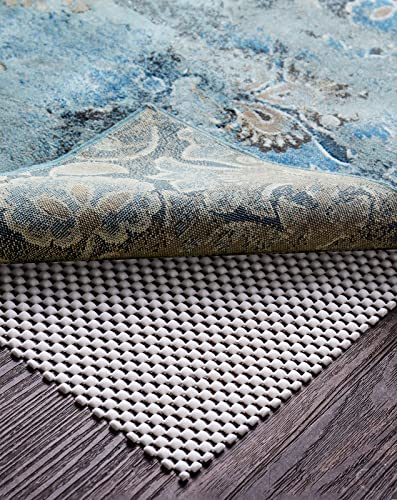
Non-slip Protection: Our pad's signature grip keeps rugs securely in place, preventing bunching and sliding during daily use. It also protects your floors from wear and tear, including damage from high heels, children at play, and more.
9. Runner Over Painted Wood
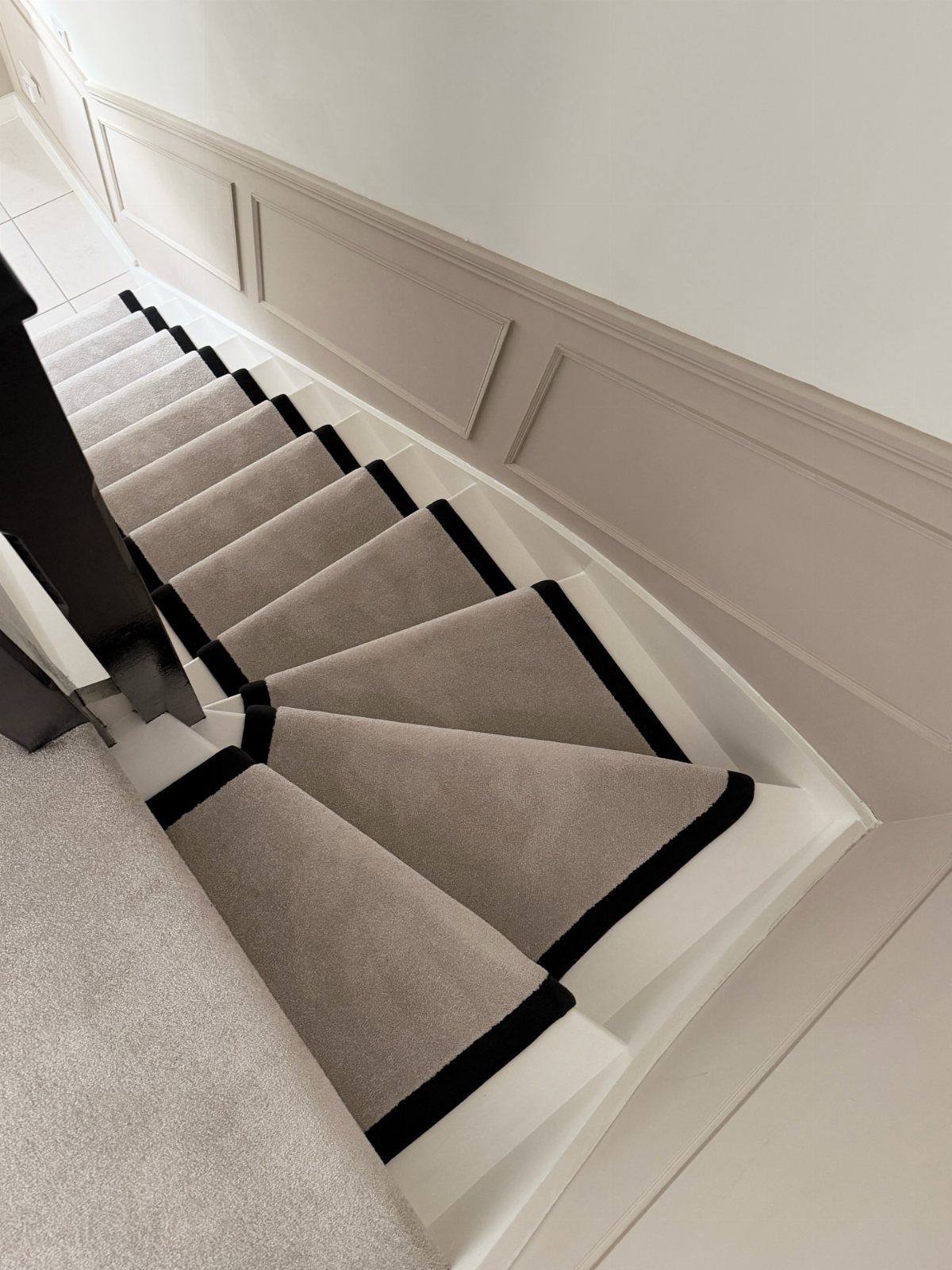
A runner softens the sound of footsteps and adds warmth to painted stairs without covering the whole tread. The exposed painted edges frame the carpet and keep the staircase from feeling too heavy.
Gray and black runners look sharp against white paint, but any neutral works as long as the contrast is clean. Borders help define the edges, especially on wider stairs.
Carpet also reduces slipping, which matters if the painted treads are smooth. Install it with stair rods or tucked and stapled, depending on the look you want.

【STAIR TREADS NON SLIP】Our durable stair treads provide secure footing, the non-slip surface provides traction and prevents slips and falls, and the self-adhesive back ensures the stair treads for wooden steps stay securely in place, even when children or pets pass over them.

【STAIR TREADS NON SLIP】Our durable stair treads provide secure footing, the non-slip surface provides traction and prevents slips and falls, and the self-adhesive back ensures the stair treads for wooden steps stay securely in place, even when children or pets pass over them.

Non-slip Stair Treads - The bottom of these stair mats are made of self-adhesive technology, which firmly adheres to various indoor floors and has a good slip-proof performance, effectively protecting the security of family members, children, and pets when going up and down stairs, and avoiding the risk of slipping
10. Herringbone Carpet
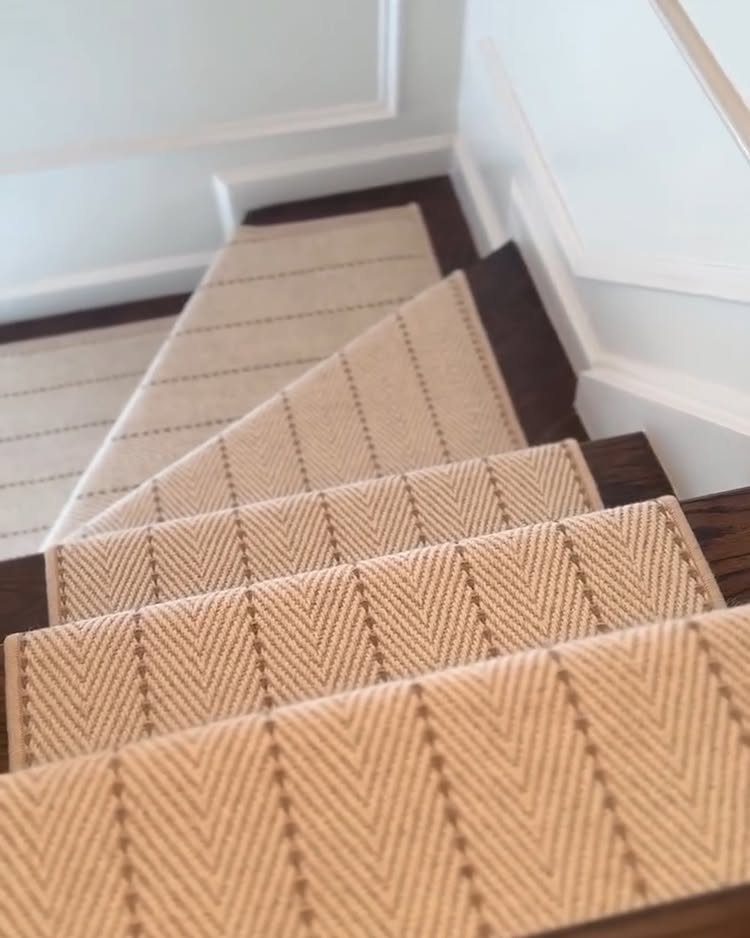
Herringbone gives a runner more texture and interest than a solid color without the formality of tartan or the boldness of a geometric.
The zigzag pattern works in traditional and updated interiors, and it pairs well with dark wood stairs because the light and dark tones in the weave create movement.
Tan and brown herringbone reads warmer than gray, and it hides wear better than a lighter color. The pattern also disguises footprints and dirt, which makes it practical for high-traffic stairs.

[Cottage Floral Rug] – This vintage rug features a delicate floral pattern blossoms and leaves. The charming scalloped edge enhances its vintage charm, making it a perfect for french country, warm organic modern farmhouse, rustic, transitional, Japandi, neutral or cottagecore home decor (© 2025 Othilic)

Note: Made of neoprene with non slip rubber backing, not carpet, more like a printed rubber mat.

【Non-slip Stair Treads】: TPE non-slip rubber backing ensures that the Stair mat stays in place, providing a safer step for the whole family and protecting the safety of children, the elderly and pets.
11. Leaf Pattern Carpet
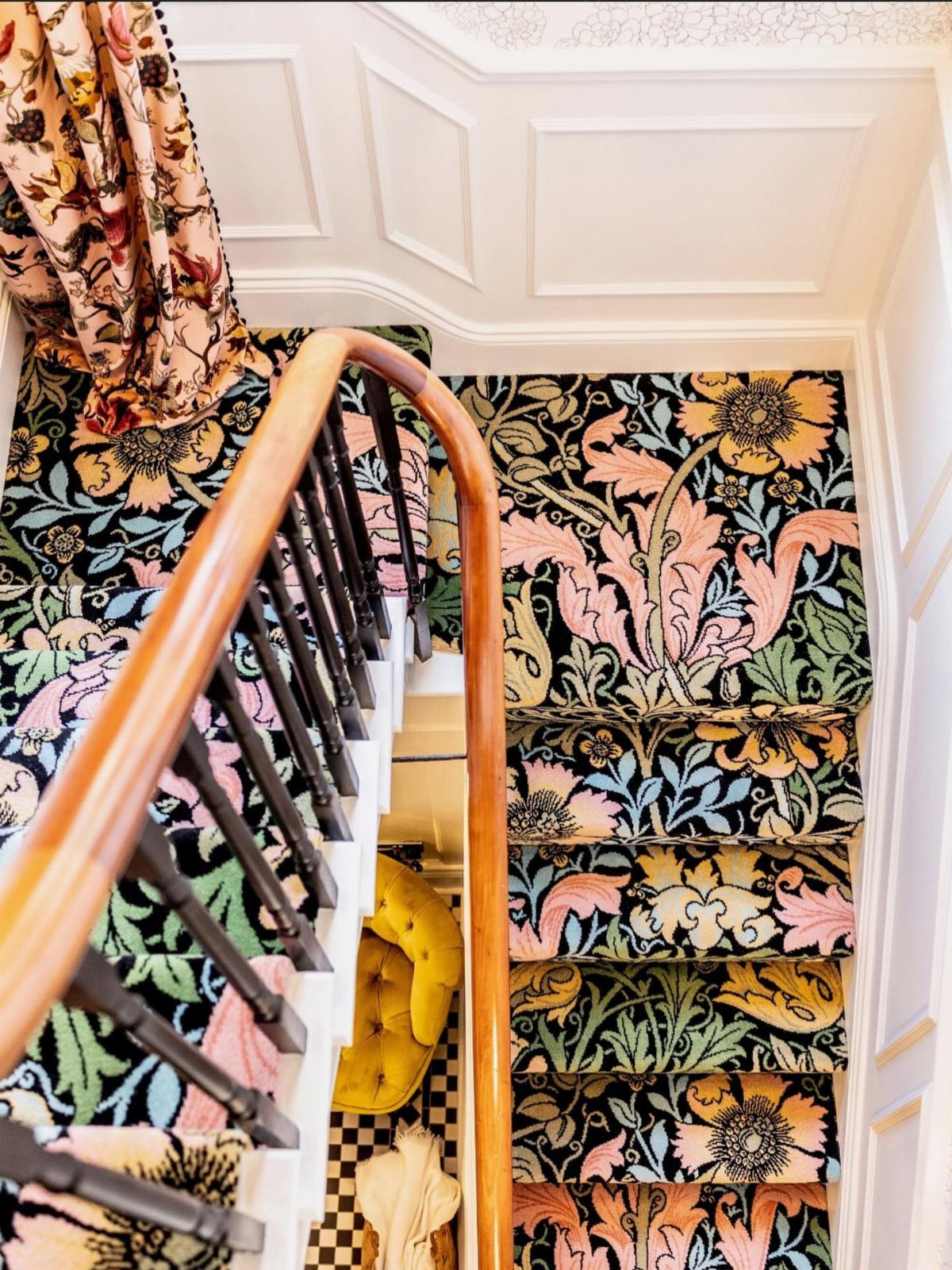
A detailed botanical pattern brings richness to a staircase and works best in homes with traditional architecture or rooms that already lean decorative.
The layered colors and shapes make the runner a focal point, so the rest of the staircase should stay simple.
Pair a leaf or floral runner with a wood handrail and white or neutral walls.
Too much wood or dark paint will compete with the pattern. If your hallway or landing is already patterned, this might be too much.
These runners are usually printed rather than woven, which makes them less expensive than wool tartan or herringbone but still durable enough for daily use.
12. Red Stair Carpet
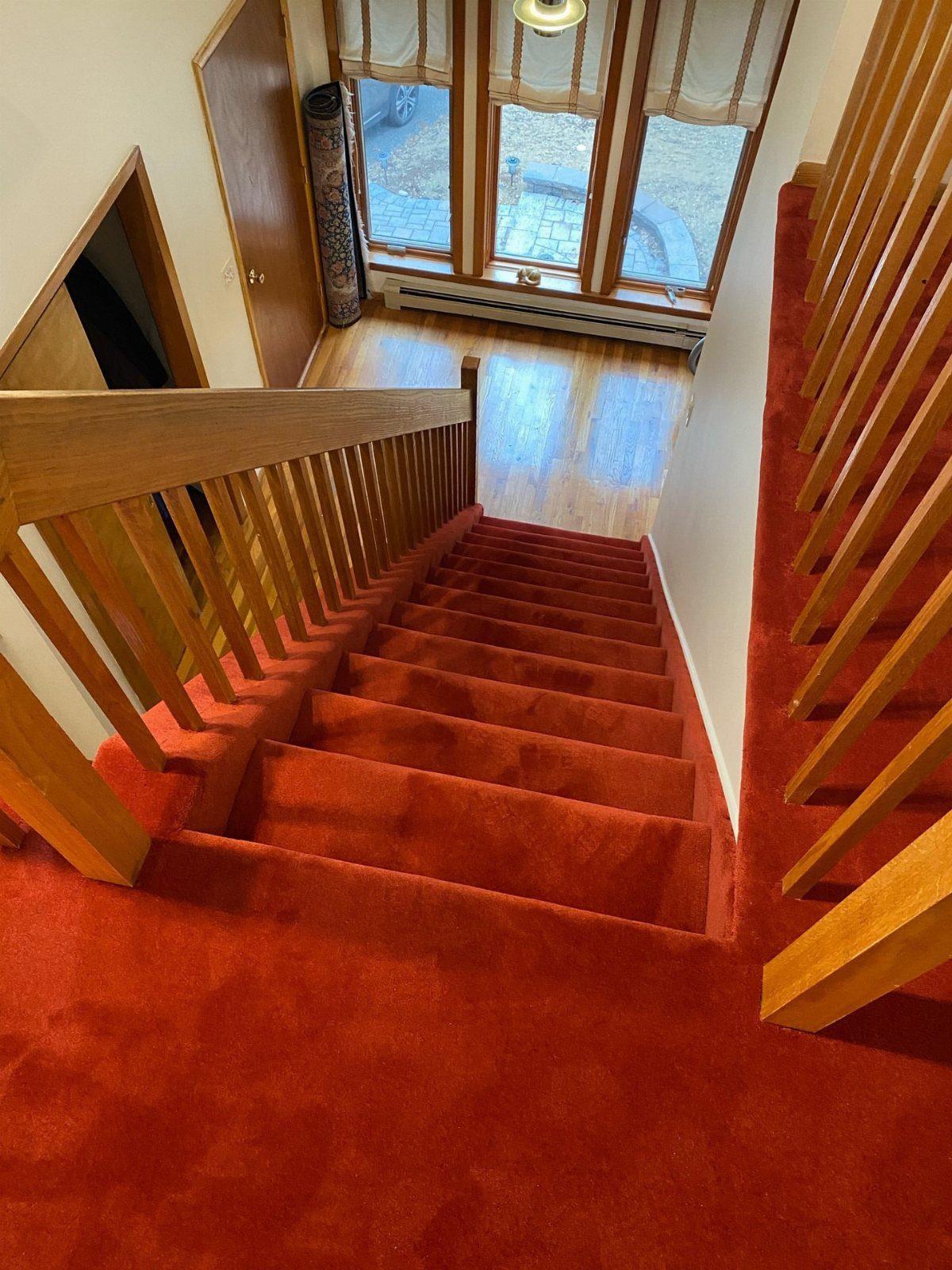
Red carpet on stairs creates instant formality and works best in homes with traditional interiors or where you want the staircase to feel important. The color draws attention, so it suits an entry staircase more than a secondary flight.
Pair red with dark wood or black handrails and white or cream walls.
Too much dark wood around red carpet makes the space feel heavy. If your walls are already bold, a red stair might overwhelm the room.
Red shows wear and fading faster than neutral tones, so it needs regular vacuuming and spot cleaning to stay sharp. Wool holds color longer than synthetic fibers.
13. Autumnal Red Runner
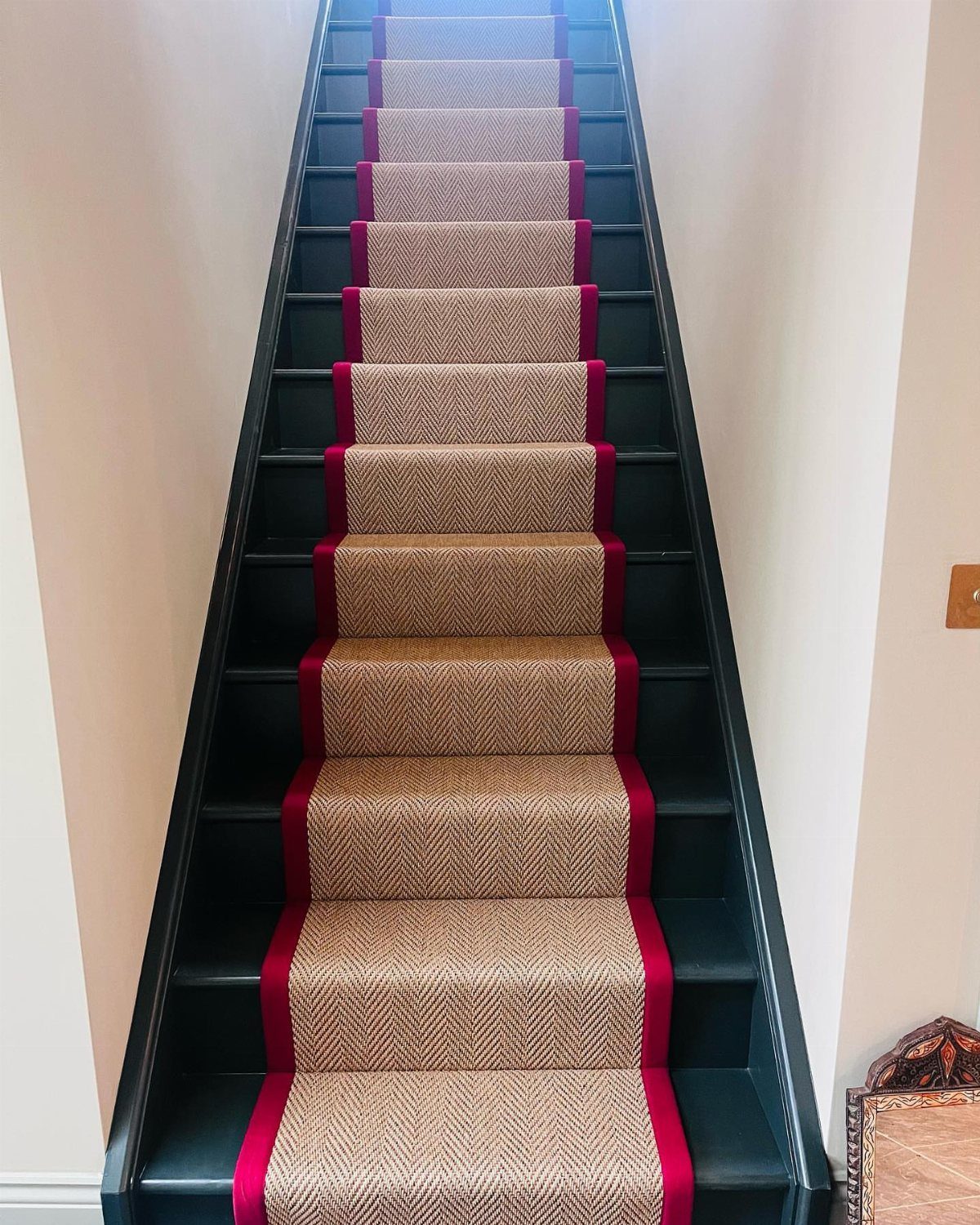
Red borders on a neutral herringbone runner warm the staircase without committing to full red carpet. The beige center keeps the look grounded, and the red edges add seasonal color that works in a home with traditional or colonial details.
Black painted stair sides sharpen the contrast and frame the runner cleanly. If your stairs are already dark wood, the effect is similar but slightly softer.
This approach gives you the warmth of red in smaller doses, which makes it easier to live with year-round than a fully red stair.
14. Earth-Toned Runner
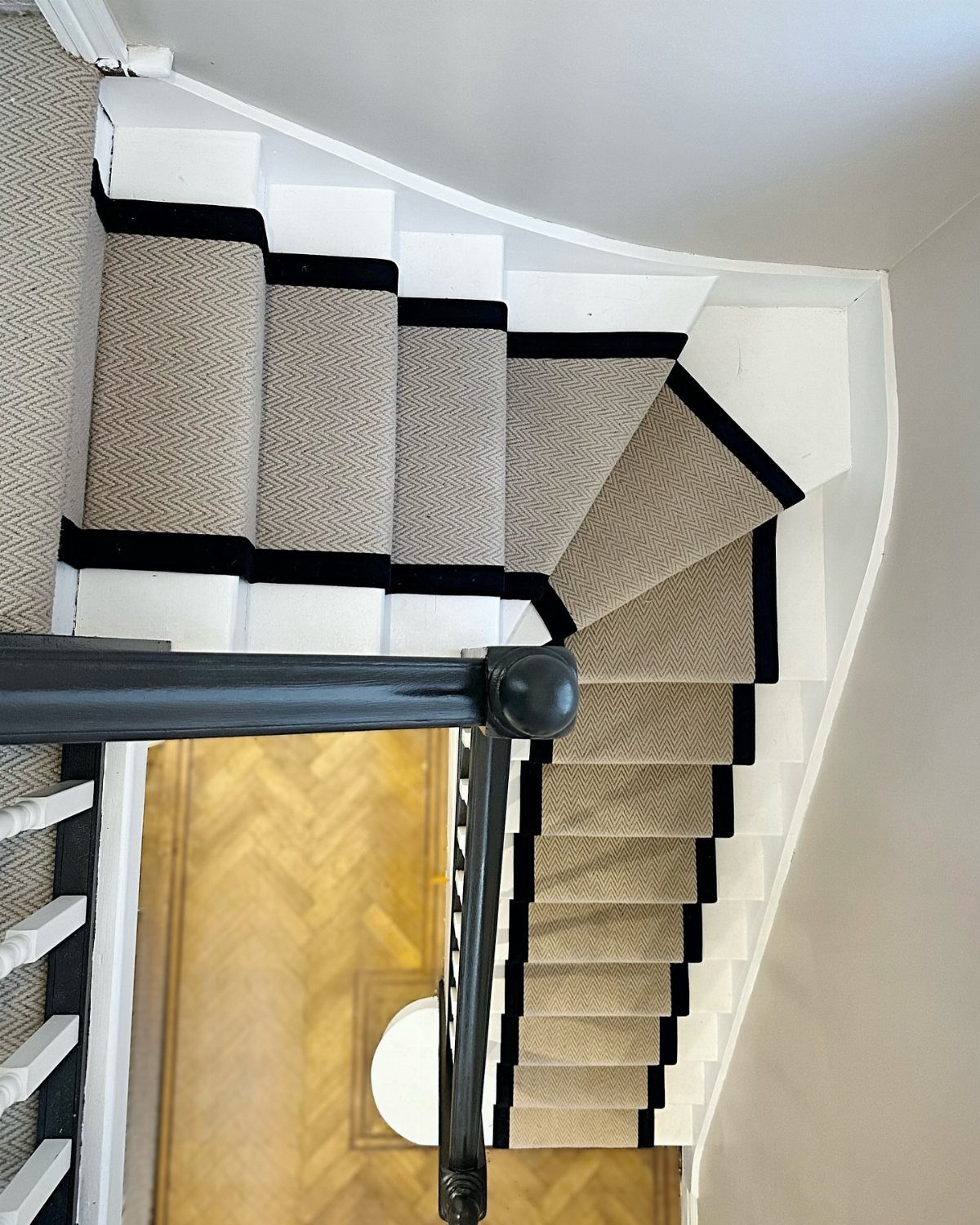
Beige herringbone with black borders brings pattern and definition to a staircase without competing with busy hallway floors. The black edge creates separation between the runner and the treads, which keeps the neutral palette from blending into itself.
The stripe acts as a neutral bridge when the hardwood around it already has movement or pattern. The stair runner reads as its own element instead of trying to match.
The texture in the weave adds grip and hides dirt better than a flat beige carpet.
15. Bordered Stair Runner
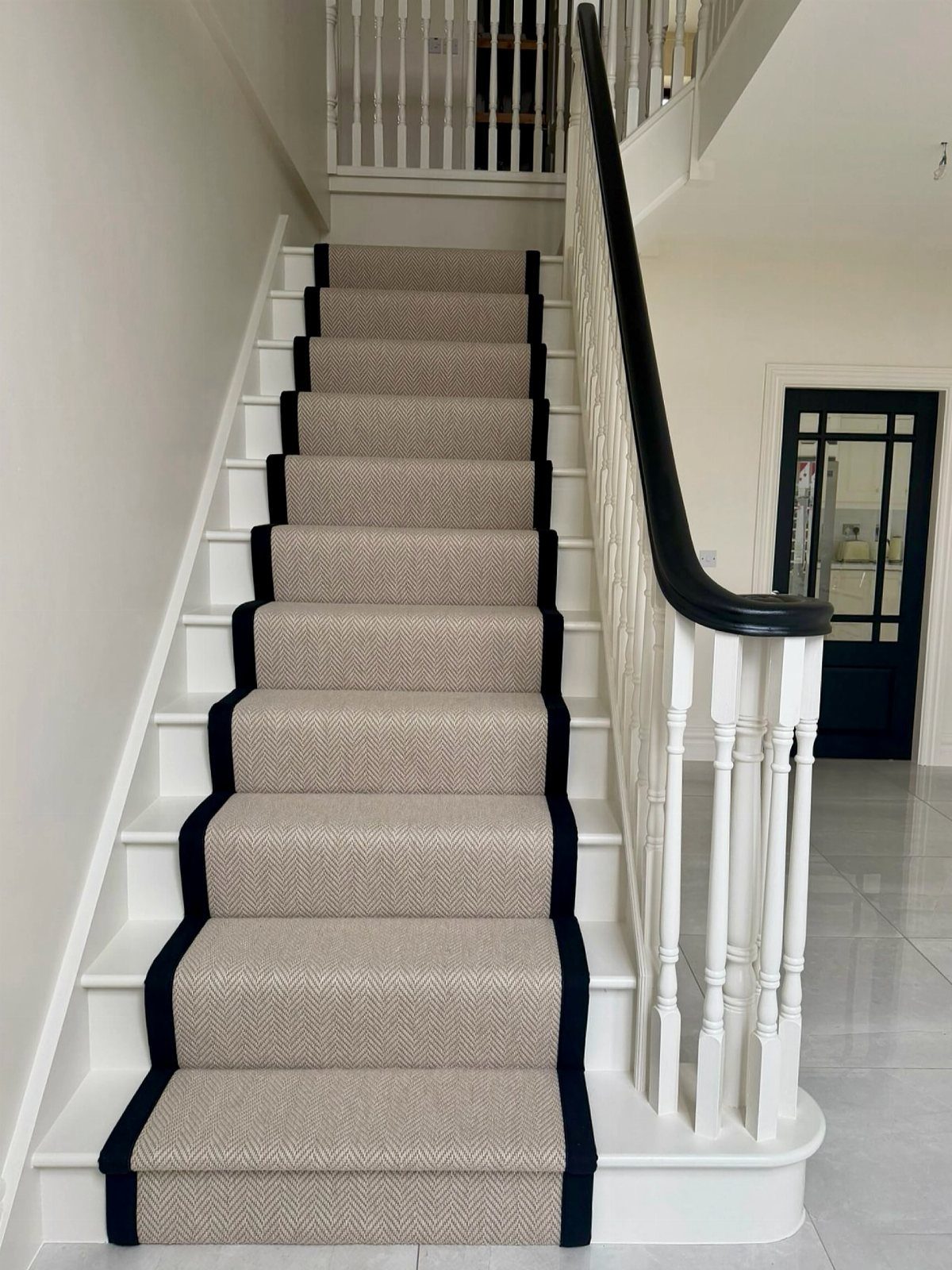
Dark borders frame a light runner and create a visual boundary that makes the staircase feel more finished. The black edge holds the runner in place visually and keeps it from disappearing against white painted stairs.
This look suits narrow staircases especially well, because the border defines the center path without adding width. Pair it with a black handrail to tie the metal and carpet together.
Herringbone or textured weaves in light tones show the border more clearly than solid flat carpet.
16. Curved Staircase Runner
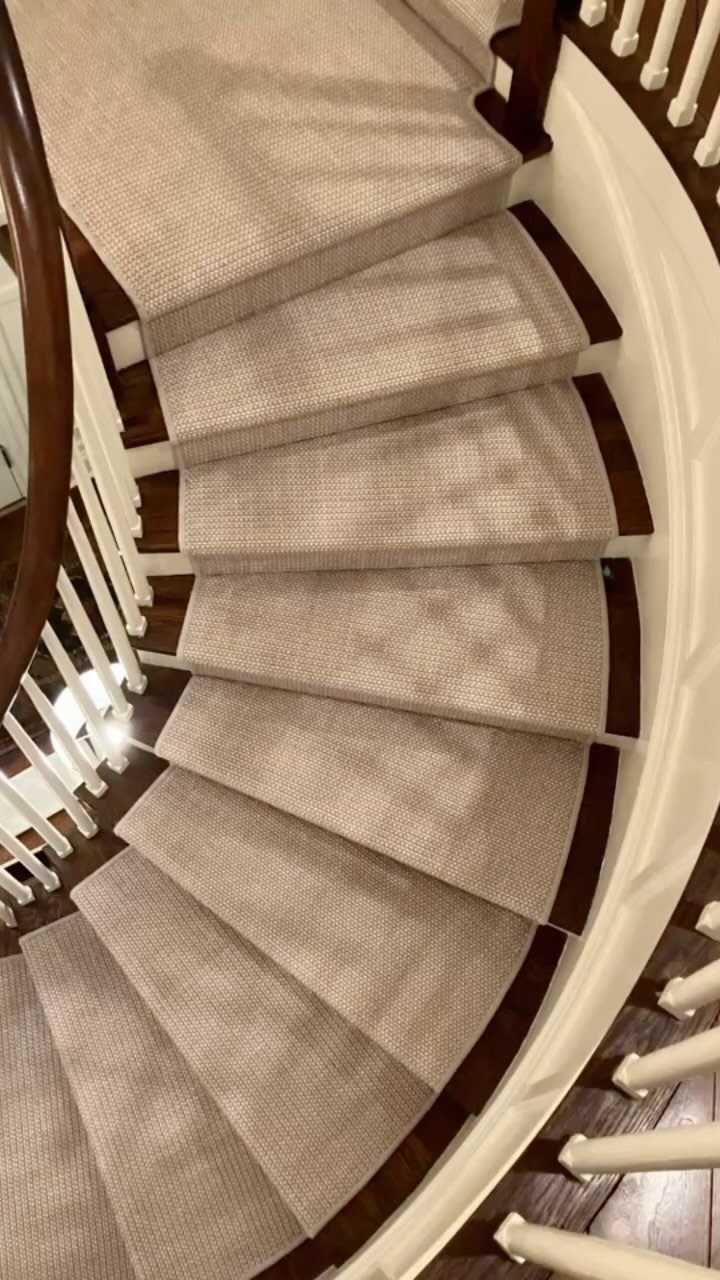
Installing carpet on a curved staircase requires cutting and fitting at each turn, which adds labor compared to a straight run. The carpet has to bend smoothly without buckling, so a textured low-pile works better than thick plush.
Beige or neutral tones hide the seams where the runner curves. A patterned carpet can work, but the pattern will shift at each turn, which some people mind.
Stair rods help hold the runner in place on curves and add a finished detail that suits the traditional look of most curved stairs.
17. Blue Patterned Runner
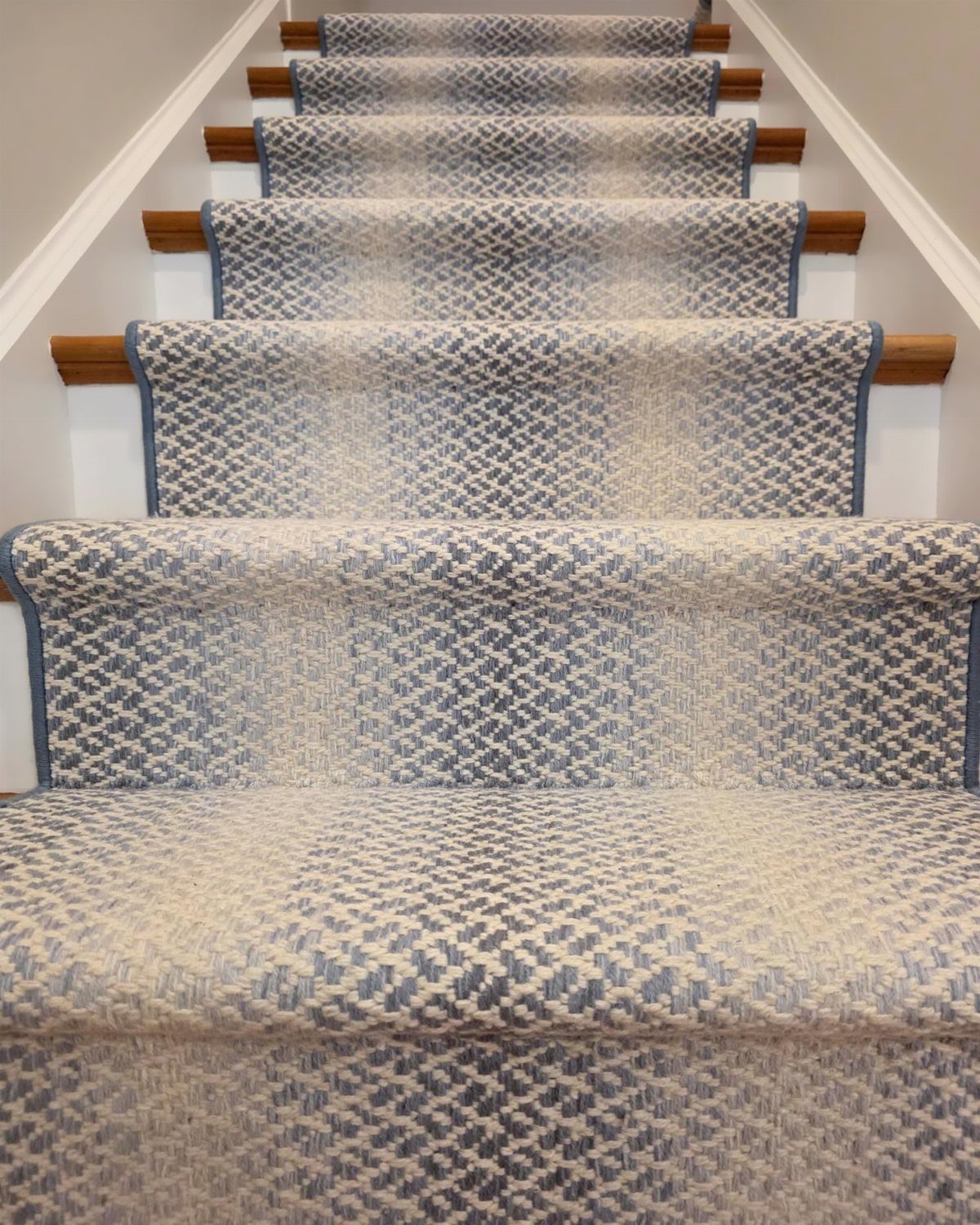
An intricate blue and white pattern brings detail to wooden stairs and works best in homes where the staircase sits in a visible entry or hallway.
The pattern density makes the runner a focal point, so keep the walls and surrounding trim simple.
Blue pairs well with natural wood and white risers. Too much dark wood around a busy pattern can make the space feel closed in.
18. Diamond Pattern Runner
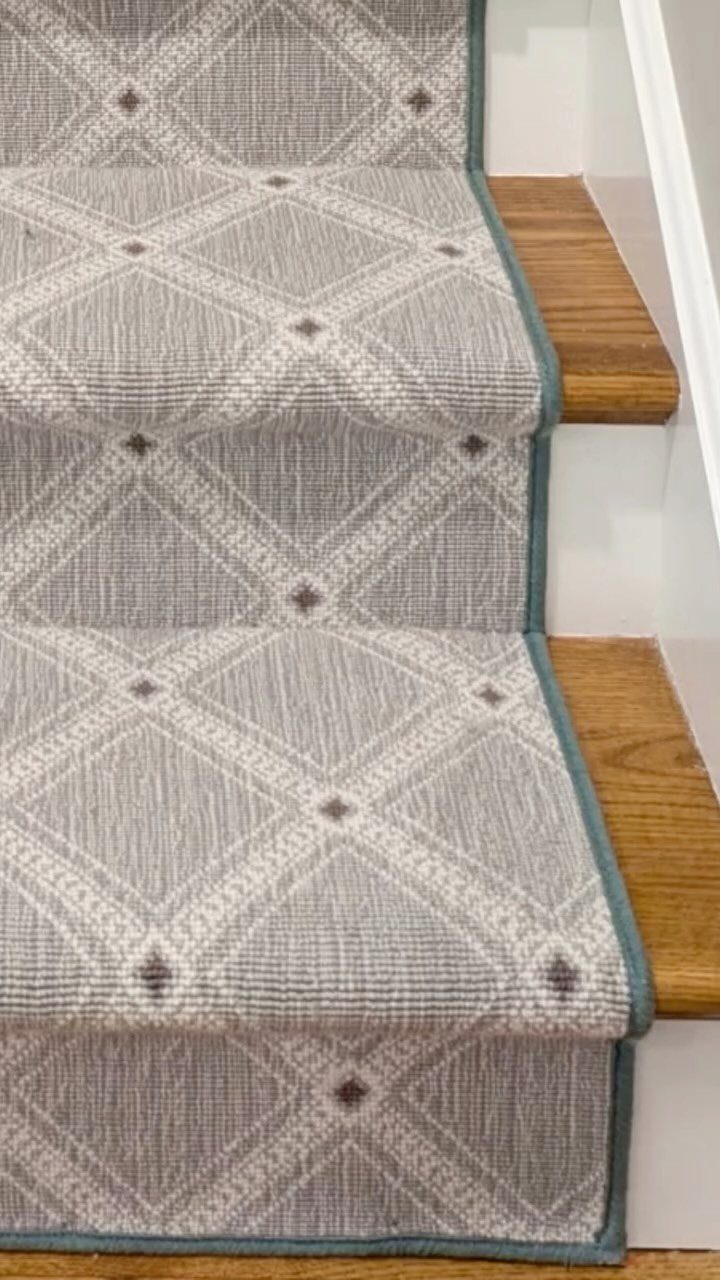
A geometric diamond pattern in gray and white gives stairs a modern look, and the thin teal edging adds a pop of color without overwhelming the design.
The repeating shapes create movement up the staircase, which makes a narrow flight feel less cramped.
This works well on wooden stairs where you want some exposed wood on the sides. The pattern holds up to wear better than a solid light color, and the gray hides dirt between cleanings.
The teal border is optional. If it feels too bold for your space, a neutral or no border keeps the focus on the diamond pattern.
19. Animal Print Runner
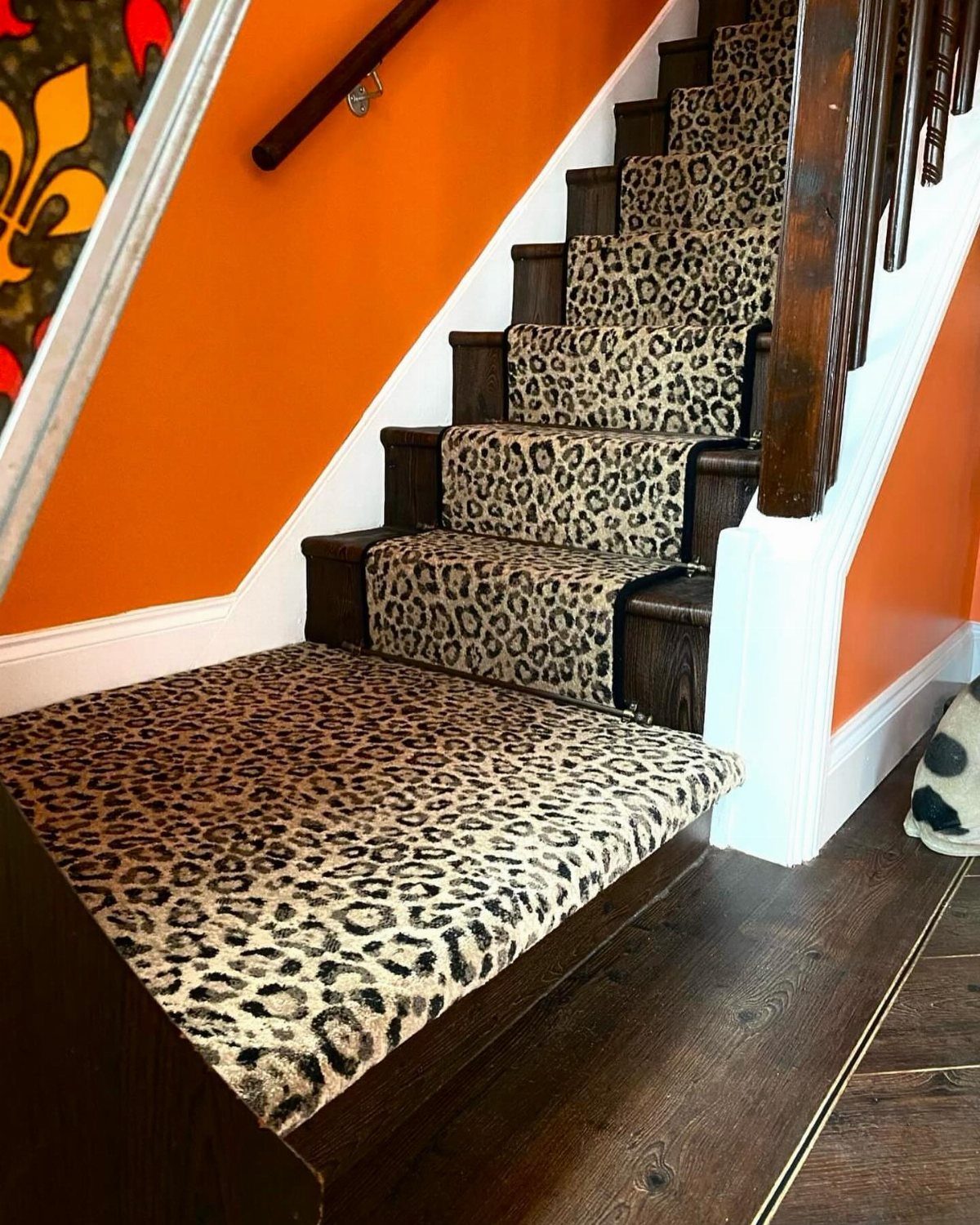
Leopard print on stairs makes the staircase a statement piece, and it works best in homes where you already lean into color or pattern elsewhere.
The print reads bold no matter the surrounding palette, so if your walls and floors are neutral, this might be the only pattern the room needs.
The look pairs well with warm wall colors and dark wood. Against cool grays or stark white, leopard can feel out of place.
Animal prints show dirt less than solid light carpet, but the busy pattern demands commitment. If you’re not sure, test it in a smaller space first.
20. Spiral Staircase Map Carpet
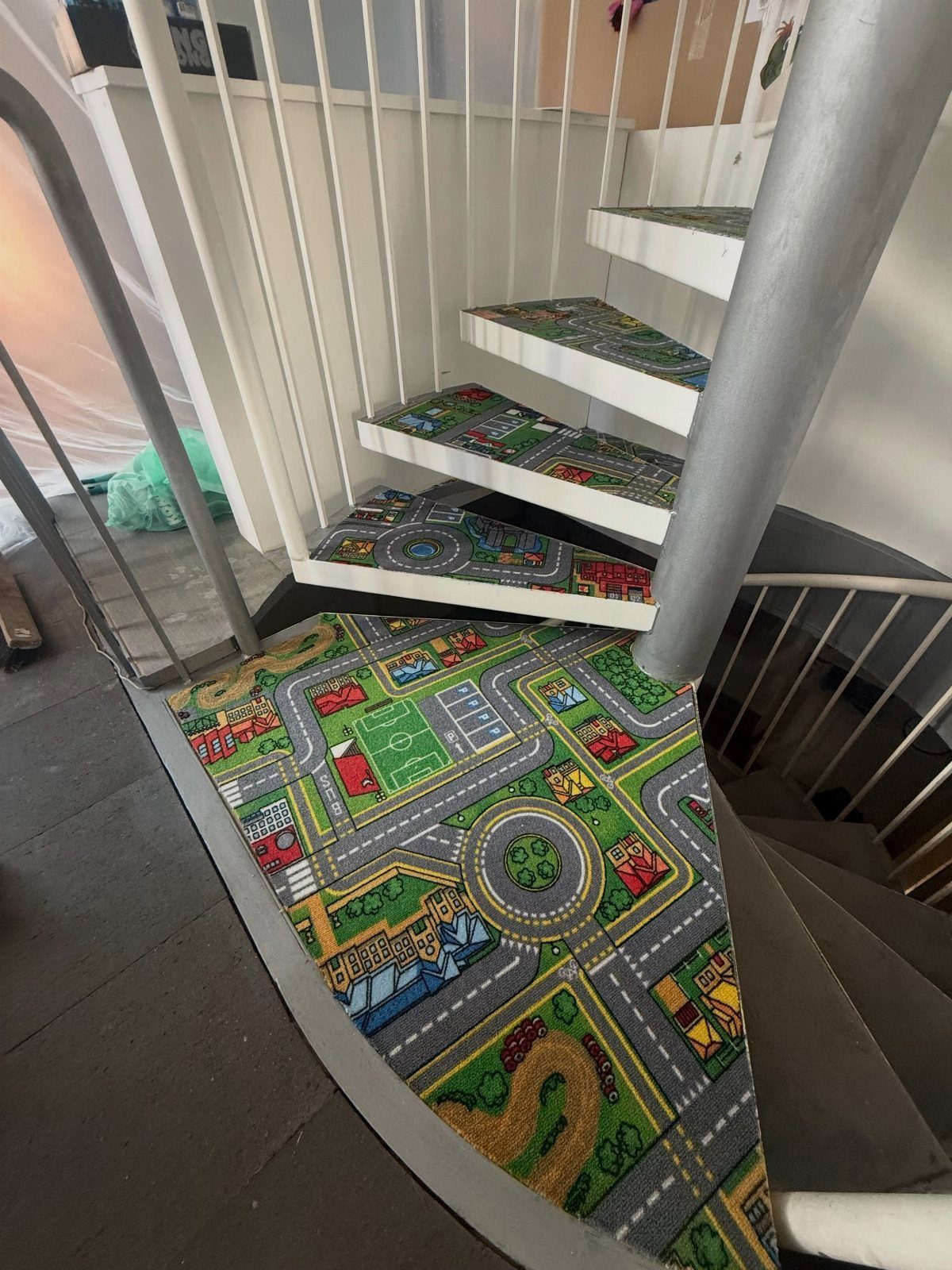
Custom-printed map carpet turns each tread into its own graphic, and on a spiral staircase, the effect is playful rather than practical.
The color and detail make this a focal point, so it suits a home where the staircase is visible and you want it to feel personal.
The installation requires cutting each tread separately to fit the curve, which adds labor and waste. Map designs work best when printed on durable nylon or polyester that can handle the cutting without fraying.
This approach is about character, not subtlety.
21. Plush Grey Fitted Carpet

Wall-to-wall plush carpet softens the staircase and the landing in one continuous surface, and grey keeps it neutral enough to work in most homes.
The deep pile feels comfortable underfoot and dampens sound, which matters in a two-story house with bedrooms upstairs.
Plush shows footprints and vacuum lines more than a textured weave, so it needs regular grooming to look fresh. Grey hides dirt better than cream but still shows lint and pet hair.
Full coverage simplifies the install compared to a runner, and it works well when you want the staircase to blend into the upstairs hallway rather than stand out.
22. Zigzag Bordered Runner
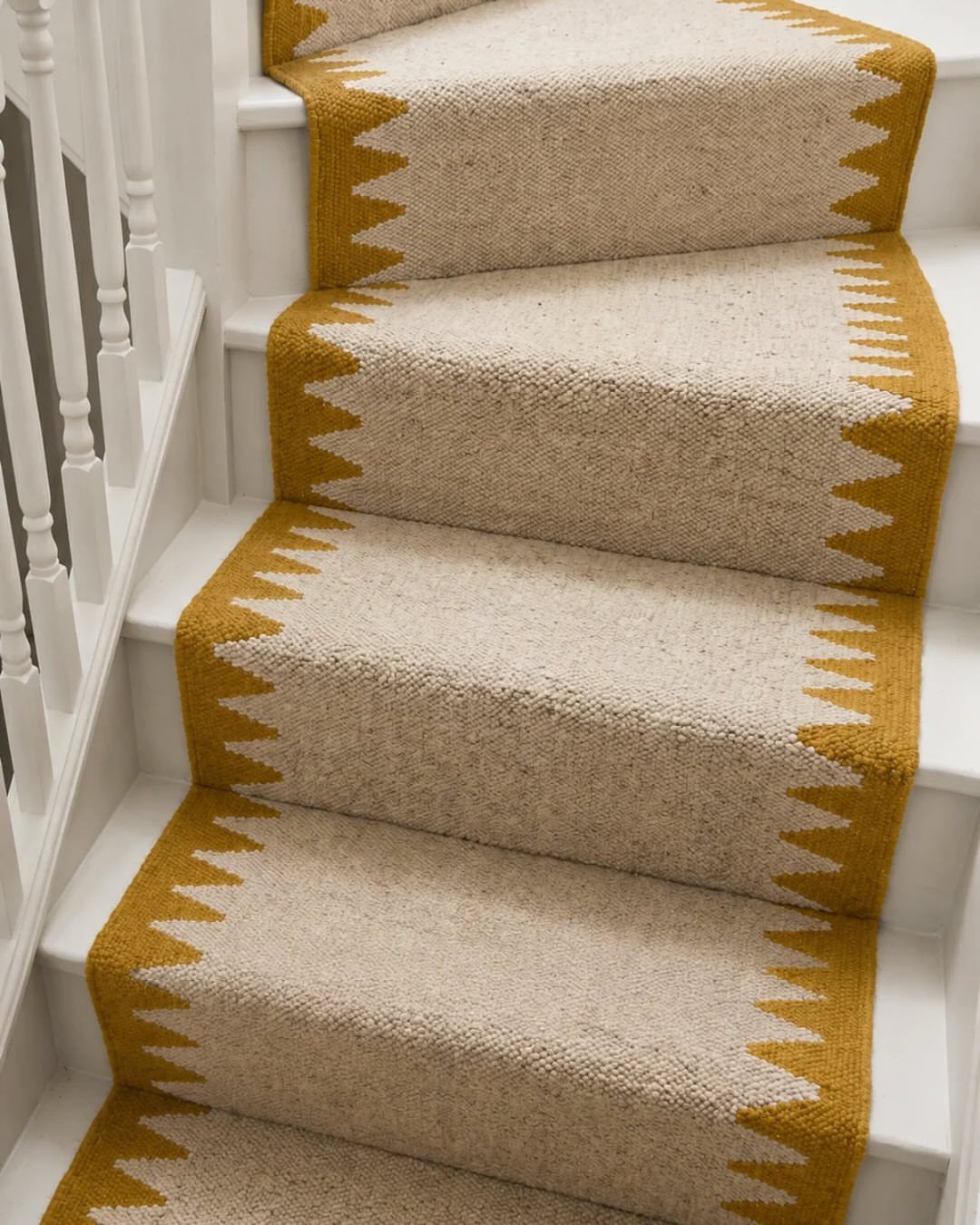
Yellow zigzag borders add a playful detail to an otherwise neutral runner, and the pattern keeps the edges defined without the formality of a straight border.
This works well on white painted stairs where you want a hit of color but don’t want to commit to a fully patterned carpet.
The zigzag reads more casual than black or red borders, so it suits a family home or a space with a relaxed feel.
The yellow will fade faster than darker border colors, especially in direct sun.
23. Novelty Animal Stair Runner
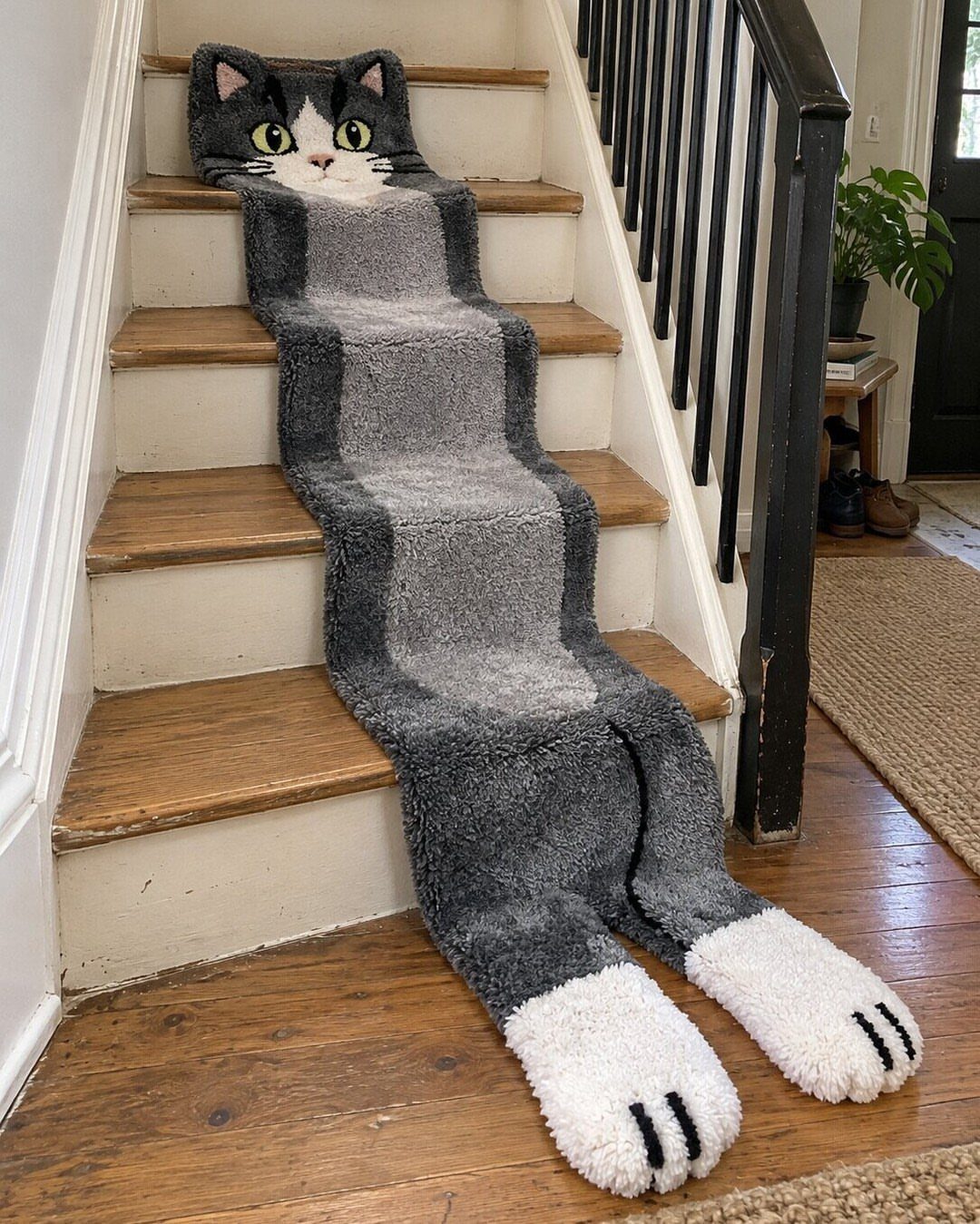
A cat-shaped runner stretched head to tail down the stairs is a novelty piece, and it works best in a home where you’re comfortable with the staircase being the joke.
The shape limits where you can place it, because the head and paws need to land on specific treads to read clearly.
This is not a practical choice for a high-traffic staircase or a formal entry. The seams and shape make it harder to clean than a standard runner, and the novelty will wear on you faster than the carpet wears out.
If you love it, commit fully. Halfway whimsy doesn’t work.
Carpet Benefits and Durability
Carpet on stairs cuts down on noise more than any other surface, which matters if bedrooms sit above or below the staircase. The cushioning also absorbs impact, so footsteps sound softer and the space feels quieter overall.
Carpet’s softer, quieter surface makes a difference in homes with kids, older adults, or pets who move quickly up and down. The texture grips better than a bare surface.
Carpet also adds a layer of insulation, which helps retain heat in colder months. That can lower heating costs over time, particularly in homes where the staircase connects floors with different temperatures.
For durability, wool blends hold up well in high-traffic areas and resist wear better than most synthetics. Sisal and jute add a tactile element but both show dirt faster and take deliberate cleaning.
Frequently Asked Questions
Should I keep carpet on stairs?
Carpet reduces noise, adds grip to prevent slipping, and makes stairs feel warmer underfoot. Carpet makes the most difference in those situations: households with young children, anyone with mobility concerns, or upstairs bedrooms where every footfall travels.
What is the most affordable way to cover stairs?
Installing a runner yourself with tack strips or double-sided tape costs far less than professional work, and polypropylene or a cut-down remnant keeps the price even lower.
Leaving wood exposed on the sides cuts the amount of carpet you need compared to full coverage.
What are some creative carpet designs for staircases?
Striped runners pull the eye upward and make narrow stairs feel less closed in, while tartan brings pattern density that ties together multiple finishes.
Herringbone adds texture without formality, and geometric diamonds create movement on a modern staircase. Green or blue runners bring color without overwhelming the space.
How can I install a stair runner without breaking the bank?
Measure the staircase first, pick a durable synthetic like polypropylene, and install it yourself using tack strips or carpet adhesive.
A flatweave or low-pile runner costs less and cleans easier than plush carpet. Extending the same runner onto the landing keeps the look cohesive without adding a second product.
What materials are best for stair carpets?
Wool or wool-blend gives durability and feels softer underfoot, which works well for tartan or herringbone runners. Sisal holds up to traffic but feels rougher than wool and needs tighter weave for easier cleaning.
Is it expensive to put hardwood on stairs?
Hiring the work typically costs $3,000 to $5,500, depending on staircase length, whether you have a landing, and the type of balusters and railings.
A longer staircase or open railings add to the price. A DIY install brings the cost down to around $2,000 in materials for treads, risers, adhesive, and finishing supplies.