

A modern puja unit can run anywhere from a wall-mounted shelf with LED backlighting to a full temple-style structure with carved stone and tiered roofs.
The choice comes down to how much floor space you’re willing to give up and whether the prayer area needs to be closed off or stay visible all the time.
Glass doors and jaali panels let you mark the boundary without losing light, while a unit built under the staircase or integrated into a TV wall uses space that would otherwise sit empty.
One setup placed in a covered balcony needs weatherproof finishes and shutter doors that close completely to protect idols from rain and dust between prayer times.
1. Marble Pooja Unit

Marble gives a pooja unit a polished, elegant surface that holds up to daily use without showing wear the way painted wood can. The material suits a formal prayer space, especially when the rest of the room leans minimal.
White marble with gold accents reads traditional but still fits a modern interior if you keep the surrounding walls and furniture simple. The floral carving adds detail without needing separate decor.
If you’re working with a smaller budget, a marble-effect laminate on MDF gives a similar look at a fraction of the cost, though the weight and cool surface of real stone are hard to replicate.

Modern Wall-Mounted Shelf: This 2 Pack vertical 7 tier wall shelves features a sleek and elegant appearance that enhances your wall decor. The tiered step-style layout adds practical storage while maintaining a refined and stylish look. The lack wall shelf unit offers functional display space for living rooms, bathrooms, or home offices.
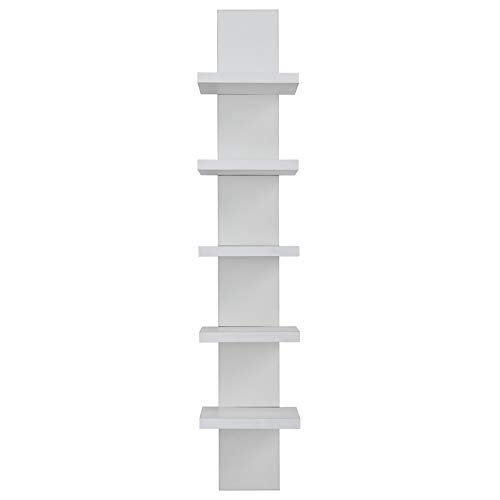
🌟 VERSATILE WOODEN WALL SHELF - Five mounted floating shelves can be used in the kitchen as an organizer for storage or are ideal for displaying books and souvenirs in a bedroom or living room
2. Wooden Mandirs

Wood brings warmth to a mandir and works in almost any room without feeling out of place. A wall-mounted design like this one keeps the floor clear, which matters in a small apartment where every bit of space counts.
The backlit Om symbol adds a focal point without needing separate lighting fixtures. If your unit doesn’t come with that feature, you can add LED strips behind a carved or cut-out symbol and run the wire through the back panel.
Teak and sheesham hold up best over time, but engineered wood with a veneer finish costs less and still looks solid if the joinery is tight.

Hand Carved Wooden Alter Meditation Prayer Table:a small small home meditation altar,puja table or Asian coffee and tea table.This wooden coffee table/floor table is perfectly sized for holding candles, incense, plant, a statue, incense bowl, and other shrine items. Dimensions: 52cm(L) x 25cm (W) x 28cm (H)
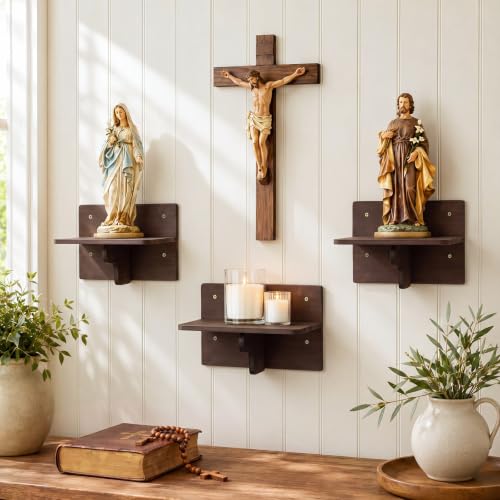
Christian Prayer Shelf Set: this 3 pack wall shrine for Christian creates a coordinated spiritual display in home; A Christian wall shelf set designed for mother mary statue jesus figurines, crosses, and candles, it is an ideal addition to a prayer room decor or home altar setup

Chinese Style Ancient Charm Cabinet:Buddha Altar Shelf Buddhist Niche This Buddha altar shelf features a timeless classic oriental design, blending traditional craftsmanship with functional elegance. The intricate detailing and natural wood finish create a serene, culturally rich aesthetic, for displaying Buddha statues, incense, or spiritual artifacts. Ideal for homes, meditation spaces, or temples seeking an authentic touch
3. Glass Pooja Room
Glass walls or doors around a pooja space let light through while keeping the area visually separate from the rest of the room.
This setup works well when the mandir sits in a shared area like a living room or hallway and you want some boundary without closing it off completely.
A wooden base gives the structure weight, and glass panels above keep the room from feeling divided. If you’re adding glass panels yourself, tempered glass is the safer choice, especially if the unit is near a high-traffic area.
Floral garlands and draped fabric soften the look, but the glass keeps the space defined even when the decor changes.

A graceful pooja mandir for home and office will definitely uplift the positive vibrations

Authentic Traditional Diya Design with Warm Glow: Each of the 10 LED diyas is sculpted to resemble a traditional Indian clay oil lamp, complete with a rich brown/red-brown shell and delicate gold ethnic patterns. When lit, the warm yellow LED flame flickers softly, perfectly mimicking the gentle glow of a real diya flame without the smoke, dripping wax or fire risk. Create an authentic Festival of Lights atmosphere in your home, pooja room, mandir, or outdoor patio this Diwali.

Spiritual Ambiance Enhancement: A beautifully crafted pooja mandir for home or office that instantly enhances the positive energy and spiritual ambiance of your space. Its modern wall-mounted design combined with an elegant teak wood finish makes it a timeless centerpiece that everyone will admire
4. Glass-Door Mandir
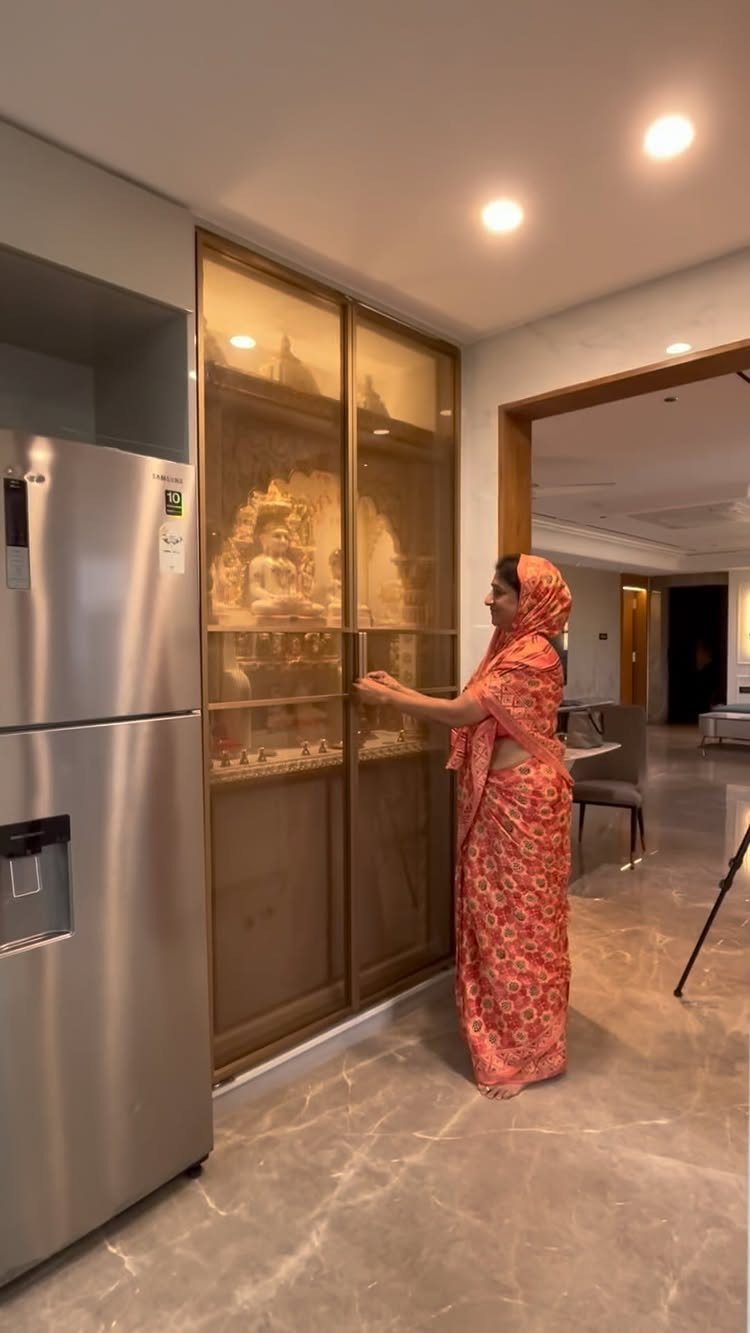
A cabinet-style mandir with glass doors keeps dust off the idols while leaving them visible from across the room. This format suits a compact space where a full alcove or built-in isn’t an option.
The gold frame here adds formality, but a simpler wood or metal frame works just as well if the rest of the room is minimal.
Inside, you can add a small LED strip along the top edge for soft lighting without drilling into the wall.
The doors make it easy to close the space when it’s not in use, which some families prefer.

HAND CARVED WOODEN ALTER MEDITATION PRAYER TABLE - Tribe Azure Fair Trade Product. A perfect union of beauty and sustainability

HAND CARVED WOODEN ALTER MEDITATION PRAYER TABLE - Tribe Azure Fair Trade Product. A perfect union of beauty and sustainability. Hand Carved deep Floral Accents.

HAND CARVED WOODEN ALTER MEDITATION PRAYER TABLE - Tribe Azure Fair Trade Product. A perfect union of beauty and sustainability. USPTO REGISTERED TRADEMARKED BRAND. No Assembly Required.
5. Pooja Partition with Jaali Panels

Jaali panels with a cut-out pattern let you mark off a prayer area without building a solid wall. A lotus motif gives the partition a traditional feel, and frosted glass behind the cutouts adds privacy without blocking light completely.
This approach works best when you have an alcove or corner to define but don’t want the space to feel closed in.
The partition can be freestanding or fixed to the floor and ceiling, depending on how permanent you need it.
Wood with a medium or dark stain holds up well and doesn’t show dust as quickly as painted finishes. If you’re ordering custom jaali work, get the panel thickness right for the span; too thin and it flexes.

VERSATILE FLOATING SHELVES: Make full use of your empty walls to create storage space for decorations and household items. Mount the wall shelves above a desk, fireplace, entryway, vanity, or between windows to add functionality.

Lightweight And Durable: Made of high-strength aluminum alloy, it is both light and stable

Package Includes: 1 Wooden Home / Office Temple Color: Brown Finish: Glossy Finish Item Dimensions: Length- 22 cm x Width- 15 cm x Height- 15 cm Origin - Made in India
6. Mandir with Glass Divider

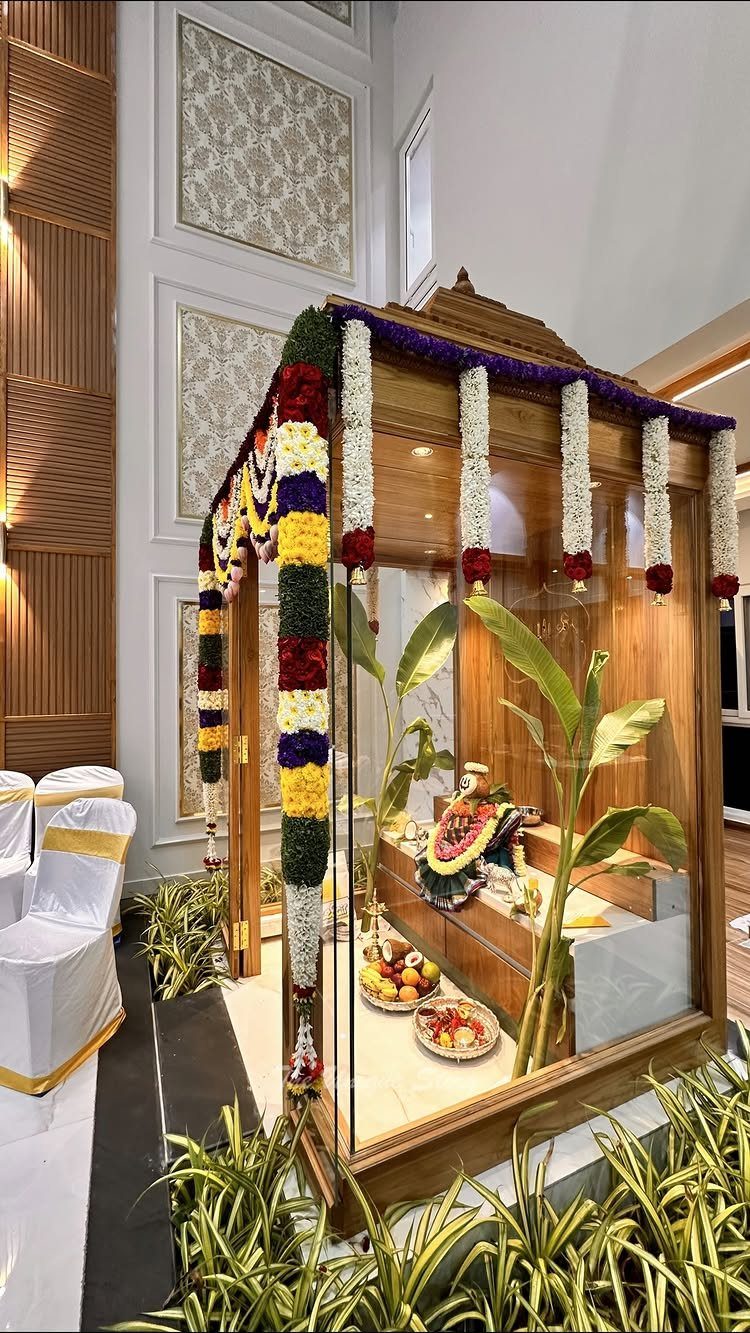
A freestanding glass divider creates a boundary around a mandir in an open-plan room without cutting off sightlines or natural light.
The wooden frame and tiered roof here give the structure a traditional shape, while the glass walls keep it from feeling heavy.
This setup suits a larger room where you want the prayer area to feel separate but still part of the main space.
The glass panels are usually tempered and set into grooves in the wood, so there’s no need for external framing.
If you’re placing this near a dining area, keep at least 3 feet of clearance on all sides so people can move around it comfortably.

COMPACT WALL-MOUNTED DESIGN: This small wooden Pooja Mandir mounts neatly on the wall, saving floor space while creating a dedicated prayer corner at home, office, or shop.

Handmade in India from durable and strong mango wood that is likely to last for a lifetime.

Elegant Wall-Mounted Zen Altar Shelf: Transform any wall into a serene spiritual corner. This exquisite Buddha Altar Shelf is semi-handcrafted from premium camphor wood, featuring a minimalist New Chinese Style design. It creates a dedicated and tranquil space for displaying your Buddha statue, incense, candles, and sacred artifacts, perfect for meditation, prayer, or mindful reflection
7. Temple-Style Mandir
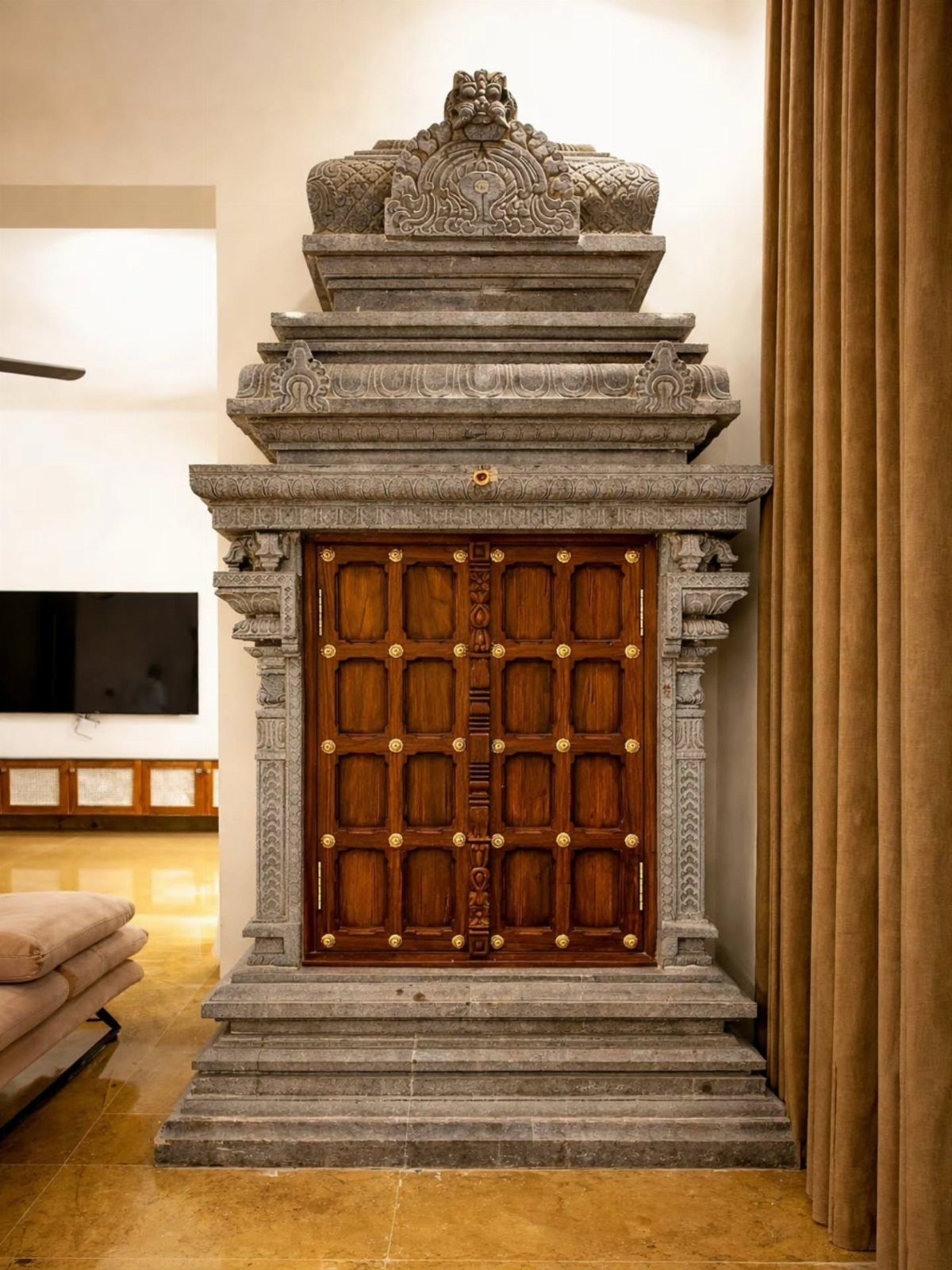
A mandir styled after temple architecture brings ornate detail and a formal presence to a prayer space.
The tiered stone roof and carved wooden doors here give the unit a traditional weight that works best when you have the floor space and ceiling height to support it.
This format suits a dedicated corner or alcove where the unit can be a focal point. If you’re placing it in a shared room, keep the surrounding furniture minimal so the mandir doesn’t compete for attention.
The stone construction adds durability, though the material is heavy and usually requires professional installation.

USB Powered – Use Anywhere, No Batteries Needed: Simply plug into any USB port – wall adapter, power bank, laptop, desktop, car USB or even a smartphone charger. The 4.8 ft lead wire gives you extra reach from the power source to your decor spot. At 11.3 ft total length with 10 warm-glow diyas, this string covers windowsills, staircases, entryways, mantels and pooja shelves without needing AA batteries or a nearby wall outlet. Perfect for renters, dorm rooms and outdoor patio use with a power bank.

A graceful pooja mandir for home or office will definitely uplift the positive vibrations

Exquisite Diwali OM Shadow Diya Set: Our Golden Shadow Diyas are made of metal, includes 2PCS OM shape shadow diyas, and two white LED T-lights, adding an elegant touch to your home decor.
8. Multi-Level Mandir
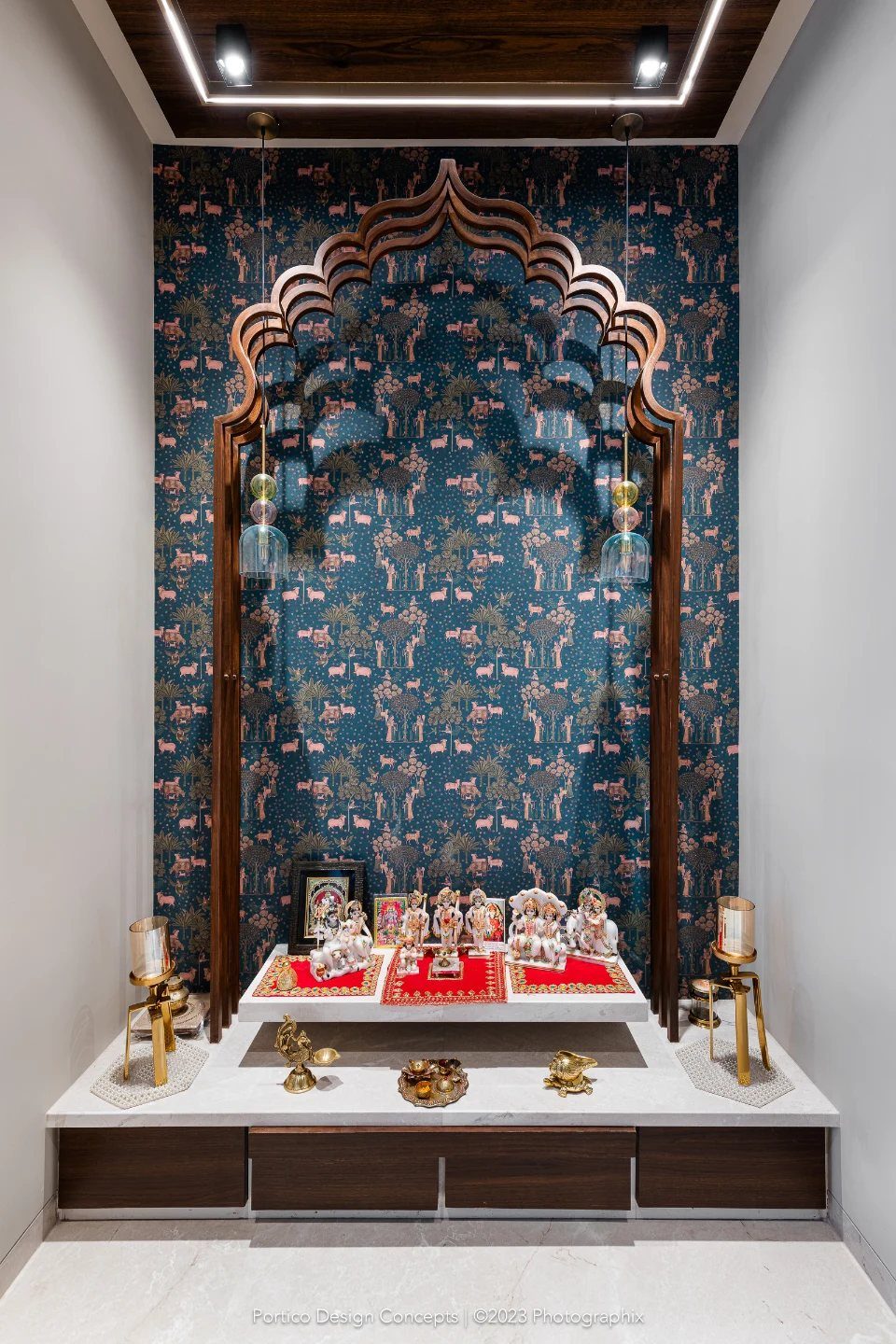
Separate tiers let you organize idols on the upper level and ritual items like lamps or incense holders below.
The carved wooden arch adds structure, and the patterned wallpaper behind gives the unit a backdrop without needing to paint or tile the wall.
A white marble base keeps the look clean and reflects light, which helps in a smaller room. If you’re building this yourself, plan the shelf heights around the tallest idol so nothing feels cramped.
The vertical arrangement uses less floor space than a single wide shelf, which matters in a compact apartment.

❤ SIZE : Approximately 20" long by 14" wide by 14" tall. Rustic Antique Moroccan look | Approximate Shipping Weight: 15.00 lbs.

Premium Material: Made of eco-friendly bamboo after spray painting, it is impact-resistant, abrasion-resistant, fade-resistant, and not easy to deform or mold, to ensure your long-term use.

❤ SIZE : Approximately 20" long by 14" wide by 14" tall. Rustic Antique dark color | Approximate Shipping Weight: 15.00 lbs.
9. Pooja Unit with Desk

Attaching a desk to a pooja unit lets you use one piece of furniture for both prayer and work in a small room.
The wooden arch defines the mandir side, and the white desk surface keeps the workspace separate without needing a divider.
This setup works best when the desk doesn’t get heavy daily use; a laptop is fine, but stacks of papers or craft supplies can crowd the prayer area. Wall-mounted cabinets above add storage without taking up floor space.
If you’re combining the two, leave enough clear surface between the mandir and the desk area so each side feels distinct.

【Make Every Wall Count 】 Why let walls stay empty when they could work for you? This 7 tier wall shelf turns wasted vertical space into useful floating shelves for wall storage. Perfect for books, plants, photos, or souvenirs—it’s like giving your walls a new job, and they do it really well

BRING JOY AND PROSPERITY: Start your day with god's blessings. Decorate your wall with space-saving puja mandir. Portable design and durable wooden built makes it ideal for pooja mandir for home wall.<br>

Wall-mounted wooden pooja stand designed for home and office use, providing a dedicated and organized space for daily puja and spiritual practices.
10. Pooja Unit with Backdrop
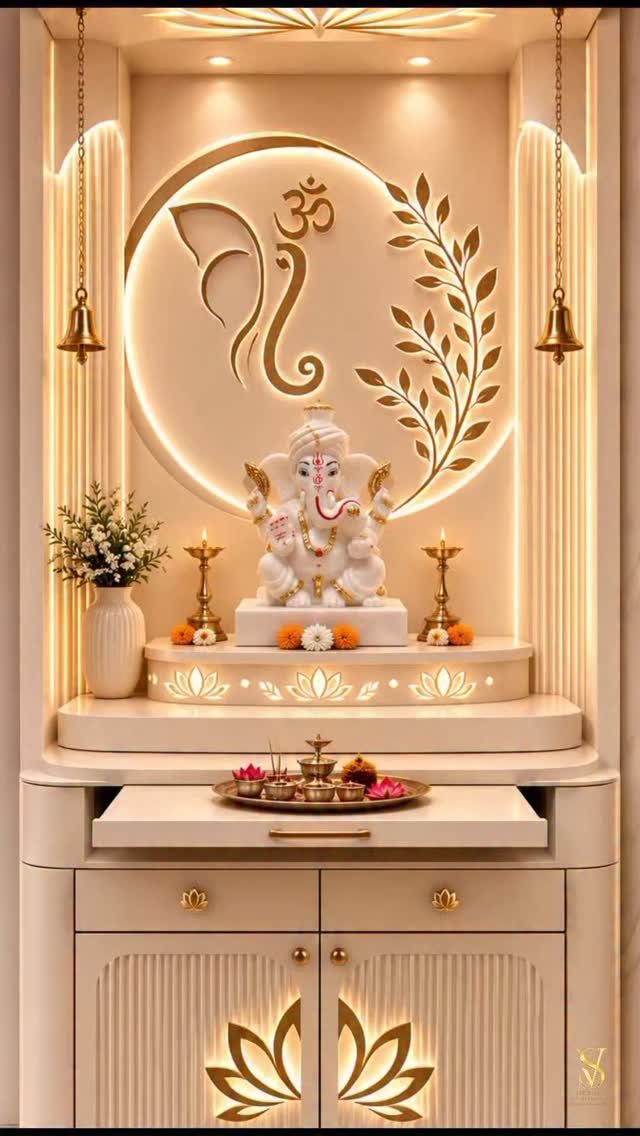
A decorative panel behind the shrine draws the eye and gives the space a finished look without needing to treat the whole wall.
The circular backlit backdrop here frames the Om symbol and adds soft lighting that works for evening prayers.
The carved lotus details on the lower cabinet tie the design together, and the cream finish keeps the unit light enough for a small room.
If you’re adding a backdrop yourself, mount it directly to the wall rather than the unit so it stays stable.
LED strips behind the panel give even lighting without exposed bulbs, and the wiring can run through a conduit in the back.

Multi-Zone Organization System: This Buddha altar features a three-tier open-plan layout with pull-out shelves and roomy drawers. The altar table and altar cabinet design can be freely combined to create flexible configurations for statues, offerings, and ritual items.
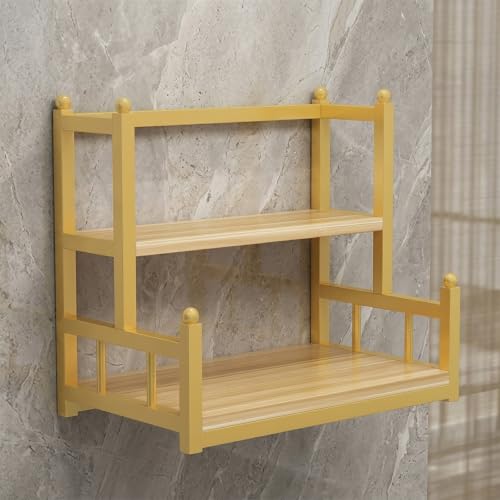
Space-Saving Wall-Mounted Design: This wall-mounted buddhist altar maximizes your living area by utilizing vertical wall space, making it an ideal choice for apartments, small rooms, or offices where floor space is limited, ensuring a dedicated spiritual corner

Traditional Wood Craftsmanship : This wall-mounted buddhist altar features detailed hand-carved lotus and cloud patterns combined with a traditional mortise and tenon structure, creating a refined wooden buddhist altar cabinet suitable for daily worship and meditation
11. Marble Backdrop
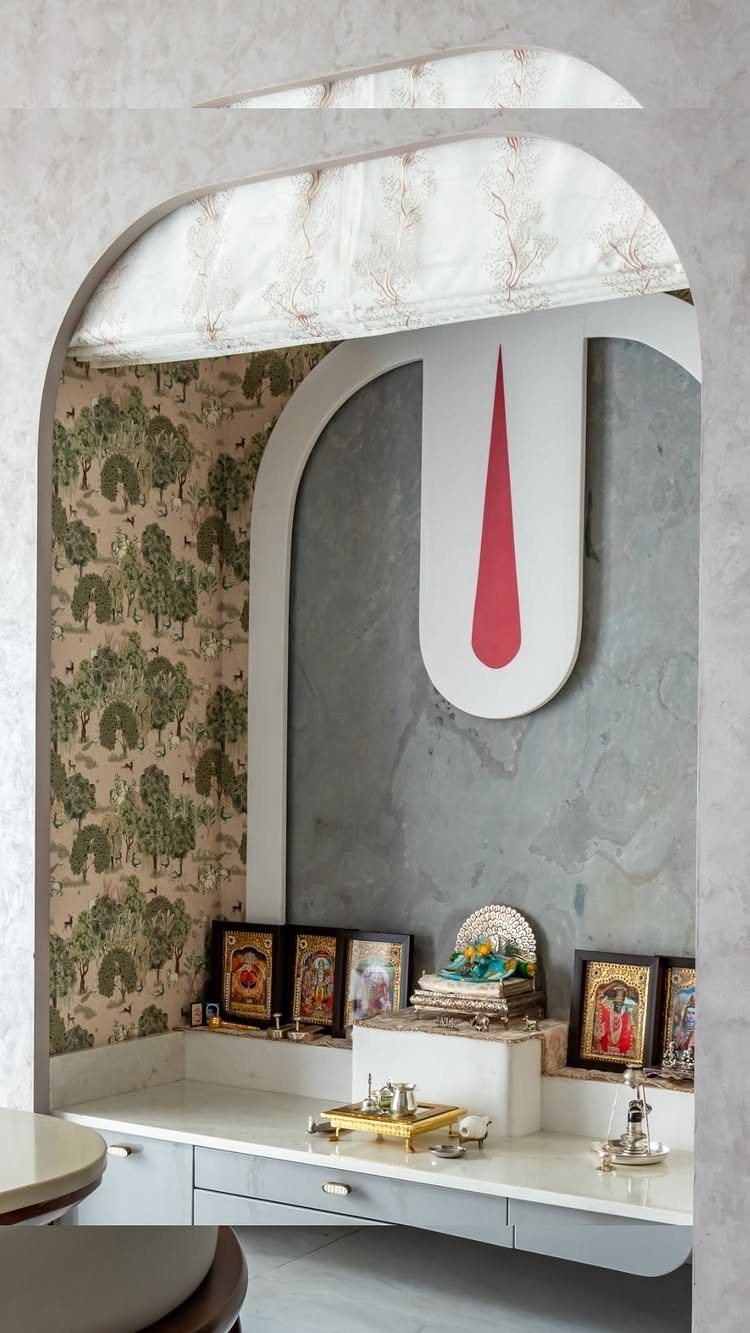
A marble panel behind the shrine gives the space a polished surface that holds up to heat from lamps and incense.
Grey marble with white veining adds texture without needing separate wall decor, and the red tilak symbol marks the focal point.
The arched white frame softens the look and keeps the unit from feeling too formal. Marble slabs are heavy, so the panel needs to be mounted securely to studs or a solid wall, not just drywall anchors.
If real marble is out of budget, a large-format porcelain tile with a marble pattern gives a similar look and weighs less.
12. Mandir with Floral Decor

Fresh flowers on top of or around a mandir add color and a natural element that changes with the season. Red, yellow, and pink blooms with greenery stand out against wood without clashing with framed images inside.
If you’re adding flowers regularly, a shallow tray or basket on top keeps water from damaging the wood. Artificial flowers work if you prefer low maintenance, but fresh ones give the space a different feel.
The floral arrangement here is large enough to be a focal point on its own, so the rest of the decor stays simple.
13. Pooja Unit with Flowers

A floral arch around the shrine softens the structure and adds color that changes with each arrangement. This setup works well for festivals or special occasions when you want the space to feel decorated without adding permanent fixtures.
The white marble base and carved panel give the unit enough detail that it doesn’t need flowers all the time, but the arch frame creates a natural spot for garlands or loose blooms.
If you’re using fresh flowers, wire or floral foam hidden behind the arch keeps stems in place.
Marigolds and roses hold up better than delicate petals in warm rooms.
14. Corner Pooja Unit
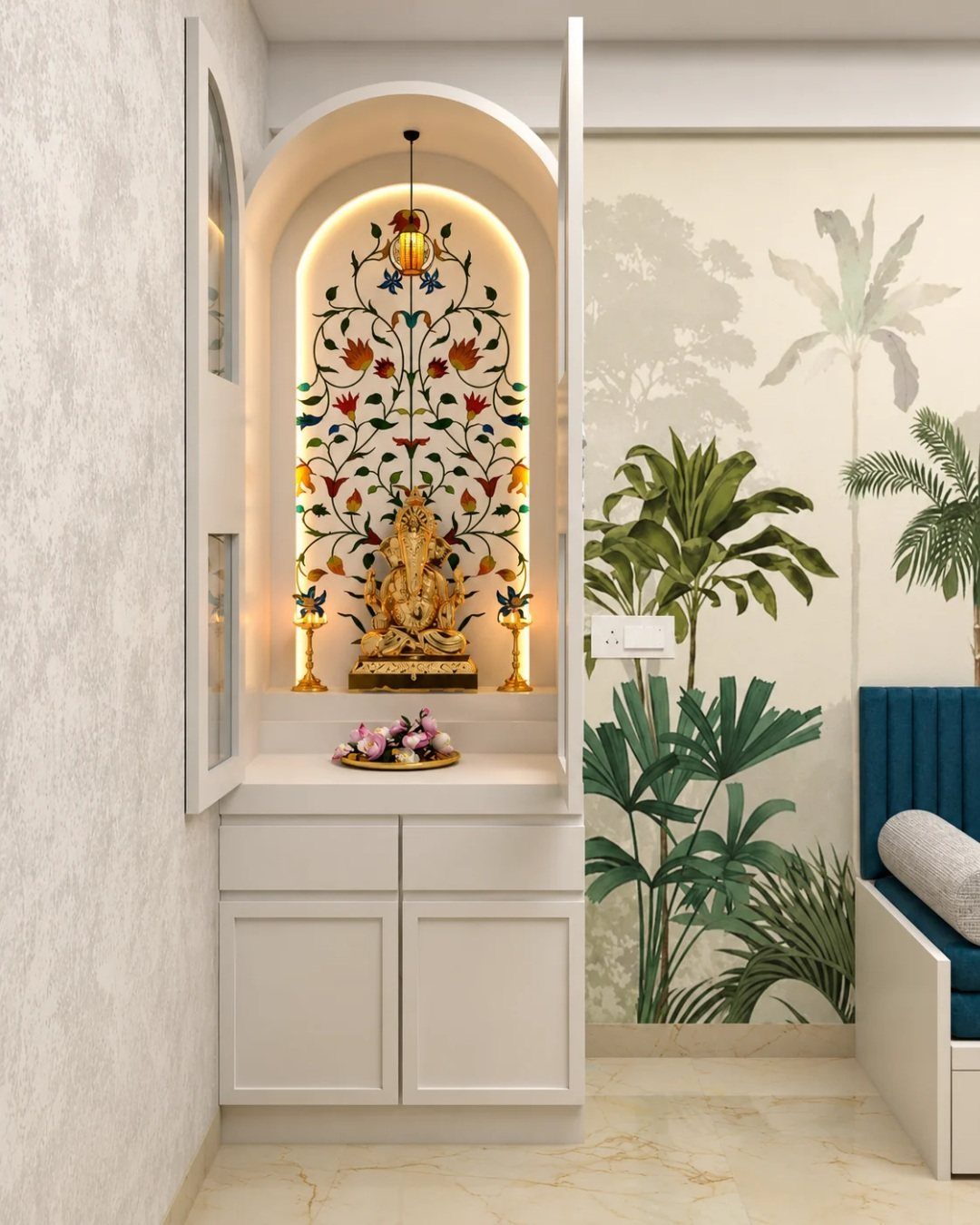
Corners often go unused, and a built-in or freestanding unit turns that space into a prayer area without taking up wall length elsewhere. An arched niche like this one gives the setup a finished look and frames the idol.
The lighting inside keeps the space visible at night, and a floral or decorative backdrop lifts the look against a plain finish.
If you’re building into a corner, measure the depth carefully so the unit doesn’t stick out past the adjacent walls.
A shallow unit fits most corners without crowding the room.
15. Pooja Storage Unit
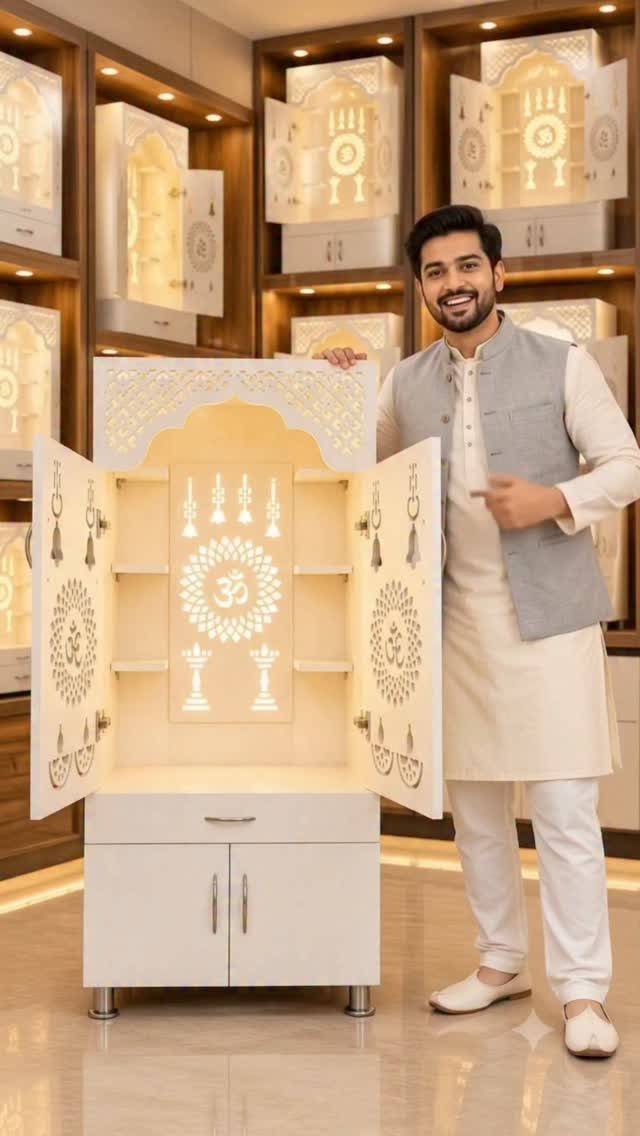
Cabinets or drawers below the shrine keep incense, lamps, and other ritual items out of sight when they’re not in use.
The ornate carving on this unit adds traditional detail, and the backlit interior gives the shrine soft lighting without needing wall fixtures.
Closed storage keeps dust off stored items, which matters if you’re in a dry climate or near a busy street.
If you’re ordering a custom unit, plan the drawer dimensions around what you’ll actually store so nothing has to be jammed in.
A pull-out drawer is easier to access than a hinged door at floor level.
16. Backlit Mandir
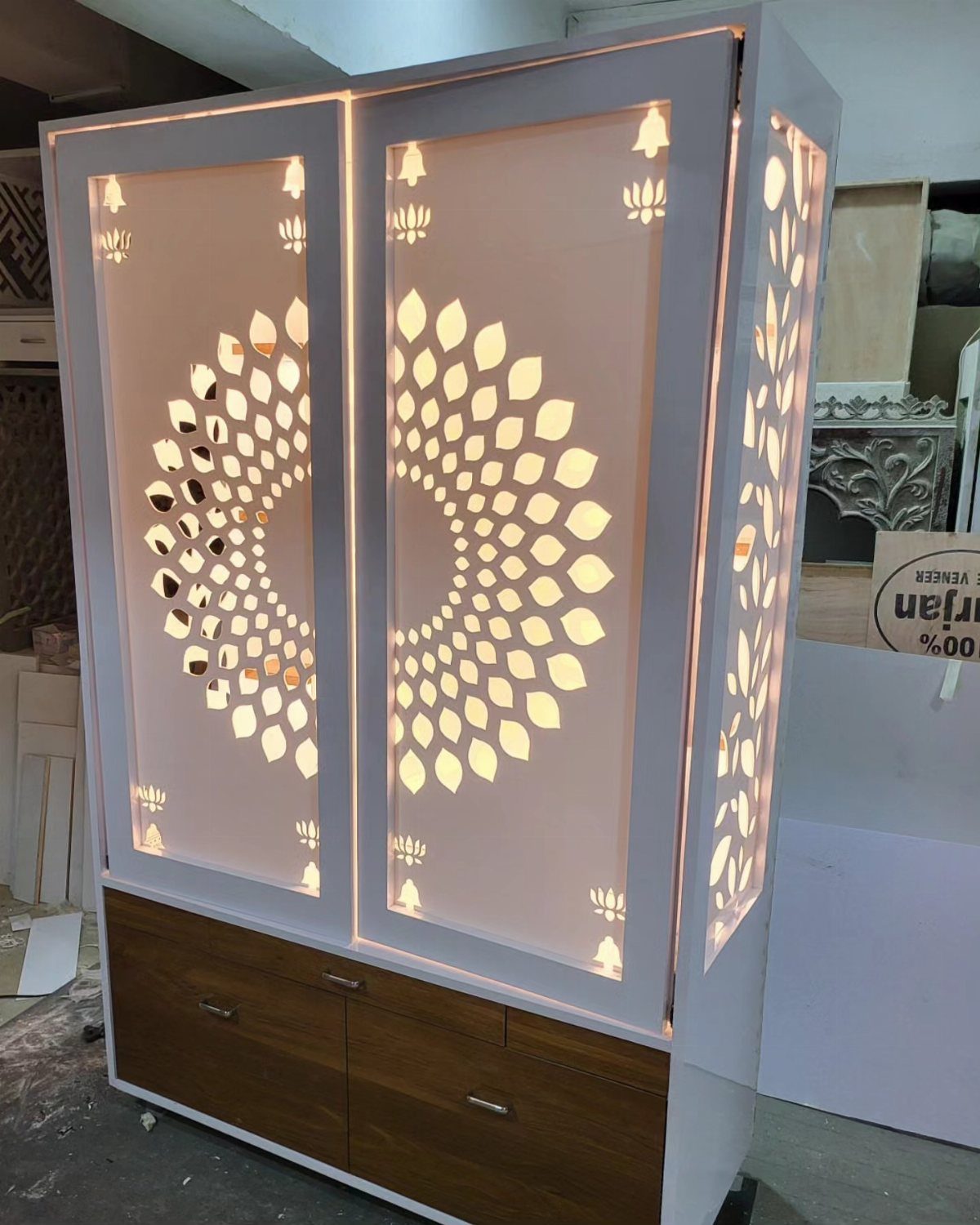
LED panels behind decorative cutouts give the shrine a warm glow that works for evening prayers without needing lamps on the shelf. The circular jaali patterns add traditional motif, and dark wood drawers below balance a lighter upper section.
The backlit panels are usually mounted to the wall behind the unit, so the wiring stays hidden.
Warm white LEDs read softer than cool white and won’t wash out the wood tones.
17. Pooja Wall Niche

Carving a niche into the wall during construction or a remodel gives the shrine a built-in look and frees up floor space.
The recessed shelf here holds the idol and ritual items, and the integrated lighting keeps the niche visible without adding fixtures that stick out.
This approach works best when you’re planning the layout early, since cutting into an existing wall means dealing with studs and electrical. The niche depth should match the tallest item you’ll place inside.
Painting the inside a different color or adding a tile backdrop gives the niche definition.
18. White Pooja Unit
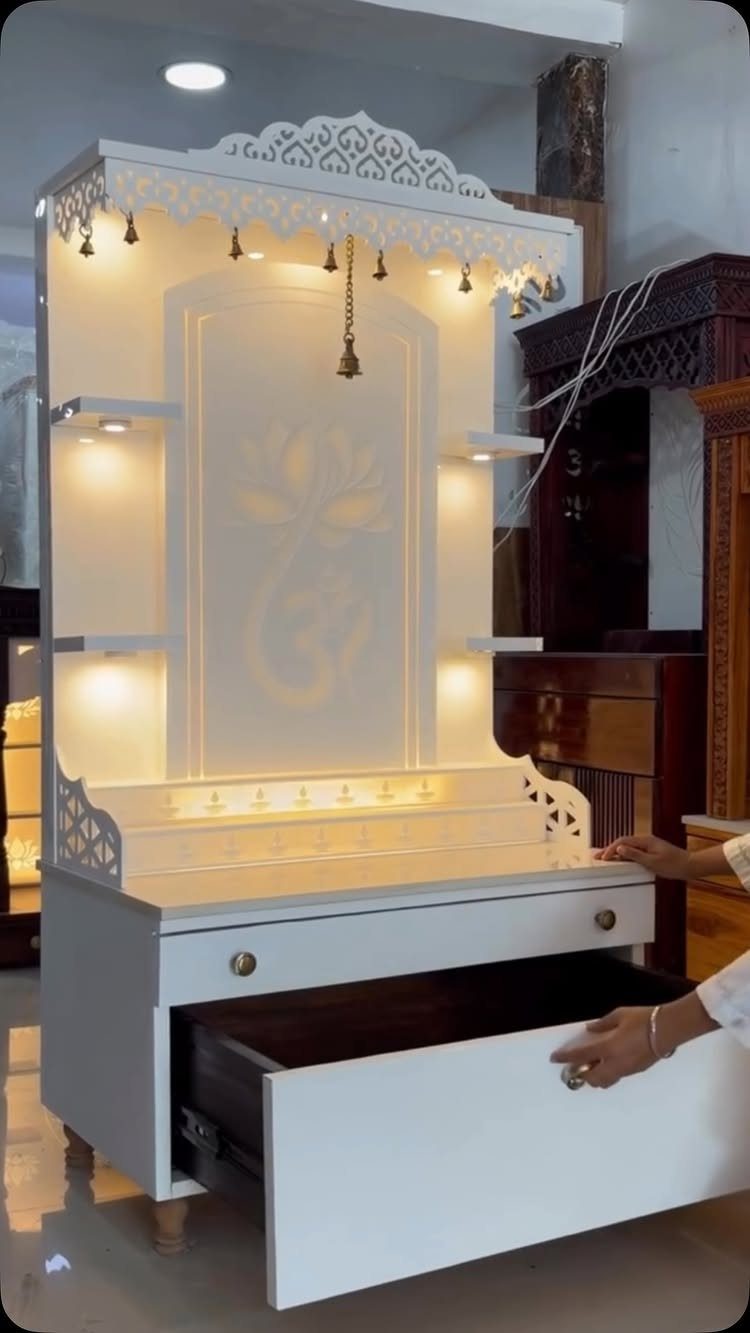
White keeps the unit light and neutral, which suits a room where you want the shrine to blend with modern furniture. The carved top and backlit Om symbol add detail without needing bright colors or heavy wood tones.
A drawer at the base gives you storage without breaking the clean lines, and the white finish shows less grain than natural wood.
If you’re painting an existing wood unit white, use a primer first so the grain doesn’t bleed through.
Matte or satin finishes hold up better than gloss in high-touch areas like drawer pulls.
19. Pooja Unit with Bells
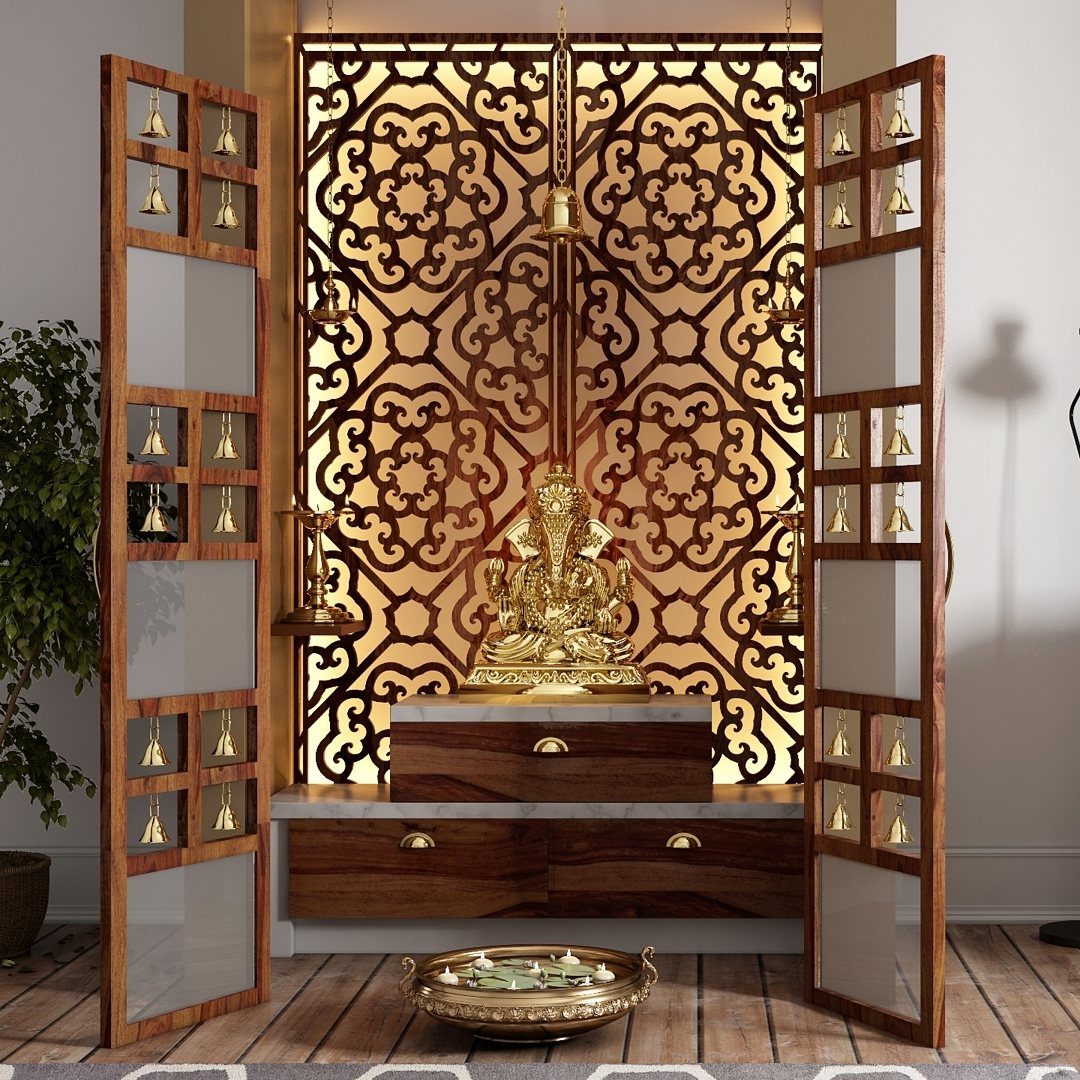
Small bells hung from the ceiling or set into the door panels give the unit a layer of sound and movement when you open the cabinet or walk past.
The carved wooden backdrop here adds traditional detail, and the gold-finished bells tie into the brass tones of the Ganesha idol.
If you’re adding bells yourself, use a wire or thin chain that can handle the weight without sagging. Bells in the doors need to be mounted securely so they don’t rattle loose over time.
The sound works best in a quiet room where it won’t compete with household noise.
20. Mandir with Brass Accents
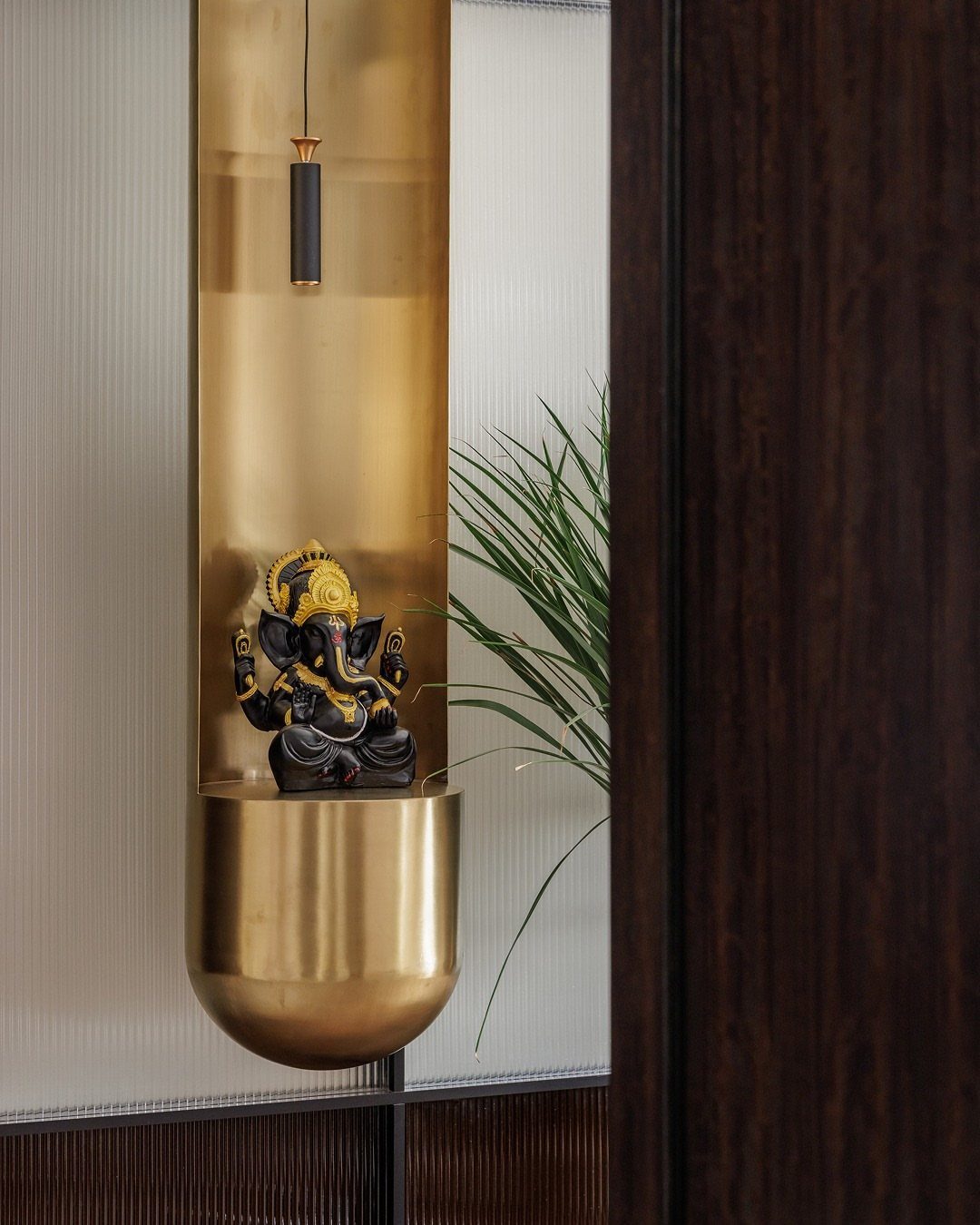
A brass or gold-finished niche mounted to the wall gives the shrine a formal frame and works in a room where floor space is tight.
The ribbed glass background here adds texture without needing tile or paint, and the curved base softens the metal edge.
If you’re using a real brass niche, expect some tarnish over time near incense or lamps. A clear lacquer finish slows that down but changes the look slightly.
A pendant light above keeps the idol visible at night without needing a shelf lamp.
21. Pooja Unit with Pendant Lights

Pendant lights hung above or beside the shrine give focused lighting without taking up space on the shelf. The brass-finished pendants here complement the wood tones, and the backlit arch inside adds a second layer of light for evening prayers.
If you’re installing pendants yourself, run the wiring through the ceiling or wall so cords don’t hang loose. The drop length should leave the bulbs above eye level when you’re seated.
This setup suits a taller room where you have clearance to hang fixtures without them blocking circulation.
22. Contemporary Pooja Unit Designs

White with clean lines and a backlit carved panel keeps the shrine quiet enough to sit in a room full of neutral furniture.
The cutouts soften the front, and drawers underneath hold incense, oils, and anything else you don’t want visible.
The arched interior gives the shrine a traditional shape without needing heavy wood or ornate carving.
White finishes show dust more quickly than darker tones, so plan to wipe surfaces down regularly.
23. Wall-Mounted Mandir
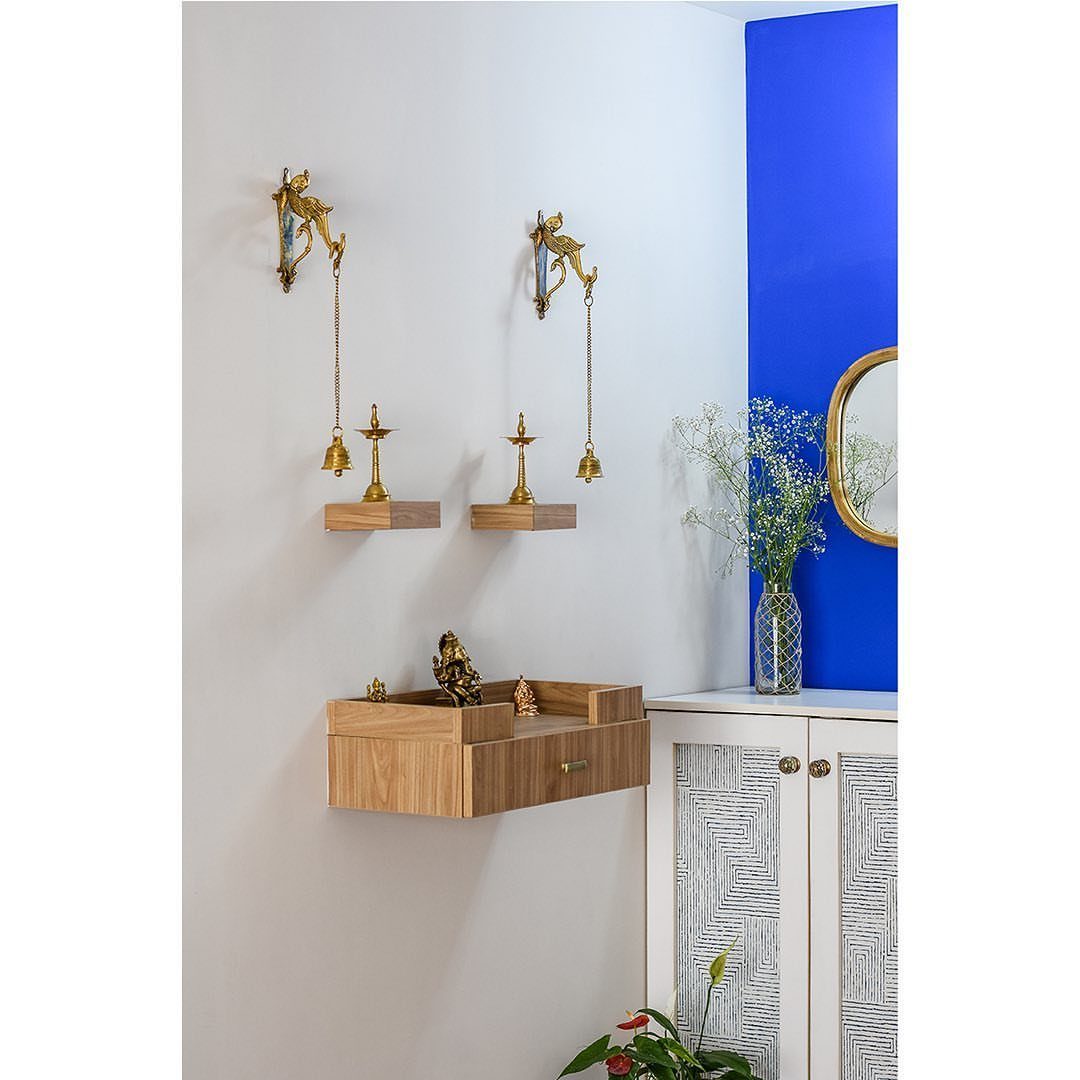
Mounting the unit to the wall keeps the floor clear and works in a small room where a freestanding piece would crowd the space.
The open shelves here let you see stored items at a glance, and the single drawer at the bottom holds smaller ritual items.
If you’re mounting the unit yourself, find studs in the wall so the bracket holds the weight securely.
This format suits a hallway or entryway where floor space is limited.
24. Jaali Mandir

A backlit jaali panel with cutout patterns gives the shrine a traditional look while keeping the space visually open. The Om symbol and text here mark the focal point, and the white finish suits a neutral room.
The lattice pattern softens the light and creates shadow detail on the back wall. If you’re building a unit with jaali, order the panel thickness to match the span so it doesn’t flex or warp.
25. Pooja Unit with Doors

Doors change how the unit lives in a room.
Glass panels let the idols and backlit panel stay visible when the shrine is closed, so the space doesn’t go dark between prayer times, while still giving you a way to close off the interior when guests arrive or the room needs a cleaner look.
If you’re having a unit built, specify soft-close hinges so the doors don’t swing open on an uneven floor.
Frosted or patterned glass gives slightly more privacy than clear while keeping the glow of any LED lighting behind it.
26. Pooja Unit Integrated Into TV Unit
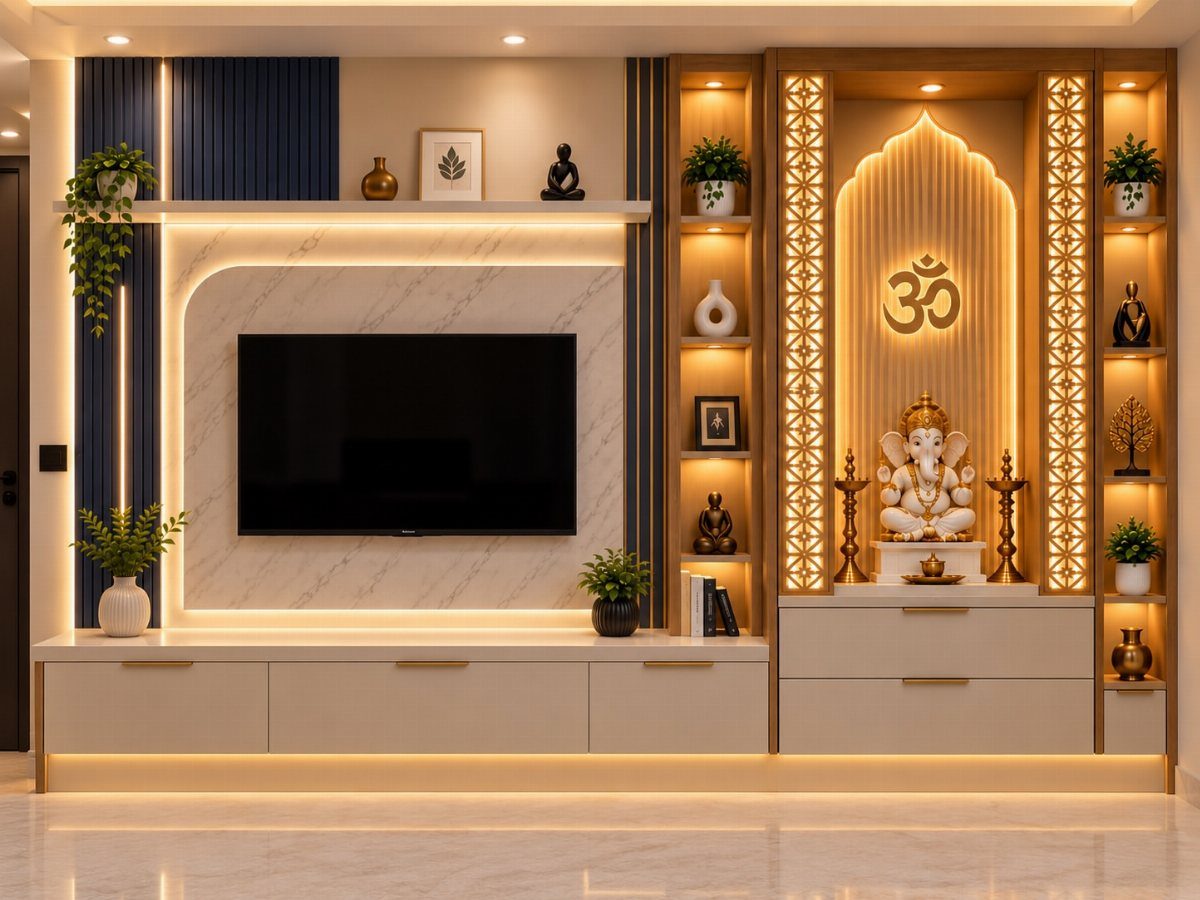
Putting the mandir and the TV wall on the same run of cabinetry means neither competes for wall space.
The shrine sits to one side of the screen, separated by the marble backdrop panel, and the two zones read as one composition rather than 2 unrelated pieces of furniture.
For this to work, the lighting needs to be managed separately: the backlit glow behind the mandir should be on its own switch so it can stay on during evening prayers without the TV section staying lit.
Plan the idol height before the cabinet is built so the Ganesha statue isn’t crowded by an overhead shelf.
A TV unit, with pooja room paraphernalia added, can also be a discreet way to integrate traditional and spiritual needs into a more modern home design.
27. Mandir Under Staircase
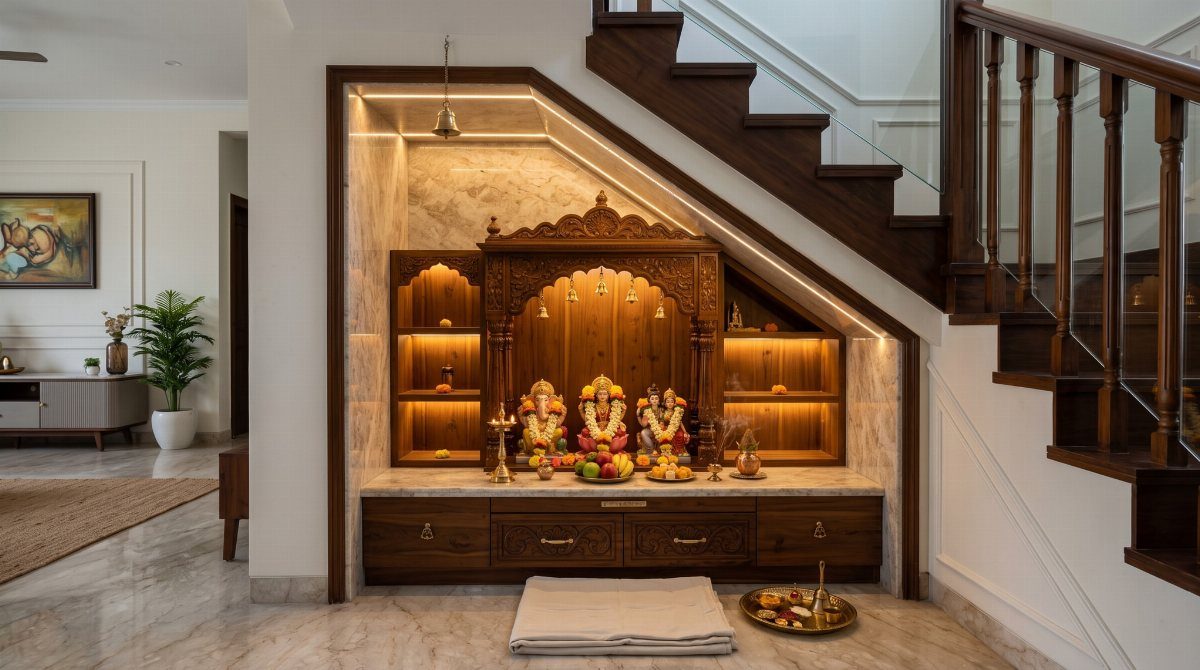
The space under a staircase is structurally dead in most homes, and a recessed prayer nook uses that volume without borrowing from any room.
Building into the recess rather than placing a freestanding unit inside it gives the mandir a finished, built-in look and protects the carved wood from foot traffic on either side.
Ceiling height under the stair changes quickly as you move inward, so measure at the point where the idol will actually stand, not at the opening.
Recessed LED lighting inside keeps the niche visible even when the surrounding room is dim.
28. Balcony Pooja Room

A balcony prayer space works because the outdoor setting adds natural light and air circulation, both of which suit open-flame lamps and incense better than an interior room.
The cabinet here closes completely with shutter doors, which protects the idol and ritual items from rain, dust, and direct sun when the shrine is not in use.
Any wood used outdoors needs a weatherproof finish or a covered overhead to avoid warping over a single rainy season.
The painted flowers inside mean the unit carries its own backdrop.
29. Hanging Mandir
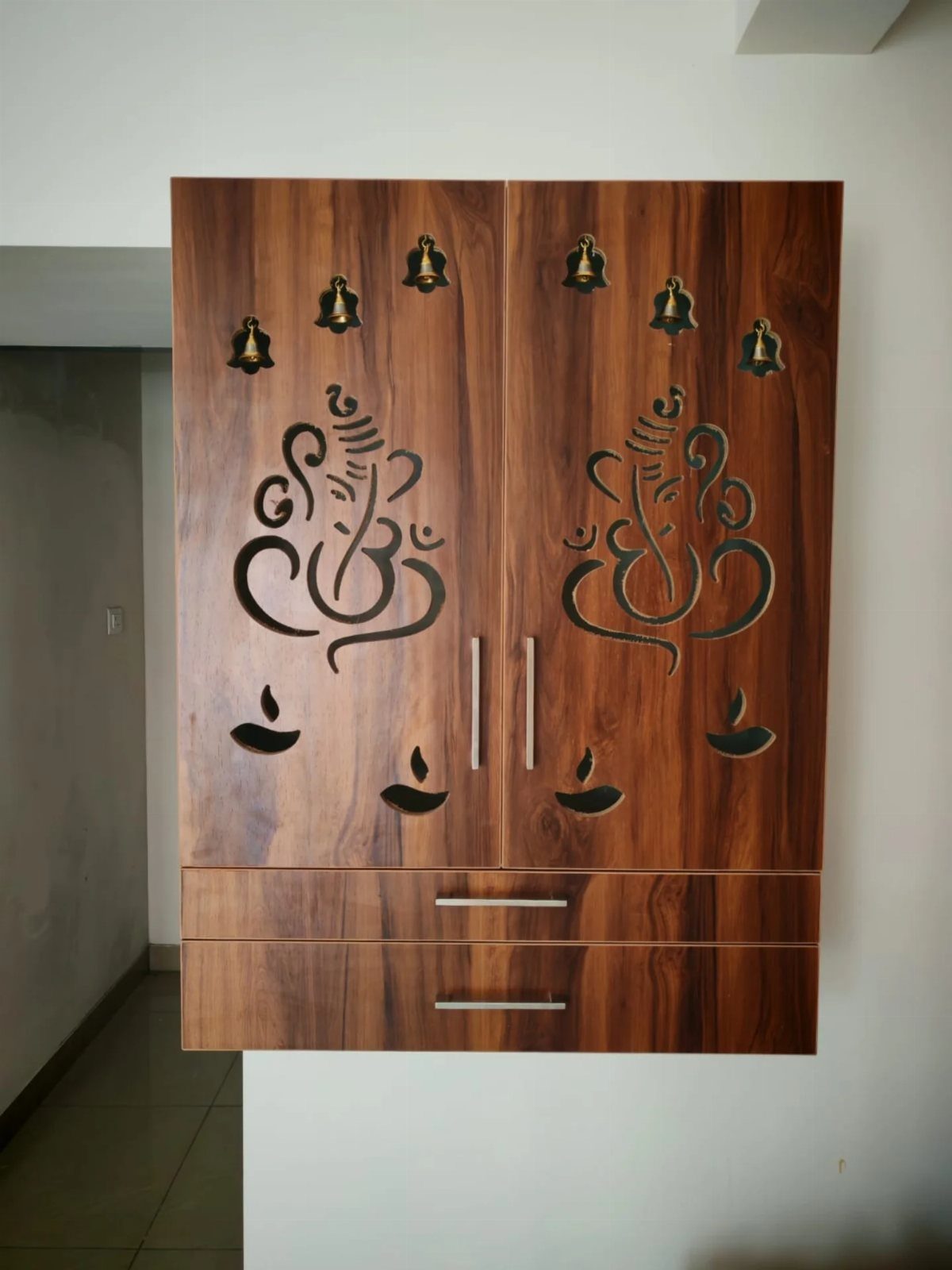
Mounting it on the wall keeps the path underneath open. The carved Ganesha figures and bell cutouts on the doors give the cabinet its own detail without needing a separate backdrop or lighting.
Mounting weight depends entirely on what’s inside the wall: a solid wood cabinet with drawers is heavier than it looks, and lag screws into studs are the right call rather than drywall anchors.
The 2 drawers below keep small items accessible without a separate storage piece.
30. Pooja Unit with Om
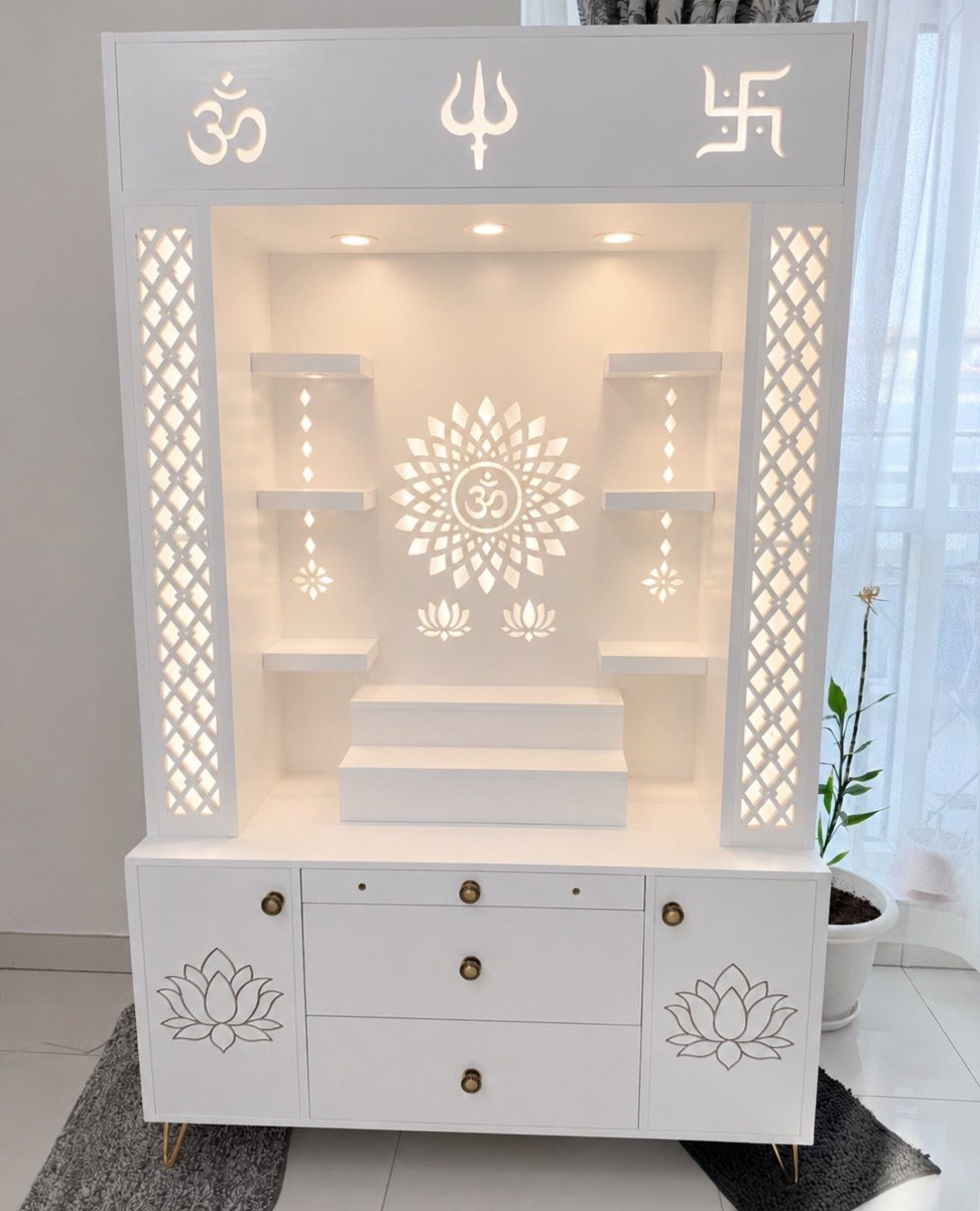
An Om symbol on the front of the unit marks the space immediately, even in a room where the puja unit isn’t the only piece of furniture.
Here it sits in a backlit panel flanked by jaali side sections, so the symbol glows in the evening while the lattice adds shadow detail on the surrounding wall.
White against a white wall reads quiet during the day and picks up the LED warmth at night, which is a combination worth keeping if the rest of the room is neutral.
The trident and swastika symbols below the Om reinforce the sacred character of the space without needing additional decor on the unit.
31. Pooja Unit with Paintings
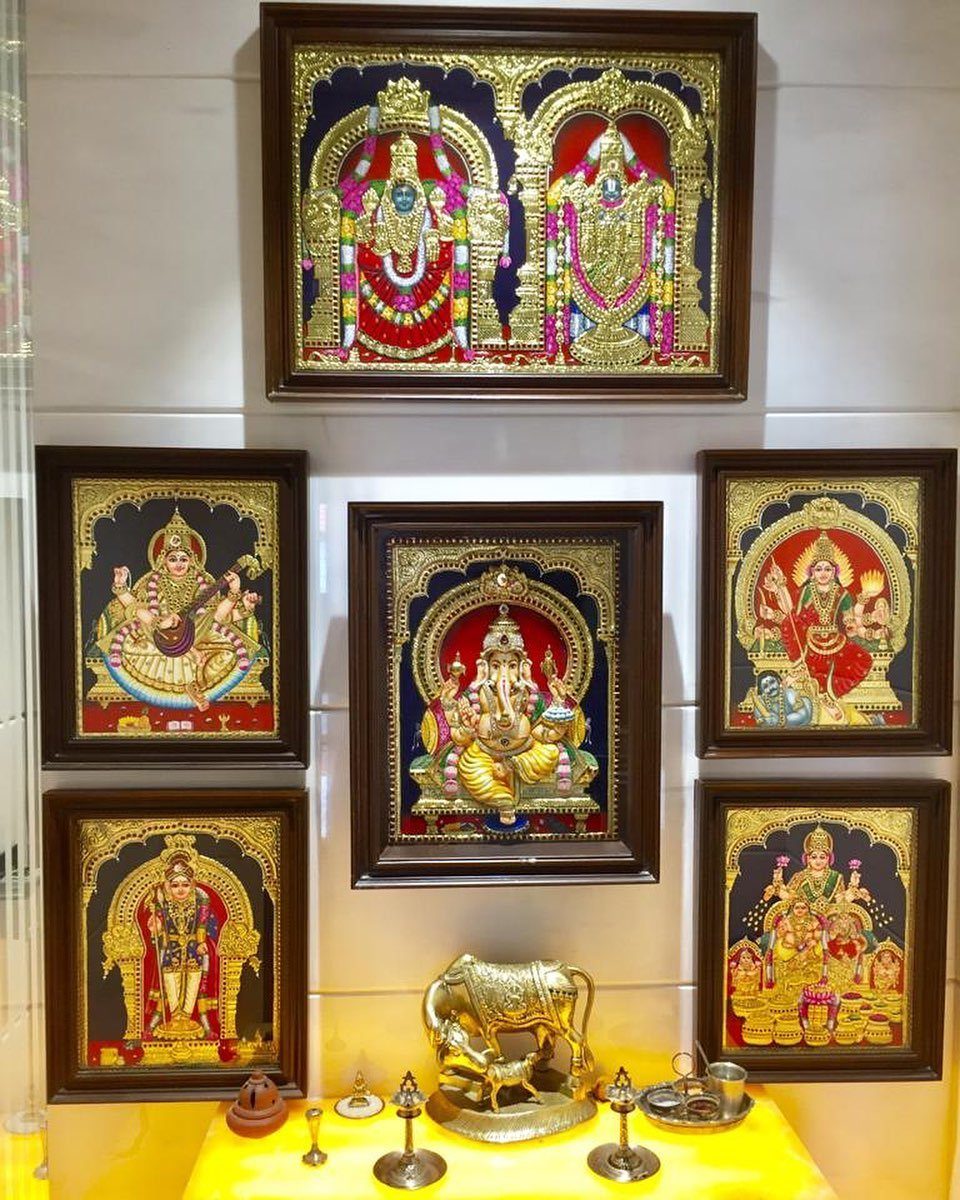
Framed deity paintings above the shrine let you add sacred imagery without carving or built-in panels. Gold embellishments on paintings lift the figures and connect visually to a yellow or warm-toned altar below.
If you’re hanging the frames yourself, use picture wire rated for the weight and mount them level with each other so the composition reads as one group. Space them evenly or cluster them tightly; half measures usually look unfinished.
32. Pooja Unit with Chandelier

A chandelier above the mandir adds formal lighting and fills vertical space in a room with high ceilings. The crystal drops here catch light from multiple angles, and the gold finish ties into the brass tones of ritual items below.
This works best when the mandir sits in a dedicated corner or along a wall where the chandelier won’t interfere with circulation. If you’re installing one yourself, make sure the ceiling box is rated for the fixture weight.
The chandelier should hang high enough that it doesn’t block your view of the idol when you’re standing.
33. Pooja Unit with Acrylic

A laser-cut acrylic panel with LED backlighting gives the shrine a bright, contemporary look that suits a modern room.
The Ganesha figure and Sanskrit text here stand out against the glow, and the white jaali side panels soften the front without closing off the space.
Acrylic stays lightweight and backlit panels glow evenly, though you need to keep it away from direct heat. The backlit panel should be wired to a switch so you can control the brightness separately from any overhead room lighting.
White cabinetry below keeps stored items out of sight.
34. Pooja Unit with Mural
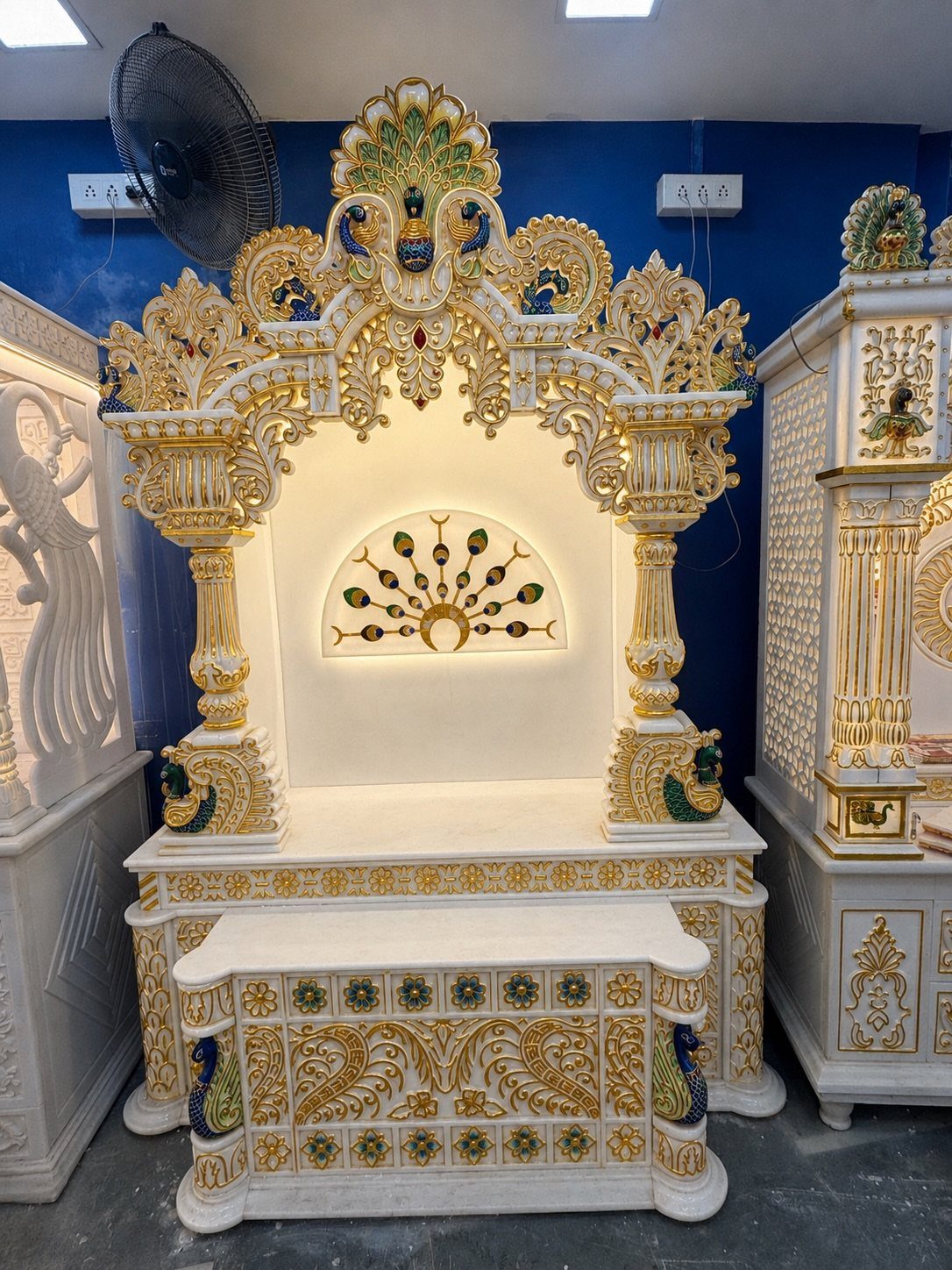
A painted or carved mural behind the shrine adds an ornate backdrop that doesn’t rely on lighting or separate panels.
A peacock motif fills the wall with traditional detail, and gold accents tie the mural to a marble or stone base.
If you’re commissioning a mural, plan the design around the idol height so the focal point isn’t hidden. A raised or backlit section draws the eye without needing to paint the entire wall.
This approach suits a dedicated pooja room where the mural can stay visible year-round.
Plan Space and Requirements
Start by deciding where the unit will go and which direction it should face. Measure the available space before settling on a format: a wall-mounted shelf, a freestanding cabinet, or a built-in alcove.
List what the unit needs to hold.
Most setups require at least one shelf for idols, a surface for a diya or lamp, and space for incense. If you keep prayer books, a small drawer or lower shelf keeps them accessible without cluttering the main area.
Account for lighting early.
A recessed LED strip or a small pendant avoids the need to retrofit wiring later. If the unit sits in a shared room, consider whether you want it open or enclosed behind doors.
Frequently Asked Questions
Where should a mandir be placed in a small house?
A corner or unused wall works best, somewhere every member of the household can reach without crowding the room. Wall-mounted designs free up floor space in tight layouts.
How do I make a small pooja room?
A wall-mounted mandir or shallow corner unit takes up less floor space than a freestanding piece and still holds idols and ritual items.
Add a backlit panel or pendant light for evening prayers, and use drawers or closed cabinets below to store lamps and incense out of sight.
If you’re working with an alcove, a recessed niche gives a built-in look without needing separate furniture.
What is the purpose of a puja room?
A puja room is a dedicated space for prayer and religious offerings, where you can focus without household distractions.
It holds idols, ritual items like lamps and incense, and gives the family a consistent place to gather for worship. The space can be a separate room, a corner niche, or a wall-mounted cabinet, depending on what the layout allows.