

Spiky plants run from a Snake Plant or Aloe that fits on a shelf to Giant Rhubarb and a Palmyra Palm that need open ground.
Which one suits you depends on who passes the spot: with kids or pets, an Agave or Yucca with tips at hand height belongs up high or out of the traffic path, while a yard with room can take a Hardy Orange along the property line.
Sharp tips and spines are the feature in most of these, so I’d choose the location first and the plant second.
1. Agave
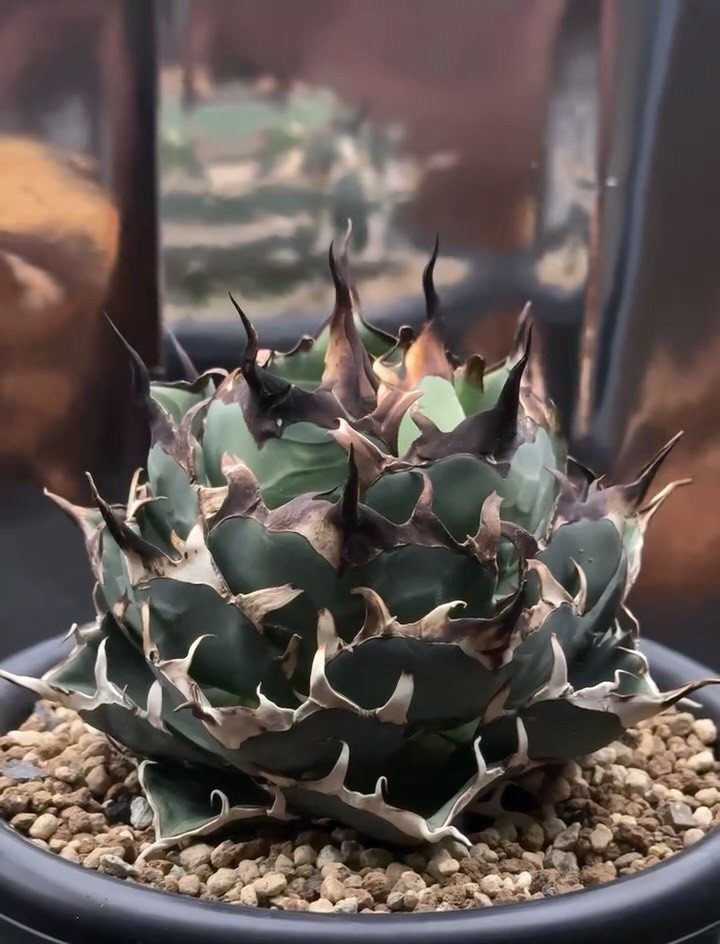
Rigid leaves fan out in a tight rosette, each one ending in a sharp tip, and some agaves add spikes along the leaf edges too. A small one in a black pot topped with gravel reads as pure sculpture.
Set it where hands and paws won’t brush past.
2. Yucca
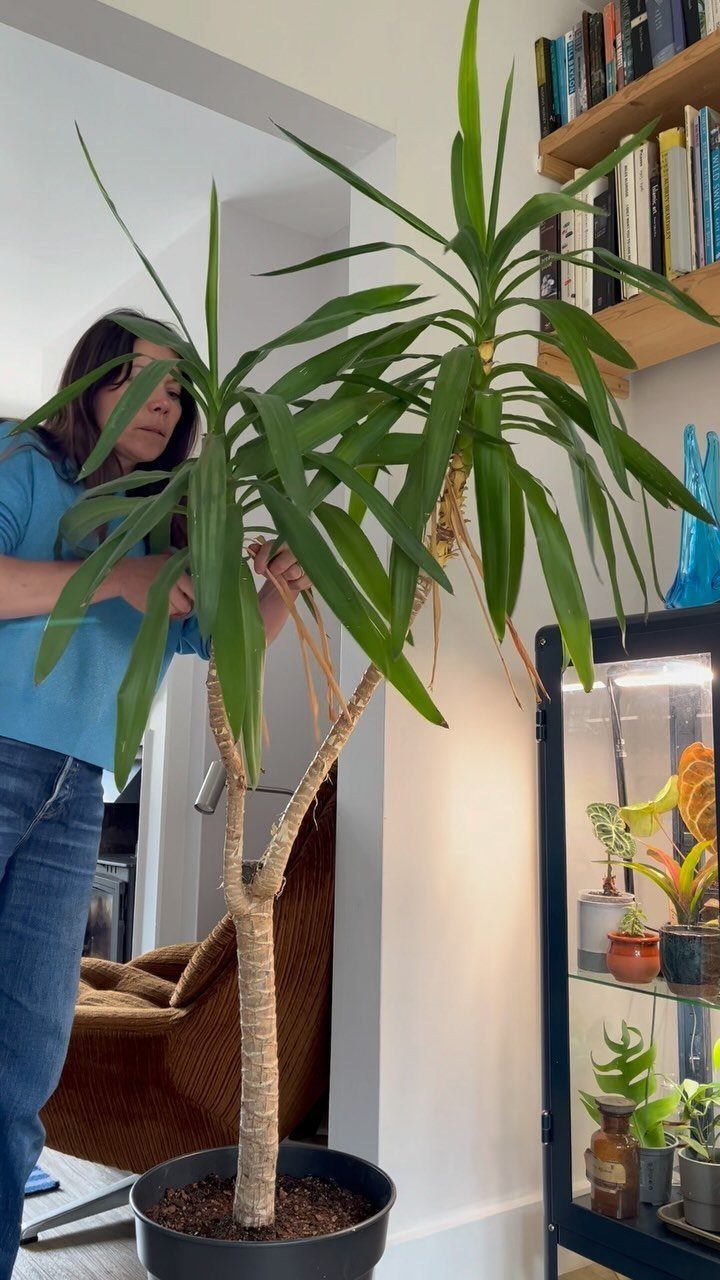
A starburst of stiff, sword-shaped leaves gives Yucca its outline, and a tall one fills a corner the way a floor lamp would.
For one strong shape, I’d buy a single tall plant over several small ones. Keep the pointed tips away from walkways and shelf edges.
3. Cactus
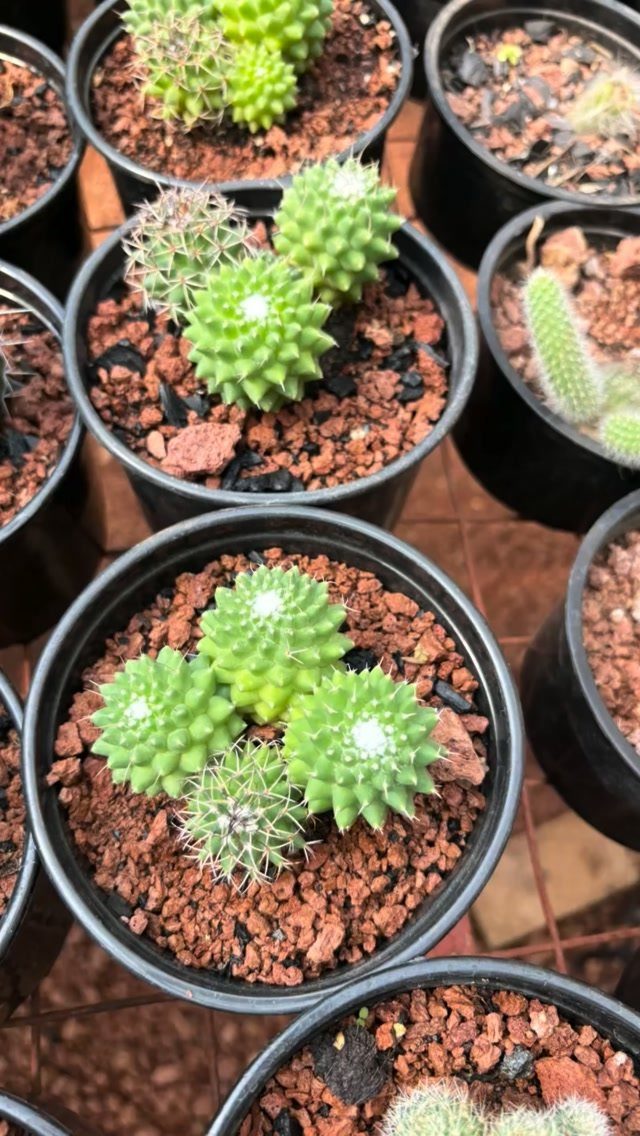
Several small cacti in matching black pots make a better display than single plants scattered around the house. Spines cover each plant, so choose by spine pattern and shape.
For color beyond green, look for a flowering variety. Cactus pots stay small, so a shelf or windowsill holds a whole group without crowding.
4. Aloe
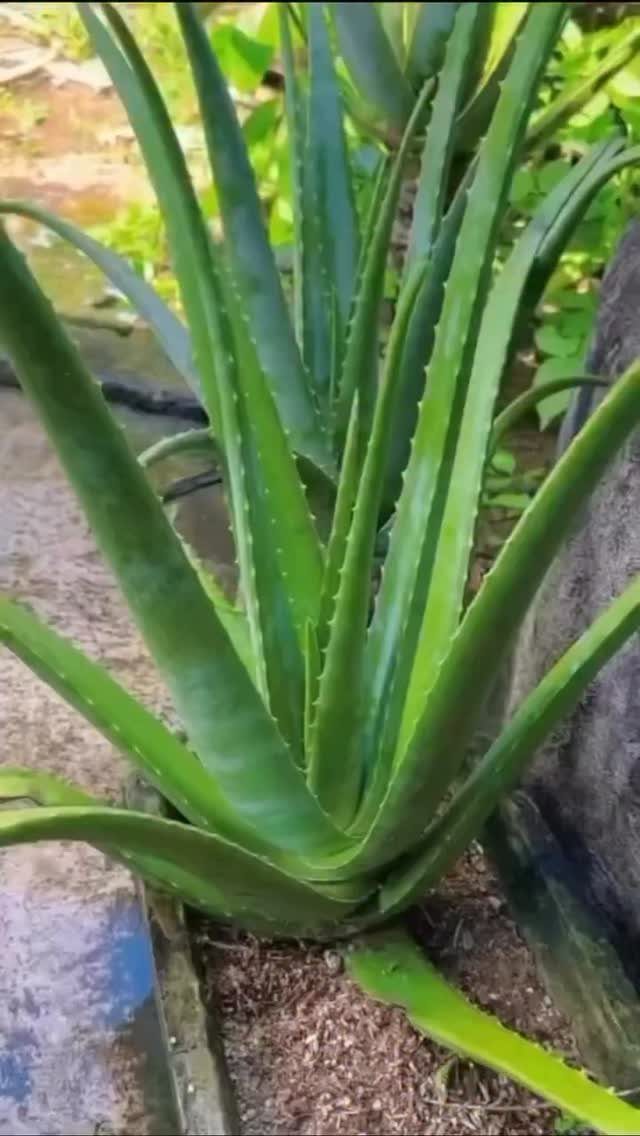
The person who grew this aloe counts 5 uses from a single pot of aloe vera, which is a good reason to plant it where you can reach it.
Aloe leaves are thick and full of gel, and each edge carries a row of small, sharp teeth.
At the front of a garden bed, I’d leave a little clear ground around it so you can get to the leaves without brushing the edges.
5. New Zealand Flax
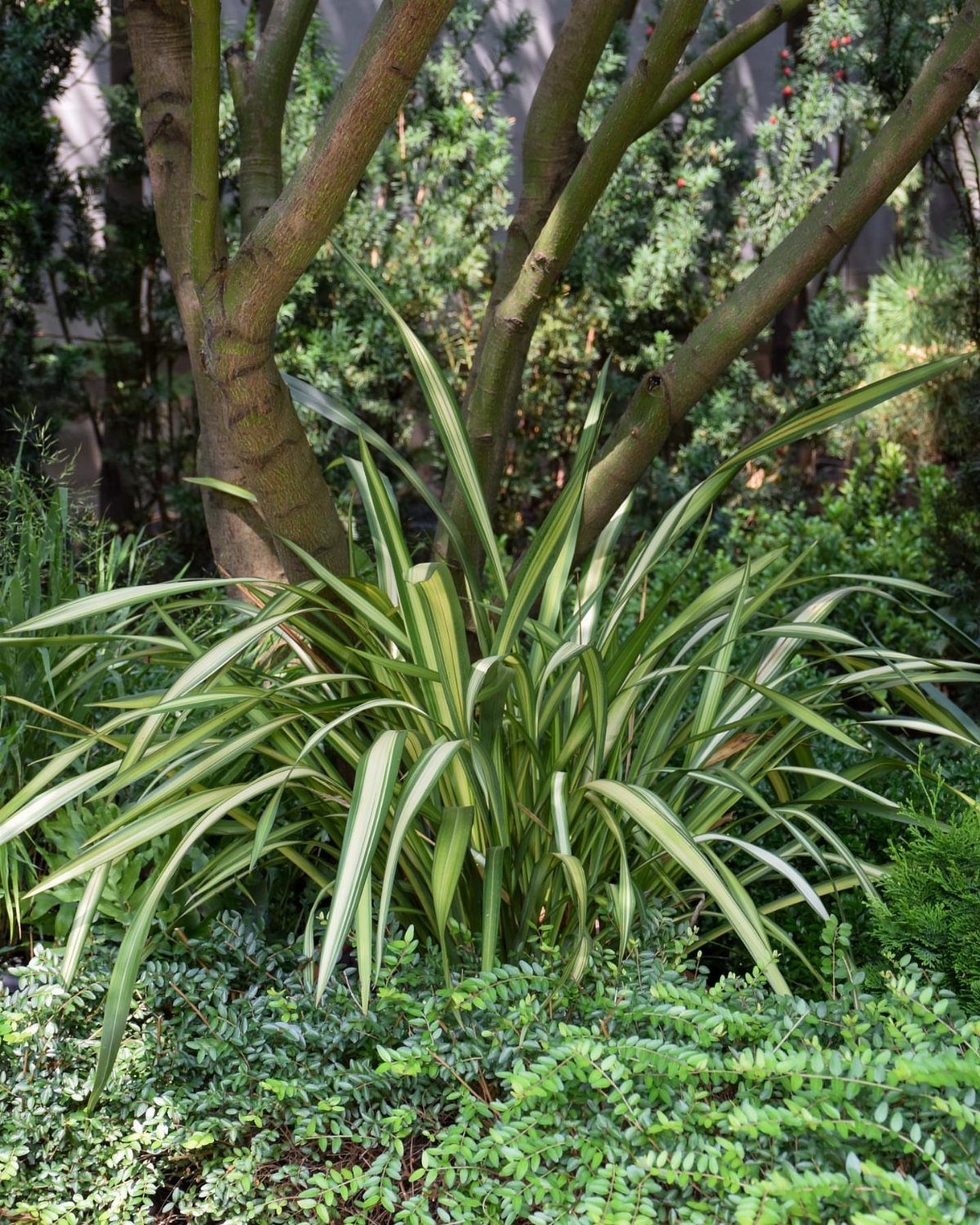
The green-and-white striping on variegated New Zealand Flax brightens the darker ground under a tree. Its long, sword-like leaves give a bold, architectural shape.
I’d pick the striped plant over a solid green one for the contrast. Give it room to arch, because crowding hides the shape.
6. Prickly Pear Cactus
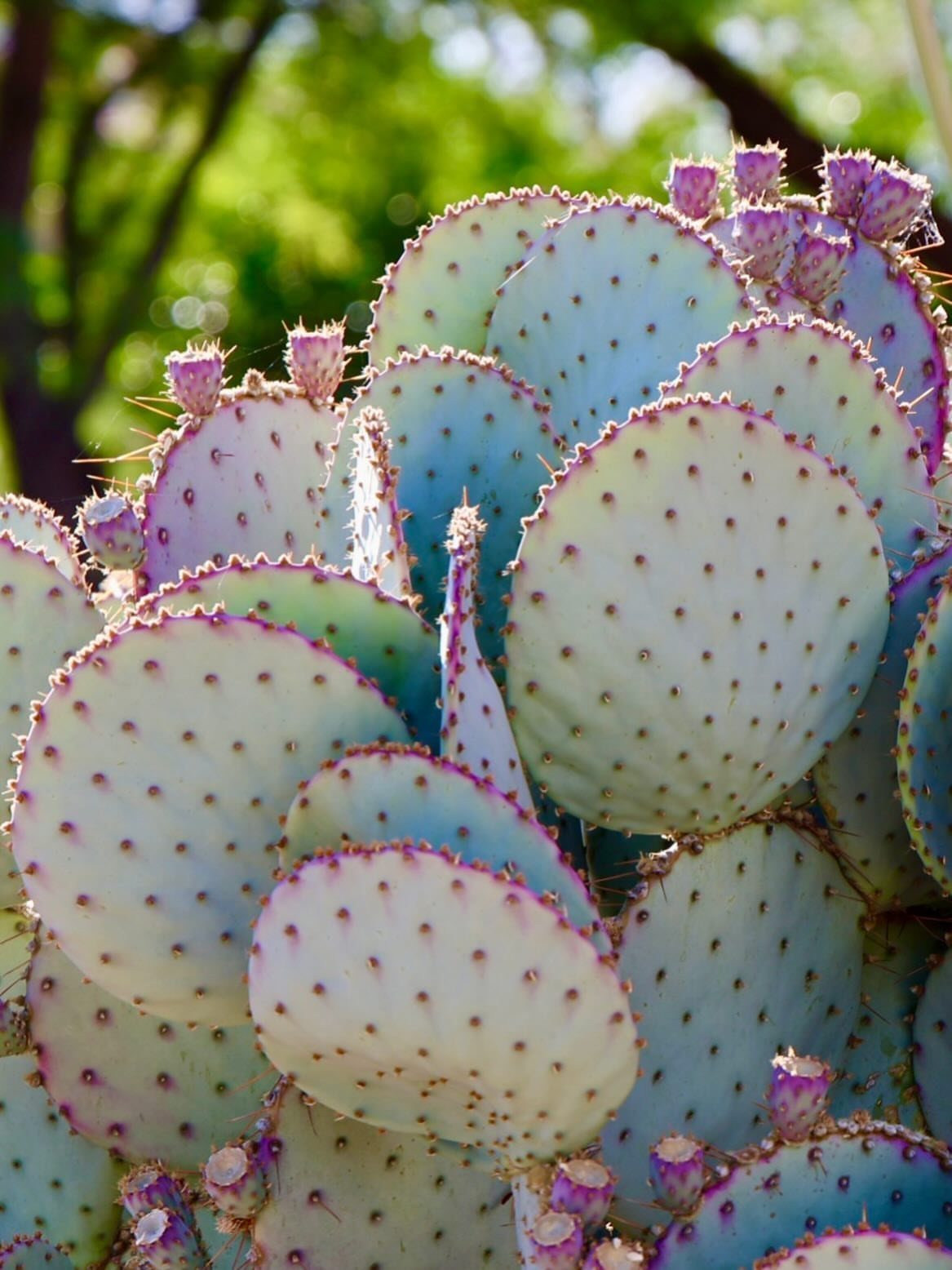
Flat, oval pads stack up on a prickly pear, and the spiny ones look a lot like a beaver’s tail.
This one has blue-green pads with purple edges and a few small purple flowers, a color mix I find hard to beat.
Small spines cover every pad, so plant it away from play areas and pet paths.
7. Sea Holly
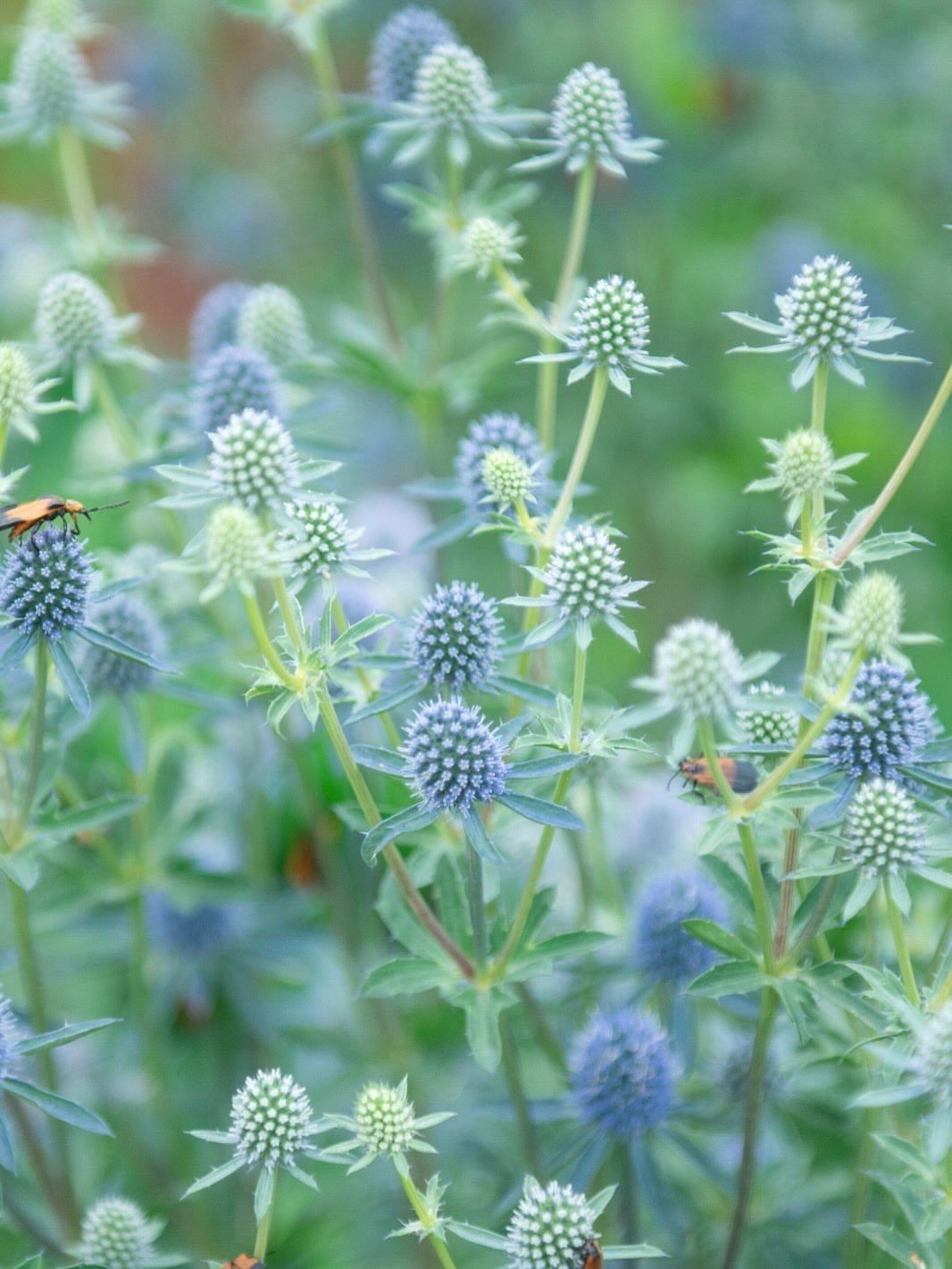
Sea Holly looks its sharpest in bloom, when the blue, spiky flower heads sit above pointed green foliage. Out of flower, the clump is much quieter.
I’d plant it where the flowers can be seen from a distance but not brushed against, such as the middle of a bed rather than the edge.
8. Snake Plant
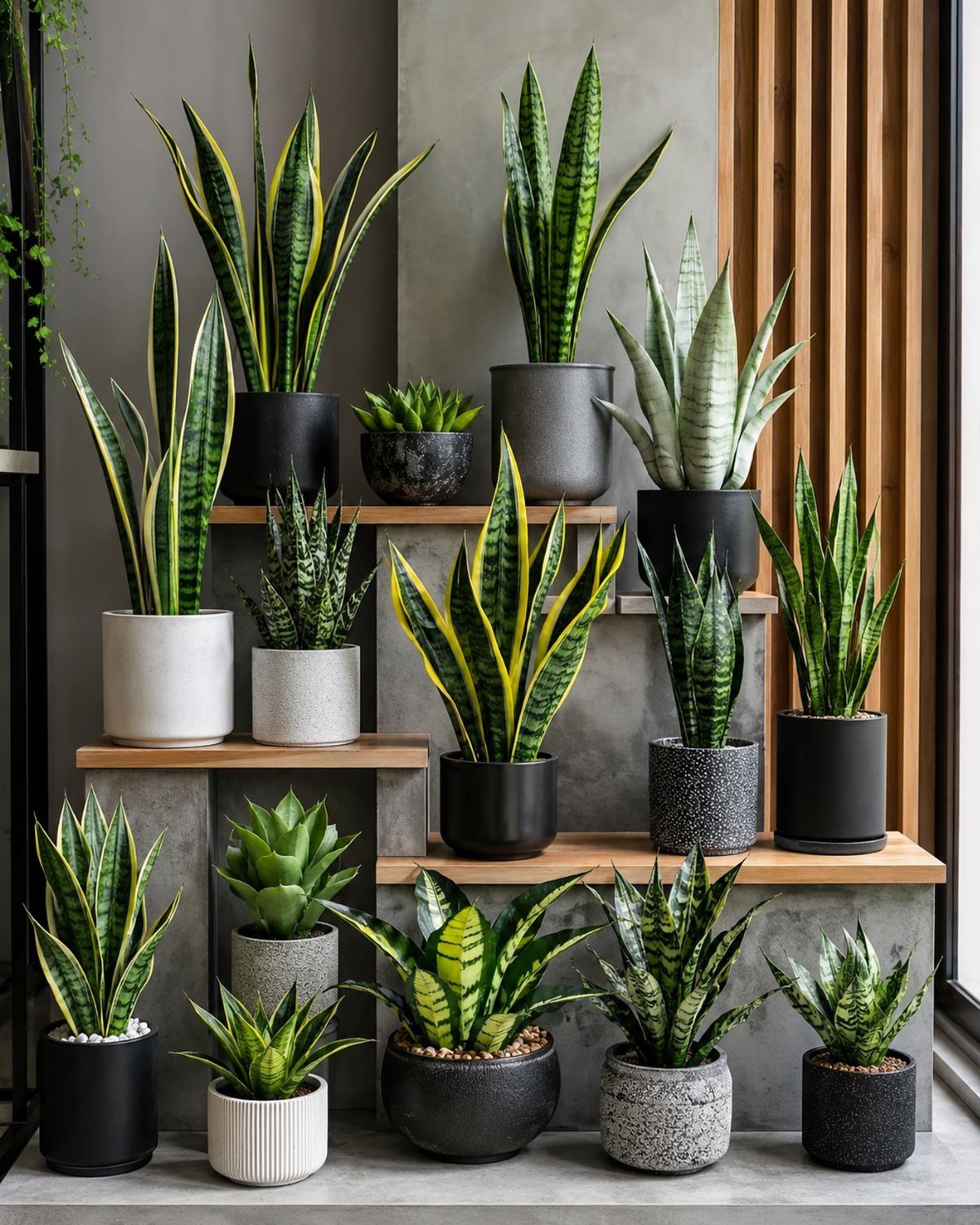
Snake plant leaves are long, sturdy and slightly succulent, and the tips end in points sharper than most people expect.
I’d keep them on upper shelves or at the back, since the tips sit right at hand and face height in a house with kids or pets.
9. Giant Rhubarb
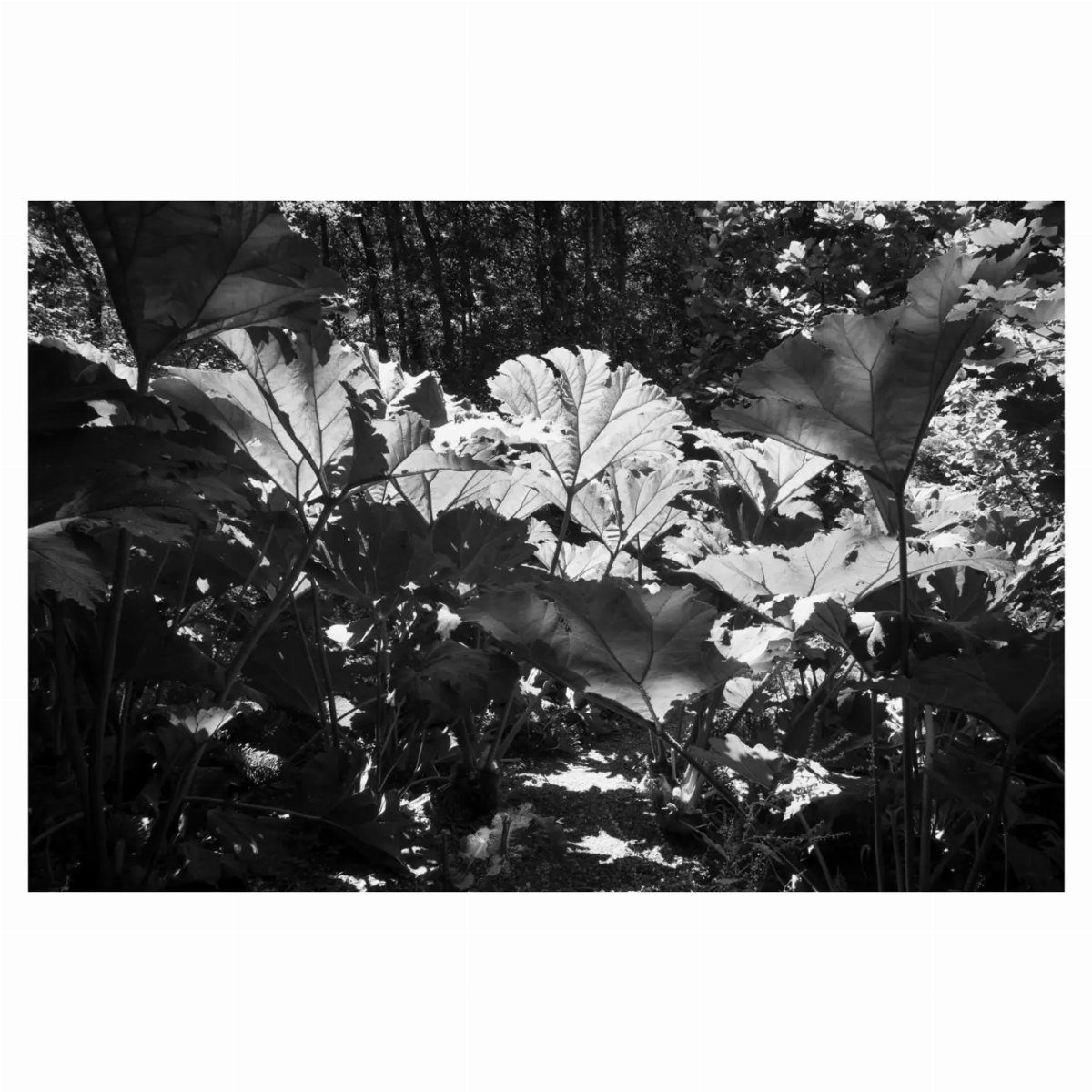
Giant rhubarb is the biggest plant in this group, with oversized leaves and prickles that make it a statement even in shade. Only a large yard really suits it.
Skip it for a small patio or balcony. I’d choose it where the leaves can spread without anyone needing to push past.
10. Porcupine Tomato
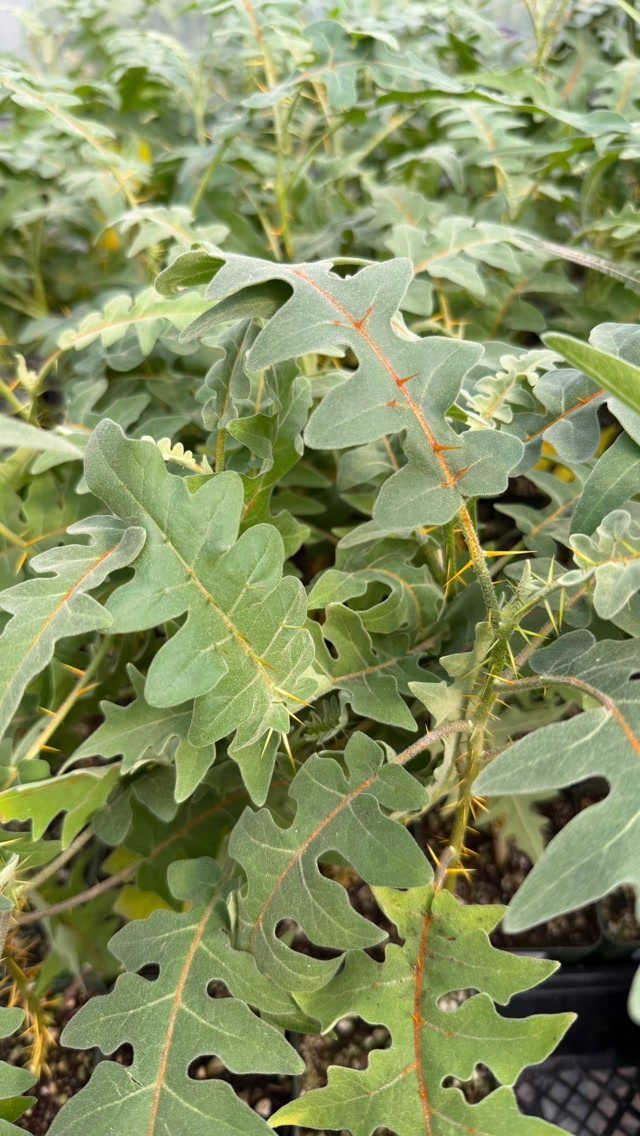
Long, bright yellow-orange thorns run along the stems and veins of the porcupine tomato, and the lobed green leaves make them stand out even more.
A black nursery pot suits it as it is, with no need to dress it up.
The thorns are the feature, so I’d keep it at arm’s length from anyone who might grab a leaf. Pets and small kids are the reason.
11. California Fuchsia

Red-orange tubular flowers hang from California Fuchsia over narrow, grayish-green leaves, and the stems carry the prickly edge. The pendulous blooms give a spiky plant some softness.
I like it best where the flowers can dangle in view, such as at the front of a bed. Place it a step back from the path so the stems don’t catch sleeves.
12. Holly
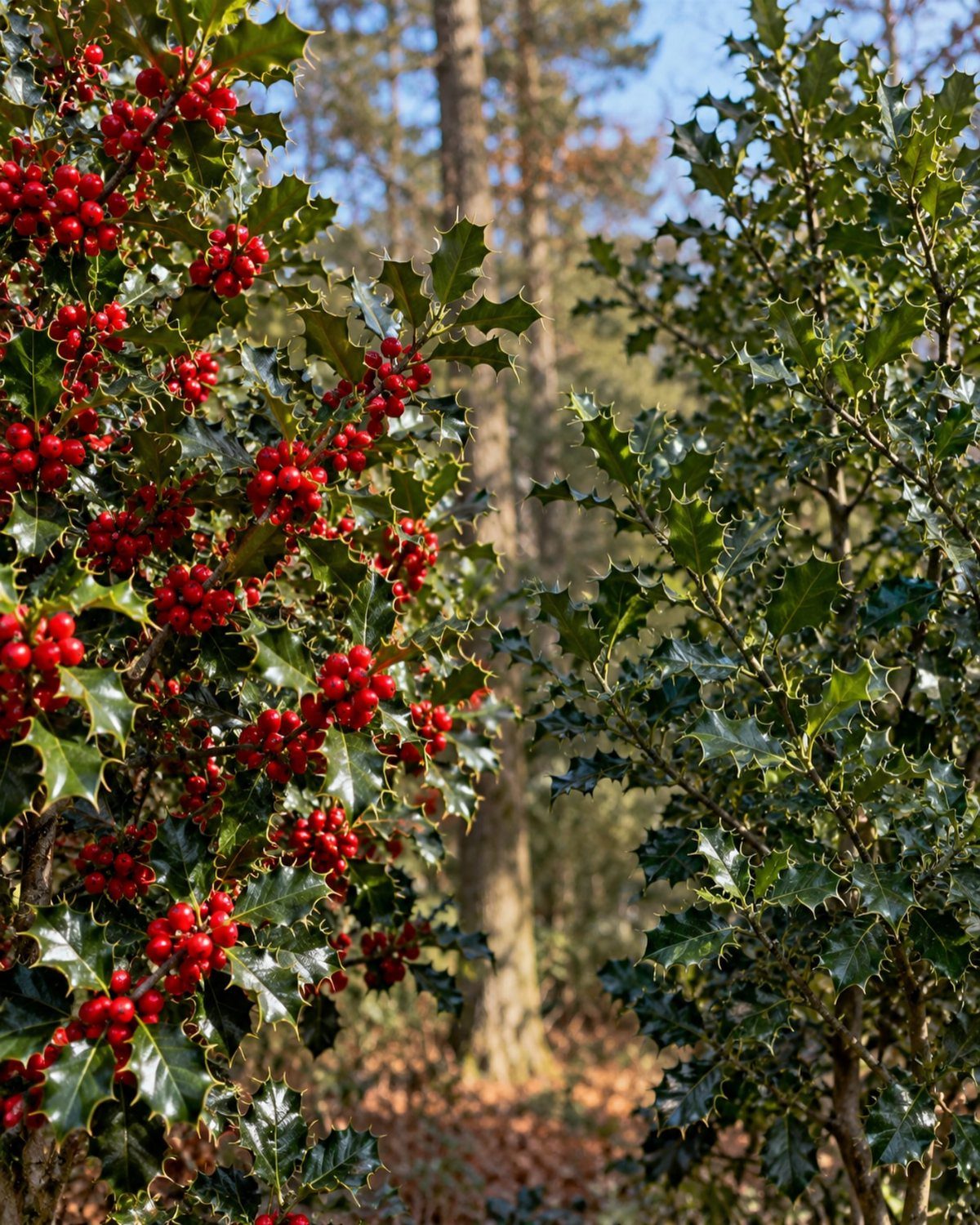
Glossy evergreen leaves with thorn-like margins make holly a spiky plant that looks good all year. The bush with red berries is the one I’d pick over the plain one for the color.
Plant it where the sharp leaf edges won’t catch anyone passing, such as the back of a border or a corner of the yard.
13. Hardy Orange
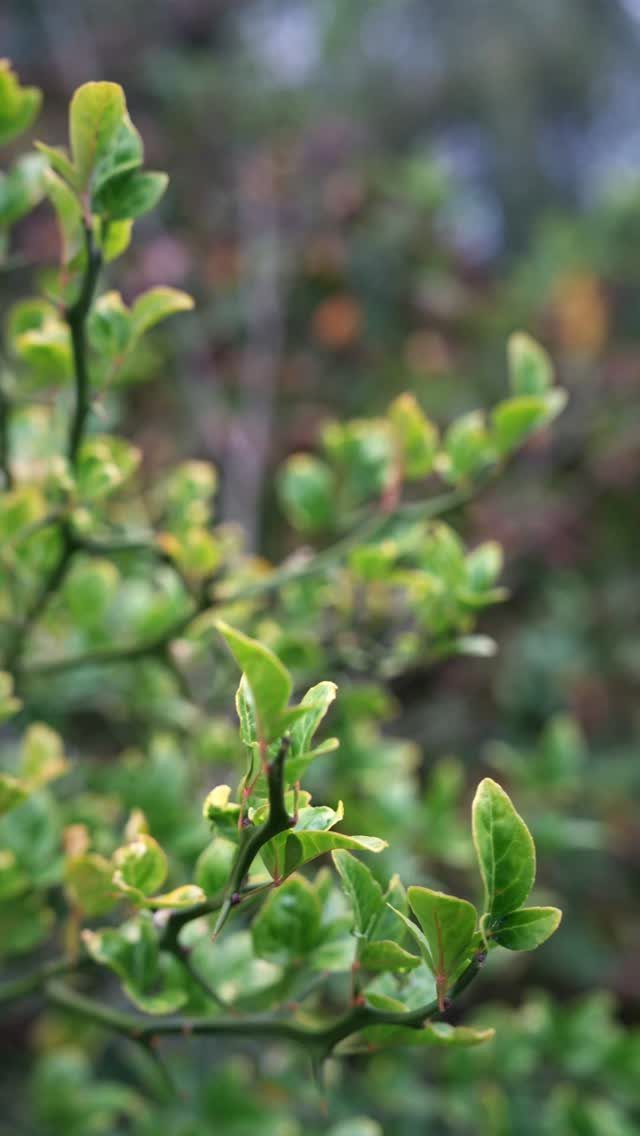
Long thorns line the branches of a hardy orange, so it works well as a living fence along a property edge.
I’d run it along a property line before I’d put it near a gate, path or play area. Plain green leaves keep the look quiet, so the thorns do the work.
14. Blue Grass
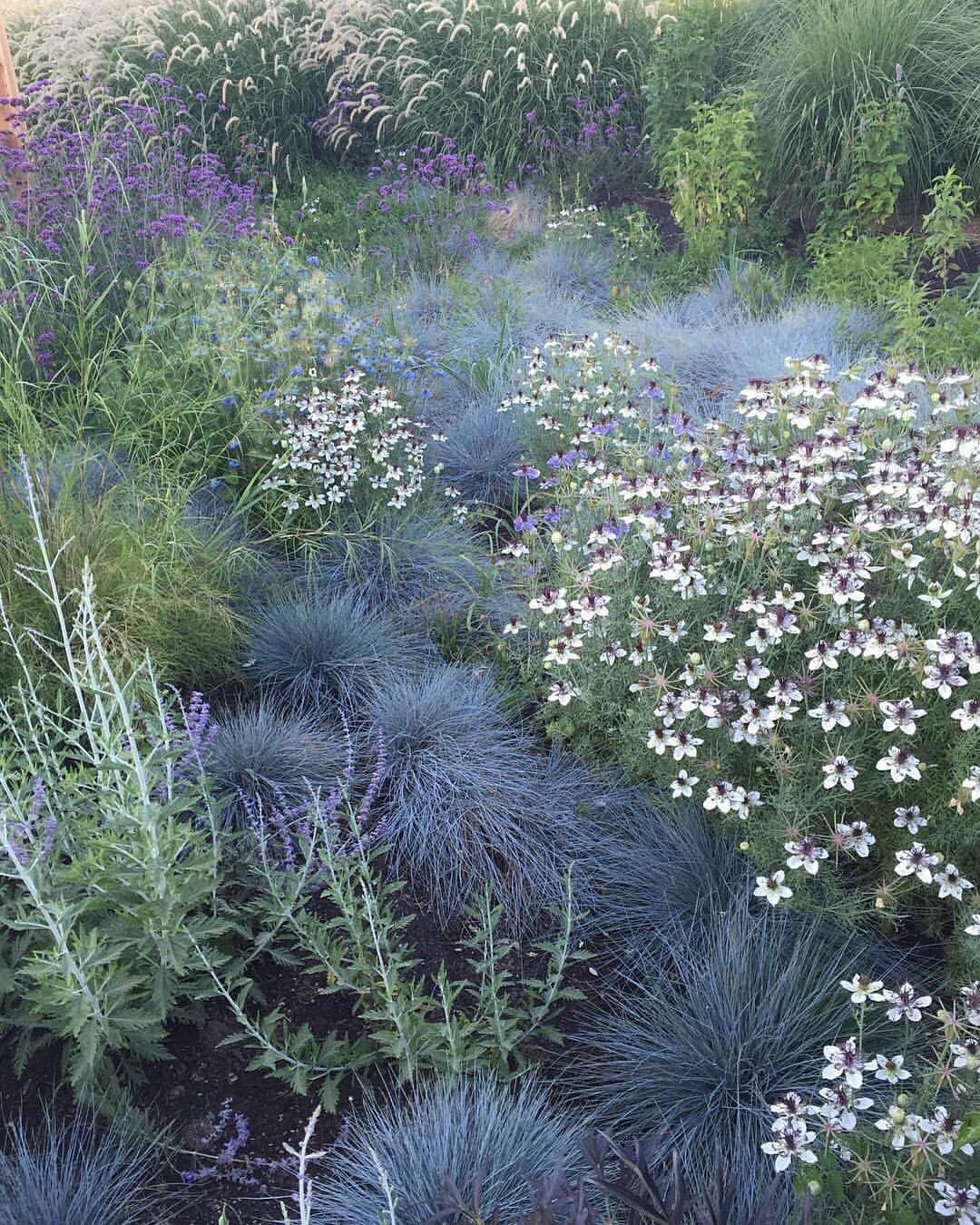
Blue-green clumps with pointed blade tips give a flower bed a cool, fine-textured edge. Against white and purple blooms, the color reads as a calm backdrop.
I’d plant several clumps together rather than one, so they read as a drift.
15. Crown of Thorns
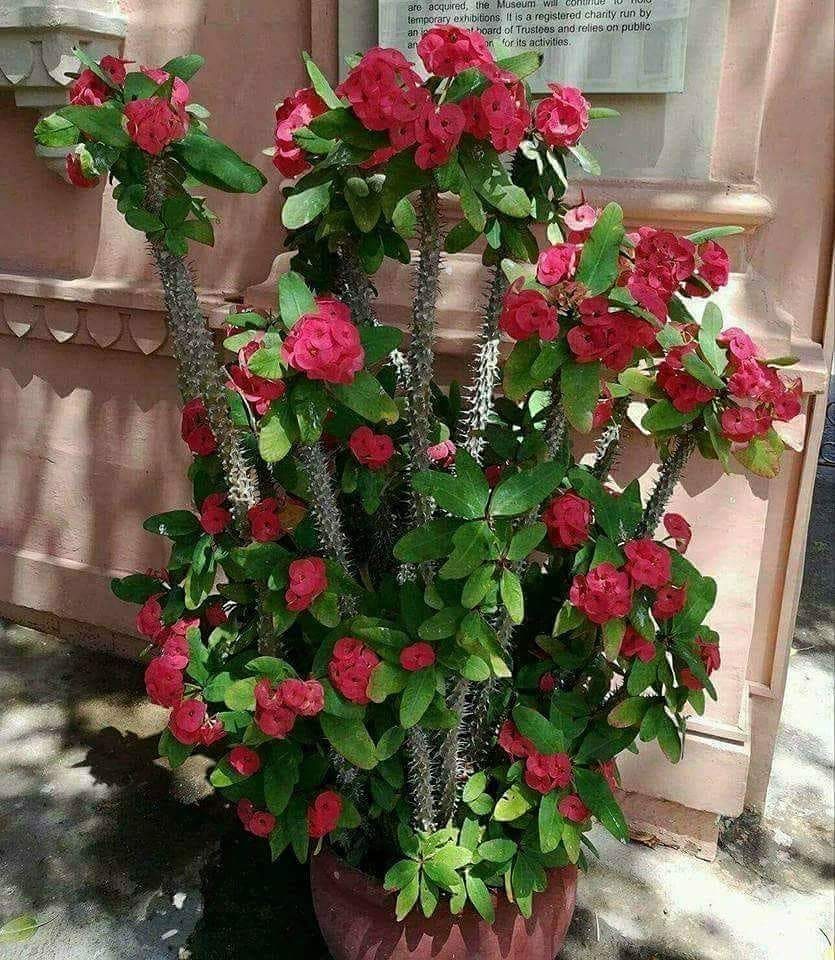
Spiny stems and bright red flowers share one plant here, and the contrast is the reason to buy it. In a pot against a painted wall, the blooms stand out sharply.
I’d choose a wall color that plays off the red, and set the pot where nobody has to reach past the stems.
16. Rattail Cactus
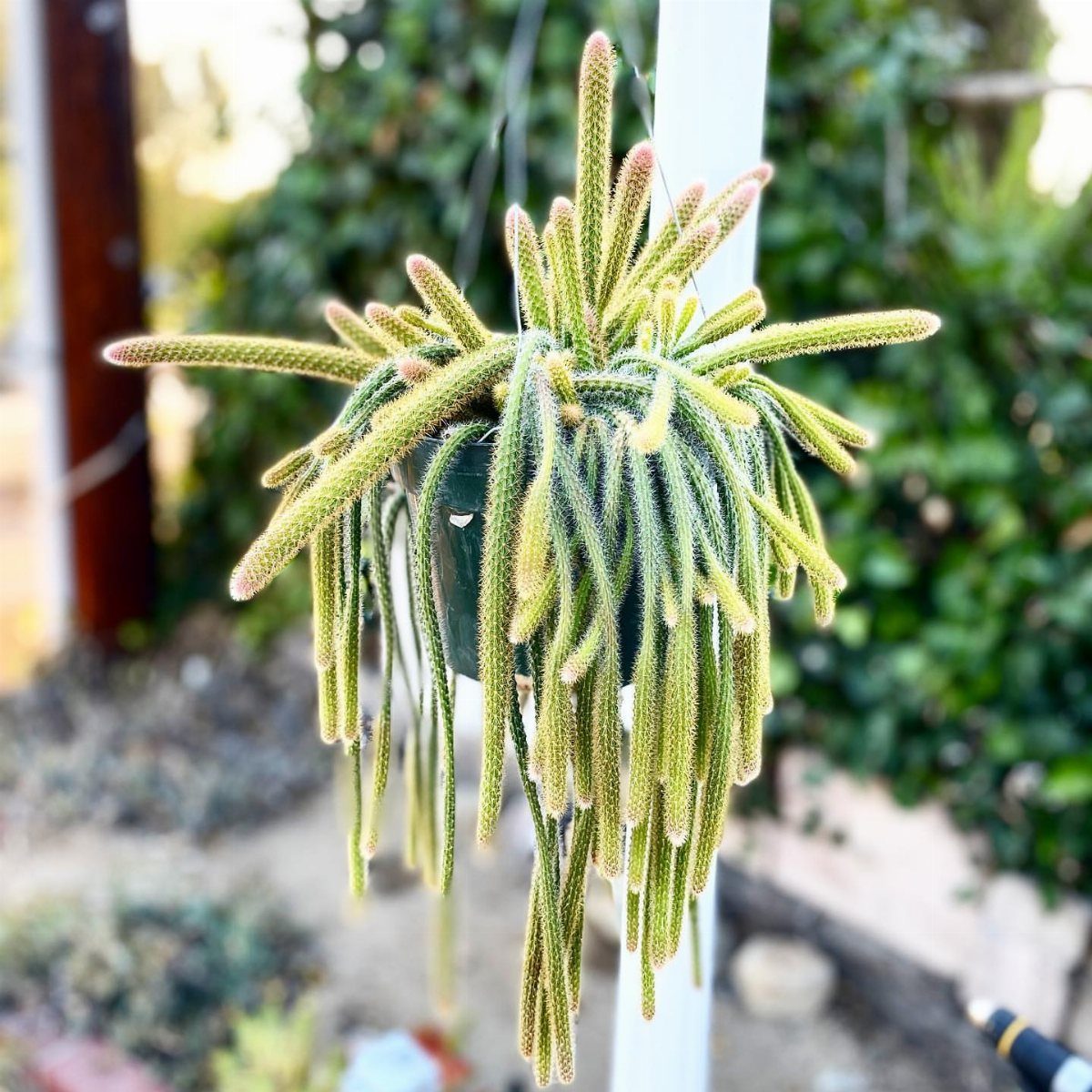
Long, trailing stems cover rattail cactus, and it’s a flowering cactus, so a hanging pot suits it far better than a shelf. A black pot against pale posts or foliage shows off the green.
Hang it where the stems can drop freely, and keep it clear of doorways.
17. Aloe Polyphylla
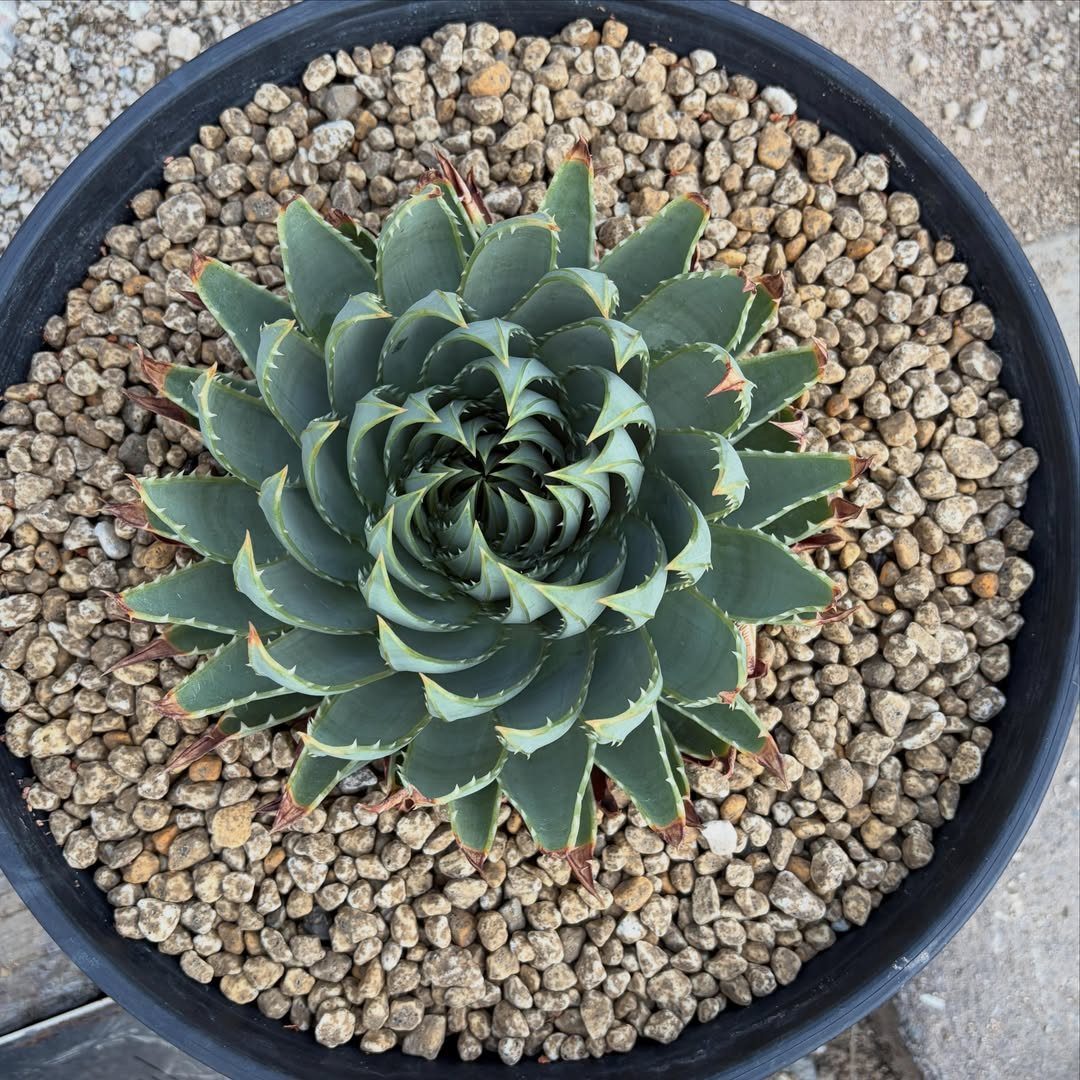
Leaves wind outward in a spiral on Aloe polyphylla, a pattern best seen from above. A black pot topped with small brown pebbles keeps the eye on the spiral of leaves, since nothing else in the container competes with it.
I’d put it on a low table or stand where people look down on it, rather than on a high shelf.
18. Blue Hesper Palm
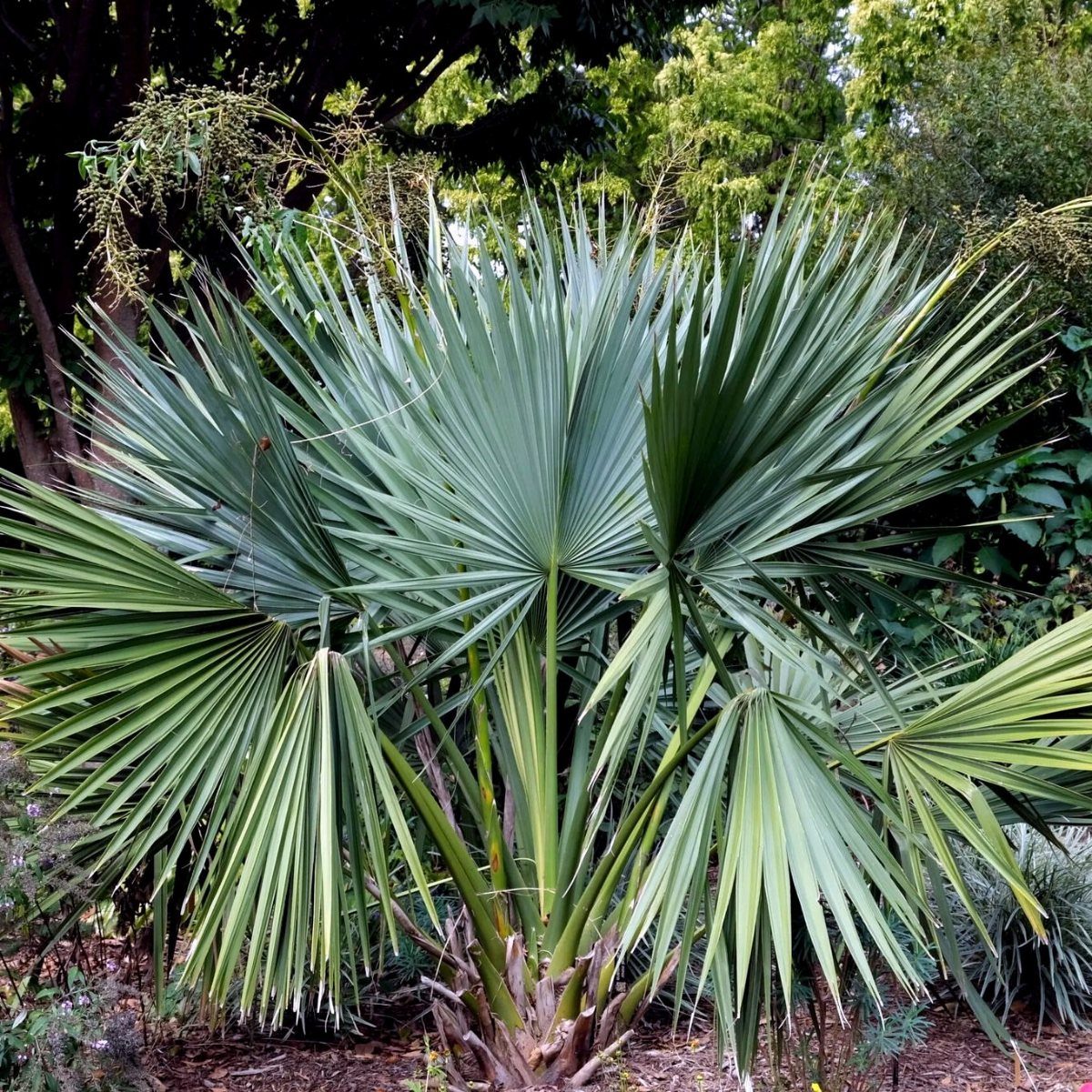
Stiff, fan-shaped fronds with a blue-green cast set the blue hesper palm apart from the plain green palms around it. Against darker garden foliage, the cooler color stands out.
I’d give it its own space as a focal point, with the pointed fronds well back from the edge of a path.
19. Palmyra Palm
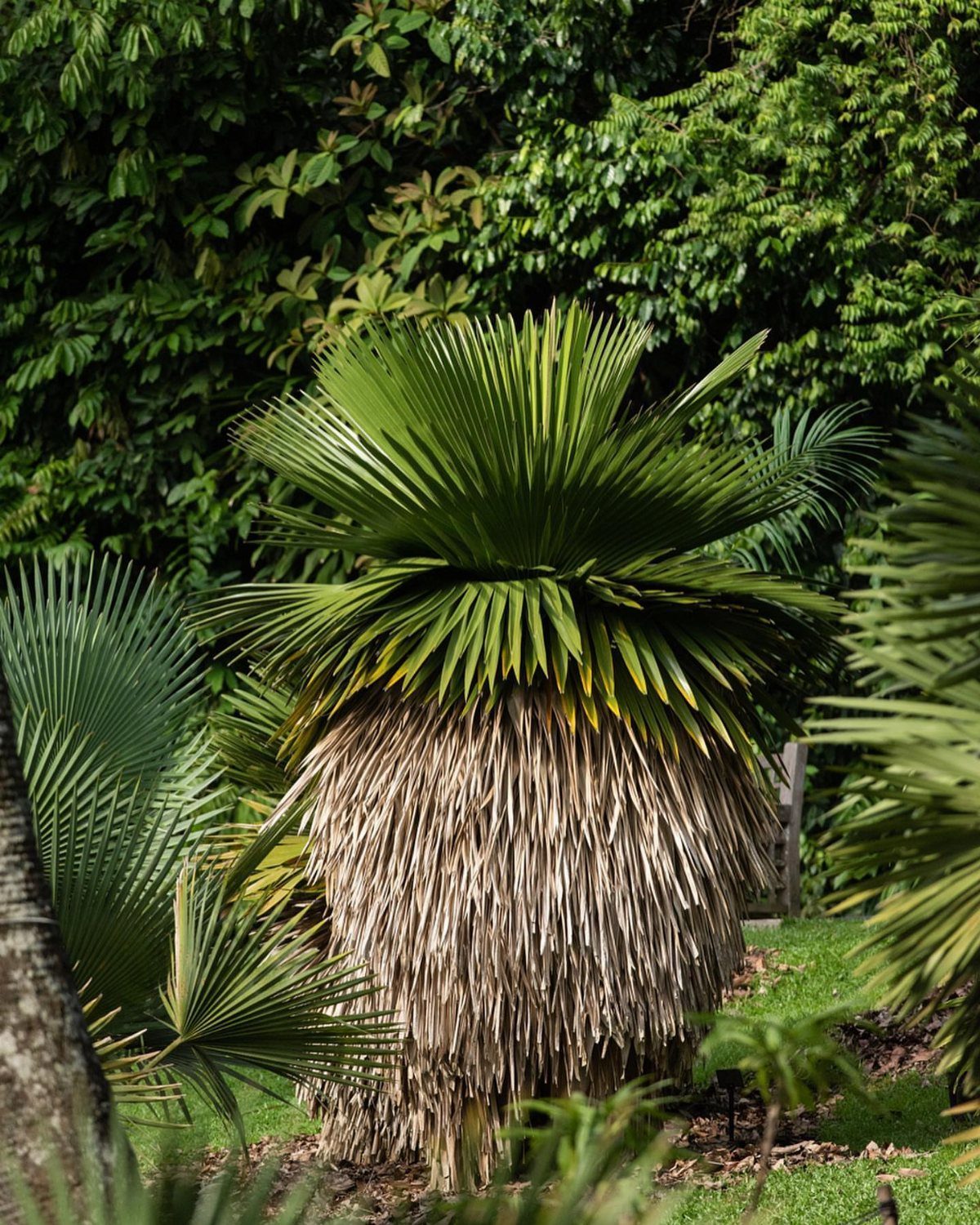
The spiky fronds are the feature.
Plant it in open ground with softer, leafy plants behind it so the fan shape stays easy to read. Sharp tips and edged stalks belong away from the places where people sit or walk.
20. Cycad
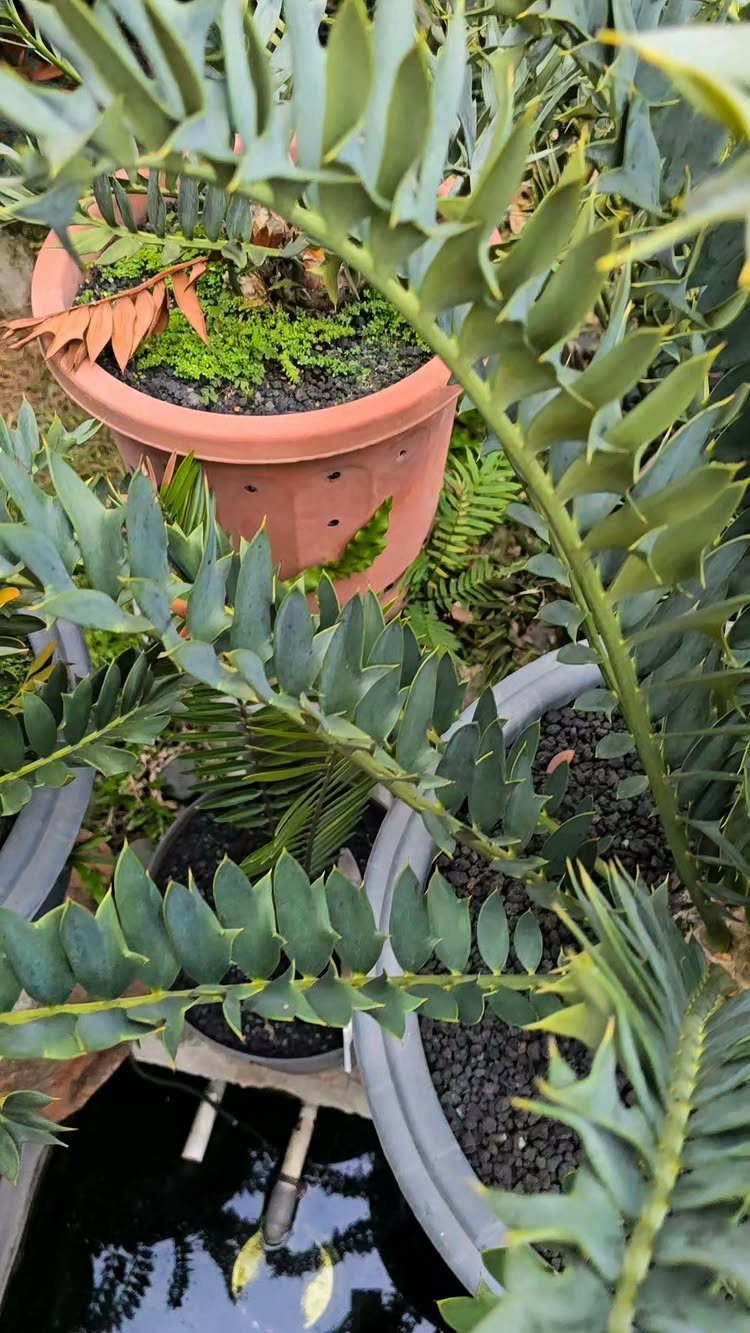
Stiff, pointed leaves fan outward from a cycad in a firm, feathered spray. Terracotta pots suit it as well as plain grey ones, and a group of 3 in mixed sizes looks deliberate.
A pond edge or the far corner of a patio gives cycads room to spread their fronds without catching anyone’s sleeve.
21. Spiky Rosette Succulent
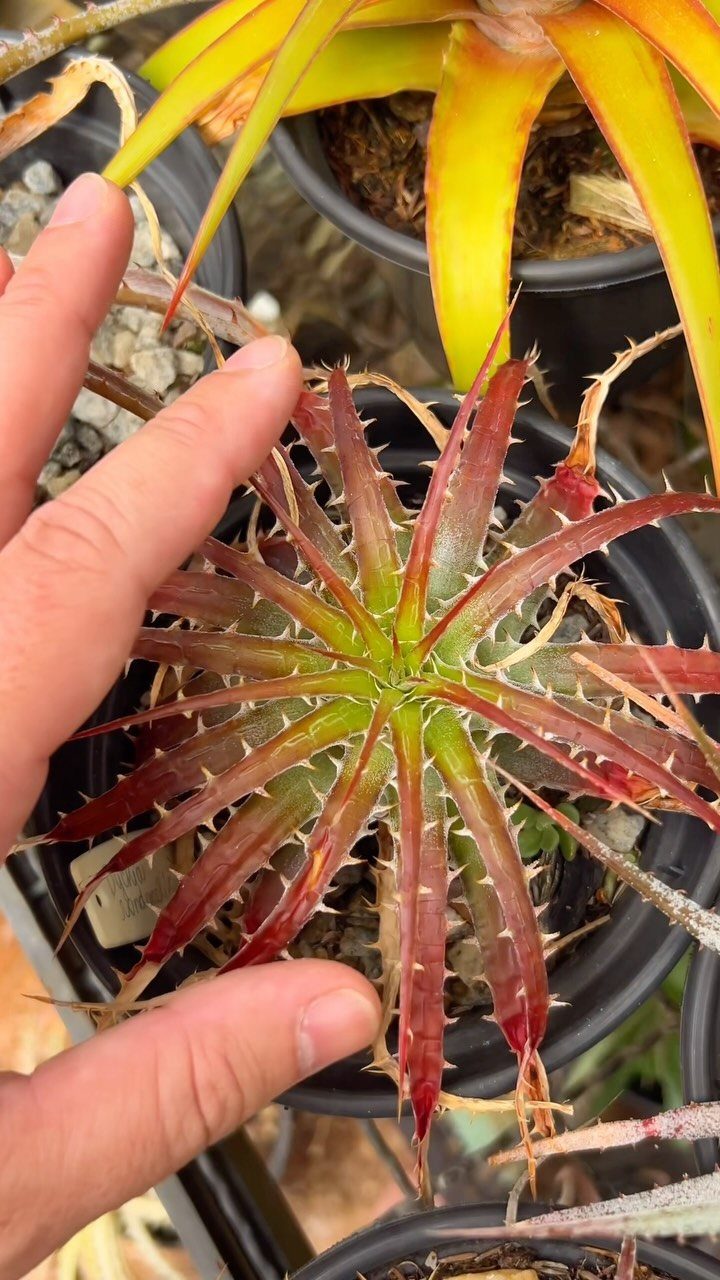
A tight rosette of small, pointed leaves makes this reddish-green succulent easy to place.
Because it stays compact, I’d line several along a shelf or table rather than hunt for one big plant. Touch the leaves gently, since the tips are sharp.
22. Red-edged Rosette Succulent
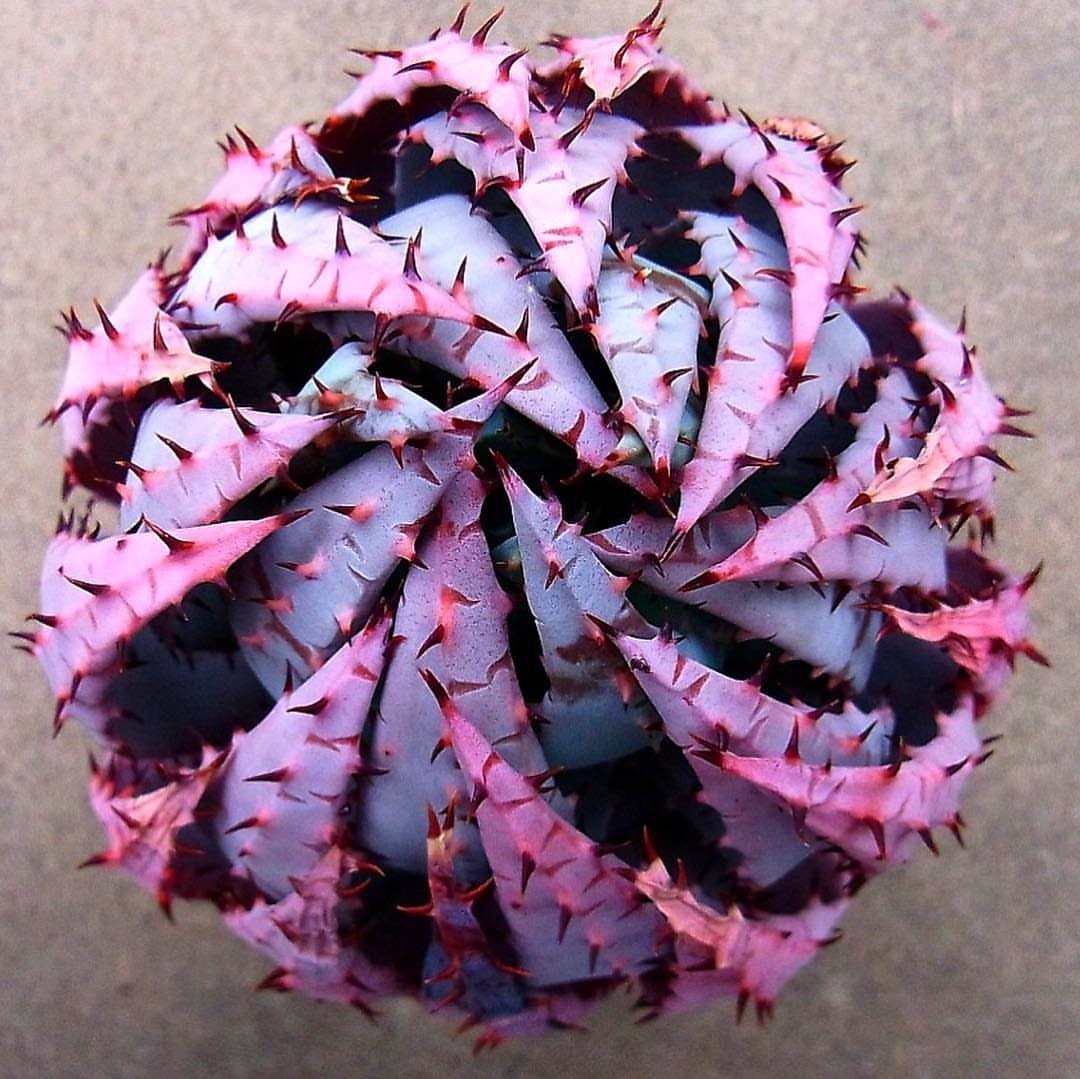
Blue-grey leaves with sharp reddish-pink teeth along the edges make this rosette look almost like it was painted. The color pairing is the reason to pick it over a plain green succulent.
I’d put it on a plain, neutral surface so nothing competes with the rosette. Keep it out of reach of small hands, since the teeth are real.
23. Purple Spiky Succulent
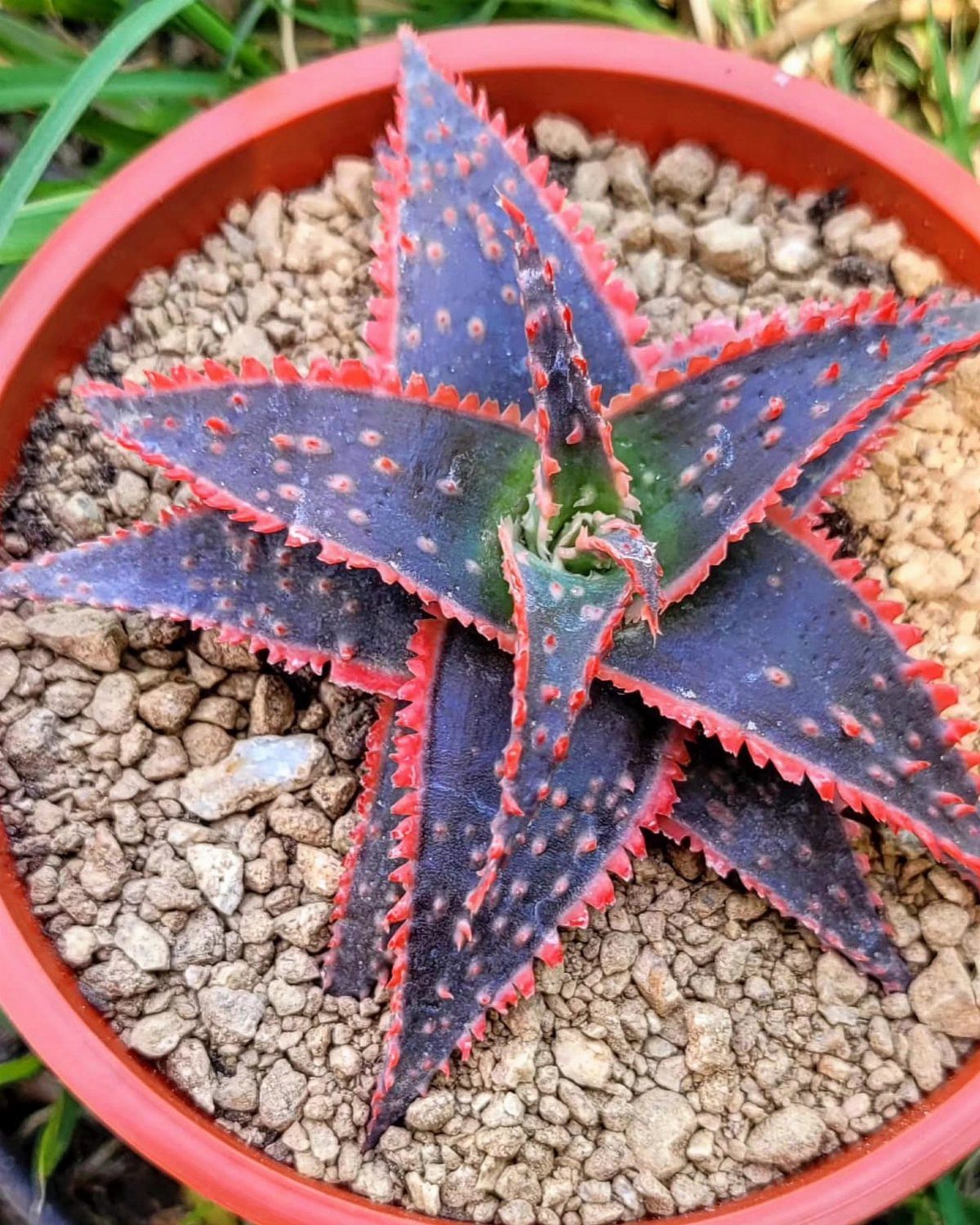
Dark purple, pointed leaves with red spiky edges and spots make this succulent look far moodier than green ones. Light gravel over the soil gives the color a pale backdrop.
I’d choose a terracotta pot like this one, since the warm red-brown picks up the red edges. Set it at table height so the spots are easy to see.
When designing with spiky plants, especially rosettes (plants with clustered leaves arranged like a rose blossom), recite this mantra: “Repetition, repetition, repetition.”
24. Spiky Flowering Plant
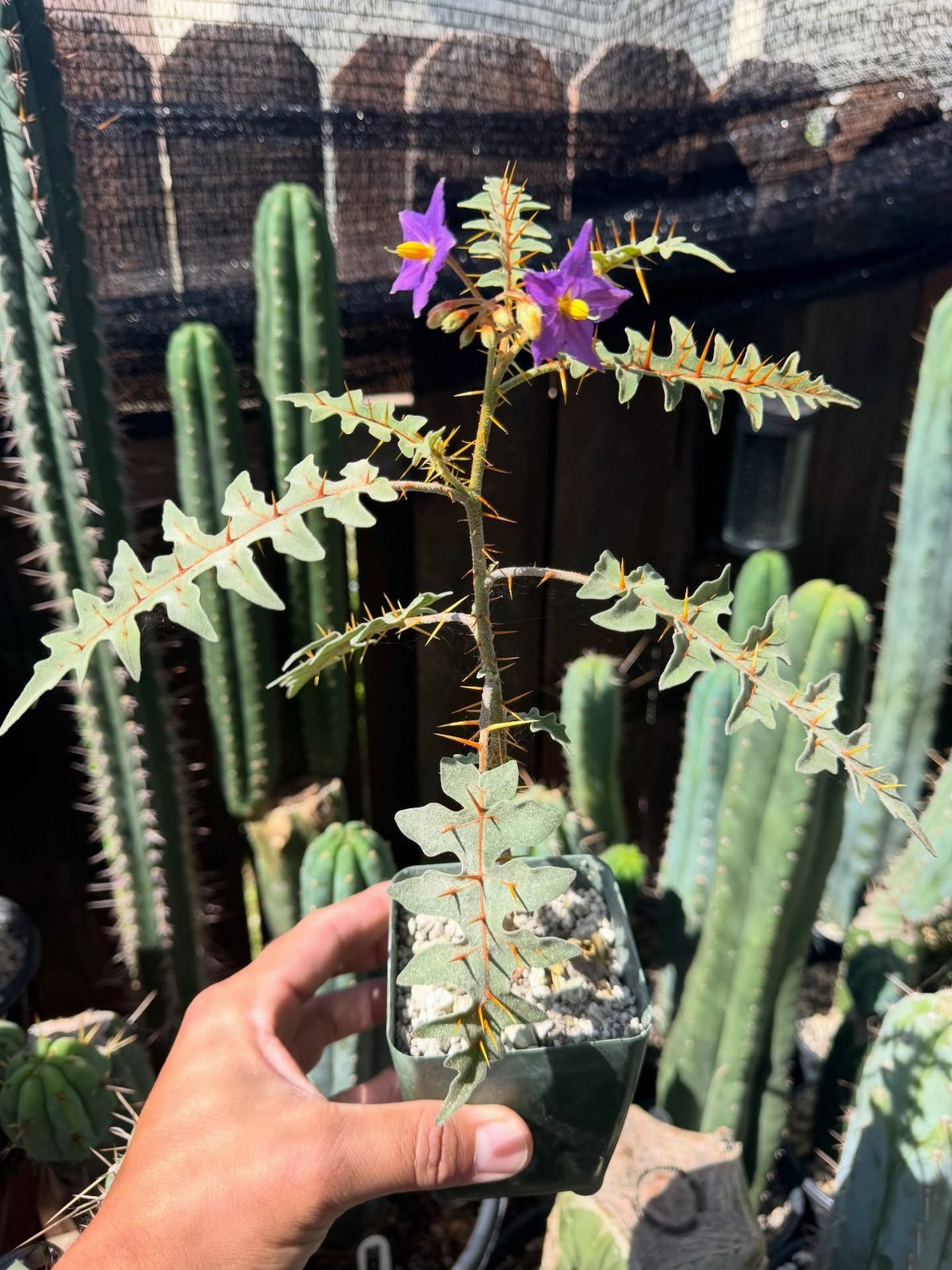
Jagged green leaves and a pair of purple flowers share one small pot, so this plant gives you color and spikes together. I’d pick it over a flowerless spiky plant for that reason alone.
A small pot holds well at the front of a cluster of taller cacti, where the purple shows. Handle it by the pot, not the leaves.
25. Spiky Hanging Plant
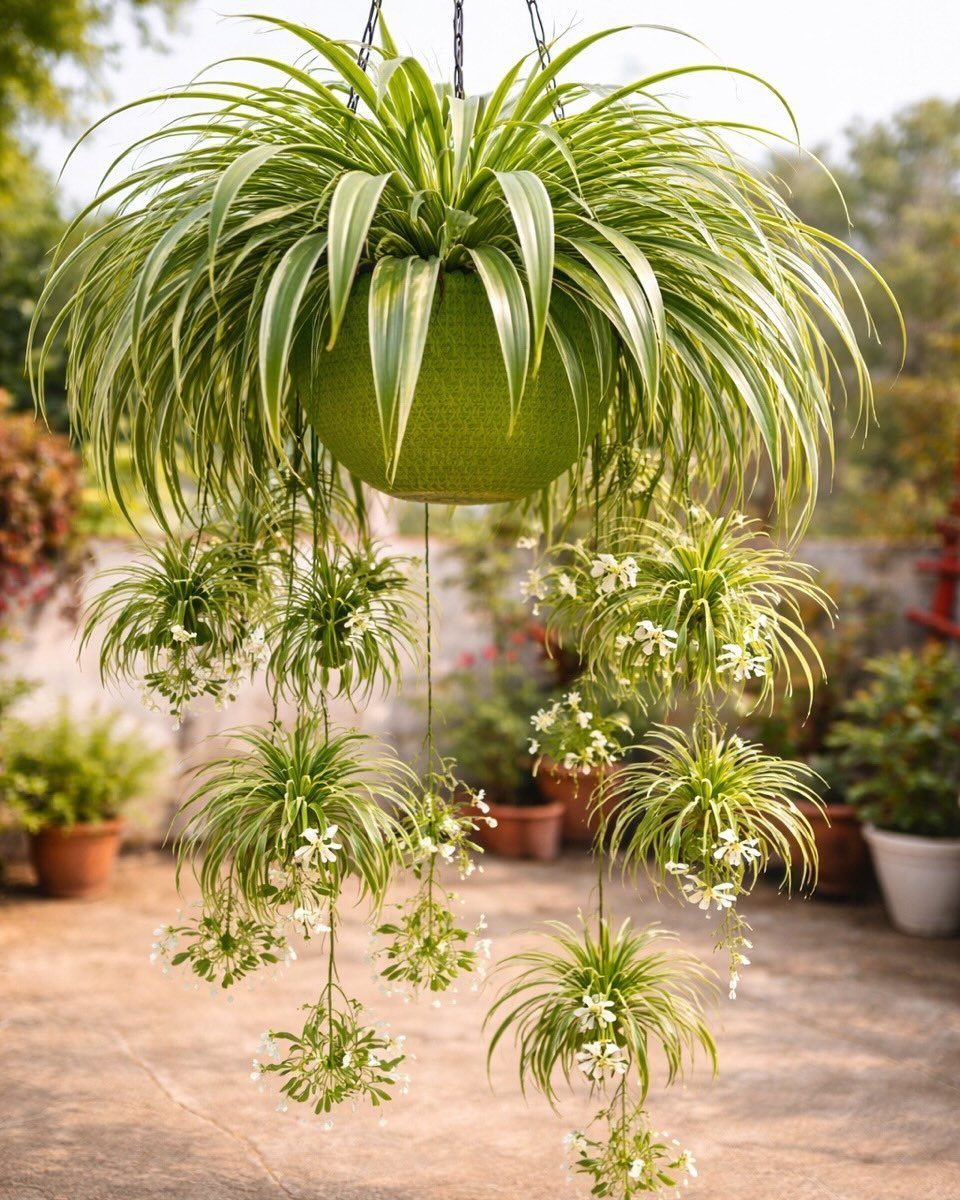
Long, narrow leaves arch over the rim of a green hanging planter and spill down, with small white flowers beneath them. The round planter and the green leaves read as one shape.
I’d hang it where the white flowers sit in view instead of overhead, and I’d pick a planter close to the leaf color, as this one is.
26. Young Palm in Husk
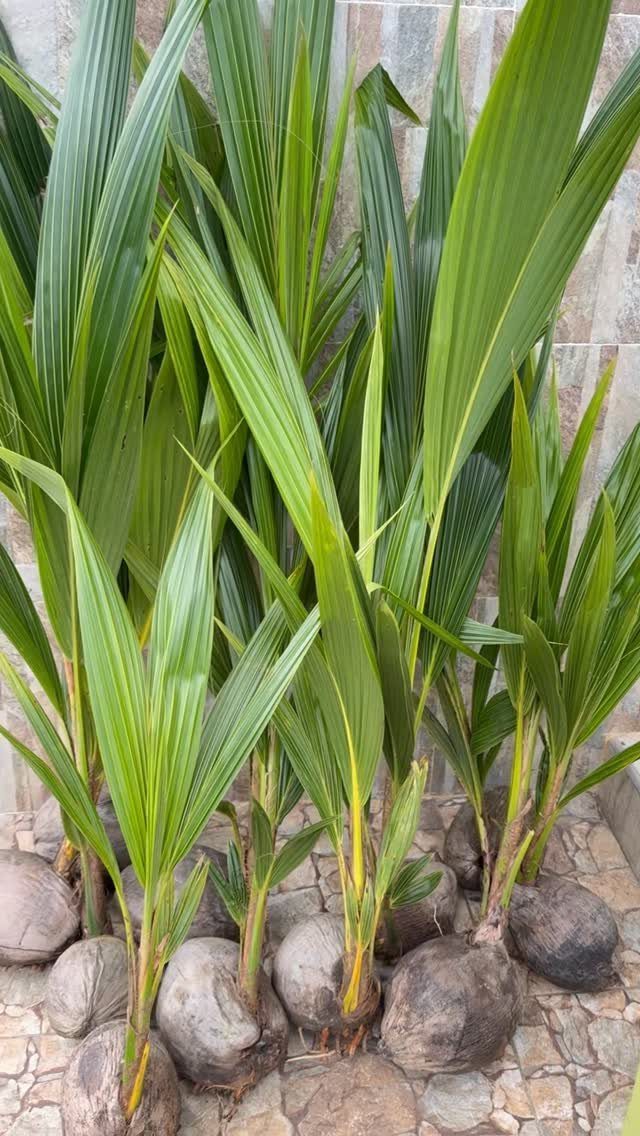
Brown husks stand in for pots here, each with a young palm sending up long, pointed green leaves.
I’d group several husks together rather than set out a single one, and let plain stone and gravel surround them.
27. Needle-leaved Shrub
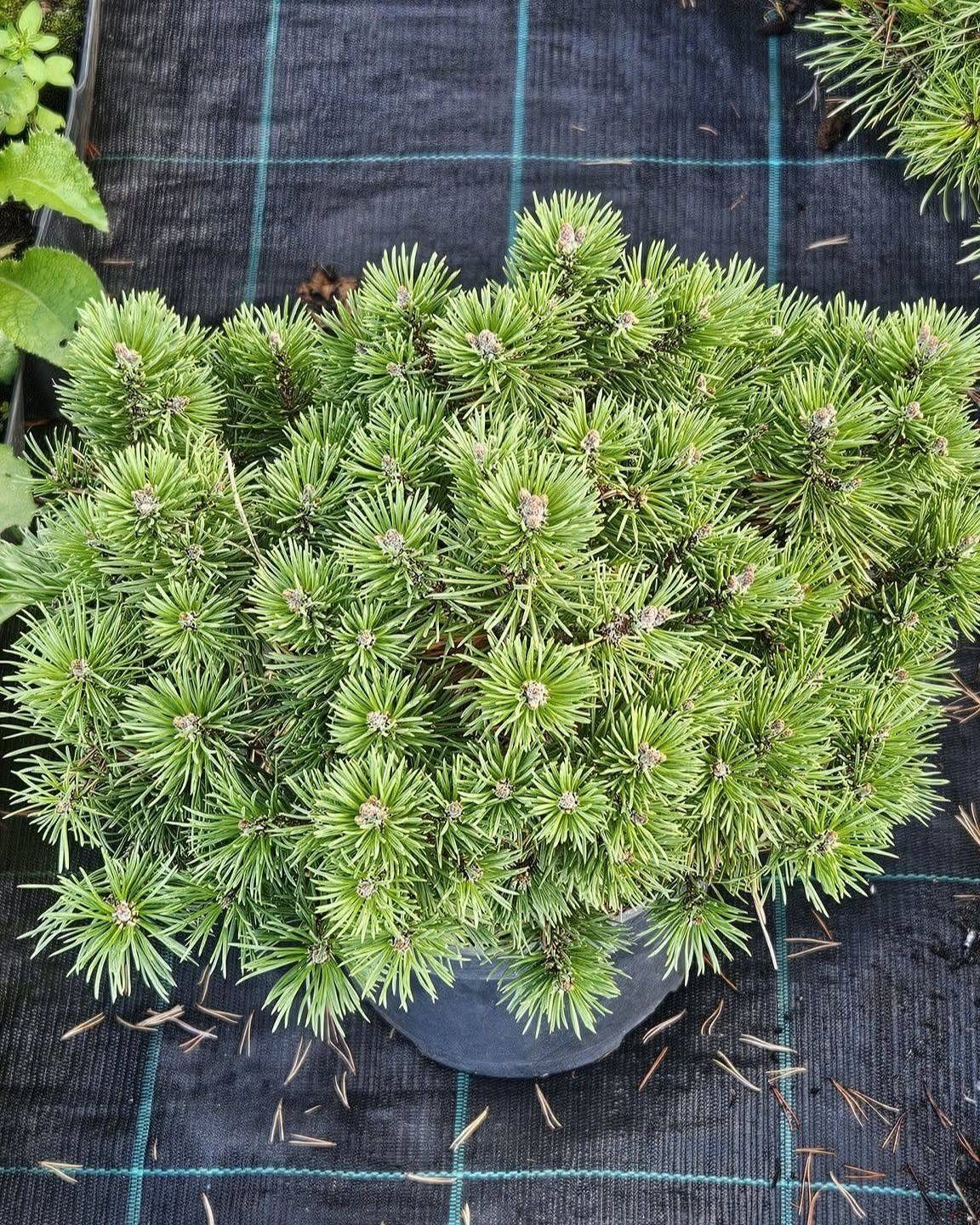
Dense needle-like leaves make this small shrub more about texture than shape. Packed tightly, they look soft from a distance and sharp up close.
I’d set it beside plants with broad, smooth leaves so the needles stand out.
28. Spiky Succulent
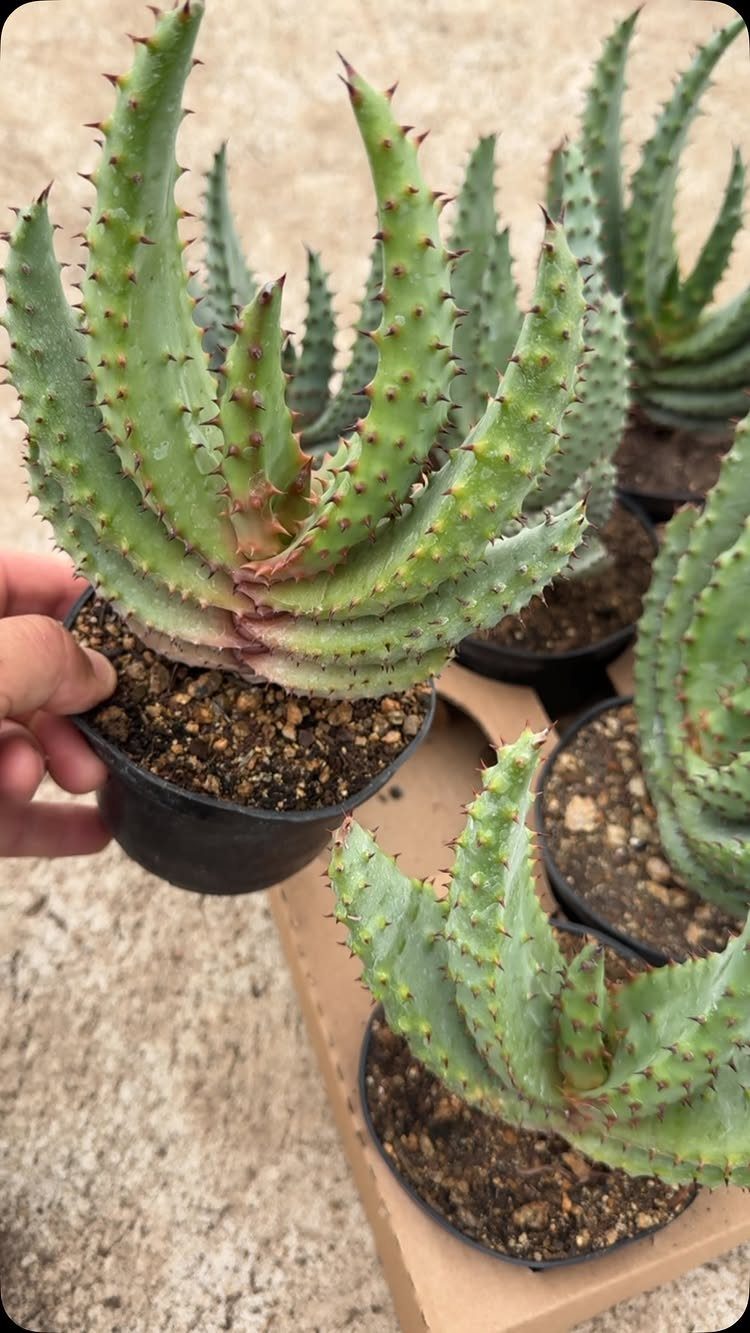
Every leaf on this small succulent bends in a slow curve before ending in a point, and the leaves are thick enough to look sturdy.
Buy 3 or 4 and line them up in matching black pots on a light surface, where the dark pots and green leaves stand out.
29. Spiky Flowering Plant
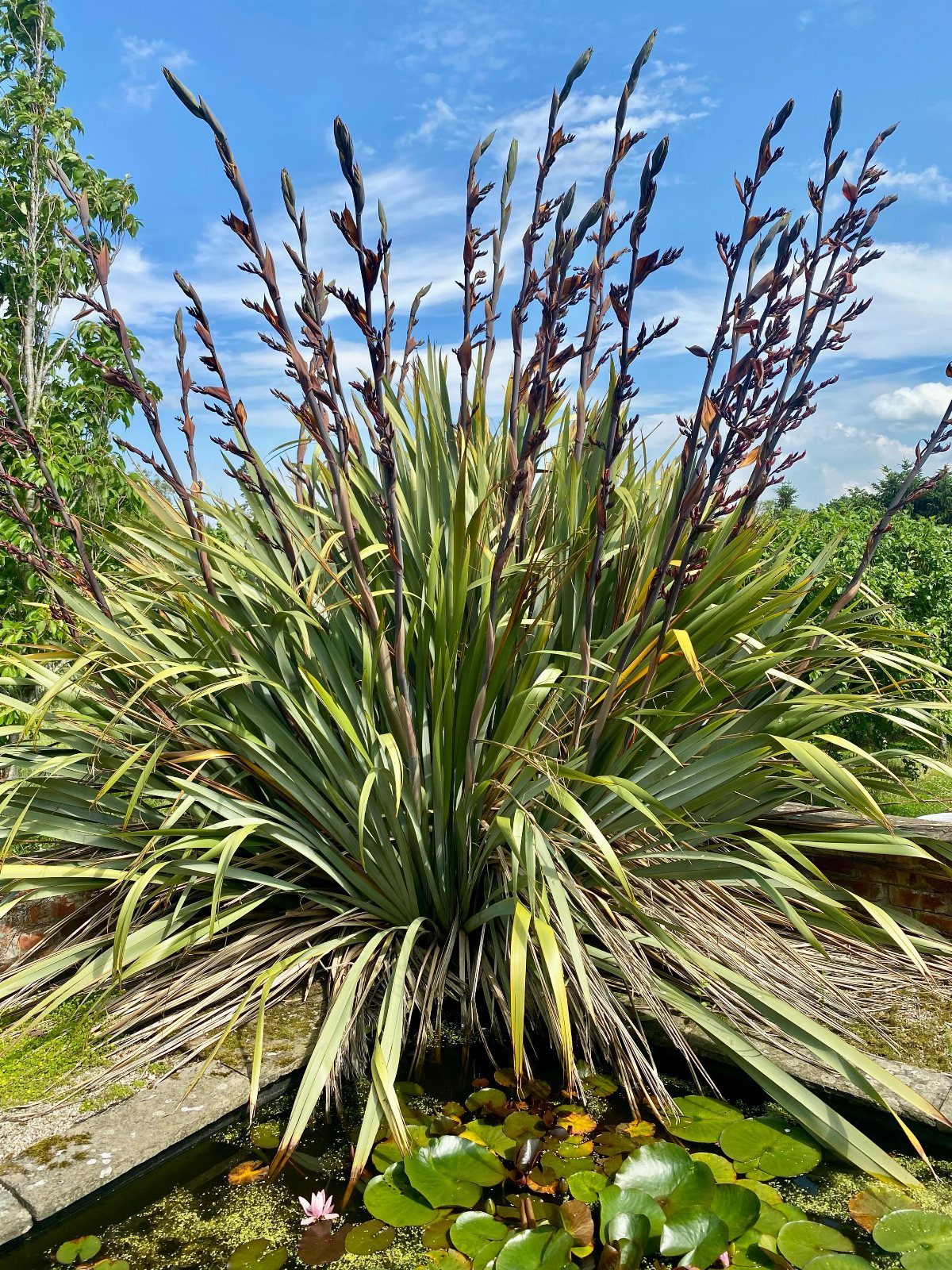
Beside a pond, long pointed leaves and tall dark flower stalks give this plant 2 distinct heights. The stalks rise well above the foliage, so the plant looks even larger than it is.
I’d plant it at the water’s edge, where lily pads and a small pink bloom add softness. It needs a big garden, so I’d skip it for small spaces.
30. Silver-blue Fan Palm
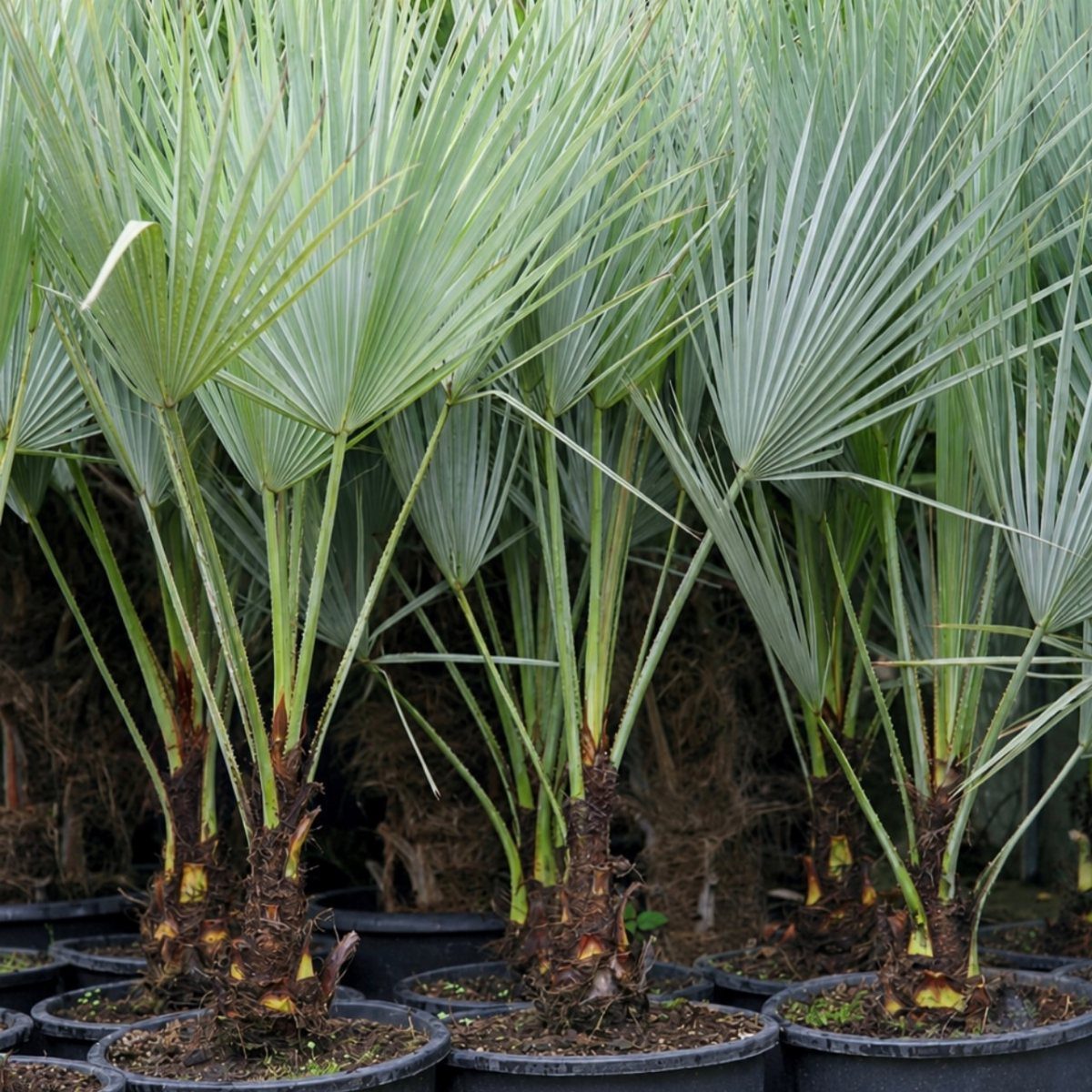
Rows of black nursery pots hold these small palms, each with stiff, fan-shaped leaves in a silver-blue tint. That tint is what separates them from the plain green palms.
If you’re buying from a nursery bench, I’d choose by color and take the plants with the most silver in the fans. A few in a row will look more deliberate than a single pot.
31. Spiky Palm Tree
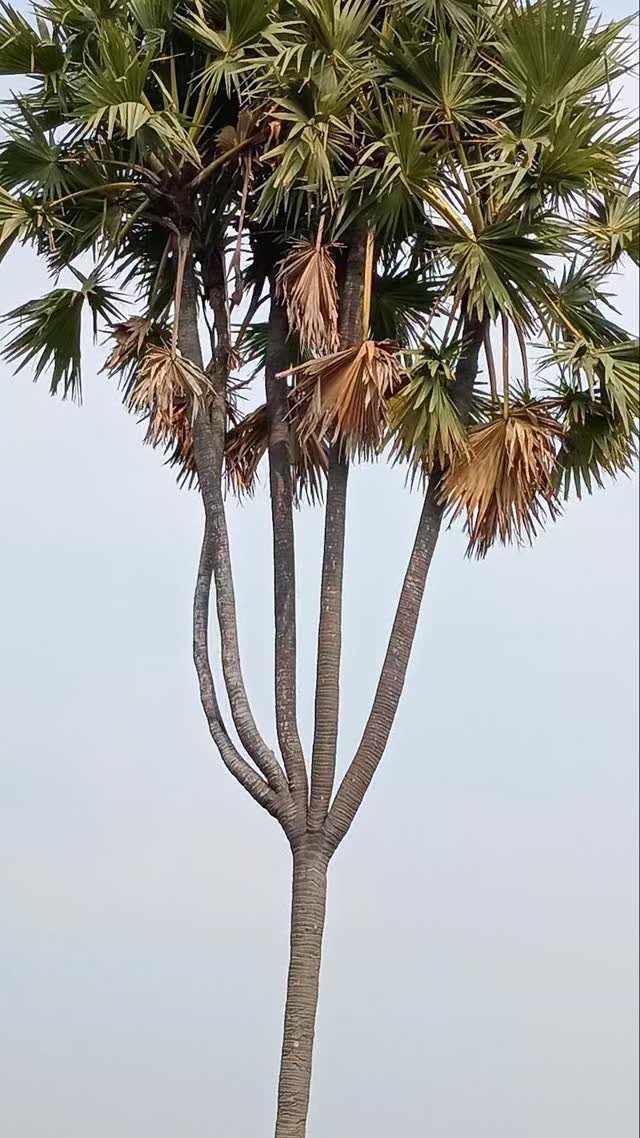
A tall palm crowned with pointed, fan-shaped green leaves looks best when you leave the dried brown fronds hanging as part of the shape.
I’d use one as a single tall accent in open ground, with the sharp tips kept well overhead and away from seating.
32. Dracaena
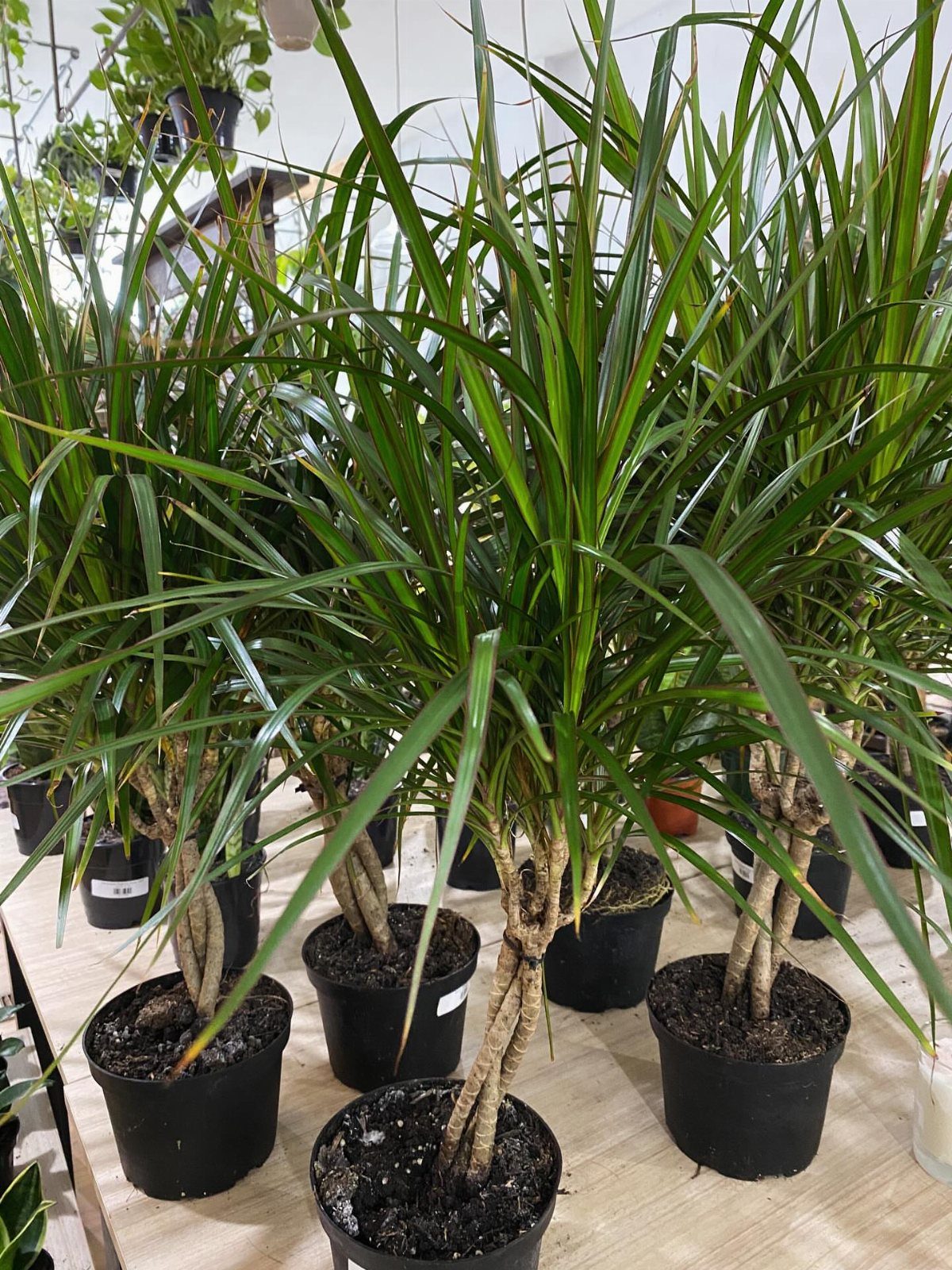
Dracaena grows long, narrow, pointed leaves on woody stems, so a plant reads as tall and upright rather than bushy.
Buying several in a row, as seen here, gives a stronger look than 1 lone pot. I’d choose plants with the fullest leaf tufts, and set them where the pointed tips stay above face height.
33. Madagascar Ocotillo
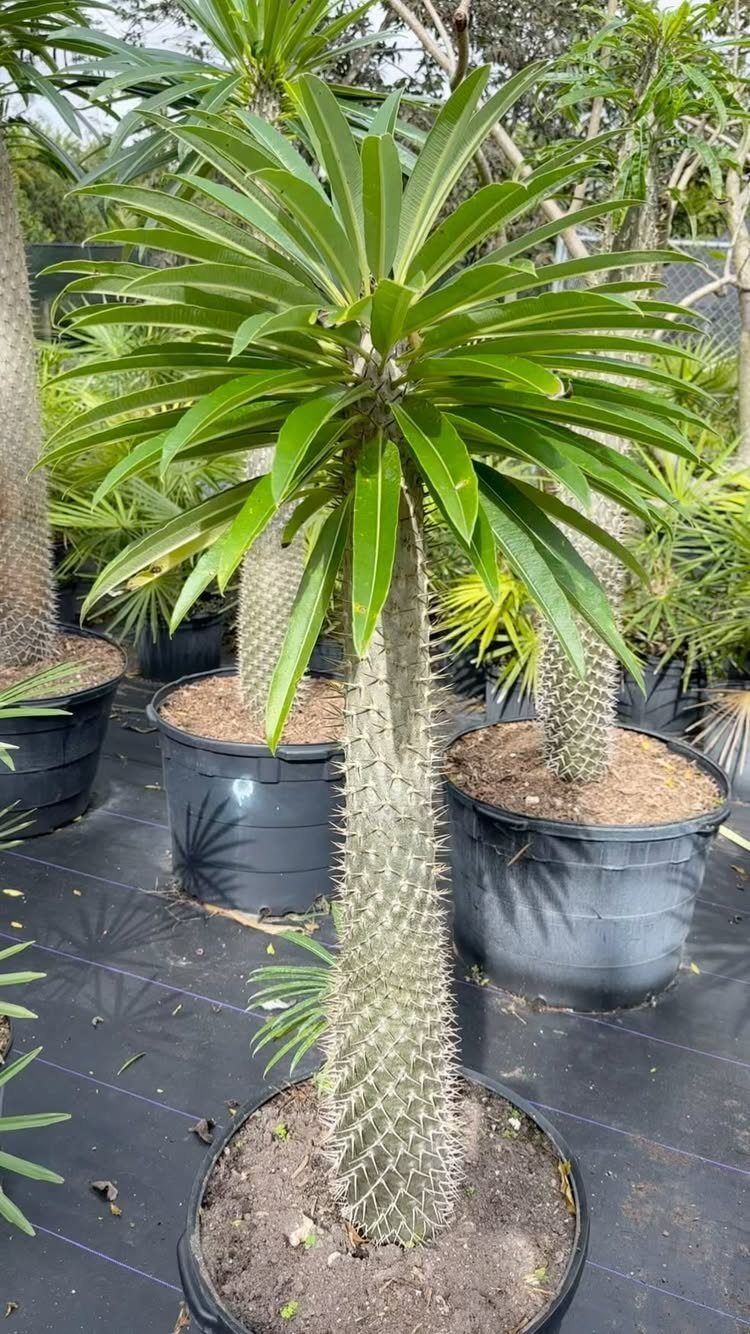
A spiky grey trunk topped with long, narrow green leaves gives Madagascar ocotillo an odd, sculptural shape. The trunk is the feature, more than the foliage.
I’d keep it in its pot on a patio or at a corner of a deck, where it can stand as a single accent. Keep it out of reach of kids and pets.
34. Purple-edged Spiky Plants

Grey-green leaves with purple edges and sharp points stay low and small, so a pair works in a tight spot. Light, sandy soil around them makes the purple trim easy to see.
I’d plant 2 or 3 close together and leave bare sand between them, so nothing hides the edges. Keep them off the path, since the points are sharp.
35. Spiky Ornamental Grass
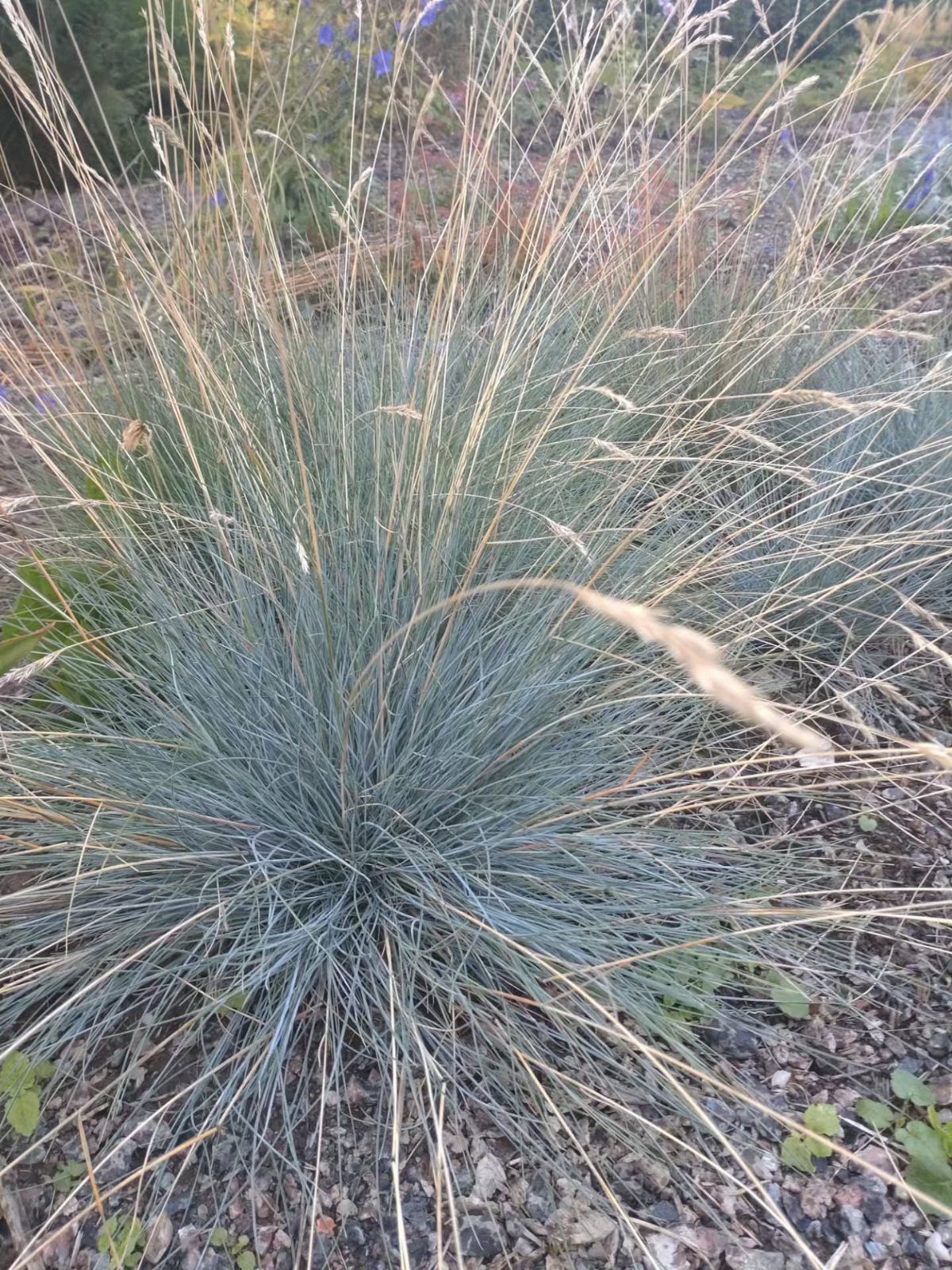
Blue-grey blades form a fine, spiky clump, and tan seed heads rise above it. Gravel around the base suits the cool color and keeps the focus on the shape.
I’d set it in a gravel bed or along a dry border, away from the edge of a walkway. The seed heads are worth leaving up so the clump keeps its height.
Frequently Asked Questions
Can you give me a list of spiky plants?
Agave, yucca, cactus, aloe, holly and New Zealand flax are the ones I reach for first.
Agave grows stiff leaves in a tight rosette with sharp tips, yucca has sword-shaped leaves, and aloe has thick, gel-filled leaves with small teeth along the edges.
Snake plant, prickly pear, sea holly and cycad also earn a spot. Each has a different shape, so pick by the outline you want and by how close people will walk.
What kind of plant has thorn-like leaves?
Holly is the clearest answer: its glossy evergreen leaves have thorn-like edges and look good all year.
The berried version wins for me, since the red fruit adds a color the plain bush can’t. Set it behind other plantings or tuck it into a corner so the pointed leaf edges stay away from walkways.
Hardy orange carries long thorns on its branches rather than its leaves, which makes it a workable living fence along a property line.
What plant has large spiky leaves?
No other spiky plant I know matches giant rhubarb for leaf size, and the huge, prickly foliage holds its own even in shade.
A big yard is the only place it fits, so a small patio or balcony is better off with something else.
For a smaller plant with a similar bold shape, a single tall yucca with stiff, sword-shaped leaves fills a corner well.
What houseplants have spiky leaves?
Aloe, snake plant and small cacti are the common picks, and yucca and agave also work indoors.
Aloe leaves are fat with gel and lined with small teeth along both edges. With kids or pets around, keep them on a high shelf or toward the back, because the tips land right at face level.