
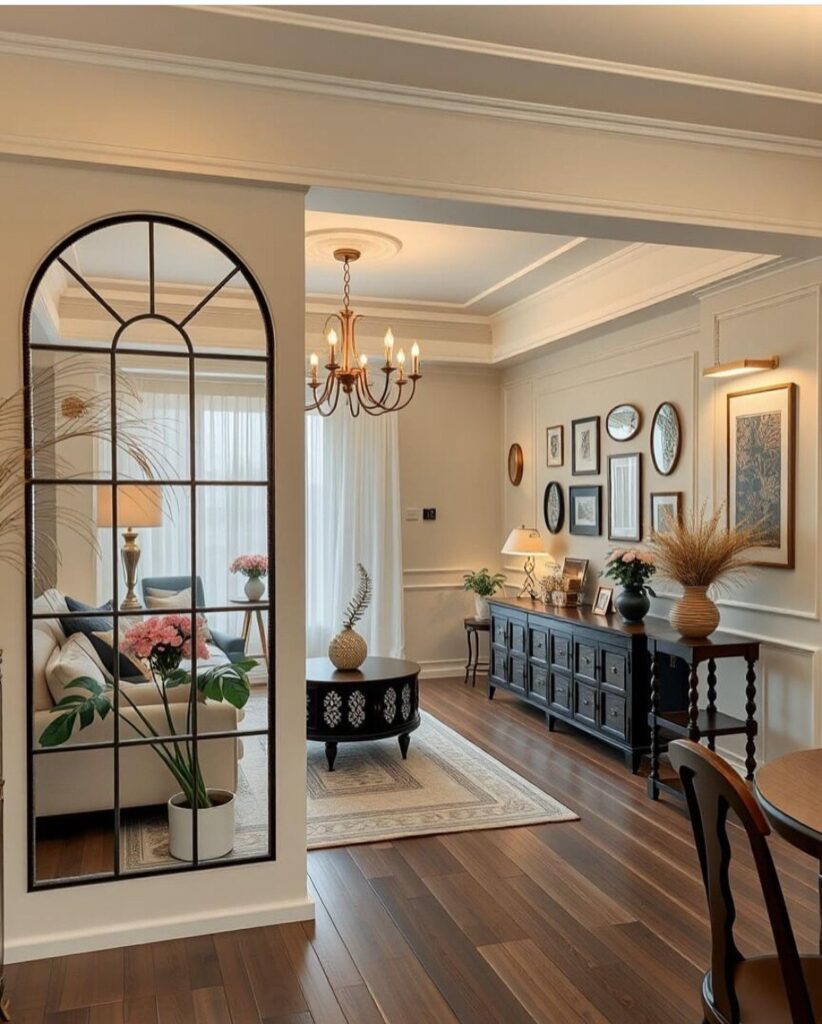
A mirror doubles whatever sits across from it, so the wall opposite decides whether it earns its spot. A window, a chandelier or a plant gains from the doubling, while a cluttered corner only gets louder.
The ideas here run from a leaning floor mirror that needs no drill to a grid of hexagons spaced over moss, and from frameless rounds to heavy antique frames that need studs or anchors rated for the weight.
On an open wall, the center of the glass usually sits 57–60 inches from the floor.
1. Oversized Statement Mirror
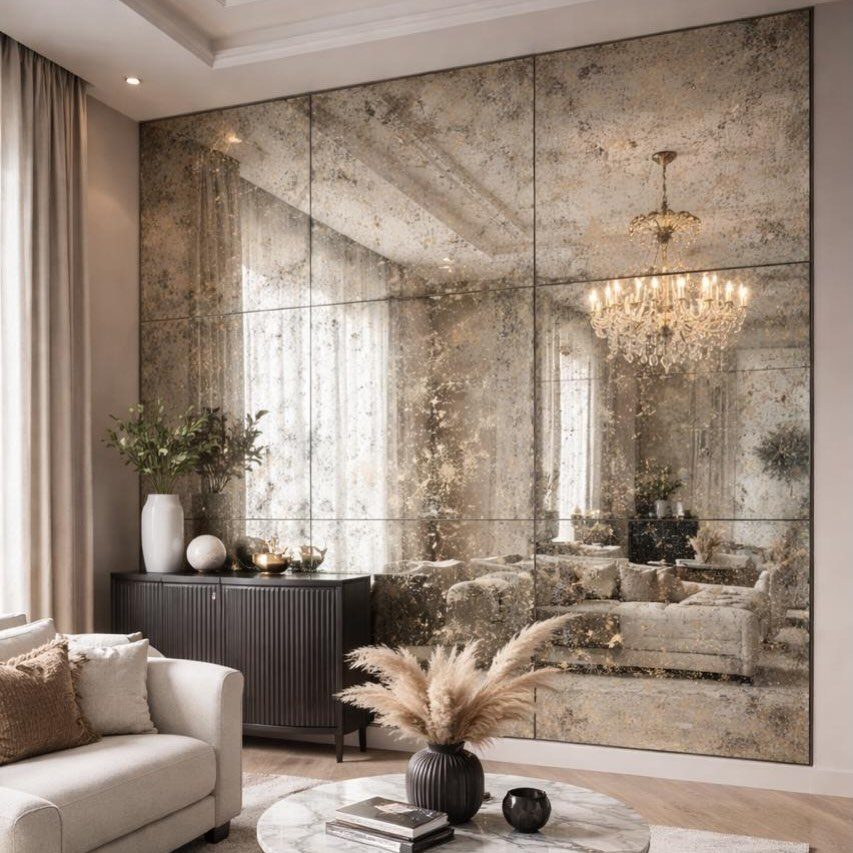
A mirror scaled to the wall, not to the furniture, is what makes this one work. Hung on the main wall of the room, it pulls the whole space back and doubles the light and depth in front of it.
I like an antiqued finish here because the soft, clouded glass reads warmer than a flat modern pane.
Place it opposite or beside your best light source, whether that’s a chandelier, a lamp or a window, so it reflects something worth seeing.
Skip it if the wall faces clutter. A big mirror repeats whatever stands in front of it.
2. Gallery Wall of Mirrors
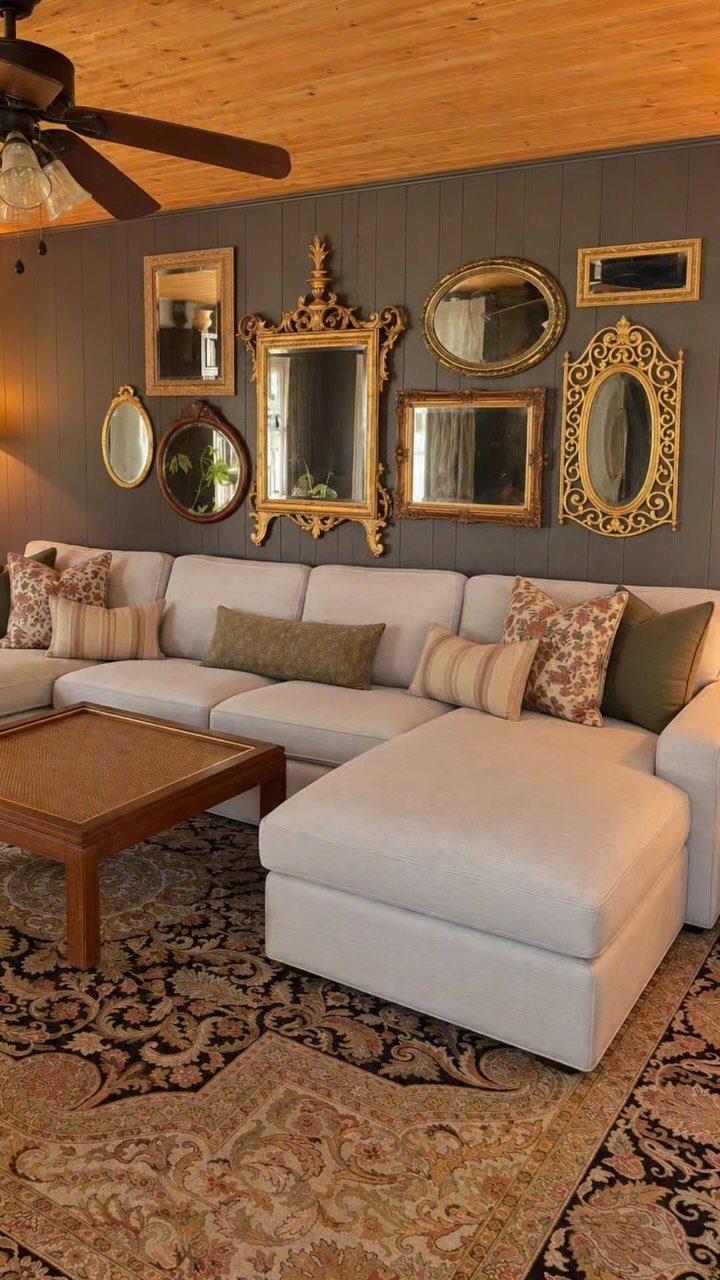
Mirrors in mixed sizes and frame shapes can fill a wall the way a framed print collection does, but with more light. Gold frames against grey is a pairing I’d copy: the warm metal stands out without any extra color.
Lay everything on the floor first and shuffle until the gaps look even and the largest piece sits slightly off center. Trace each mirror on paper, tape the templates to the wall, and adjust there before drilling.
Keep the whole group centered over the sofa, not stretched wall to wall.
3. Leaning Floor Mirror

Leaning a tall mirror against the wall skips the stud finder and the drill, which makes it my first pick for renters.
A black frame draws crisp edges on pale walls, so the mirror reads as a deliberate line and not an afterthought.
Set it on a rug edge or a hard floor, and keep walkways clear so nobody bumps it. A plant or a side table at the base anchors the mirror, and the look stays relaxed.
4. Mirror Above a Console
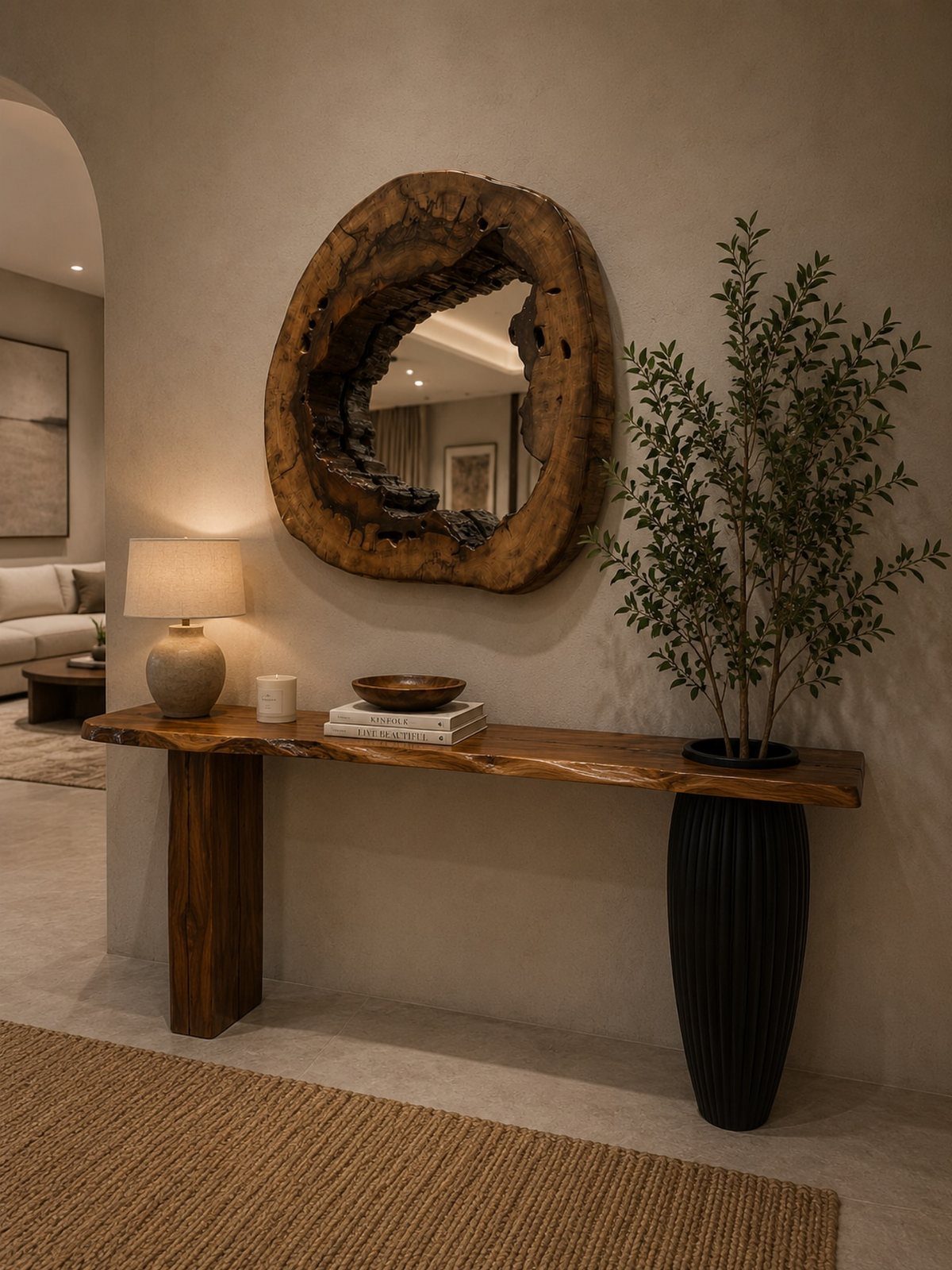
A wood frame over a wood console ties the two together, as long as the tones sit close to each other. A natural wood-framed mirror hung above it echoes the tabletop and ties the whole corner into one picture.
Match the grain tone loosely, not exactly. A mirror a little narrower than the console looks settled, and hanging it a hand’s width above the objects keeps lamp shades from touching the frame.
Pick a lamp that sits beside the mirror, not in front of it, so the glass stays clear.
5. Arched Floor Mirror

A curved top is the cheapest softening trick a boxy living room has.
The arch on this floor mirror cuts against the hard rectangles of the console, rug and walls, and the black frame keeps the shape graphic instead of fussy.
Lean it where the room has the most straight edges, like beside a console or near a door frame. Plan on a wall space at least as wide as the mirror, plus a little breathing room on each side.
Against a blank wall in your living room, think about leaning a large arch floor mirror, which will resemble an arched entryway into a whole new space and make your living room feel much larger than it really is.
6. Round Accent Mirror
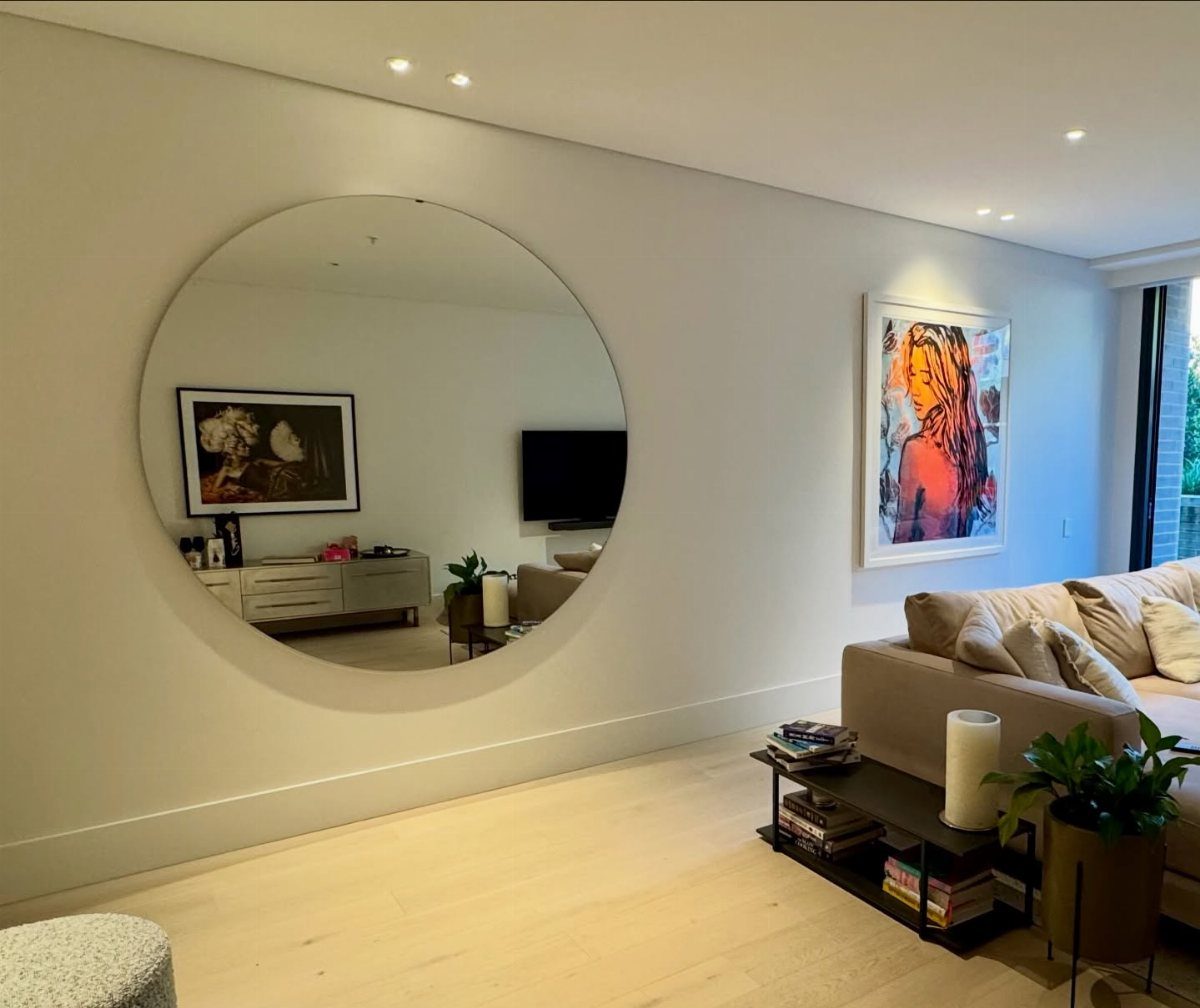
Round and frameless is a quiet combination, and I’d choose it for a wall that already has strong furniture below it.
The circle softens a sofa’s straight back and the edges of a coffee table without adding another frame to the room.
Go large. A small circle gets lost on a big wall, while one that spans most of the sofa’s width looks planned.
Set the center where you would for gallery art, based on where people’s eyes land rather than on the ceiling height.
7. Mirror Above the Sofa

Gold framing on white walls above gray upholstery gives the sofa wall a warm anchor line. A plain rectangular frame suits the spot because it repeats the straight back of the sofa instead of competing with it.
Hang it a bit narrower than the sofa, roughly 6–8 inches above the back cushions, so the two read as one group. I’d choose this over art in a room that already has plenty of pattern.
8. Mirror with Artwork
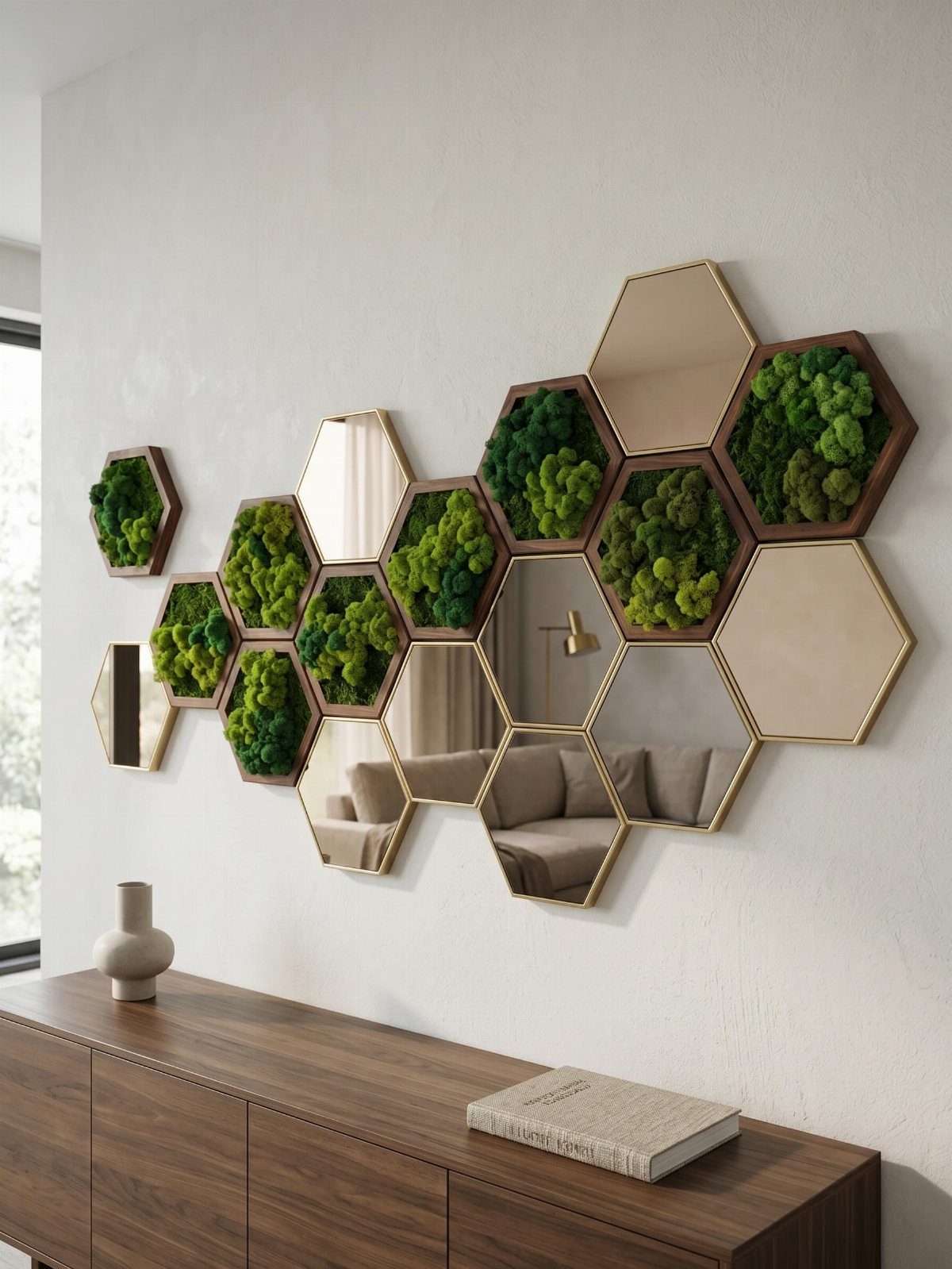
Mirrors cut in one repeating shape, like hexagons, read as part of a textured panel instead of a single bright pane when you space them evenly in a grid over moss or a similar soft material.
The green softens the hard shine of the mirrors, while their reflections lighten the dense moss so it never looks heavy.
I’d keep the cluster no wider than the sideboard beneath it, so the wall and the furniture read as a pair.
This works better as wall art than as a mirror for checking your outfit, since each piece reflects only a small slice of the room.
9. Geometric Wall Mirror

Pattern comes built in with a paneled diamond mirror, so the wall needs very little else. The facets split the reflection into pieces, which gives a plain wall more interest than one flat pane would.
A calm sofa like this beige one lets the mirror lead. I’d keep the pillows simple and the wall texture quiet, because a busy room fights with all those angles.
10. Black Grid Mirror
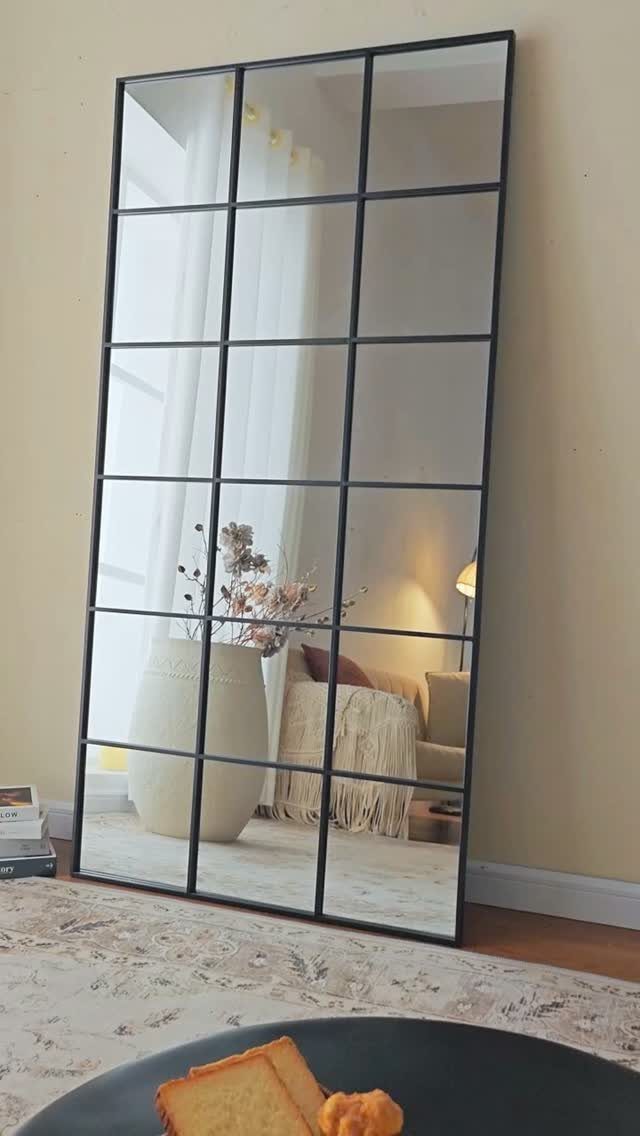
A yellow wall needs something dark to steady it, and a black grid does that job. The thin lines break the reflection into small squares, so the mirror looks more like an interior window than a plain piece of glass.
Pick a spot where the grid frames something pleasant, like curtains or a vase of dried flowers. Black against a strong wall color gives the sharpest contrast; against a pale wall, it gets softer.
11. Organic Shaped Mirror

No 2 edges match on a freeform mirror, and that is the appeal. The loose outline reads more relaxed than a rectangle and gives a formal room an easier feel.
Gold on a neutral wall works well over a straight-lined wood sideboard, where the curves have something crisp to play against. Center it on the furniture and keep the surface below simple, since the mirror already supplies the movement.
Choose a Reflection Deliberately
Before you pick a spot, stand where you sit most and look at what the glass would show.
A mirror repeats whatever faces it, so aim it at artwork, a plant, an architectural detail like a window or molding, a light fixture, or a good view outside.
Check the angle from the doorway too, since that’s the view you get every day. Leave some bare wall around the mirror so the reflection reads as a calm picture and not extra clutter.
In a small living room, scale matters more than anything.
A 12-inch mirror floating on a 10-foot wall barely registers, but one that runs close to the height of the sofa or console below it stretches the sightline and widens the whole space.
An unused corner is a good place to try it.
Match Frame and Room Materials
Look around the room for a material that’s already there: a brushed metal lamp base, black window hardware, white trim.
Pick a frame that echoes one of them, and the mirror reads as part of the room instead of an add-on. Brushed metal, matte black and crisp white all suit a modern scheme.
After that, choose by mood. Brass or gold frames lean formal, oak or walnut reads softer and homier, and a frameless pane stays out of the way in a clean, modern room.
An ornate antique frame adds age and character, and I like it best in a vintage or eclectic room.
In a very modern space it can look too formal, though paired with a clean-lined sofa the contrast can still look deliberate. Heavy frames need secure mounting, so use wall anchors or studs rated for the weight.
Hang at Eye Level
For a decorative mirror, eye level is the rule, and the usual center height is 57–60 inches from the floor. Measure up from the floor to the middle of the glass, mark it, and hang from there instead of eyeballing it.
That number fits an open wall. Over a console, sofa or sideboard, the furniture sets the height, so position the mirror relative to the piece below it.
Next to the mirror, wall sconces add light in a small room, and artwork or a bit of greenery keeps the wall from looking empty. Keep these pieces to one side so the glass stays clear.
Frequently Asked Questions
Where should mirrors be placed in a living room?
Face the mirror toward a window, lamp or chandelier, or hang it right beside one, and the glass will bounce back light instead of a blank wall.
Above a sofa or console works well too, and a tall mirror leaned against the wall is the easiest option for renters because it needs no drilling.
Several mirrors in mixed shapes and sizes can share one wall, as long as the group stays centered over the sofa.
What can I hang next to a living room mirror?
In a small room I reach for wall sconces first, since they give off light of their own; a framed print or a trailing plant fills out the rest of the wall.
Keep them beside the frame, not in front of it, so the reflection stays clean. A lamp follows the same rule: set it beside the mirror, not in front of it.
How do I choose the right mirror for my living room?
Before you buy, sit where you spend the most time and note what the glass would catch, then size the mirror to the furniture beneath it, going a little narrower so it doesn’t crowd the wall.
Pull the frame finish from something already in the room: brushed nickel on a lamp, black window hardware or painted white trim all work.
Brass and gold feel dressier, wood like oak or walnut feels warmer, and a mirror with no frame nearly disappears in a modern room.
Are wall mirrors a good idea for small living rooms?
Yes, as long as the mirror is big enough to matter.
A mirror close to the height of the sofa or console under it opens up the sightline and makes a small room read wider, while a 12-inch mirror on a 10-foot wall does almost nothing.
A bare corner is a low-risk spot to test one.
What size mirror works best for living room wall decor?
Go a little narrower than the furniture beneath it. Above a console, go a bit narrower than the piece for a settled look; above a sofa, hang the mirror 6–8 inches over the back cushions.
Round mirrors break the go-small habit: one that covers most of the sofa’s width looks intentional, while a little circle on a big wall just floats.
Do mirrors make a room feel bigger?
They create the look of more space, though not any real extra square footage. One big mirror on the main wall catches daylight and lamplight and sends it back, so the room gains both brightness and depth.
How well it works depends on what the glass faces, so aim it at a window, a lamp or something attractive.
Which mirror shape works best in a living room?
For making a room feel bigger, oversized rectangular and round mirrors give the strongest effect, and an arched top draws the eye upward.
A round mirror takes the edge off a straight sofa back and a square coffee table, and an arch plays against the hard rectangles in a boxy room.
An irregular, organic shape looks easygoing above a sideboard with straight wood lines.
Are antique mirrors still in style?
Yes. Antiqued glass with its cloudy patches feels warmer than a crisp new pane, and an ornate old frame brings age and character, which suits a vintage or eclectic room best in my view.
A very modern room can make it feel stiff, but setting it above a clean-lined sofa makes the contrast look chosen. A heavy frame needs anchors, or screws driven into studs, that are rated for its weight.
What are the rules for mirrors in interior design?
Mark the spot with a tape measure rather than guessing: the center of a decorative mirror belongs 57–60 inches off the floor. Then choose what it reflects and pick a frame that echoes a material already in the room.
Where should mirrors not be placed in a living room?
Skip walls that face clutter, because the mirror doubles whatever sits across from it. Look at the mirror from the doorway as well, since that’s the view you’ll see most days.