I’ve spent years proving the “perfectly matched set” belongs in the past with wall-to-wall carpet. Intentional friction, where chairs share just enough DNA to feel related without catalog-page sameness, is what makes guests actually linger. The secret isn’t throwing random finds together, learned that the hard way when my first attempt looked like a yard sale detonation, but anchoring everything to one invisible thread: walnut grain threading through mismatched silhouettes, a curved back echoing across eras, or seat heights locked in crisp horizontal alignment. I always start with two chairs sharing a single element, warm oak, maybe, or that subtle curve, then build outward. Let a bench anchor one long side while scattering companions with the same wood tone. Plush host chairs need streamlined sidekicks; vintage treasures demand new production partners tied by finish, not era. Keep that 25–30 cm clearance for actual human legs, match your metals or woods like a stubborn through-line, and coherence emerges from what first looked like chaos. A collection evolves from desperate to designed when you follow these simpler-than-expected methods.
Start Mixing Dining Chairs With One Unifying Element
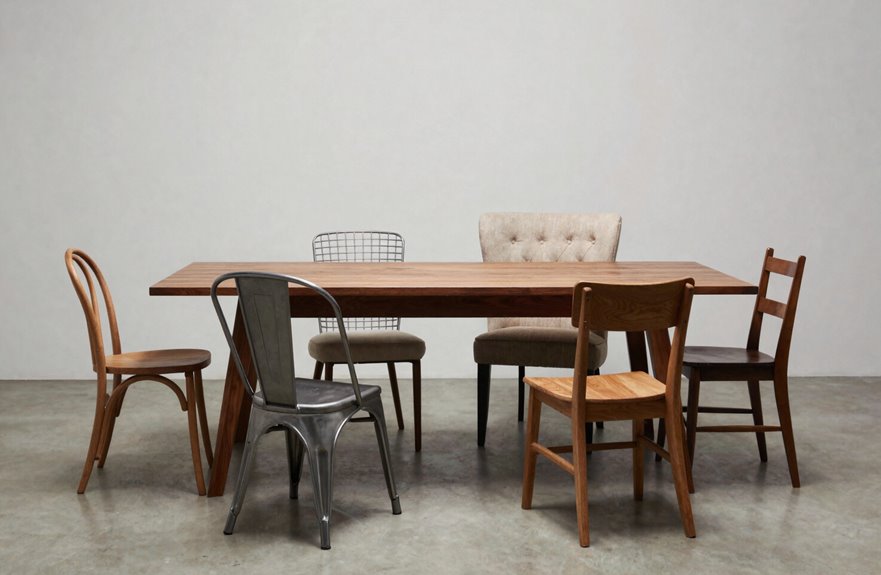
How do you keep a room full of mismatched chairs from looking like a garage sale exploded? Embrace one unifying element and watch the magic happen.
Mismatched chairs look intentional, not chaotic, when you anchor them with one unifying element.
When I started mixing chairs around my own table, I panicked until I anchored everything in walnut wood. Suddenly my vintage finds and modern scores felt like family. That single finish became invisible connective tissue, creating cohesion without sacrificing personality.
I’ve seen designers like Leanne Ford pull this off spectacularly, repeating one silhouette or material across wildly different styles. Start with head chairs sharing your chosen element, then build outward. Before you know it, your mixed chairs transform from random collection to intentional, welcoming gathering spot.
One common thread creates visual harmony across otherwise disparate pieces.
Keep Seat Heights and Proportions Consistent
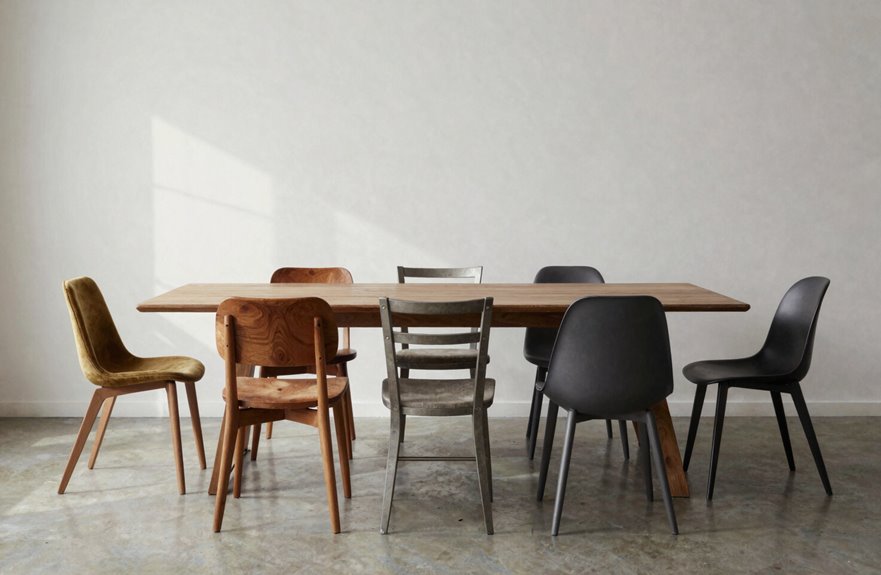
Mixed seating only works when that horizontal line stays crisp. Your eye travels across the table, creating visual harmony. The EN 1335-1 standard supports this principle.
Don’t forget table clearance. That 25-30 cm gap between seat and tabletop is essential for legroom. Inadequate clearance creates discomfort and restricts movement during meals.
Pair Statement Host Chairs With Simple Side Chairs
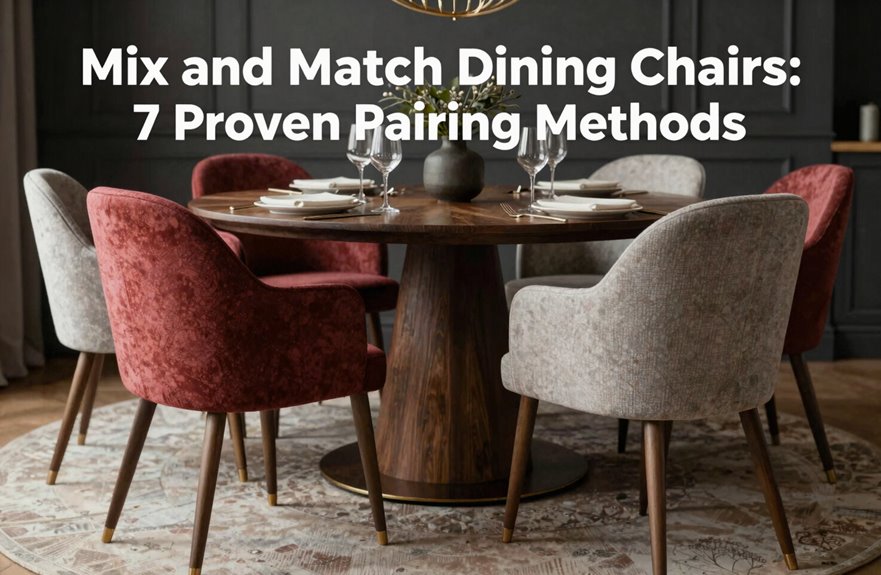
I love how a killer host chair instantly says “I’m in charge here” without you having to raise your voice. I learned this the hard way after buying six identical statement chairs; my dining room looked like a throne room for a very confused king. Anchor those dramatic ends with simple sides that share just one DNA strand, maybe oak legs or a curves-in-all-the-right-places silhouette, so your eye travels peacefully down the table without getting whiplash from too many competing divas. The real trick is balancing that silhouette contrast. Think Kelly Wearstler’s sculptural Joaquim host chairs against quiet Parson sides, or a curvaceous Velvet Underground moment flanking straight-back minimalist seats. When you pair contrasting host and side chairs this way, the table gains visual coherence instead of fighting for attention.
Visual Hierarchy Establishment
Why settle for a dining room that feels flat when you can build one with real visual drama? Creating visual hierarchy means anchoring each end of your table with statement host chairs, such as sculptural Arhaus velvet thrones, then lining the sides with simpler, quieter companions. It’s like casting a movie: you need your stars, but the supporting cast matters too.
Keep seat heights nearly identical and widths proportional to your tabletop, or you’ll feel like you’re climbing furniture. Maintain cohesion by threading one finish through both pieces, maybe warm oak tones or brushed brass details, to ground the mix. That repetition creates rhythm, so your eye travels smoothly without getting dizzy. Belonging starts with intentional contrast that feels curated, not chaotic.
Silhouette Contrast Balance
How do you keep a dining room from looking like a furniture showroom explosion? Silhouette contrast with serious balance is the solution.
I pair sculptural host chairs, think Kelly Wearstler’s channel-tufted throne-like beauties, with streamlined side chairs that practically disappear. The hierarchy feels intentional, not accidental. My statement ends once dwarfed my table completely. Now I always check that the host chair silhouette complements the table’s profile first.
The magic glue is cohesion through shared details. I match wood tones or repeat a metal finish so these distinct forms feel related, like cousins at a reunion. I’ll echo one element everywhere, maybe tapered legs or a warm linen upholstery, so the mix sings rather than shouts.
Your guests will notice the sophistication without knowing why.
Balance Upholstered Comfort With Wood or Metal Frames
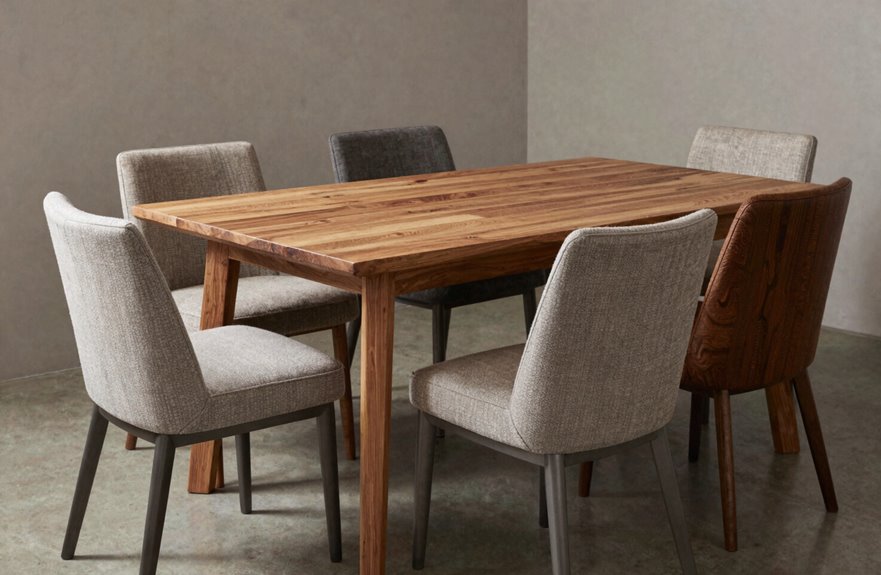
I love how upholstery softens a room, but too much padding around a big table makes everything feel like it’s sinking into the floor. That’s why I always balance those plush velvet head chairs, the ones that make you want to linger over coffee, with lighter wood or metal side chairs that keep the visual weight manageable. The trick is sticking to one frame finish throughout. Think of it as the thread that ties your whole mismatched family together, even when you’re mixing textures liberally.
Comfort Meets Structure
Where do we even begin when our hearts want sink-into-it softness but our dining rooms crave a little architectural backbone? I’ve found the sweet spot pairs upholstered chairs at the heads with lighter wood or metal side chairs. Lisa’s Collected European-Vibe nails this, using airy frames to keep things from feeling stuffed around a substantial table.
Stick to similar seat heights so everyone sits eye-to-eye; no one wants to feel like they’re at the kids’ table. Repeat wood tones or metal finishes somewhere in both pieces. I once matched walnut legs on my velvet captains to the pale oak side chairs, a subtle detail that tied the whole room together. Tonal upholstery within the same family reinforces visual cohesion.
Weight Distribution Strategy
Why does one side of the table always look like it’s about to float away? Staring at a dining setup where airy metal chairs seem to drift while upholstered ones anchor the room reveals a simple principle: weight distribution.
Keep seat heights within 2 cm so everything shares one clean horizontal line without visual chaos. Pair upholstered comfort with wood or metal frames by matching leg colors or metal tones to create a cohesive through-line tying everything together. Chair scale matters significantly. Those leggy chairs need companions with similar visual heft, or they will appear to float. Your table’s silhouette anchors the whole arrangement, so let it ground your mix with confidence and style.
Material Harmony Essentials
When I’m hunting for the perfect mix of chairs, I always start with the wood finish. It’s my covert tool for keeping things from looking like a yard sale explosion. A consistent walnut tone across every piece, whether it’s a sleek mid-century shell or a chunky farmhouse seat, creates this gorgeous invisible thread that lets you play with shape without losing your mind.
I love pairing upholstered beauties with wood or metal frames, letting that plush fabric bring the color party while everything stays in the same tonal family. Your cohesive palette becomes the bouncer at this design club; mixed silhouettes get in, chaos stays out. Match those leg finishes, keep one through-line constant, and suddenly your dining room feels intentional and well-designed.
Blend Vintage Finds With New Production Chairs
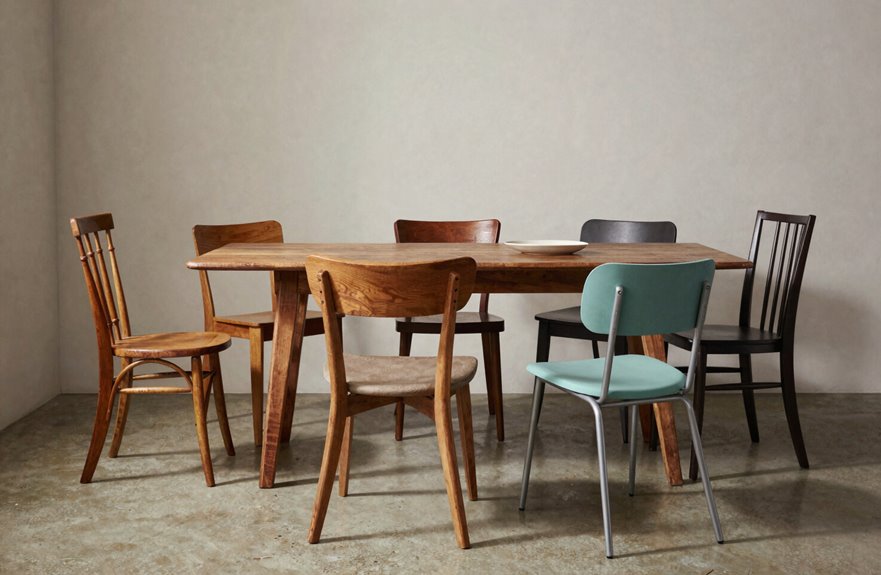
The thrill-hunt of vintage chairs can turn into a storage-unit nightmare if you don’t have a plan for making them play nice with newer pieces. I’ve learned this the hard way, with three mismatched Thonet chairs gathering dust in my basement.
For a successful vintage-new pairing, anchor with one through-line. Maybe it’s walnut finish, maybe it’s that scooped silhouette we all crave. This creates instant cohesion even when your grandmother’s carved Victorian sits beside a sleek Article Sven.
Keep seat heights identical, or you’ll have dinner guests feeling like they’re at the kids’ table. Start with just two styles, then build slowly. Each addition must share that unifying element: tone, material, or curve. Restraint reads as sophistication, not limitation.
Combine Benches and Chairs for Flexible Seating
Once I’d finally wrestled those Thonet chairs into submission, I stumbled onto my favorite seating hack: benches. They changed everything for my cramped dining situation.
This combo works brilliantly for several reasons:
- That horizontal line grounds the room while chairs soar vertically, creating visual balance like a Piet Mondrian painting you can actually sit on.
- Seating flexibility lets you squeeze in my sister’s kids (all four of them) without worrying about having enough chairs.
- Cohesion comes from matching my bench’s oak legs to my chair frames, using the same wood but different design approaches.
My first mismatched attempt looked like a yard sale explosion. Now I anchor one long side with a bench, scatter chairs elsewhere, and keep one consistent element across the pieces, whether that’s color or material. This approach ensures your guests feel welcomed at the table.
Build From Two Chairs to a Full Set Gradually
How did I survive my first apartment’s “eclectic” dining situation? I started with just two chairs. IKEA finds that didn’t match anything, a classic rookie move. Now I know better: grab two chairs that share one element, maybe a warm oak finish or that sleek curved back, and let them anchor your whole cohesive set.
Don’t rush. Add gradually, keeping that through-line alive. I stick to two, maybe three styles max, a lesson learned the hard way at a flea market binge. Check your clearances: 25 to 30 cm below the table and 5 to 8 cm between seats, because nobody wants knee bruises at dinner.
Repeat finishes, match scales, and suddenly your “collection” looks intentional. Your guests will notice when dining chairs coordinate visually rather than clash.