
Window light sorts the plant list faster than anything else: Snake Plant and Aglaonema cope with a dim corner, cacti and many succulents want a hot, sunny sill, and most leafy houseplants settle in with bright light that doesn’t hit the leaves directly.
The ideas here range from an Air Plant that needs no pot and no soil to a Dragon Tree or Bird of Paradise that needs floor space and a spot of its own.
A cat or dog narrows the list further, because a good number of popular houseplants are toxic if chewed.
1. Monstera

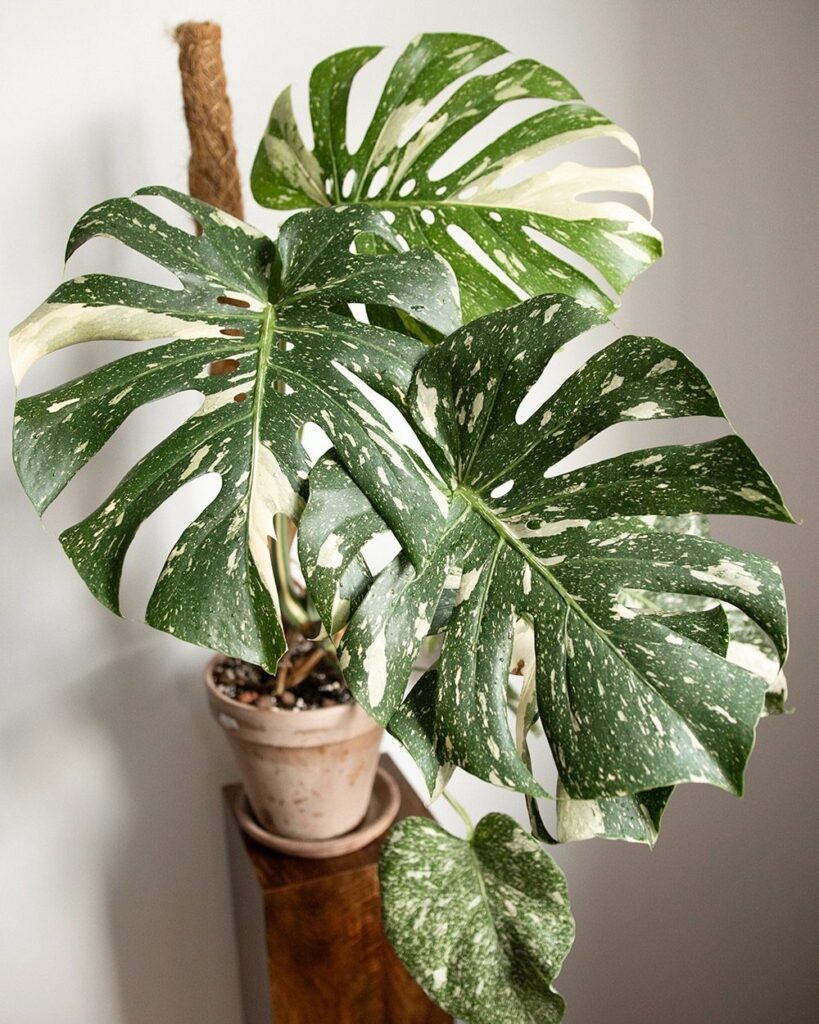
Splits and holes in the leaves are the reason to buy a Monstera, and variegation adds white to the pattern.
Terracotta is my pick for a Monstera, because the warm clay sets off green leaves and makes any white variegation stand out more.
Give it a plain wall and some floor space. The leaves are the decoration, so a busy backdrop only competes with them.
2. Pothos
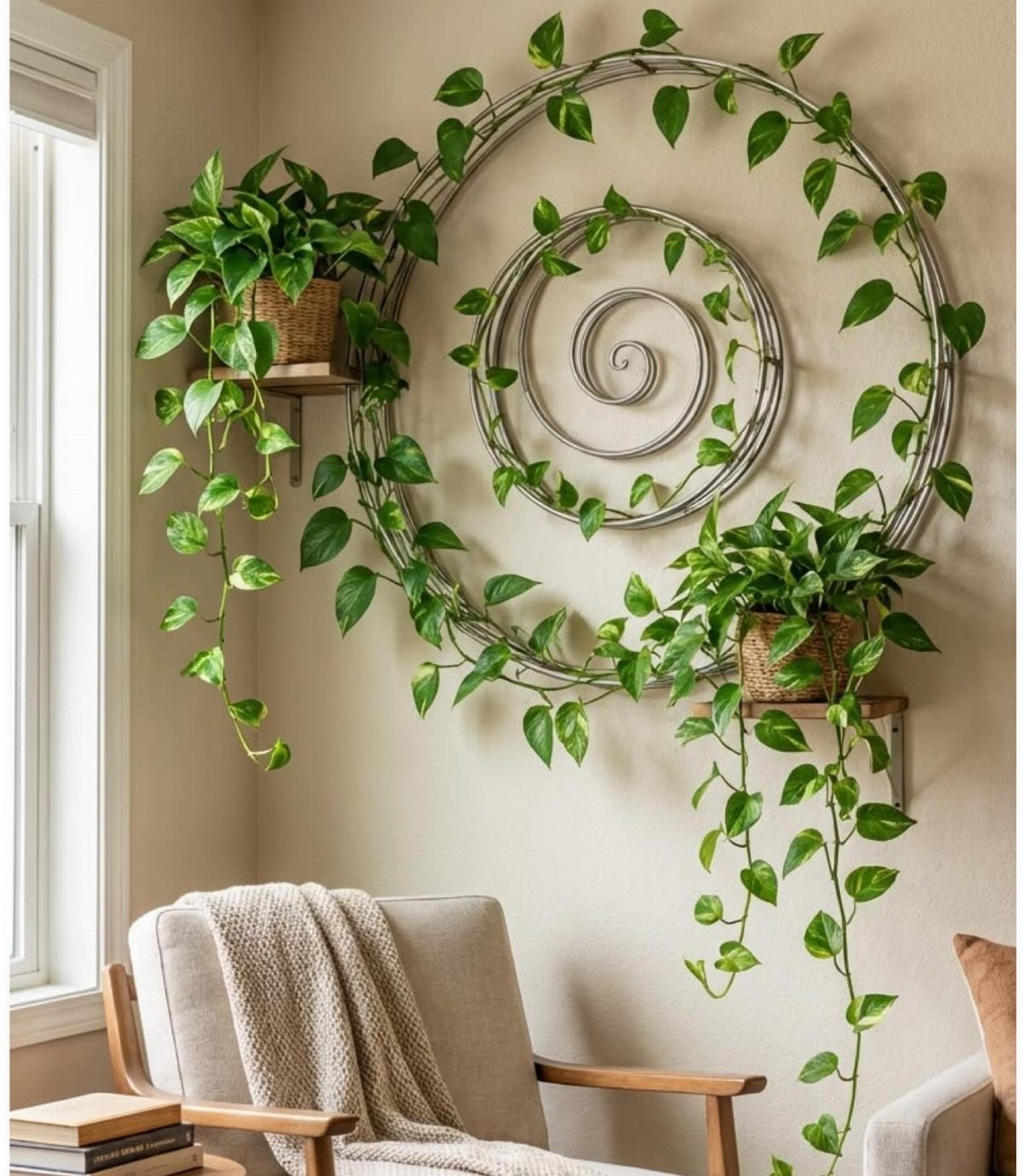
A long vine with heart-shaped leaves lets you decide what shape the plant takes.
Pothos can spill from a basket on a shelf, or you can guide it up a wall trellis, and I like the metal spiral because the vines trace its curve.
If you’re not sure which to pick, start with a hanging or shelf basket and add a trellis later.
3. Snake Plant

Snake Plant leaves are stiff, sword-shaped and point straight up, which gives a room a vertical line most houseplants can’t.
It’s the plant I reach for when a corner looks flat. A snake plant puts up with a dim corner better than almost any other houseplant.
A yellow-edged type such as ‘Laurentii’ brings its own brightness to the leaf, so the pot can stay plain. A plain pot keeps the focus on the foliage.
4. ZZ Plant
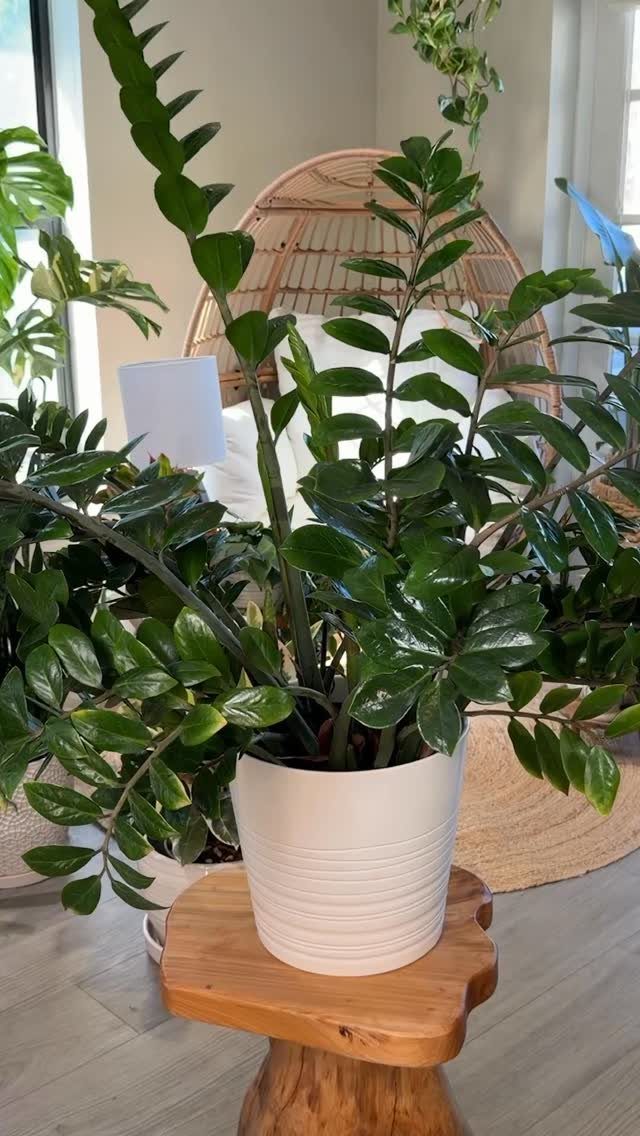
Glossy, upright leaves and a tolerance for neglect make the ZZ plant a good fit for a busy household. ZZ leaves have a glossy, waxy finish, and a white ribbed pot gives that shine a quiet backdrop.
The person who grew this one bottom waters when possible, letting the pot sit in water for about 10 minutes so the lower layer of soil gets saturated.
They use sandy soil. I’d copy the method if your mix drains fast.
5. Calathea

Dark green, silver and pink markings turn Calathea leaves into the main event, and the leaves fold or shift as the light changes.
Buying a few together, as in this cluster, gives you a mix of patterns in a single spot.
I pick Calathea for the leaf detail alone. A plain pot and a quiet surface let the patterns read.
6. Air Plant
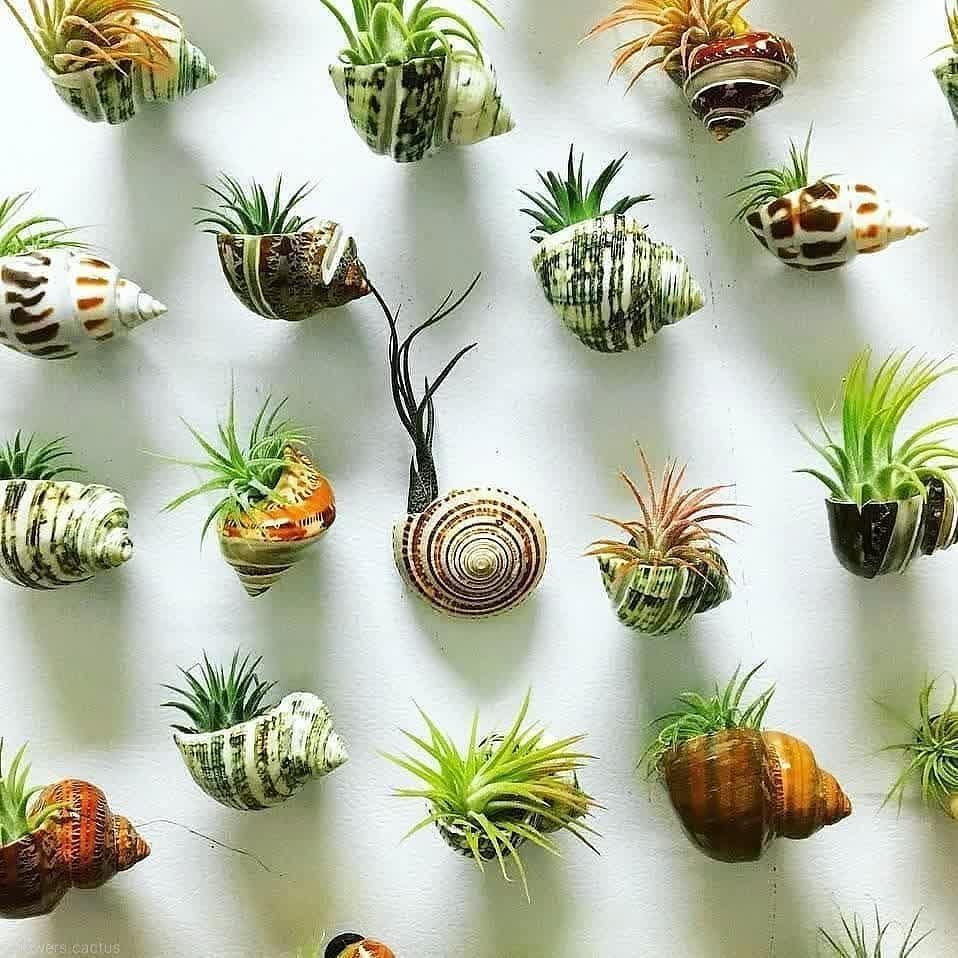
No pot and no soil means an air plant can go almost anywhere, since it takes in moisture and nutrients through its leaves.
Seashells make charming holders, and I like how a cluster of small plants on a white wall looks like a gallery arrangement.
Choose shells with some depth so each plant has a place to sit. Because the plants are small, grouping several looks better than hanging one alone.
Calatheas come in several hundred varieties, so there’s plenty to choose from if you’re looking for specific designs. They can tolerate cooler weather, down to about 65°F (18°C), but strongly prefer being closer to 75°F (24°C) through most of the year.
7. Peace Lily
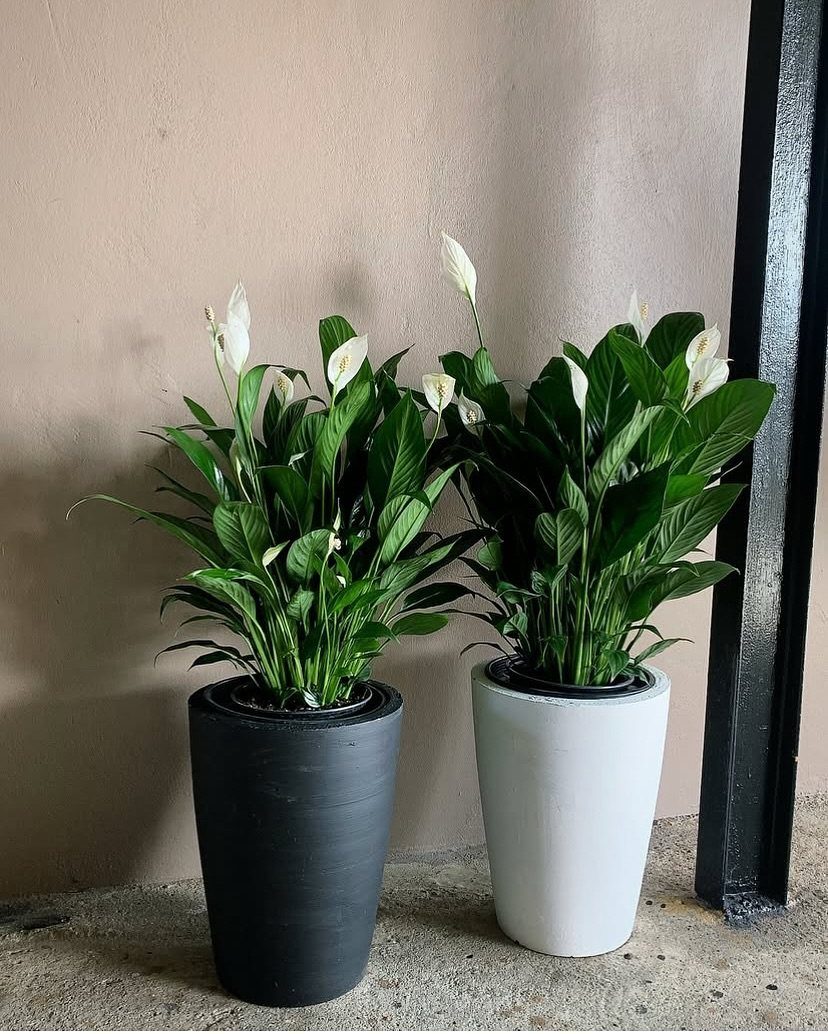
White blooms against deep green leaves give the Peace Lily a built-in contrast, so the plant needs very little help from its surroundings.
A pair works well, and I like mixing one black pot with one white pot, since each color picks up a different part of the plant.
Set them against a plain wall and nothing competes with the flowers.
8. Peperomia

Peperomias stay compact, yet no two look alike: the leaves vary in texture, shape and color from one plant to the next. That makes them a collector’s plant for people with limited space.
Buy different varieties and group them on a table or shelf. Patterned pots are fun, but with leaves this busy I prefer simple ones, so the plants don’t fight each other.
9. Dracaena

Narrow, spiky leaves or broad ones: Dracaena covers both, so pick the leaf shape you like before anything else. The upright habit suits a tall, tapered pot, which keeps the whole plant looking like one slim column.
Place it beside a window and against a white wall, where the leaf outline stays easy to read.
10. Succulents

Small succulents in a row on a sunny windowsill make a good starter collection, and they come in a wide spread of shapes, sizes and colors.
Matching white pots are what pull the mix together. Without them, rosettes, spikes and rounded leaves can look like a pile of unrelated plants.
I’d buy in odd groupings of 3 or 5 and vary the heights a little.
11. Fern
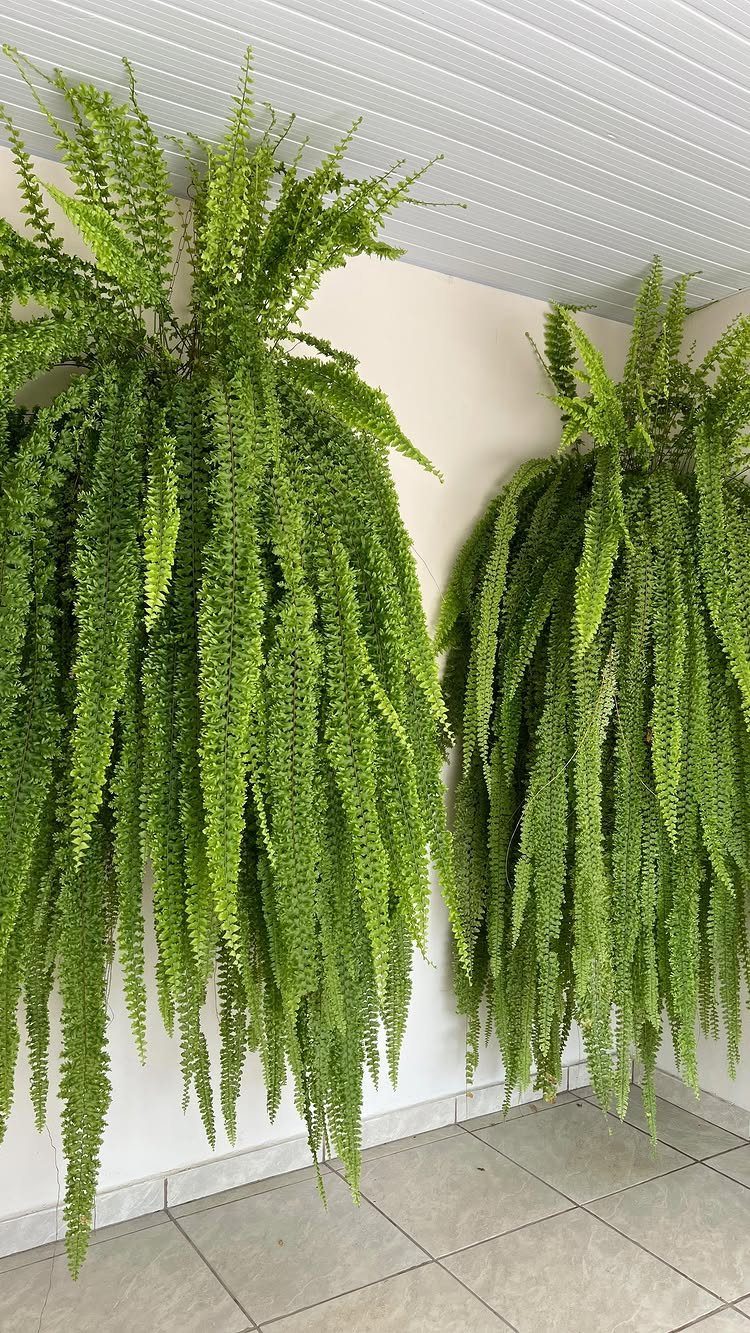
Hanging a Fern lets the fronds fall freely, and a pair side by side on a white wall looks tidy and full. Ferns suit humid rooms, so a bathroom or kitchen is where I’d try one first.
Pick a spot with open space below, because cascading fronds need room to hang without brushing the floor or furniture.
12. African Violet

African violets stay small and still deliver flowers in purple, pink and white. Shelves suit them better than a floor spot, since the blooms sit at eye level.
Group plants by flower color on each shelf, and white shelving keeps the colors clear. Mixed pots look fine, but a matching set reads calmer if you’re short on wall space.
13. Begonia

Silver flecks on green, deep burgundy undersides, flowers in the mix: Begonia gives you more variety than almost any other houseplant, so pick by leaf pattern first.
Terracotta pots suit the patterned foliage, and grouping several kinds together lets you compare the markings side by side.
Plain pots suit begonias best, since the leaves already do the talking.
14. Palm

A Palm in a white pot beside a window with sheer curtains gets a tropical look going with one plant.
Arching fronds need space to spread, so I’d leave open floor on all sides instead of wedging it into a tight corner.
Pair it with a neutral chair and the room stays calm while the fronds draw the eye up. Tall plants like this look best when the pot is simple.
15. Pilea

Round, coin-like leaves on slim stems make the Pilea, or Chinese money plant, easy to spot from across a room.
A clear glass pot shows off the stems and the plant’s tidy, compact shape, and it sits well on a wooden shelf or table.
I like it with other plants nearby, since the round leaves contrast with feathery or spiky foliage.
16. Monstera Adansonii
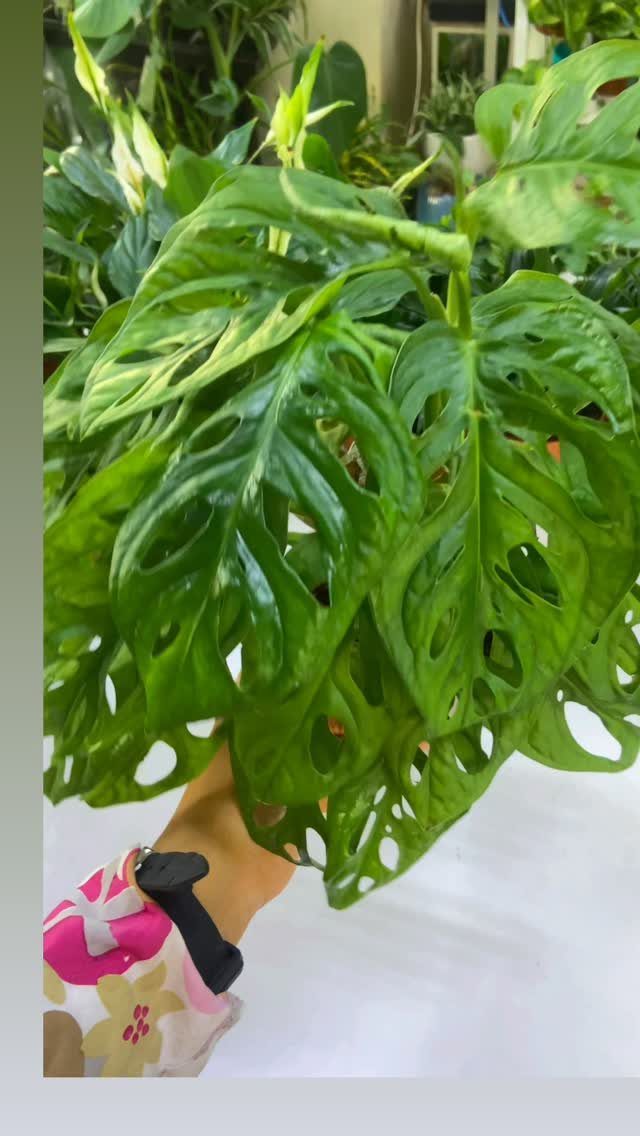
Smaller than a standard Monstera, Monstera Adansonii has leaves full of holes and a habit of trailing or climbing. That makes it my pick for people who want the look without giving up a big patch of floor.
Let it hang from a shelf, or give it a support to climb. The leaves are thin and detailed, so keep the backdrop plain.
17. Bird of Paradise
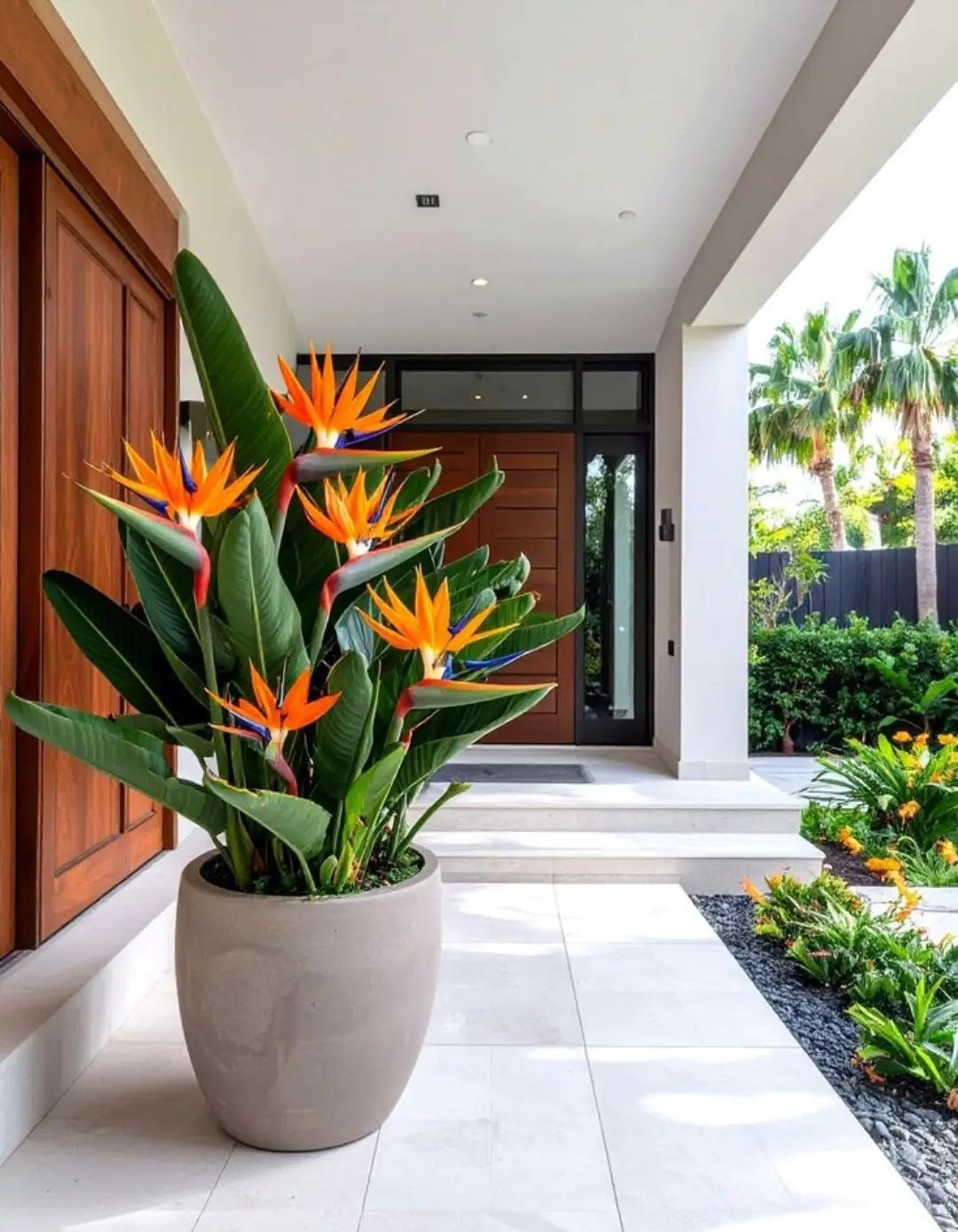
Big paddle leaves and orange flowers give the Bird of Paradise a height and drama few houseplants match.
A grey pot keeps the color on the plant, and a plain entry or porch gives it room to stand as the main feature.
Plan for a lot of space. This is a statement plant, and I’d give it a spot of its own instead of crowding it with others.
18. Rubber Plant
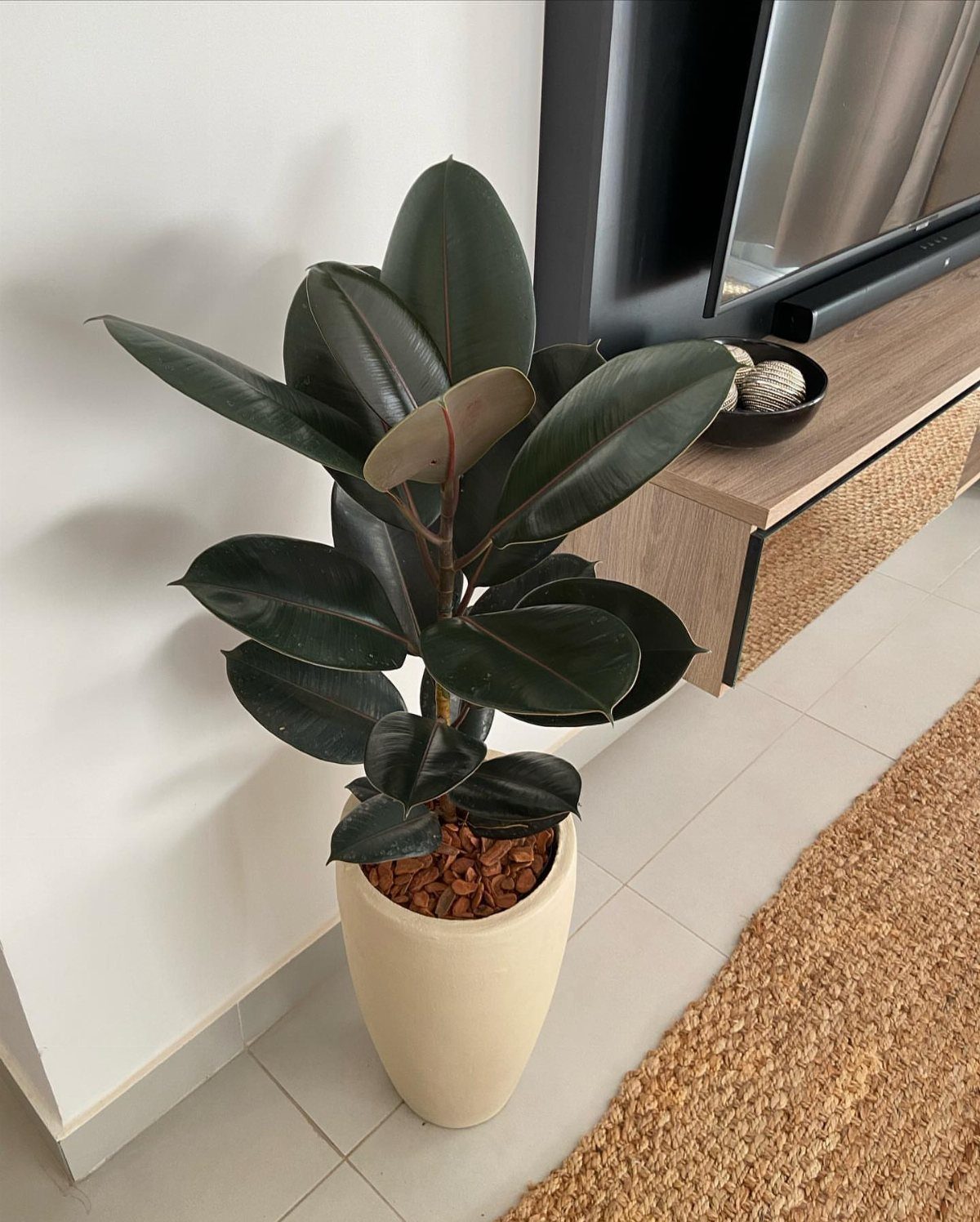
Thick, glossy, leathery leaves in dark green make the Rubber Plant a classic Ficus with real presence. Dark, glossy rubber plant leaves look softer in a cream pot, and a pale, uncluttered wall behind it lets the shine show.
It looks right beside a TV stand or other low furniture, where its height balances the room. I’d choose a pot a little wider than the base so it looks planted, not perched.
19. String of Pearls

Strands of round, bead-like leaves spill over the pot edge, and that falling line is the whole appeal of String of Pearls.
Hang it where the stems have open air below, since they only look good when they can drop freely.
I’d hang it at or above eye level so the beads read from the side. The white flowers are a small bonus, and a plain pot lets the strands do the work.
20. Bromeliad

A Bromeliad grows as a rosette of bold leaves with a bright flower spike at the center, and that spike holds its tropical color for a long time.
A pink ribbed pot picks up the warm tones without competing with them.
Red and yellow bracts read best against a dark surface, with a clean pale wall behind to keep the color from getting lost. For a bright accent that stays put, I’d choose this over a cut-flower bunch.
21. Croton

Red, orange, yellow and green all show up on Croton leaves, sometimes on a single plant. Because each plant colors differently, lining up several on a tiered wooden shelf lets you compare them and pick the mix you like best.
I’d choose by color first. A shelf of mixed Crotons already has plenty going on, so simple pots and a quiet wall behind them are what I’d choose.
22. Dieffenbachia

Dieffenbachia grows upright, with large green leaves splashed in yellow, so it adds height and pattern without spreading across the floor. A woven pot gives it a softer, more casual look than glazed ceramic.
Raising it on a stand near a window puts the big leaves at a good viewing height. Speckled foliage like this does the decorating on its own, which is why I skip patterned pots and leave the leaves in charge.
23. Schefflera
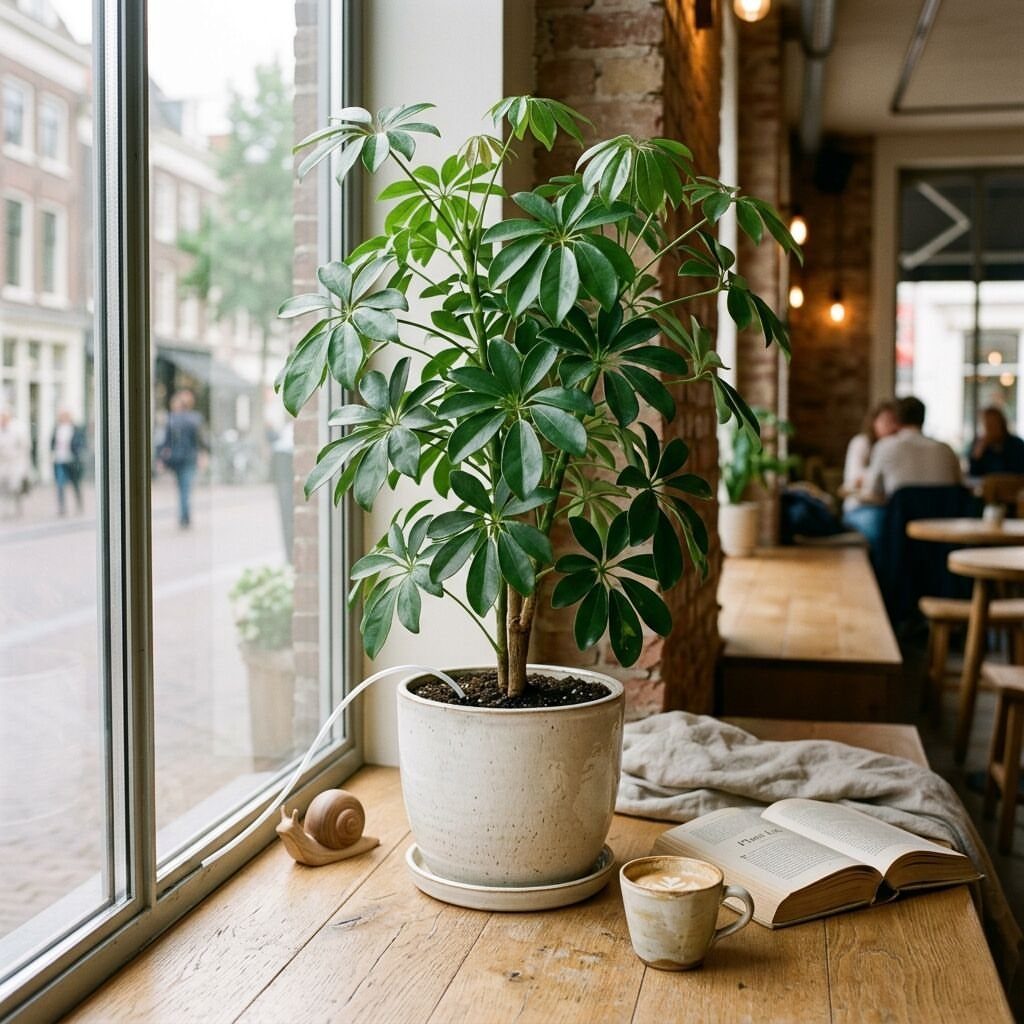
Schefflera is easy to spot because every leaf fans out into several leaflets from a single point, much like an open umbrella. A white pot on a wooden table by a window shows that outline against the light.
I like it as a tabletop plant beside a lamp or a cup of coffee. Leave a little space on every side so the fan shape stays clear.
24. Dragon Tree

Spiky green trunks topped with leafy crowns make the Dragon Tree a sculptural plant, more like a small indoor tree than a typical houseplant. A wide, fluted stone bowl suits that scale and keeps it from looking top-heavy.
I’d put it beside a staircase or in any spot with real vertical room. Choose a pot with some weight and width, because a tall plant in a small container looks unsteady.
25. Striped Dracaena
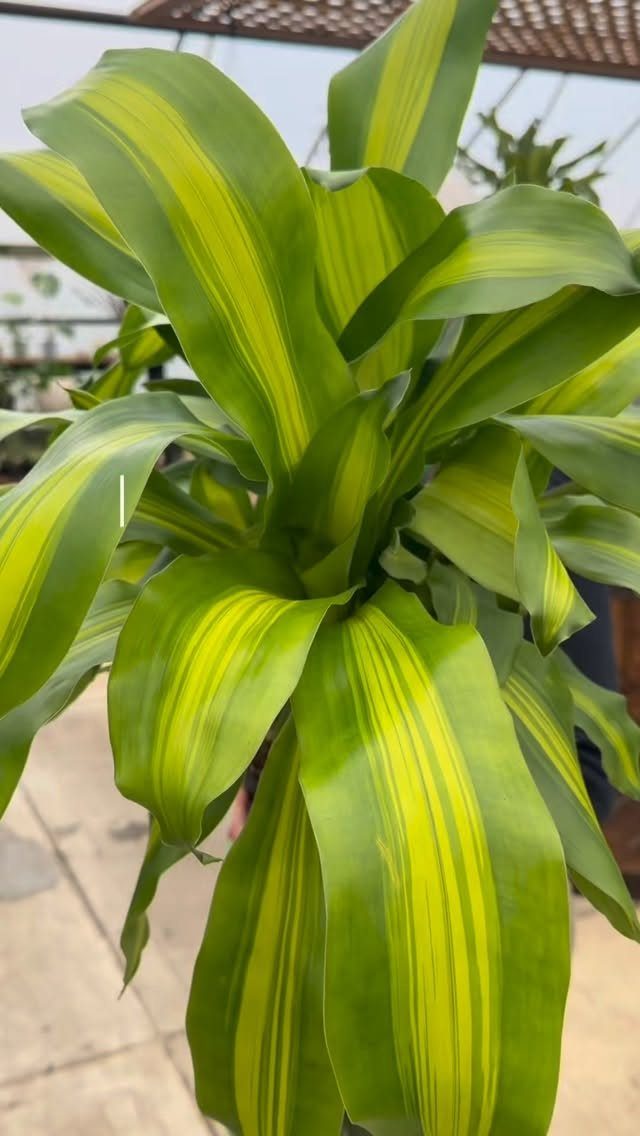
Check your ceiling height and floor space first, since the grower says a striped dracaena can reach 3 to 8 feet indoors.
Long, arching green leaves with bright yellow stripes need room to curve outward, so I’d keep it clear of shelves and doorways.
The stripes carry the color, which is why I’d pick a plain white or gray pot. Set it where you can see each leaf along its full length.
26. Spider Plant
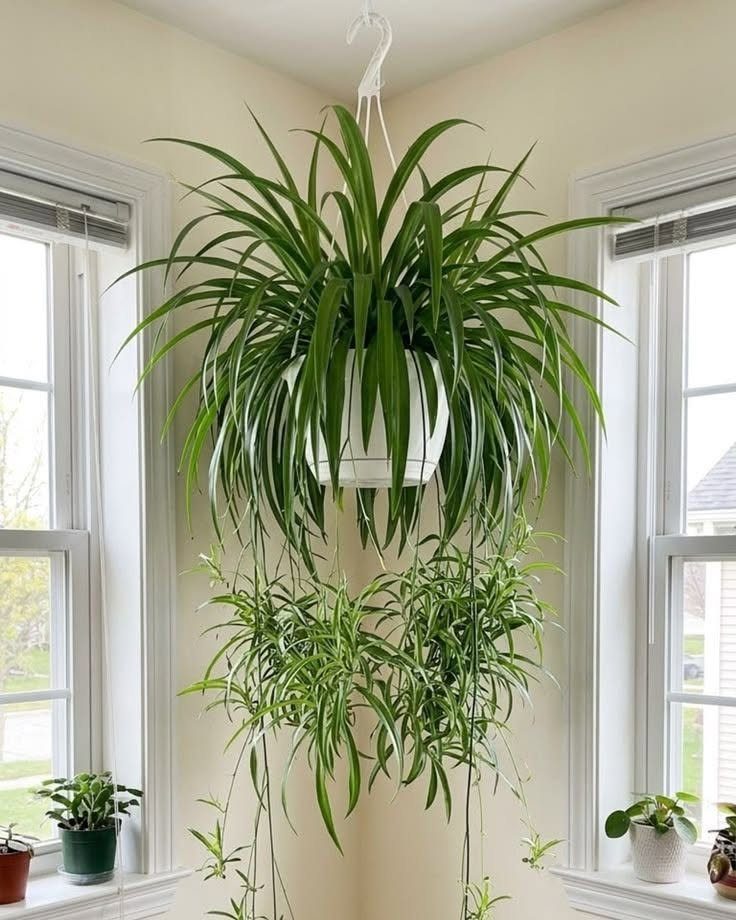
A hanging pot lets spider plant leaves arch and spill down on every side, and that cascade is the reason to choose this plant. Pale, solid pots let the arching leaves do the talking.
Hang it with open space around it, such as a corner between 2 windows, so the leaves can fall without catching on anything. Small plants on the nearby sills make good company.
27. Pink Princess Philodendron
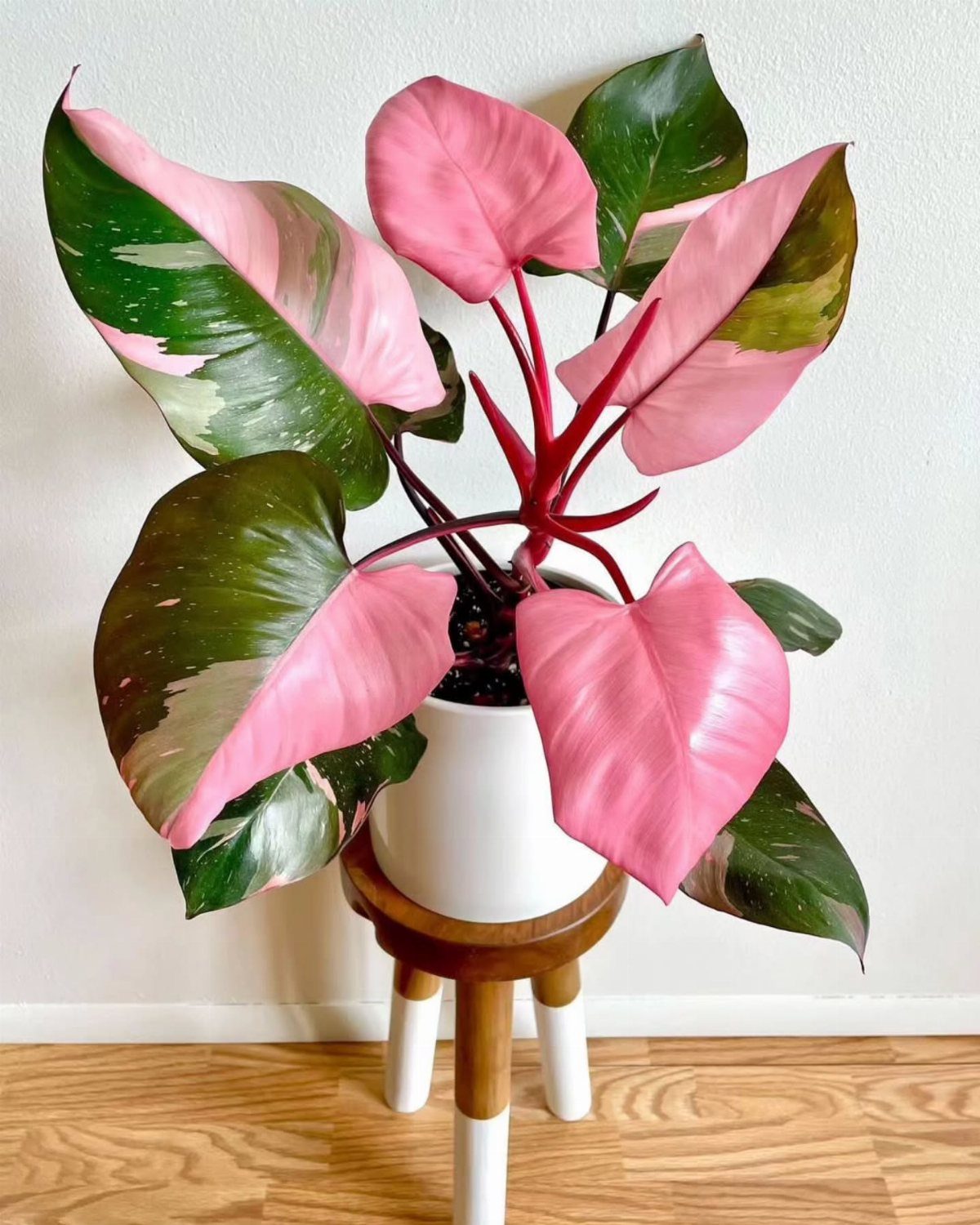
Bright pink splashes on heart-shaped green leaves are the whole reason to buy this philodendron, so I’d put it where they stand out.
A small wooden stool lifts it closer to eye level, and a white wall behind it keeps the pink clear.
Colored or patterned pots compete with the variegation.
Match Plants to Available Light
Most houseplants want bright, indirect light: a spot near a window where the sun doesn’t land straight on the leaves. Cacti and certain succulents handle direct sun without scorching, so a hot, bright window is where they belong.
Too much light burns or bleaches foliage, and too little leaves a plant leggy and dropping leaves. Those 2 signs tell me when a plant needs to move.
For a dim room, Aglaonema (Chinese evergreen) and Chamaedorea elegans (parlor palm) are the low-light picks.
For indoor blooms, African violets, Siam tulip, lipstick plant and goldfish plant all want bright, indirect light, and several also like air more humid than most homes offer.
Light shifts with the seasons, so a spot that works in summer can be too dim by winter. Move the plant closer to the glass, or add an artificial light to supplement a dark corner.
Water According to Soil Dryness
Skip the weekly schedule and check the soil instead. Push a finger into the mix, about 1–2 inches down, and water only when it feels dry there.
When you water, let the excess drain out of the bottom of the pot. Empty the saucer afterward, because a pot left standing in water keeps the roots wet.
Plants use less water in winter, so the same pot that wanted a drink every week in summer may go much longer between waterings. The finger test still works; it just says "not yet" more often.
Consider Pets Before Choosing
Plenty of common houseplants are poisonous to pets or people, so look each one up on a pet-safe plant list before buying, not after it’s already on your shelf.
If a plant you love turns out to be toxic, you have two choices: pick a safer one, or keep it well out of reach of pets and small children.
I’d only take the second route if you can truly keep it out of reach, and a low table or floor spot doesn’t count.
Frequently Asked Questions
What are the 10 most common houseplants?
Pothos, snake plant, ZZ plant, spider plant, peace lily, rubber plant, Swiss cheese plant, Chinese money plant, string of hearts and Christmas cactus show up in the most homes.
Several earn the spot by being easygoing: snake plants put up with a dim corner, ZZ plants tolerate neglect, and pothos will either trail from a shelf or climb a trellis.
What are the main types of houseplants?
They sort into 7 groups: foliage plants; trailing and climbing plants; tree-like and architectural plants; ferns and palms; succulents and cacti; flowering plants; and bromeliads, air plants and carnivorous plants.
Pothos is a good trailing example, a dragon tree is the architectural type, and African violets are small flowering plants that bloom in purple, pink and white.
What are houseplants’ light needs?
Most houseplants want bright, indirect light, meaning a spot near a window where the sun doesn’t hit the leaves directly.
Cacti and some succulents break that rule, and a hot window with full sun suits them fine. Excess light scorches or fades the leaves, while a dim spot gives you a stretched, leggy plant that sheds foliage.
Winter sun is weaker and sits lower, so a plant that did well in July may need to slide closer to the glass by December.
Which houseplants cope with low light?
ZZ plant, snake plant, pothos, peace lily, spider plant, philodendron, Chinese evergreen (Aglaonema) and strawberry begonia all tolerate lower light, and parlor palm (Chamaedorea elegans) is another dim-room pick.
None of them grows well in true darkness, and variegated pothos can lose some of its color in a dim spot. Low-light spots call for a lighter hand with the watering can, because the soil stays damp longer there.
Which houseplants are safe for cats and dogs?
Peperomia, calathea, maranta, most Hoya species, string of hearts, Christmas cactus, Siam tulip and African violet are described as pet-safe. A plant’s type tells you very little, so look up each one on a pet-safe list before you buy it.
If a toxic plant has already won you over, buy a pet-safe stand-in or find a spot that cats, dogs and small kids can’t get to; a low table or the floor won’t work.
Which houseplants need high humidity?
Typical indoor air sits at 40–60% humidity, which falls short for some plants. Anthurium and arrowhead plant prefer 60–80%, Boston fern, nerve plant, goldfish plant and pepper plant want 60% or more, and lipstick plant, bromeliads and pitcher plants like 50–70%.
Clustering these plants together or parking them in a bright bathroom lifts the moisture in the air around their leaves.
How do I choose the right type of houseplant?
Before buying, stand in the exact spot at noon and see how much light actually reaches you there. A south-facing sill suits succulents and cacti, while most foliage and trailing plants want bright, indirect light.
Then be honest about watering. Forgetful waterers do better with plants that like to dry out between drinks, such as snake plant, ZZ plant or jade plant; ferns and pitcher plants suit people who check the soil often.
Check humidity needs and pet safety before you buy.