
Removable Wall Decals and a Full-Length Mirror suit a lease far better than Brick Cladding or a Textured Plaster Wall, and that split sorts these ideas faster than taste does.
Renters can lean a tall mirror, hang a gallery wall on picture-hanging strips or press up peel-and-stick wallpaper, while owners can commit to brick cladding, hand-troweled plaster or dark ribbed wood that runs from the wall onto the ceiling.
Style and budget narrow the rest, and a Painted Feature Wall or Pastel and Bold Geometric Shapes takes only paint and painter’s tape.
1. Gallery Wall
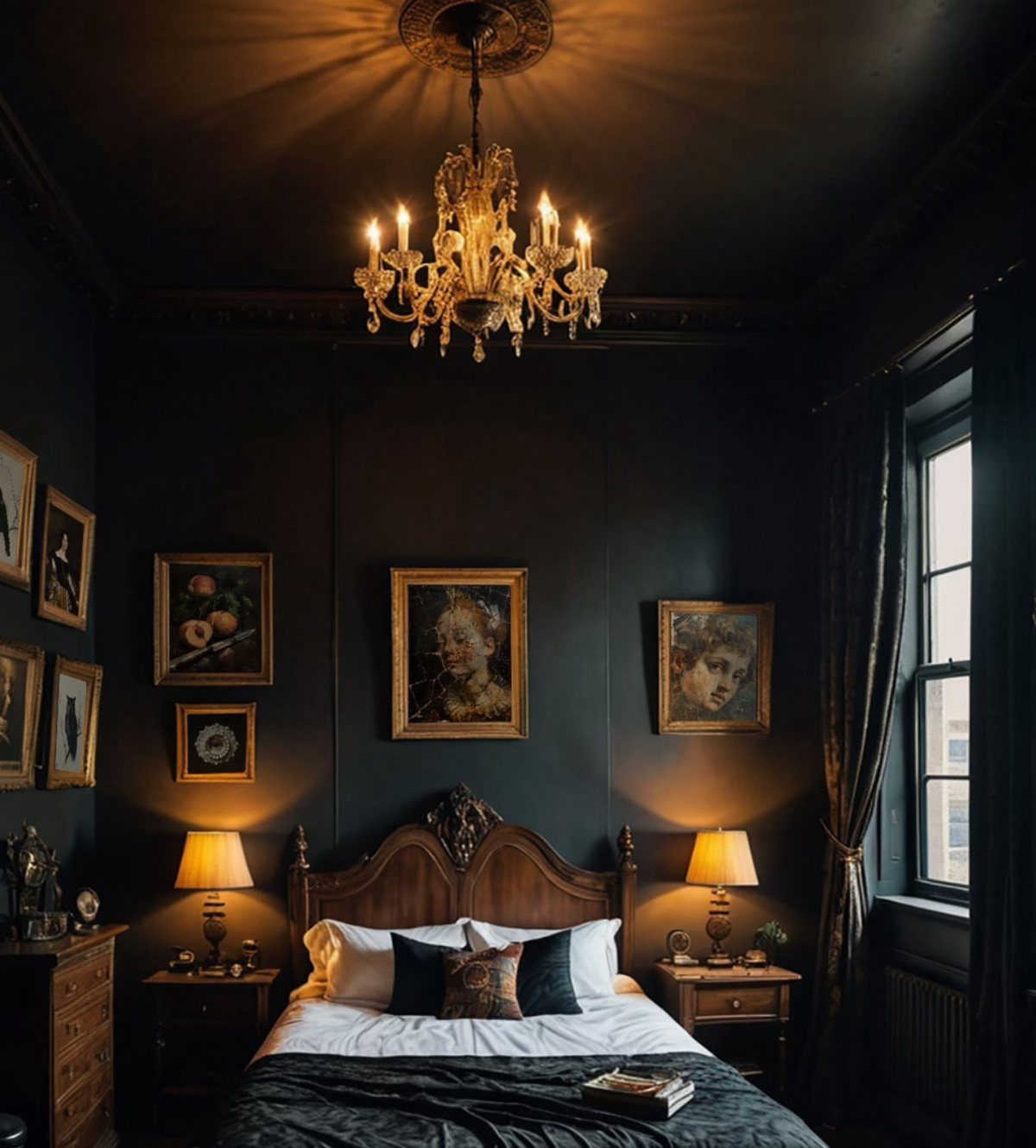
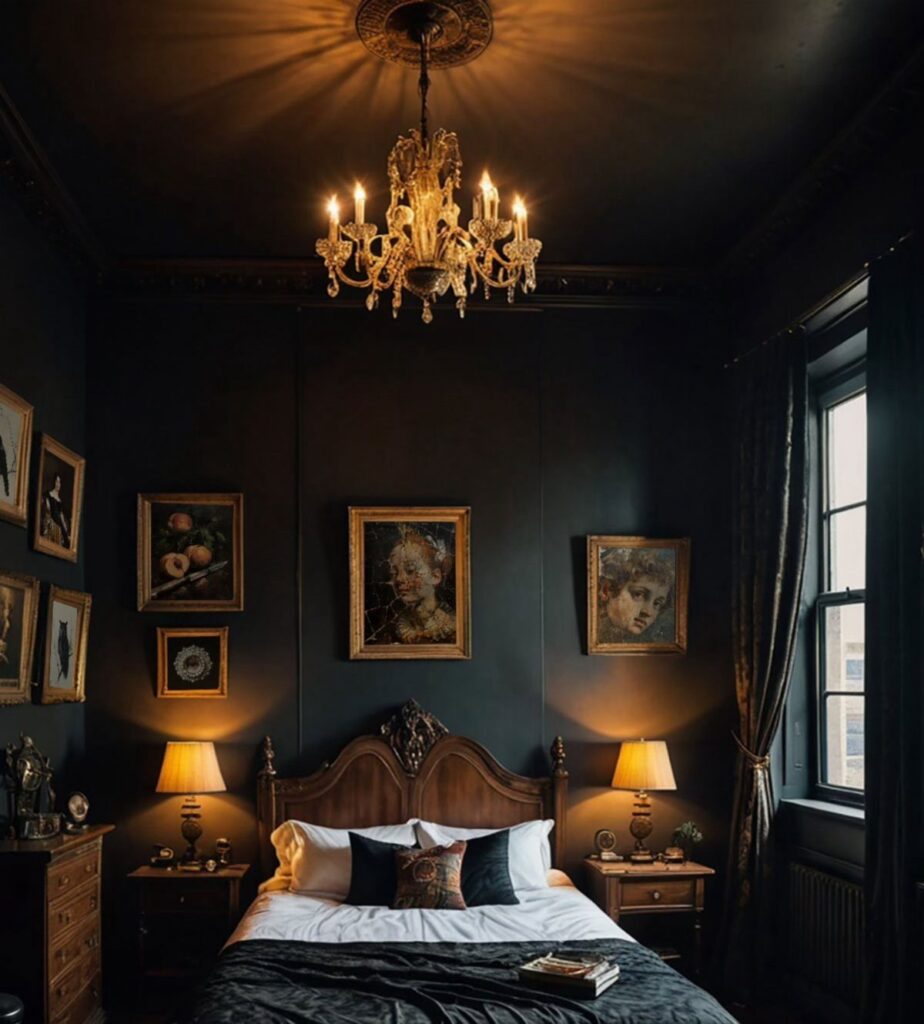
Frames that agree on something look planned: a shared finish, a shared mat color, or a shared subject. Matching gold frames in mixed sizes do it well, and the variety keeps the group from reading as a grid.
Trace each frame on paper, tape the cutouts to the wall, and move them around before you make a single hole.
I’d keep the whole group about as wide as the bed or slightly narrower. Renters can use picture-hanging strips and spare the paint.
2. Full-Length Mirror

Leaning a tall mirror needs no drilling, so it suits a rental, and you can move it whenever the layout changes. An arched top softens a boxy room, and a thin black frame keeps it from competing with the bedding.
Set it where it catches window light, because bouncing daylight back into the room is the biggest benefit a mirror gives you.
I’d pick a mirror close to your own height at minimum, so it works for getting dressed as well as decorating.
3. Large Abstract Artwork
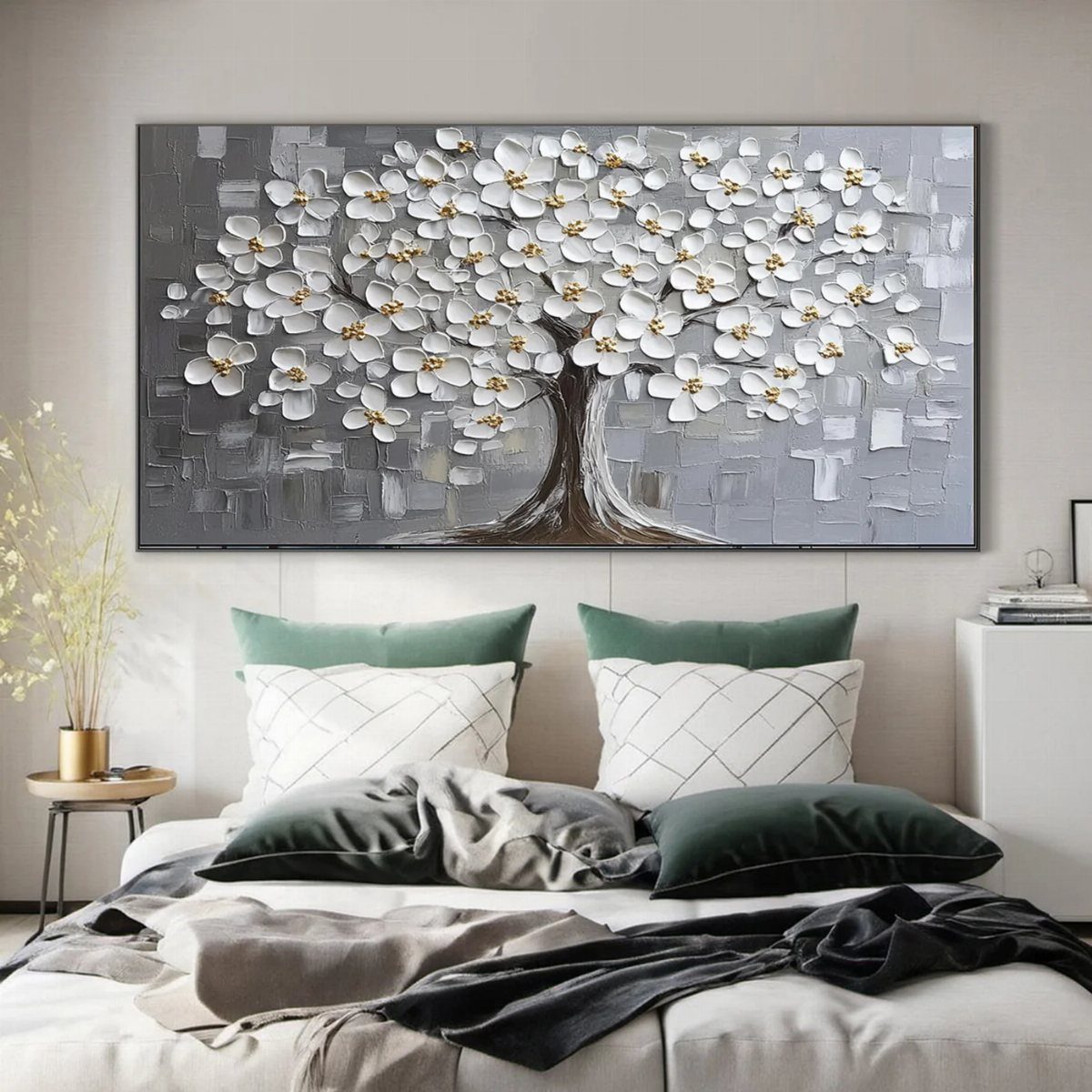
One oversized piece does the work of a dozen small ones, and you only hang it once. A textured canvas adds depth that a flat print can’t, and it holds its own over a bed.
A common rule of thumb is a width around two-thirds to three-quarters of the headboard. Center it on the bed, not the wall.
Pulling one color from your pillows or throw into the art ties the whole wall together. Budget is the limit: large originals cost more than prints.
4. Staggered Floating Shelves
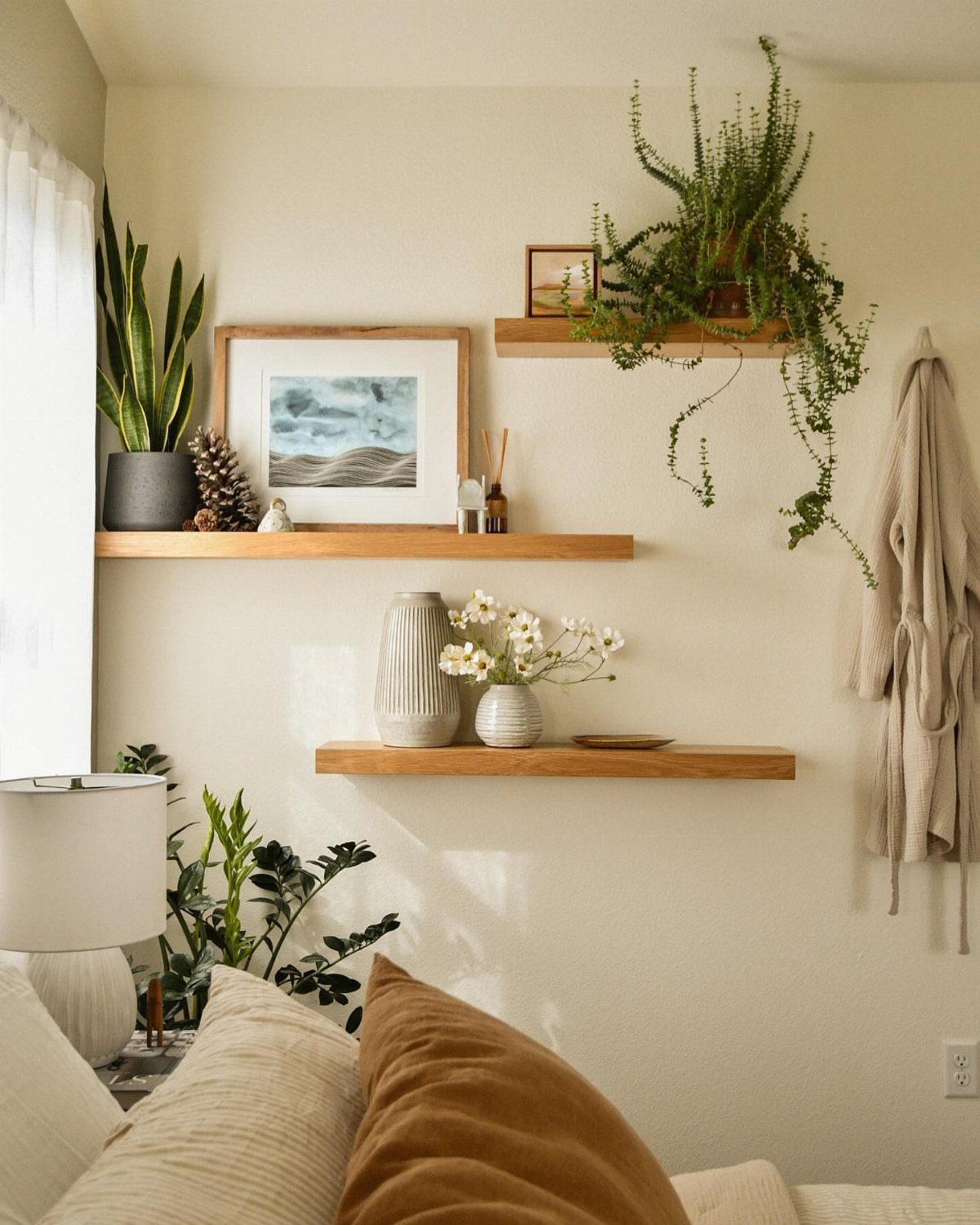
Heights that don’t line up are the whole look here. 3 shelves at different levels and offsets feel looser than a tidy row, and the gaps between them matter as much as the shelves.
Mark every position with painter’s tape before drilling, and stand back from the bed to judge the rhythm. I like a mix on top: one plant, one small framed piece leaning at the back, one vase.
Stop there. Crowded shelves undo the calm.
5. Wall Panels
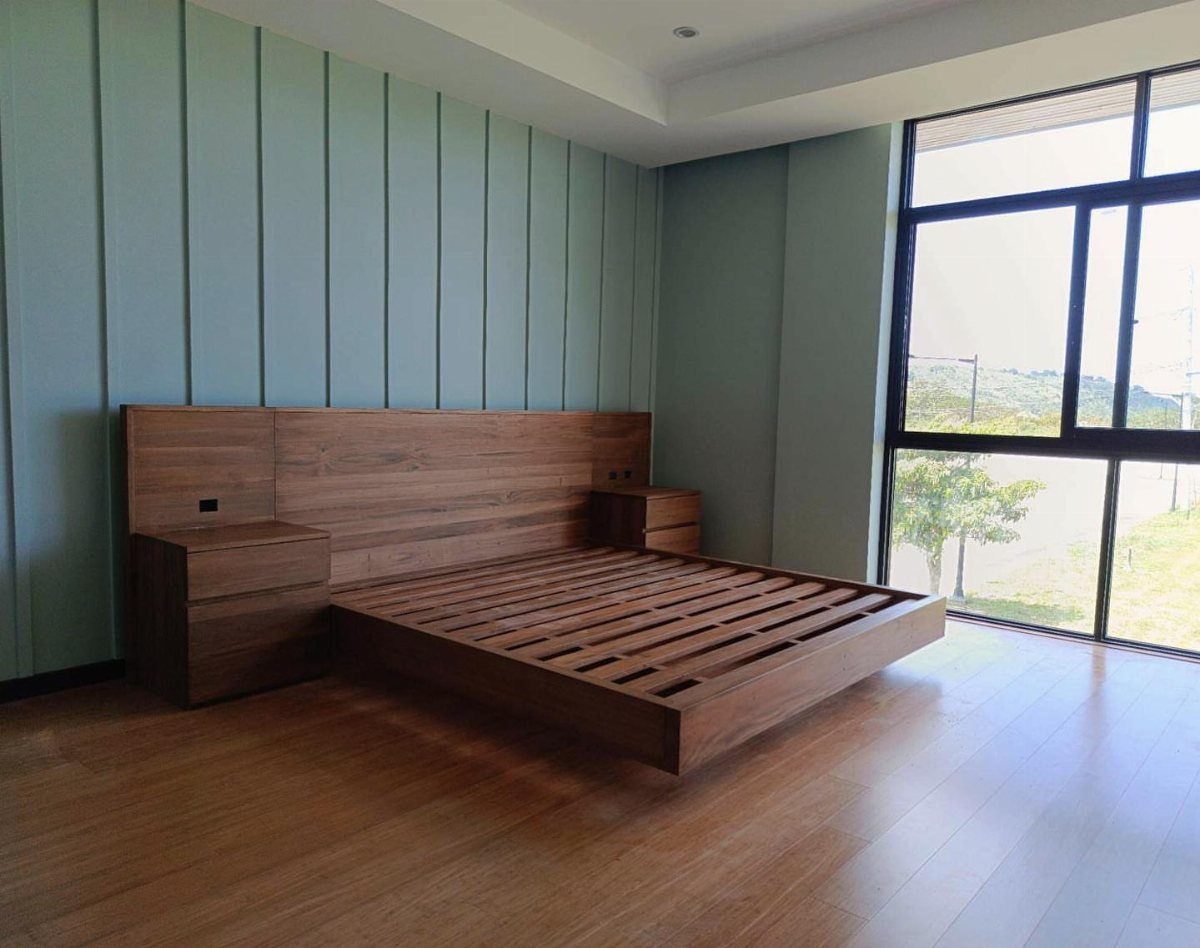
Vertical panels draw the eye up, which helps a room with an average ceiling. A soft color like light blue keeps the feature wall calm behind a wooden bed, where a darker shade would weigh the room down.
Panel only the bed wall to keep the cost and the work contained.
Measure the wall height and the width you want to cover before buying, and plan on more than a weekend for a first-timer. This is a more permanent change than paint, so check your lease.
6. Removable Wall Decals
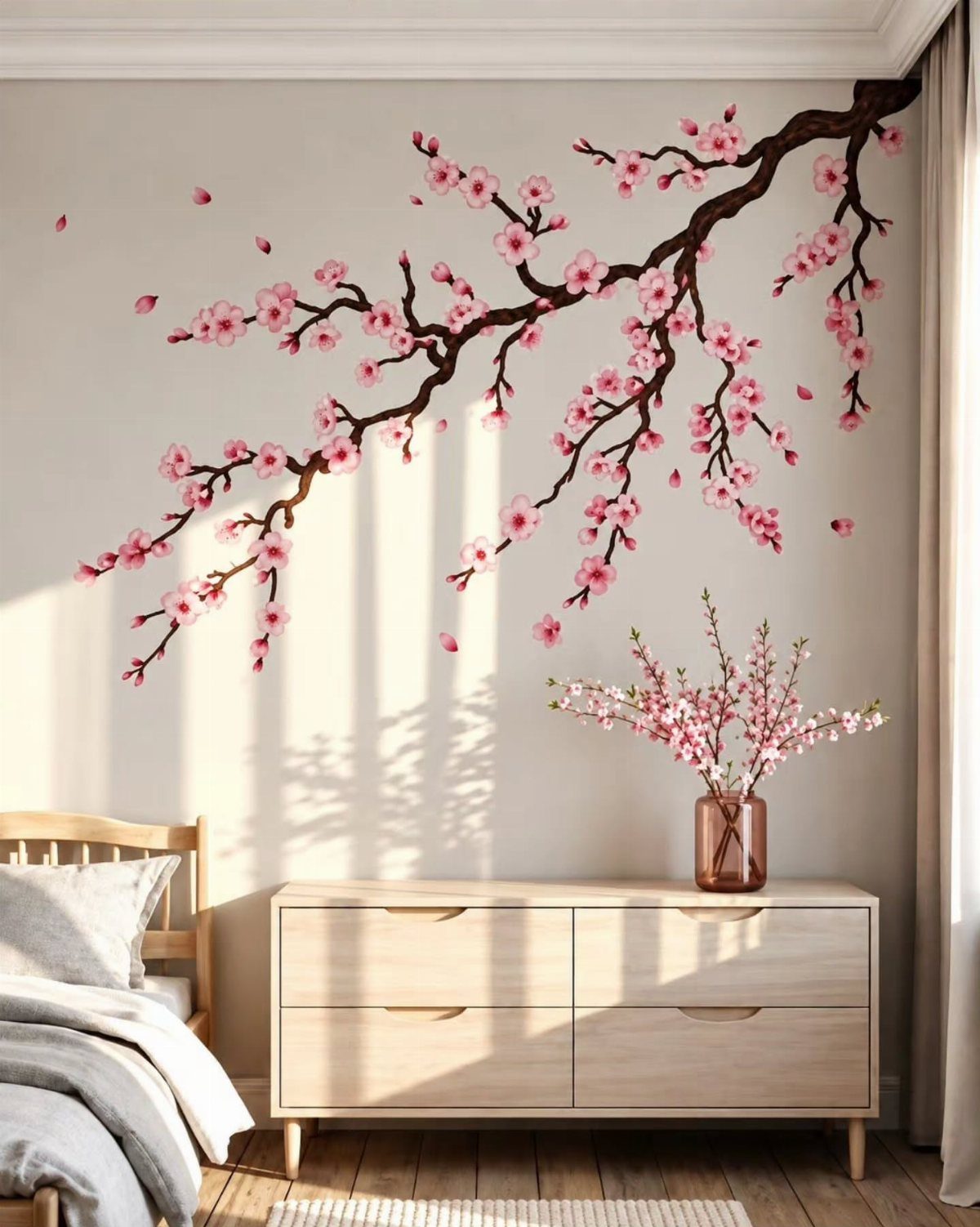
A branch decal grows from a corner or edge and leaves plenty of bare paint around it, which is why it suits a spot above a dresser. Placing it so the stems reach toward the furniture ties the two together.
Test one small piece in a hidden corner first. Then press each section on from the center outward to push out air bubbles.
Smooth, painted walls are the best match. Peel-off art is the easy answer for renters who want pattern without a deposit fight.
7. Bedroom Plants
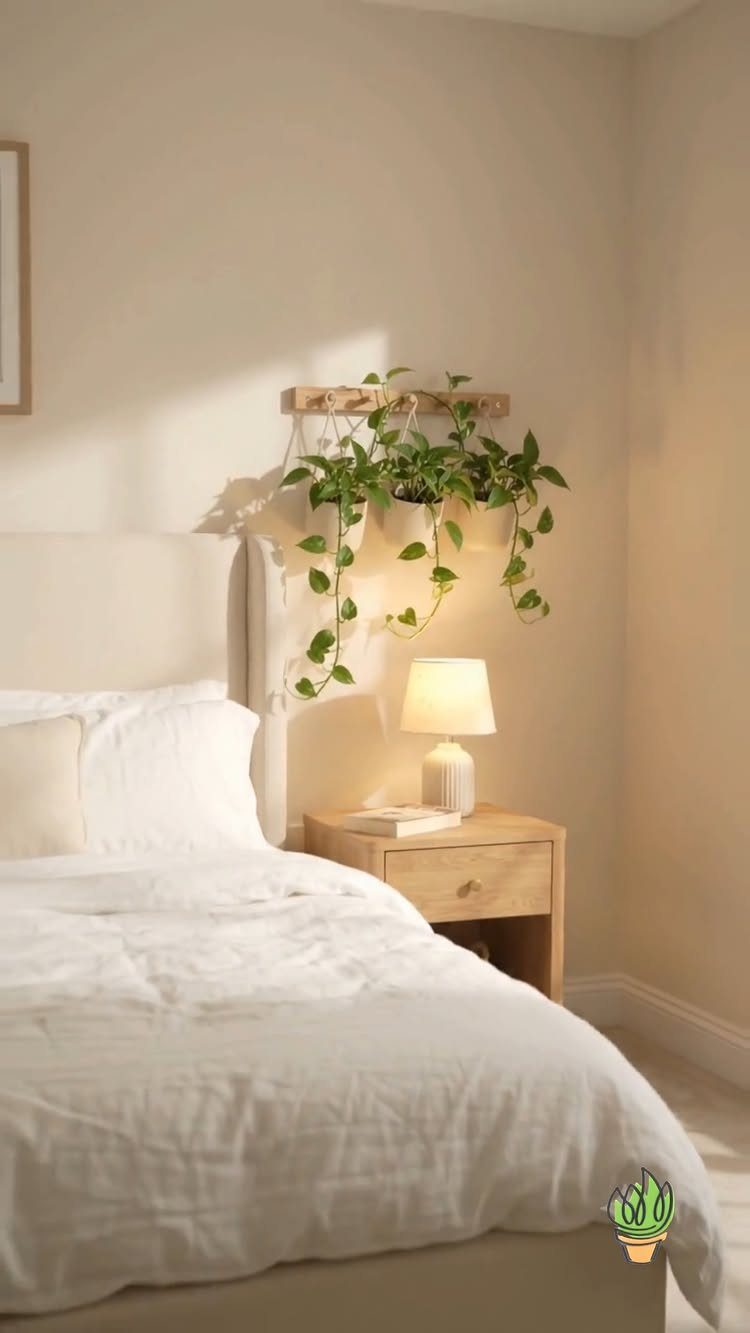
A wall rack with trailing plants puts something living on a bare bedroom wall and leaves the floor completely open.
Pothos-style vines that spill down read as soft against a plain wall, and a wooden rack ties in with a wooden nightstand.
Hang the rack above the bed or beside it, and keep the pots light so the screws hold. I’d leave a few inches of wall showing between the rack and the headboard, so the vines have room to fall.
A real plant needs light, so check the spot first. A faux trailing vine is the fallback for a dim room.
8. Painted Feature Wall
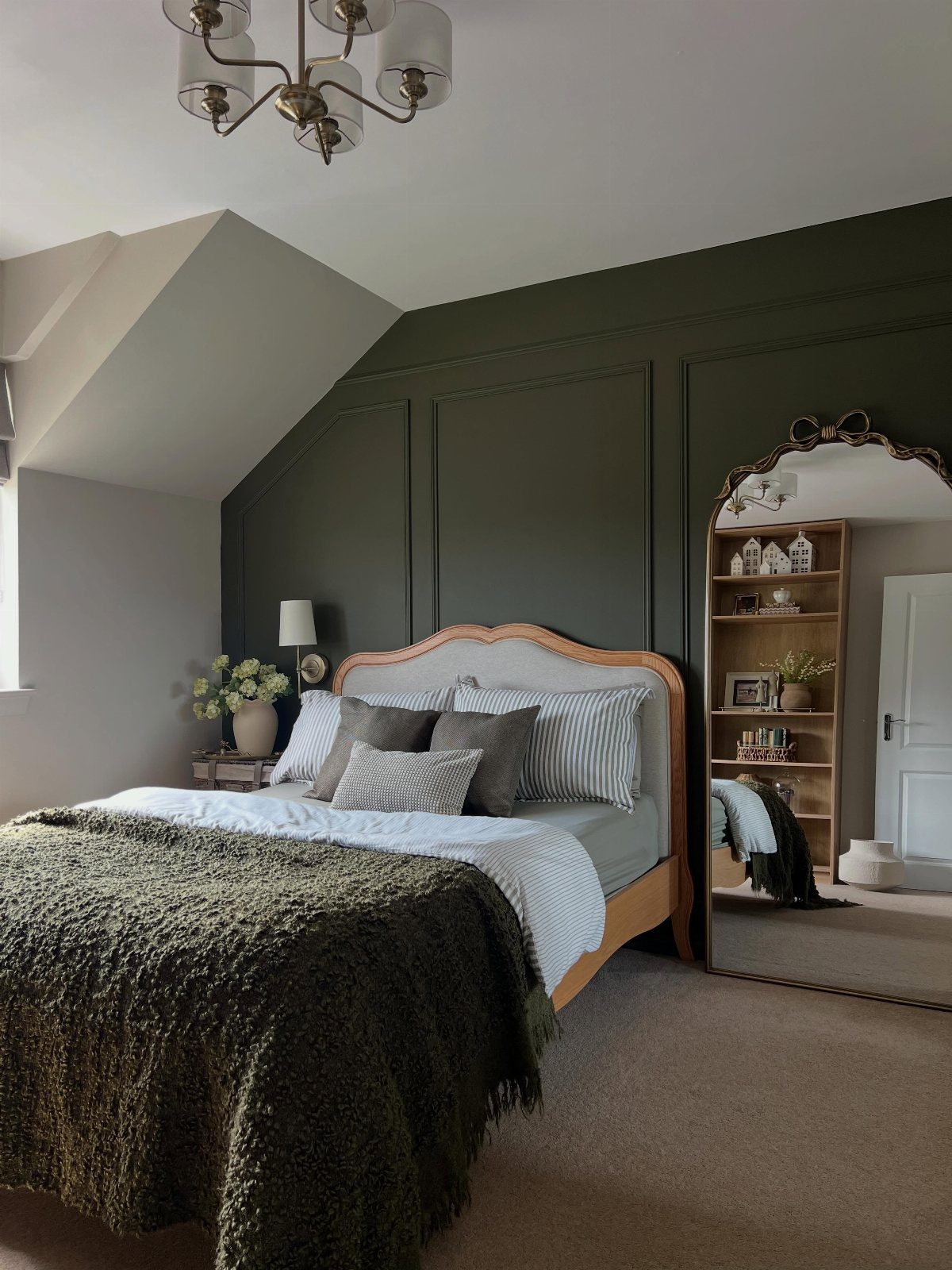
Dark green behind the bed turns the wall into the feature, so very little needs to hang on it. Paneling gives the paint shadow lines that flat color can’t, and a wooden headboard sits well against it.
I’d paint the panels and the wall in one shade so the texture does the talking. Gold touches, like a framed mirror, glow against deep green.
Paint is cheap and easy to redo, but a color this dark takes more than one coat.
9. Wallpaper Feature Wall
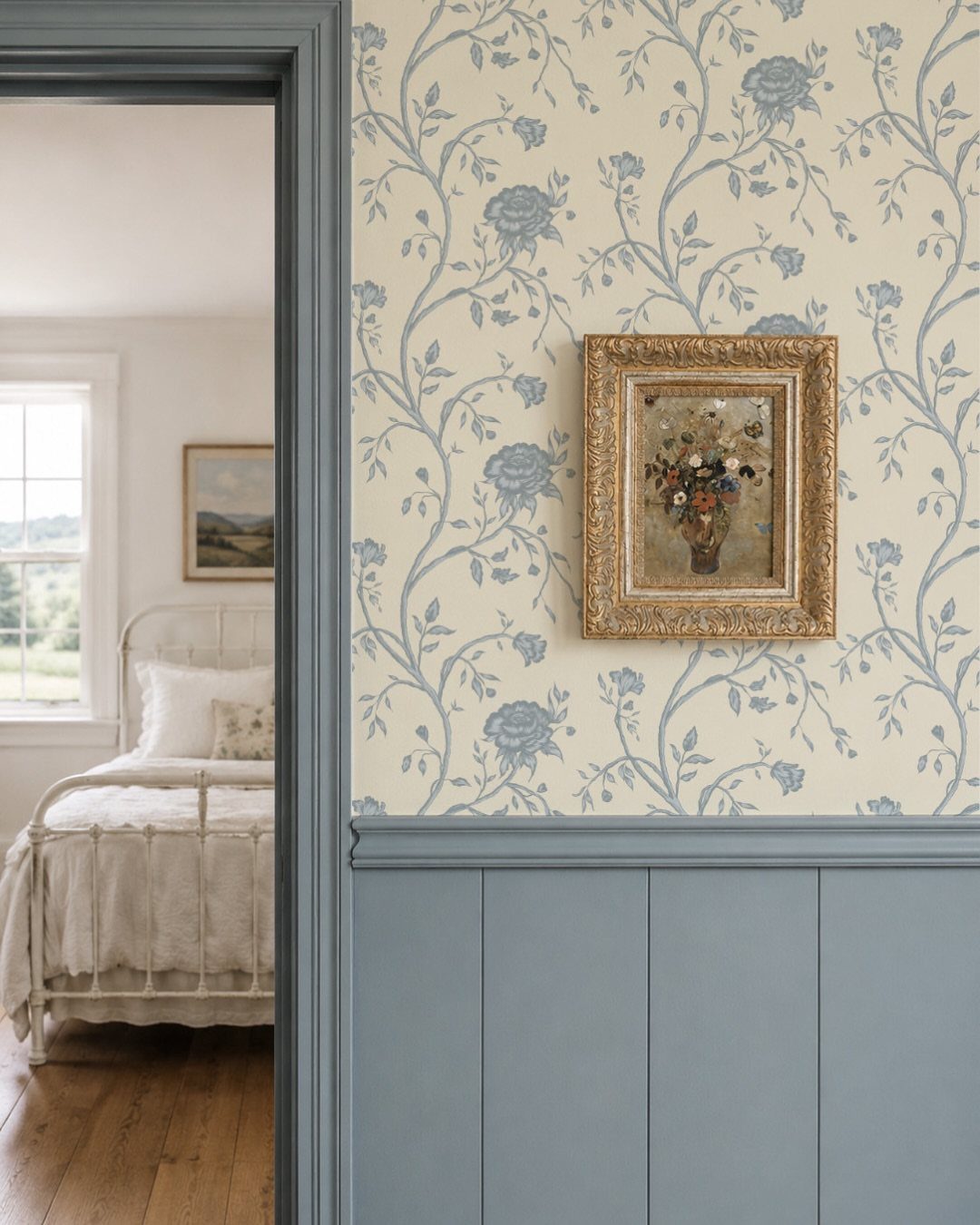
Blue floral paper above blue wainscoting gives a wall 2 layers of interest, pattern up top and a solid band below. Matching the wainscoting to the blue in the print keeps the pattern from feeling loud.
Hanging one framed painting in gold over the paper adds a focal point without crowding it. Plain walls, bedding and furniture elsewhere work best, since the papered wall already supplies the pattern.
Choose a small-scale print if the room is tight. Peel-and-stick paper is the lease-friendly option.
10. Wooden Accent Wall
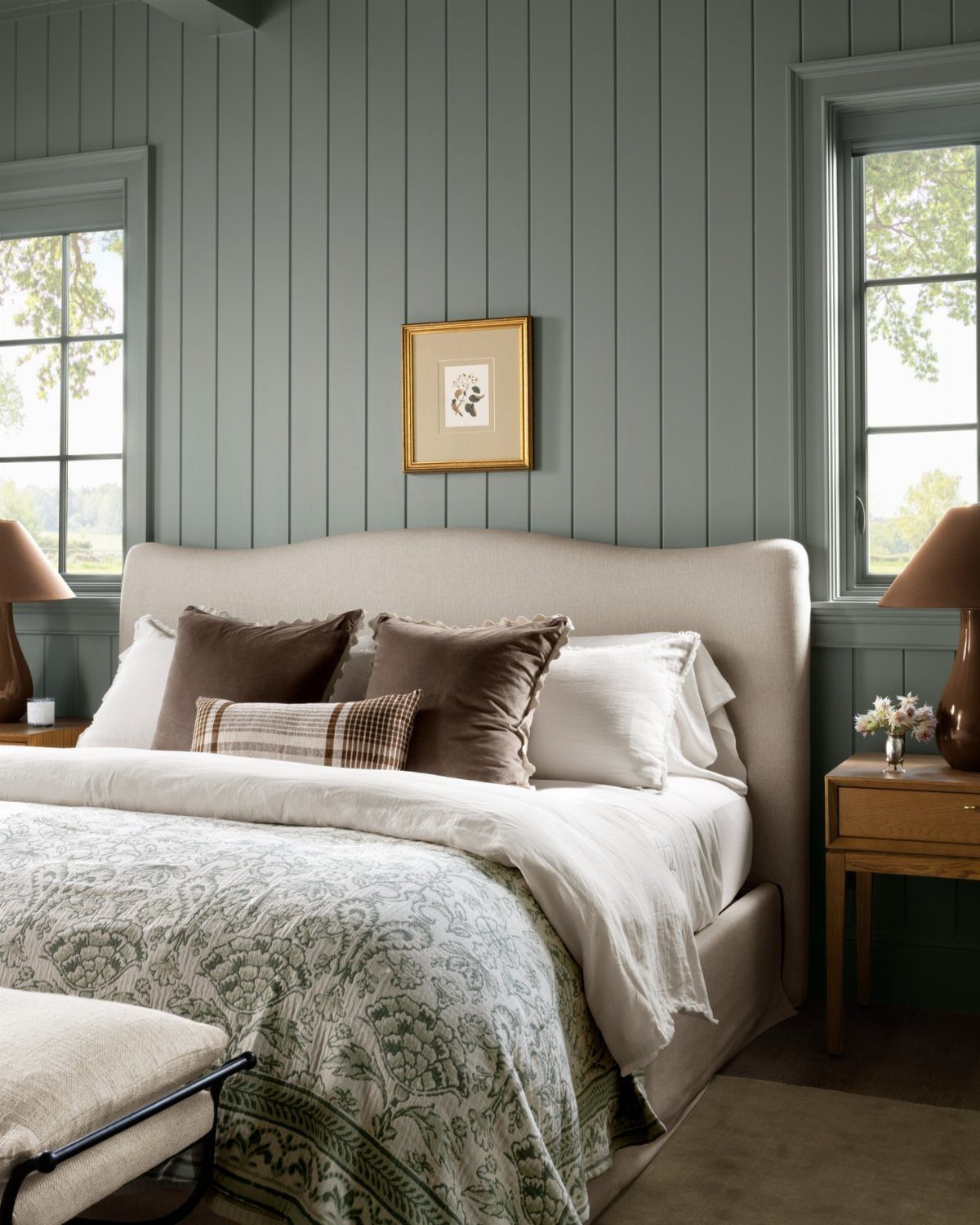
Vertical wood slats painted sage green keep the warmth of wood and add a soft color. Run behind the bed, they give the headboard wall a backdrop that looks built in.
Slim, upright boards also make the ceiling feel taller. Neutral bedding lets the wall stay the star.
Painting wood is a cheaper path than stained hardwood. It’s a permanent change, so rentals should get approval first.
11. Vertical Louvers
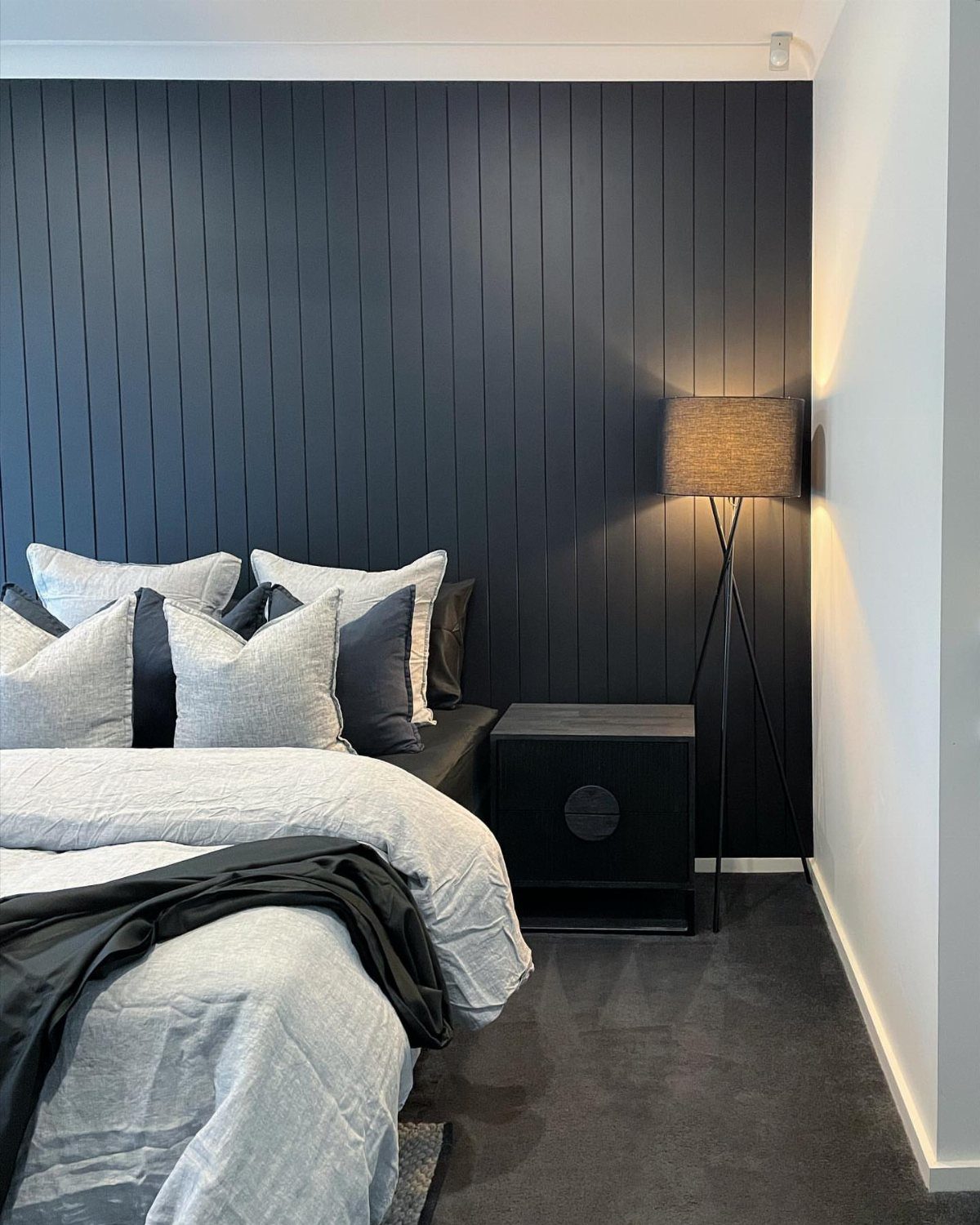
Louvers are vertical strips spaced evenly, and they turn a flat wall into one with depth and shadow. In a dark navy or charcoal, they make a bedroom feel moody and tailored.
I like a matte finish: it hides fingerprints, and the wall never turns glossy. Pair it with simple black lighting and gray bedding so the lines remain the main detail.
Dark slats absorb light, so add a lamp near the bed. This is a permanent build, not a renter’s fix.
12. Sconces on Both Sides of the Bed
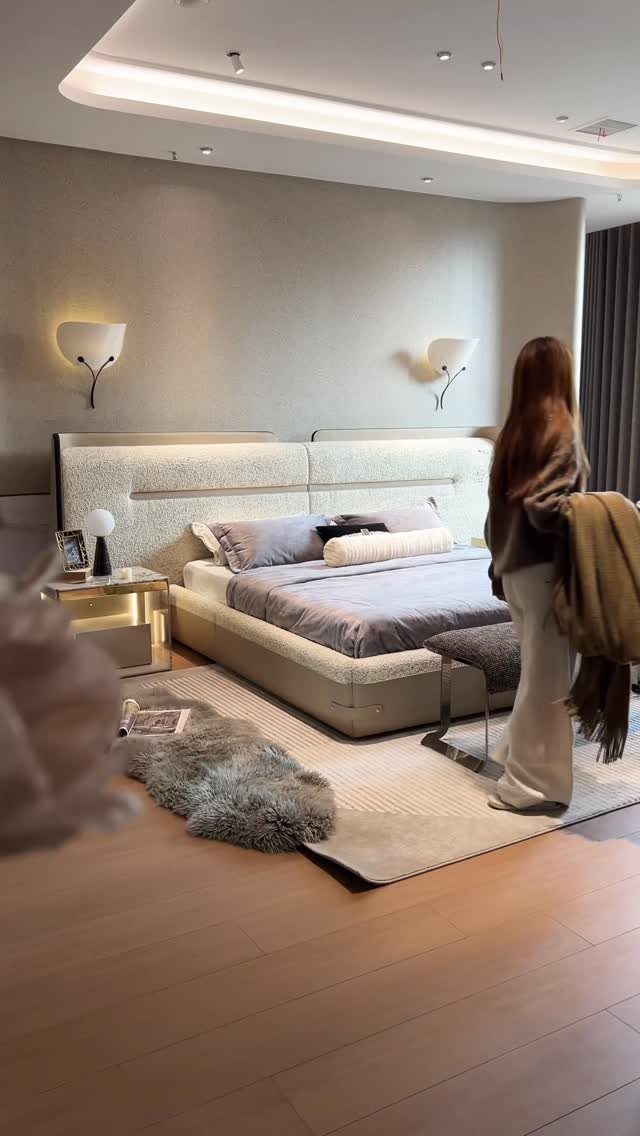
A sconce on each side of the bed puts light at reading height and frees both nightstands from lamps. The pair also frames the headboard, which makes a plain neutral wall look finished.
Hang them at matching heights, centered on each side of the bed, and measure both before drilling. I’d choose a plug-in style with a cord cover if you rent, since hardwiring means an electrician.
Dimmable bulbs let the same light work for reading and for winding down.
13. Veneer Wall and Ceiling

Running the same dark ribbed wood from the wall up onto the ceiling makes the two surfaces read as one continuous shell.
The room feels wrapped rather than boxed, and a lit ceiling panel or a fan sits comfortably inside that run of wood.
Dark slats absorb light, so I’d plan for a glowing piece like the backlit art on the wall. It’s a permanent build and a big one, so renters should skip it.
14. Painted Wall Mural
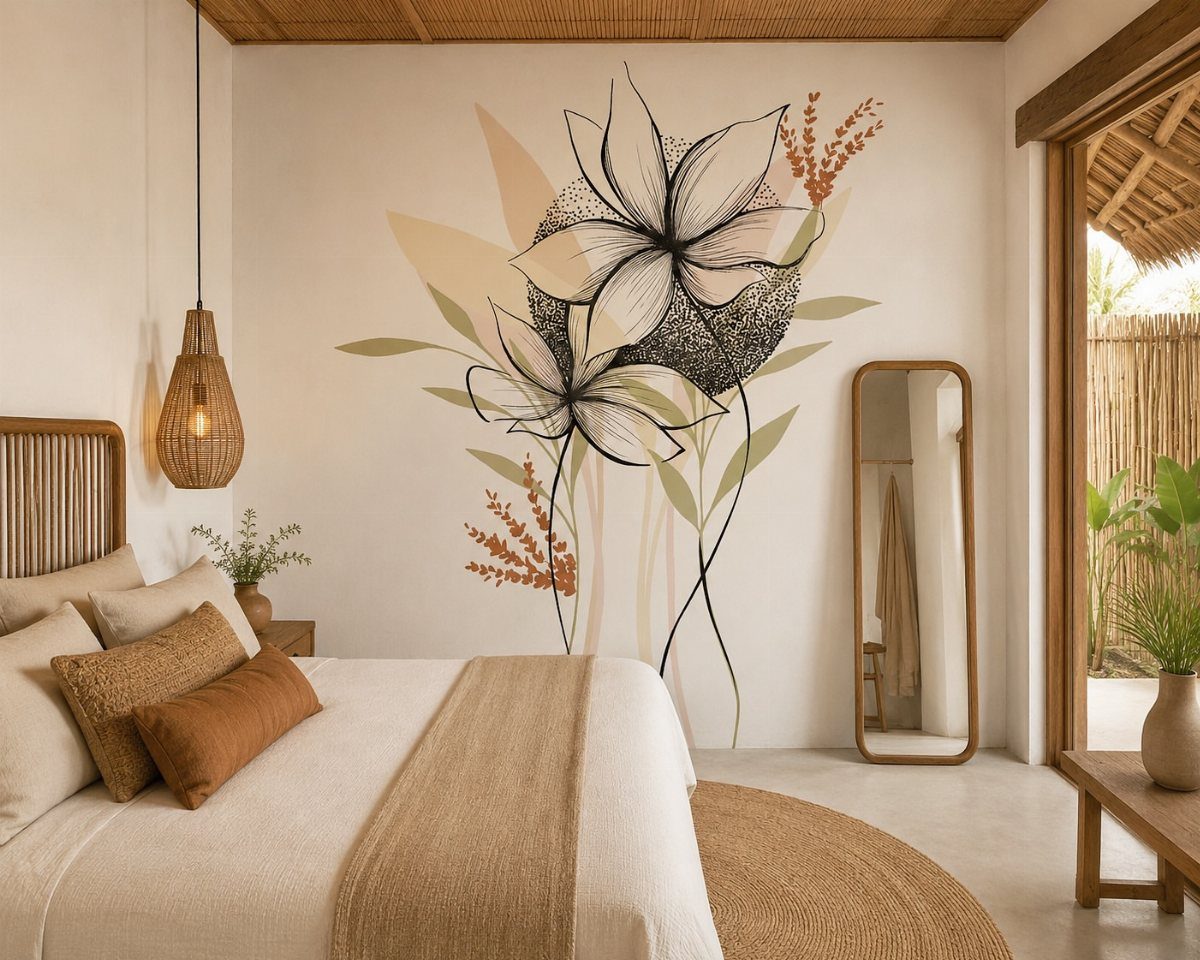
A large floral mural gives a white bedroom wall a single big image instead of many small things to arrange.
Painted by hand, it costs time; printed, it costs less effort.
I’d keep the bed centered under the biggest blooms. A painted scene takes far more work to cover than a plain color, so renters should get the landlord’s okay before picking up a brush.
15. Brick Cladding
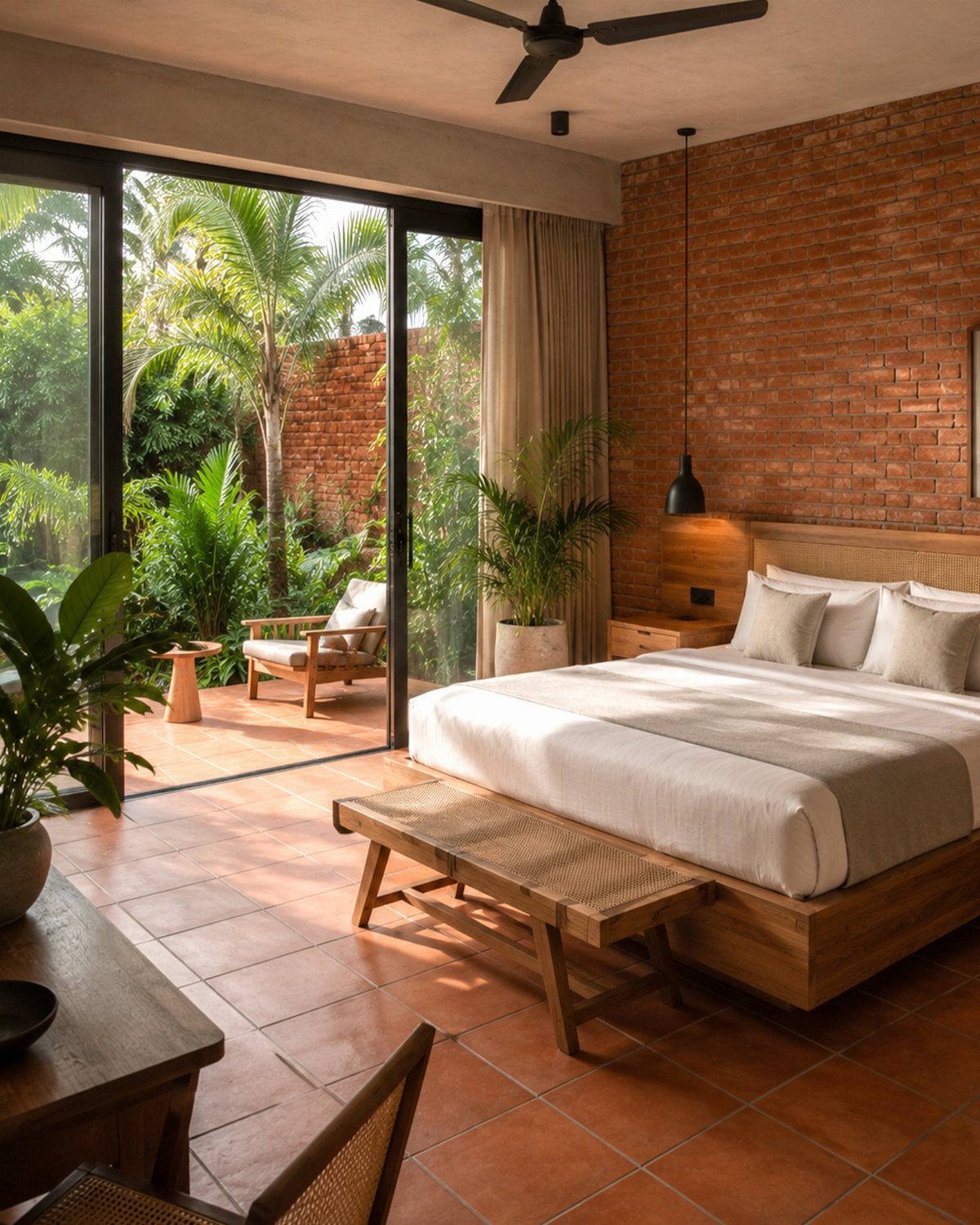
Red brick gives a bedroom wall a raw, earthy surface that no paint finish quite copies. White bedding lets the brick stand out, and a wooden bench or another warm wood piece keeps all that texture from feeling cold.
Cladding is thinner than full brick and attaches to the wall, so it’s a permanent change. I’d confine it to the bed wall, and let the other walls stay plain so the brick has room.
16. Pastel and Bold Geometric Shapes
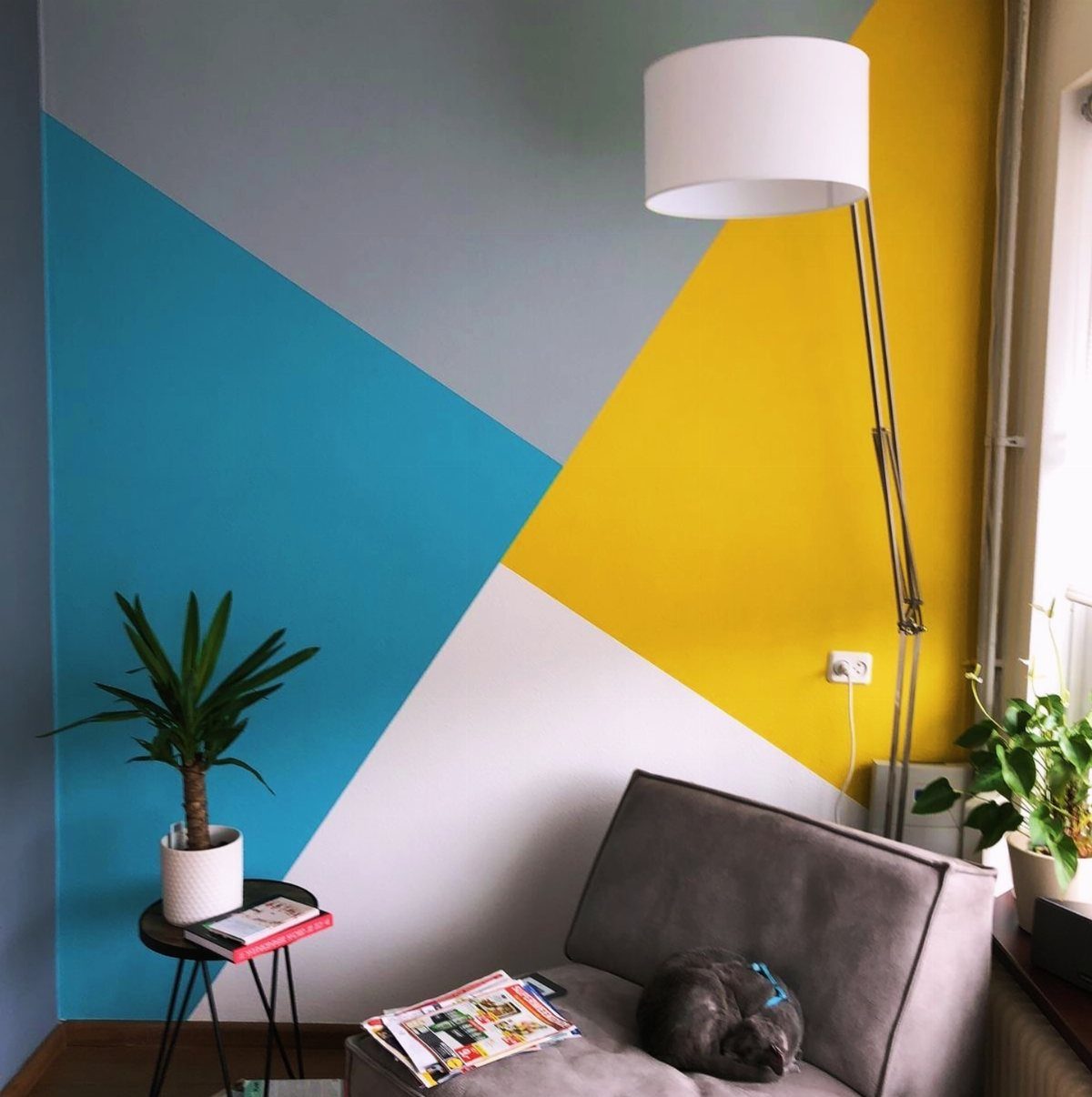
Limiting the palette to a few colors keeps bold shapes from turning chaotic.
Sketch the layout on paper first, then mark the lines on the wall with painter’s tape.
Press the tape edges down firmly before painting so the lines stay crisp. A grey chair and a plant beside it let the wall be the loud part.
17. Wall Panelling
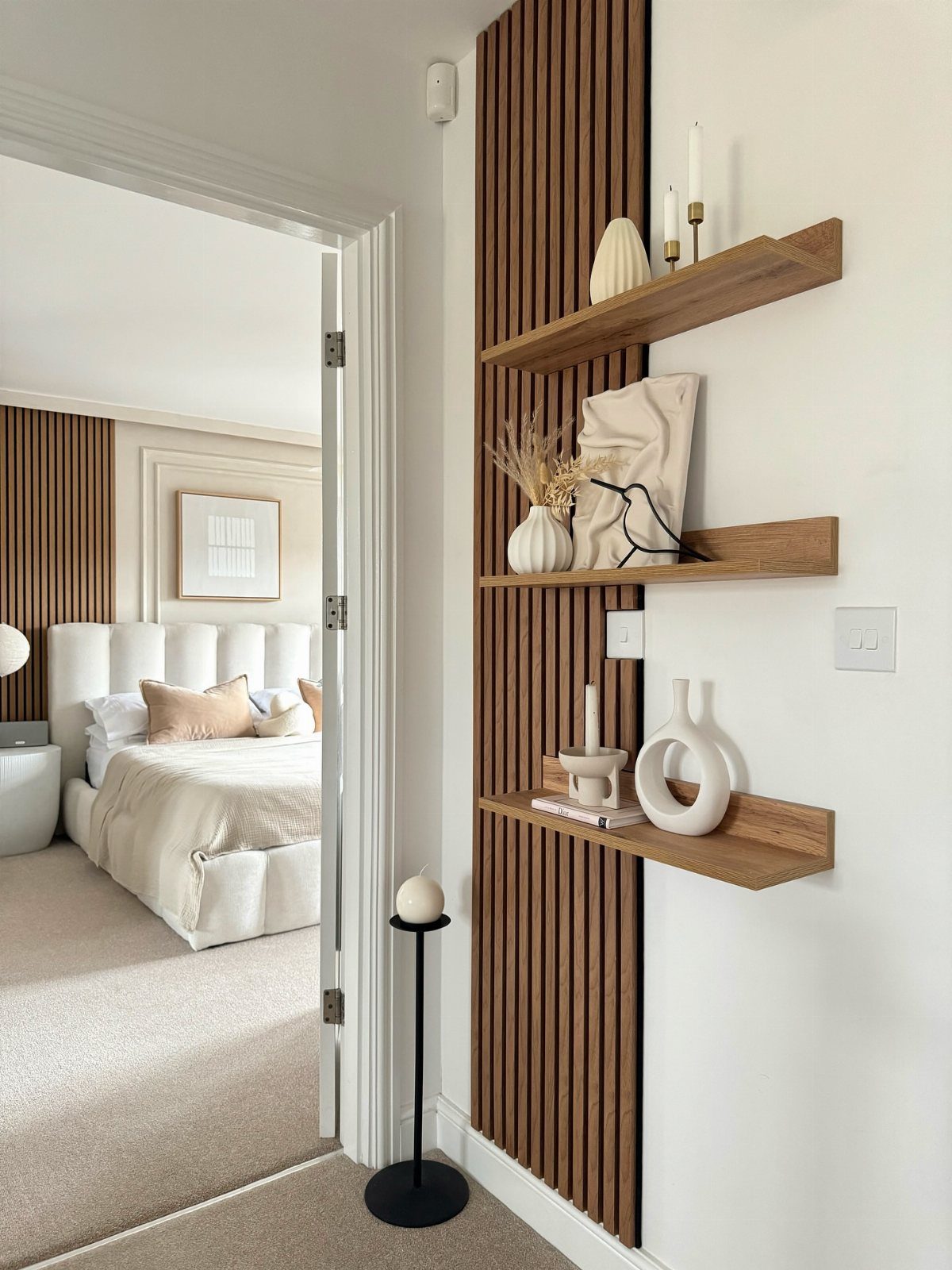
Upright wood battens, or strips of painted MDF cut to width, add depth to a flat white wall that paint alone can’t.
Spaced evenly, they cast thin shadows through the day, and floating shelves can sit right across them for vases and candles.
Carrying the same slats into the bedroom, as the doorway shows, ties the spaces together.
Matching the batten color to the wall lets the shadows between the strips carry the look. Glued or nailed battens are hard to reverse, so renters should get written permission first.
18. A Shelf Above the Bed
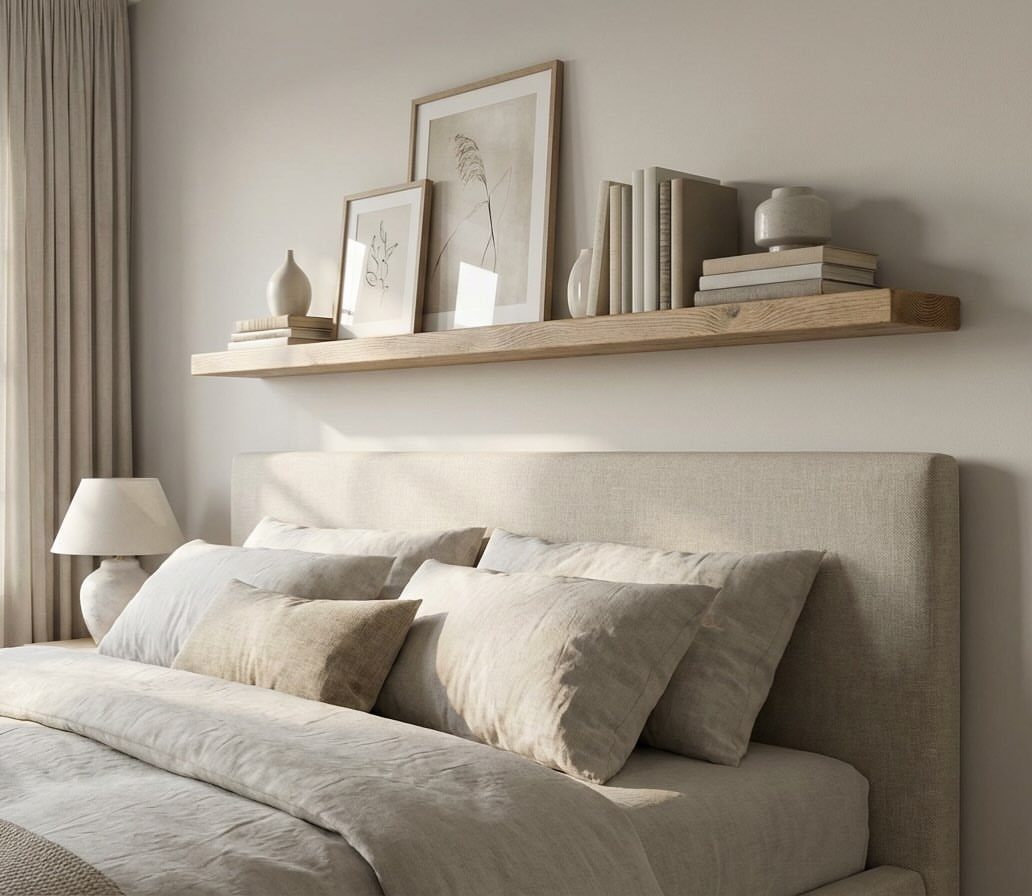
One long floating wooden shelf over the bed gives framed art, books and small vases a home without a gallery wall’s layout puzzle. Lean the frames rather than hanging them, and you can swap pieces whenever the mood changes.
Center the shelf on the bed and keep it close to the headboard’s width.
I’d mount into studs, since books add weight. Leave the items few and the tones neutral, so the shelf stays calm.
19. A Heart of Postcards

Pink floral postcards pinned in a heart read as sweet without needing a single large piece of art.
String lights woven between the cards add a warm glow at night, and a bedside shelf holding tulips and a candle echoes the same soft palette.
Cut a heart template from paper, tape it to the wall, and pin the cards along its outline first, then fill in the center.
Pick lights with a warm white tone so they flatter the pink. Putty tabs or small removable hooks keep the wall clean for renters.
20. A Bedroom Art Arrangement
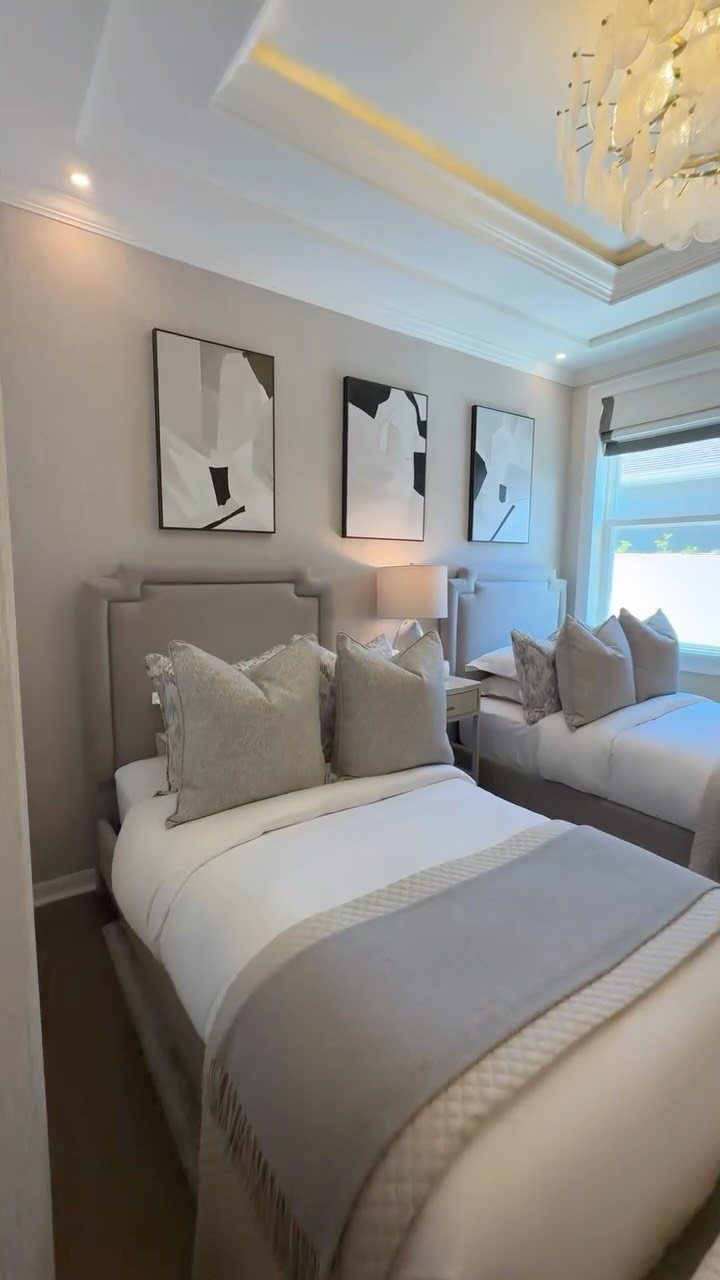
Three black-and-white abstract paintings give twin beds one shared focal point, which suits a shared room where each bed can’t have its own art. Monochrome pieces sit calmly against grey headboards and white bedding, so nothing fights for attention.
I’d hang the trio as a tight row, with equal gaps of a few inches, and keep the group centered over the beds.
Cut paper templates and tape them up before drilling to check the spacing. Prints keep the cost low; originals cost more.
21. A Framed Print with Warm Lighting
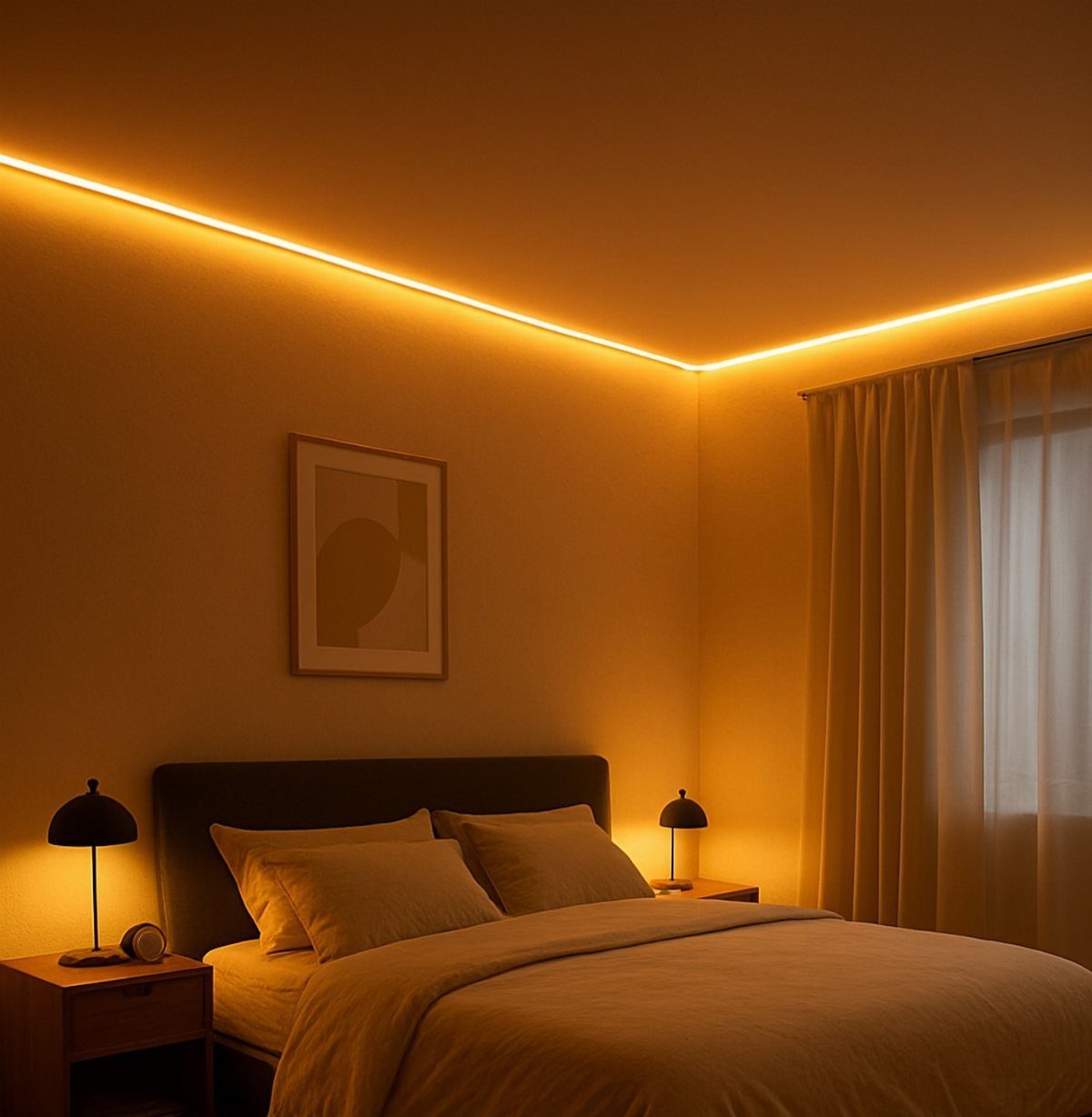
Warm light does as much as the print here. A framed abstract piece over the bed, a lamp on each side, and a glowing strip along the ceiling edge make a plain wall feel finished after dark.
LED strips stick on and plug in, so they suit a rental. Choose a warm white and run the strip along the ceiling line where it washes the wall softly, rather than pointing at the bed.
I’d put the lamps and the strip on separate switches, so you can dim the room in layers.
22. A Textured Plaster Wall
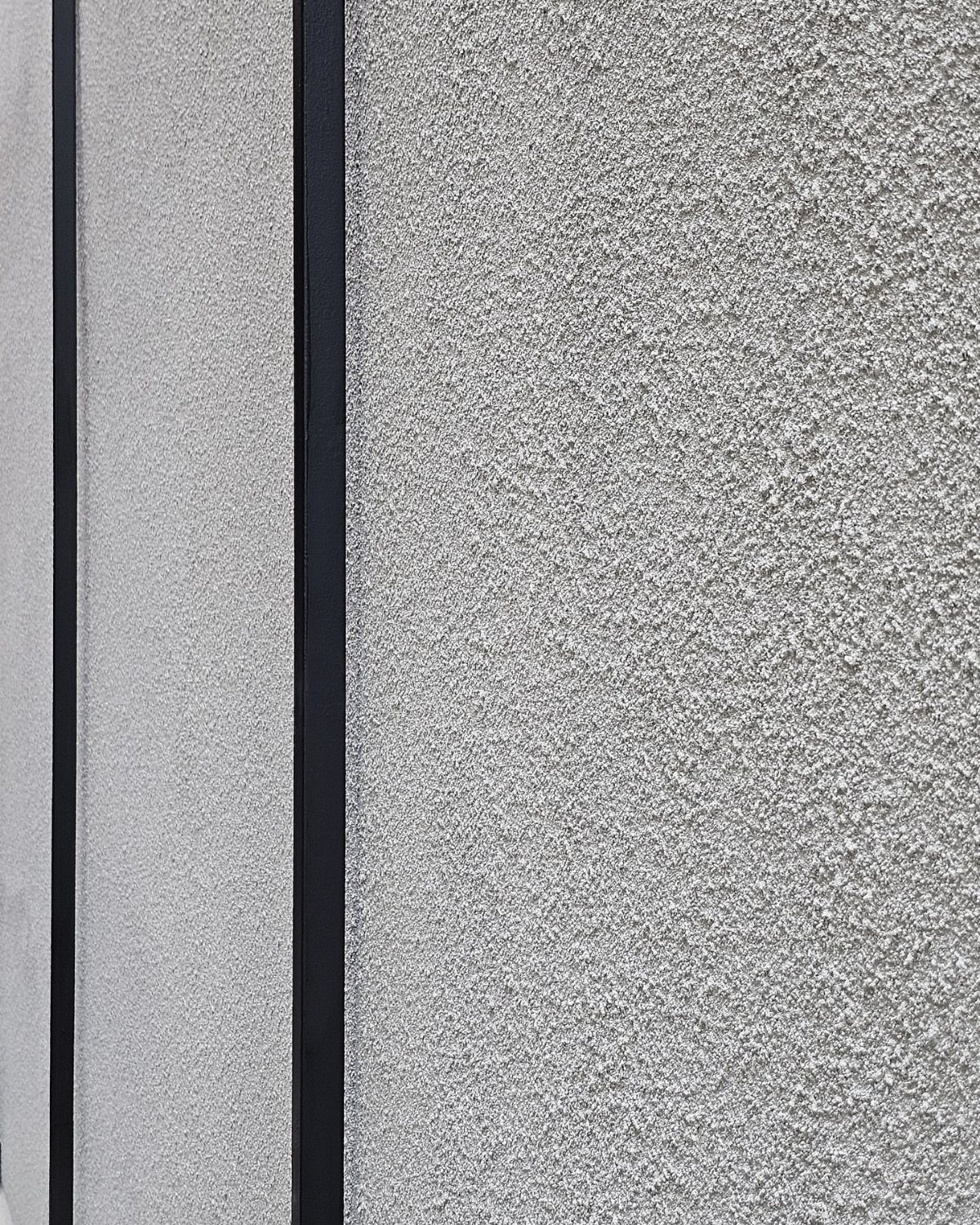
Light grey plaster with a rough, hand-troweled surface gives a wall quiet texture, and two black vertical strips split it into panels with a crisp, modern edge.
The contrast between the soft grey and the thin black lines is the whole design.
Plaster is a permanent finish and takes some skill to apply evenly, so I’d practice on a spare board first.
Rentals can borrow the look with textured paint and black tape or slim black trim, though the depth won’t match real plaster.
Choosing a Wall Treatment
Pick one wall and let it carry the room. The wall behind the bed is the usual choice because you face it from the doorway, and the other three can stay quiet.
Room size sets how bold that wall can be. Small bedrooms close in fast under deep colors and thick texture, so I stick to pale paint or a flat, shallow finish on the wall.
Weigh function against looks before you buy. A wall that gets bumped by a headboard or brushed by a door needs a finish you can wipe or touch up, and delicate surfaces show wear fast.
Budget runs from DIY projects you finish in a weekend to high-end installs you pay someone else to do.
Think about how soon you’ll get bored: if you change your mind every year or two, buy cheap and easy to undo, and if you want it to last, spend on a finish that holds up.
Keeping a Wall Deliberately Blank
Some advice says a bare wall always lacks character and must be filled.
A room that already has a patterned rug, loud bedding or a busy window treatment needs one quiet wall, and in that case I’d leave it blank so your eye has a place to land.
A blank wall reads as planned when it’s finished well. Patch the nail holes, sand them smooth and repaint the whole wall, since scuffs and patches are what make a bare wall look forgotten.
Color helps too: a warm white or soft greige has more presence than flat builder white. Leave a little margin around the bed and dresser so the wall looks like a choice.
Then live with it for a while before deciding. If the room still feels unfinished, fill it; if your eye lands there and relaxes, leave it alone.
Frequently Asked Questions
Is a black wall in a bedroom a good idea?
A very dark wall can work, with charcoal or deep navy giving a moody, tailored look. Black walls work best in a large or well-lit bedroom, because a small one starts to feel boxed in.
A dark wall soaks up light, so I’d set a lamp beside the bed, and dark paint often takes 2 coats or more to cover evenly.
What are some ideas for decorating an empty bedroom wall?
Start with the wall behind the bed and give it one job.
One oversized piece of art, about two-thirds to three-quarters as wide as the headboard, fills it with a single hang, or a group of frames can run about as wide as the bed.
Floating shelves, a leaning full-length mirror, a mural or a decal also fill space. Let one wall carry the room and keep the other three quiet.
What is the easiest way to decorate a bedroom wall?
Paint is the easiest, since it’s cheap and simple to redo. A group of frames or peel-and-stick wallpaper comes close.
Renters can hang frames with picture-hanging strips or putty tabs, or use decals, and skip a fight over the deposit. Panels, plaster and brick cladding are permanent and take much more work.
How do I style a small bedroom wall?
Keep the finish light and shallow, like pale paint, because deep colors and thick texture make a small room feel tighter.
One large piece of art is easier to live with than many small things to arrange. In a small room, a tight little wallpaper print beats a large bold one.
Are wooden walls good in a bedroom?
Yes, they add warmth. Vertical slats painted sage green give a soft color and a built-in look behind the bed, and upright boards make the ceiling feel taller.
Light wood reads bright and airy, dark wood reads earthy and rustic, and dark slats soak up light, so add a lamp. Painting wood costs less than stained hardwood, but it’s permanent, so renters need approval first.
Can I mix wall styles in one bedroom?
One wall can be the busy one; the others should stay calm.
Blue floral wallpaper above blue wainscoting works because the lower band repeats a color from the print. Keep the bedding and furniture simple so the layers don’t compete.
When should you leave a bedroom wall blank?
Leave it blank when the room already has a patterned rug, loud bedding or a busy window treatment, so your eye has a place to rest.
Plenty of people say every wall needs something on it, but a clean, well-finished blank wall looks deliberate. Fill and sand the nail holes, then repaint the entire wall in warm white or soft greige instead of stark builder white.
How do I put a wall decal up?
Pick a smooth, painted wall and test one small piece in a hidden corner first.
Wipe the wall with plain water and no soap, let the decal rest flat for about 1 hour, then press it on a section at a time, working from the center out to chase away air bubbles.
A squeegee helps with stubborn ones. Decals won’t grip textured walls, brick or paint that hasn’t fully cured.