Blot immediately with clean white cloths by pressing from the edges inward, never rubbing. For liquid messes, work fast and rotate cloths; for solids, scrape first with a plastic spoon.
Mix pH-neutral wool cleaner with warm water, test on a hidden corner, then apply sparingly without soaking. Rinse, blot dry, and repeat.
Different stains need different weapons: enzymes for pet disasters, cornstarch for grease, alcohol for ink. The next section breaks down exactly which tool wins which battle.
How to Remove Stains From Wool Carpet: Immediate First Steps
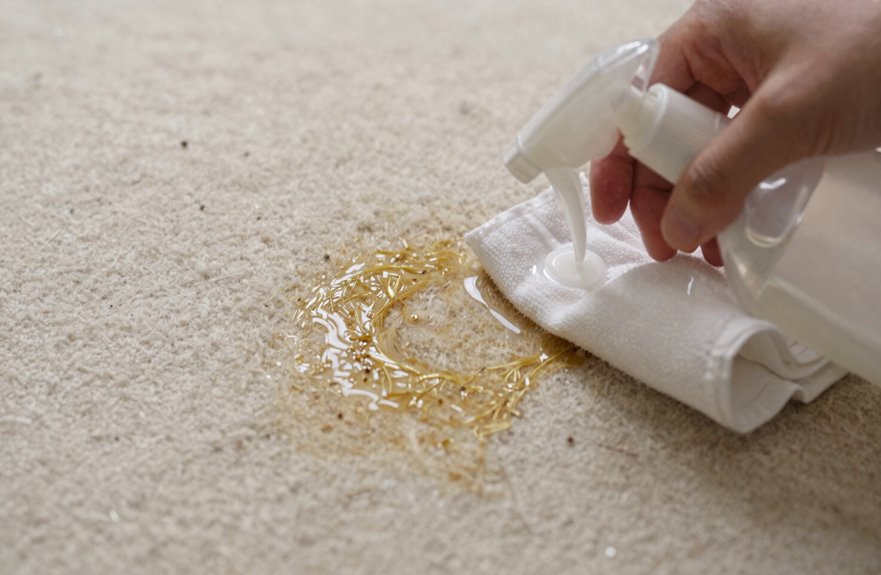
Why does every spill happen the moment I’m already late for something? (Classic Murphy’s Law, right there.) When that glass of Cabernet or my morning coffee takes a nosedive onto my beloved wool runner, I’m grabbing a clean white cloth. Never use colored or terry cloth.
Work from the outer edges toward the center, pressing gently, watching that stain shrink instead of bloom outward like some horrible flower. For solid messes, scrape first with a plastic spoon or kitchen spatula before any blotting begins.
Reach for wool-safe cleaners only. Your rug deserves better than harsh chemicals. Test first on a hidden corner, because nothing’s worse than solving one problem and creating another. No scrubbing, no flooding. Just patience and pressure.
What You Need to Clean Wool Carpet Stains
Where do I begin when disaster strikes my precious wool carpet? Having the right arsenal ready before panic sets in is essential.
I always keep clean white cloths and paper towels stacked nearby; nothing fancy, just the good stuff from Costco. I learned the hard way with my patterned Anthropologie napkins that bled dye, resulting in disaster.
For wool carpet cleaning, I have my pH-neutral wool-safe cleaner, a gentle stain remover specifically labeled for protein fibers, and white vinegar in a spray bottle. Warm water, a soft bristle brush, and my Dyson with the brush attachment complete my toolkit.
I test everything first on that corner hidden under the IKEA POÄNG chair. Colorfastness matters. A plastic spatula from my kitchen drawer prevents pushing solids deeper into the fibers.
How to Get Food and Drink Stains Out of Wool Carpet
Because I’ve spilled everything from Malbec to homemade bolognese across my beloved West Elm rug, I’m practically a battle-scarred veteran regarding food and drink disasters.
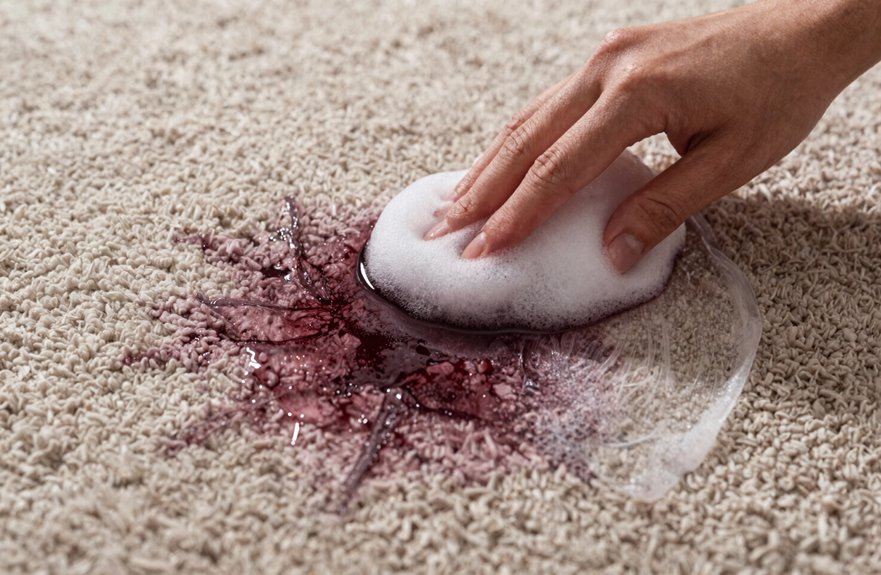
Blot immediately with a clean white cloth, working from edges toward center to prevent stain spread. This lesson came from experience with Pinot Noir.
Blot from the edges, not the center—learned that the hard way with a very expensive Pinot Noir.
Mix a pH-neutral wool cleaner with warm water per instructions. Test on a hidden corner first, then apply sparingly with a cloth. Do not soak.
Rinse with plain water and blot dry. Repeat until the mark fades. Direct heat will ruin the fibers.
For stubborn messes, call professionals. Some stains require professional treatment.
How to Remove Pet Stains and Odors From Wool Carpet
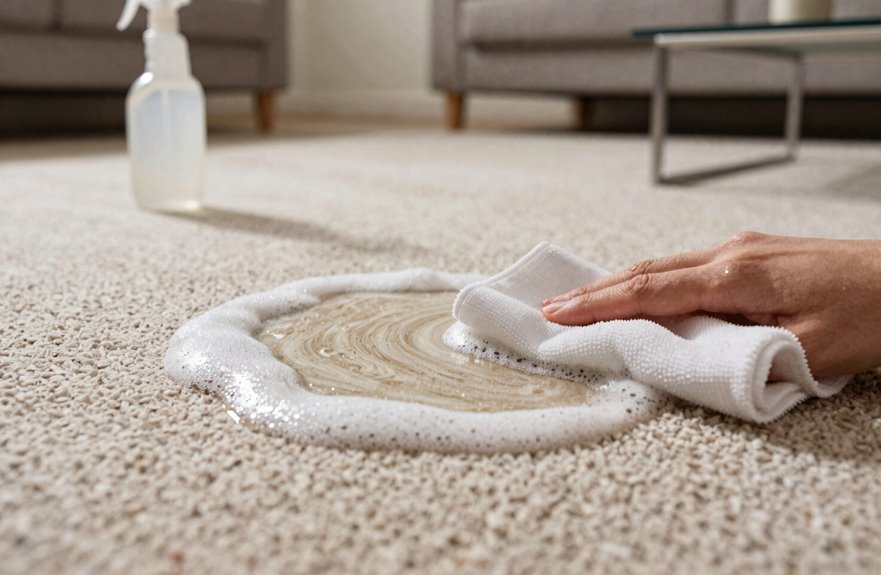
I know the panic when you spot a fresh pet stain on your gorgeous wool carpet. I’ve been there, standing frozen with my coffee still in hand. That’s why I’m going to walk you through my battle-tested routine: first, immediate blotting steps (grab those white cloths, not your favorite patterned towels like I once did; rest in peace, my Missoni hand towel), then enzyme cleaner application with wool-safe products I’ve learned to trust, and finally drying and odor control so your living room doesn’t smell like a kennel. After three rescue dogs and one very opinionated cat named Chairman Meow, I’ve got this down to a science.
Immediate Blotting Steps
Why does every pet stain seem to happen at the worst possible moment? Right before dinner guests arrive, as you’d expect. I’ve learned that speed saves my wool carpet from permanent disaster. The moment I spot trouble, I grab clean white cloths, never colored, never printed, and blot like my reputation depends on it. No rubbing. That just pushes the mess deeper into precious fibres.
Here’s my battle-tested sequence:
| Step | Action |
|---|---|
| 1 | Blot excess liquid with white cloths—press, don’t rub! |
| 2 | Rotate to fresh cloth sections constantly |
| 3 | Blot with plain warm water to dilute remaining nastiness |
| 4 | Continue until cloth comes away almost clean |
| 5 | Create barrier around spot to prevent spreading |
This immediate blotting routine minimizes absorption and sets up proper stain removal later. Your wool carpet will benefit from quick action during the critical first minutes after a spill.
Enzyme Cleaner Application
Blotting buys you time, but it doesn’t fix the chemistry happening down in those wool fibres. I’ve learned this the hard way, sorry about Fluffy’s incident last Christmas.
Enzyme cleaner is essential for this step. I grab a wool-safe formula specifically designed for pet stain removal, not the generic supermarket stuff that’ll wreck your carpet’s integrity. After blotting up the worst, I apply the enzyme cleaner so it actually penetrates those fibres rather than pooling on top like a lazy puddle.
Follow the label’s contact time religiously. These enzymes need time to literally eat the organic matter causing your headache. Then I blot, rinse with warm water, and blot again with white cloths. Don’t oversaturate, or you’ll invite mould to the party. Proper stain removal requires respecting each step of the process.
Drying and Odor Control
So here’s where I’ve personally botched things more than once: how exactly do you get wool dry without turning your living room into a sauna? Drying demands patience, not panic.
Here’s my battle-tested routine for fellow carpet warriors:
- Blot like your life depends on it. White cloths, no rubbing, just lift that moisture out.
- Stack paper towels, add a book weight (my copy of The Joy of Cooking works), and let gravity do the heavy lifting.
- Once mostly dry, sprinkle baking soda generously. It’s odor control magic for stubborn pet odors.
I once used a hair dryer on high (rookie mistake) and nearly felted my grandmother’s heirloom rug. Never again. For serious pet odors that linger, I grab enzyme cleaners safe for wool. Rocco & Roxie saved my sanity last spring. Complete drying prevents mold, which can cause permanent damage to fibers and create health hazards in your home.
Treat Oil and Grease Stains on Wool Carpet
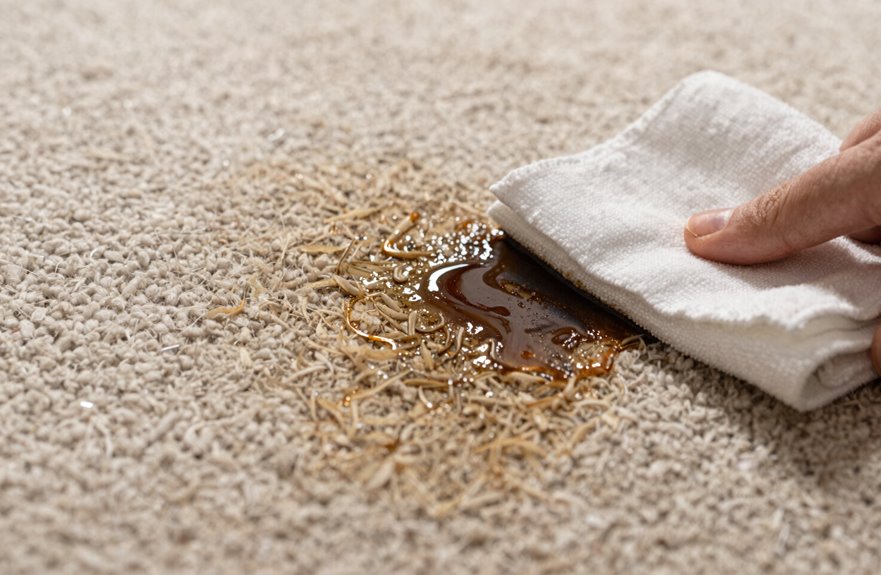
Tackle oil and grease stains on wool carpet the moment you spot them. Speed matters with oil, wool, and stain-removal success. After a pizza incident, I learned this lesson through experience.
Grab a clean white cloth, not printed paper towels that will transfer dye, and blot thoroughly. Don’t rub, as you’ll mash that grease deeper into the fibers. I made this mistake with my grandmother’s Persian rug, a decision she still mentions at holidays.
Sprinkle cornstarch or baking soda generously and wait fifteen minutes. Then scrape gently with a plastic spoon. Apply wool-safe solvent to another white cloth and blot from edges inward without saturating the carpet. Finish with warm water, dry thoroughly, and brush gently. This method will restore your wool carpet.
How to Lift Ink Stains From Wool Carpet Without Spreading
I know that heart-dropping moment when you see a pen explode on your wool carpet. Ink’s a tricky beast because it wants to spread faster than gossip at a neighborhood barbecue, so I’m going to walk you through exactly how to tackle these stains without making them worse. Quick blotting, careful alcohol application, and thorough drying are three steps that prevent stains from setting permanently and protect your carpet’s fibers.
Blot Excess Ink Quickly
Why does ink seem to find wool carpet like a magnet finds metal? We’re talking about that sinking feeling when you watch your favorite pen roll off the desk and onto your precious rug.
Grab a clean white cloth (colors bleed) and start blotting immediately. Work from the outer edges of that ink stain inward, circling like a detective closing in on a suspect. Pushing outward spreads the damage.
- Blot, don’t rub. Rubbing spreads the stain.
- Keep rotating your cloth to clean sections for better absorption.
- Apply gentle pressure, letting the wool carpet’s fibers release what they grabbed.
Speed matters most when dealing with fresh ink stains.
Apply Isopropyl Alcohol Carefully
So how do we actually lift this ink without turning our wool carpet into a modern art piece? I grab my isopropyl alcohol, 90% or higher, nothing weak, and pre-test it on a hidden corner (learned that the hard way with my grandmother’s Persian, rest her soul).
The key technique: blot outward first, then work inward. This approach prevents that dreaded ink bloom. Dampen a clean white cloth, never pour directly, and press without rubbing. Wool carpet fibers tangle easily, and aggressive scrubbing creates a fuzzy mess.
Blot, check, and repeat with a fresh cloth and more alcohol, watching that ink transfer stop. When the transfer stops, you’ve achieved near-victory. Sometimes stubborn spots need another round.
Patience saves rugs one blot at a time.
Rinse and Dry Thoroughly
Once the alcohol’s done its job and that cloth comes up clean-ish, it’s time for the rinse-and-rescue phase. I grab warm water and a fresh white cloth (learned that dye transfer lesson the hard way with a blue towel incident) and rinse the spot gently. No rubbing; I’m pressing, not petting a cat backwards here.
- Blot from edges toward center so that ink doesn’t spread like my aunt’s gossip at Thanksgiving
- Rinse again, then blot dry with white paper towels. No one wants pink carpet.
- Repeat if wicking happens. Stains love a comeback tour.
Drying completely before walking on it is non-negotiable. Rushing this step leaves footprints and requires starting over.
Baking Soda and Vinegar: Safe DIY Cleaners for Wool Carpet
What happens when you’re staring down a red wine disaster on your beloved wool rug and the only thing in your pantry is that box of baking soda from 2019? I grab it, toss some salt in the mix and make a paste that works effectively on stubborn stains.
For wool carpet emergencies, this combination is effective. I spread the baking soda paste right on that stain, let it sit overnight, then vacuum away the crusty remains. Sometimes I’ll follow with a vinegar solution for spot-cleaning. I learned to pre-test in a hidden corner first, after a mystery bleach spot damaged my carpet in 2017.
Testing in an inconspicuous area prevents damage to visible carpet sections.
What to Do When Home Stain Removal Doesn’t Work
I’ve stared down plenty of stubborn stains that laughed off my baking soda miracles. Red wine ended up at my sister’s flat when Rupert the cat knocked it over. Coffee stains appeared after that Sunday morning I definitely needed caffeine. When you’re facing a spot that’s burrowed into the wool like it’s paying rent, despite your patient blotting and wool-safe solutions, you’re not failing. You’re hitting the wall where DIY ends and professional service begins. Call someone who actually knows their way around a wool-specific extractor, not just any van with a hose. Pushing too hard yourself turns “maybe fixable” into “permanent artifact of my hubris.”
Recognising Stubborn Stains
So you’ve scrubbed and blotted and rinsed, and that stubborn blotch is still staring back at you like a personal insult. We’ve all been there, staring at wool stains that resist standard cleaning methods.
Stain recognition is essential knowledge. Here’s how to spot trouble:
- That ghostly comeback – re-wicking means it resurfaces after drying, like a persistent problem
- The smell that lingers – trapped moisture indicates incomplete cleaning
- Colour betrayal – fading means stop immediately before causing further damage
Bleach and aggressive scrubbing damage wool fibres. When you’re uncertain about a cleaning method, reach for wool-safe enzymatic cleaners (pet parents know these well). Follow product labels carefully, and use your judgment.
Professional Cleaning Benefits
Sometimes you just have to admit defeat, right? I’ve been there, scrubbing like a maniac while that red wine laughs at me. That’s when I call in professional cleaning experts who actually get wool fibers.
| What Pros Do | Why It Matters | The Payoff |
|---|---|---|
| Assess fibre safety first | No guesswork, no damage | Your carpet survives |
| Use wool-safe solvents | Harsh chemicals? Never | Warranties stay intact |
| Apply stain protection | High-traffic zones need love | Future spills wipe right up |
They’ve got equipment I can’t buy at Tesco, and they reach deep where my spray bottle dreams of going. Recurring odour? They’ll sniff out the real culprit (looking at you, Mr. Whiskers) and neutralize it properly. Handing this over to professionals means your carpets get properly maintained and your investment is protected long-term.
Preventing Permanent Damage
When I’ve already attacked that stain twice and it’s still smirking back at me, I know it’s time to pump the brakes before I turn my gorgeous wool into a fuzzy disaster zone.
What I’ve learned through experience:
- I stop re-wetting immediately. Repeated moisture swells wool fibres and invites dye migration like that disastrous merino throw I ruined in ’19.
- I dodge bleach and silicone repellents completely; they strip colourfastness and leave permanent white patches (RIP, my grandmother’s Kashan).
- I call for professional guidance from wool-certified cleaners who understand fibre integrity.
I’ll request a spot test first to confirm wool-safety before any re-treatment. If wicking reappears, I dry thoroughly and repeat only gentle methods, or hand the piece over to professionals who can restore it properly.
When to Call a Professional Wool Carpet Cleaner
Why do we cling to that half-empty bottle of supermarket carpet cleaner like it’s some kind of security blanket? Because admitting defeat feels like failure, and nobody wants that. However, some battles need professional intervention.
When that red wine stain persists after three DIY attempts, professional help becomes necessary. For wool carpet stain removal, timing matters. Wicking stains will reappear if ignored, causing additional damage.
A professional cleaner understands wool’s delicate properties. They bring wool-safe solutions that won’t felt your carpet fibers. For pet disasters or ink emergencies, professional services protect both your carpet and your time investment.
Daily Habits That Keep Wool Carpets Looking New
How do you keep that gorgeous, hand-loomed Flokati looking like it just arrived from the Greek mountains? My daily rituals saved my own cream Beni Ourain from my red wine catastrophe of 2019.
- I vacuum weekly, twice in my hallway war zone, because embedded soil is the enemy of wool carpets everywhere
- I’m that host who makes guests remove shoes, yes, even cute ones, thanks to my aggressive doormat situation
- When stains strike, I blot like my life depends on it, working outer edges inward with a clean white cloth. Never rub; I learned that the hard way.
I only use wool-safe products, always test first, and splurge on professional cleanings. Your wool carpet will maintain its appearance and longevity with these practices.