I’ve dried more carpets than I care to admit, usually after my own disasters. First, I grab my trusty wet/dry vac, or borrow a Rug Doctor if I’m feeling fancy, and extract every drop of pooling water with overlapping passes. Then I attack the fibers with clean white towels, swapping them out like I’m running a laundry marathon, especially in those pet-accident corners my cat Picasso seems to favor. Next comes the fan choreography. I angle air movers low across the surface toward open doors, never blasting straight down like I’m trying to launch the carpet into orbit. I pair that with a dehumidifier cranked to 30-50% humidity, my little Frigidaire workhorse, and crack windows for crossflow when the weather cooperates. Finally, I lift corners and press my knuckles into the padding, hunting for that dreaded squish that means mold city is coming. If I find it, I’m speed-dialing the pros faster than you can say “security deposit.” This process prevents the moisture damage that leads to mold growth and structural deterioration of your flooring.
Extract Water Immediately With a Wet/Dry Vacuum
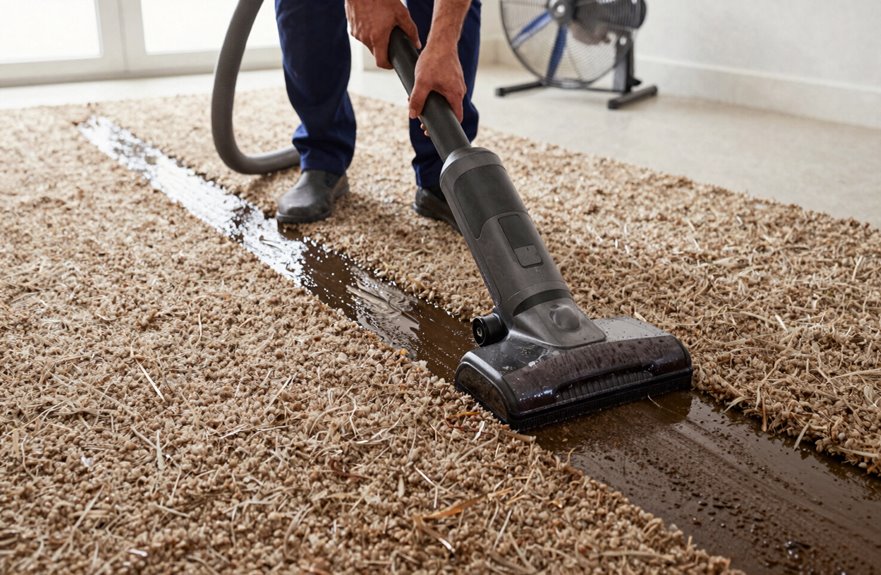
I always grab my wet/dry vacuum the second I spot water pooling on carpet. That initial extraction makes or breaks your whole carpet drying mission.
I learned this the hard way after my washing machine failed last spring, rusting out the laundry room floor. Now I make overlapping passes like I’m mowing stripes into a baseball diamond; slow, steady, slightly obsessive. You’re aiming for damp but not saturated, because nobody wants to replace subfloor plywood at 2 AM.
For serious moisture removal, I’ll hit problem spots twice, looking at pet accident corners. The backing and padding protection matters here, so I avoid over-wetting like I avoid unwanted encounters. Hot water extraction equipment produces excellent results if you can borrow or rent it.
Blot Deep Moisture From Carpet Fibers
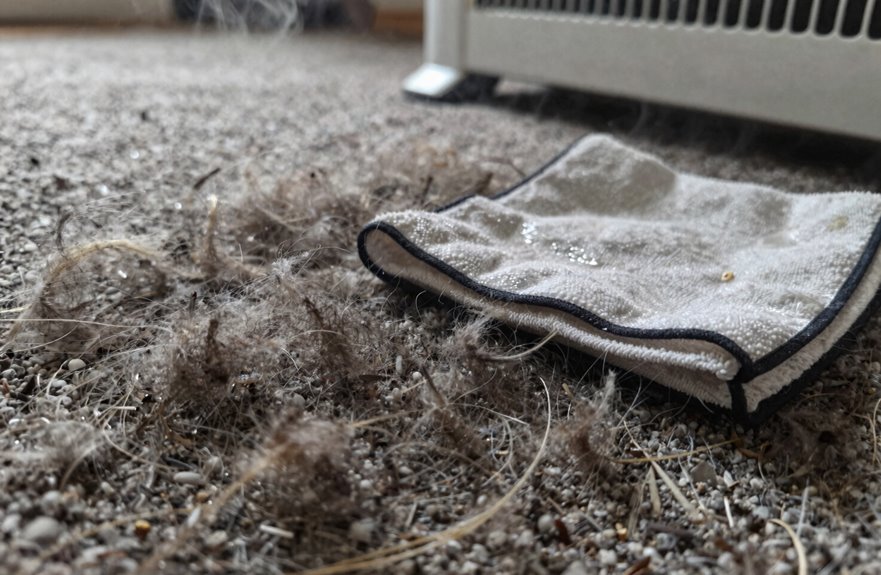
Grab a stack of clean, white towels (the fluffy ones you hide when guests come over) and start pressing them into the carpet like you’re making the world’s saddest panini. This blot technique is essential for moisture removal.
| Blotting Zone | Towel Type | My Honest Take |
|---|---|---|
| Traffic lanes | Thick absorbent towels | These spots hoard moisture like my closet hoards shoes |
| Pet disaster zones | Extra absorbent towels | Double-pass moisture extraction, trust me |
| General carpet fibers | Standard white cloths | Watch surface dampness vanish—so satisfying! |
Focus moisture removal on those beaten-down traffic lanes where everyone drags their feet. Do not rub. You’re blotting, not scrubbing. Replace soaked towels immediately. Wet carpet handling requires patience. Once you’ve conquered that surface dampness with relentless blot deep moisture action, your carpet fibers will function properly again, with moisture extraction complete.
Position Fans to Dry Carpet Across the Surface
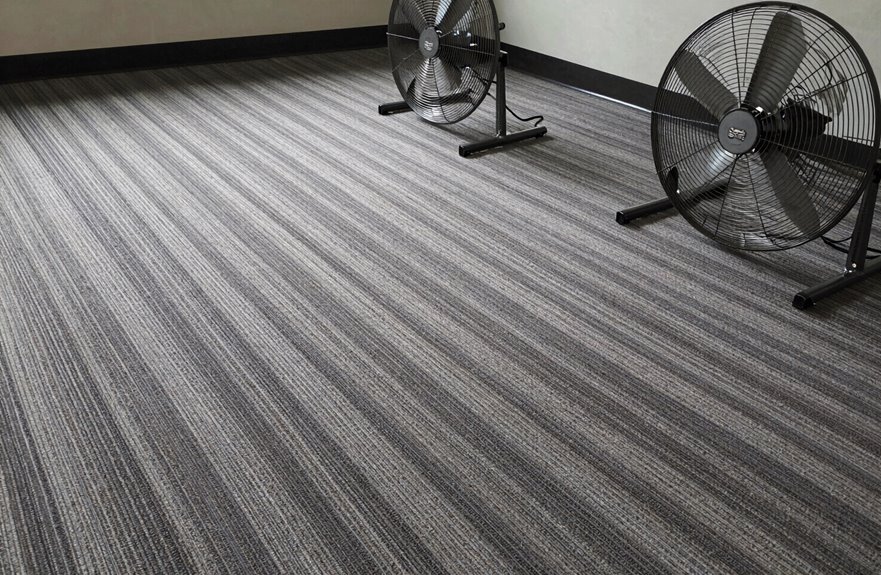
Where exactly should those fans go so they actually pull moisture out instead of just pushing humid air around in circles? Aim your air movers across the carpet surface, not straight down. That sweeping airflow carries moisture away like a tiny wind highway.
Angle your fans toward open doors or return vents so humidity actually escapes, eliminating excess moisture buildup. For big spaces, you’ll want multiple units creating continuous cross-flow. Think of it as coordinated placement for your carpet drying mission. Got ceiling fans? Position them to funnel air low across that damp surface.
Clear those paths. No furniture blocking the ventilation. Every obstacle adds drying time. Moving one stubborn ottoman can cut drying time in half for a hallway.
Run Dehumidifiers and Ventilate Damp Air Out
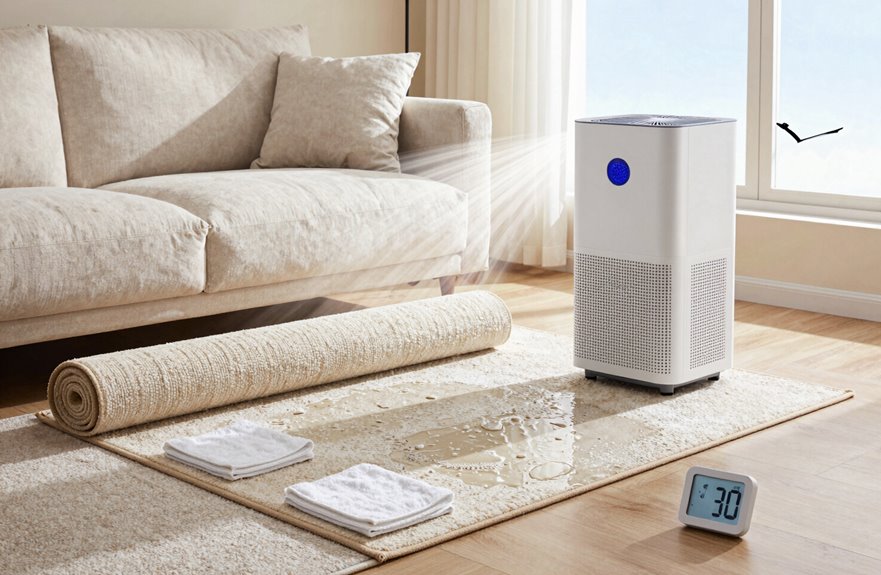
For humidity control, I’m aiming for 30–50% relative humidity. My cheap hygrometer from Amazon provides accurate readings. When the sun’s blazing outside, I crack windows on opposite walls for crossflow ventilation, letting damp air escape. On humid days, my HVAC system handles the moisture load.
I position fans to push airflow toward exhaust points, accelerating damp carpet drying while dehumidifiers remove moisture. The continuous drainage gurgle indicates the system is working effectively. This approach reduces humidity one percentage point at a time.
Check for Complete Dryness and Call Professionals If Needed
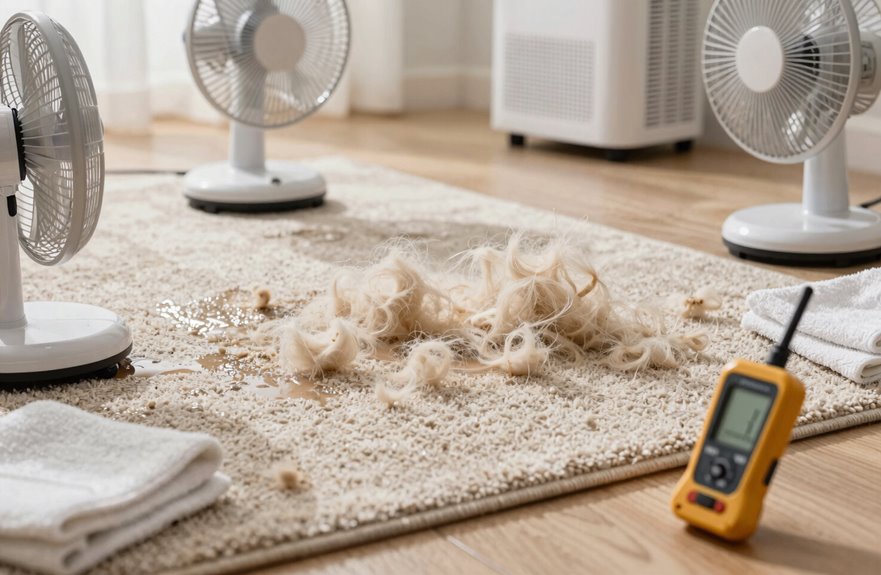
How do I know when it’s actually done? Looks deceive. I grab my moisture meters and check everywhere: surface, backing, everywhere. That sneaky moisture behind backing is the villain of this story.
I watch for drying signs like a hawk. Any musty odor means I’m not finished. Complete dryness demands patience. I lift corners, feel the carpet padding (squishy indicates a problem), and document everything thoroughly.
My moisture check routine includes serious moisture testing with no guessing allowed. If dehumidification fails or that pad’s soaked through, I call professional restoration immediately. Severe flooding means I contact experts before mold becomes a problem.