
Stands here run from a small wooden shelf hung on ropes to a stone urn on a square pedestal, and weight is what separates them.
Wrought iron and stone stay wherever you set them, while wood, wicker and crates on casters slide to follow the light.
The choice starts with whether the spot is permanent: renters and anyone who rearranges often should lean toward the lighter pieces, like a ladder shelf that needs no drilling.
1. Tiered Plant Stand

A tree-shaped stand turns a bare wall or corner into a small indoor garden, with each shelf holding its own pot at a different height.
Matching pots in one color, like the white ones here, keep a stand with this many levels from looking cluttered.
I’d put the biggest pot on the lowest shelf and the trailing plants higher up, where their leaves can hang without hiding what’s below.
2. Wrought Iron Plant Stand

Scrollwork is what makes a black wrought iron stand worth buying: the curls give a plain pot a frame, and the dark metal makes green leaves look sharper.
A corner against a pale wall suits this style best. Pick a stand with an open top ring so the pot sits snugly and doesn’t tilt.
3. Multi-level Metal Stand

Curved or circular shelves give a metal frame a softer look than straight rungs, and stacking the pots upward keeps the footprint small.
Pairing a black stand with a white one works well, and matching the heights keeps the two looking like a set.
I’d choose the black if your wall is light, since it gives you a clear outline. Fill the shelves with mixed leaf shapes so the stand never looks like a rack.
4. Wooden Ladder Shelf
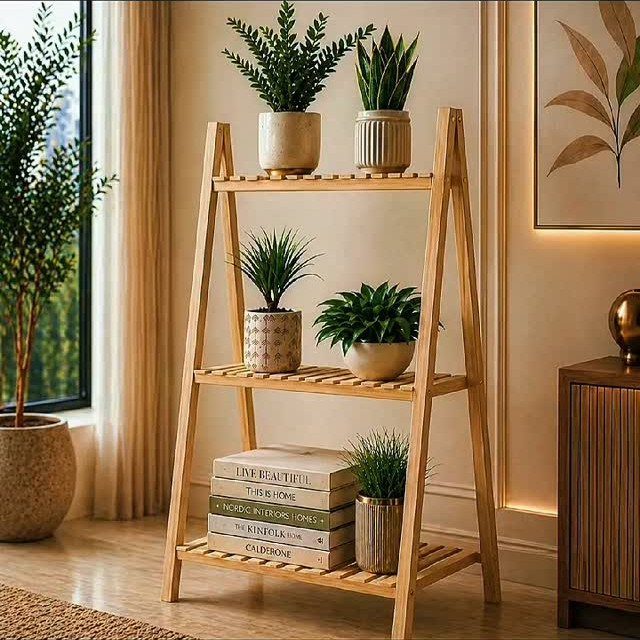
Ladder shelves lean against the wall, so there’s no wall drilling to worry about, which makes them a good fit for renters.
The angled rungs create stepped levels where pots sit at staggered depths, and the open frame leaves room for a few books between the plants.
Keep the heaviest pots on the bottom shelf, where the ladder is widest. That’s my rule for any leaning piece: weight low, light things up top.
5. Curved Black Metal Stand

One tall, curved black stand with a single ribbed grey pot is the quietest way to display a plant. The curve does the decorating, so the pot and plant need no help from other pieces.
A snake plant is a good partner because its upright leaves echo the stand’s curve. I’d leave a little bare floor around it so the silhouette stays clear against the wall.
6. Four-legged Metal Frame

A four-legged frame in black metal holds one cylindrical pot, and its open sides keep the look light even with a large plant on top.
A fiddle leaf fig in a black pot merges the planter and stand into one dark base under the leaves.
Because the pot and frame match in color, the plant gets all the attention. If you’d rather have contrast, choose a pot in a lighter shade than the stand.
7. Brass Tripod Stand

Gold-finished bowls on matching tripod legs look more like small furniture than plant holders. Against white paneling, the warm metal stands out without any other color nearby.
A fern suits the shape, since its fronds arch over the rim and soften the straight legs. I like the pair spaced a little apart, with one bowl left unplanted.
8. Three-tier Circular Stand
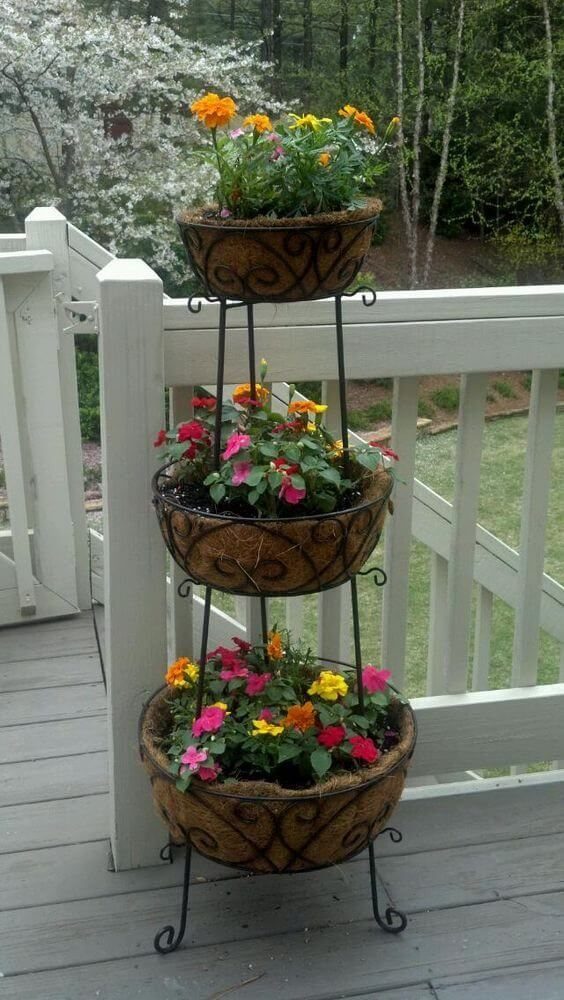
Three round pots stacked inside one black circular frame give a full flower display for the floor space of a single pot. On a deck with a white railing, the dark metal draws a clean outline around the blooms.
Black frames let the flowers carry the color, so I mix shades from shelf to shelf and leave the metal plain.
9. Metal Ring-base Stand

Black cylinders on thin ring bases read as a set when you vary the heights: one tall, one mid, one low. Because the legs are so slim, the pots look like they float above the floor.
Matching the pot color to the stand, as in black on black, makes each piece one solid shape. Against a white wall, that contrast is the whole look.
10. Geometric Frame Stand

Angular frames and square pots belong together, and a black geometric stand holding a square planter does the job outdoors as well as it does inside.
Next to stone and concrete, the straight lines blend into the patio instead of competing with it.
Buy two or three in different sizes and cluster them. I’d pick leafy plants over flowers here, so the shapes stay the focus.
11. Square-base Metal Stands
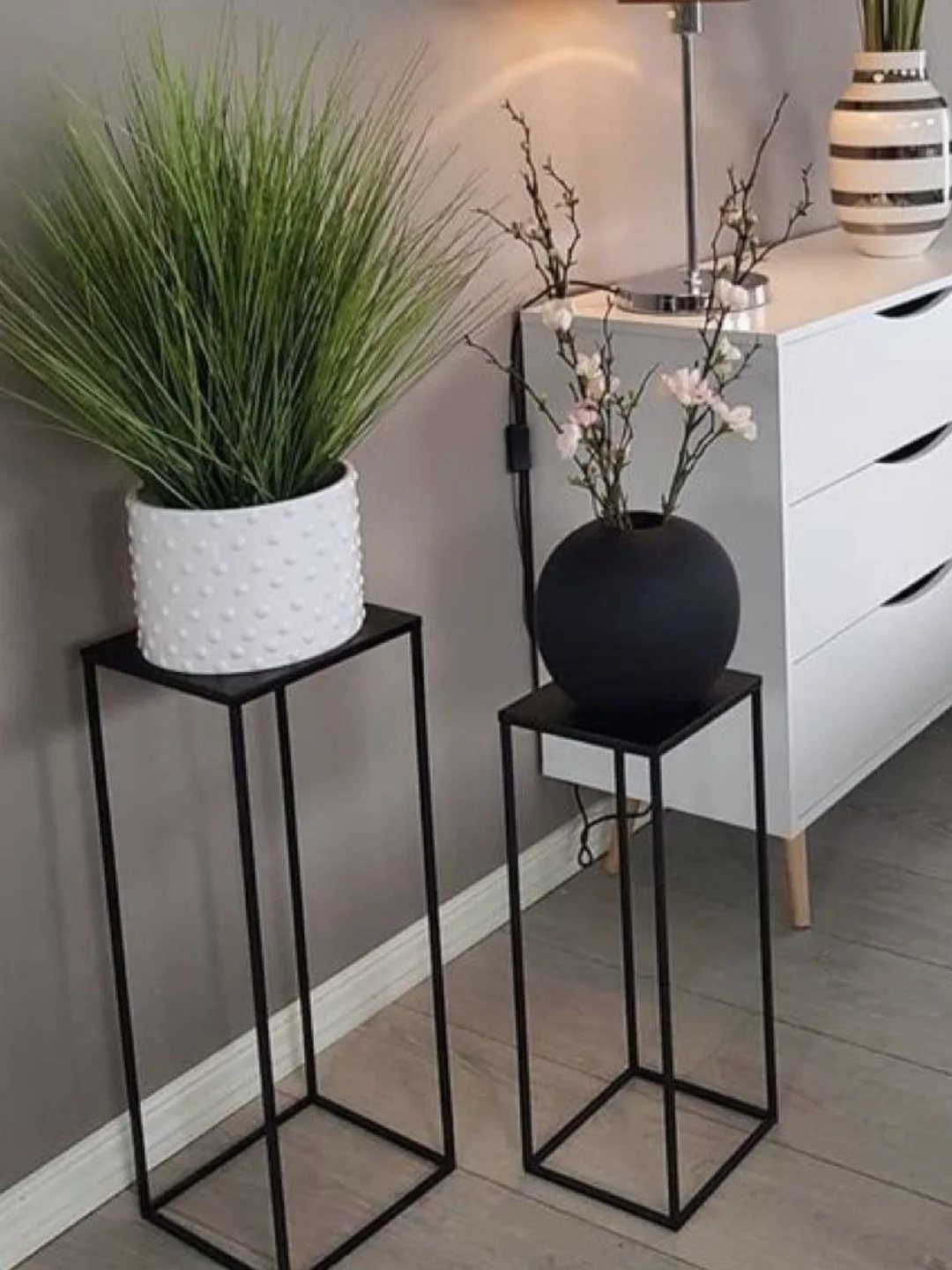
These stands aren’t just for plants. A black vase of bare branches on one and a white textured pot of grass on the other show that a square base also suits arrangements.
Beside a low dresser, a pair adds height where the furniture stops. Swapping the colors, white pot on a black stand and black vase on a black stand, keeps the pair from looking too matched.
12. Gold Metal Frame Stands
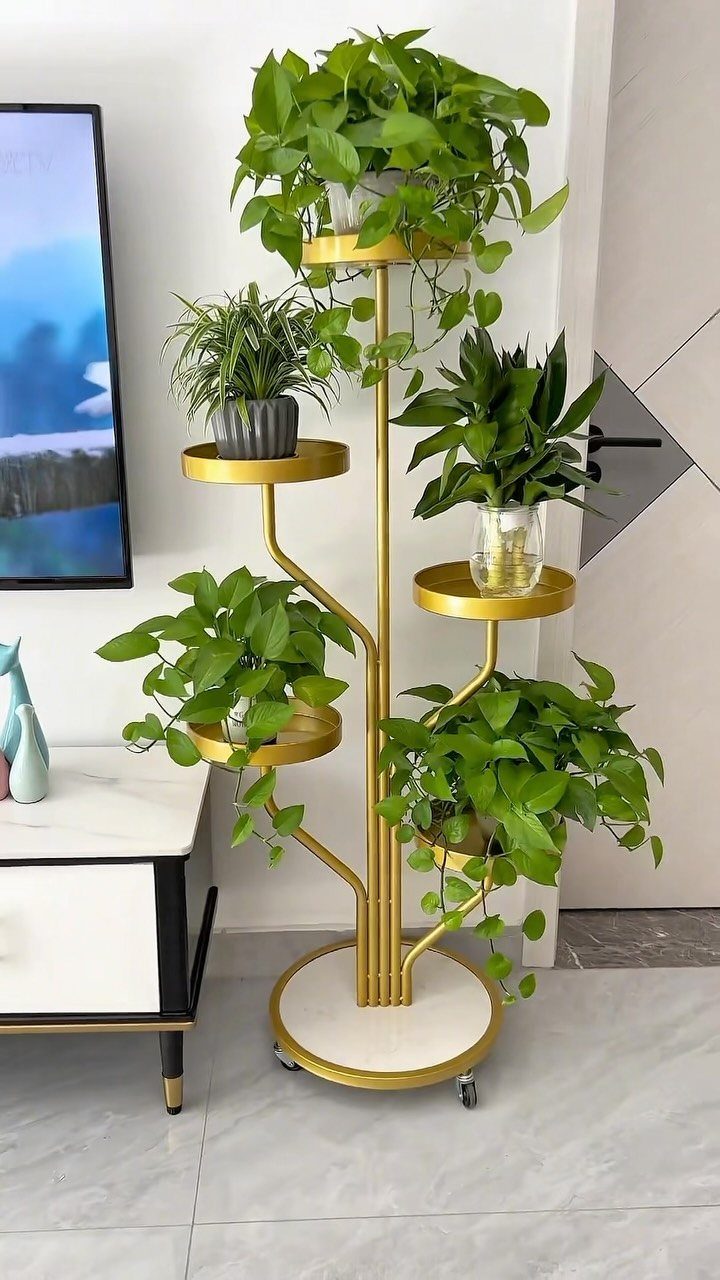
Gold metal tiers turn a corner into a green wall of mixed pots. Gold is a warm neutral, so you can vary the pot colors on each shelf without the stand fighting them.
Next to a TV, a stand this full fills the awkward gap beside the screen. The smallest plant belongs on the top tier, so the outline tapers as it rises.
13. Geometric Four-pot Frame

Four white pots in one black geometric frame read as a single piece of furniture rather than individual planters. The angular metal lines give an otherwise bare wall some structure, and the white pots keep the frame from looking heavy.
I’d fill it with plants that differ in leaf shape, so the green varies even though the pots match. Keep the pots one color and leave the variety to the foliage.
14. Wooden Cube Stands

Wooden cube-frame stands in 3 different heights turn a row of identical snake plants into a staggered display. Because the frames are open, the light wood stays airy, and black pots read crisply on a light gray wall.
If you build or buy a set, vary the heights by a clear margin so the steps look intentional. I’d keep all the plants the same species, as the repetition is what makes the trio look designed.
15. Mid-century Wood Stand

A handmade four-legged wooden stand gives a white cylindrical pot a warm, furniture-like base. Against a yellow wall, the pale wood and white ceramic stay soft, so the red flowers become the one bright note.
I like 3 stands set at different heights, which lets the blooms sit at different eye levels. Choose plants with a little red or green so the yellow wall doesn’t compete with them.
16. Wood Pedestal Stand

A tall rectangular pedestal beside a short tripod base gives you 2 silhouettes from the same light wood. The pairing works because the shapes contrast while the finish matches, so the 2 read as a set.
Put the larger plant on the tall pedestal and the smaller one on the tripod. On a wooden floor, I’d pick wood close to the floor’s tone, so the stands blend in and the white pots stand out.
17. Bamboo Slat Stand
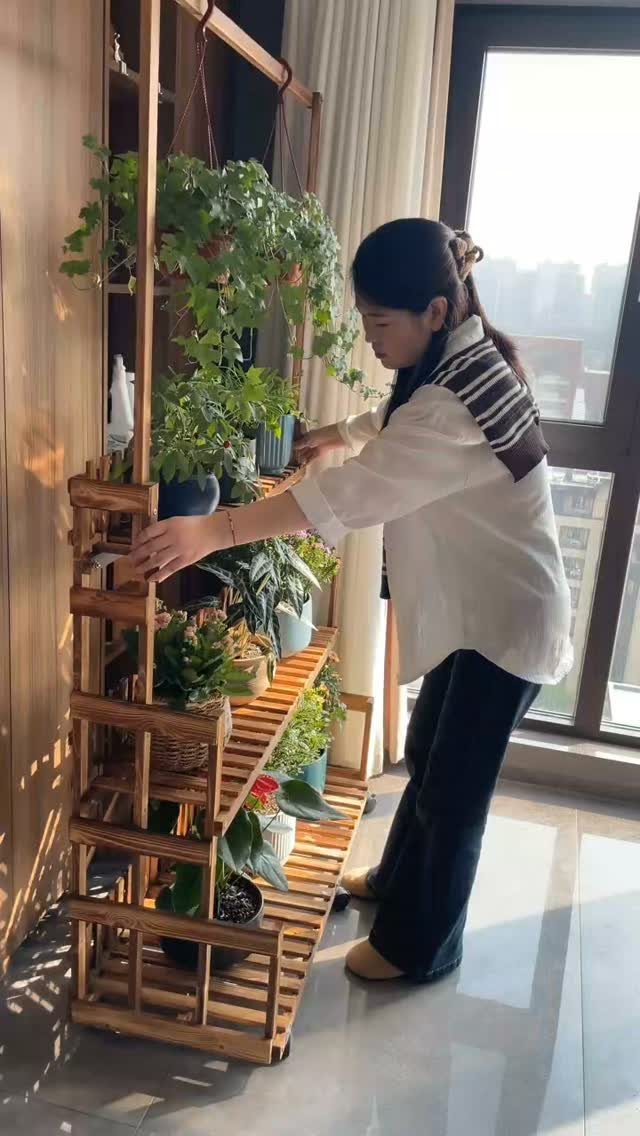
Bamboo slats give a tiered stand a light, natural look that suits a bright room by a window. Several small pots fit across the tiers, so a collection of little green plants reads as one display instead of scattered pots.
I’d put this next to a window where the plants get daylight. Keep the pots small and similar in size, because the slim slats suit a lot of little containers better than a few big ones.
18. Wooden Shelf Frame

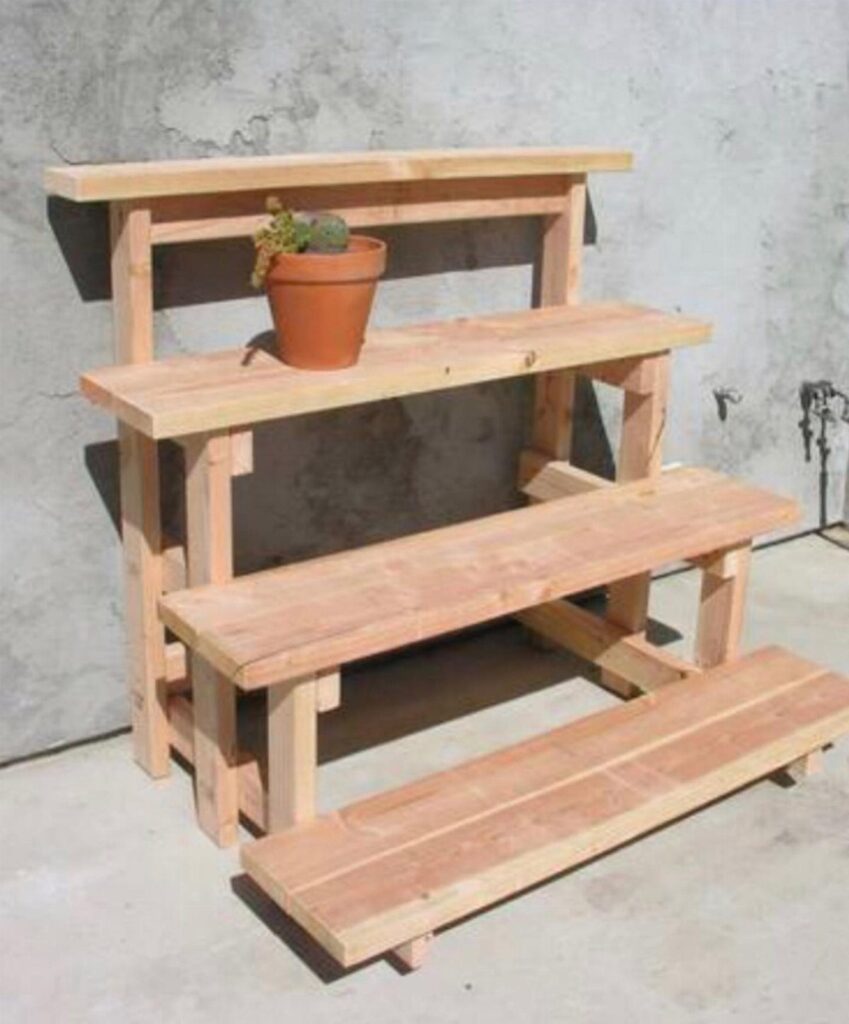
Four rectangular shelves in light-brown wood give a mixed collection of houseplants a home in one spot. This frame sits on wheels, so you can slide the whole stand along a wall or turn it toward the light.
Fill the shelves with a mix of green plants, with the heaviest pots on the bottom shelf. Against a light wall and white floor, the warm wood gives the room a natural, easy look.
19. White Staggered Shelves

Three white platforms staggered at different heights let flowering plants in matching white pots read as one tidy display. Against a dark carved door, the white wood stands out sharply, and the colorful blooms look brighter for it.
I’d keep the pots white and let the flowers supply every bit of color. Setting the tallest blooms on the highest platform keeps the front shelf from hiding the ones behind it.
20. Wooden Vertical Pole Stand

A single wooden pole carrying three staggered shelves takes up about as much floor as one pot, which suits a small room.
On a plain white wall, the wood is the only warm tone, so the plants and their hanging pots do the rest.
Mixing upright plants with trailing ones gives each level a different outline. I’d keep the trailing pot on a shelf with clear air below it so the leaves have room to fall.
21. Wooden Crate Display

Slatted wooden crates on casters are a cheap stand for plants, and the wheels mean you can roll them toward light or out of the way. Small tags on the slats make it easy to label what’s inside.
A crate’s open sides let you see the pots through the wood, so I’d keep the plants green and simple. Casters that lock are worth choosing, so a loaded crate stays where you park it.
22. Beginner Woodworking Plant Stand

A palm in a woven basket on a plain four-legged stand is about the easiest woodworking project a beginner can take on.
Legs and a flat top need only straight cuts, and the basket hides the pot so the wood can stay simple.
Light wood pairs well with the natural weave. I’d skip any decoration and let the palm’s fronds be the detail against a plain wall.
23. Wrought Iron Fern Stand

Black wire stands with a country look suit ferns because the thin metal lets the fronds spill over without the stand competing. Raising one fern above its neighbors, as here, gives a group of three white pots a varied skyline.
A white pot against black wrought iron gives strong contrast, and the pairing sits comfortably beside wood furniture. I’d put the stand where the fern gets bright light, near a mirror if you have one.
24. Scalloped Fernery Stand

Scallops along the edge of a black wrought iron fernery stand give the ironwork a lacy outline that repeats the shape of fern fronds.
Outdoors on a paved patio, the dark metal keeps its crisp look against all the green behind it.
I’d choose a lush fern with a full, spreading shape so it fills the top and hides the pot rim. A stand this ornate looks best with nothing else crowding it.
25. Curl Fernery Stand

A curl in the ironwork gives a fernery stand movement that a straight-legged frame can’t match. Terracotta pots sit well in these loops, and the orange clay warms up the black metal.
On a porch, I’d keep the stand close to the wall so the scrolls read as a backdrop for the pink blooms.
Two stands side by side look better than one lone piece, as long as you leave a gap between them.
26. Round Kari Stand
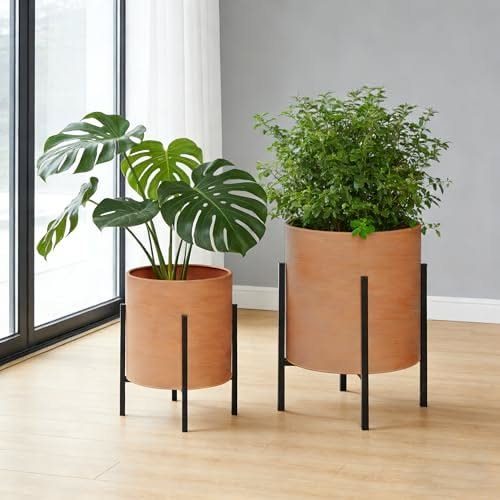
Heavy wrought iron makes a round stand feel planted rather than perched, and a ring of black metal around a terracotta pot gives the clay a firm outline. On a light wood floor, the dark circle shows up at once.
A pair of round stands works best near a window, where soft light and a plain white curtain keep the plants as the focus.
Heft is the trade-off: a stand this solid is harder to shift than a lightweight one, so settle on its spot before loading it.
27. Round Flower Planter
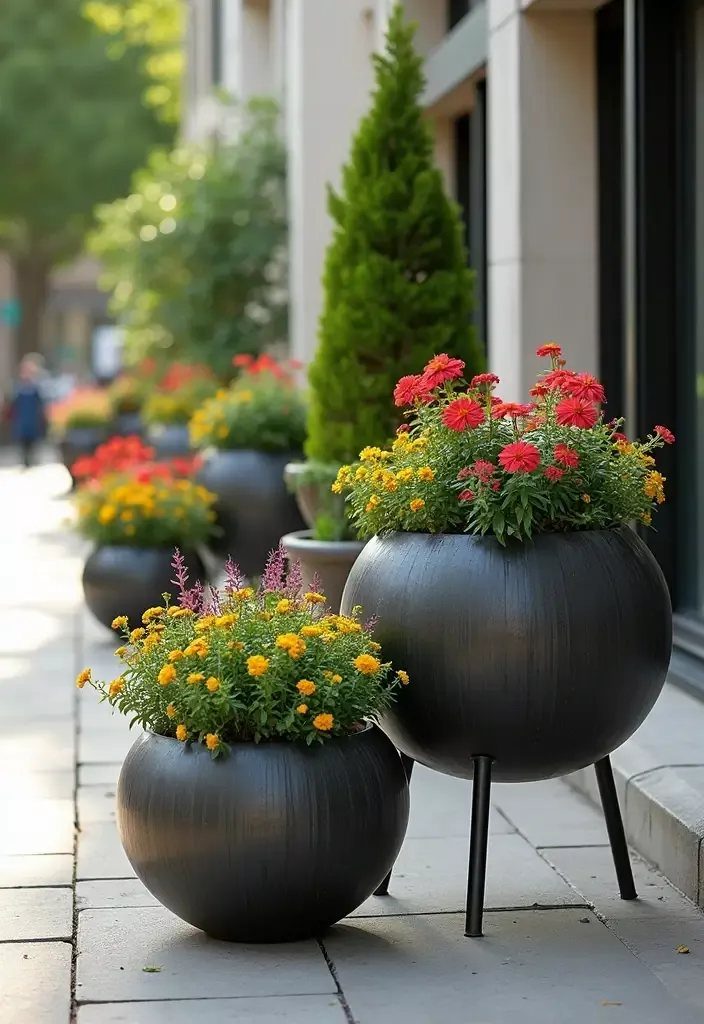
Round planters come in several sizes, so a single style can fill a whole streetfront or just a doorstep. A row of matching spheres reads as a deliberate border, and the black finish lets bright flowers carry the color.
For a lined-up look, buy the same shape in 2 sizes and alternate them. Raising one on a stand, as in the front of this row, adds a high point that breaks up the repetition.
28. Heart Plant Stand
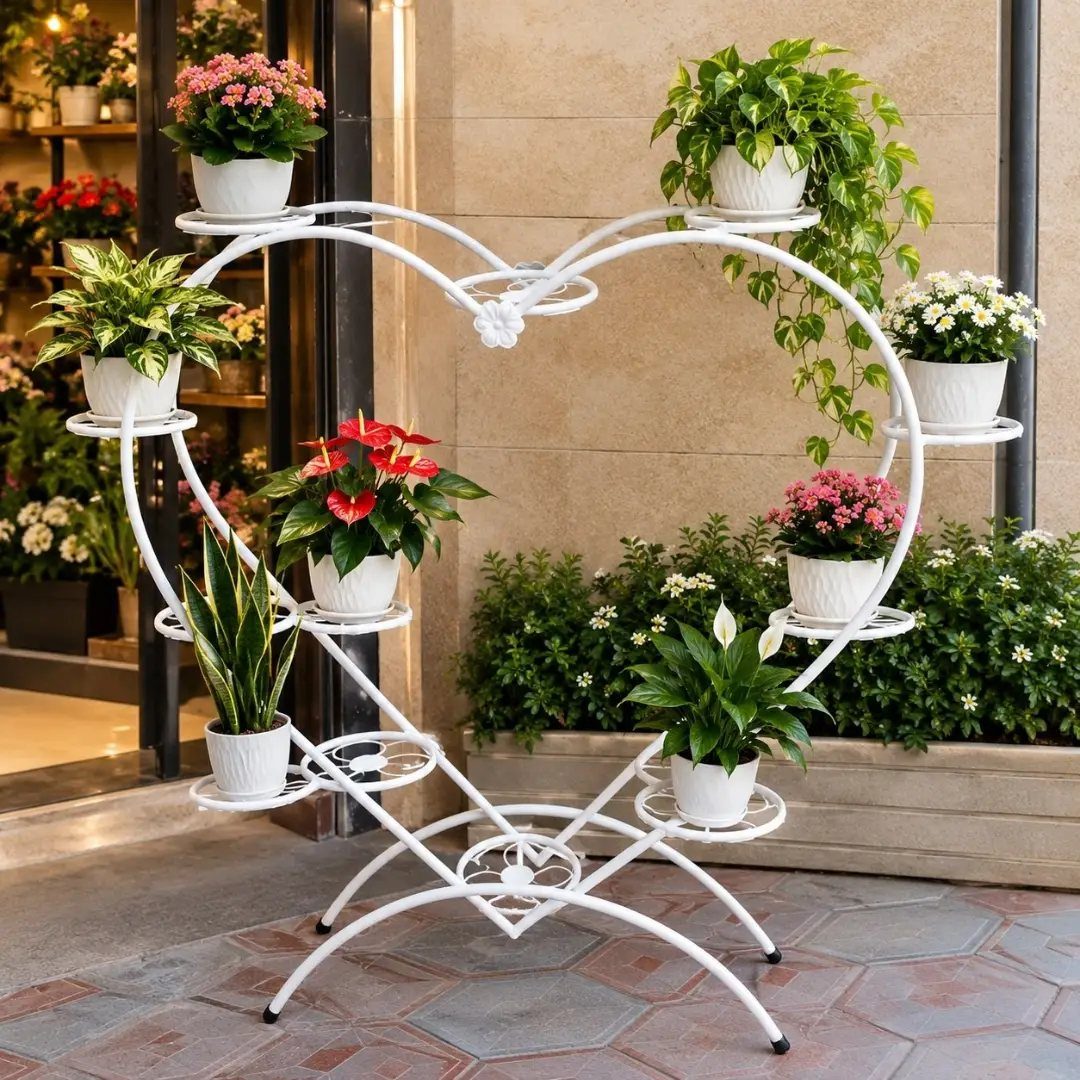
A heart cut into the ironwork gives a plant stand a romantic note without any extra decoration. White paint softens it further, and against a beige wall the pale frame blends in while the flowers stand out.
I’d fill it with white pots only and let the blooms bring the color. Several small pots suit the shape better than one large one, since each gets its own spot along the curves.
29. Cammie Plant Stand

Small wrought iron stands work best in a group, and four at different heights make an easy arrangement for a bright room. Tall, medium and short pieces let each plant sit at its own level without needing shelving.
I’d keep every stand in the same black finish and vary only the plants. A stand this small holds a decorative container well, so choose pots that stay light.
30. Classic Stone Pedestal
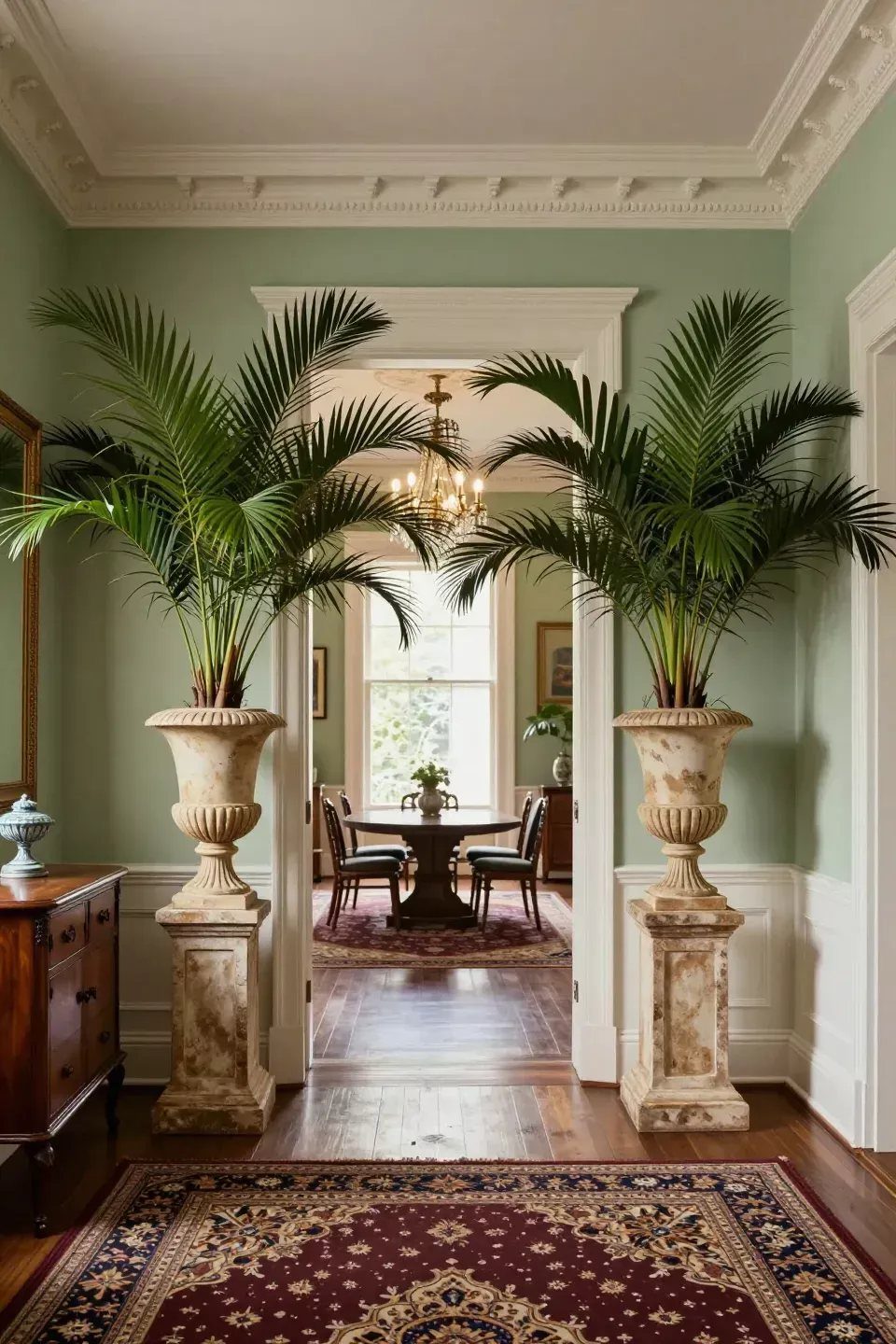
A stone urn on a square stone pedestal is the formal choice, and a pair framing a doorway gives a room instant symmetry. Palms suit the scale, since their fronds fill the urn and rise well above it.
Stone is the heaviest option for a plant stand, so I’d place each pedestal where it will stay put. Against green walls and a red rug, the gray stone acts as a calm neutral.
31. Wheeled Plant Base

A low black platform on 4 casters turns a heavy terracotta pot into something you can slide instead of lift. A full pot with a saucer gets heavy fast, so rolling it is easier on your back.
I’d pick a base slightly wider than the saucer so the pot can’t creep over the edge.
Look for casters with a locking tab, and press the brakes down as soon as the pot sits where you want it, since a loaded base can creep on smooth floors.
32. Bicycle Flower Stand
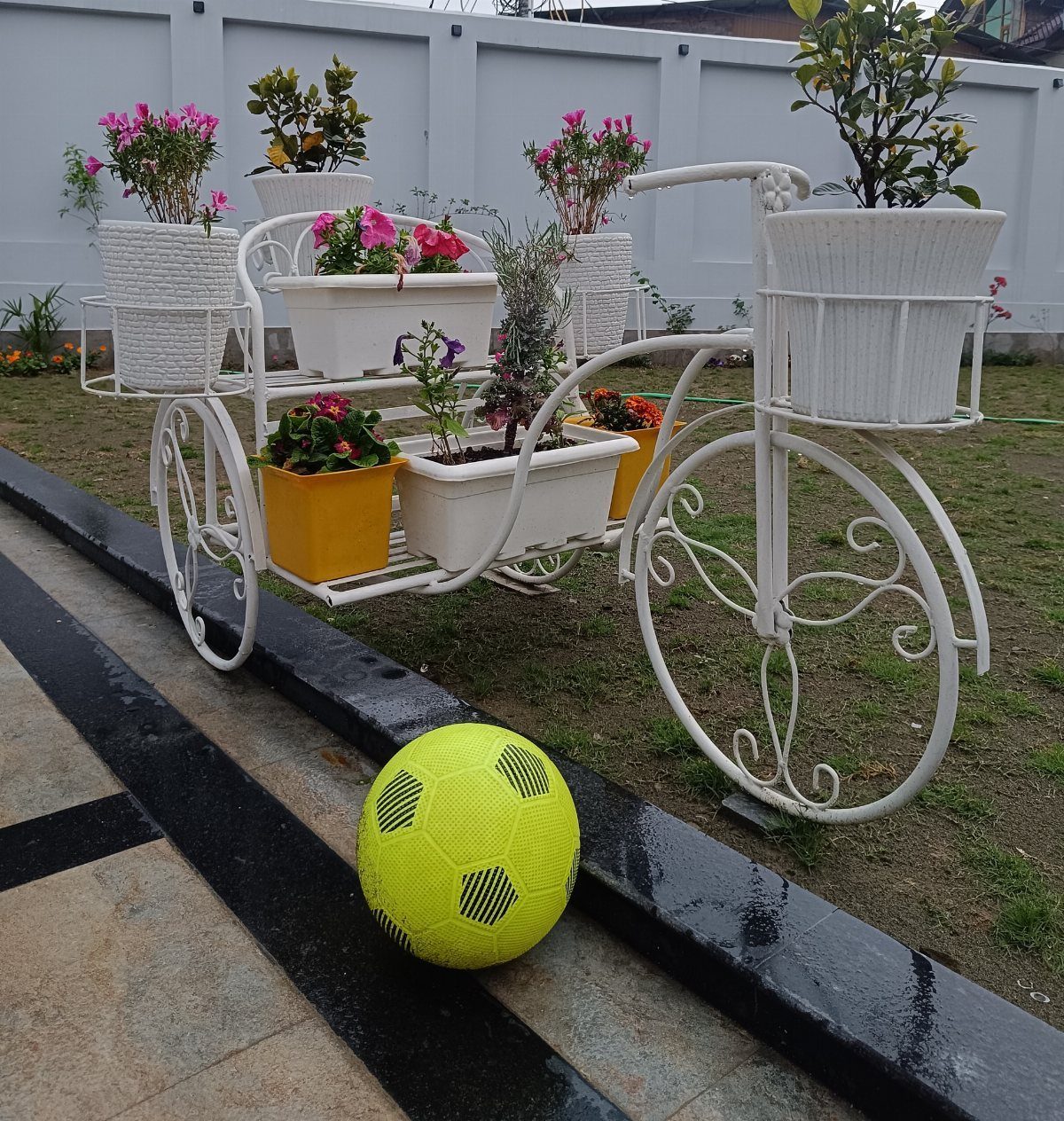
A bicycle-shaped stand in white metal gives a lawn a small piece of garden decor, with each pot sitting on its own rack, basket or wheel. Mixing pot colors works here because the white frame stays neutral.
I’d keep the pots small enough that the frame doesn’t tip, with the heaviest one set low. Placing it on level ground matters more than any styling choice.
33. Root-branch Vase Stand
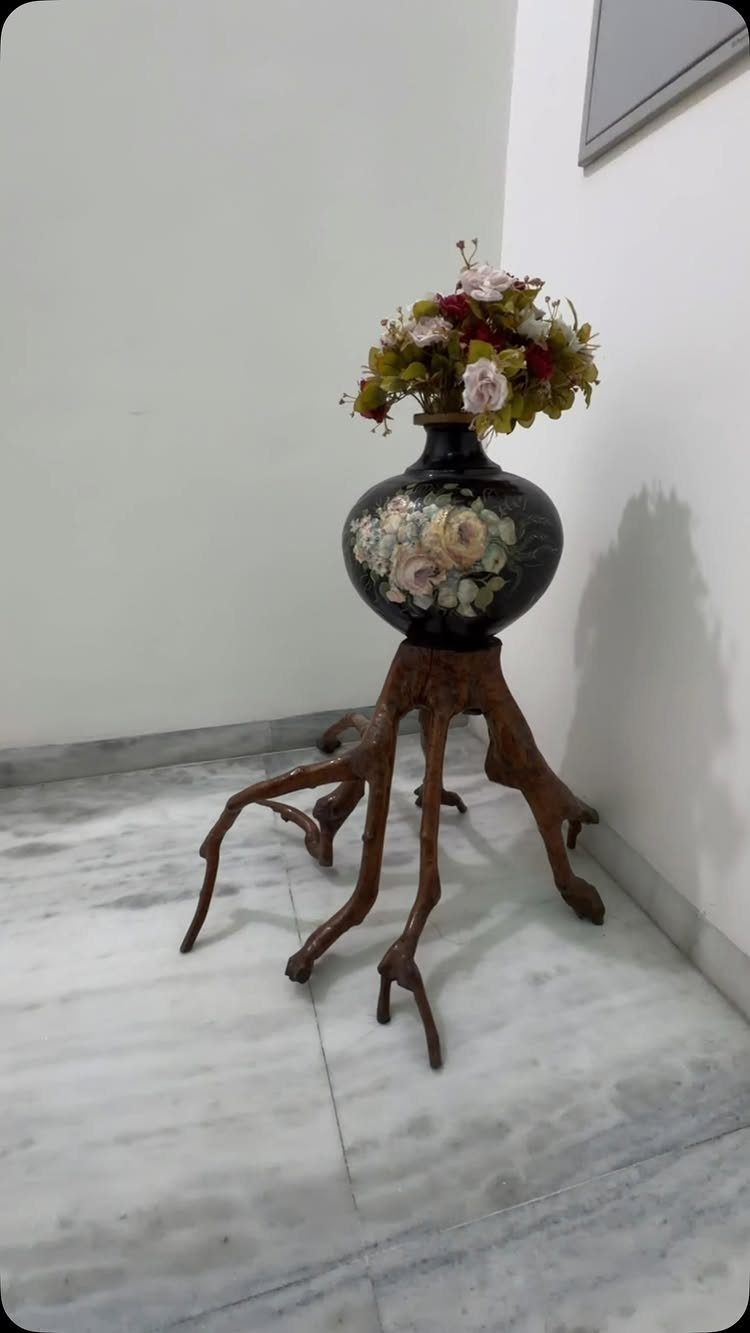
Root-like branches twisting upward make a stand that looks more like sculpture than furniture. A black vase with a floral pattern sits well on it, since the dark glaze contrasts with the pale wood.
Because the stand is the showpiece, I’d keep the bouquet loose and let the vase do the rest. A plain white wall behind it gives the curves room to be seen.
34. Hanging Pot Shelf
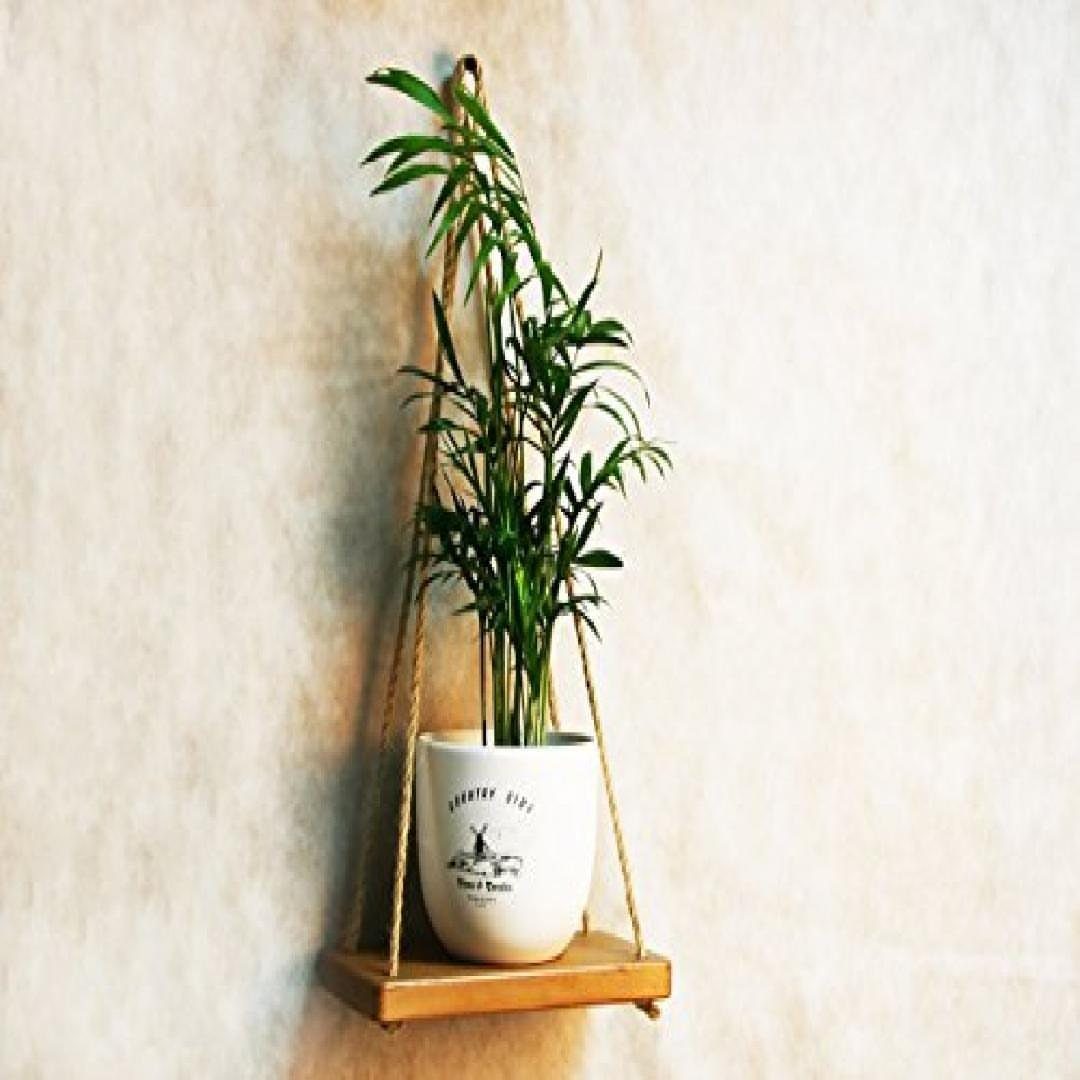
A small wooden shelf hung from ropes holds one pot and no more, which is exactly its charm.
It frees the floor entirely, so a white pot with a single green plant can sit at eye level on a bare wall.
I’d pick a pot with an illustration or a bit of text, since a lone container is the whole display. Keep it small and light, and anchor the ropes into something solid.
35. Stone Pedestal Cluster

Three stone-look planters at different heights read as one grouped piece, and the weathered finish suits a garden. Varying the pedestal heights does the styling for you, so the leafy plants can stay simple.
I’d stick to one type of foliage so the staggered heights are the only variation. Stone-look pieces are heavy, so set the cluster where it will stay before you fill the planters.
36. Figure Pedestal Planter
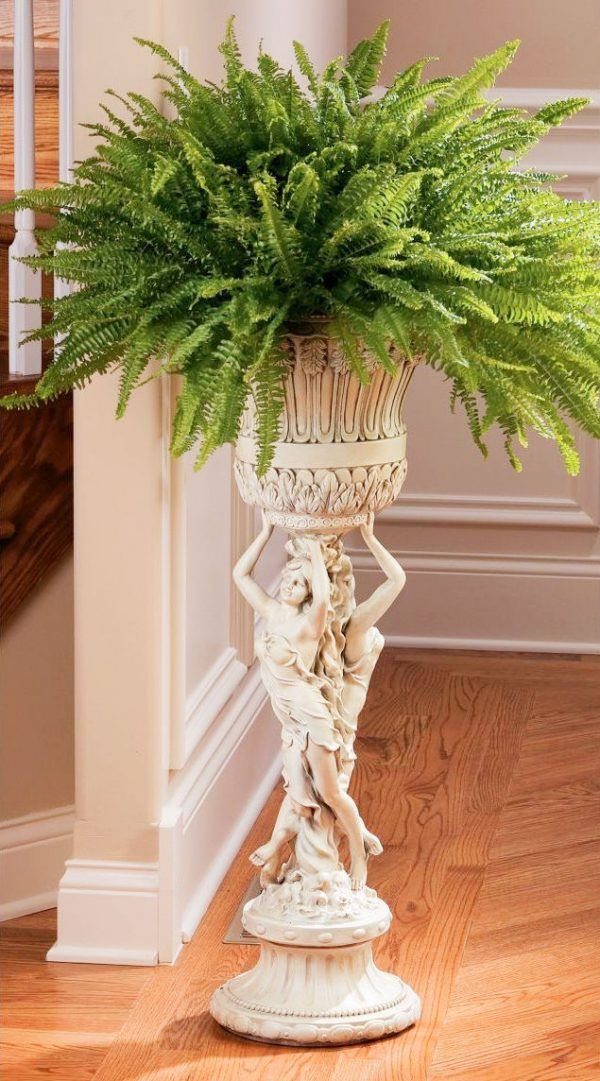
A white pedestal sculpted as a figure holding an urn works as a statue first and a planter second. A green fern suits it because the fronds soften the hard white shape.
Indoors, I’d give it a plain white wall and enough floor space to be seen from several sides. Keep the planting simple: the sculpture is already the detail.
37. Balcony Railing Holder

A black metal holder that hooks over the railing puts a flower pot outside the living space and keeps it off the floor. On a small balcony that matters, because every square foot of deck stays free for a chair.
Sunflowers in terracotta read well against a grey railing and an evening sky, and I’d copy that pairing. Before loading the holder, check that the hook sits snugly over your railing, since a pot of tall blooms catches the wind.
38. Wicker Basket on Legs
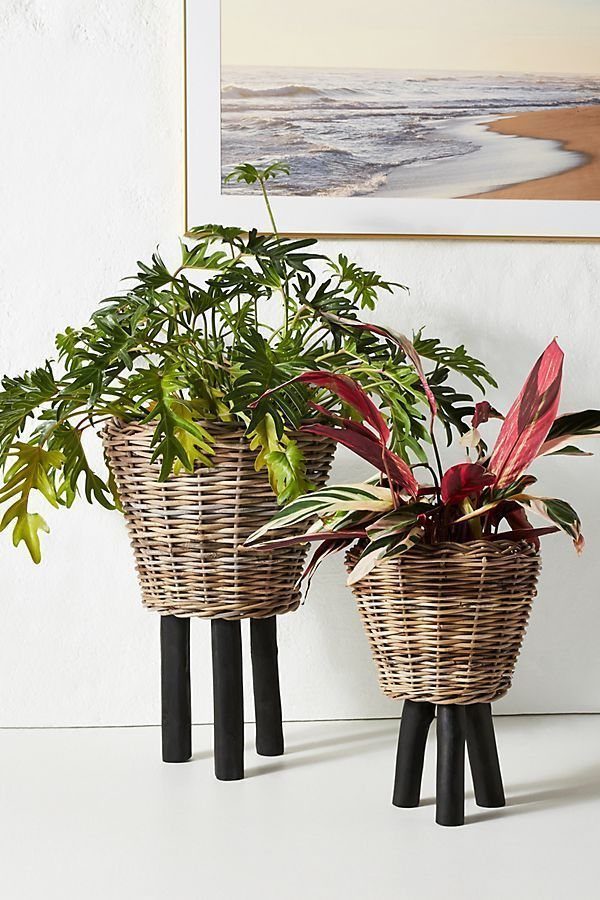
Woven wicker baskets on black three-legged stands make a plant display that feels soft and a little structured at once.
The baskets hide the plastic nursery pots inside, so the weave does the decorating and the plants only need to be green.
A pair set against a white wall suits a bare corner.
I’d keep both baskets in the same wicker tone and let the plants differ, as the green and red foliage does here. Set the pot inside the basket on a saucer so watering doesn’t stain the weave.