

What goes on the shelves decides which corner is yours: books call for a floor-standing piece like the BILLY Corner Combination, or for Floating Corner Shelves if you want the floor clear, while a plant or one small object suits the IVAR Small Triangular Shelf.
The range runs from LACK ledges and bracket-and-plank boards to IVAR sections joined in an L and basic shelving boxed in to pass for a built-in. Measure the corner before buying any of these, because walls are rarely perfectly square.
1. EKET Corner Shelving

Offset cubes turn a dead corner into a vertical stack that feels designed rather than filled in.
Staggering the units so they interlock gives you open and closed edges that step up and down, which breaks up the boxy look a straight column would have.
Mixing grey and light wood finishes keeps the stack from reading as one heavy block. Put books in some cubes and leave others half empty so a vase can breathe.
2. BILLY Corner Combination
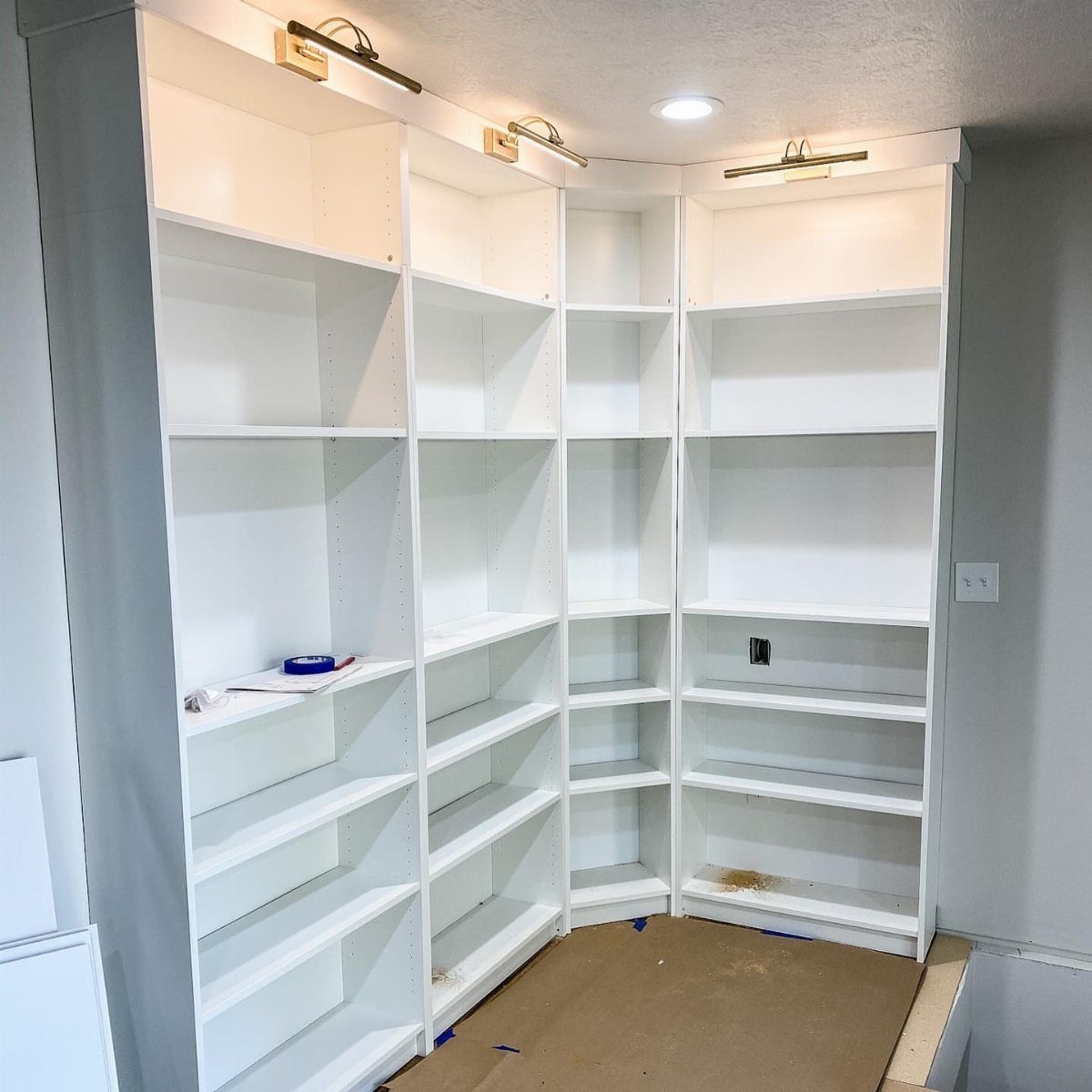
BILLY bookcases joined at a corner, with extension units stacked on top, give you the closest thing to built-in shelving at a rental-friendly price.
I like this one when the ceiling is tall and the corner is begging for full-height storage.
Adding lighting along the top, as this white version does, lets the shelves glow in the evening. Put the frame together and set it in the corner before you load a single book, so you can still reach the screws.
3. IVAR Corner Shelving
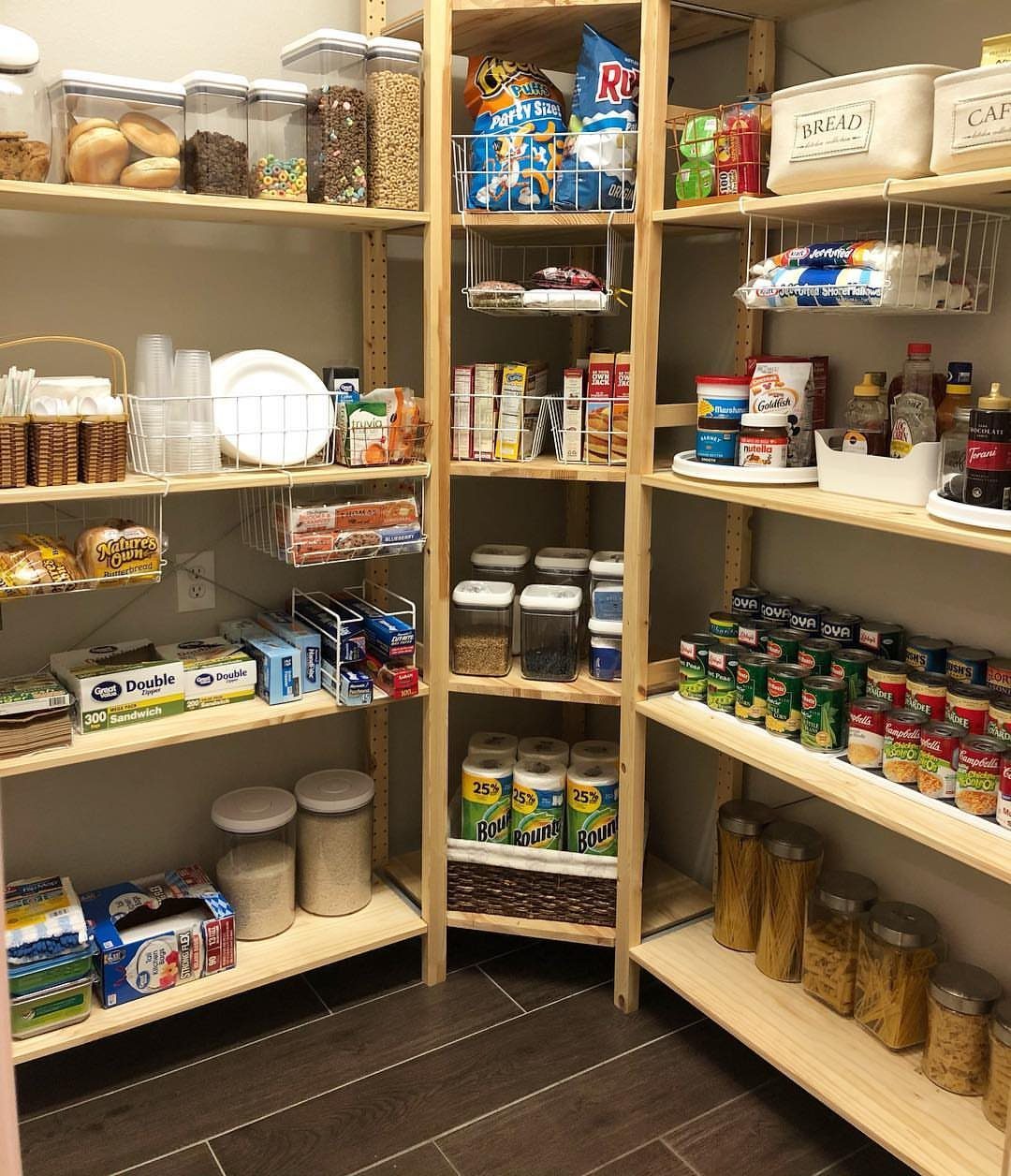
Pantry storage is where an L-shaped run of IVAR sections earns its keep. Because the sections connect at the corner, you get shelf depth on both walls instead of a dead zone where 2 units would meet.
Open wood shelving only stays tidy if everything has a home, so I would pair it with matching containers and baskets, plus labels on the ones you reach for daily. Bread, snacks and bulk items all sort faster that way.
4. IKEA Lack Corner Shelves

LACK shelves stacked in a corner are the cheapest way I know to give a collection a wall of its own.
Each shelf is a slim ledge, so spacing them closely suits small boxed sets, models or anything with a flat base.
Space the shelves to the height of your tallest box, plus a little room for fingers. A bare, pale wall behind them lets the colors do the talking.
5. IVAR Small Triangular Shelf
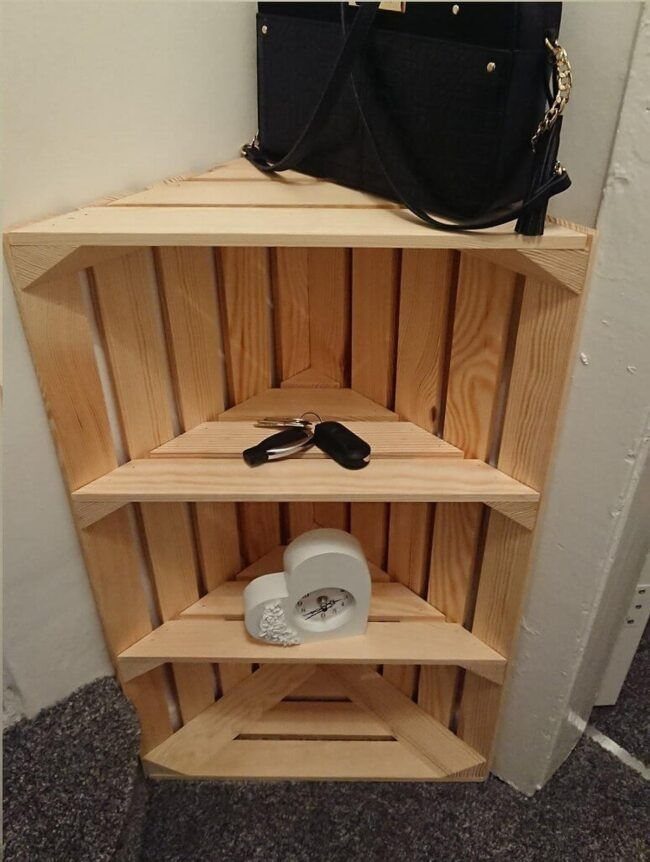
A small triangular shelf made from IVAR parts fits the corner by an entry door, where keys, a clock and a spot for a bag are all you want.
3 tiers is enough; any more and it starts crowding the doorway.
Since this is a DIY project, the cuts and angles are yours to get right. Check your corner with a square first, because walls are rarely perfectly square, and trim the shelf to fit.
6. HEJNE Corner Shelf
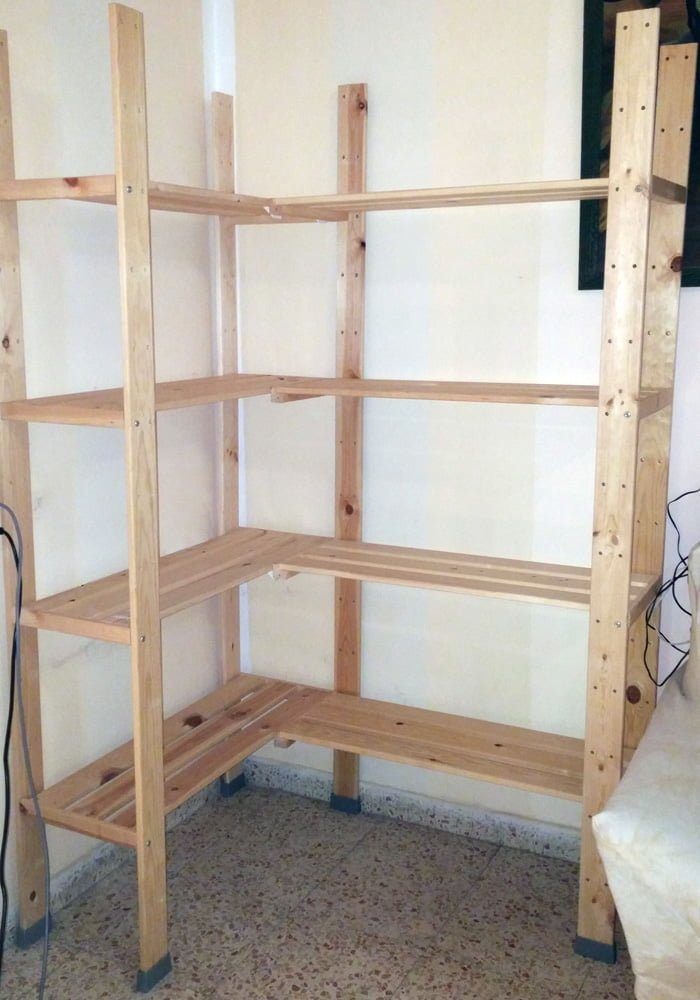
A slatted corner shelf is a good candidate here because its tiers let air and light pass through, so it looks lighter than a solid cabinet would. The natural wood also sits well against white walls.
Plan the hack on paper before you cut anything. With 4 tiers, I would keep the heaviest items on the lowest shelf and use the upper ones for light, easy-to-grab things.
7. Corner Cabinet IKEA Hack
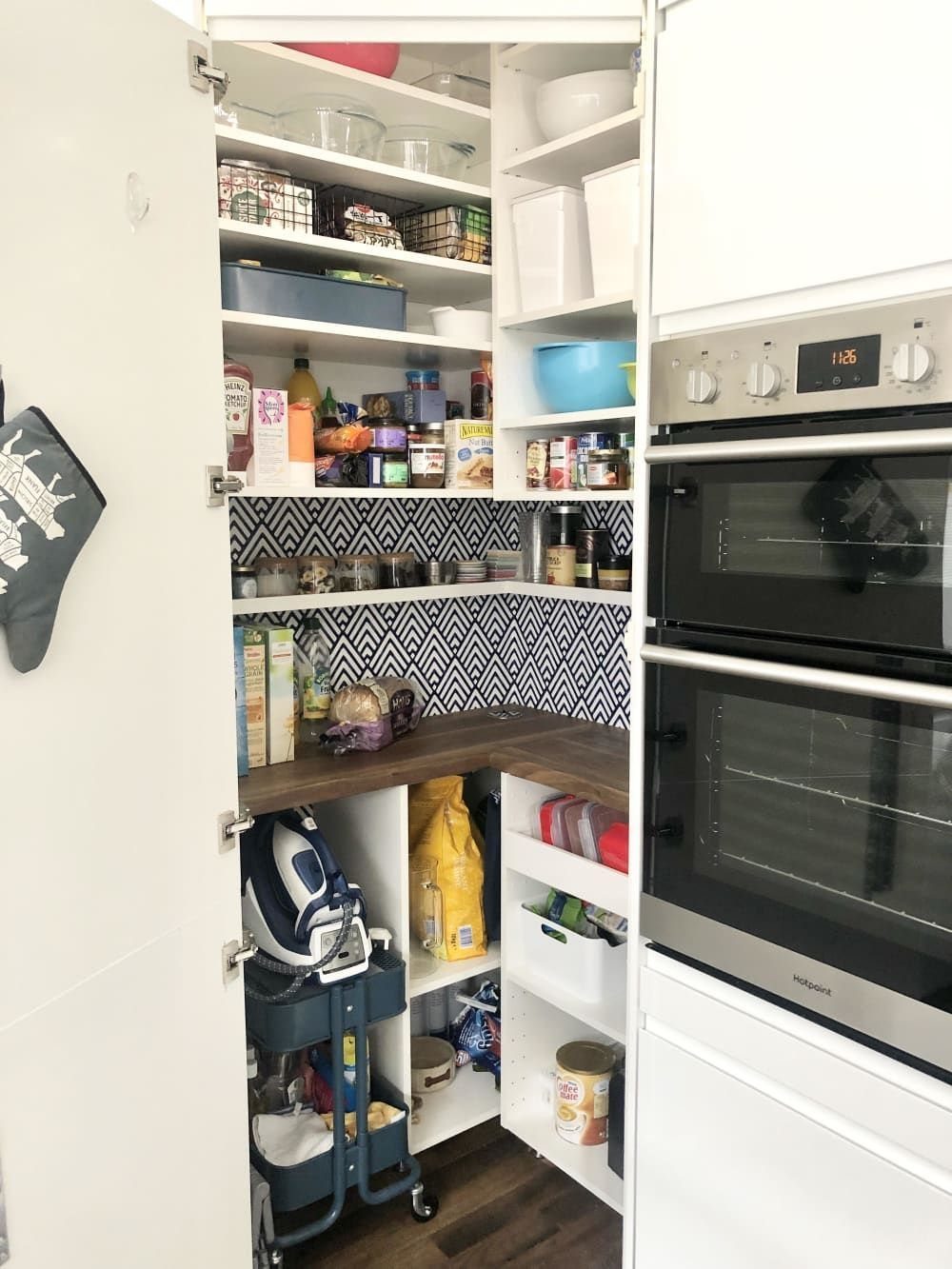
Basic shelving boxed into a corner can pass for a built-in pantry, and this one proves it. Doors or no doors, the frame gives you deep storage in a spot that usually goes to waste.
A tall slot at the side suits a vacuum or a broom, while the shelves take cans and boxes. Chevron wallpaper on the back panel is a cheap way to make plain shelving look planned.
8. Floating Corner Shelves

Wall-mounted shelves that follow the corner hold shoes without eating floor space. Because nothing stands on the ground, the carpet runs clear underneath and a closet feels less crowded.
Stack them evenly and match the spacing to your tallest boots. Heels and sneakers fit on the same shelf, but boots need their own tier, so plan the gaps before drilling.
9. Zigzag Floating Bookshelf
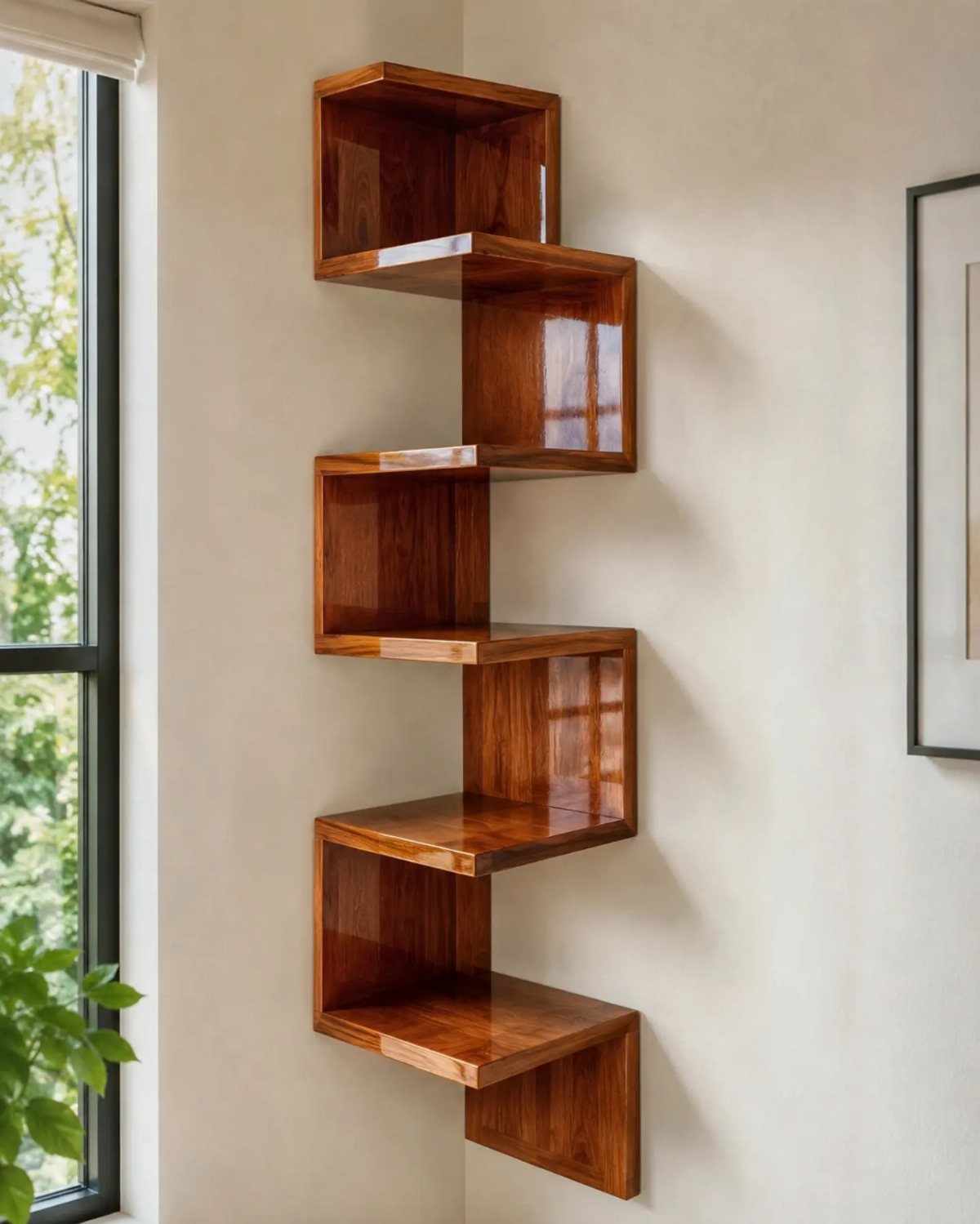
A zigzag of glossy wood planks beside a window makes a reading corner out of a bare angle. The staggered shape holds a few books and one or two objects, and it reads more like sculpture than storage.
I would keep it sparse. Cram every step with paperbacks and the shape disappears, so give each plank one stack or one display piece.
10. Corner Shelf with LED Lighting

LED strips tucked under each shelf turn a corner into a small lit display. Dark brown wood soaks up light, so LED strips under or along the shelf are what keep vases and figurines from disappearing into the corner.
Run the strip along the front edge underneath, where it hides from view but still lights the shelf below. Warm white suits wood better than a cool tone.
11. Corner Shelves with Brackets
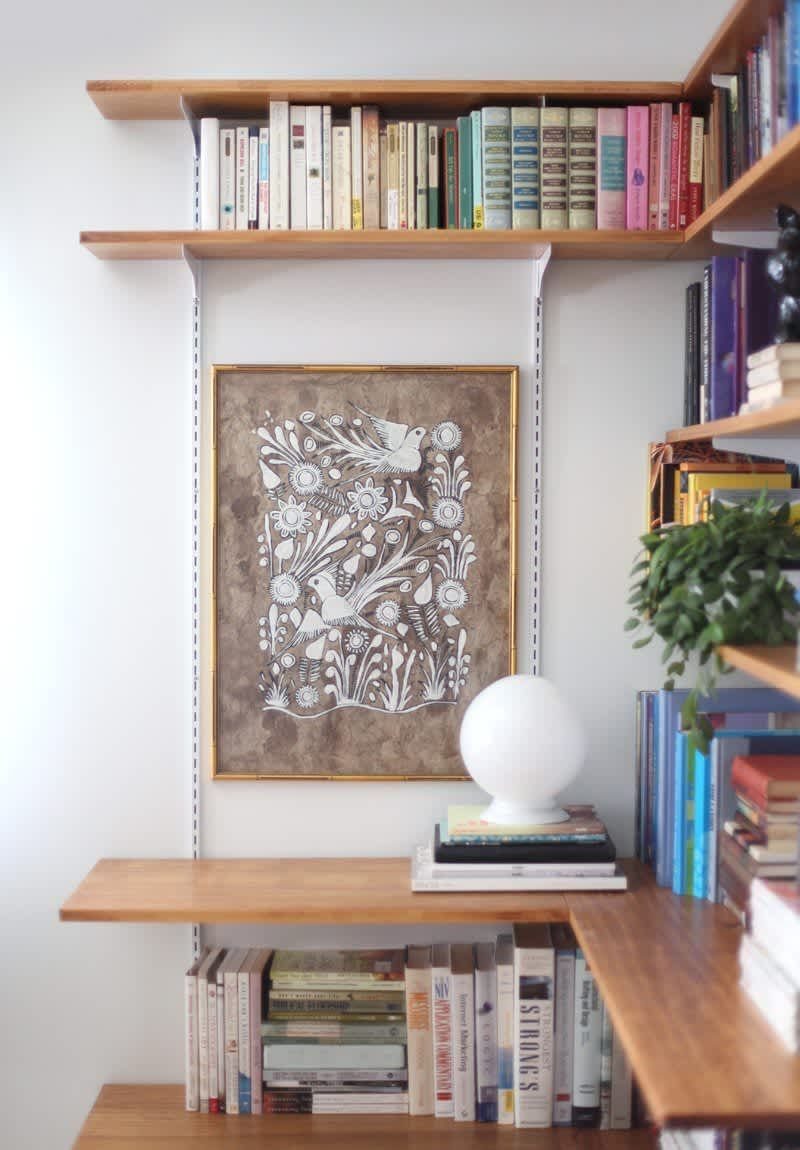
Light wood planks on white metal brackets are about the simplest corner shelves to put up.
The brackets disappear against a white wall, so the wood does the visual work, and a lamp on the lower plank adds light to the corner.
Mount the brackets into studs or use proper wall anchors, especially if books are going on top. Books get heavy fast.
12. Industrial Pipe Corner Shelf
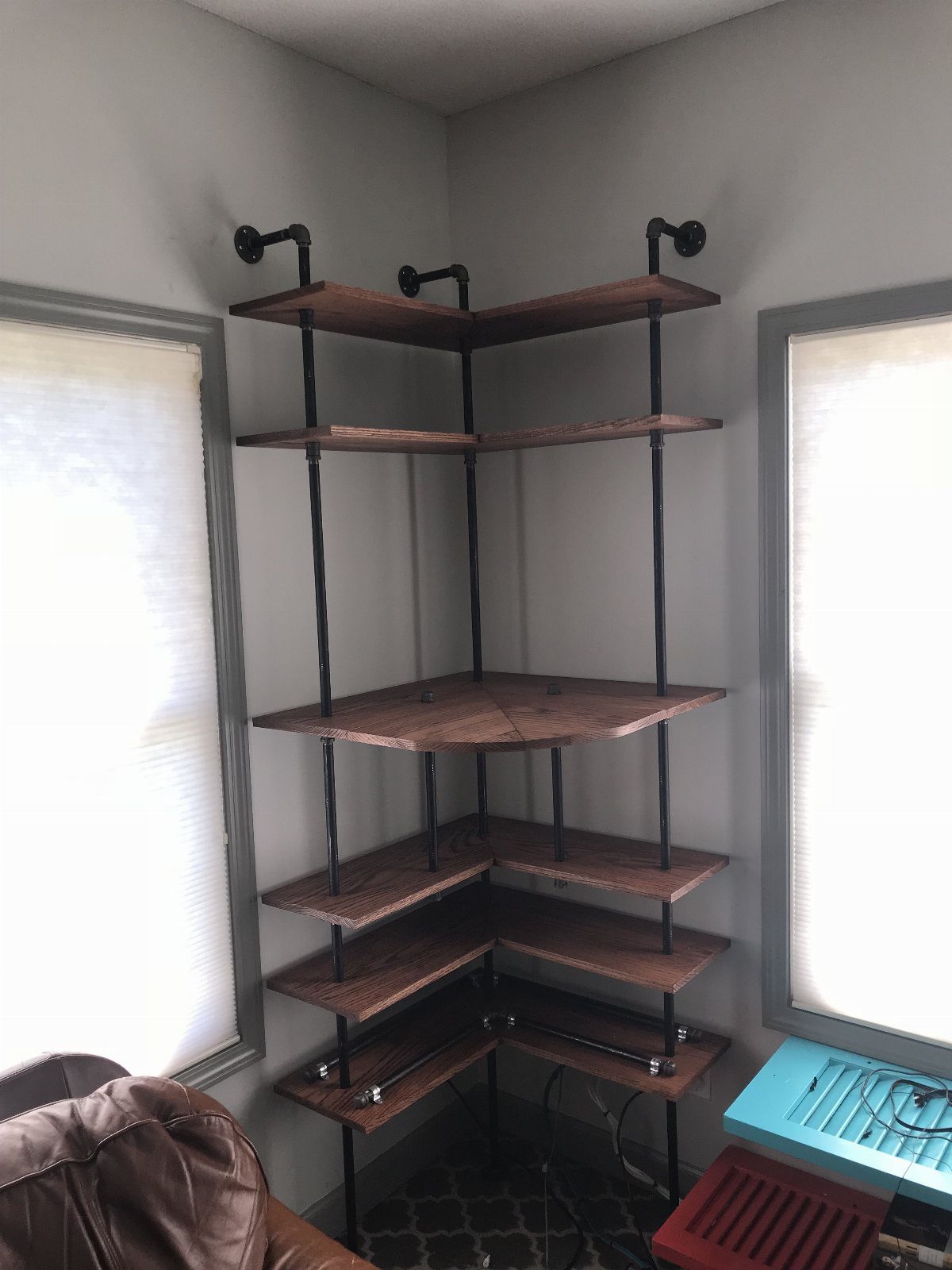
Dark planks on black pipe give a corner a heavier, workshop-style look, and stacking the tiers lets the shelf use the full height between 2 windows.
I like it best with a leather chair nearby, where the metal and the wood echo each other.
It is a bolder choice than painted boards. Pick it if the room already has darker tones, since it can look severe in a pale, airy space.
13. Corner Cube Storage
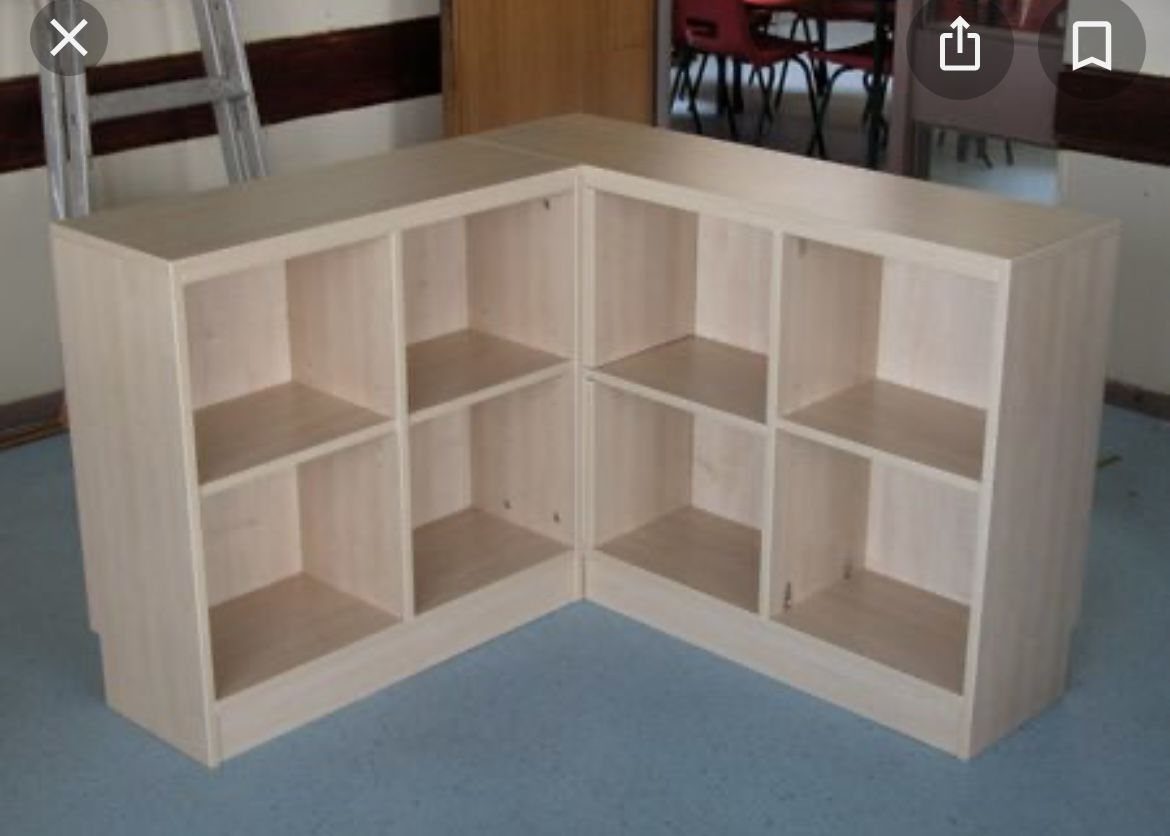
Two cube units pushed together at a right angle make an L that holds books on one arm and bins on the other. Light wood keeps the corner bright, and the open squares give each category its own slot.
Slide the units together before filling them so the joint sits flush. Put the heavier books in the bottom row.
14. L-shaped Corner Shelves

Three white L-shaped shelves, each wrapping both walls of the corner, work best staggered in height.
The offset keeps the arrangement from reading as a tidy column, and the white blends into the wall so the plants and frames stand out.
I would keep one shelf mostly bare. Plants on one, books on another, a single framed print leaning on the third.
Measure each shelf’s depth against your pots before buying.
15. Corner Bookcase Display
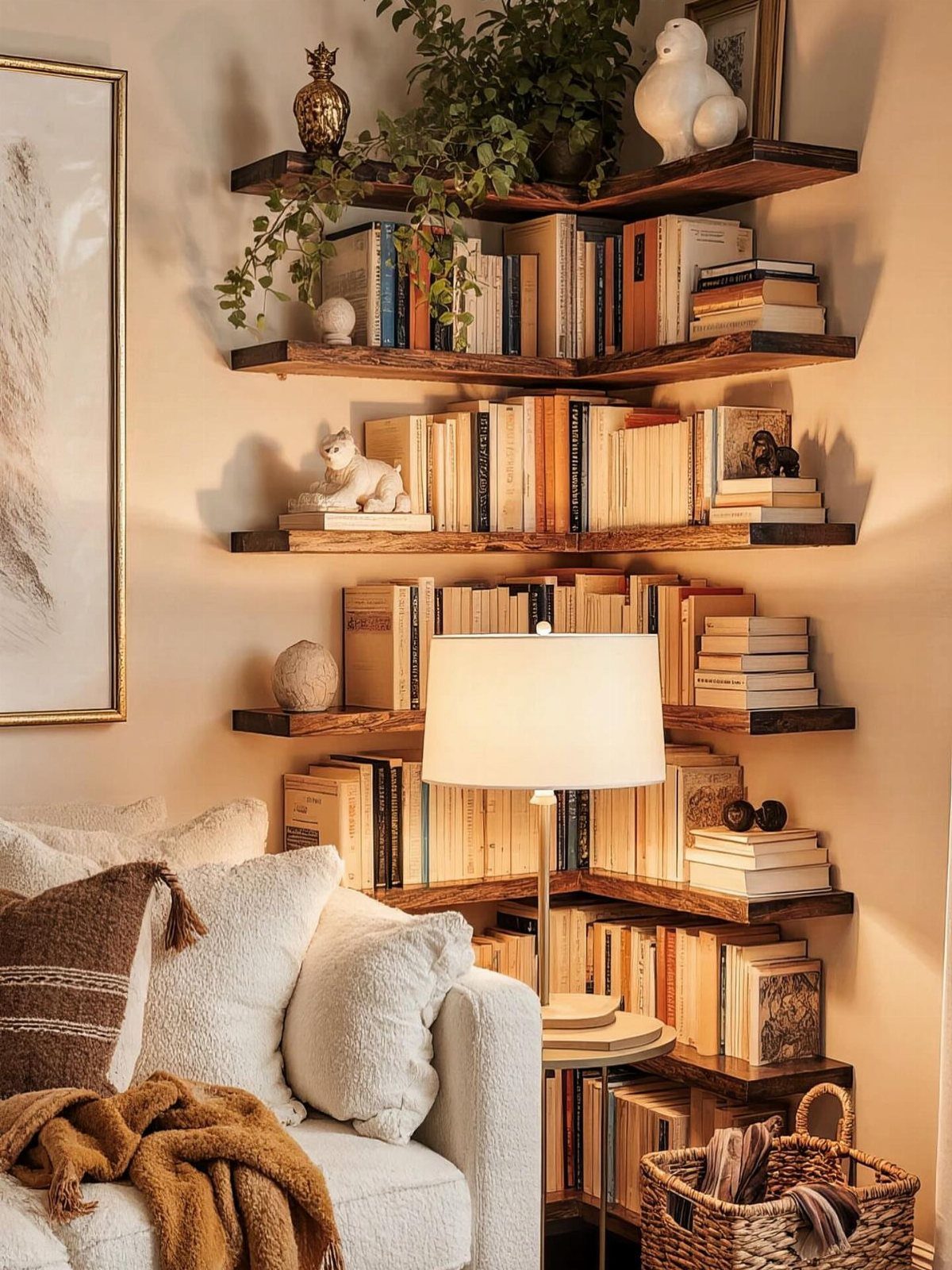
Dark wood L-shaped floating shelves give a corner the weight of a bookcase without a unit standing on the floor.
A corner bookcase leaves room for a lamp and a basket beside it, and a dark finish looks richer against a white sofa.
Alternate stacks of books with a few decorative pieces, and lay some books flat to break up the vertical lines.
Loaded shelves can pull free of the wall, so drive screws into studs, or use rated wall anchors where no stud lines up.
16. Corner Shelving with Cabinets

Open shelves over closed cabinets split the job in two: the top row is for what you want seen, and the doors hide the rest.
Beside a TV and a record player, that means albums and cables get a place out of sight.
Put the clutter in the cabinets below, then limit the upper shelves to a few records, books or one decorative object.
A brown wood finish suits a living room better than a stark white unit, and I prefer it for that warmth.
17. IKEA Corner Shelf Unit
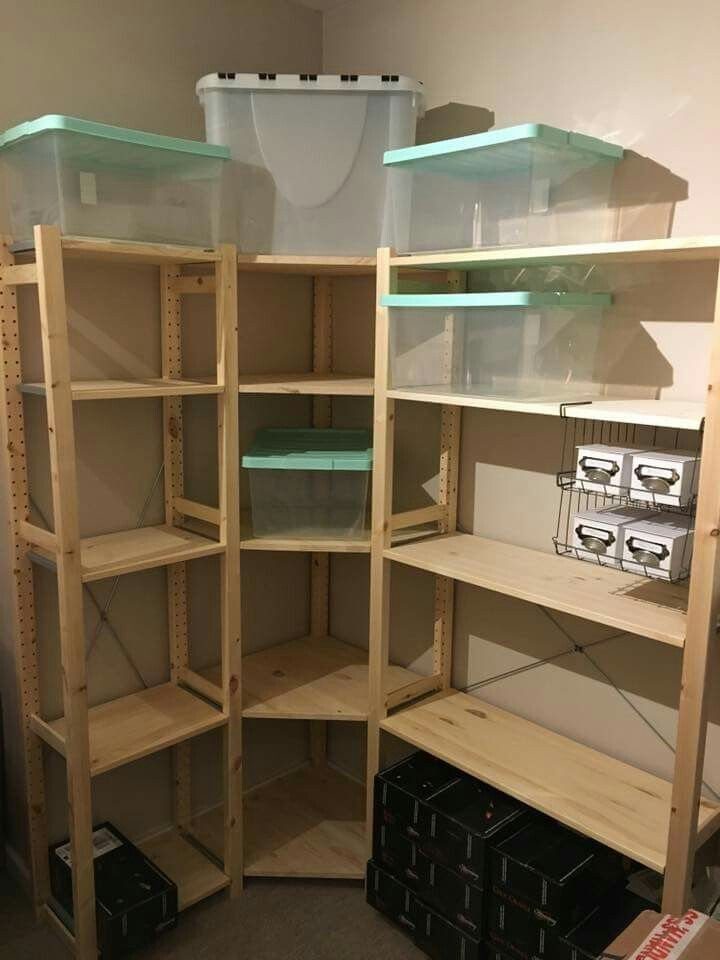
Three light-wood units set around a corner, with triangular shelves filling the center, solve the problem of where two straight units meet. The wedge picks up the dead space, so the whole corner becomes usable shelf instead of a gap.
Clear bins and black boxes keep it practical for a garage, craft room or playroom.
Clear ones show the contents at a glance, while the black boxes hide visual noise. Label the black ones so you are not opening every lid to find something.
18. Corner Shelves for Plants
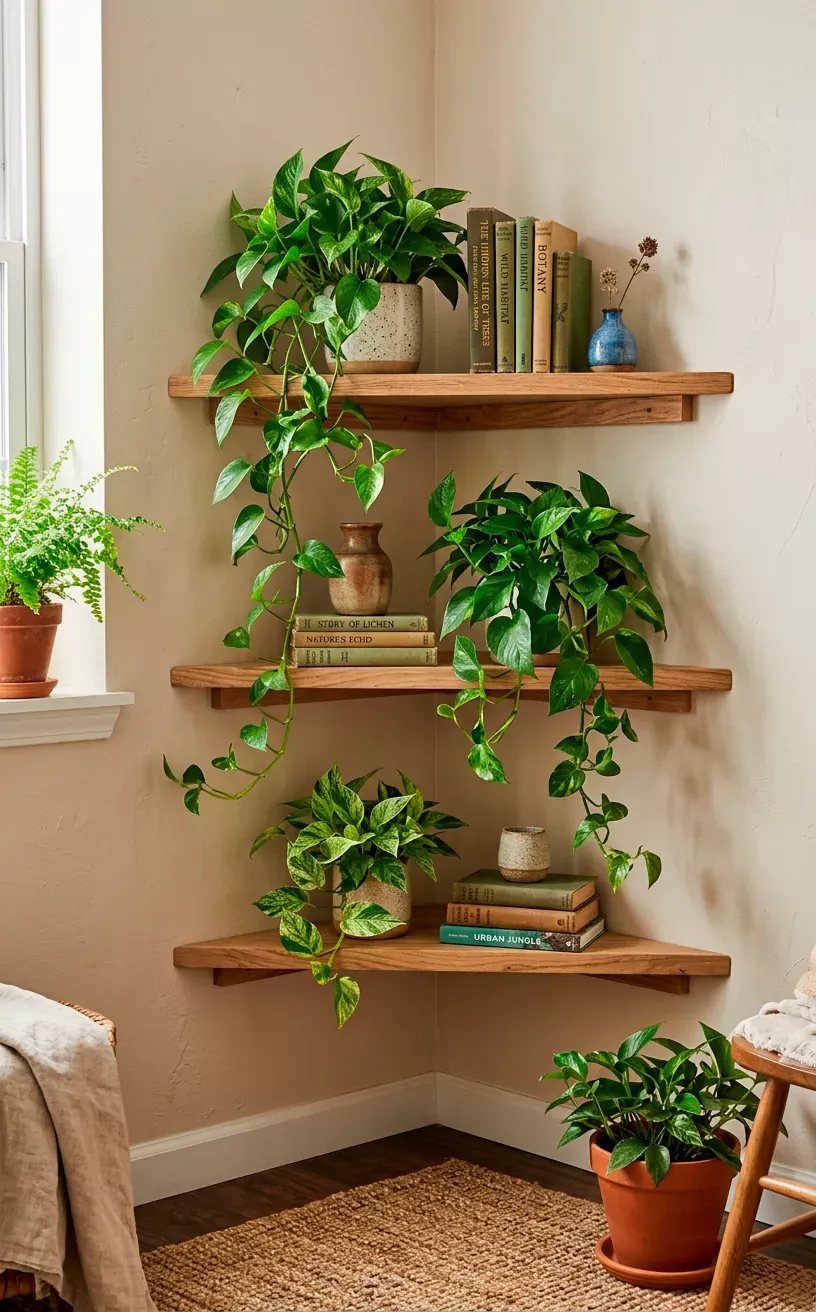
Floating corner shelves in wood give plants a staircase of display space, with books mixed in to break up the green. Trailing plants on the upper shelf and compact pots on the lower ones keep the arrangement from looking crowded.
Keep the corner next to a window if you can, since plants on a shelf far from daylight struggle. Wet pots can mark wood, so use a saucer under each one.
Anchor the shelves well, because potted soil is heavier than it looks.
19. Triangular Wall Corner Shelves
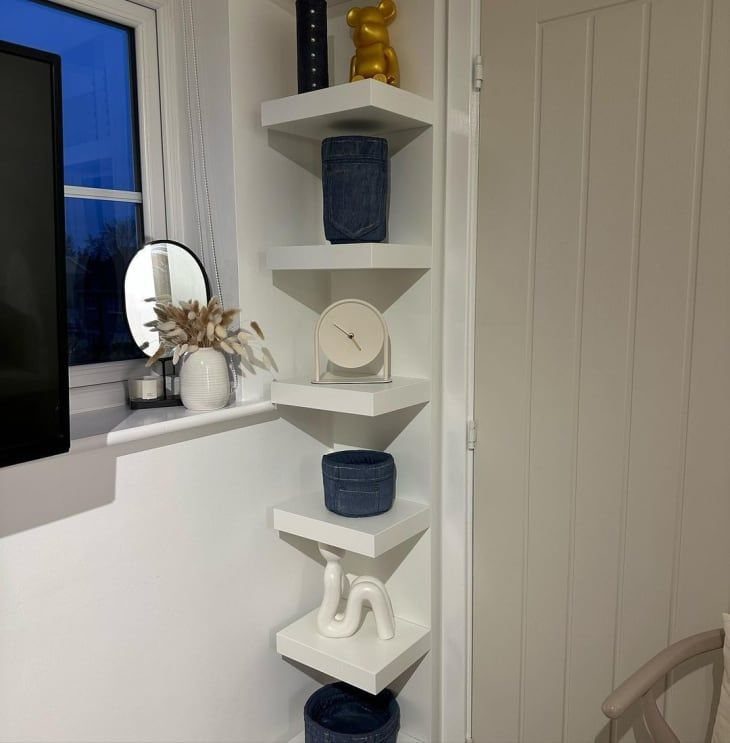
Five white triangular shelves stacked up a corner take almost no floor or wall width, which makes them a good fit for a narrow gap beside a door or window.
Small things suit them best: a clock, a few containers, one figure.
Painting or choosing the shelves in the same white as the wall keeps the stack quiet, so the objects carry the color. I would hold each shelf to one or two pieces; five shelves already supply plenty of rhythm.
20. Wooden Corner Display Shelves
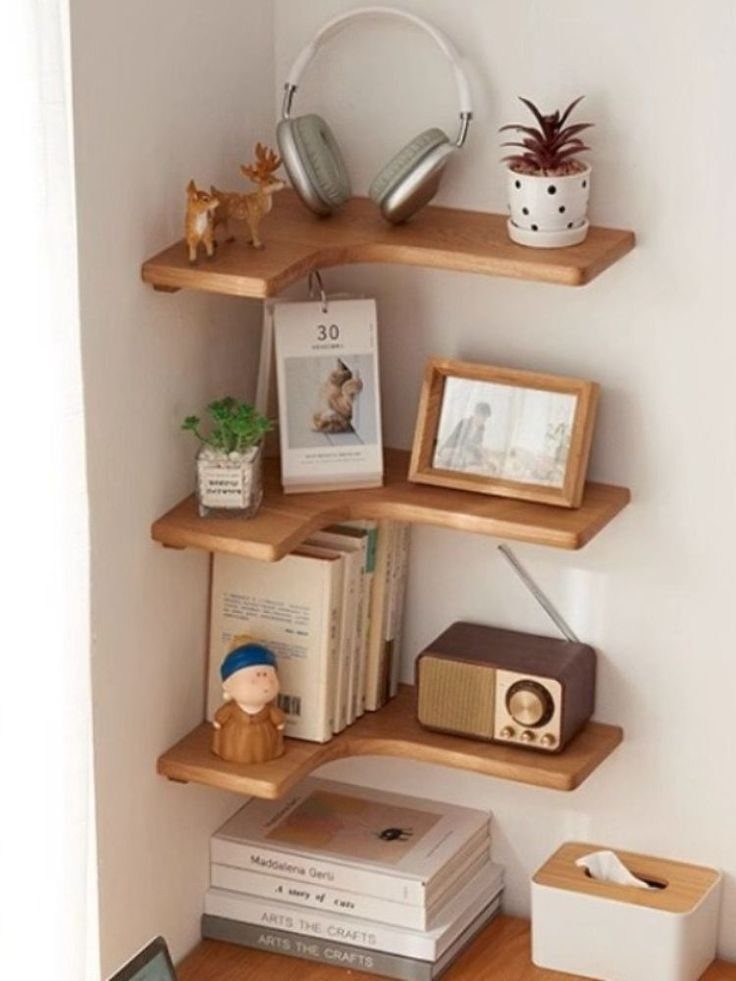
3 wooden shelves fitted into a wall corner can hold a whole desk-side routine: books, a radio, headphones and a small plant, all within arm’s reach. Light brown wood warms up a white wall without adding visual weight.
Give each shelf a job.
Books and the radio can share one, while the plant and a few figurines get their own level. Keep the top shelf for things you rarely touch, so daily items stay at hand height.
21. Curved Corner Shelves

Curved shelves soften a corner that straight boards would make sharp. A warm natural wood finish holds its own next to a bold paint color, so don’t count wood out just because the wall is loud.
Rounded edges also suit a spot where you brush past, since there are no pointed corners to catch a sleeve.
I would pick this over square shelves for a kid’s room or a narrow hallway, where rounded edges are kinder to elbows, and I’d stick to light, small items.
22. Corner Shelves for Kitchen Storage
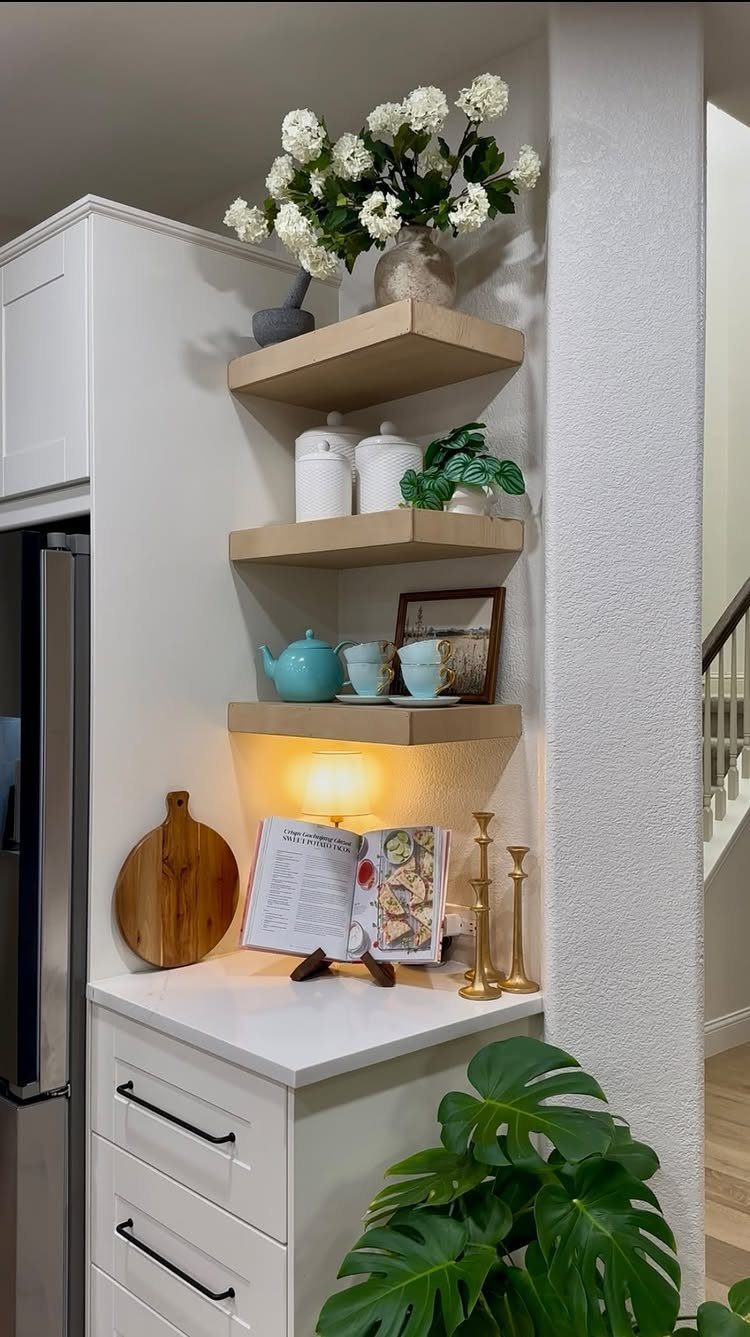
Light-wood floating shelves in a kitchen corner hold canisters, cups and a teapot above the counter, so the work surface stays clear. Wood also warms a kitchen that is mostly white.
Keep to what you reach for often: tea, sugar, a few mugs.
Put the canisters on the lowest shelf and lighter decorative pieces higher. Shelves near a stove collect grease, so wipe them down regularly and keep paper items off the top tier.
23. Corner Shelves with Spotlights

Spotlights built into L-shaped wooden shelves light each tier from above, so every level gets its own pool of light. Stacked on a white wall, the brown wood looks like a deliberate feature instead of storage.
Choose this version if the corner sits in a dim spot in the room.
Plan where the power will come from before you buy or mount anything, because a visible cord running down a white wall undercuts the clean look. Display flat, low items so the light has room to fall.
24. Corner Shelves Beside a TV

Small light-wood shelves tucked into the corner beside a wall-mounted TV fill the awkward space next to the screen. A trailing plant and a single picture frame are enough; the plant’s vines soften the hard line of the television.
Keep the shelves lightweight and the decor sparse, since too many objects beside a lit screen pull the eye away from it.
I would mount them just below the top edge of the TV so the two read as one arrangement.