

Permission to drill decides which of these shelves is yours, because floating shelves and pegboard shelves need it and freestanding shelving does not.
Renters can stay with leaning shelves or tension rod shelving, which leave the wall alone, while ceiling-mounted shelves and slatwall panels only work when they are fastened into something solid.
The range runs from plastic crate shelves at the bare-bones end to floating shelves at the finished end, with pegboard, pullout and rolling units in between.
1. Floating Shelves

Hidden brackets are what make a floating shelf look like it grew out of the wall. The line stays clean, and the floor underneath stays open.
Warm wood with a built-in light strip is my favorite version, because the glow makes plants and small decor look planned instead of piled up.
Decide where the power comes from before you buy, since a lit shelf needs a cord or a wiring route.
Floating shelves are extremely popular, and for plenty of good reasons. They don’t take up a lot of real estate, so they work in small and oddly proportioned spaces.
2. Pegboard Shelves

A home gym is where pegboard earns its wall space. Pegs, hooks, baskets and small shelves all move, so the layout changes whenever your gear does.
I put daily-use items at arm height and loose, floppy things like towels in a basket instead of on a hook. Leave a few empty rows at the start; you will add gear.
3. Ceiling-Mounted Shelves
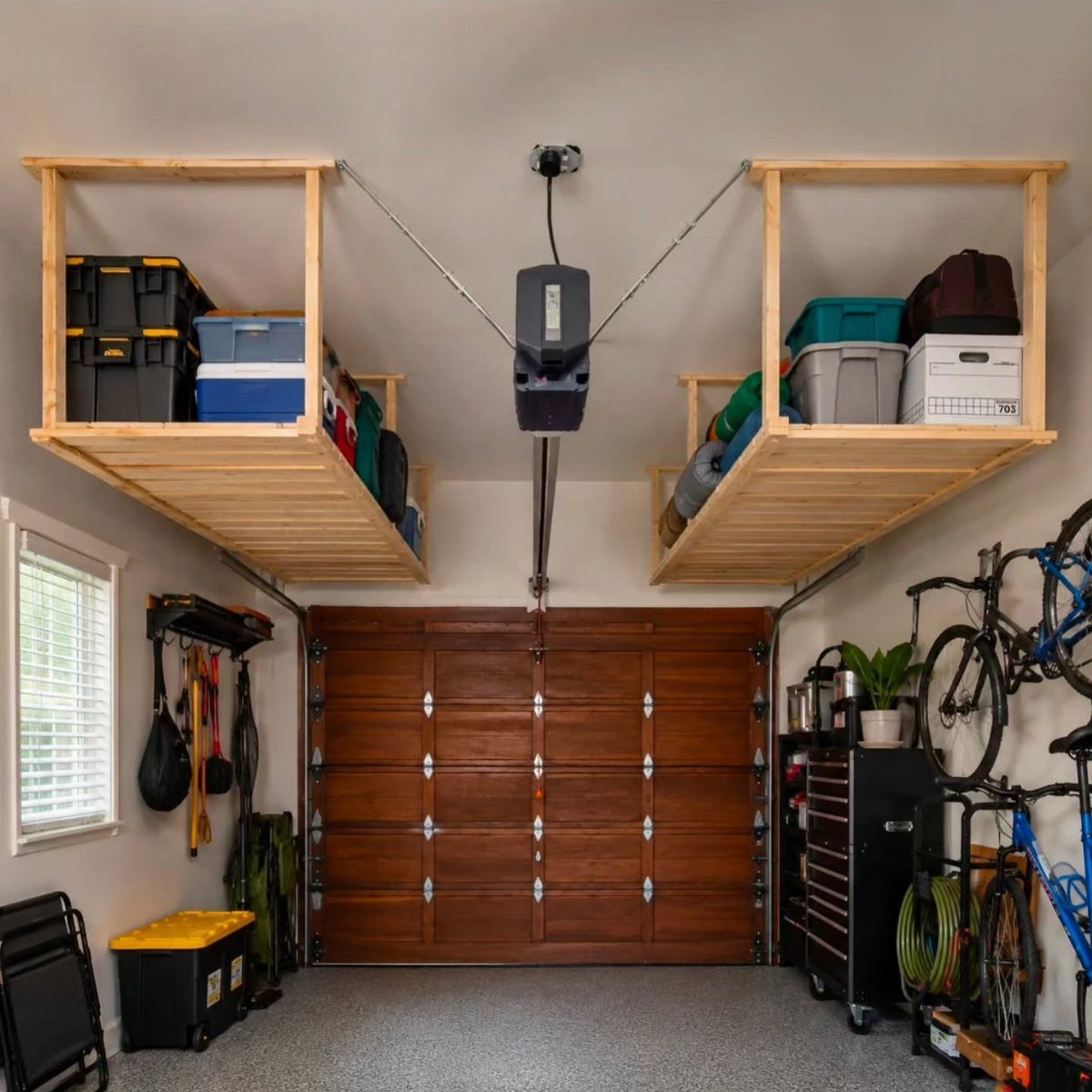
Look up before you look at the walls. Ceiling-mounted shelves claim space nothing else is using, which matters in a garage where the walls hold bikes and the floor holds a tool chest.
Use them for lidded bins you touch a couple of times a year. Fasten the frame into the ceiling joists, never drywall alone, and label the ends of each bin so you can read them from the floor.
4. Corner Shelving
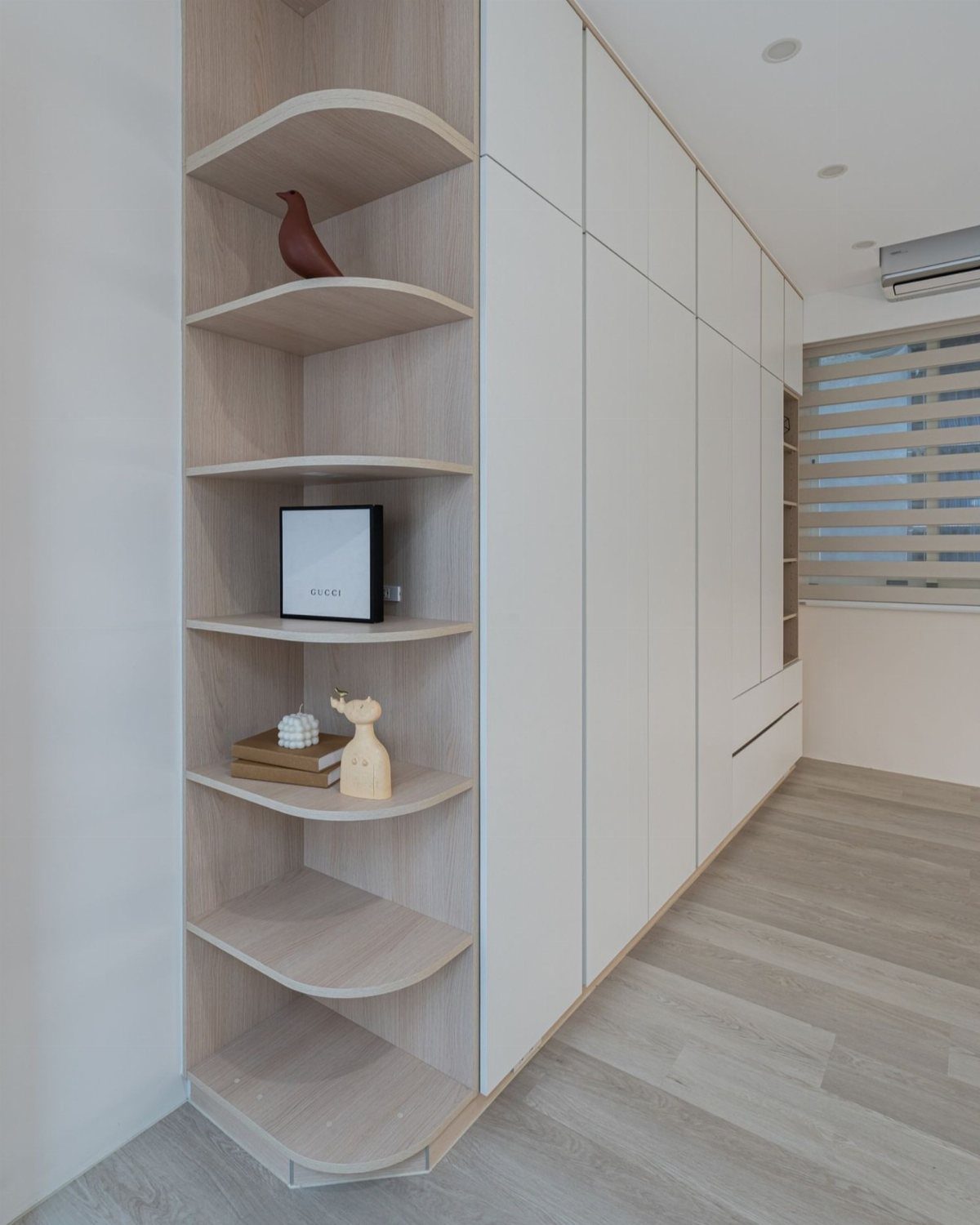
Curved edges are what I look for in corner shelving. They soften a dead corner and keep a sharp edge out of the walking path.
Built into cabinetry, a corner unit looks like it belongs to the room’s original design instead of something added later.
I would fill it with display pieces and small keepsakes, not daily grabs, because a corner is always the deepest reach.
5. Plastic Crate Shelves

Plastic crates in a metal frame are some of the cheapest storage you can put together, and the whole thing stays light enough to rearrange in an afternoon.
I like mixing clear bins for small parts with solid crates for bulkier things, so you can see what you need without opening every box.
A rolling frame lets you pull the unit out of a tight workshop wall when you need the space.
6. Pullout Shelves
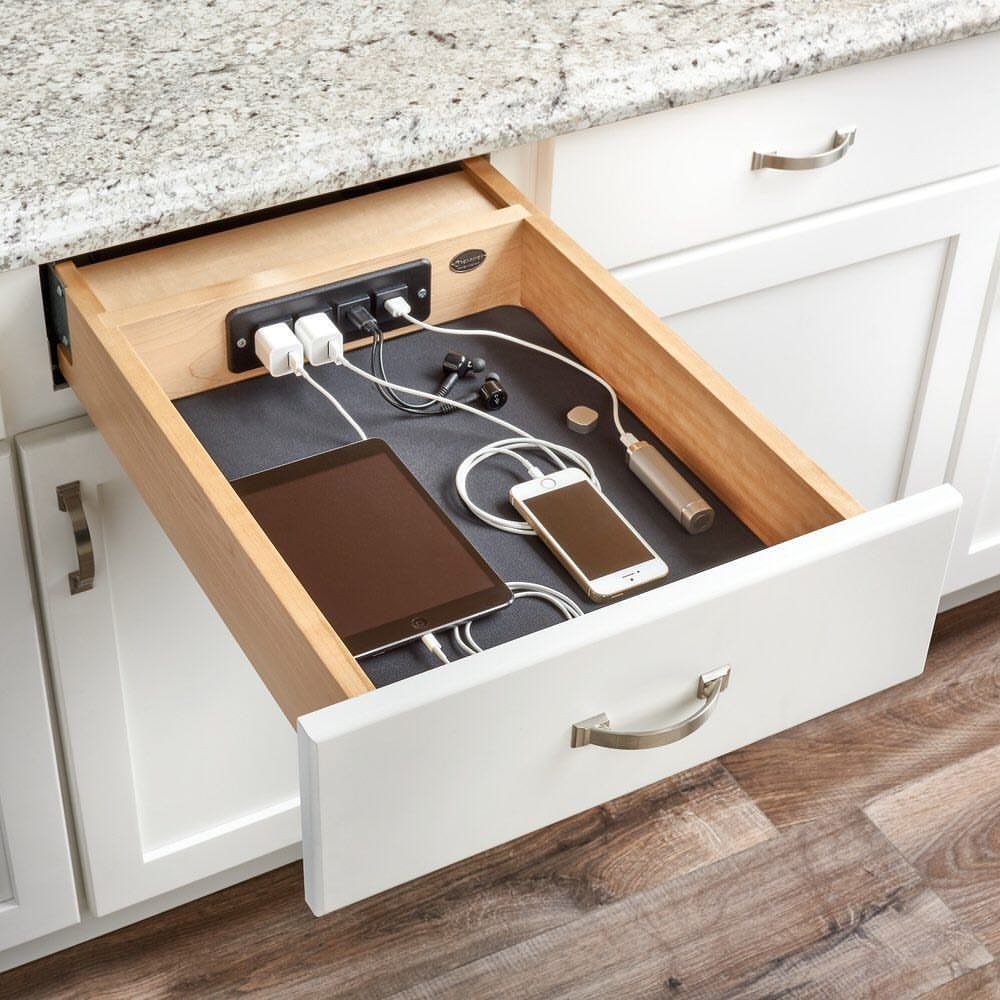
Drawer-style shelves turn a hidden cabinet or drawer into usable storage, and a kitchen charging station is one of the smartest uses I know. Cables and devices tuck away behind the face of the shelf, and the counter stays clear.
Drill a small hole in the back panel so the power cord can reach the outlet while the drawer slides freely. The same glide-out approach suits a pantry or garage wall, wherever deep shelves hide things at the back.
7. Box or Cube Shelves

Boxes mounted at different depths and angles work like shadowboxes, and each opening frames one object instead of a crowd of them.
Give every box a single job: a plant in one, a framed photo in another, a short stack of books in a third.
I would keep the boxes and the wall in a close color, as white on grey does here, so the shapes read as the decoration. Leave a few openings empty on purpose; the gaps make the filled ones look chosen.
8. Leaning Shelves

A leaning shelf needs no brackets, no studs and no drilled holes, which makes it a fit for a rental bathroom. The unit rests against the wall at an angle, with the wider base reaching out toward the room.
A leaning shelf beside a tub can hold towels, a mirror and everyday toiletries, but check the finish first, because bare wood and bathroom steam don’t get along.
Keep the heaviest items on the lowest shelves. Check the lean angle before you stock it, because a steeper lean wastes floor space and a shallower one wobbles.
9. Tension Rod Shelving

Tension rods run from floor to ceiling and hold the whole system in place by pressure, so nothing gets screwed into the wall.
That is the reason I would point a renter at this setup for a bedroom with no closet.
Shelves, hanging space and drawers all clip onto the poles, and you can slide them up or down as your wardrobe changes.
Match the rod finish to your hardware and keep the colors pale, which keeps a bedroom looking bright instead of crowded.
10. Freestanding Shelving

A self-supporting unit is the simplest shelf to own: set it down, load it, and move it when you move.
White metal industrial shelving suits a utility room, a basement or a garage, and arranging the units in a U-shape wraps storage around you so everything sits within a step or two.
I prefer a light finish on a light floor, since it keeps the room open. Put heavy items low and light ones high.
11. Slatwall Panels
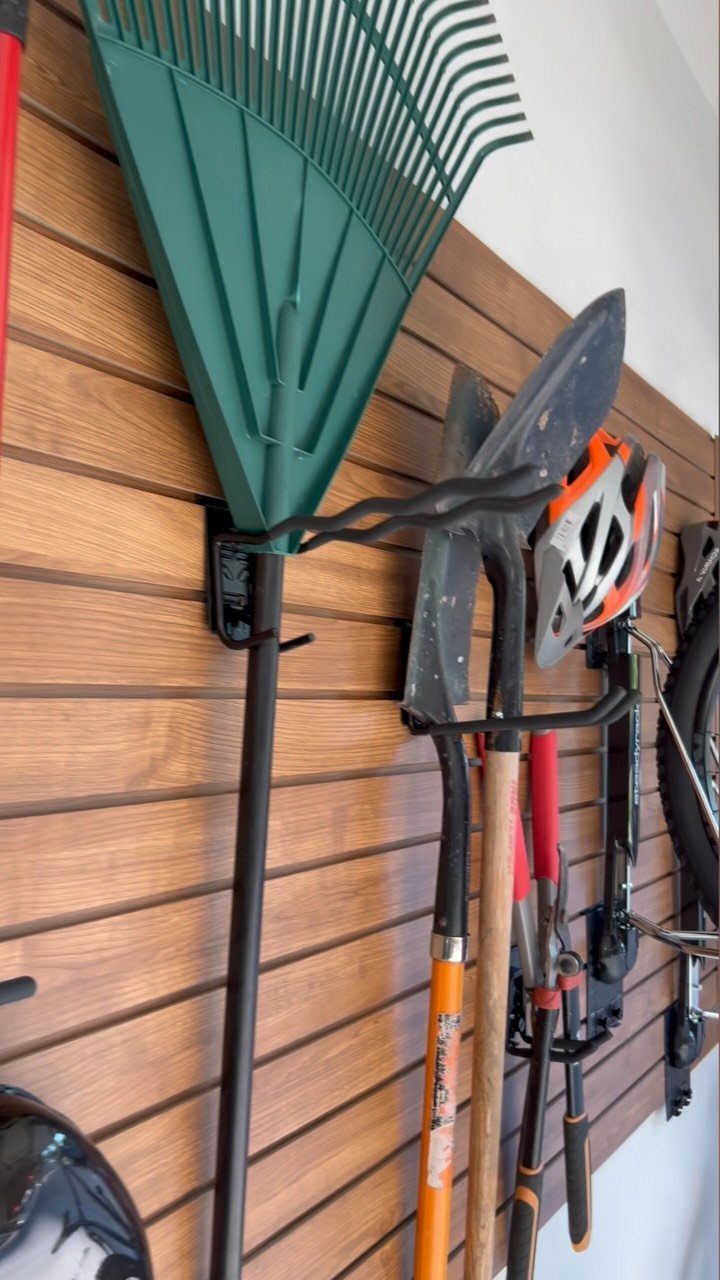
Slatwall turns one blank stretch of wall into adjustable storage. Hooks, shelves and baskets slot into the grooves, so long-handled garden tools hang next to a bike helmet and rearranging takes seconds.
Wood panels look better than most garage storage, which is why I like them in a mudroom or entry too.
Hang the tools you grab most at chest height. Mount the panel to the studs, and plan your hook spacing after you lay the tools on the floor.
12. Rolling Shelving Units

Casters make a shelf unit a tool you steer instead of a fixture you work around.
In a garage or workshop, a three-tier wooden unit can roll out to the middle of the floor for a project and tuck back against the wall afterward.
I would choose locking wheels, or at least a pair that lock, because a loaded shelf that drifts is a nuisance. Put the heaviest tools on the bottom tier to keep it stable while it rolls.
13. Overhead Bin Storage
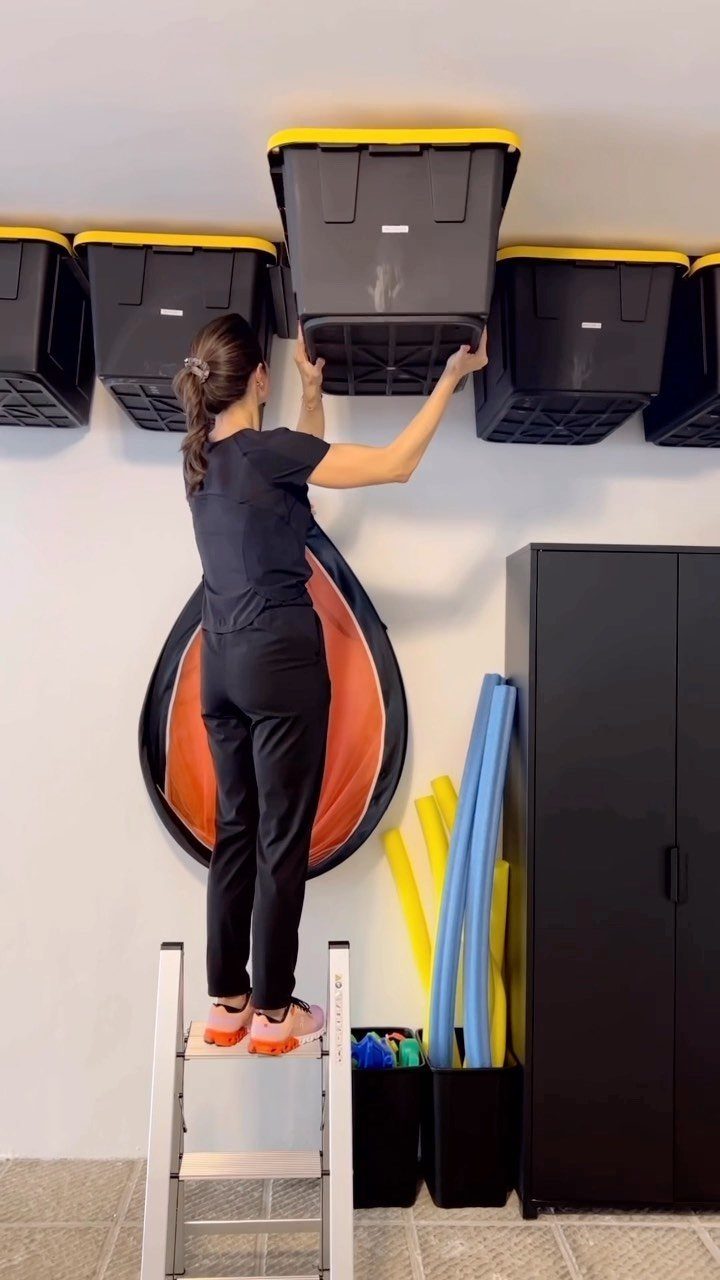
Ladder height decides how well this works, so set the rack where you can reach it with both hands free and a bin in your grip.
Overhead racks hang from the ceiling and hold lidded bins above the clutter, leaving the floor and walls for things you use weekly.
Black bins with bright lids are easy to spot from below, and a label on the end of each one saves a trip up the steps.
I would keep seasonal gear and holiday decor up there, never anything you reach for monthly.
Check the rack’s weight rating before you load it.
Maintaining Garage Organization
A garage stays organized when putting things back is easier than dropping them on the floor. Labels and placement do most of that work.
Put a label on every box and bin, on the side that faces out once it is on the shelf.
Choose clear containers where the contents change, so a glance answers the question. Opaque bins are fine for things you already know by heart, as long as they carry a label.
Give the easiest spots to what you use most. Weekly items belong near the door or along the path from the car, while once-a-year gear can go to the back or up high.
Set a reminder every 3–6 months to pull out what you no longer use and reset the layout.
A short pass like that beats a full purge, and it keeps floor space open for parking or a workstation. Clear floors also mean fewer things to trip over.
Frequently Asked Questions
Is plastic or metal shelving better?
Metal wins for heavy loads, and plastic wins for light, cheap storage you want to move around.
Plastic costs less, goes together easily, weighs little and wipes clean without rusting. Metal is sturdier and lasts longer under weight, so I’d put tools and bulky gear on it.
Pairing a steel frame with plastic bins splits the difference: the frame carries the weight, the bins stay light, and the whole setup can be rearranged in one afternoon.
What is the strongest shelving material?
Steel is the strongest option for shelving. It resists bending under heavy loads, which is why warehouses, supermarkets and gyms rely on it.
Look for a powder-coated or galvanized finish if the shelves will sit somewhere damp, and read the weight rating per shelf before you stack anything heavy.
What do I put on garage shelves?
Lidded bins, tools, garden equipment, sports gear, pet items and seasonal belongings are the usual fits, and small items can go in closed cabinets.
Heavy things belong on the lowest shelves, and a label on the outward-facing side of each bin lets you find things at a glance.