
Placement settles the pick faster than style does: a windowsill suits a snug pot with an inch or so of clearance, an empty corner calls for one big planter, and a tight balcony works best when the plants stack upward on tiers and hangers.
The range runs from painted tin cans and thrift-shop mugs to weathered metal containers and wooden stands, so cost is rarely the limit; floor, sill or shelf space is. I’d measure that space before looking at a single glaze.
1. Ceramic Plant Pots
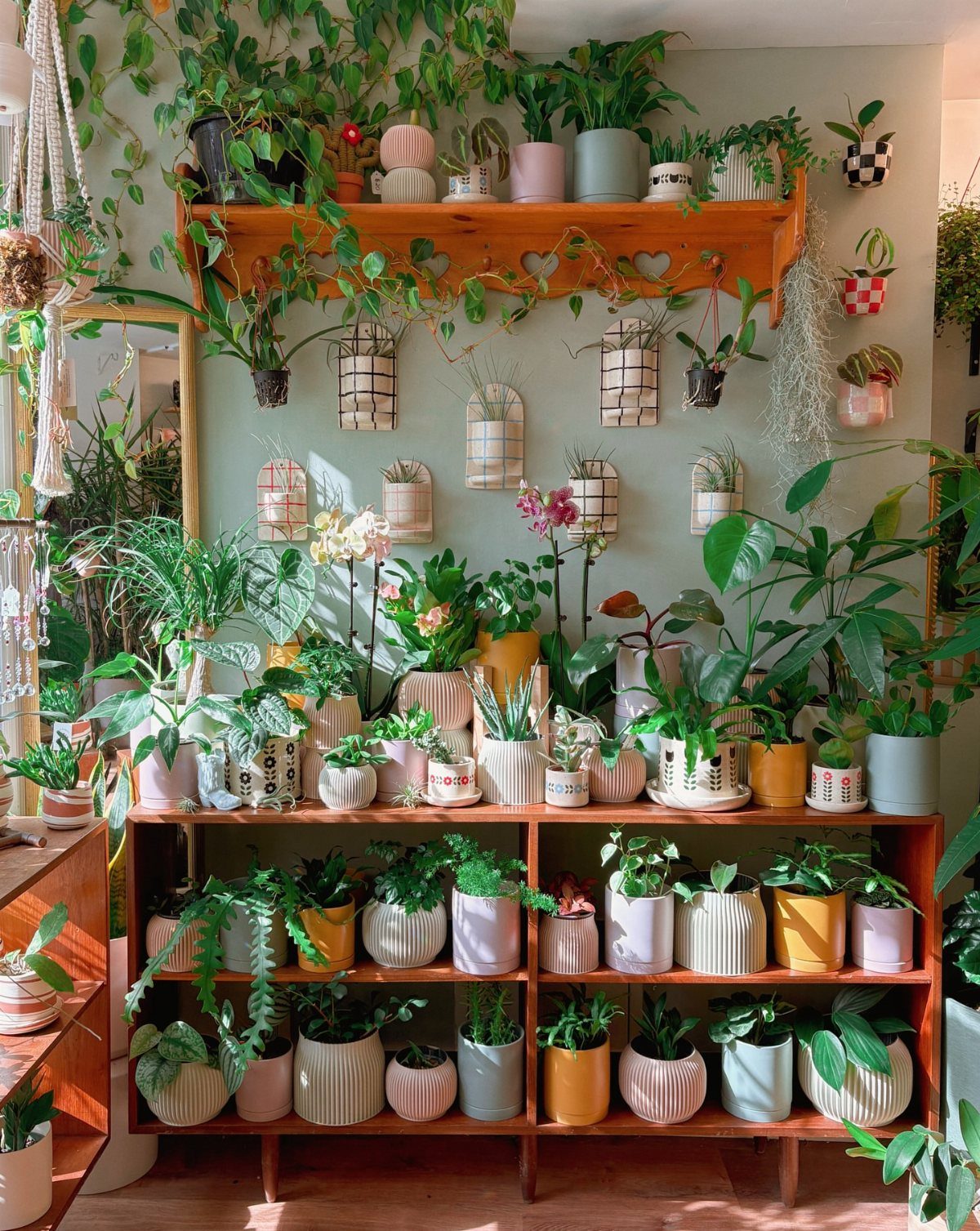
A shelf full of ceramic pots looks best when the shapes disagree and something else stays steady. I’d pick a single color family, say creams and greens, and let the glazes, heights and silhouettes vary inside it.
Put the tallest pots at the back and the squat ones in front, so each plant gets its own line of sight. A light wall behind them lets the glaze colors do the talking.
2. Terracotta Pots
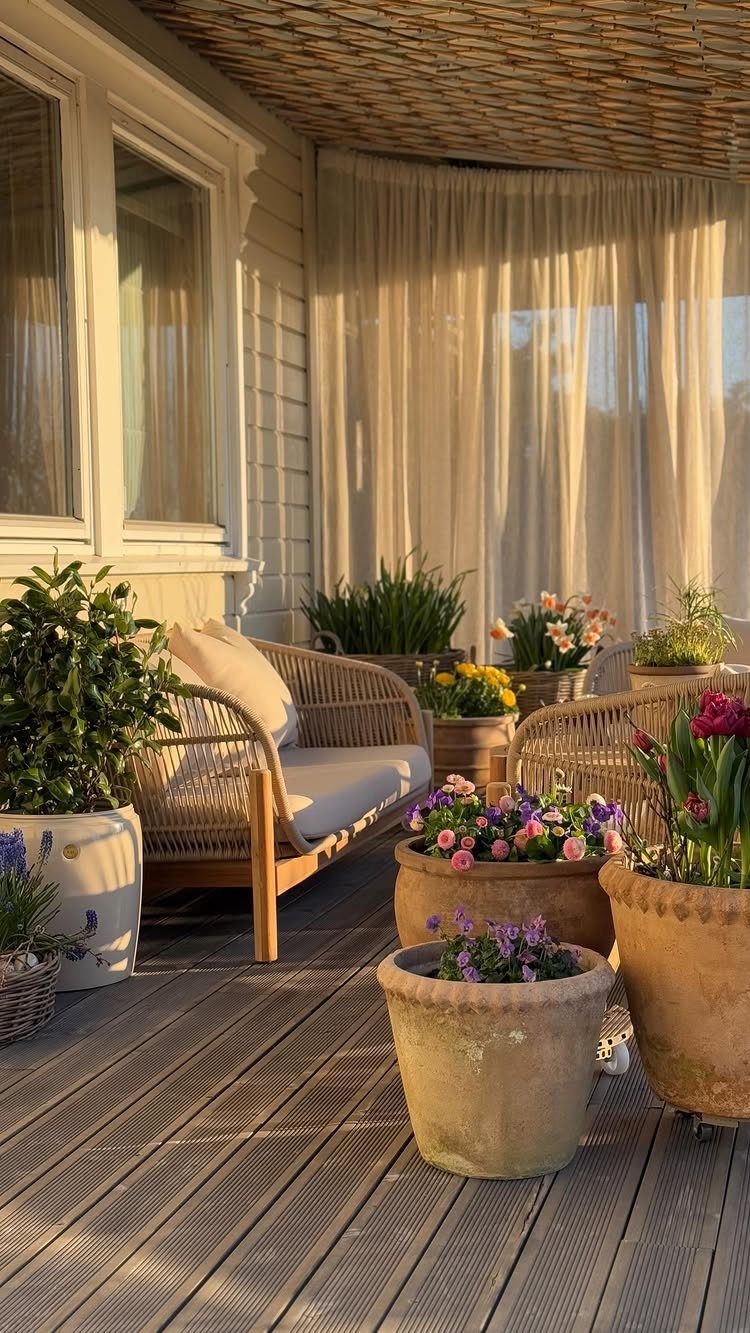
Plain terracotta pots are the easiest way to make a porch or deck feel planted rather than decorated. Their orange-brown tone sits well beside green leaves and bright blooms, so you don’t have to match anything.
Group them in odd numbers and mix the sizes.
Set a saucer under each one to protect the boards. If bare clay feels too plain, a painted or decorated pot can be the one accent in the group.
3. House-shaped Planters
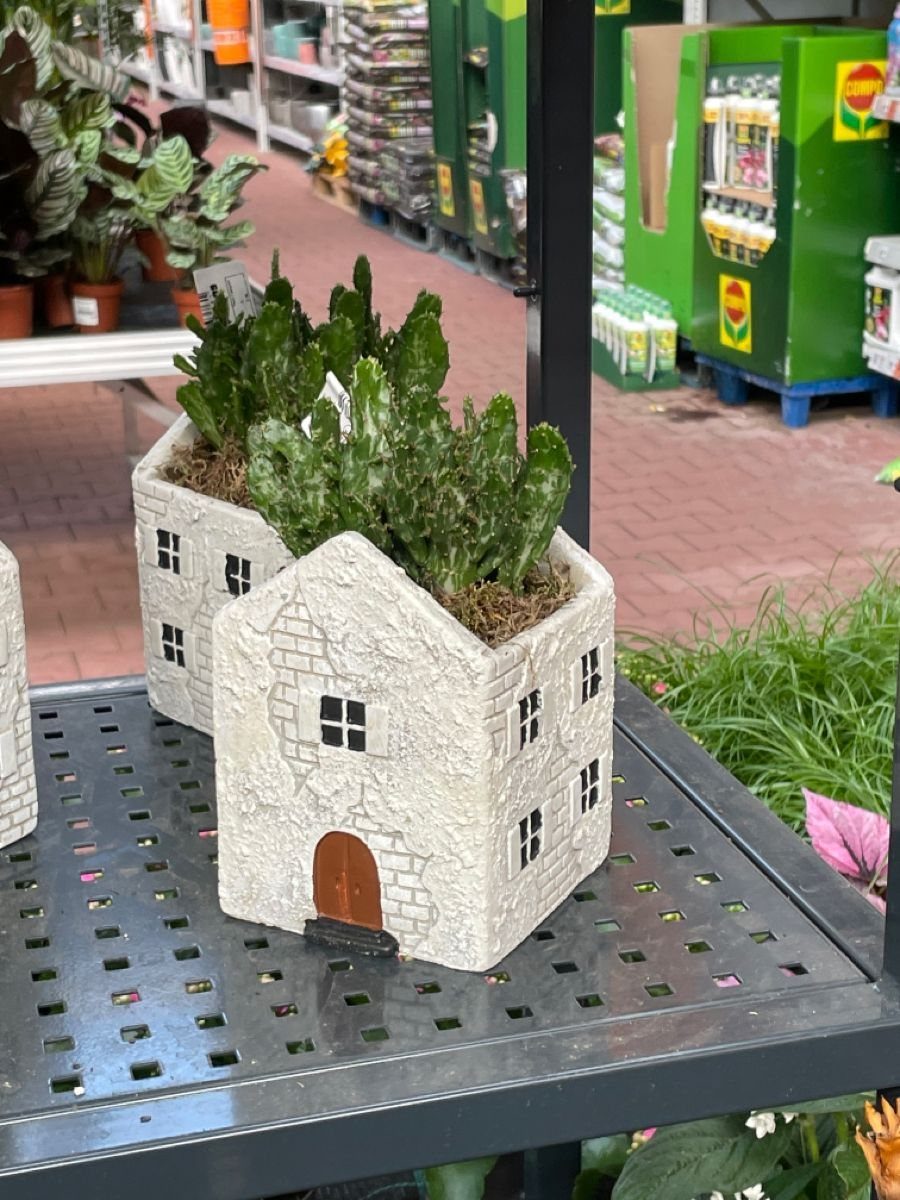
Tiny stone houses with a planting hole where the yard would be: that’s the charm of these planters, and succulents suit their small scale.
I like them in a row of 2 or 3, each a slightly different size, so they read like a little street.
They fit a desk, a bookshelf or a kitchen shelf without crowding anything. Keep the plants low and compact so the roofline stays visible.
4. Fairy House Planters
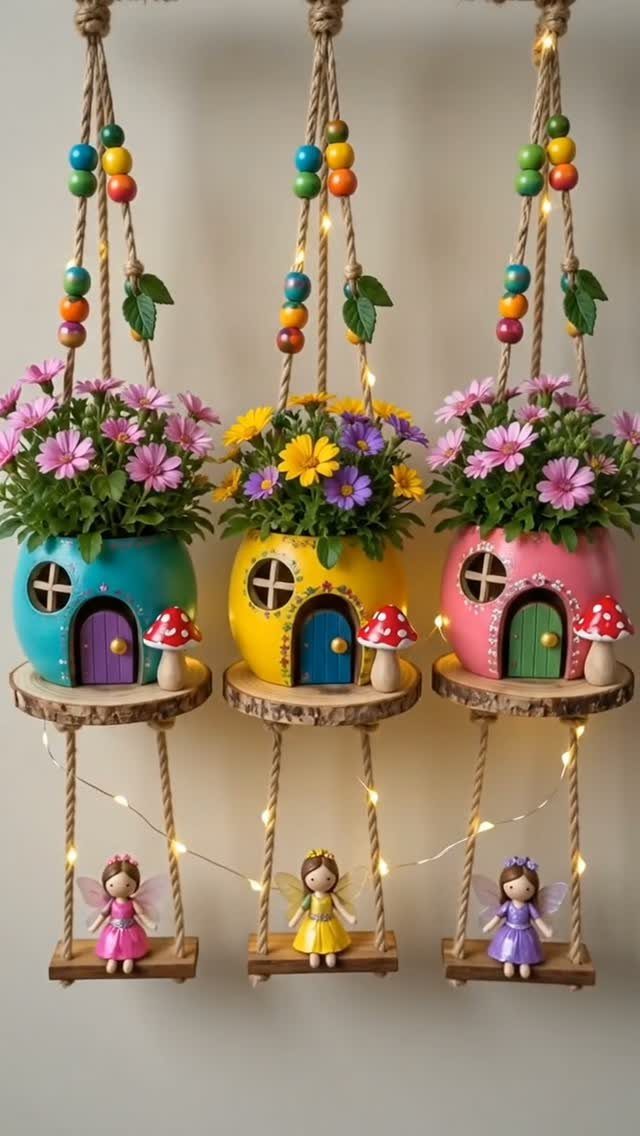
Fairy house planters are pure whimsy, and I’d keep them for a spot where whimsy is welcome: a kid’s room, a sunroom, a porch corner.
Hanging them by rope lets you stagger the heights, which looks better than 3 in a straight line.
Beads, mushrooms and tiny figures do the decorating, so let the plants stay simple. A strand of string lights nearby makes the whole group glow in the evening.
5. Colourful Geometric Pots
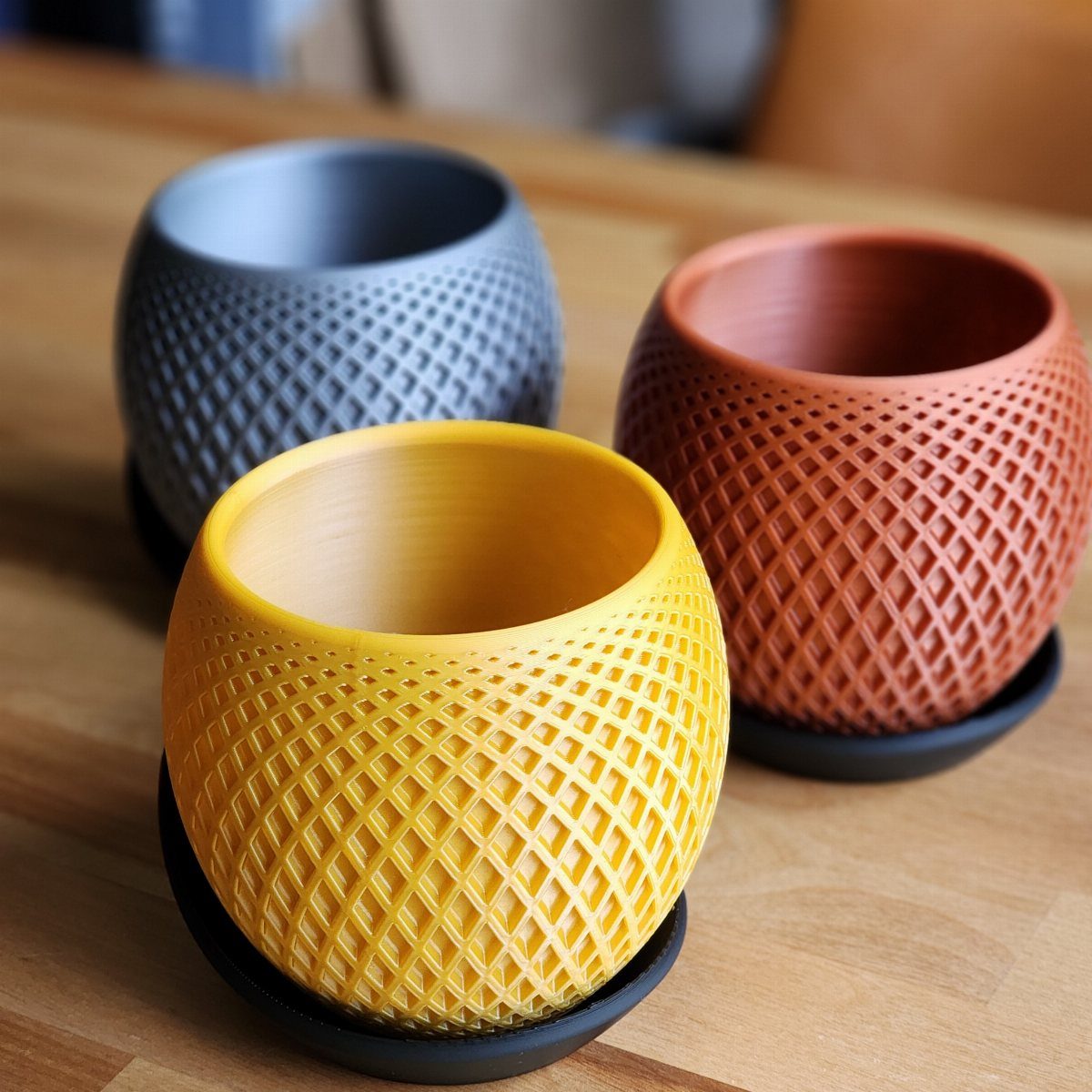
Yellow, orange and grey make a tight, sunny trio, and bold geometric faceting gives each pot a pattern without any paint. A black saucer under each one grounds the bright color and gives the set a finished look.
I’d buy or print them in the same shape but different shades, then line them up on a table or sill. The pattern is busy enough that the plants can stay plain green.
6. Wooden Plant Stands
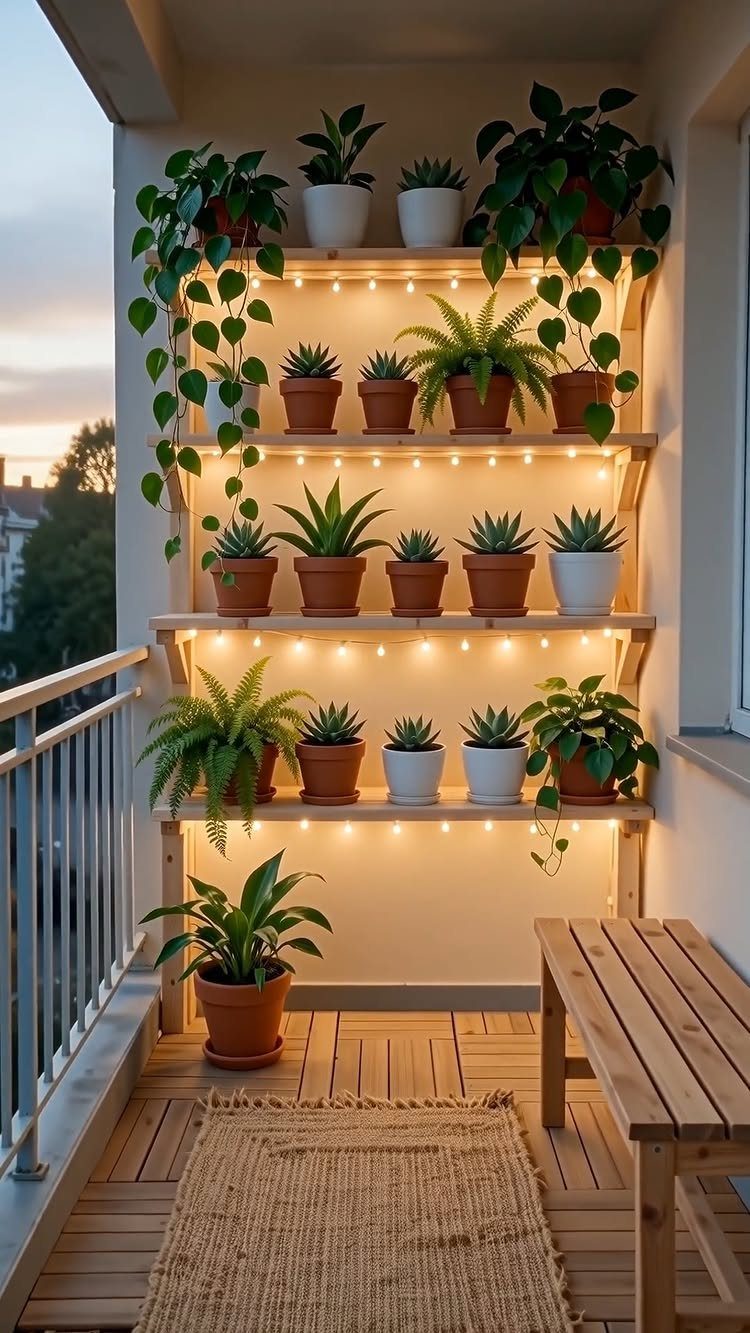
Height is the cheapest upgrade a plant display can get, and a multi-tiered wooden stand gives you several levels at once. On a balcony it also keeps pots off the floor and lets them share one tidy footprint.
Put trailing plants on the upper tiers so they can spill down, and keep the heavier pots low. Wood warms up a space, and a strand of string lights along the frame turns the stand into a feature at night.
7. Large White Planters
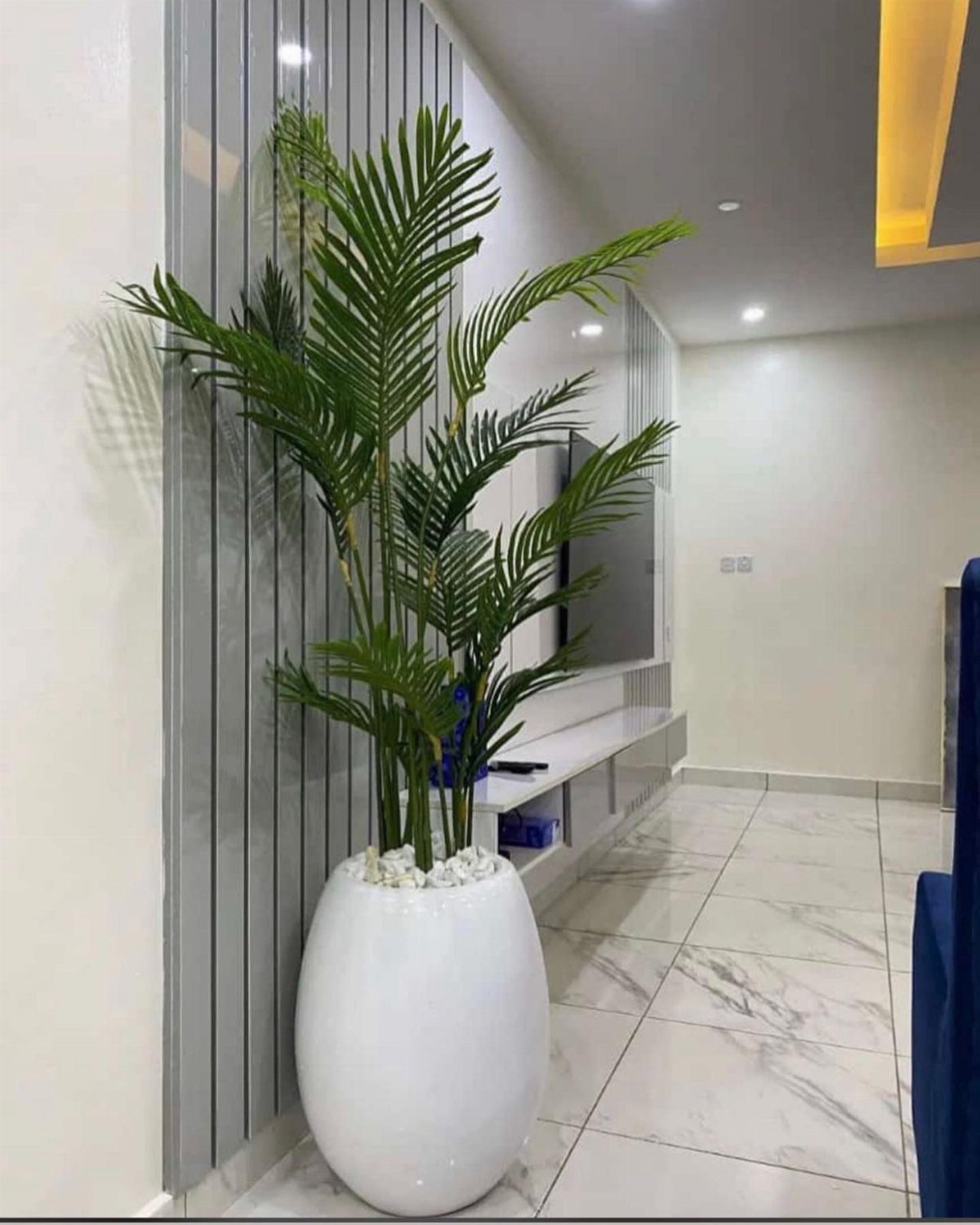
One oversized egg-shaped planter does the job of a piece of furniture. A tall palm in a smooth white oval fills a bare corner and gives the eye somewhere to land.
I’d choose a pot wide enough that the plant looks rooted rather than perched, then leave the floor around it clear. White keeps the attention on the leaves.
8. Two-tone Ceramic Pots
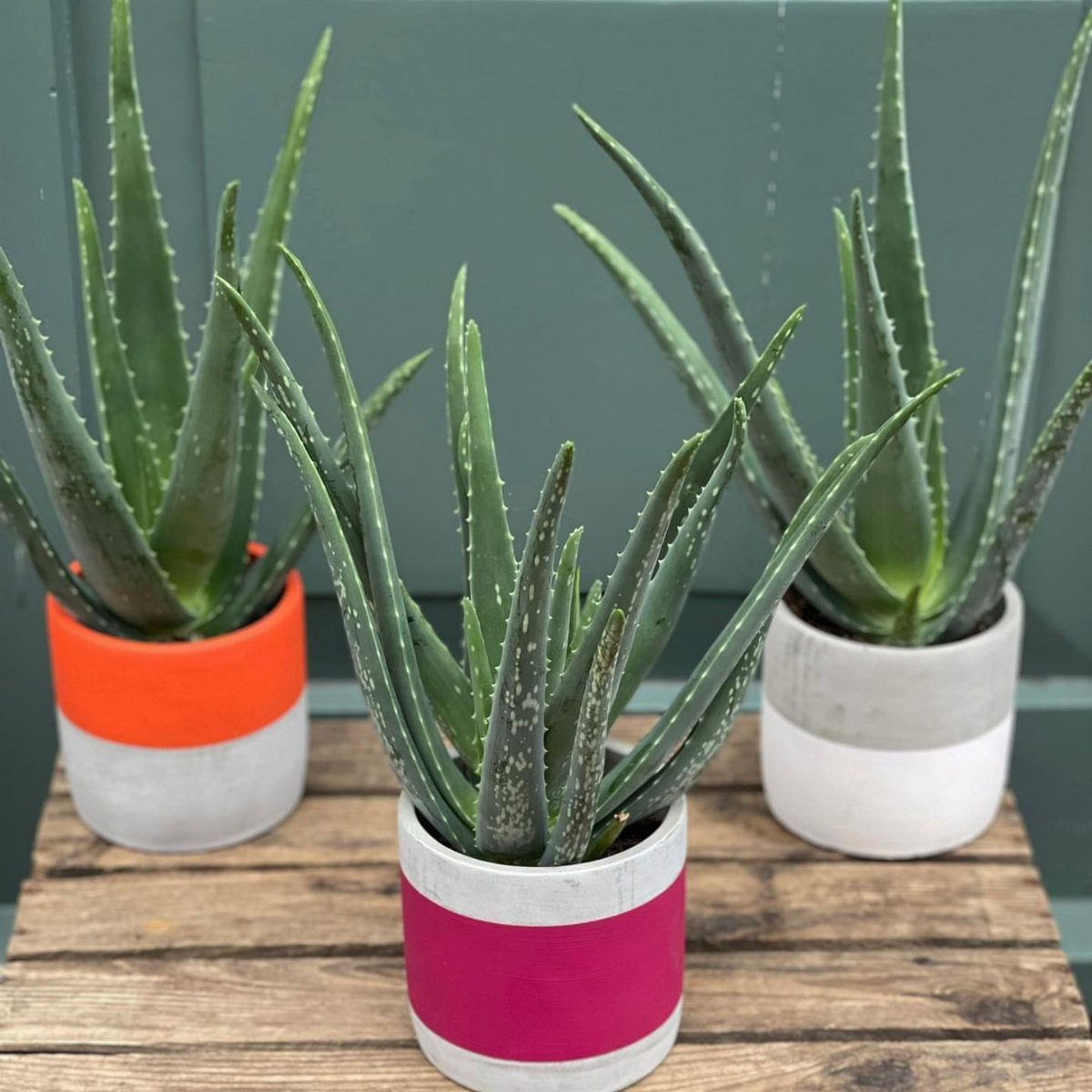
Pick pots that share one neutral, like grey, and glazes in orange, pink and white will sit side by side without fighting. Each pot splits into 2 tones, so the set feels planned.
Contrast is the other lever: a glossy glaze against a matte finish on the same pot gives you texture without any pattern. I’d keep the shapes identical and let the color pairings differ.
9. Grey Cylindrical Planter
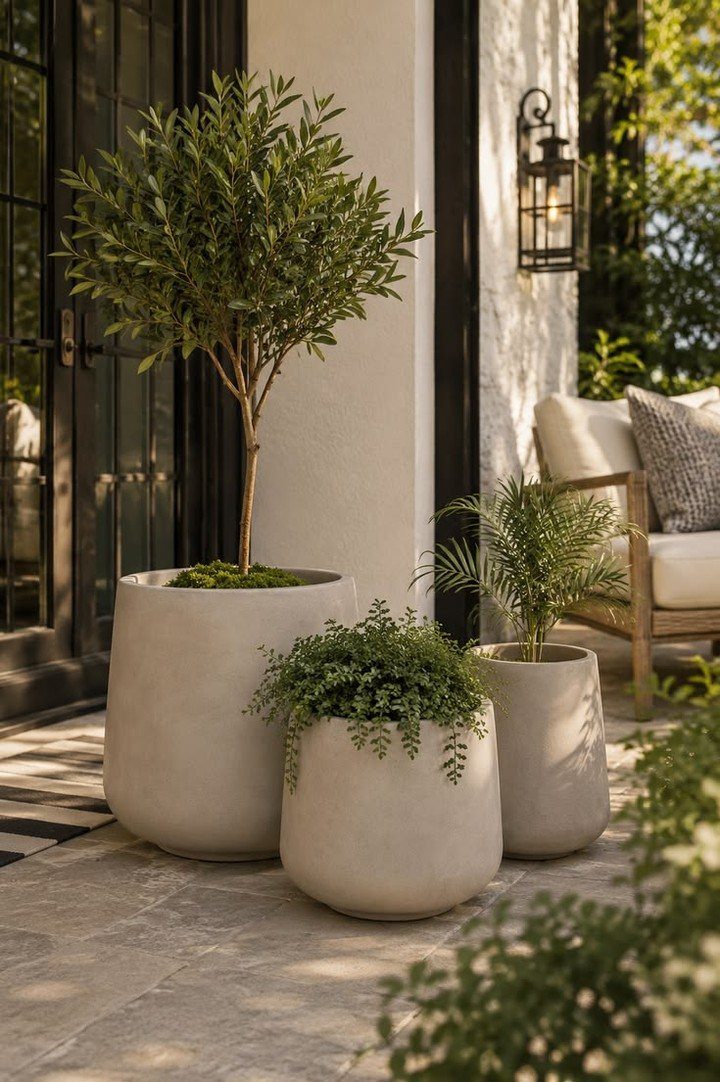
Straight sides, flat grey, 3 sizes: that’s the whole recipe, and it works because nothing competes with the foliage. Cylinders in stepped heights look intentional when you group them together instead of spacing them out.
I’d keep every pot the same shape and vary only the height. A plain wall behind them lets the green stand out, and a plant with fuller leaves in the tallest pot balances the row.
10. Painted Metal Tin Planters
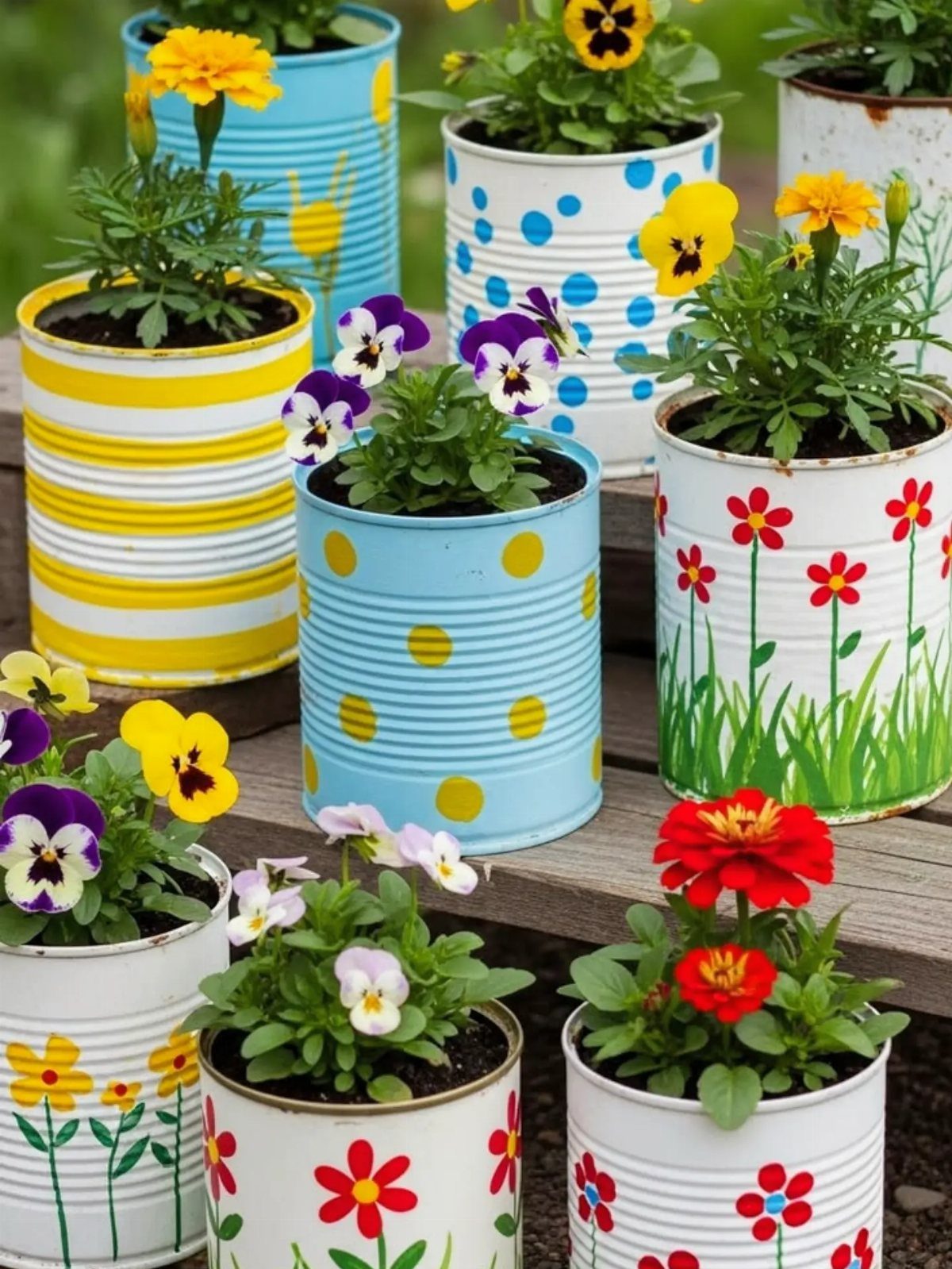
A tin can is about the cheapest planter there is, and paint is what makes it look chosen instead of leftover. Giving each can its own hand-painted design turns a recycling bin item into a small flower display.
Bright flowers suit the bright paint. I’d set the cans close together on one wooden surface so the mix of colors reads as a group rather than a scatter.
11. Painted Terracotta Pots

Vertical stripes are what make a mismatched shelf of clay pots read as a set. Repeat the same stripe pattern across every pot and the sizes can vary as much as they like.
Plain terracotta costs little, and paint is the only extra. I’d vary the stripe colors from pot to pot, then spread the group over a shelf and a tabletop so they don’t crowd one spot.
12. Painted Geometric Pots
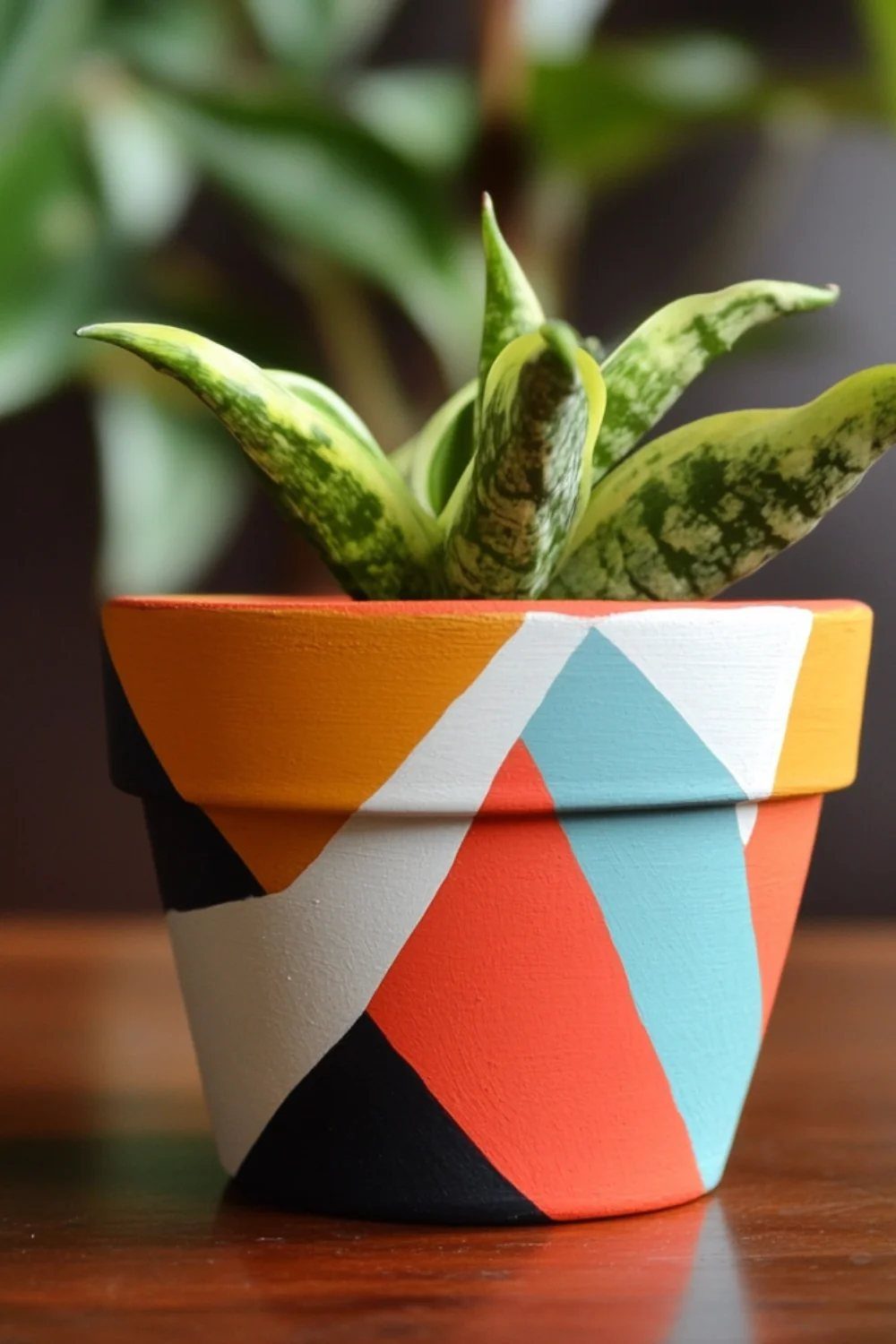
Old terracotta pots with scuffs or faded rims are good candidates for geometric paint. Triangles, blocks and angled lines in orange, blue, white and black turn a tired pot into the accent of a shelf.
I’d paint just one pot rather than a whole set, so the pattern stays a feature. Leave some bare clay showing; it gives the colors a warm base.
13. Tiered Plant Pots
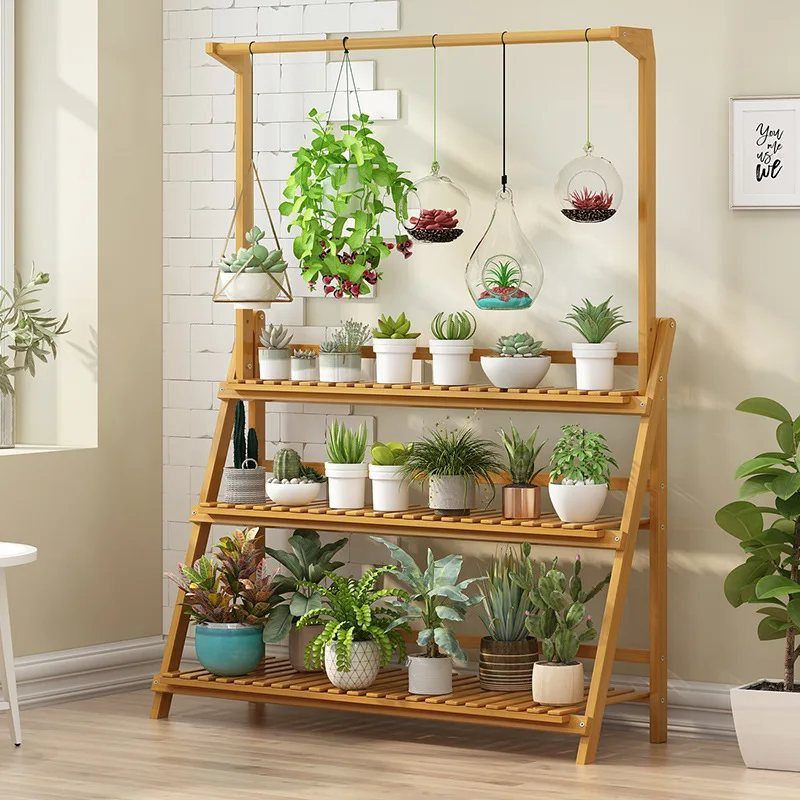
Stacking pots at different heights gives a crowded corner a shape. A wooden tiered stand does that in one footprint, and the open frame leaves room for hanging terrariums to dangle beside the potted plants.
I’d put the biggest pot on the lowest level and the smallest on top, so the display tapers instead of toppling. On pale brick, the wood tone carries enough warmth that extra decor just adds clutter.
14. Terracotta Self-watering Pots
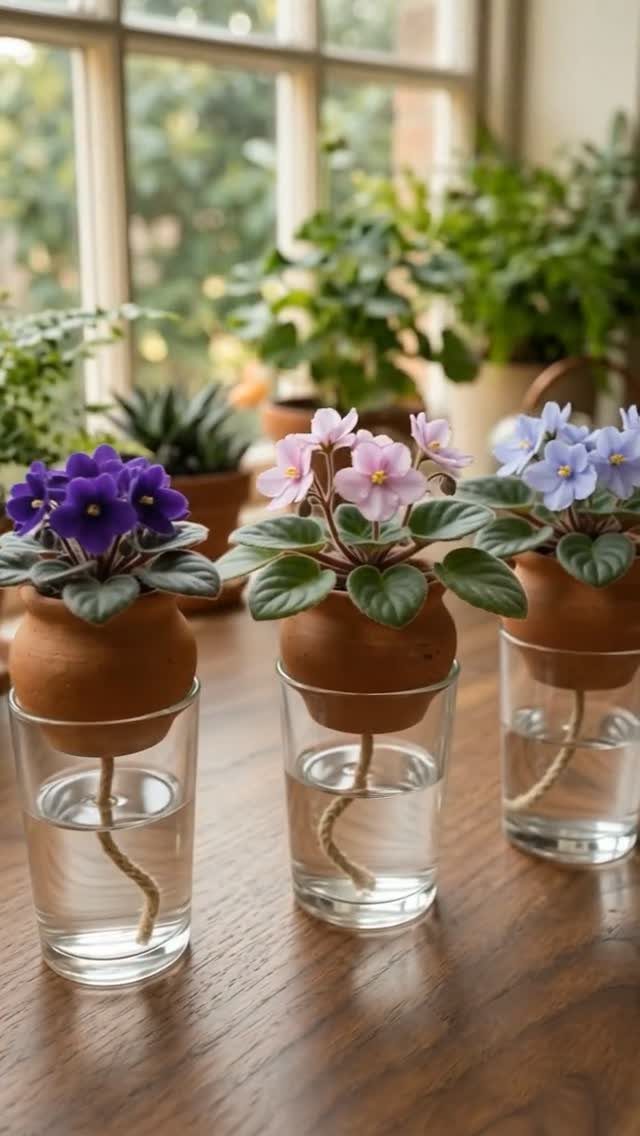
A glass of water, a wick and a terracotta pot: that’s all a self-watering setup needs, and it suits small flowering plants that dry out fast.
Set each pot in its own glass so the clay can draw up what it needs.
I’d line up 3 on a wooden table near a window, where the glasses catch the light. Check the water level now and then, and top it off before the glass runs dry.
15. Macrame Pot Hanger
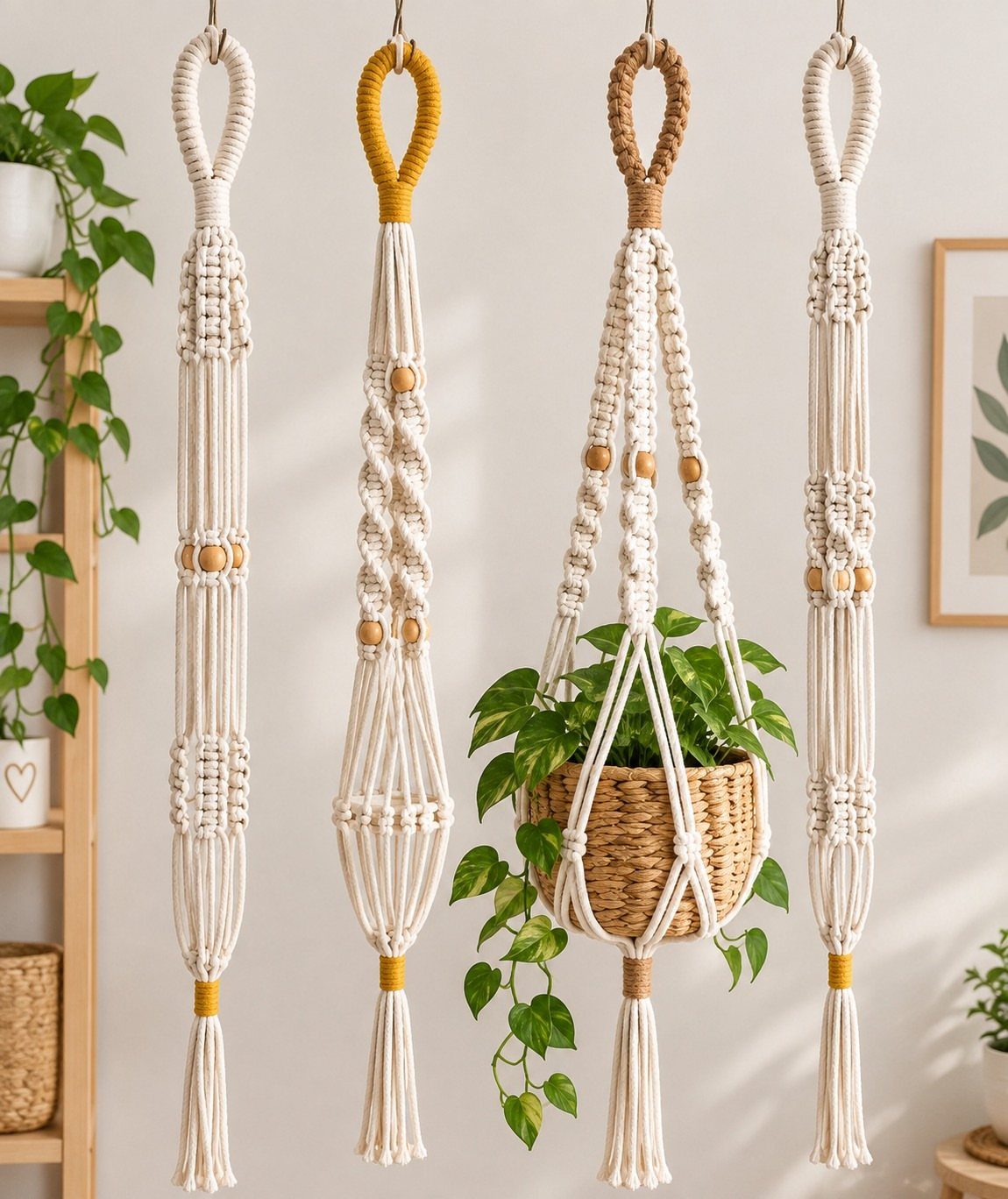
Cream cord knotted into a hanger frees up shelf space and lifts the plant to where you look straight at it. Macrame holders also cost little, and a woven basket inside one lets you hide a plain nursery pot.
I’d hang several at staggered heights in front of a solid, light-colored wall so the knots read clearly. Leave a gap between each one, or the fringes tangle and the group looks messy.
16. Ceramic Pots on a Windowsill
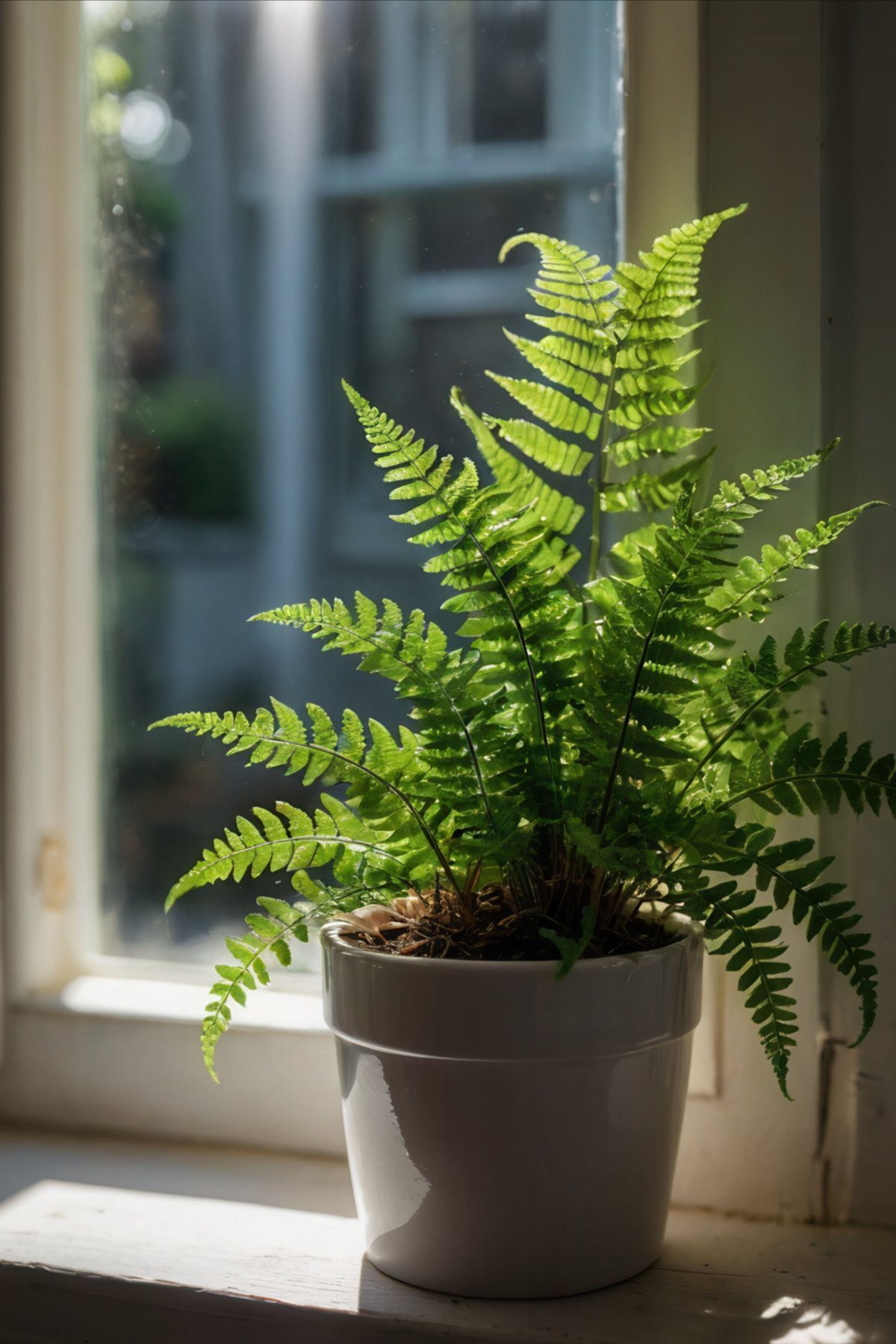
A white ceramic pot on a white sill lets a fern’s fronds do all the work. The plant gets light and the pot disappears into the frame, so the window reads as a clean picture.
I’d choose a pot that fits the depth of the sill with a little room to spare, so nothing hangs over the edge. One plant per window feels calmer than a crowded row.
17. Mug Planters
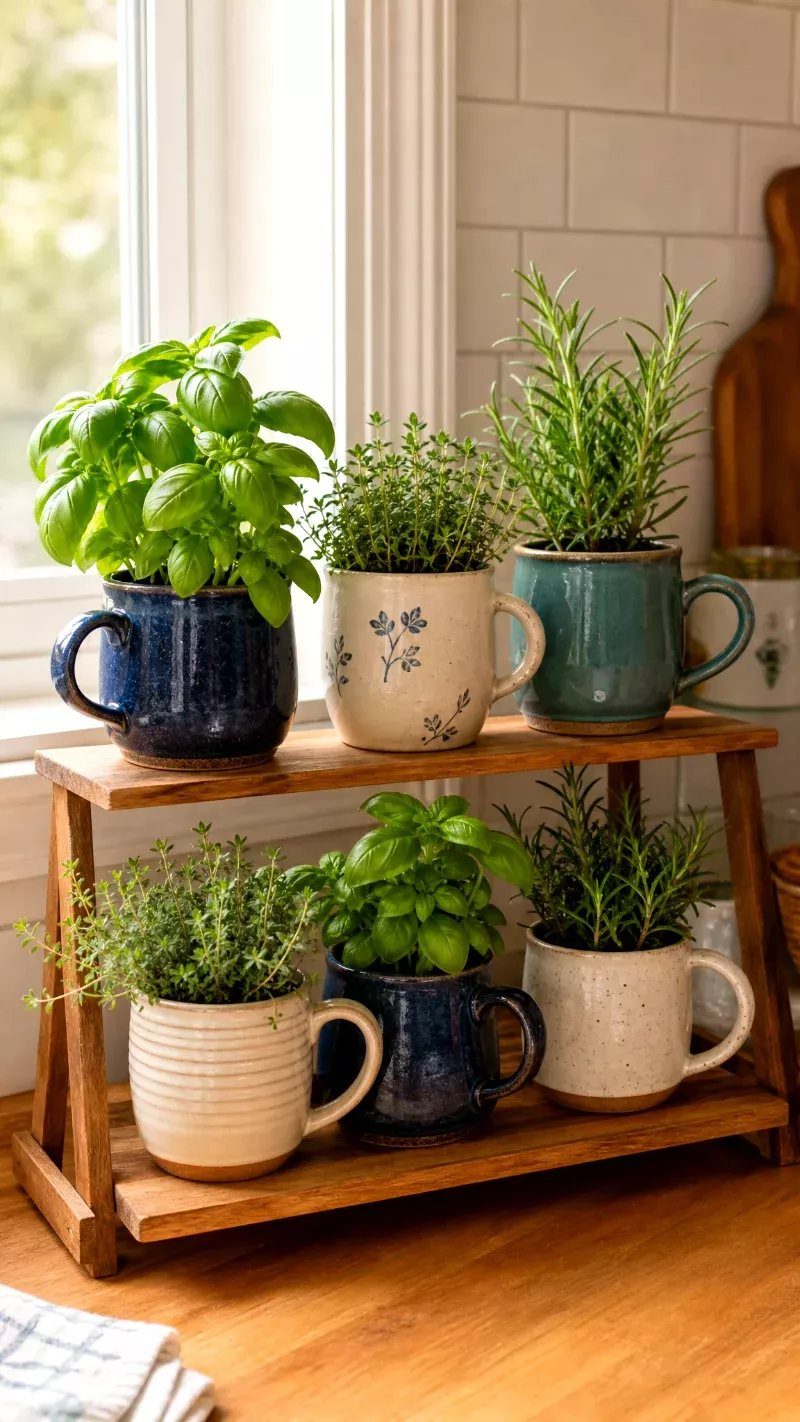
Mismatched mugs make good herb pots because every one is already a different shape and color. Odd mugs from a thrift shop or the back of a cabinet work as well as a matching set.
Herb mugs do best grouped on a tiered stand by a bright window, and a spot near the stove makes them easy to snip mid-recipe.
A mug has no drainage hole, so water lightly and don’t let the soil sit wet.
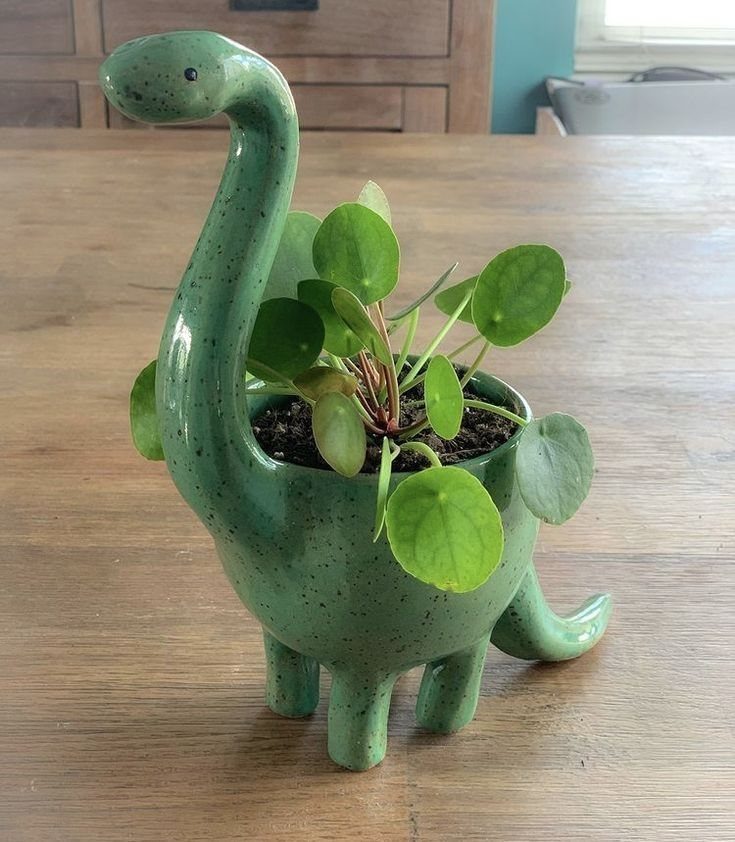
18. Dinosaur Planters
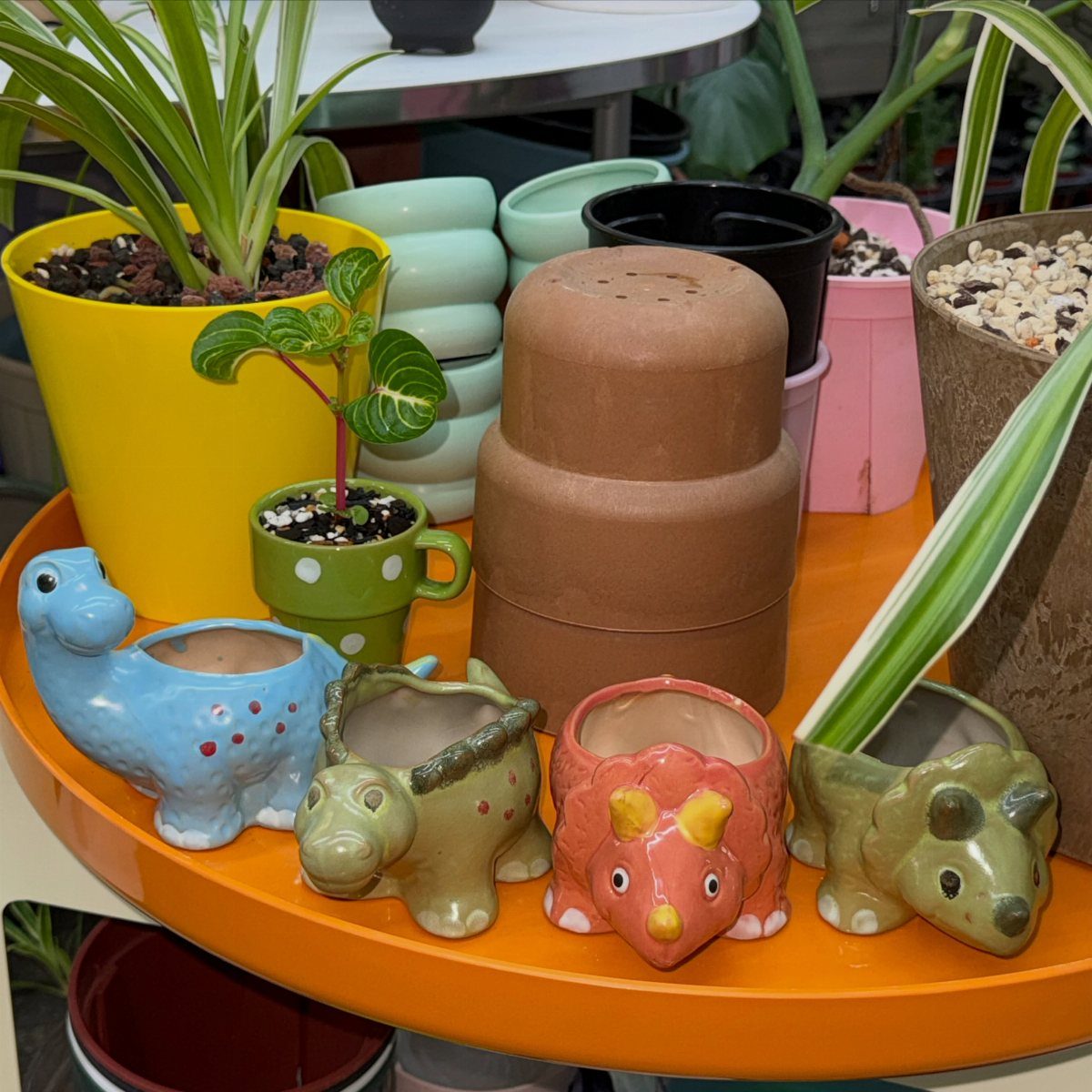
A dinosaur-shaped planter gives a small plant some personality, and it belongs on a desk, a kid’s shelf or a counter. Keep the plant tiny so the creature stays the main event.
A mix of several colors holds together if the surface behind them is a strong solid; orange makes a lively base. I’d add one plain pot or mug into the group to give the eye a place to rest.
19. Metal Planters
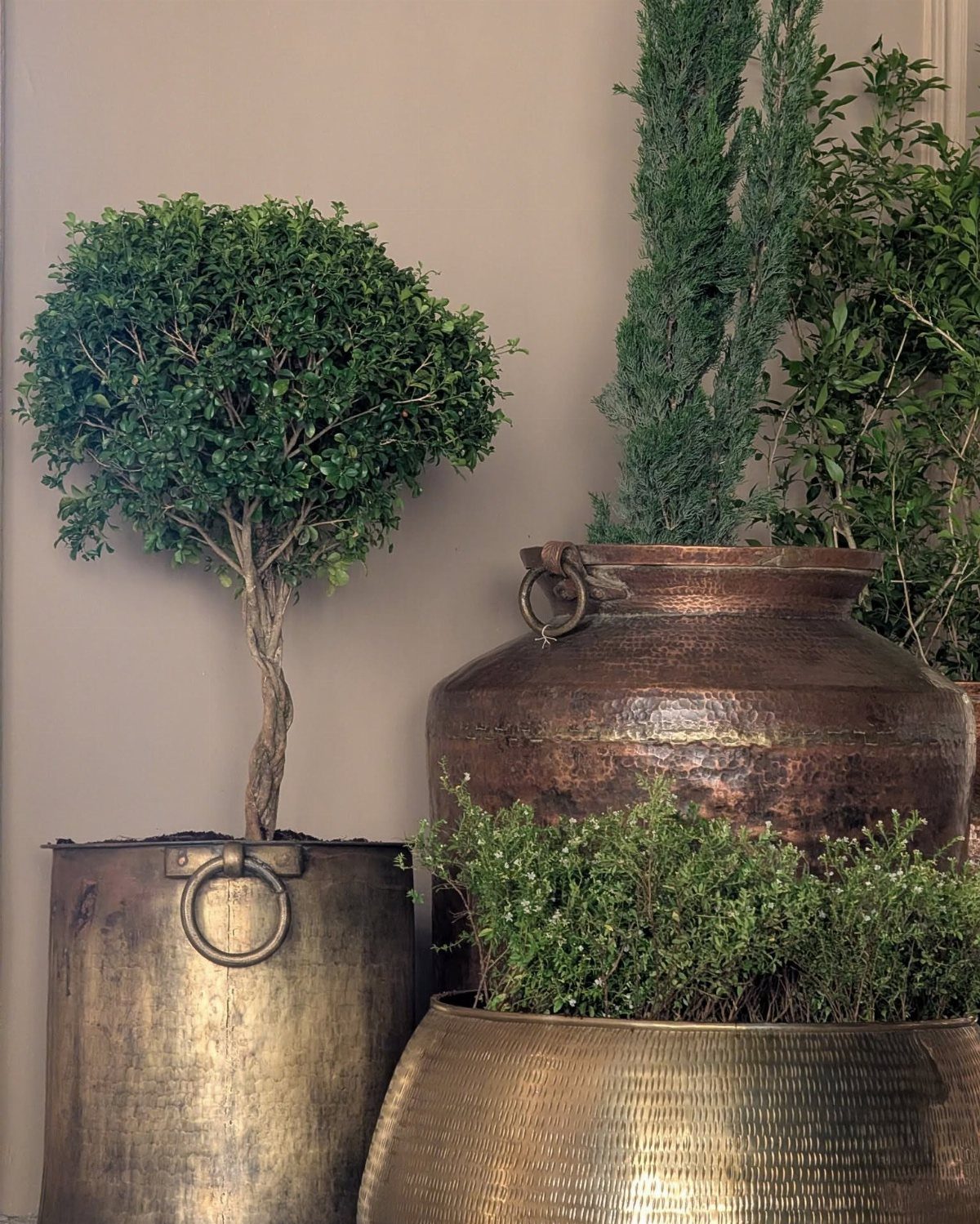
Weathered metal in silver, copper and brass tones gives green plants a heavier, more grown-up look than a ceramic pot would. Mixing the three finishes works because they share an aged texture, so they read as one family.
I’d vary the heights and keep the foliage plain, so the metal gets the attention. A neutral wall behind them keeps the group calm.
Choose large containers; small ones look thin in metal.
20. Matte Ceramic Pots
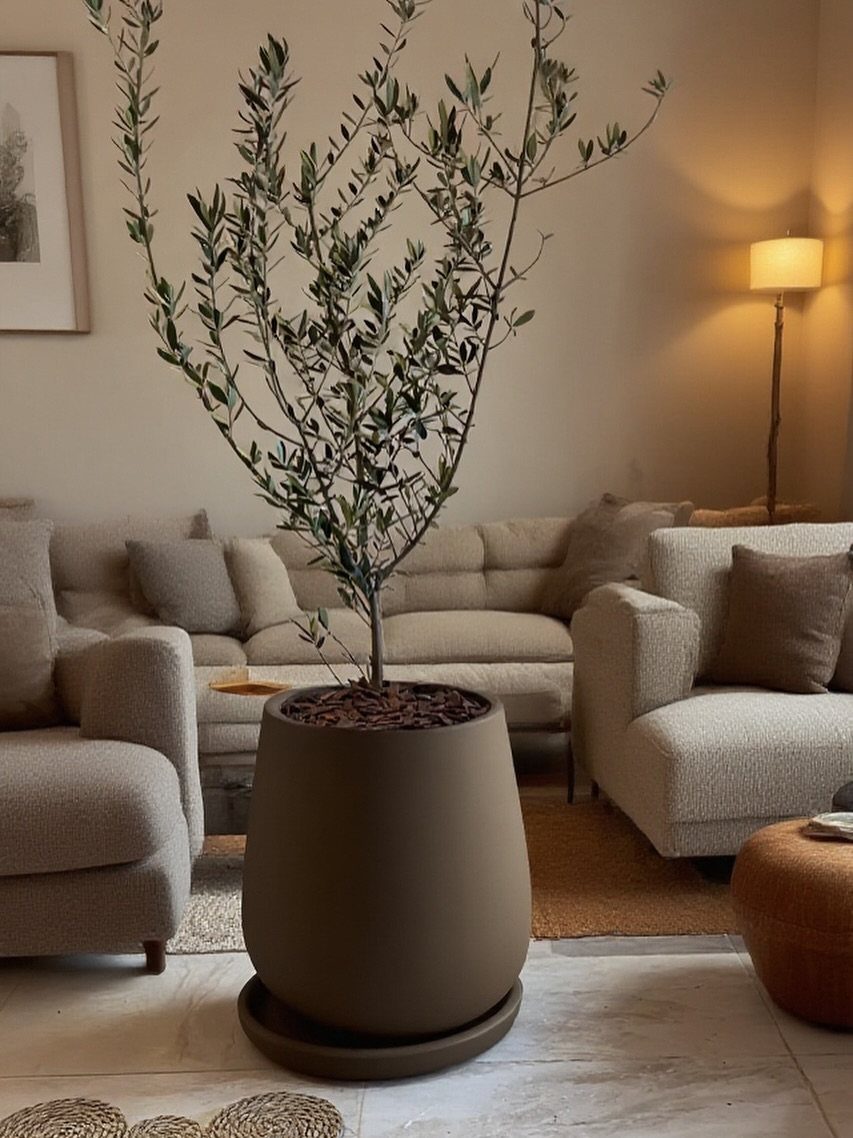
A matte brown ceramic pot with a matching saucer suits a large indoor tree, because the dull finish takes the glare off and lets the leaves stand out.
In a living room with beige furniture, a brown pot stays in the same warm range.
I’d go big on the pot so the tree looks anchored, and keep the saucer in the same glaze so the base looks finished. Matte surfaces show less shine but still deserve a wipe now and then.
21. Small-space Plant Displays
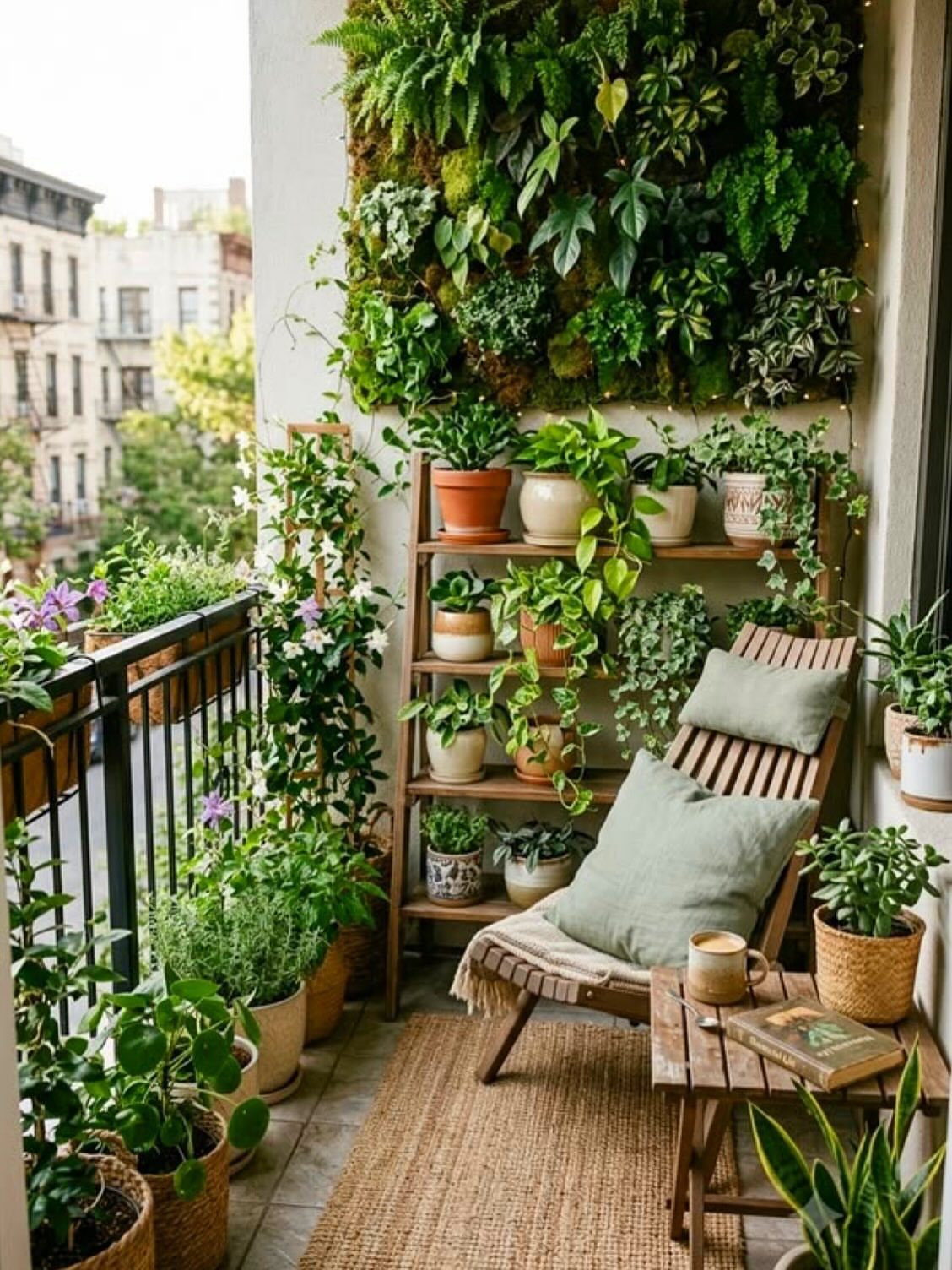
A small balcony gets more planting room by going up. A living wall of plants on the vertical surface, plus a tiered wooden shelf, lets you grow a lot without eating into the floor you need for a chair.
I’d put the tallest, fullest plants on the shelf’s lower levels and keep the wall for small, light pots. Leave enough floor for a lounge chair and a side table, or the balcony stops being somewhere to sit.
Frequently Asked Questions
What are some good pots for indoor plants for home?
Terracotta and ceramic cover most homes. Plain terracotta sits well beside green leaves with no matching needed, and a large matte or white ceramic pot suits a tall indoor tree because it makes the plant look rooted instead of perched.
A mug can hold a small herb plant, but with no drainage hole the roots sit in whatever water you add, so give it small sips and let the top inch of soil dry out between waterings.
Where can I buy cheap but nice plant pots?
Start at a thrift shop, where odd mugs make good herb pots and no two need to match.
Plain terracotta costs little, and a coat of paint or a stripe pattern makes a mismatched set look planned. A tin can costs next to nothing, and hand-painted designs turn it into a small flower display.