
Your lease settles the route: if painting is allowed, the charcoal, moonlit blue, and forest green bedrooms and the matte black accent wall are all open to you.
Charcoal, midnight blue, forest green, or one matte black wall each take a can of paint and a free weekend, while a burgundy throw and a few pillow covers cost a fraction of that and come off the day the mood shifts.
If the walls are off limits, string lights, a poster and photo wall, trailing plants, and a record player station still give a rental plenty to work with.
1. Warm String Lights
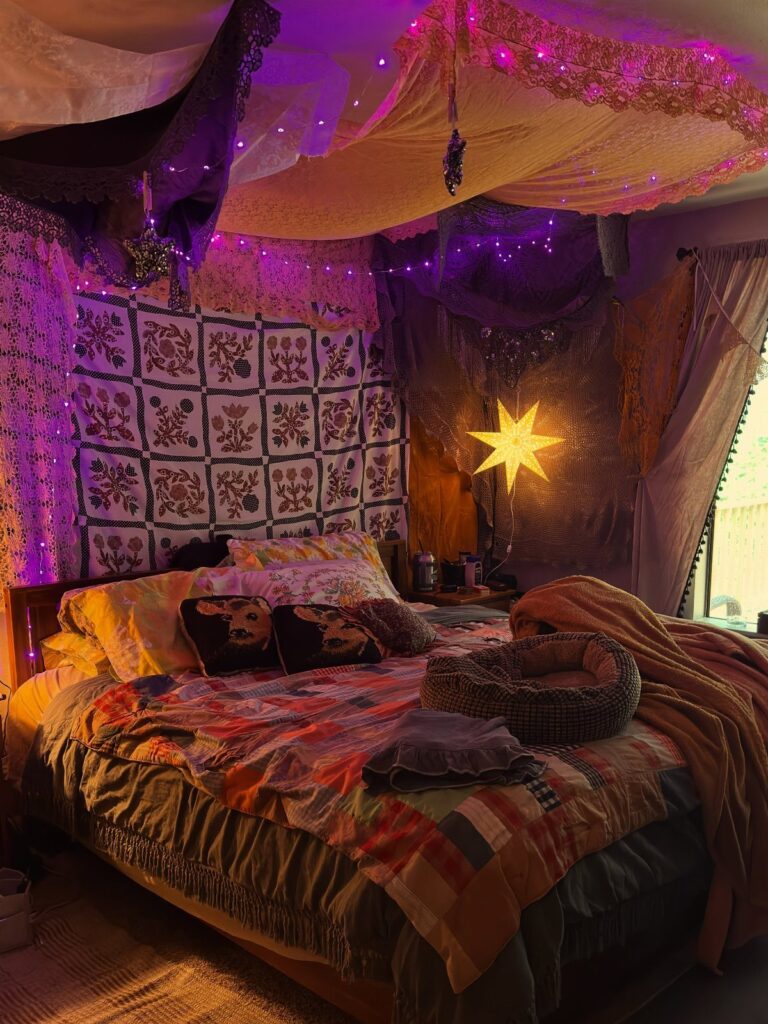
Skip the overhead light and let several small sources do the work. Strings of lights tucked into fabric canopies and wall hangings glow through the cloth, so the room gets a soft wash instead of a glare.
A star-shaped lamp adds one more low point of light. I like mixing heights like that, with some light up high in the fabric and some near the bed, because no single bulb ends up carrying the room.
2. Cream Bedding with Charcoal Walls
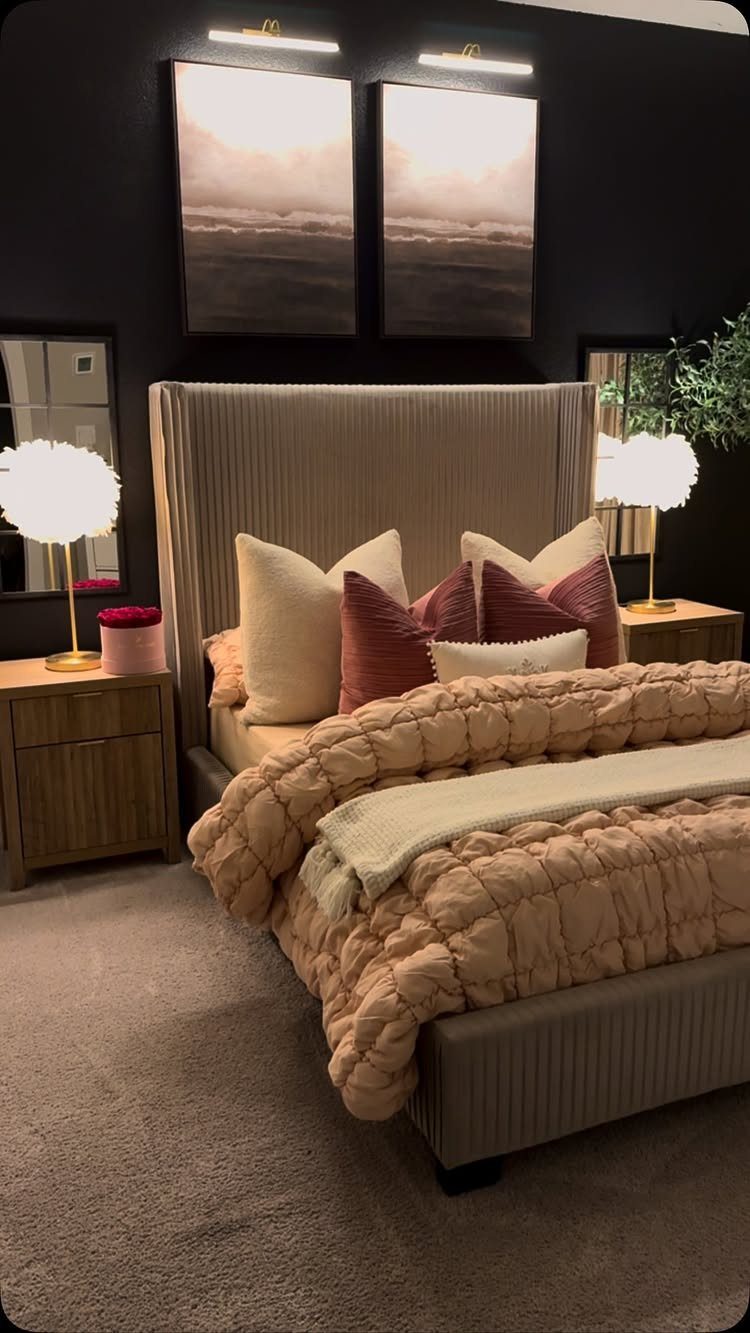
Charcoal walls can read cold and a little severe, and bedding is the cheapest way to fix that. Cream quilting against the dark paint does most of the work, and a few deeper-toned pillows add richness without a second pattern.
2 bedside lamps give the bed a warm, even glow at night. I’d keep the headboard and bedding soft and ribbed or quilted, so the walls supply the edge and the bed supplies the comfort.
3. Poster and Photo Wall
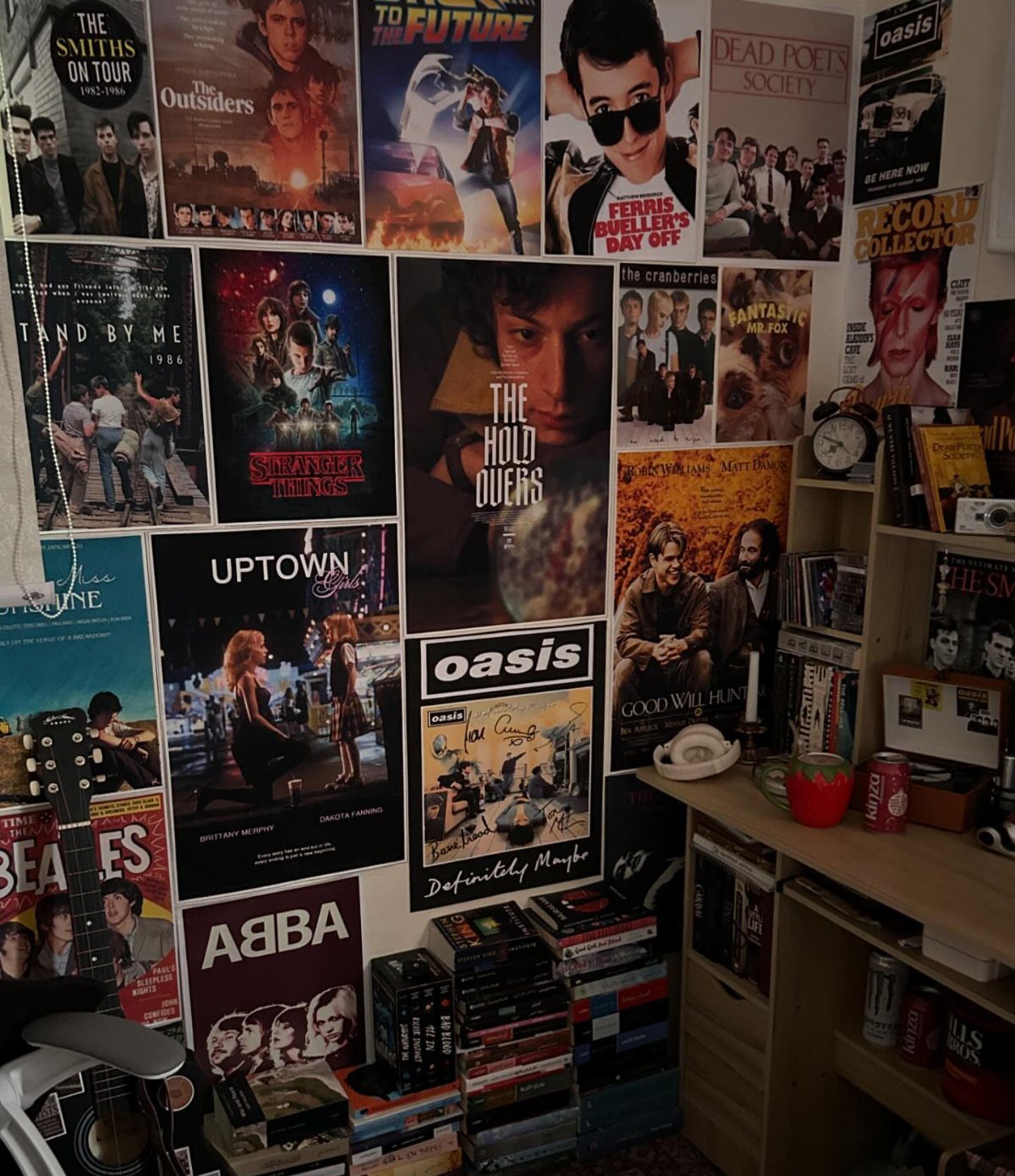
Movie one-sheets, band posters, and whatever else you’ve kept on paper can share one wall without matching anything. Mixed sizes, uneven spacing, and a few overlapping edges make it look collected instead of bought as a set.
I prefer this to a tidy gallery grid because the wall says something about you.
Start with the posters you’d defend in an argument, then fill the gaps with photos and small paper keepsakes. Prints and thrifted posters keep the cost low.
4. Trailing Plants
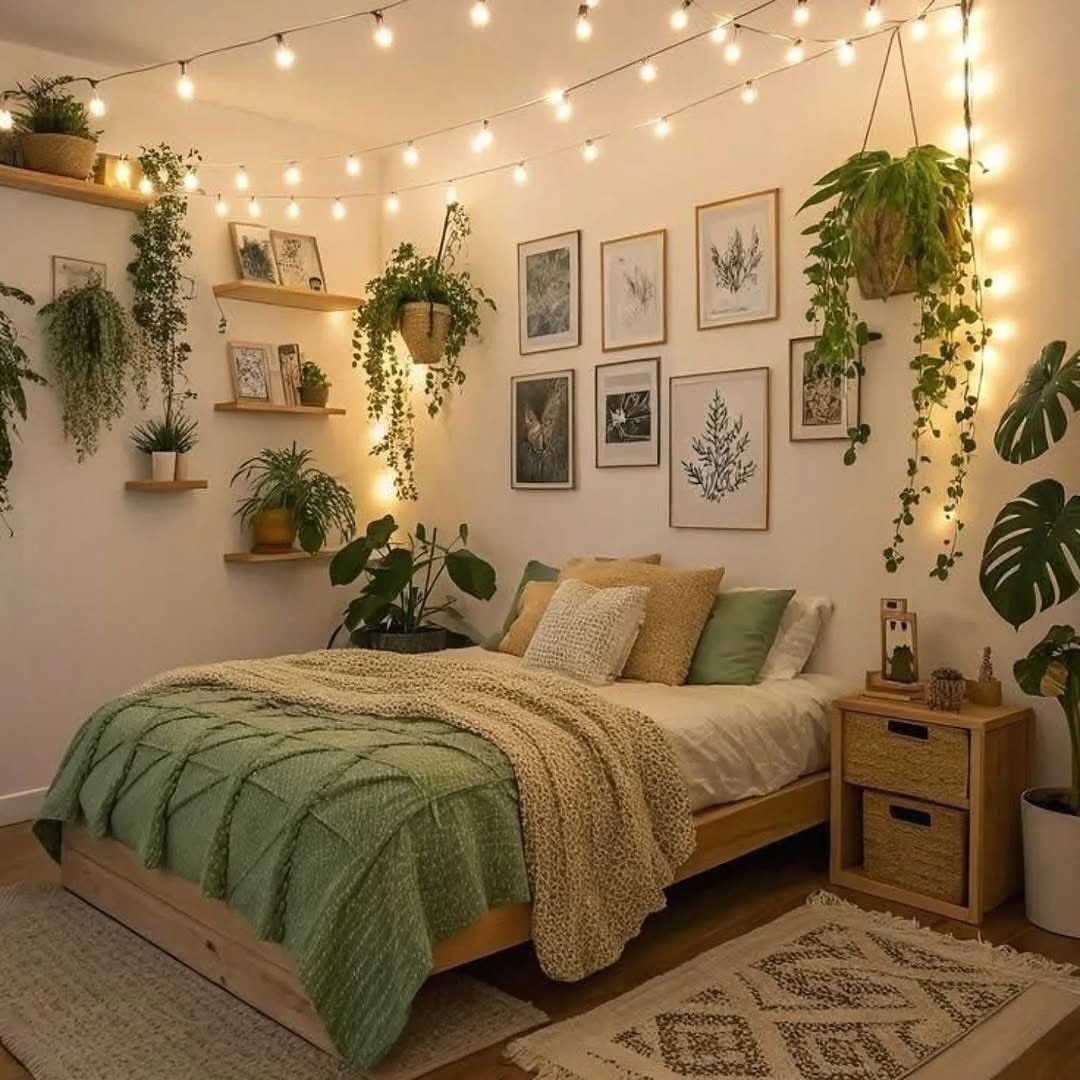
Trailing plants earn their spot because they use height instead of floor. Set a few on shelves where the vines can spill over the edge, and hang others from the ceiling at different lengths.
Green bedding echoes the leaves, and botanical prints on the wall keep the theme going. I’d choose trailing varieties over upright ones here, since falling leaves fill empty wall space and soften the straight lines of shelves.
5. Record Player Station
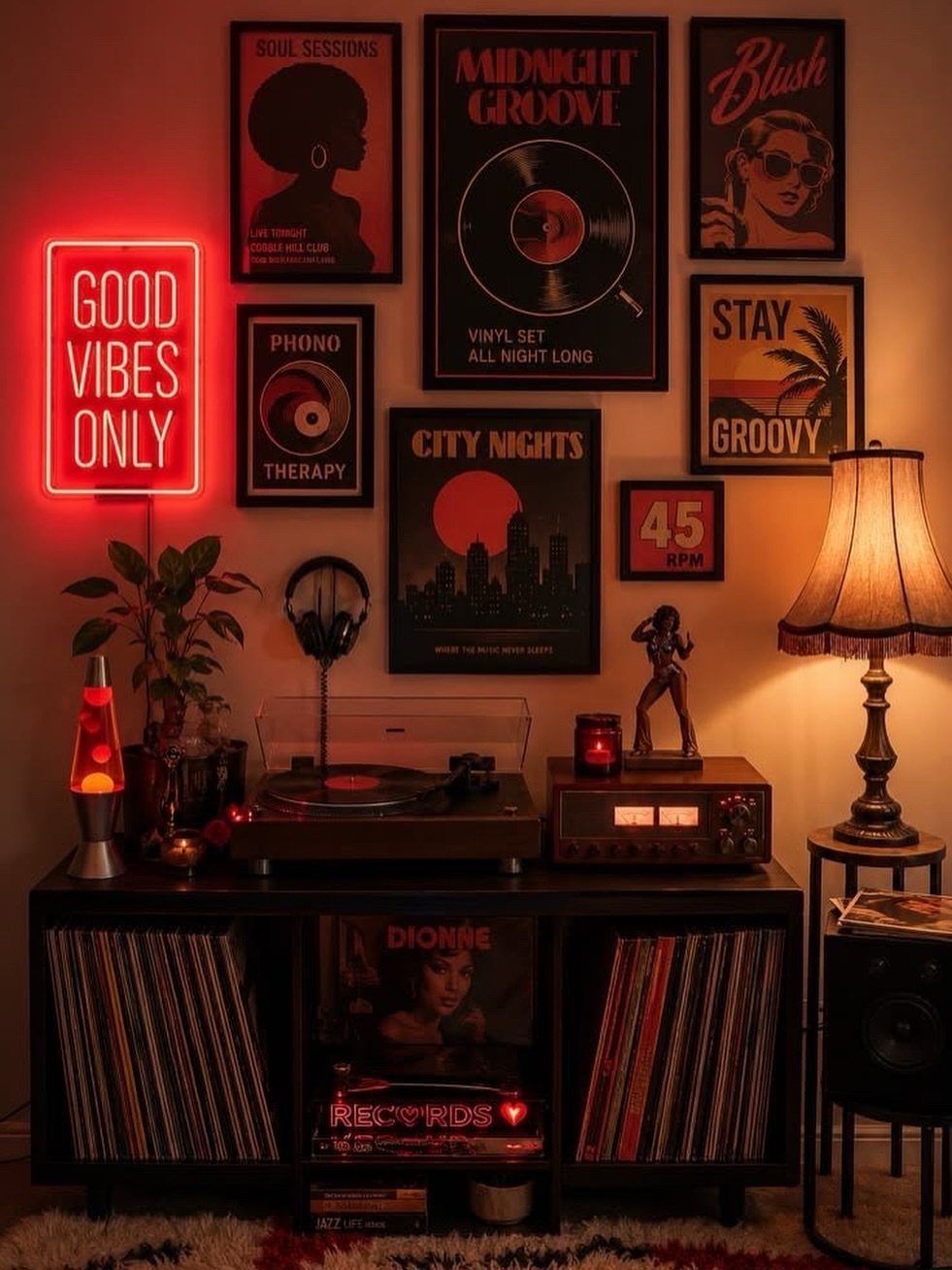
Gather the turntable, receiver, and records in one spot so the gear reads as a corner of its own. Keeping vinyl within arm’s reach matters more than any styling, since a record you can’t grab easily won’t get played.
Give the corner its own light. Music posters around it tie the whole station together.
6. Charcoal Bedroom
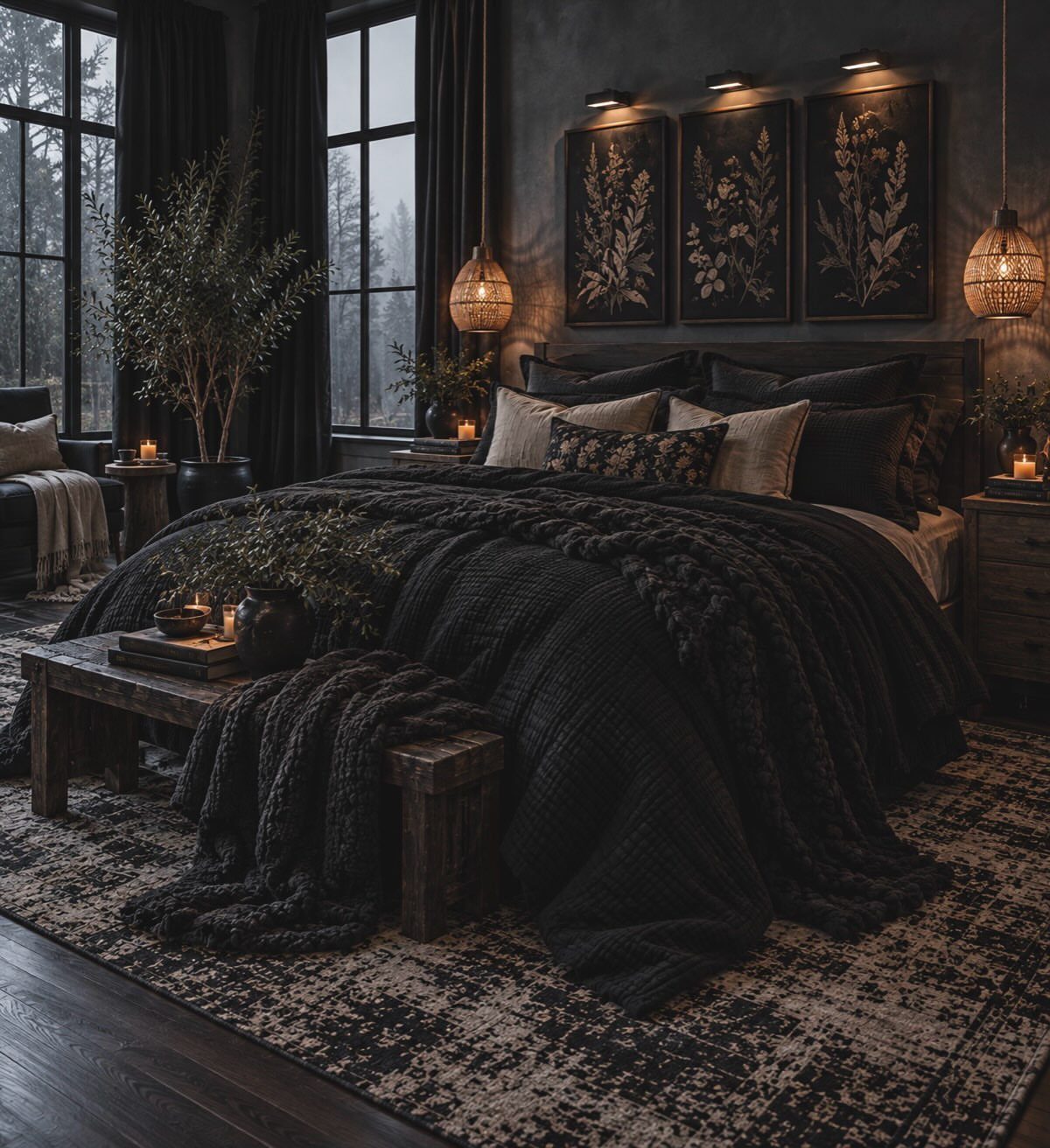
Black bedding on charcoal walls makes a deep, enclosed room, and what keeps it livable is texture.
3 botanical prints give the eye something to rest on without adding more color. I’d keep the wood and weave visible, because without them a room this dark flattens out into one block of shadow.
7. Compact Hobby Desk
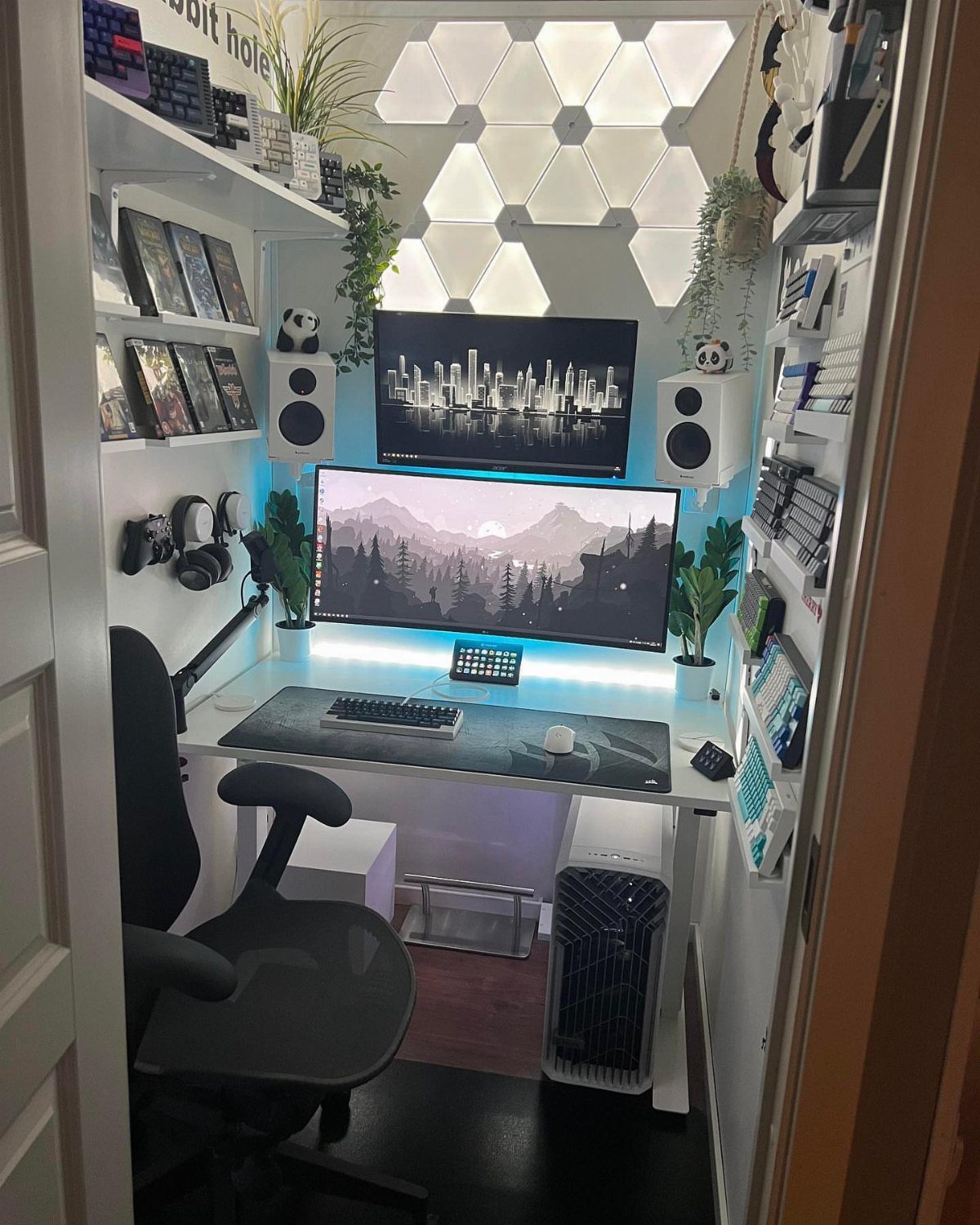
A hobby deserves a corner that works as hard as the hobby does. Two monitors, speakers, and the PC all sit on one white desk against a single wall, which leaves every other corner of the room free.
Hexagonal wall lights move the glow up off the desktop. A shelf with a joke label on it ties the spot into the room instead of leaving it as a separate zone.
I’d choose a desk in the same color as your walls or bed frame. The gear then looks like it belongs.
8. Cream Duvet and Burgundy Throw
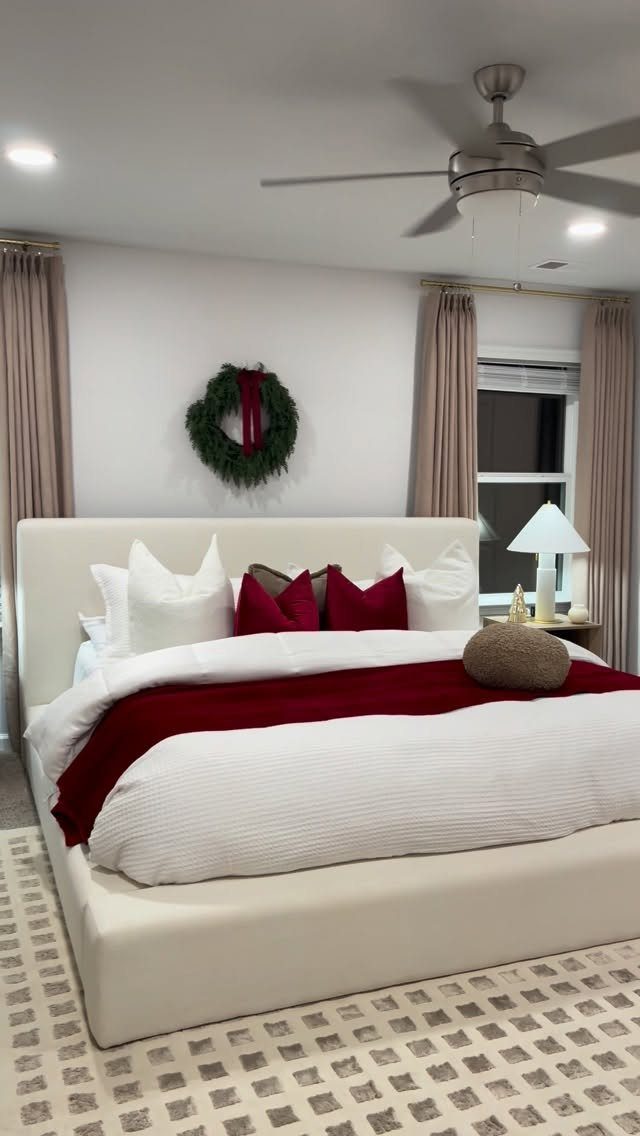
Cream bedding gives you a quiet base, and a burgundy throw folded across it supplies the one deep color. Red pillows repeat the shade at a smaller scale, which ties the bed together.
I like that the whole palette lives in textiles. A throw and a couple of pillow covers cost far less than repainting, and you can swap them when you tire of the color.
Keep all other bedding plain so the burgundy has room to stand out.
9. Warm Wood Furniture
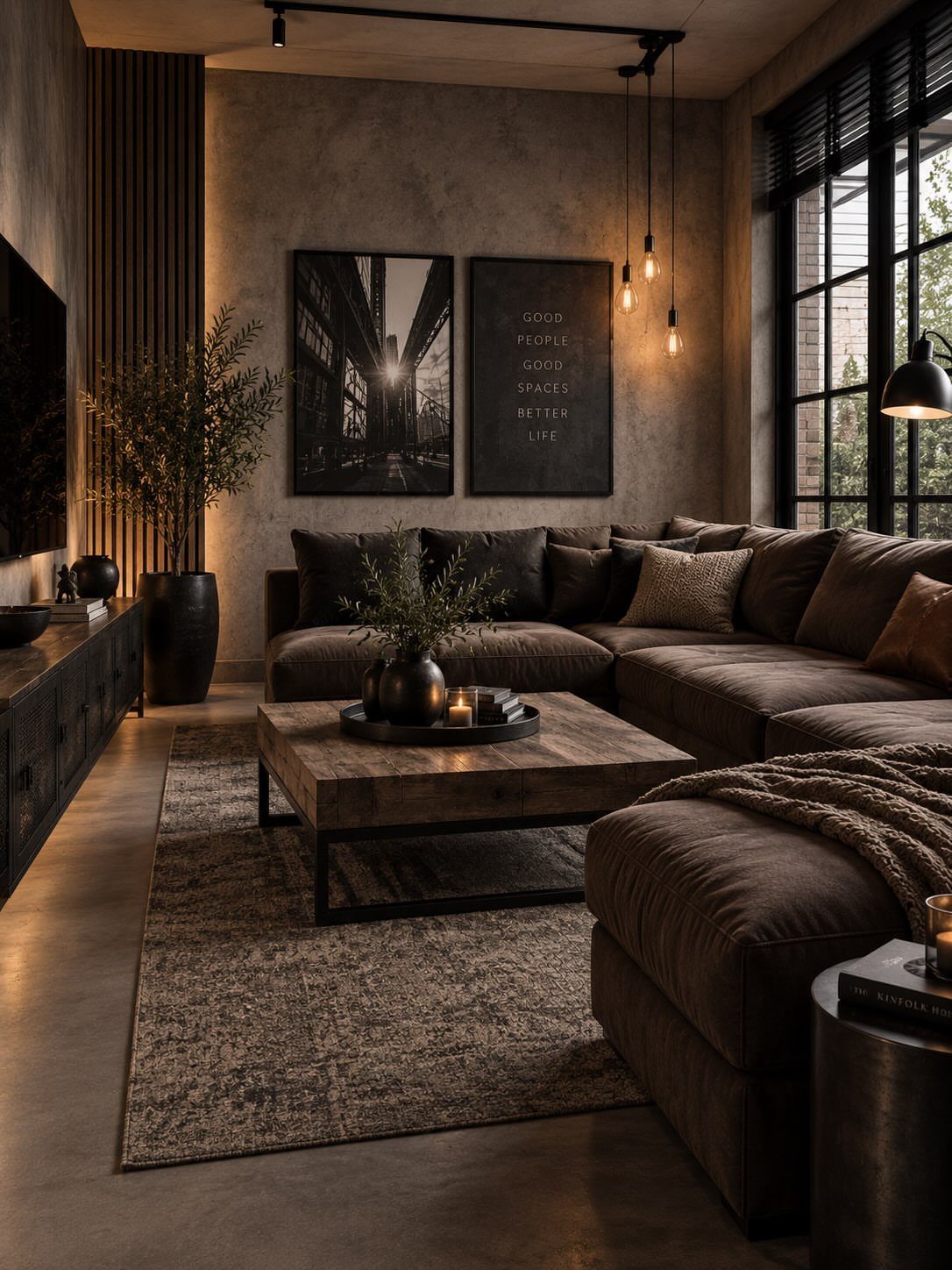
Dark rooms go flat when every piece in them looks brand new.
A rustic wood coffee table and a matching console bring in grain, wear, and a bit of age, so the space feels collected instead of bought in one trip.
Thrift stores and secondhand listings are the easiest places to find solid pieces like these. I’d keep the wood tones in one warm family and let the sofa stay simple.
One or two framed prints on the wall are plenty above them.
10. Moonlit Blue Bedroom
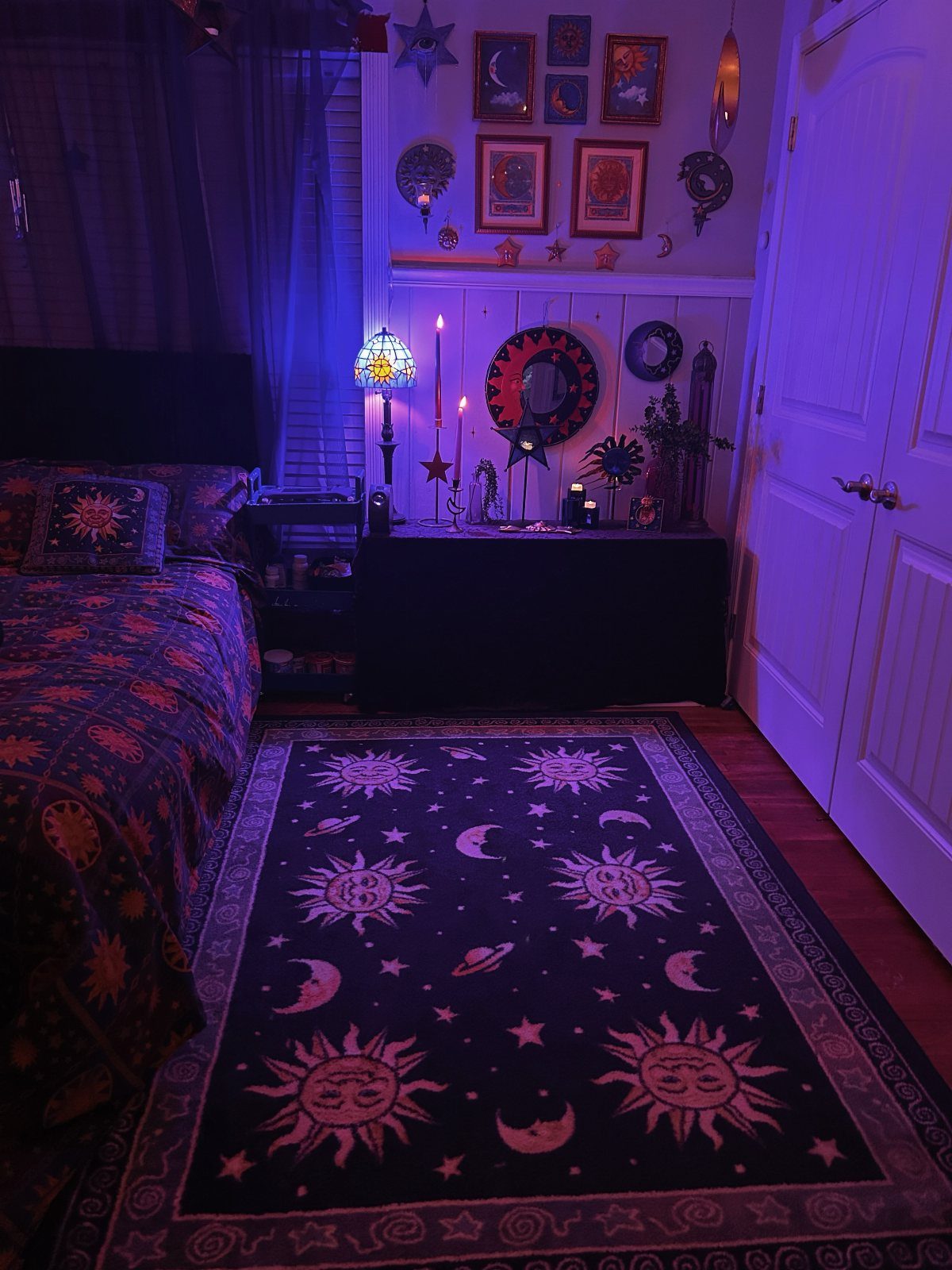
Midnight blue gives you a dark, moody bedroom without going all the way to black. The deep blue walls do the heavy lifting, so the decor can stay light-handed.
Stick to a few celestial pieces: a sun and moon rug, matching bedding, and art on the wall.
I’d skip extra star motifs beyond those three. Past that point, the theme starts to feel like a set instead of a room you live in.
11. Red, White, and Black Abstract Artwork
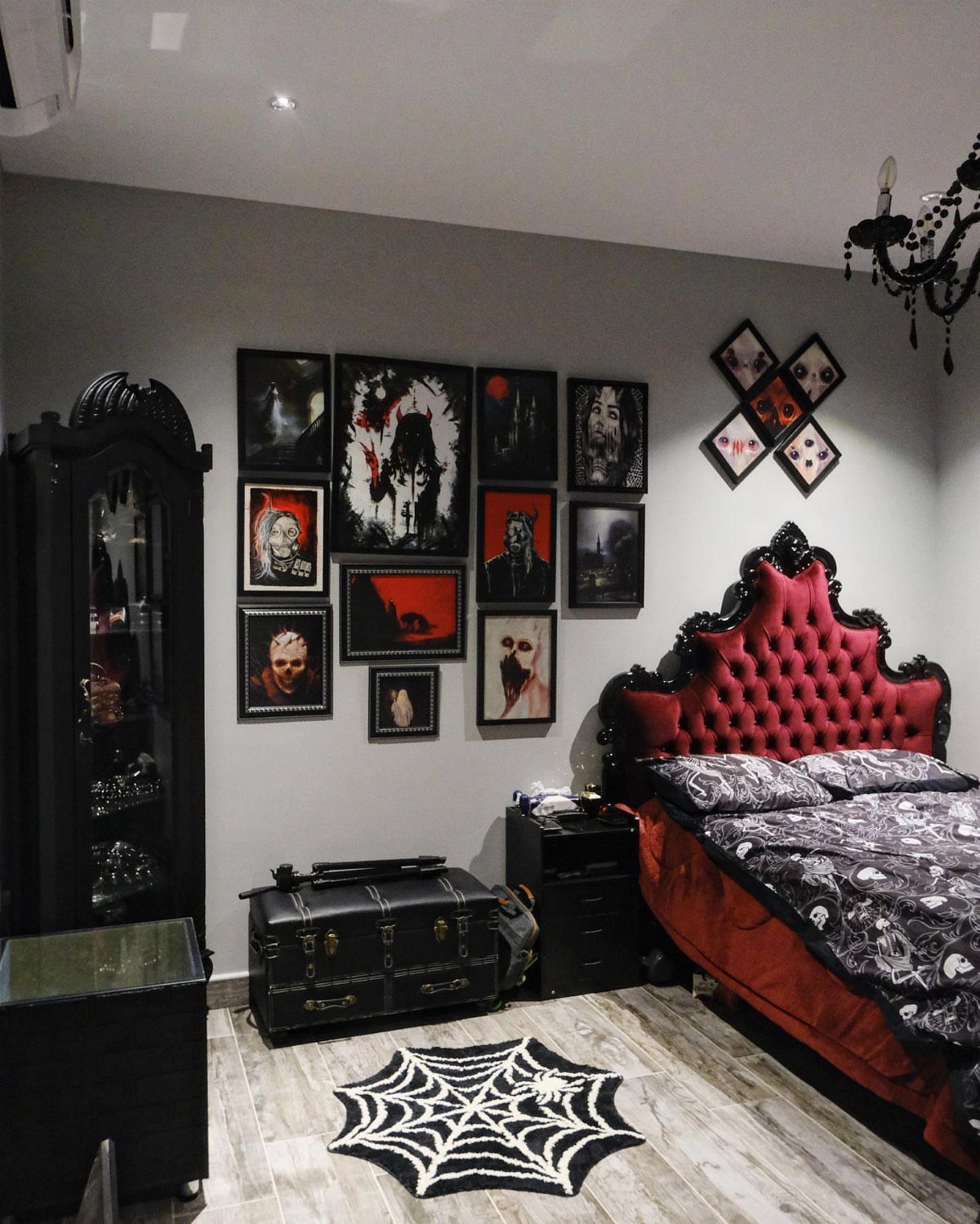
Red is loud, so black and white have to keep it in check. A red tufted headboard sets the energy of the room, and black furniture grounds it.
For the wall, hang a gallery of art limited to those 3 colors.
Mixed sizes and styles still read as one group because the palette repeats. Black-and-white prints are cheap to produce, and one red piece in the mix is enough.
Bedding is where I’d stay quiet in this room, so the artwork keeps the attention. When the headboard, art, and rug all compete, the room gets tiring.
12. Forest Green Bedroom
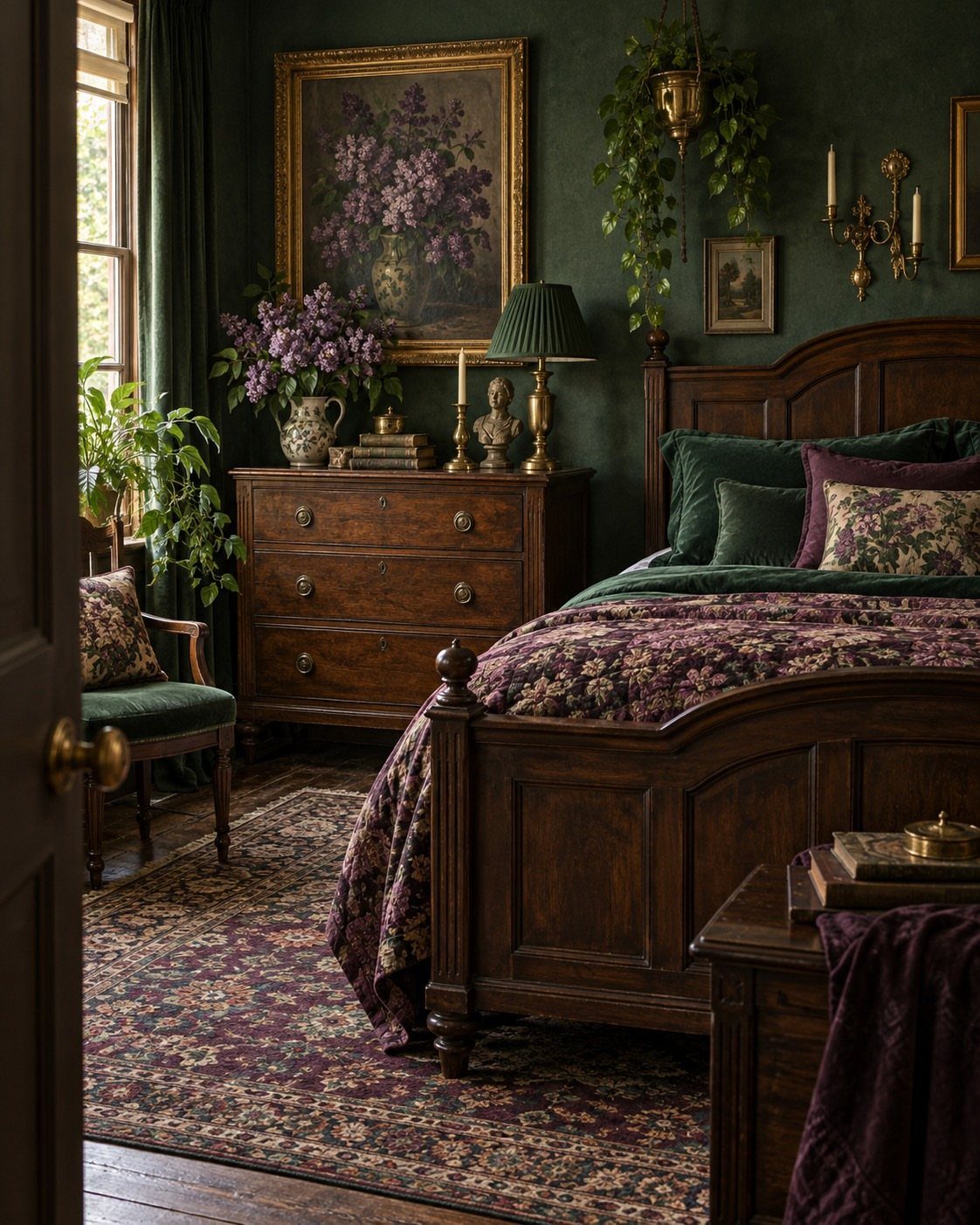
Dark green walls pair well with wood. A wooden bed and dresser add warmth, and green curtains at the window keep the color continuous instead of leaving a bright patch.
Floral bedding in purple tones, plus a purple flower painting, gives the green a contrast color to push against. A patterned rug between them ties the two together.
For a first dark room, green is the safer call than black. It still feels cozy, but it reads like a color choice instead of an absence of one.
13. Matte Black Accent Wall
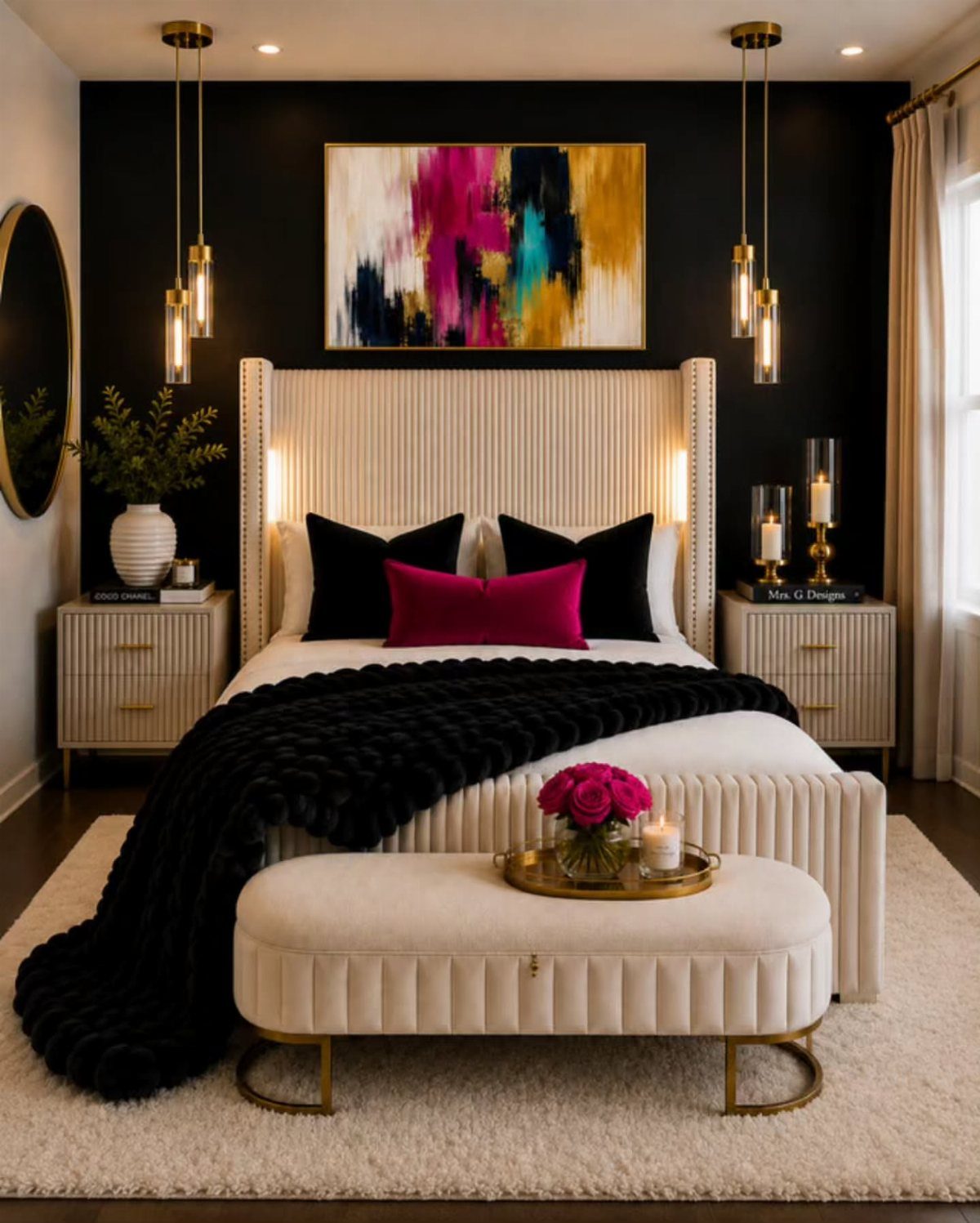
Paint just the headboard side in matte black and leave the other 3 walls a pale warm white, and the room gets its punch without turning into a cave.
Cream upholstery and white nightstands read brighter against that depth, and the black bedding keeps the bed from floating in front of it.
Matte paint suits the idea better than a sheen, since it soaks up glare and hides small flaws in the wall. Pick the wall your eye lands on first, usually the one behind the headboard, and leave the rest alone.
One bold painting is plenty. Let it carry the color so everything else can stay quiet.
Choose a Mood First
Decide how the room should feel before you buy anything. Write down a few words for it, because a mood on paper stops the impulse purchases that fit nothing.
Furniture comes next, and I’d pick it to support that mood, since a bed, desk, or chair sets the tone more than small decor does.
Your own taste is the best source: the music you play, the art you love, a subculture you belong to, your hobbies, collections, and small obsessions.
Labels like cottagecore, grunge, dark academia, boho, kawaii, or galaxy can help you sort ideas into a direction.
If none of them fit, skip them. A room built from what you actually like feels authentic instead of staged.
Balance Chaos and Control
A room full of collected things reads as intentional when a few elements repeat. Pick 3, such as a color, a material, and a shape, and let them turn up in different spots around the room.
Lighting follows the same rule. Limit the glow to 2 colors, such as purple and warm white, and repeat them across your bulbs and strings so they read as a set instead of competing.
For any dense collage, set one visual rule before you hang the first piece: a limited palette, a shared frame finish, or a single subject.
Let one section run busy and expressive, then keep another one calm so the eye can rest and the strongest pieces stand out.
Keep the Room Functional
Personality sits on top of a room that still has to work.
Leave a clear path from the door to the bed, choose bedding you actually want to sleep in, and give daily clutter like keys and books one fixed spot.
Match each kind of item to the storage that suits it:
- Baskets for soft items like blankets
- Drawers for smaller collections
- Shelves for pieces you want on display
A single woven basket on the floor next to the bed swallows chargers and remotes, which keeps the nightstand looking arranged instead of crowded.
Pick the 10 or so objects worth looking at, display those, and shut the rest away in drawers or cabinets. A bare stretch of wall or an empty shelf also gives your boldest pieces space to be noticed.
In a small bedroom or dorm, look to the ceiling for what the floor can’t hold, and keep any hobby area compact.
Frequently Asked Questions
What is an alt bedroom?
An alt bedroom starts with what you like, not with a catalog set where every piece matches. Pull the look from what you already love: the bands on your playlist, the art you’d hang anywhere, your hobbies and your collections.
Tags like grunge, goth, dark academia or kawaii can give you a starting direction, though I’d skip them if none fit, because a room built from real likes feels personal instead of staged.
How can I do an alt bedroom on a budget?
Check thrift shops and resale listings first, then make whatever you can’t find yourself. Thrifted frames hold printed or thrifted posters, a secondhand wood dresser adds age, and one dark accent wall takes a single can of paint.
How do I keep dark walls from making the room feel gloomy?
Pair dark walls with warm light and at least one pale element. Against charcoal walls, cream sheets and a duvet add brightness right away, and a mirror placed to catch a lamp sends that light back into the room.
Visible wood grain and woven texture are worth keeping, I’d say, since without them a dark room collapses into a single flat block of shadow.
What colors work best for an alt bedroom?
Charcoal, black, forest green, burgundy, midnight blue, espresso brown and plum all fit the look, and plenty of alt rooms have no black in them at all.
Warm wood and soft lighting keep these shades cozy. If this is your first dark room, forest green gets my vote over black; it’s just as cozy but reads as a deliberate color instead of a lack of one.
What lighting works best in an alt bedroom?
Several small, warm sources beat one bright overhead light. Fairy lights, LED strips, table lamps and even a neon sign add depth and make dark palettes feel inviting.
Place lights at different heights, some up high and some low near the bed, and stick to one main light color across bulbs and strings, because mixed tones fight each other.
Should everything in an alt bedroom match?
No.
Furniture and decor gathered over time look better than a matched set. Repetition is what holds a mixed room together: choose 3 elements, like one color, one material and one shape, and repeat them in different spots.