
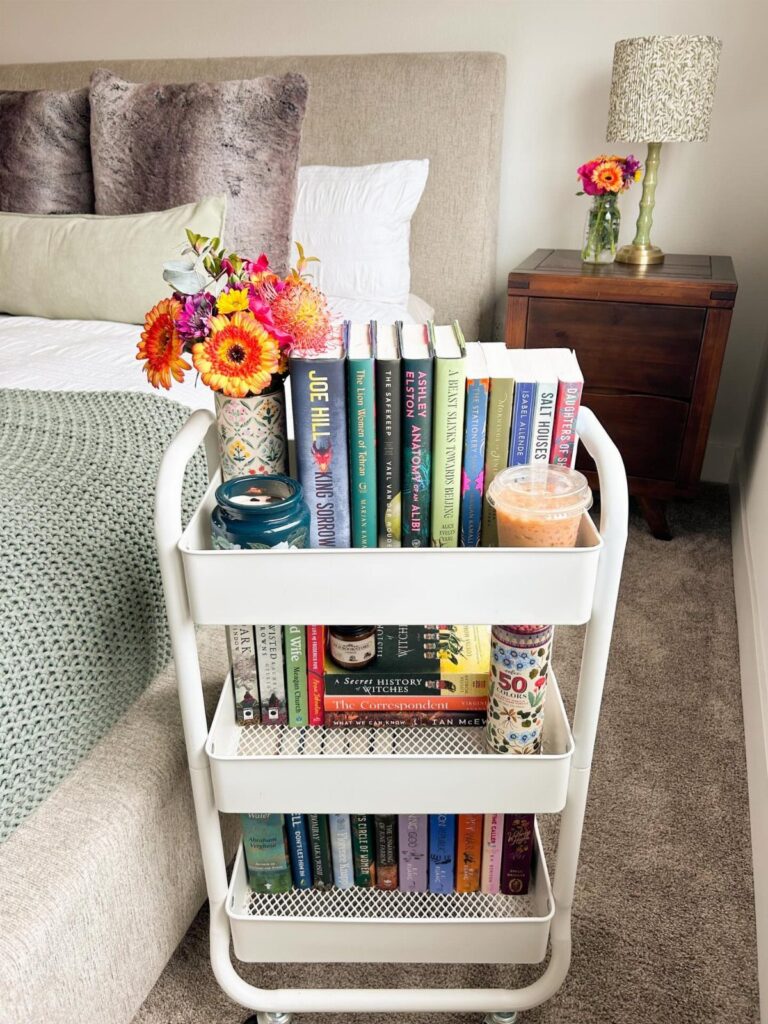
Permission to drill decides which of these ideas is yours.
Renters can stick with the ones that roll or lean on their own, like a rolling book cart or a ladder bookshelf, while owners can go as far as recessed wall shelves cut into the wall, once someone has checked what’s inside it.
Effort and cost climb along the same line, from a side table that holds tonight’s books to custom storage built under a staircase.
1. Floating Shelves

Wall-mounted shelves put books at eye level and leave the floor clear, which matters most in a room where every square foot already has a job.
I like the mix of spines, small objects and framed art, because a shelf of books alone can read heavy.
Leave a few gaps rather than filling every inch, and set one lamp low so the wall stays lit after dark.
Rentals can be tricky here, since anchors mean holes you’ll need to patch before you move out.
2. Rolling Book Cart
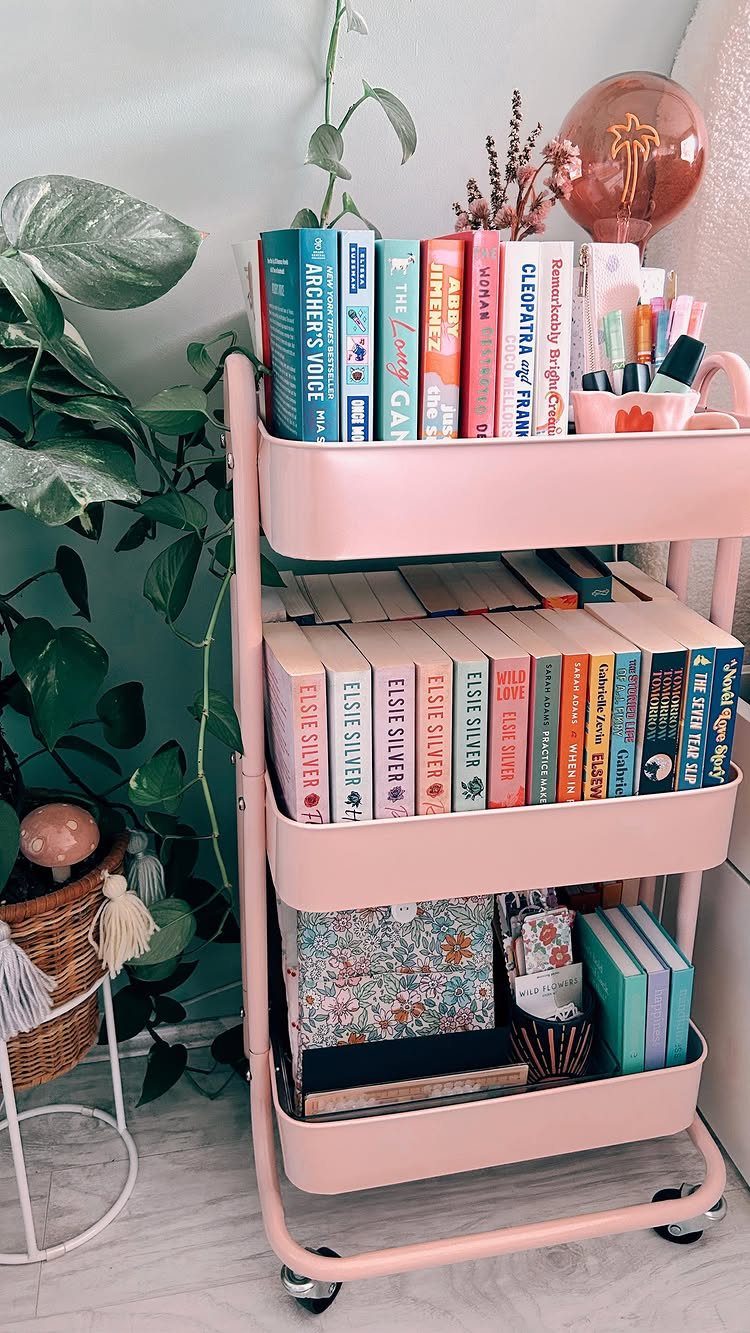
A cart on wheels solves the problem of books with nowhere permanent to live. Park it beside a sofa or desk while you’re reading, then slide it into a corner or closet when the room needs the space back.
Three tiers hold more than they look like they should, and mixing books with craft supplies keeps a hobby corner in one place.
For renters, this beats any shelf: no drilling, and it moves with you.
Bookworms who live in houses have bookcases galore to show off their beloved novels and bibliographies and memoirs.
3. Built-in Bed Storage

Reading in bed is where many of us end up with a stack on the nightstand that slides over by Thursday.
A headboard with shelving built into it keeps the current few books within reach of the pillow. Drawers underneath take the overflow books, and a pull-out tray can hold shoes or other things you’d rather not stack on a shelf.
I’d pick this over a separate bookcase in a small bedroom, because the bed already takes up the floor space. Budget is the limit: storage beds cost more than a plain frame.
4. Floor-to-ceiling Storage

Height is the cheapest square footage in any house. A bookcase running from floor to ceiling stores far more books than a waist-high one on the same footprint, so a narrow wall can hold a whole library.
Built-in units look best, but freestanding cases pushed tight to the wall and ceiling get close.
Anything above arm’s reach needs a step stool or ladder nearby, so I’d keep the top rows for books you rarely pull down and the lower ones for what you read often.
5. Over-door Book Storage

Nobody uses the strip of wall above a door, which is why it works for books.
A long shelf mounted over the frame, running on down the adjoining wall, adds a lot of capacity without taking a single inch from the floor.
Keep the heavier hardcovers on the lower shelves beside the door and the lighter paperbacks up top, where you’ll reach less often. Door-back storage is a lighter option for small rooms and needs no wall mounting.
6. Under-stair Book Storage
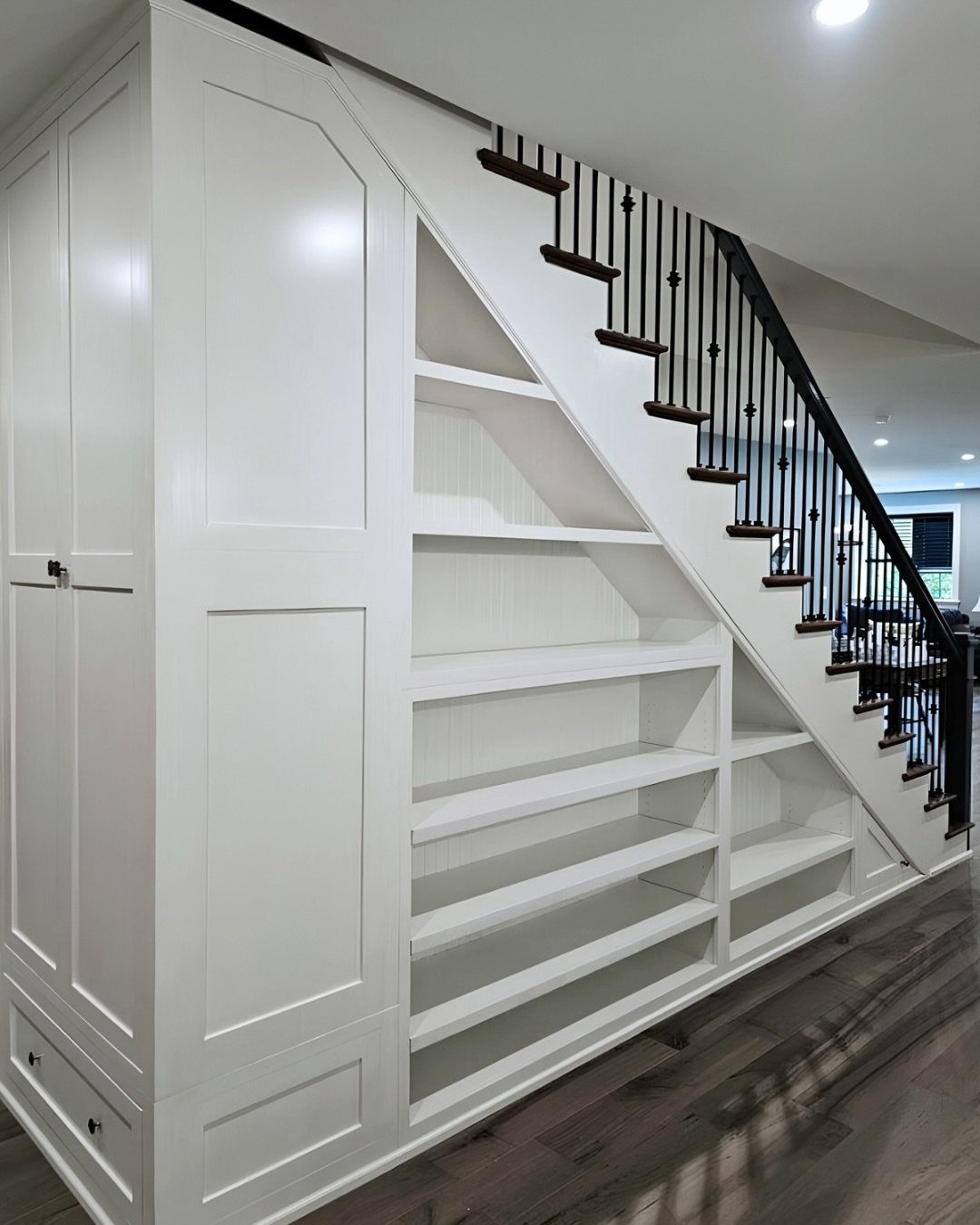
A staircase leaves a wedge of dead space underneath, and shelving is one of the better uses for it.
Built-ins fitted to the slope give you tall shelves at the high end and cabinet doors lower down, where the ceiling drops.
I’d put books on the open shelves and hide clutter behind the doors.
If the area is wide enough, a cushion and a small light turn it into a reading nook instead. A custom fit usually means a carpenter, so budget for that.
7. Doorway Book Display
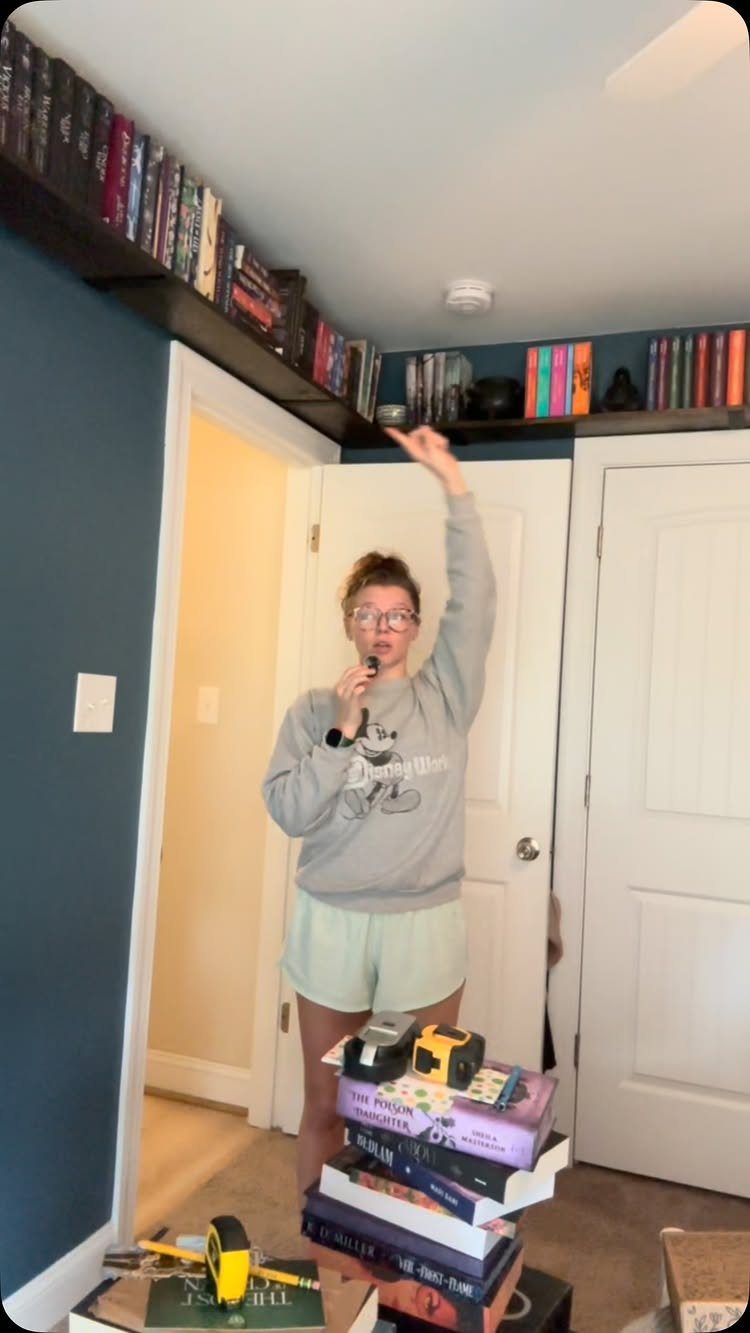
A doorway is usually treated as a gap to walk through, but the wall on both sides and above it can hold a lot of books.
Shelves that wrap the frame turn a plain opening into a feature, and they cost the room no floor space.
I like a high shelf running across the top, since that’s the spot nobody else is using.
Keep the books you reach for often on the side shelves at hand height, and leave the top one for display. A stack on the floor is fine while you sort, but it won’t stay tidy for long.
8. Cube Storage
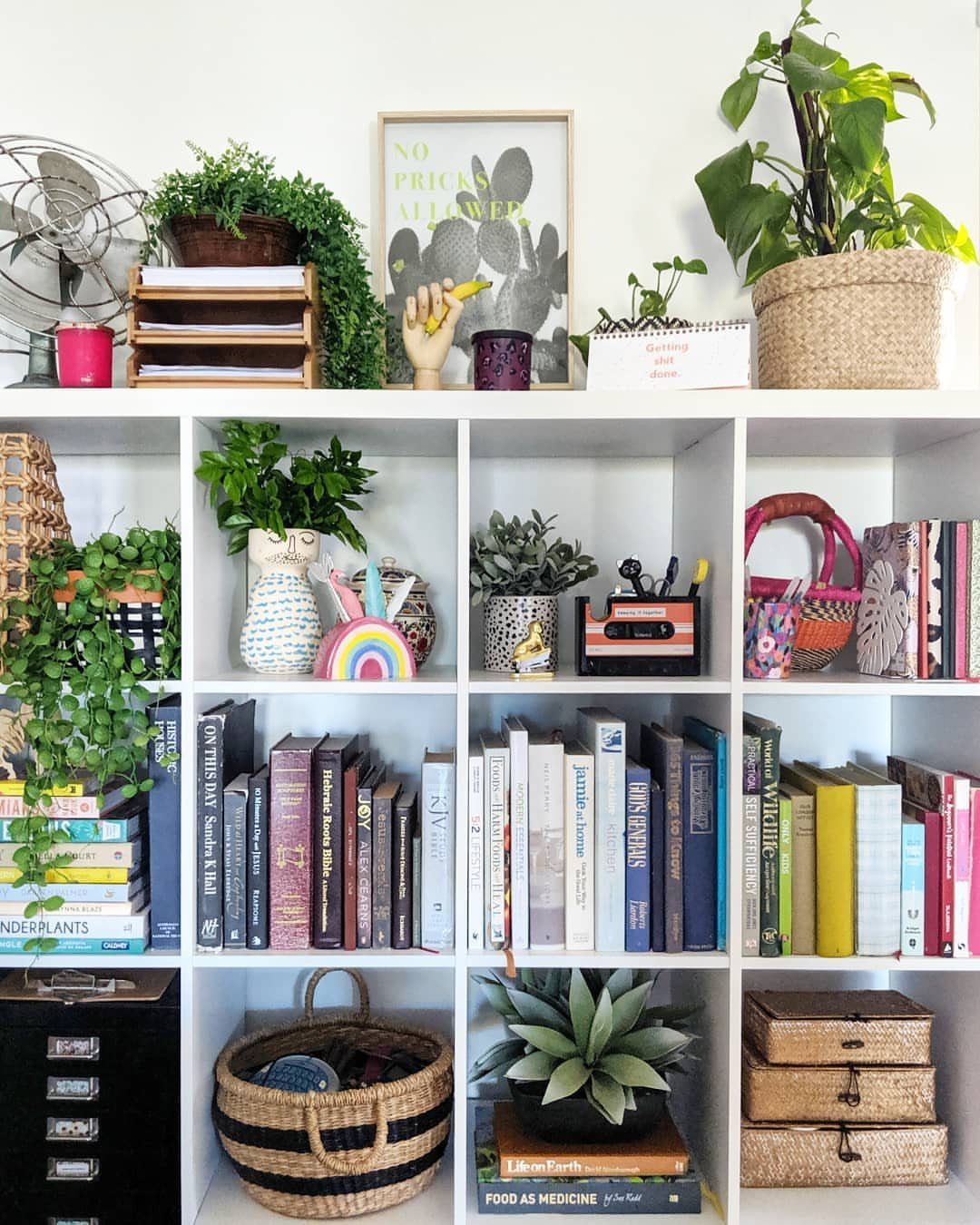
Cube shelving suits a mixed collection: tall hardcovers, slim paperbacks and oversized art books each get a square of their own instead of fighting for one shelf height.
A white unit against a white wall also stays quiet, so the books carry the color.
I’d fill some cubes and leave others for plants, a framed print or woven baskets. Baskets hide the odds and ends that would otherwise clutter the shelf.
Because cube units are modular, you can start small and add more as the pile grows, which suits a tight budget.
9. Ladder Bookshelf
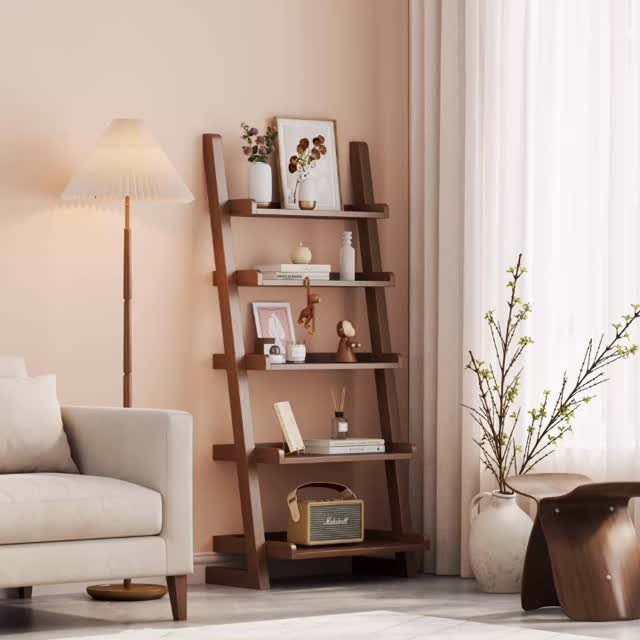
A ladder bookshelf leans against the wall, with each tier stepping back from the one below. That slanted shape draws the eye upward, so a cramped space reads taller than it is.
A 5-tier ladder shelf is a good count to look for: enough levels for books plus some decor without crowding a corner. Put the heavier books on the bottom tiers and the lighter décor higher up.
Leave a little room behind the top so the lean doesn’t scrape paint.
10. Make a Book Nook

Giving books a space of their own, even a converted small room, makes reading feel like a habit instead of an afterthought.
Shelves running floor to ceiling hold the collection, and a desk and a beanbag chair cover both working and lounging.
Plants soften all those straight shelf lines.
This takes a spare room or a large closet, so it won’t fit every home. Where it does, it’s the idea I’d choose for a family that reads together.
11. Recessed Wall Shelves
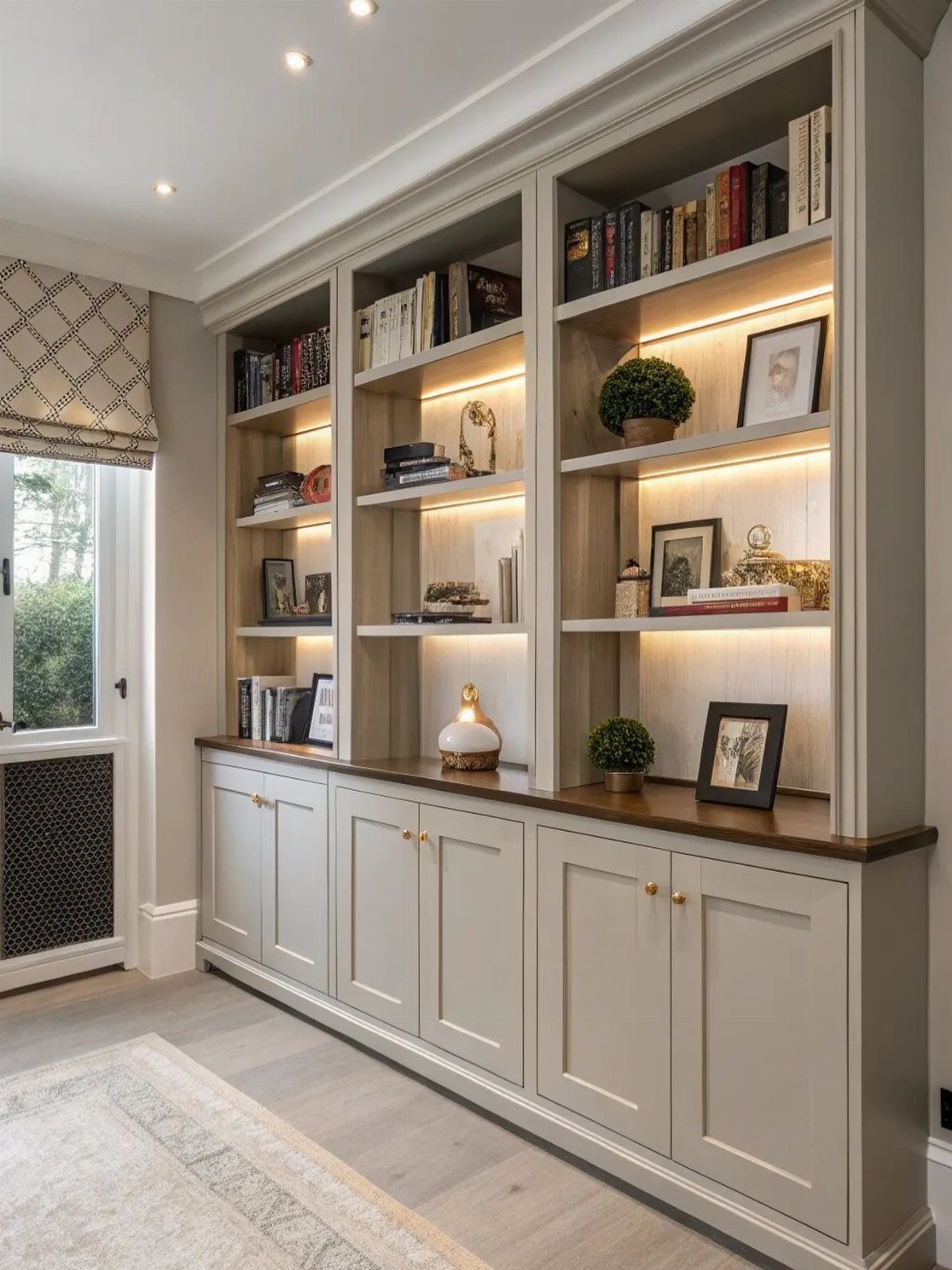
Building shelves into a recessed section of wall keeps the books flush with the room instead of sticking out into it.
Open shelves up top with closed cabinets below is a combination I like: display what you love above, hide the clutter below.
Lighting built into the shelves makes the unit glow in the evening, which a freestanding case can’t do as neatly.
Cutting into a wall is a job for a carpenter, and you’ll want someone to check what’s inside that wall first. It also isn’t an option for renters, so budget for pro help and a landlord’s permission.
12. Store Books in a Side Table
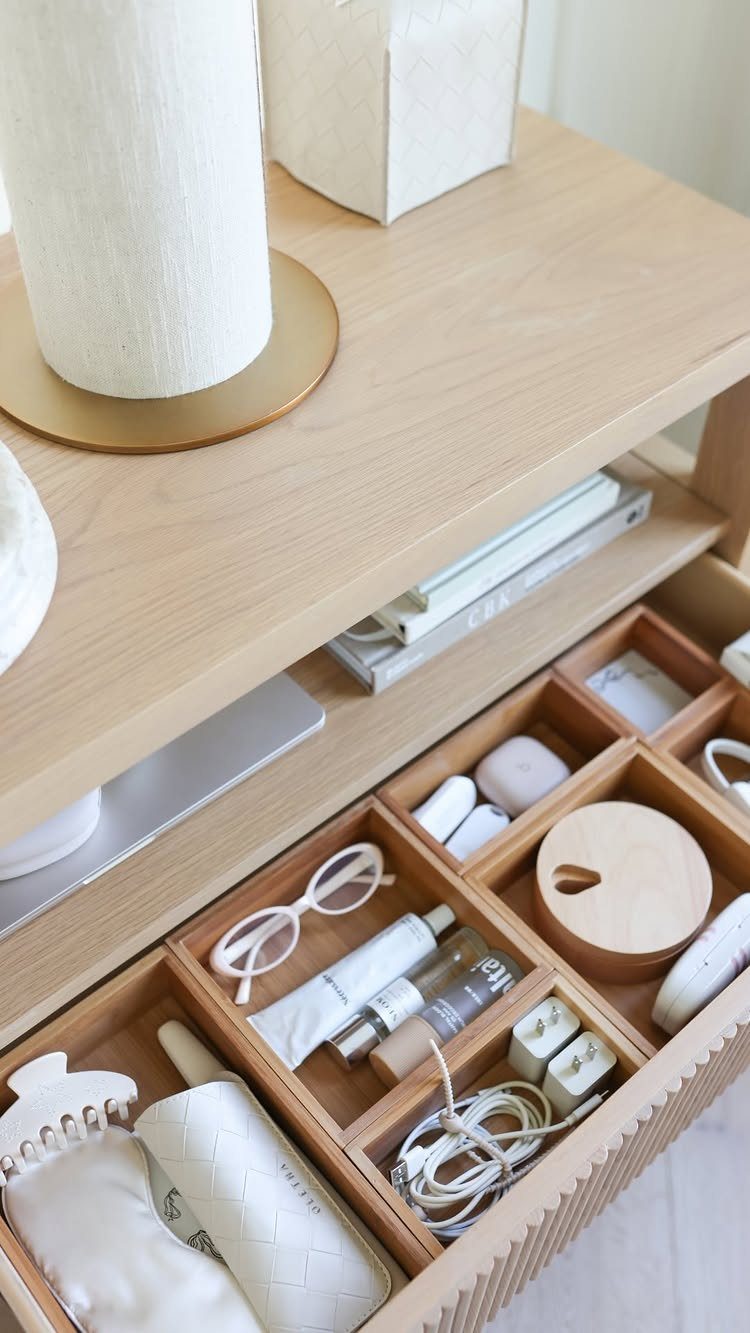
A nightstand with a slot built in for a stack of books keeps tonight’s reading right where you’ll reach for it.
I’d choose this over a bare table because the books no longer pile up on the surface and slide off.
The slot holds a short stack, not a library. Treat it as a home for the books you’re reading now, and send the rest to a shelf somewhere else.
Frequently Asked Questions
How to make a bookshelf look interesting?
Mix the books with small objects, a framed print or a plant, and leave a few gaps instead of filling every inch.
Solid rows of spines on their own look heavy, and the breaks give the eye somewhere to rest. A low lamp on the shelf lights up the wall after dark, and baskets in a cube unit hide odds and ends.
Are floating shelves good for books?
Yes, especially in a room where floor space is tight. They hold books right where you can see and reach them, with nothing standing on the floor, and they can go on a wall or even a headboard.
In a rental, plan to patch the anchor holes before you move out.