

The mirror you need depends on what the image has to do: show true size, magnify, or cover a wide view.
Flat glass is the only type that shows an outfit to scale. A concave shaving mirror enlarges your face only while you stay inside its focal point; back away and you flip upside down.
1. Plane Mirrors
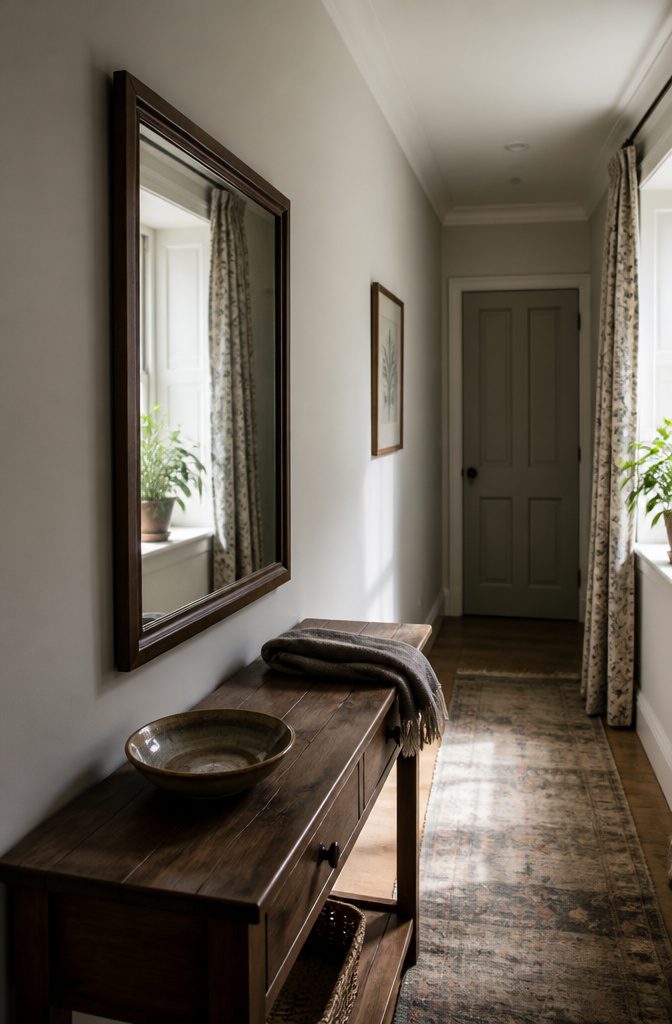
A plane mirror is the flat one on your bathroom wall, and it’s almost certainly the type you already own. The hallway mirror and the one you dress in front of belong to the same family.
The image is virtual, upright and the same size as the object, which makes it the one type that shows an outfit true to scale.
"Virtual" means the light rays don’t actually come from the image; it only appears to sit behind the glass.
The image is also reversed left to right, so your right hand becomes the reflection’s left. It rarely matters at home, but you’ll see it if you part your hair on one side.
Shape doesn’t change the type. Round, arched or animal-shaped, flat glass is still a plane mirror, and I’d choose it anywhere accuracy beats effect.
2. Concave Mirrors
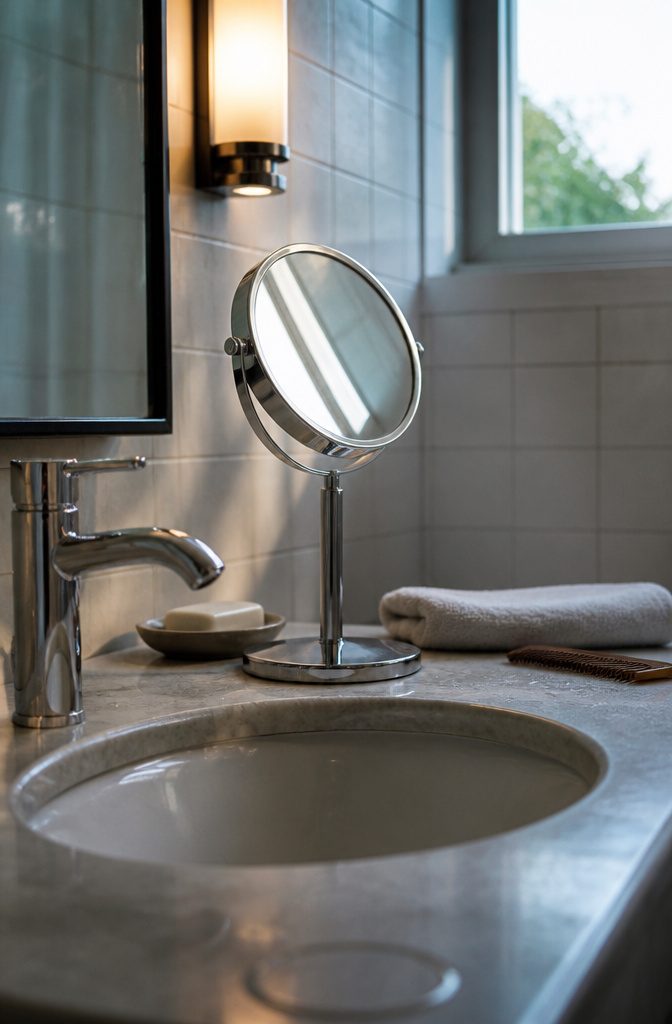
A concave mirror curves inward like the bowl of a spoon and pulls incoming light toward one focal point.
Far back, the image is real, inverted and smaller. At the focal point no image forms, because the reflected rays run parallel and never meet.
Inside that point, between the focus and the glass, the image turns virtual, upright and larger. That’s why shaving and makeup mirrors are concave: keep your face closer than the focal point and you get an enlarged, right-side-up view.
Back away past it and your face flips upside down, which is a quick way to find the spot. I’d treat this mirror as a close-up tool only, since it won’t give you a true full-length check.
3. Convex Mirrors

A convex mirror bulges toward you, so the curve spreads reflected light outward instead of pulling it to a point. That is why the view is so wide, and Wikipedia states the reason plainly:
Since everything appears smaller in the mirror, they cover a wider field of view than a normal plane mirror.
You see this on the side mirrors of cars and trucks, in parking garages, and at corridor corners where you need to see around the bend.
Security viewing uses the same trick to cover more floor. The image is always virtual, upright and smaller, wherever the object stands.
Things also look farther away than they are, and the curve can distort them. Use a convex mirror to spot movement, not to judge distance or detail.
4. Silvered Mirrors
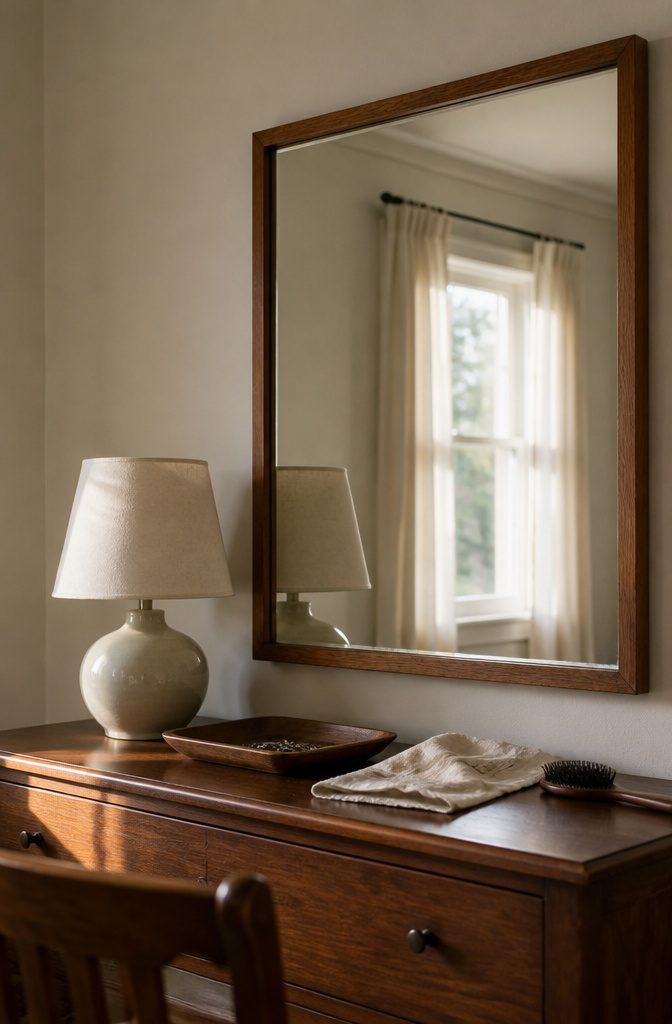
Silvered describes a coating, not a shape. A round, arched or rectangular mirror counts as silvered when one side of the glass carries a thin metallic layer that does the reflecting.
Silver reflects all wavelengths of light, and a thin layer is enough, which keeps the process cheap. That is why most mirrors you can buy are silvered, whether or not the label says so.
The name has outlasted the recipe. Early mirrors used a mercury and tin mixture; by the 18th century that gave way to pure silver, and today the usual coating is sputtered aluminum or similar compounds.
I treat "silvered" as a category label, not a promise about the metal. Bathroom, furniture and decorative wall mirrors all fall here, so your real choice is shape and size.
5. One-Way Mirrors
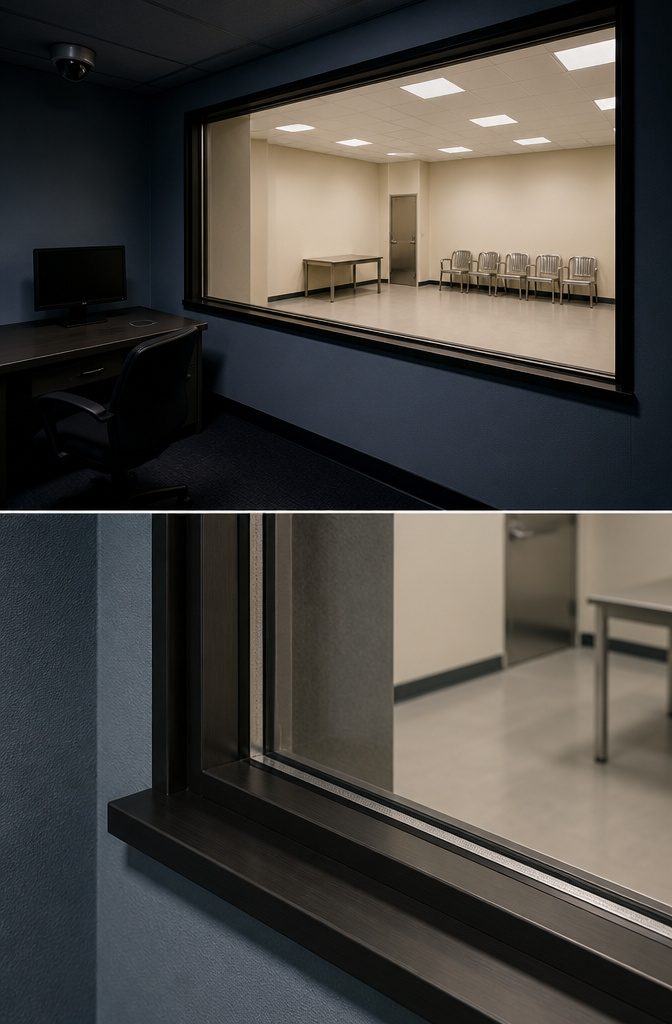
A one-way mirror is a sheet of glass with a thin reflective coating on one side, so it bounces back some light and lets the rest through.
It only works when the two rooms differ in brightness. Someone standing in the dark can see into the lit room, while the people in the lit room see only their own reflections.
That is why these mirrors turn up in interrogation rooms, research setups and security observation decks.
Security cameras also sit behind them in mirrored enclosures. Keep the viewing side dark and the observed side bright, or the effect fades and both sides see through.
One description of the build puts a coating of nickel, tin or silver on the back of the glass, then a copper layer against oxidation and a coat of paint on top. Buy from a maker who does this routinely.
6. Parabolic and Acoustic Mirrors
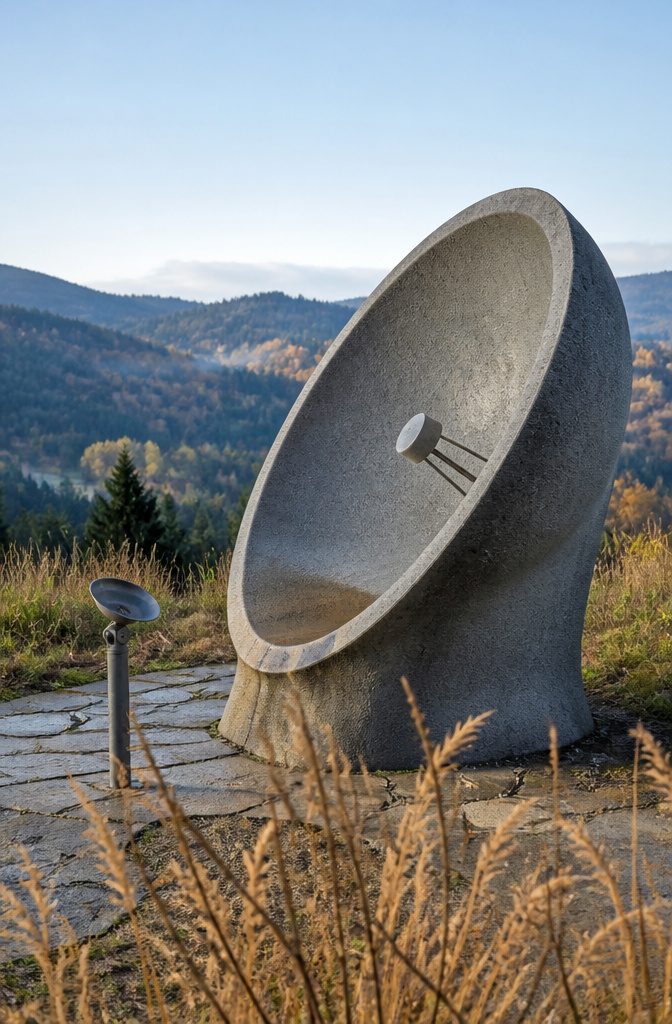
Two very different things get called a mirror here, and neither belongs on your wall.
Most curved mirrors are spherical because that shape is the simplest to make, but spherical mirrors suffer from spherical aberration: rays from a distant object never meet at one point.
A parabolic reflector fixes that by focusing parallel rays to a much smaller spot, which is why reflecting telescopes use it.
Acoustic mirrors do the same job for sound.
They focus and reflect sound waves, not images, so you won’t see yourself in one. Built from concrete instead of glass, they let the military pick up enemy aircraft from far away.
They also turn up in surveillance, in certain microphones and at sporting events for distant sounds. Science museums use them to build whisper galleries that demonstrate sound focusing.
7. Non-Reversing Mirrors

Two ordinary mirrors joined edge to edge at a 90-degree angle make a non-reversing mirror, also called a true mirror or flip mirror.
Set it upright and look into the corner where the two meet, and you see yourself as other people see you, not flipped left to right as in a plane mirror.
Nothing special goes into one, so anyone with two standard mirrors can build it. If you’re buying instead, the cleanest version uses first surface mirrors joined at an exact spot, which leaves the seam nearly invisible.
Other versions use a concave mirror or a bent, faceted surface that throws the image in several directions; I’d skip those for a face-checking mirror at home.
Public bathrooms, dressing rooms and retail stores are where you’ll most often run into them.
8. Distorting Mirrors

A distorting mirror bends in more than one direction on the same surface.
Concave patches magnify and convex patches shrink, so your head may swell while your legs thin out, or your whole body stretches tall and narrow. That is the funhouse mirror, made for carnivals, fairs and novelty displays.
A single concave or convex mirror curves one consistent way, and any warping near the edges is a side effect of that curve. In a distorting mirror, the warping is the design, planned region by region.
For a home, I’d treat one as a party piece: fun in a hallway, useless for checking an outfit.
9. Decorative Mirror Designs

Mirrored walls and backsplashes cover the most surface.
A mirrored wall adds depth to a hallway and makes it look longer, while a backsplash brings light and space into a kitchen. Both are custom glass jobs, so I’d save them for a home you own.
Renters get more from a full-length mirror, which can be made six or seven feet tall or more and fits inside a larger closet.
Framed mirrors carry the style: mosaic tile, silver or gold highlights, copper, or shapes like stars and sunbursts. Beveled or frameless glass keeps things quieter.
A mirrored tabletop turns a coffee or end table into the focal point of the room. Small mirrors, as short as 6 inches, suit a dark corner.
How Shape Changes the Reflection

Flat glass is the baseline: it shows you at true size and proportion, flipped left to right.
Curve the surface and that changes. Concave glass, curved inward like the bowl of a spoon, can make a reflection look larger, so it turns up in bathrooms and bedrooms.
Convex glass bulges outward like the back of a spoon. It shrinks and distorts the image, and that shrinking lets shops and parking lots cover more floor with one mirror.
Plane, concave and convex are the three most common home-decor glass types, and nearly all the curved ones are spherical.
For a wall mirror, flat is the safer pick. Choose a curve only when you want magnification or a wide-angle view on purpose.
Image Behavior at a Glance

Concave is the only type that changes its answer with distance. Plane and convex mirrors behave the same wherever you stand, and a convex mirror is always virtual, upright and smaller.
| Mirror | Object position | Image | Orientation | Size |
|---|---|---|---|---|
| Plane | Any | Virtual | Upright, left and right flipped | Same |
| Concave | Between focal point and mirror | Virtual | Upright | Larger |
| Concave | At focal point | None (rays parallel) | n/a | n/a |
| Concave | Beyond focal point | Real | Inverted | Larger, then same, then smaller as you back away |
| Convex | Any | Virtual | Upright | Smaller |
Where Mirrors Go at Home
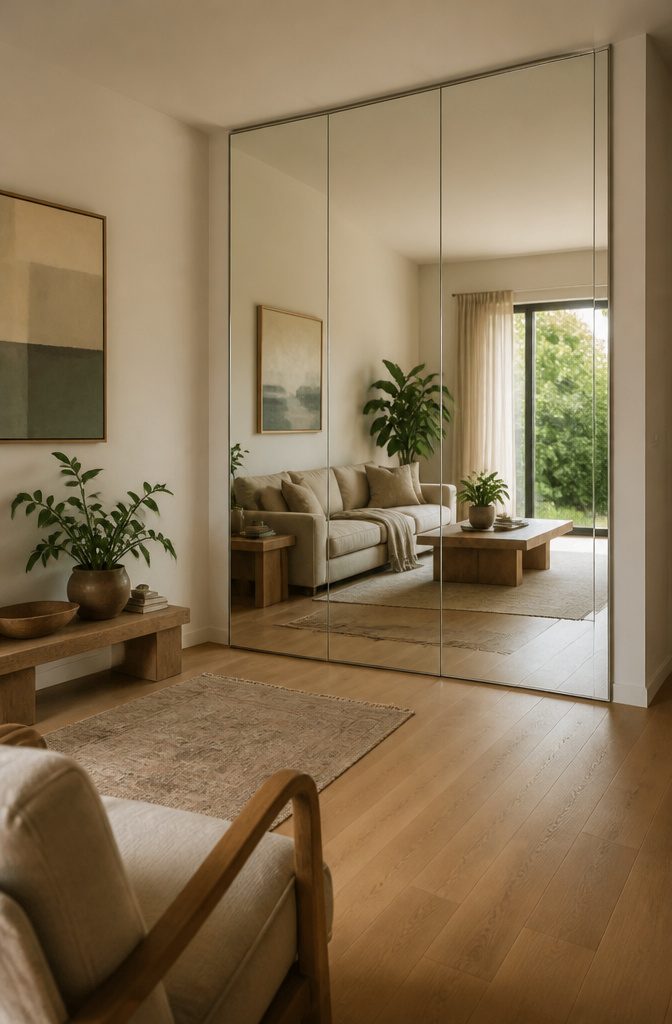
Placement decides what a mirror does, so pick the spot for the job:
- Grooming and dressing: hang it where you get ready, with light falling on your face from the front. A full-length mirror on a bedroom or closet wall shows the whole outfit.
- Adding light: face it toward a window or lamp, and the glow travels deeper into the room.
- Depth and space: a floor-to-ceiling mirror in a living room makes a wall seem to open up. I’d set it on the longest wall, away from the TV, where glare shows.
- Hallways: a mirror along a narrow hall widens it and brightens a dark stretch.
- Safety viewing: mount one at a blind corner or by a door so you see who is coming before you step out.
Frequently Asked Questions
How many types of mirrors are there?
The 3 most common for home use are plane, concave and convex, and they differ by the shape of the glass.
What are the 2 types of mirrors?
The 2 basic groups are plane mirrors and spherical mirrors. A plane mirror is flat, while a spherical mirror curves inward (concave) or outward (convex), like the inside or outside of a spoon.
What are mirrors?
A mirror is a smooth, highly polished surface that reflects light to form an image. Most are glass with a thin metallic coating on one side that does the reflecting.
What kind of image do concave and convex mirrors form?
A convex mirror always forms a virtual, upright, smaller image, wherever the object stands.
A concave mirror depends on distance: inside the focal point the image is virtual, upright and larger, at the focal point no image forms, and beyond it the image is real and inverted.
Which type of mirror is used in a house?
The plane mirror, because it shows you at true size and is the standard choice for bedrooms, bathrooms and hallways. Concave mirrors appear in homes too, mainly as shaving and makeup mirrors for close-up work.
What are some examples of convex mirrors?
Common examples are the side mirrors on cars and trucks, mirrors in parking garages, mirrors at corridor corners, and security mirrors that cover more floor space.
Their outward curve gives a wide field of view, which suits spotting movement better than judging distance.