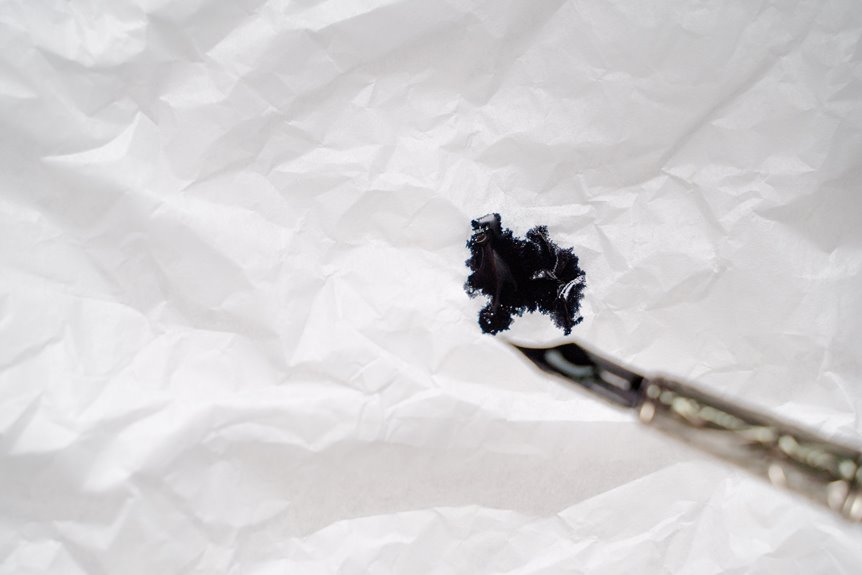
I grab a dry cloth the second I spot ink on my leather sofa. Blot, don’t rub, or that stain becomes permanent.
For fresh marks, I dab rubbing alcohol or hand sanitizer on a hidden spot first (learned that lesson on my vintage Chesterfield), then gently work the stain.
Soap and water works too, but I always condition afterward. Alcohol strips those natural oils quickly.
Additional tricks beyond this quick fix are available for stubborn stains.
Blot Immediately: Stop Ink From Spreading on Your Leather Sofa
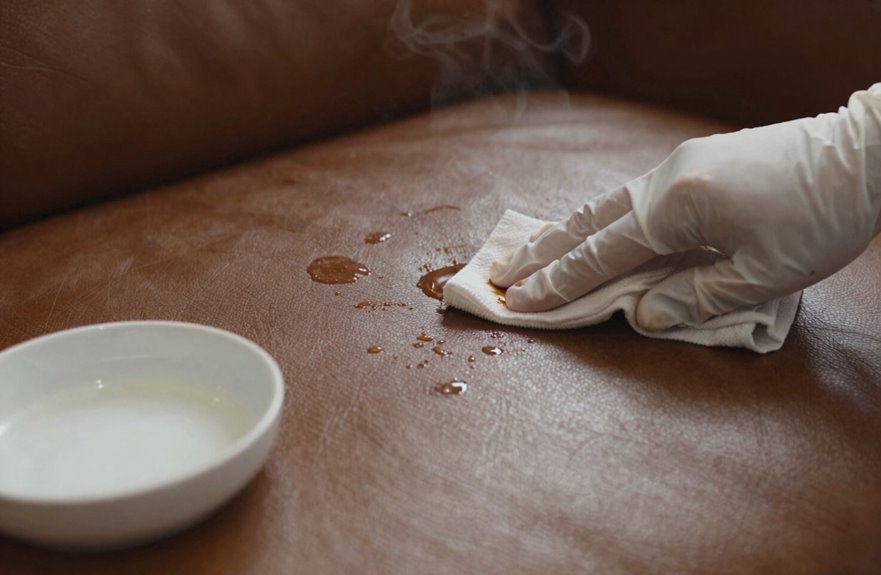
Why does ink seem to have a personal vendetta against anything expensive I own? The second that pen touched my Chesterfield leather sofa, I knew I was in trouble. You’ve got to blot that ink immediately. I’m talking seconds, not minutes. Grab a soft, dry cloth and gently dab without rubbing, as this pushes ink deeper into the leather’s pores. Always use a fresh cloth each time, since reapplying ink will spread the stain further. Before treating the stain, do a test spot somewhere hidden. Quick action prevents permanent damage to your sofa.
Remove Ink From Your Sofa With Rubbing Alcohol or Hand Sanitizer
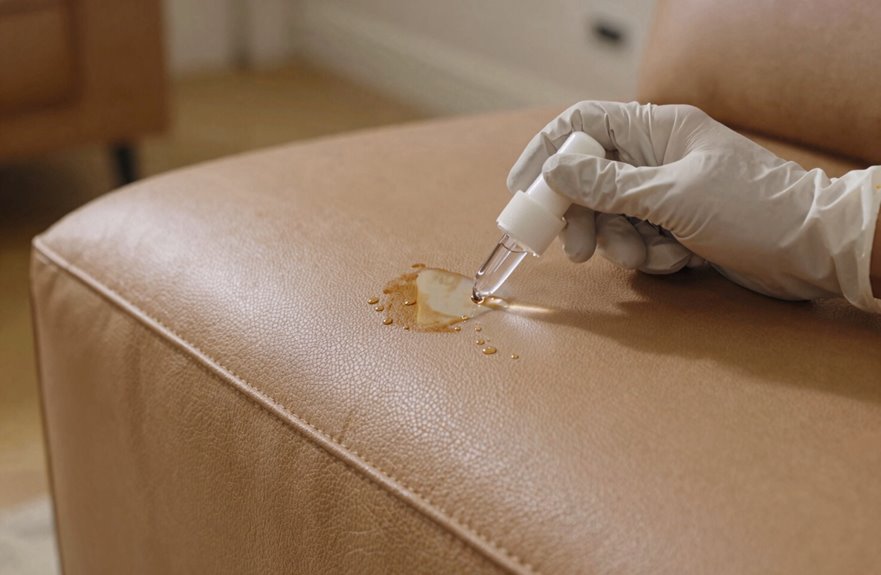
First, patch test somewhere hidden, underneath where nobody sees your shame. Dab, don’t rub, or you’ll push that ink stain deeper into the grain. Hand sanitizer works too, but those additives worry me, so test first.
Grab a fresh cotton ball, work from the outside in, and blot gently. Rinse with a damp cloth, then immediately apply leather conditioner since alcohol dries leather quickly. Your sofa will be restored to its original condition, and you can remove ink stains effectively.
Is Alcohol Safe? Test Your Leather Before You Clean
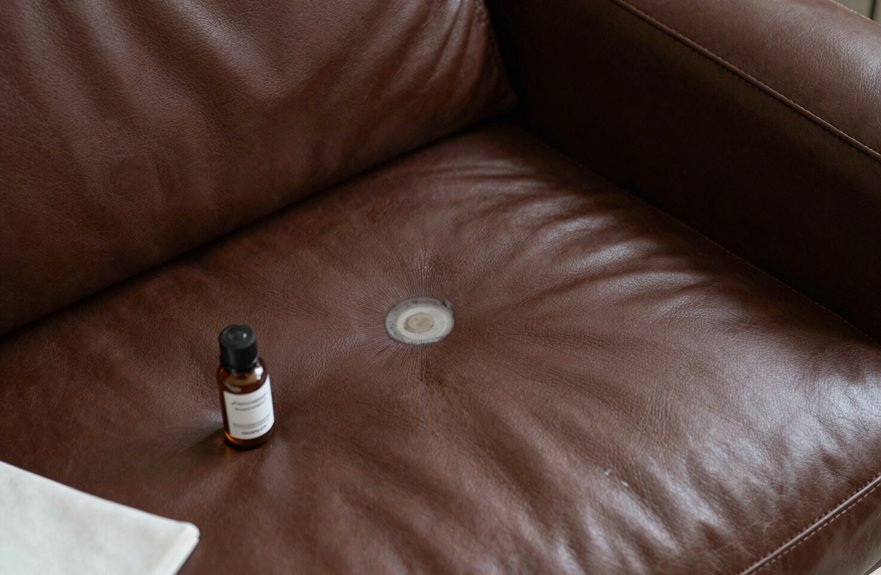
Before you use alcohol on your Chesterfield (the one inherited from your aunt, not the IKEA knockoff purchased in college), always patch test first. A personal mishap in 2009 resulted in a white sneaker turning pink. You’ll want to grab denatured alcohol specifically, since rubbing alcohol’s higher water content can spread ink stains, while isopropyl or alcohol wipes work well when applied carefully. Spending thirty seconds testing behind the cushion where no one looks prevents the need to explain to your partner why the sofa now has a bleached-out spot the size of a dinner plate.
Patch Test First
Where exactly should I test first? I always pick a hidden spot, under a cushion, behind the sofa, anywhere my clumsy moments won’t show. This patch test area becomes my safety net before any ink removal adventure begins.
| Test Spot | Why It Works |
|---|---|
| Under cushions | Completely invisible, perfect for leather care experiments. |
| Back panel | No one sees it, ever. |
| Bottom edge | Shadowed, forgiving, ideal for that first alcohol dab. |
I’m obsessed with preventing staining disasters. If my patch test shows discoloration, I stop immediately. No shame in retreating. When the leather stays gorgeous, I proceed with gentle dabs, never rubbing. Protecting beloved sofas from pen marks requires patience and testing before full treatment.
Alcohol Type Matters
With ink stains, not all alcohols work the same way. Denatured alcohol works well for leather ink removal, but rubbing alcohol should be avoided. Its higher water content can damage your leather finish.
Isopropyl alcohol or alcohol wipes are better choices, though a patch test on hidden spots is essential first. Alcohol-based hand sanitizers may work in a pinch, but they also require testing.
Your leather’s dye and coating affect which solvents are appropriate. What works on aniline sofas may damage pigmented leather. For staining prevention, use gentler solvents and apply them slowly. For uncertain situations, consult a professional rather than risk damage to valuable furniture.
Try Soap and Water for Fresh Ink on Leather Sofas
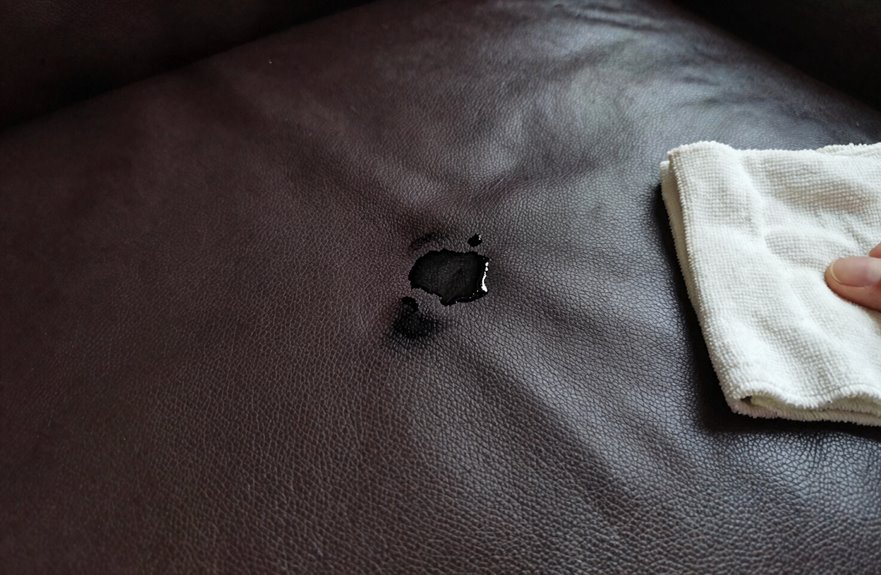
The moment I spot that fresh ink blob on my beloved Chesterfield, I’m already reaching for the soap drawer without panic. Fresh ink on leather sofas is actually the best-case scenario; I’ve learned this the hard way. Soap and water might just save your sanity.
I mix warm water with a drop of mild dish soap, nothing fancy, just the stuff by the kitchen sink. Then I dampen a soft cloth (microfiber works beautifully) and gently rub that stain in small circles, rinsing constantly so I’m not just pushing ink around. Don’t soak the leather though; we’re cleaning, not drowning it.
This stain removal trick shines on full-grain leather, though aniline types might shrug it off. Afterward, I always condition because happy leather stays supple, and nobody wants a crispy sofa.
Vinegar or Baking Soda: Natural Ink Removal for Sofas
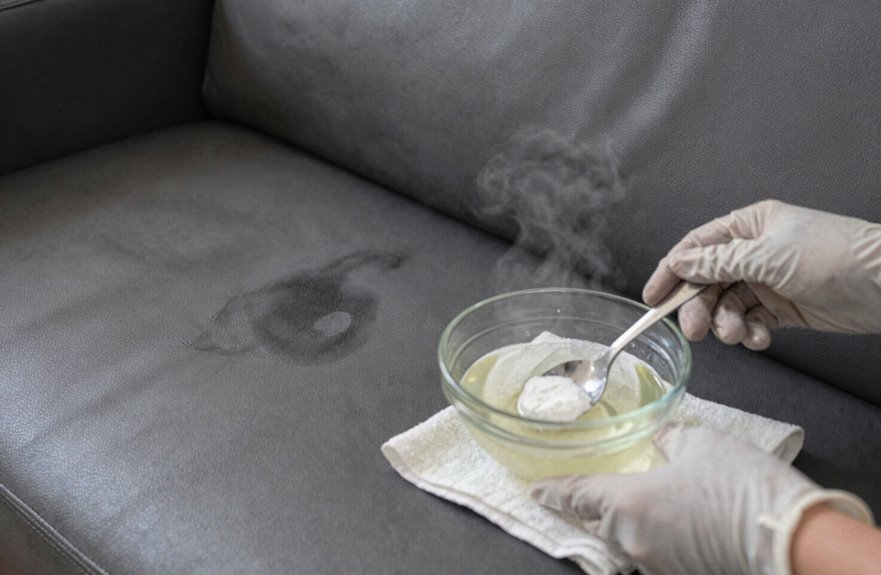
I’ve got two kitchen-cabinet heroes that’ll tackle ink without torching your leather. First up, I’ll mix equal parts white vinegar and water, which is gentler than harsh solvents. I’ve seen it lift ballpoint stains from my own caramel-colored Chesterfield (never again, left-handed note-taking). For tougher spots, I’ll whip up a baking soda paste, slap it on for a few minutes, then wipe clean with a damp cloth. Just don’t get overzealous with the scrubbing, or you’ll spread the stain like I did on my sister’s vintage Barcelona chair. Whichever route you pick, patch-test somewhere hidden first, then condition afterward. A crispy, cracked sofa is the result of skipping this step.
Vinegar Solution Method
Why reach for harsh chemicals when your kitchen cabinet holds a practical tool. I’ve rescued my own caramel leather sofa, a vintage Chesterfield, with nothing but white vinegar and water in equal parts.
First, patch-test behind the cushion where no one will see. Mix your vinegar solution, dab gently onto that ink stain, and wait a few minutes. Let the acid work on the stain. Then wipe with a damp cloth and watch the blue disappear.
Leather requires regular conditioning to prevent damage. Skip this step and you’ll face cracks. I learned this with my first apartment’s neglected sectional. Treat your sofa like skin; it deserves consistent care.
Baking Soda Paste
I mix baking soda with a splash of water until it’s thick and spreadable, like frosting, but please don’t taste it. I gently layer it over the ink stains, then wait. Those few minutes feel eternal, but watching the paste lift that pigment is remarkable.
I wipe it away with a damp cloth using microfiber only, and the chaos fades. But I’m not done. I always follow with leather conditioner because nobody wants cracked leather. I learned this lesson the hard way when my 2019 sectional suffered permanent damage.
This natural method won’t conquer ancient disasters, but for fresh mishaps, it’s a gentle, budget-friendly solution.
Nail Polish Remover or Hairspray: Last Resorts for Sofa Stains
Sometimes you need to use stronger methods when dealing with tough stains. Staring at a fresh ink stain on your beloved leather sofa can be stressful. Nail polish remover (acetone-based, the real deal) tackles new ink stains effectively, though it can dry leather considerably. Acetone-free versions exist for those who prefer a gentler approach. Hairspray works too, since alcohol dissolves ink quickly, but watch out for sticky residue from all those extra chemicals.
The most important step is to test patch first, every single time. Find a hidden corner, wait ten minutes, then dab without rubbing using a soft cloth or cotton swab. Spreading the ink will make the stain worse. Finish with conditioner to restore moisture to your leather sofa.
Aniline or Suede Sofa? When to Skip DIY and Call a Pro
How quickly does a gorgeous aniline sofa turn from showpiece to sob story. Aniline leather can happen faster than expected.
Aniline leather soaks up ink like a sponge, leaving ghostly shadows that no amount of frantic blotting fixes. Suede’s velvety surface turns into a watermark nightmare with one wrong drop.
DIY risk isn’t worth it on these beauties. Professional cleaning protects both your sanity and your investment.
Still tempted. Do a stain patch test in some hidden corner, then proceed with caution. When ink starts spreading, call a certified leather specialist. Your sofa will retain its value and appearance longer with professional intervention.
Condition Your Leather Sofa After Ink Removal
Once you’ve removed that stubborn ink spot, apply your leather conditioner. Skipping this step leaves your sofa looking cracked and dull. Reach for products like Chamberlain’s Leather Milk or Lexol, but you must match it to your specific leather type, or you’ll end up with dark patches. I once turned a gorgeous aniline section into a blotchy mess by using the wrong product. Test everything in a hidden corner first to avoid repeating this mistake.
Why Conditioning Matters
Because I’ve learned the hard way that cleaning leather is only half the battle, I’m practically evangelical about conditioning after ink removal. Those solvents that lift ink are moisture thieves. Without conditioning, you’re inviting cracks, dullness, and that sad, thirsty-leather look (like a neglected baseball glove from 1987).
A quality leather conditioner performs real restoration, replenishing oils stripped during cleaning and bringing back flexibility. I’ve seen conditioners revive a Palliser sofa’s leather finish from “abandoned lobby furniture” to “catalog shoot ready.” Aftercare timing matters. Let it sit, then wipe excess, or you’ll attract dirt like my aunt’s white pants at a barbecue.
For sensitive types like aniline or nubuck, conditioning is essential for maintaining the leather’s integrity. Your sofa deserves proper care to avoid permanent damage.
Best Conditioner Options
When I’m standing in the leather care aisle, I’m basically a kid in a candy store, except the candy costs forty bucks and promises to save my sofa’s soul.
Not all leather conditioner formulas work with every leather finish. Here’s what actually works for leather furniture care:
| Leather Finish | Best Conditioner Type |
|---|---|
| Full-grain | Wax-based cream (like Chamberlain’s Leather Milk) |
| Aniline | pH-balanced lotion, no silicones |
| Nubuck/Suede | Specialized spray conditioner only |
| Protected/Coated | Light cream, buff to matte sheen |
After stain removal, your sofa needs conditioning. Grab a microfiber cloth, apply sparingly in circles, and let it absorb for five minutes. Wipe excess and the leather will have a noticeable sheen.
For conditioning frequency, reapply every six weeks in sunny living rooms, more often if you have kids or pets. Always patch test behind cushions first, as some formulas can darken certain leather types unexpectedly.
When Home Remedies Fail: Options for Set-In Sofa Stains
So what happens when that stubborn ink stain refuses to budge after your vinegar solution fails? We’ve all been there, staring at our leather sofa in frustration. Home remedies sometimes meet their match with set-in stains.
Here’s when to call in the pros:
- Specialized solvents — professionals use enzymes safe for your specific leather finish (full-grain, aniline, nubuck)
- Reconditioning treatments — restores that buttery texture and color after ink removal
- Verification first — spot tests on hidden areas prevent damage like what happened on my cognac Chesterfield
- Dyeing restoration — for extensive damage, they can match and uniform your sofa’s appearance
Professional cleaning protects your investment by addressing damage that home methods cannot resolve.
Keep Your Sofa Ink-Free: Prevention Tips That Work
Why wait until you’re frantically blotting a fresh pen explosion across your butter-soft Arne Jacobsen. Prevention beats panic every single time. Treat your leather sofa like the sanctuary it is. Quick response matters.
| Prevention Habit | Why It Saves Your Sofa |
|---|---|
| Blot ink spills immediately | Stops spreading, protects your investment |
| Test cleaner in hidden spots | No nasty surprises on show surfaces |
| Apply conditioner quarterly | Creates barrier against future stains |
| Use coasters and slipcovers | Catches rogue pens before they strike |
| Avoid harsh scrubbing | Keeps delicate leather finishes intact |
I keep a leather-safe cleaner and conditioner handy because preparation prevents damage. Fresh ink responds to gentle methods. Set stains require professional treatment. Ink prevention protects both aesthetic appeal and resale value.