I’ve definitely learned this the hard way after turning my favorite Target chenille rug into a shrunken coaster. You can dry most bathroom rugs in the dryer, but that care label is everything. Look for the square-with-circle symbol, not the crossed-out version that basically screams “don’t you dare.” I once ignored that symbol, and I never will again.
Cotton and synthetic blends usually handle low heat just fine, but rubber-backed rugs will absolutely disintegrate into sad, crumbly flakes that stick to your drum like glitter after a craft project. Wool, silk, jute, and memory foam are strictly air-dry territory. Lay them flat near a window or over your shower rod like I do with my West Elm jute number.
Always separate rugs from towels; damp towel combinations smell like wet dog. Use the lowest heat setting possible, and when in doubt, air-dry it out. Following these material-specific guidelines will keep your rugs fluffy and your dryer drum clean.
How to Read Your Bathroom Rug’s Care Label
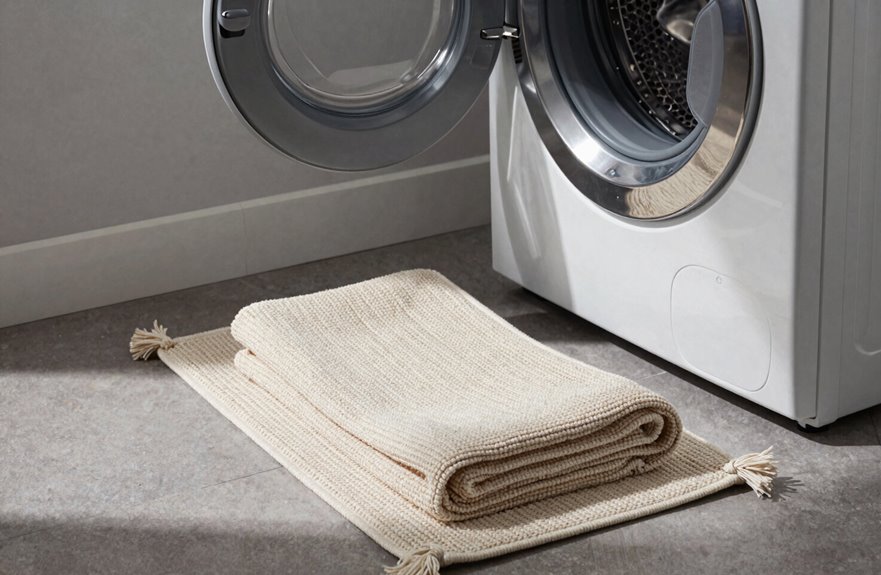
That tiny tag tells me everything: whether my rug’s dryer-safe or destined for the clothesline. Cotton and synthetics often get the green light, but wool and rubber-backed rugs require air-drying only. I hunt for those little symbols; the square with a circle means tumble dry, but crossed out means do not tumble dry.
No label. I play it safe with cold water and air-drying. I’ve shrunk enough rugs to know that a care label is not a suggestion, it’s a requirement.
Can You Put Bathroom Rugs in the Dryer?
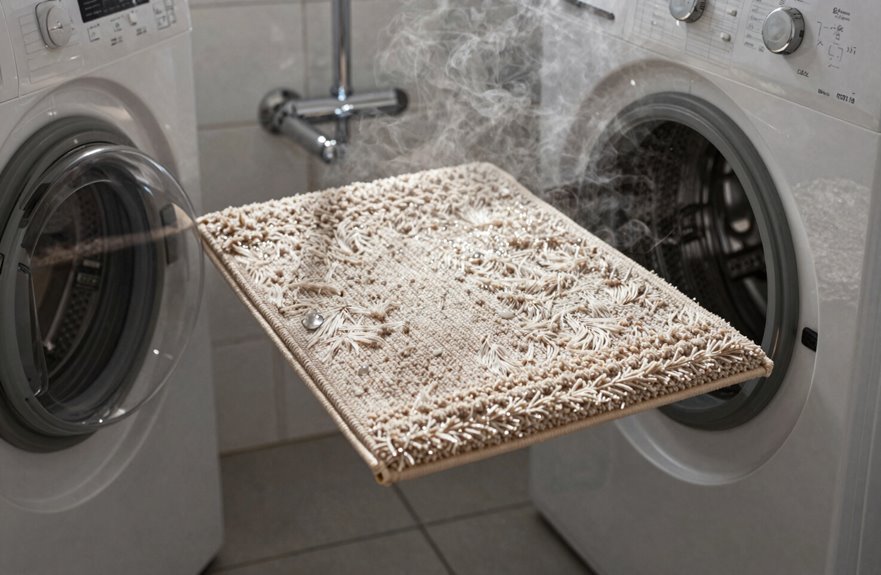
I always check care labels first because I’ve learned the hard way that a shrunken West Elm rug (RIP my first apartment) isn’t a great look. Material matters most here: cotton and some synthetics can handle low heat, but wool, rubber-backed, or that gorgeous memory foam Target find should never go in the dryer unless you want a crinkled mess that smells like a gym locker. For safe drying methods, I’ll lay rugs flat on a rack (my IKEA MULIG has saved me more than once) or use air-dry settings when the label gives me the green light.
Check Care Labels First
How often do we toss something in the dryer, cross our fingers, and hope for the best? (My favorite sweater from 2019 is now doll-sized because of my careless approach.) When it comes to bathroom rugs, that gamble can cost you a soggy, misshapen mess or a dryer drum coated in melted rubber backing.
That’s why checking the care label first is essential. The label is your roadmap to dryer safety, and ignoring it’s like driving blindfolded through a car wash. That tiny tag tells you if your rug can handle heat or needs gentle treatment. Skipping this step turns fluffy bath mats into crispy pancakes. Laundry mistakes teach us valuable lessons.
Material Matters Most
Once you’ve checked that care label (and maybe snapped a photo of it for reference), it’s time to talk about what your rug is actually made of.
| Material | Dryer Verdict |
|---|---|
| Cotton | Low heat only—don’t let it shrink! |
| Wool | Hard no |
| Rubber-backed | Skip it, backing crumbles |
| Silk/jute/fringe | Never, ever, ever |
| Synthetic blends | Check label, usually okay |
Cotton rugs are the workhorses of bathroom life. Toss them in on low, and they’ll come out fine. Wool, however, requires caution. I ruined my grandmother’s gorgeous cream wool mat, the one from her 1972 powder room renovation that was photographed in House Beautiful, by tumbling it into a felted coaster. When facing a mystery fiber, air-drying is the safest approach to avoid expensive replacements.
Safe Drying Methods
So you’ve checked the label, identified your rug’s material, and now you’re standing in front of the dryer wondering if this is where everything goes sideways. I’ve melted more rubber backings than I care to admit (RIP, my favorite Target find from 2019).
Here’s the real deal: cotton and some synthetics can handle low heat, but wool and rubber-backed rugs should not go in the dryer. Always check the care label first. No instructions means air-dry the rug. When using the dryer, select low-heat or air-dry settings only, and never overload it. Damp rugs breed mildew, so dry them individually and thoroughly. For delicate rugs, lay them flat on a rack outside. This method keeps them sun-fresh and preserves the backing.
Which Bathroom Rug Materials Can Go in the Dryer?
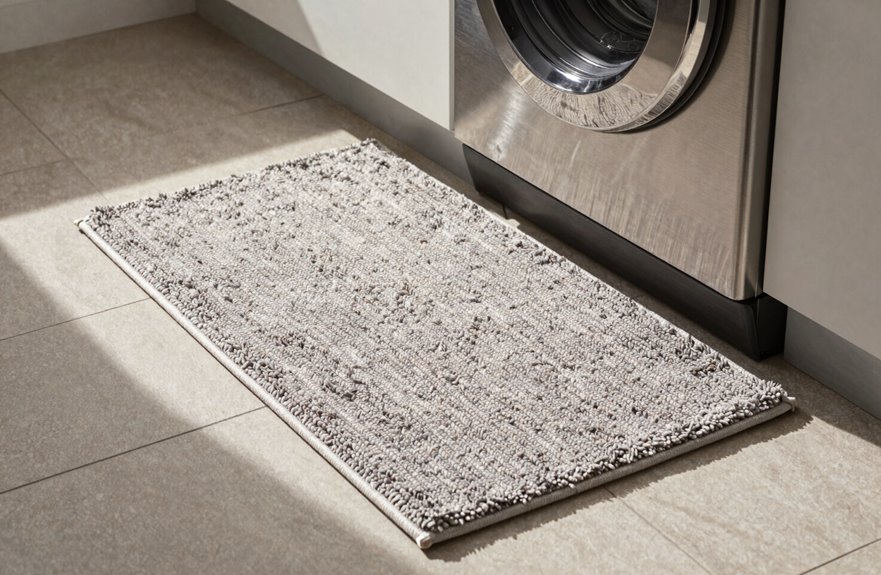
Where do I even start when I’m staring at a sopping wet bathroom rug and the dryer is right there? I always grab that care label first, as it contains the manufacturer’s guidelines. Cotton rugs are usually dryer-friendly on low heat. Some synthetics work too, if handled carefully. I never toss anything in without checking, because I’ve learned the hard way. Low heat or air-dry settings are my preference, even for dryer-safe materials. When I’m doubting, I lay it flat instead. Better safe than explaining to my roommate why our laundry room smells like melted rubber.
Which Bathroom Rugs Should Never Go Near Heat?
Why do I still get a little thrill of danger when I spot my favorite wool rug in the laundry pile. That gorgeous hand-knotted piece from West Elm? Heat destroys it. The dryer turns wool into felted tragedy, shrinking it into something that fits a dollhouse.
Wool rugs in the dryer: a felted tragedy that fits a dollhouse.
Rubber-backed rugs are equally doomed. I’ve seen the cracked, melted disaster that emerges, like something left on a hot dashboard in July. Never again.
Jute, silk, anything with delicate fringe? These crave gentle air-drying, not tumbling torture. And memory foam mats (looking at you, Tempur-Pedic bath collection) can turn into lumpy pancakes unless the label specifically blesses the dryer.
I learned this the hard way so you don’t have to. Some rugs demand patience, not heat.
What’s the Safest Dryer Setting for Bathroom Rugs?
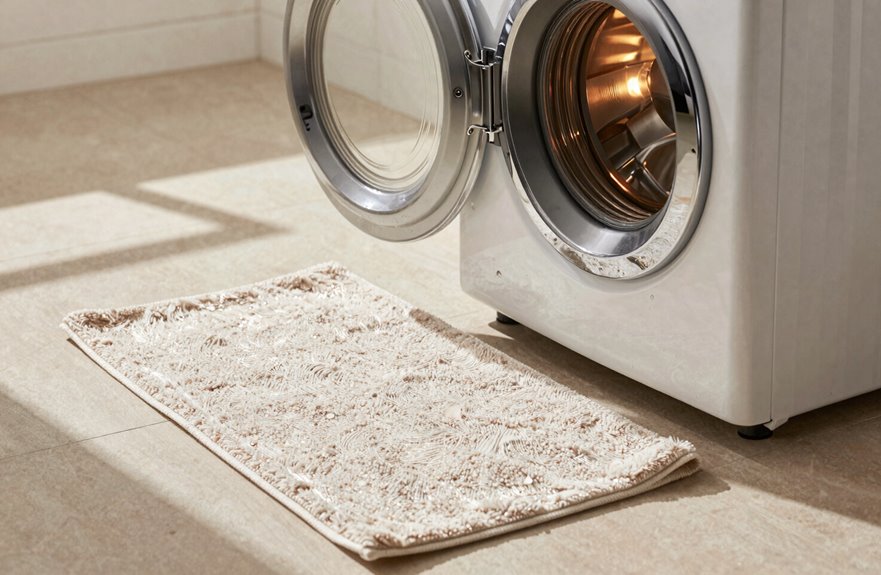
I always start with low heat on my bathroom rugs, similar to how you’d wash a delicate cozy sweater. I learned this the hard way after shrinking a perfectly good Target Fieldcrest rug into a bath mat for a dollhouse. Cotton and synthetics can usually handle that gentle warmth, but I check that care label carefully before I even think about pushing start. The material really dictates everything here. What works for my fluffy Parachute cotton rug would absolutely destroy something delicate or rubber-backed, so I match the setting to the fabric every single time.
Low Heat Priority
How exactly do we keep our beloved bathroom rugs from turning into felted coasters or crumbling disasters? I always reach for low heat on my dryer, as it protects delicate fibers. High heat shrinks plush mats into dollhouse accessories.
| What We’re Protecting | What Low Heat Saves | What High Heat Destroys |
|---|---|---|
| Cotton fibers | Soft, fluffy texture | Shrunken, dense mat |
| Vibrant dyes | Rich, saturated colors | Faded, blotchy mess |
| Rubber backing | Flexible, intact grip | Cracked, peeling disaster |
| Our sanity | Rug remains usable | $40 Target rugs become unwearable |
I dry rugs solo. No overcrowding allowed. When I’m unsure about fabric care, I flat-dry the way my grandmother taught me. This prevents shrinkage, color fading, and backing deterioration.
Material-Specific Settings
For every rug in my linen closet, there’s a dryer setting that requires careful attention. Cotton and some synthetics can handle low heat, but wool, rubber-backed, and delicate rugs should not go in the dryer. Always check the care label first, as manufacturers specify the appropriate care for their fibers. When the care label doesn’t provide guidance, use cold wash and air dry as the safest approach. For dryer settings, low heat or air-dry is the recommended method. High heat causes shrinkage and faded colors. Dry rugs separately without overloading the machine. Rubber-backed rugs should always hang dry to prevent damage.
How to Prepare Bathroom Rugs for the Dryer
Why rush into tossing that soggy bath mat into the dryer without a second thought? (I learned this the hard way; rest in peace, my favorite West Elm trellis rug from 2019.) Before we even think about hitting that start button, we need to do a little detective work on what we’re actually dealing with.
First, I always hunt down that care label like it’s a golden ticket. No label? I play it safe and assume low heat only. Nothing kills a good rug faster than reckless heat. I separate my rugs from everything else because towels can pick up odors that transfer to rugs. Cotton and synthetics can usually handle the dryer, but I use low heat. I never overload; those beauties need room to tumble freely. An extra rinse cycle removes detergent residue that can feel crunchy underfoot.
Can You Dry Rubber-Backed Bathroom Rugs Safely?
I’ve learned the hard way that tossing rubber-backed rugs into a hot dryer causes cracked, melted damage. Like that time I ruined my grandma’s vintage Sears bath mat and had to explain the rubber crumbs in the lint trap. The heat warps and weakens that backing over time, so I always hang mine on a towel bar now. This method is safer and keeps them fresher-smelling. If you’re absolutely desperate for speed, you can use the lowest setting for a quick spin, but waiting a day for air-drying prevents the need to replace another rug.
Heat Damage Risks
How exactly do we ruin our favorite bath mats? It’s easier than you’d think. I’ve watched perfectly good rubber-backed rugs transform into crumbling disasters.
When you’re drying these mats, that backing becomes incredibly vulnerable. Here’s what heat actually does to your rug’s backing:
- Cracks the rubber into flaky shards, like a bad sunburn
- Melts bits onto your dryer drum
- Warps the whole shape into a lumpy mess
- Destroys grip, turning your rug into a slip hazard
High heat accelerates backing degradation fast. I’ve learned this the hard way with a gorgeous West Elm mat that came out crispy. If you absolutely must machine-dry, keep it low and loose without crowding. Machine drying at high temperatures will shorten your mat’s lifespan significantly.
Air-Drying Benefits
So where do we turn when the dryer damages our beloved bath mats. We air-dry, my friend, and it works well.
I used to worry about soggy rubber-backed rugs until I discovered that laying them flat prevents the backing from cracking.
Here’s my routine: squeeze, blot with a towel, then hang or lay flat until bone-dry. No mildew, no odd odors, no shrunken disasters. The rubber stays supple, the fibers keep their loft, and my bathroom stays fresh. Sure, it takes longer, but preserving that grip I paid for is worthwhile. Your rug and your dryer will last longer as a result.
Back Preservation Tips
Why risk turning your trusty Gorilla Grip mat into a crumbling, crackled mess when keeping that rubber backing pristine is totally doable. I’ve learned the hard way that heat destroys these babies faster than my motivation on Monday mornings.
Here’s my battle-tested preservation routine:
- Skip the dryer entirely. Air-drying protects that rubber backing from cracking into sad puzzle pieces.
- Hang rugs flat over your shower rod, like a damp taco, for even airflow.
- Check the underside regularly. Damp rubber backing breeds mildew nightmares.
- Embrace patience. Rushing means warped, melted disaster, like my first Target purchase.
If you’re absolutely desperate, air-drying on the lowest setting limits risk, but I prefer hang-drying exclusively. Your mat will retain its grip longer and maintain structural integrity when you avoid heat exposure.
When Should You Air-Dry Bathroom Rugs Instead?
| Rug Type | Drying Risk | My Go-To Move |
|---|---|---|
| Rubber-backed | Melting, cracking | Air-dry flat, always |
| Cotton rugs | Shrinking, distortion | Air-dry on rack |
| Jute/silk/fringe | Fraying, ruin | Gentle air-dry only |
Humid bathroom. Find ventilation or sunlight to prevent mildew growth.
How to Air-Dry Cotton and Microfiber Bathroom Rugs
I’ve ruined enough bath mats to know that air-drying cotton and microfiber rugs preserves their quality and prevents shrinkage.
Air-drying these machine-washable rugs keeps fibers intact and avoids that sad, shrunken look. Here’s how to do it:
- Shake your rug outside first to remove loose dirt
- Lay cotton flat on a clean surface (such as a dresser top) or hang microfiber over a sturdy shower rod
- Flip halfway through so both sides dry completely and prevent mildew
- Check the underside with your hand; dampness collects there
Your bathroom deserves rugs that last, and this method delivers results.
How to Speed Up Air-Drying for Bathroom Rugs
Nobody wants to wait three days for a bath mat to dry, especially when your bathroom floor looks like a sad, naked tile desert in the meantime. I’ve learned a few tricks to speed up air-drying without ruining your rugs.
First, I press out excess water with a towel, which gives your arms a workout. Then I grab a drying rack and position it near a window or fan. I flip the rug every few hours to prevent a damp underside.
Here’s my quick reference for faster drying:
| Technique | Why It Works |
|---|---|
| Towel-press first | Removes 40% more moisture immediately |
| Drying rack placement | Maximizes airflow on both sides |
| Shade drying outdoors | Fresh air without sun-fading disasters |
| Periodic flipping | Prevents that gross mildew smell |
Your bathroom floor will dry faster with these methods.
Can You Put Memory Foam Bathroom Rugs in the Dryer?
I’ve learned the hard way that tossing a memory foam bath mat in the dryer causes it to become lumpy and shrunken. Most memory foam rugs, like those cushy ones from Target’s Threshold line, cannot handle the heat, so checking that care label first is essential. If you’re unsure, lay it flat to air dry, because this method preserves the dense, pillowy cushioning for your bare feet every morning.
Drying Memory Foam Risks
How exactly do memory foam rugs survive the dryer gauntlet? (Spoiler: most don’t, and I’ve learned this the hard way.) You know that plush, cloud-like stepping pad from Target’s Fieldcrest line or the dreamy UGG Duffield? I tossed mine in once, and it emerged looking like a sad pancake.
Memory foam drying risks are real. When you expose these rugs to heat, several problems occur:
- The core crumbles into weird, lumpy chunks (RIP my $45 spa moment.)
- Shrinking turns your rectangle into something resembling modern art.
- Deformation means your toes meet a lopsided, sad cushion.
- Trapped moisture breeds mildew, and nobody wants a science experiment underfoot.
I’ve learned from ruined rugs so you don’t have to. That dense viscoelastic structure requires patience rather than high heat exposure. Your bathroom oasis will maintain its shape and comfort only with proper air-drying methods.
Safer Drying Alternatives
So what’s a rug lover to do when the dryer can damage your precious memory foam. Let’s explore some drying alternatives that’ll keep your bathroom buddy fluffy and happy.
| Method | Setup | Result |
|---|---|---|
| Flat drying | Lay on towel rack | Even shape, zero stress |
| Hang drying | Drape over shower rod | Air circulates beautifully |
| Low heat (if allowed) | Dryer on delicate | Quick but risky business |
| Outdoor breeze | Shaded patio spot | Fresh scent, nature’s touch |
I air dry my memory foam flat. Patience reduces drying time and prevents heat damage. Check that care label first though; some brands have specific requirements. Skip the direct sun, avoid high heat, and your rug stays cloud-like for years. Your drying method directly determines how long your rug will maintain its original texture and comfort.
What Dryer Heat Does to Bathroom Rugs
Why does that little rectangle by my shower deserve so much drama when I toss it in the dryer? Dryer heat absolutely transforms these humble mats, and not always for the better.
That little rectangle by my shower deserves so much drama when I toss it in the dryer.
What I’ve discovered about rug care:
- Cotton and some synthetics survive low heat, but wool is a total disaster.
- High heat shrinks fibers, fades colors, and warps everything. My rug once became a coaster.
- Rubber backing melts or crumbles, leaving sticky residue on the drum.
- Heavy rugs need solo spins. Overpacking means damp, mildewy centers.
Check care labels, use low or air-dry settings, and give bulky rugs their own drying cycle. Delicate decorative pieces should be flat-dried only.
Can You Dry Bathroom Rugs With Towels?
I’ve spent way too many Sunday afternoons staring into my dryer, wondering if my soggy bath mat and that mountain of towels could become laundry partners. They shouldn’t. When drying bathroom rugs, I’m always tempted to toss everything together for efficiency, but that’s a rookie mistake I learned the hard way. My rubber-backed mat once emerged twisted like a pretzel because towels hogged the tumble space. Now I dry bathroom rugs solo on low heat, letting them bounce freely for even drying. Cotton rugs might tolerate towel company, but separate loads prevent that damp, musty smell we all dread. Your future self will appreciate sniffing fresh, fully dry rugs after running the extra cycle.
How Often Should You Dry Bathroom Rugs?
I usually toss my bathroom rugs in the wash every single week, sometimes pushing it to two if I’m feeling rebellious (or just buried under a Netflix queue). We’re all figuring out this bathroom rug care thing together, right? Here’s my real-talk breakdown:
- Weekly washing keeps that post-shower funk from becoming your whole vibe. Your guests will notice the difference.
- Biweekly works for solo dwellers with drier bathrooms, like that Instagram-worthy guest bath nobody uses.
- High-humidity homes need faster cycles, meaning every few days when your mirror fogs up.
- Toss them in with towels for efficient drying and happy machines, because laundry efficiency matters.
Finding your rhythm isn’t about perfection. It’s about keeping your sanctuary fresh without losing your mind.
When to Replace Your Bathroom Rug
You’ve finally nailed down your washing schedule, but bathroom rugs have a secret expiration date. I learned this the hard way with my own sad, threadbare West Elm bath mat.
| Sign It’s Time | What You’re Seeing |
|---|---|
| Thinning pile | That once-plush Crate & Barrel rug now looks like roadkill |
| Fraying edges | Strings waving hello every morning |
| Backing cracks | Crunchy rubber sounds underfoot |
| Persistent mildew smell | Like your grandma’s basement, but worse |
| Color fading | Remember when it was teal. Now it’s “mystery gray” |
I replace my daily-use rug yearly, but guest bath rugs can last a few years. When odors linger after drying or fibers shed like my golden retriever, it’s time to replace. Cracked backing is a slip hazard that requires immediate replacement.